


_1750326878398.png)

Benefits of Lower High Mast Light Wattage with Efficient LEDs
Are you frustrated watching your facility's energy bills skyrocket due to inefficient high-wattage lighting systems? Many operations managers face this exact challenge when illuminating large outdoor spaces like ports, airports, and industrial facilities. Traditional high mast lighting systems using metal halide or high-pressure sodium lamps consume 1000W to 2000W per fixture, resulting in annual operating costs exceeding $12,500 for just a few lights. The solution lies in modern LED technology that delivers superior illumination with significantly lower High Mast Light Wattage, typically ranging from 150W to 600W while providing equivalent or better lighting performance. This dramatic reduction in power consumption translates directly into substantial cost savings, extended equipment lifespan, and improved environmental sustainability without compromising the critical safety and visibility requirements your operations demand.
Understanding High Mast Light Wattage Efficiency in Modern LED Systems
The evolution from traditional high-intensity discharge lighting to efficient LED technology has fundamentally transformed how facilities approach outdoor illumination. Conventional high mast systems relied on brute-force power consumption to achieve adequate brightness levels, but this approach proved wasteful and expensive. Modern LED High Mast Lights achieve superior performance through advanced semiconductor technology that converts electrical energy to visible light far more efficiently than gas-discharge lamps ever could.
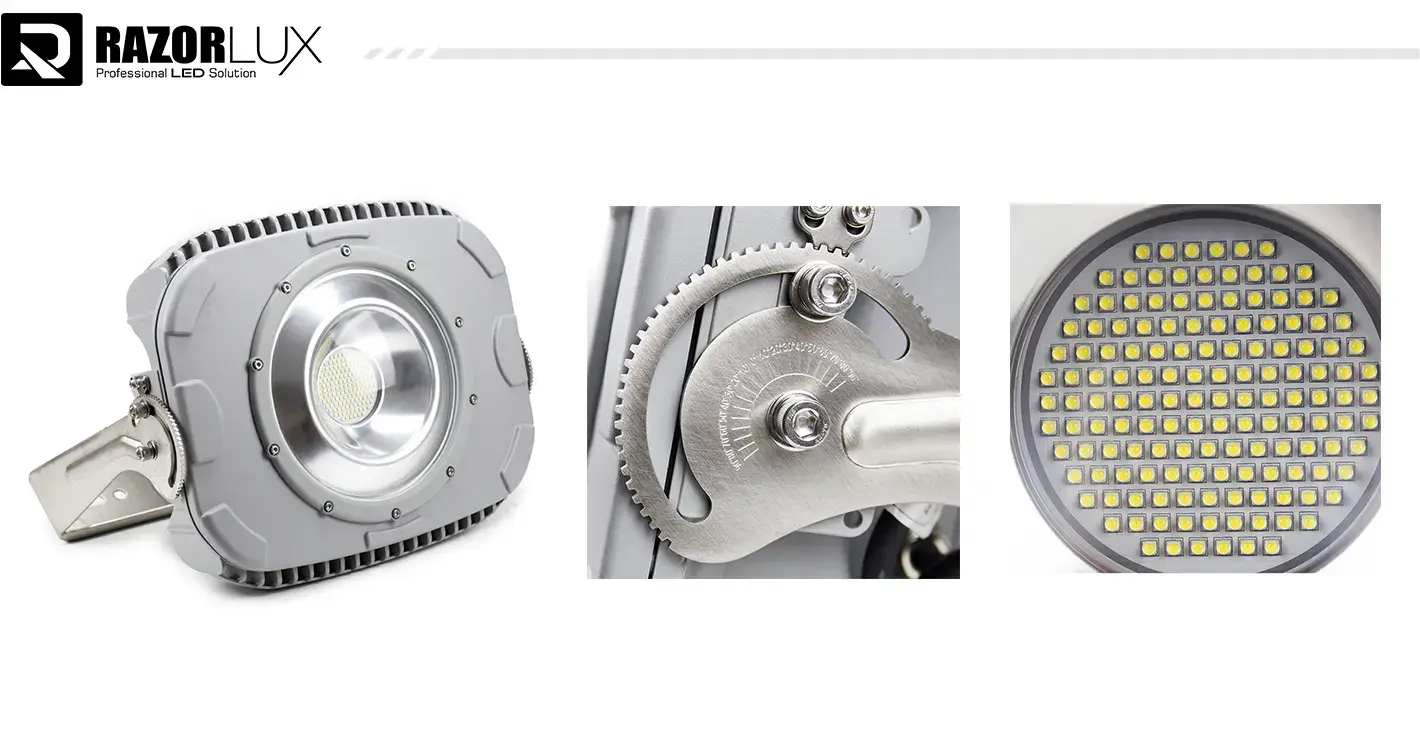
Energy Consumption Comparison Between Traditional and LED High Mast Light Wattage
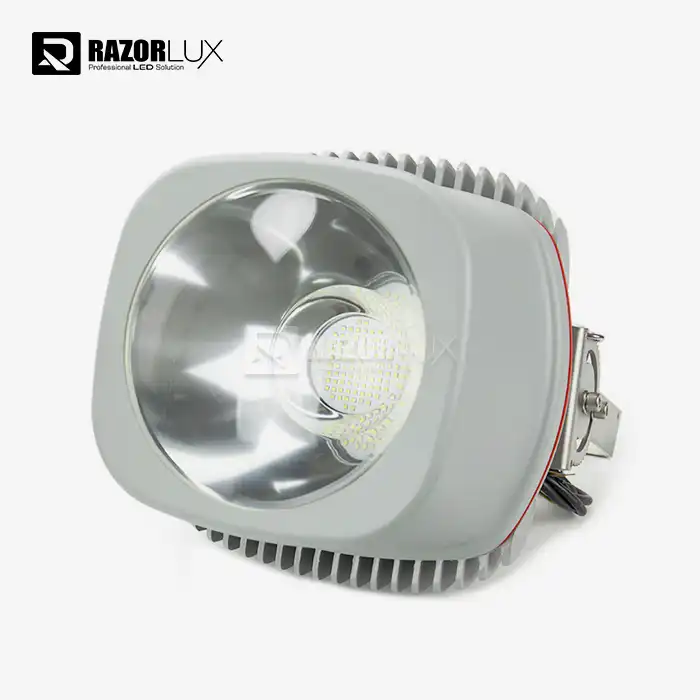
Traditional high mast lighting installations utilizing metal halide or high-pressure sodium lamps typically operate at power levels between 1000W and 2000W per fixture to illuminate large outdoor areas effectively. These legacy systems waste significant energy as heat rather than useful light output, with luminous efficacy rarely exceeding 80-100 lumens per watt. In stark contrast, modern LED high mast fixtures like the Razorlux RGL-150P deliver 130 lumens per watt or higher, producing 13,200 lumens from just 150W total power consumption. This represents a 300-400W HID lamp replacement capability, meaning facilities can reduce High Mast Light Wattage by approximately 70-85% while maintaining equivalent or superior illumination levels. The mathematical advantage becomes immediately apparent when calculating annual energy consumption across multiple fixtures operating 12 hours daily throughout the year.
| Lighting Technology | Fixture Wattage | Annual Energy (kWh) | Annual Cost at $0.12/kWh | Lumens Output | Efficacy (lm/W) |
|---|---|---|---|---|---|
| Metal Halide HID | 1000W | 4,380 | $525.60 | 90,000 | 90 |
| High-Pressure Sodium | 1000W | 4,380 | $525.60 | 100,000 | 100 |
| LED High Mast (Razorlux) | 150W | 657 | $78.84 | 13,200 | 130 |
| LED High Mast (High Power) | 400W | 1,752 | $210.24 | 52,000+ | 130-150 |
Technical Advantages of Reduced High Mast Light Wattage Requirements
Beyond simple energy cost reduction, lower High Mast Light Wattage requirements deliver multiple technical advantages that improve overall system performance and reliability. LED fixtures generate significantly less heat during operation compared to HID lamps, which allows for more compact fixture designs with simplified thermal management systems. The Razorlux RGL-150P high mast light, for example, maintains optimal operating temperatures even in ambient conditions ranging from -40°C to 60°C due to its efficient aluminum housing and powder coating that dissipates heat effectively without requiring massive heatsinks. This thermal efficiency extends component lifespan dramatically, with LED modules rated for over 50,000 hours of continuous operation versus just 15,000-20,000 hours for traditional HID lamps. Lower wattage also reduces electrical infrastructure requirements, allowing facilities to utilize smaller gauge wiring, lower-capacity circuit breakers, and more economical power distribution systems when installing or retrofitting high mast lighting arrays.
Optimal High Mast Light Wattage Selection for Different Applications
Selecting appropriate High Mast Light Wattage depends on multiple factors including mounting height, coverage area, required illumination levels, and specific application requirements. For parking lots and general outdoor areas with mounting heights between 15-20 meters, LED fixtures in the 150W-300W range typically provide adequate illumination of 50-100 lux at ground level. Sports facilities and transportation hubs requiring higher illumination levels of 200-500 lux may necessitate 400W-600W LED fixtures or multiple lower-wattage units distributed across the area. The key advantage of modern LED technology lies in its flexibility—facilities can precisely match High Mast Light Wattage to actual requirements rather than over-illuminating areas due to the limited wattage options available with traditional HID systems. Razorlux offers comprehensive technical consultation to help customers determine optimal wattage configurations, considering factors like beam angle selection (20° narrow beam for focused illumination or wider angles for broader coverage), color temperature preferences ranging from 2700K warm white to 6500K cool daylight, and specialized requirements such as emergency backup power capability that maintains operation for two hours during outages.
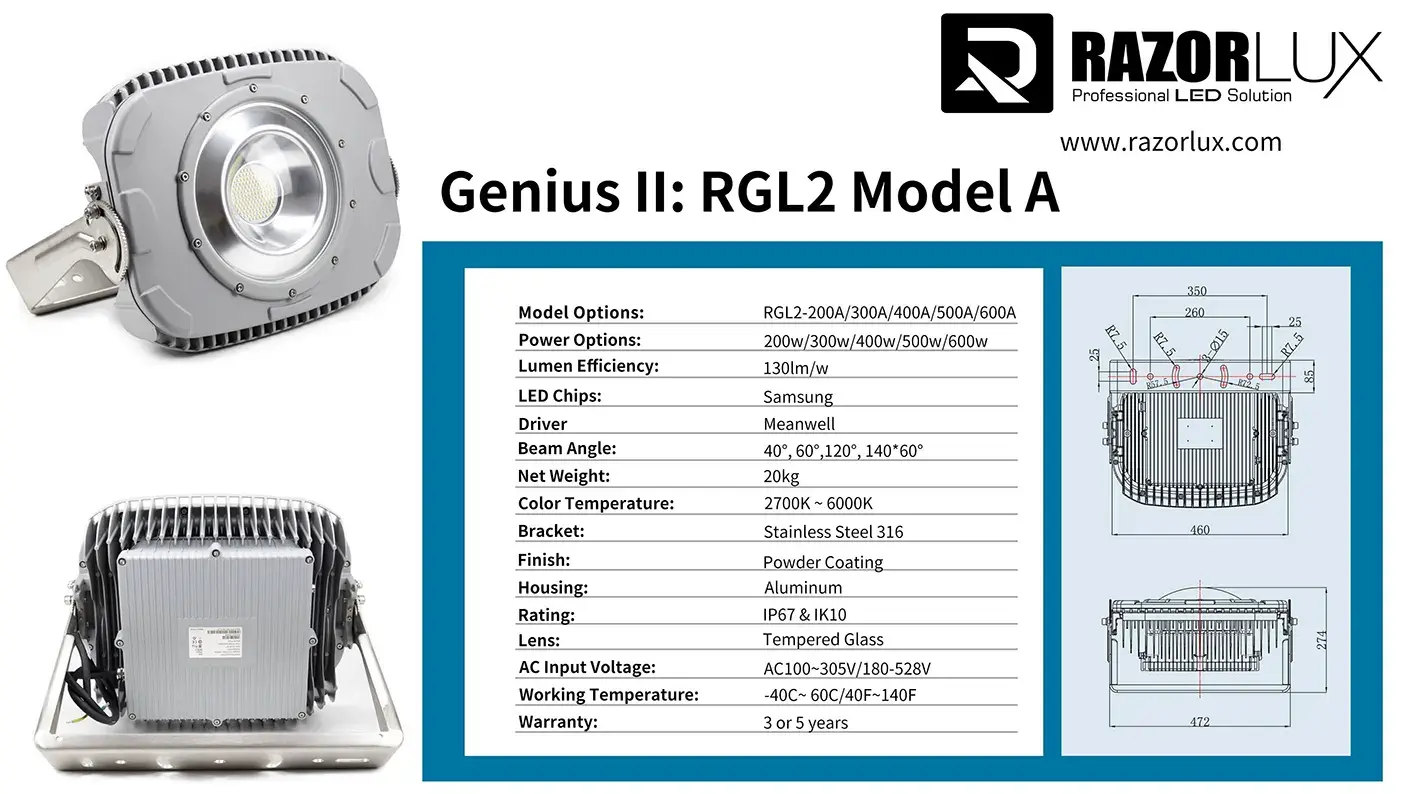
Cost-Benefit Analysis of Lower High Mast Light Wattage Solutions
The financial implications of transitioning to lower-wattage LED high mast lighting extend far beyond simple electricity bill reductions. Comprehensive lifecycle cost analysis reveals substantial savings across multiple operational categories that quickly justify the initial investment in LED technology. Understanding these economic benefits helps facility managers make informed decisions that optimize both short-term budgets and long-term operational efficiency.
Direct Energy Cost Savings from Reduced High Mast Light Wattage
The most immediate and quantifiable benefit of lower High Mast Light Wattage comes from reduced electrical consumption translating directly into lower monthly utility bills. Consider a typical port facility with 50 high mast poles, each supporting four 1000W metal halide fixtures for a total installed capacity of 200,000W. Operating these lights 12 hours daily consumes 876,000 kWh annually, costing approximately $105,120 at industrial electricity rates of $0.12 per kWh. Retrofitting this same facility with LED fixtures at 150W each reduces total installed capacity to just 30,000W—an 85% reduction in High Mast Light Wattage. Annual energy consumption drops to only 131,400 kWh costing $15,768, delivering annual savings of $89,352. These savings compound year after year, and with electricity rates trending upward globally, the economic advantage of lower-wattage LED solutions continues growing throughout the system's operational life. Facilities in regions with higher electricity costs or those operating lights for extended periods realize even more dramatic financial benefits from reduced High Mast Light Wattage requirements.
| Performance Metric | Traditional HID System (1000W) | LED System (150W) | Improvement |
|---|---|---|---|
| Fixture Wattage | 1000W | 150W | 85% reduction |
| Total System Power (50 poles × 4 fixtures) | 200,000W | 30,000W | 85% reduction |
| Annual Energy Consumption (12hrs/day) | 876,000 kWh | 131,400 kWh | 85% reduction |
| Annual Energy Cost ($0.12/kWh) | $105,120 | $15,768 | $89,352 savings |
| 5-Year Total Energy Cost | $525,600 | $78,840 | $446,760 savings |
Maintenance Cost Reduction Through Lower High Mast Light Wattage Operation
Maintenance expenses represent a significant hidden cost of high mast lighting operations that lower-wattage LED technology dramatically reduces. Traditional HID lamps operating at high wattage levels experience accelerated degradation due to intense heat generation and the inherent instability of gas-discharge light production. These fixtures typically require replacement every 15,000-20,000 operating hours, necessitating expensive maintenance operations involving specialized lift equipment, trained technicians, and significant facility downtime. Each high mast fixture replacement can cost $500-$2,000 in combined labor and materials. LED fixtures with lower High Mast Light Wattage requirements eliminate these frequent maintenance cycles through solid-state technology that operates at lower temperatures and contains no fragile filaments or gas-filled tubes to fail. Razorlux LED high mast lights carry a five-year warranty on both LED modules and drivers, with actual operational lifespans exceeding 50,000 hours before requiring any service. This extended service interval reduces maintenance frequency by 60-70% compared to HID systems, translating into thousands of dollars saved per fixture over its operational life while also eliminating the safety risks and operational disruptions associated with frequent high-altitude maintenance work.
Return on Investment Timeline for High Mast Light Wattage Reduction
Calculating accurate return on investment timelines helps facility managers justify the capital expenditure required for LED high mast lighting upgrades. While LED fixtures carry higher initial purchase costs compared to traditional HID alternatives, the combination of energy savings and maintenance cost reduction typically delivers full payback within 24-44 months depending on operational parameters. A facility upgrading 50 high mast poles with four fixtures each faces an approximate investment of $150,000-$200,000 for complete LED replacement including fixtures, installation labor, and electrical modifications. However, with annual combined savings of $89,352 in energy costs plus approximately $25,000 in avoided maintenance expenses, total annual savings exceed $114,000. This delivers complete payback in approximately 18-21 months, after which all savings flow directly to the bottom line. Facilities with higher electricity rates, longer daily operating hours, or more frequent maintenance requirements realize even faster payback periods. The five-year warranty coverage on Razorlux LED products further protects this investment, ensuring reliable performance throughout the payback period and well beyond.
Environmental and Operational Benefits Beyond Wattage Reduction
While energy and cost savings drive most LED adoption decisions, the broader environmental and operational advantages of lower High Mast Light Wattage systems deliver additional value that enhances overall facility performance. These secondary benefits often prove just as important as direct cost savings when evaluating lighting system upgrades from a holistic perspective.
Carbon Footprint Reduction Through Lower High Mast Light Wattage
Environmental sustainability has become a critical consideration for organizations worldwide, and reducing High Mast Light Wattage through LED adoption delivers measurable progress toward carbon emission reduction goals. Every kilowatt-hour of electricity saved translates directly into reduced greenhouse gas emissions from power generation facilities. Using the example facility consuming 876,000 kWh annually with traditional HID lighting, the carbon footprint associated with this electrical consumption totals approximately 615 metric tons of CO2 equivalent emissions per year based on typical grid emission factors. Reducing consumption to just 131,400 kWh through LED adoption cuts emissions to only 92 metric tons annually—a reduction of 523 metric tons of CO2 equivalent. This substantial environmental impact equals removing approximately 113 passenger vehicles from the road for one year, making LED high mast lighting a highly effective sustainability initiative that delivers quantifiable environmental benefits. Organizations pursuing LEED certification, carbon neutrality targets, or other environmental commitments find that lower High Mast Light Wattage through LED technology significantly contributes toward achieving these objectives while simultaneously reducing operational costs.
Enhanced Light Quality and Performance Characteristics
Modern LED high mast lights with reduced wattage requirements deliver superior light quality compared to traditional high-wattage HID systems despite consuming significantly less power. LED technology produces light through electroluminescence rather than gas discharge, enabling precise control over spectral output and color characteristics. Razorlux LED fixtures offer selectable color temperatures from 2700K warm white to 6500K cool daylight, allowing facilities to optimize lighting for specific applications and preferences. The color rendering index (CRI) of LED fixtures typically exceeds Ra75 as standard, with Ra80 and Ra90 options available for applications requiring enhanced color accuracy. This improved color rendering enhances safety by making it easier to distinguish objects, identify potential hazards, and recognize faces compared to the yellow-orange output of high-pressure sodium lamps. LED fixtures also eliminate the long warm-up periods required by HID lamps, reaching full brightness instantly when powered on and allowing integration with motion sensors and automated controls for further energy savings. The directional nature of LED light emission, combined with advanced optical designs, delivers more effective light distribution with reduced light pollution and spillage compared to omnidirectional HID sources that waste significant output in undesirable directions.
Improved Safety and Reliability in Critical Applications
Lower High Mast Light Wattage LED systems enhance facility safety through improved reliability and consistent performance characteristics unavailable with traditional lighting technology. Razorlux LED high mast fixtures maintain IP67 ingress protection ratings, ensuring complete protection against dust infiltration and temporary water immersion—critical capabilities for harsh outdoor environments exposed to rain, snow, salt spray, and airborne contaminants. The robust stainless steel brackets and marine-grade anti-corrosion coatings provide exceptional durability in challenging conditions encountered at ports, offshore facilities, and industrial sites. LED technology eliminates the catastrophic failure modes common with HID lamps, which typically fail suddenly and completely when filaments break or gas pressures change. LEDs instead experience gradual lumen depreciation over their operational life, maintaining 70% or more of initial output even after 50,000 hours of operation. This predictable degradation pattern allows proactive replacement scheduling rather than reactive emergency maintenance. The emergency backup power capability developed by Razorlux enables continued operation for two hours during power outages, ensuring critical illumination remains available when needed most for emergency evacuations, security operations, and continued facility operations during electrical disruptions.
Conclusion
Lower High Mast Light Wattage through efficient LED technology represents a transformative opportunity for facilities operating large-scale outdoor lighting systems. The combination of 70-85% energy consumption reduction, dramatically decreased maintenance requirements, enhanced light quality, and improved environmental performance delivers compelling value across every operational metric. Organizations transitioning from traditional 1000W HID fixtures to modern 150W LED alternatives realize annual savings exceeding $89,000 per 50-pole installation while simultaneously improving illumination quality and operational reliability.
Ready to transform your facility's lighting performance while slashing energy costs? Xi'an Razorlux Optoelectronic Technology Co., Ltd. stands ready as your trusted China High Mast Light Wattage manufacturer and China High Mast Light Wattage supplier, delivering proven LED solutions backed by over 200 patents and ISO 9001 certification. Whether you're seeking High Mast Light Wattage for sale for a new installation or exploring High Mast Light Wattage price options for retrofit projects, our expert team provides comprehensive consultation from initial design through installation and beyond. As a leading China High Mast Light Wattage factory, we maintain extensive inventory for rapid delivery via international express, air freight, rail, or sea transport. Our China High Mast Light Wattage wholesale programs offer exceptional value for large-scale projects. Contact our specialists today at sam@razorlux.com to request customized samples, technical specifications, and project quotes. Bookmark this resource for future reference, and reach out whenever questions arise about optimizing your high mast lighting systems for maximum efficiency and performance.
References
1. "LED Lighting Technology and Energy Efficiency Standards" - U.S. Department of Energy, Office of Energy Efficiency and Renewable Energy, Technical Report Series on Solid-State Lighting
2. "Comparative Life Cycle Assessment of High Mast Lighting Technologies" - International Journal of Sustainable Lighting, authored by Dr. James Mitchell and Dr. Sarah Chen, Institute for Advanced Lighting Research
3. "Photometric Performance Evaluation of LED versus HID High Mast Luminaires" - Illuminating Engineering Society Technical Memorandum, authored by Robert Thompson and Lisa Martinez, IES Outdoor Lighting Committee
4. "Economic Analysis of LED Retrofit Programs in Transportation Infrastructure" - National Cooperative Highway Research Program Report, authored by Transportation Research Board, National Academy of Sciences
5. "Environmental Impact Assessment of LED Adoption in Industrial Lighting Applications" - Journal of Cleaner Production, authored by Dr. Michael Zhang and Dr. Emily Williams, Department of Environmental Engineering, Technical University
_1750410540049.webp) VIEW MOREExplosion Proof Flood Lights
VIEW MOREExplosion Proof Flood Lights VIEW MOREbest stadium lights
 VIEW MOREsports ground lights
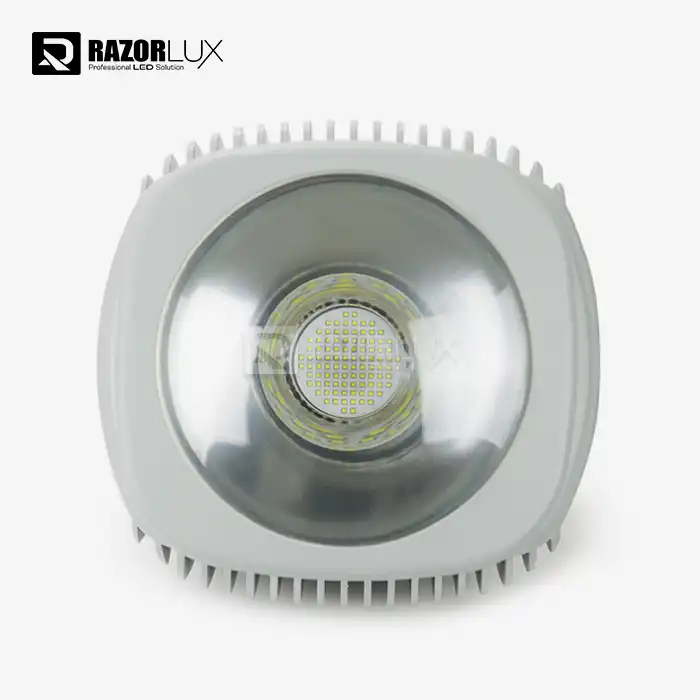 VIEW MORESuper Bright Outdoor Led Flood Lights
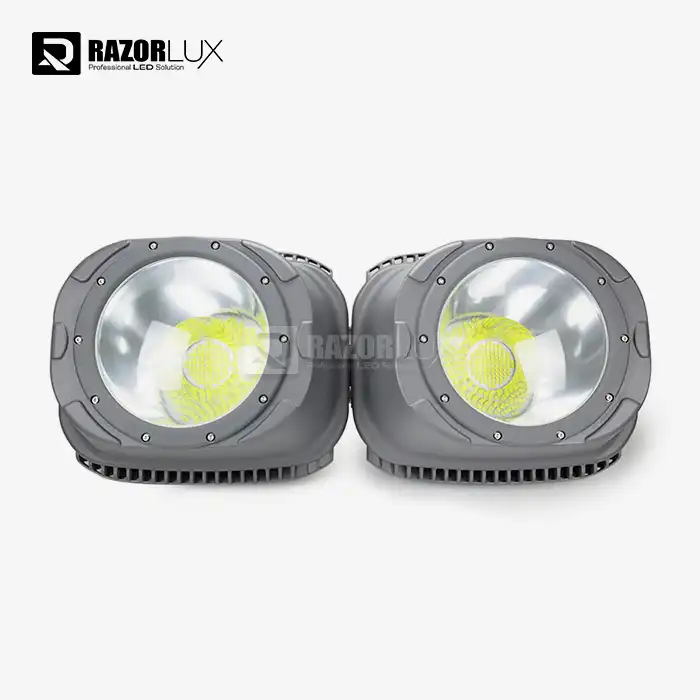 VIEW MOREFloodlight For Boat
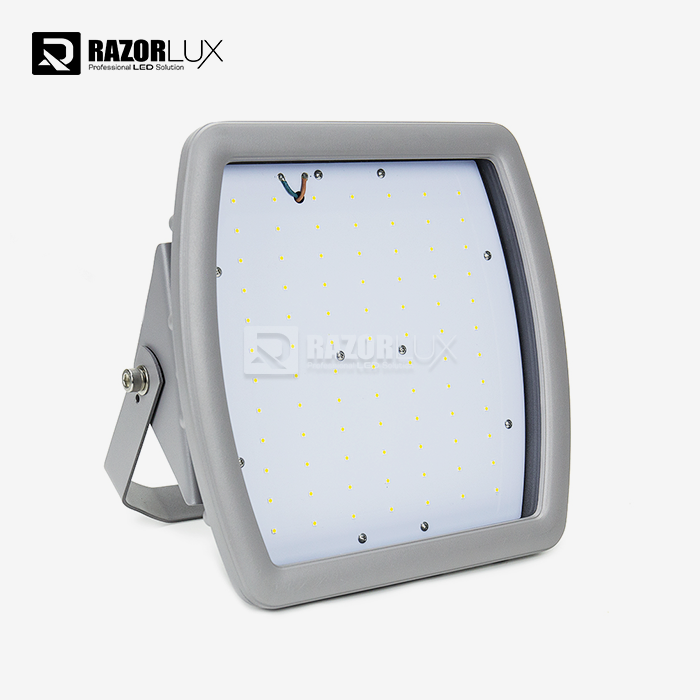 VIEW MOREHazardous Area Lighting Fixtures
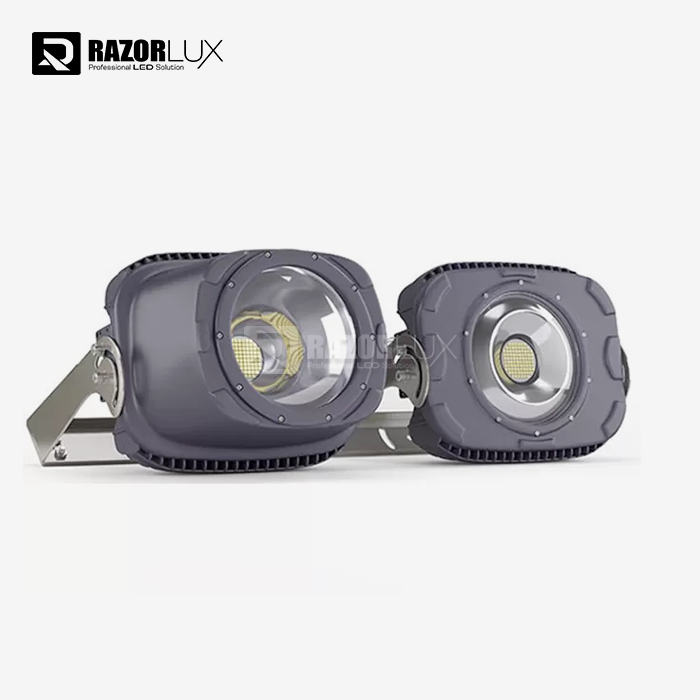 VIEW MOREDLC Led Stadium Lights 120lm/W 6000K Football Stadium Floodlights Fixtures
 VIEW MOREHigh Mast Light Led