


_1750326878398.png)

Construction Site Flood Lights for Large Building Projects
It can make a big difference for people in charge of building projects whether they can meet goals safely or have to pay a lot of money for time lost. To provide strong, even lighting over large work areas, Construction Site Flood Lights are high-intensity LED lighting systems. These strong units are different from most industrial lights because they can handle dust, rain, vibrations, and extreme temperatures. Also, they give off enough light to keep workers safe and keep things running smoothly during long shifts at night. Modern floodlights use less energy, last longer, and need less maintenance than metal halide or halogen alternatives. This is because LED technology has improved.
Understanding Construction Site Flood Lights
What Are Construction Site Flood Lights?
Construction Site Flood Lights that work well get rid of dangerous shadows and make sure that safety rules are followed. They are an important part of safety infrastructure. To work well on busy building sites, infrastructure projects, and business ones, these lighting systems were made to last. They provide steady lighting—often more than 130 lumens per watt—so that work can be done around the clock without the risk of accidents that come with poor vision.
Key Technologies Behind Modern Flood Lighting
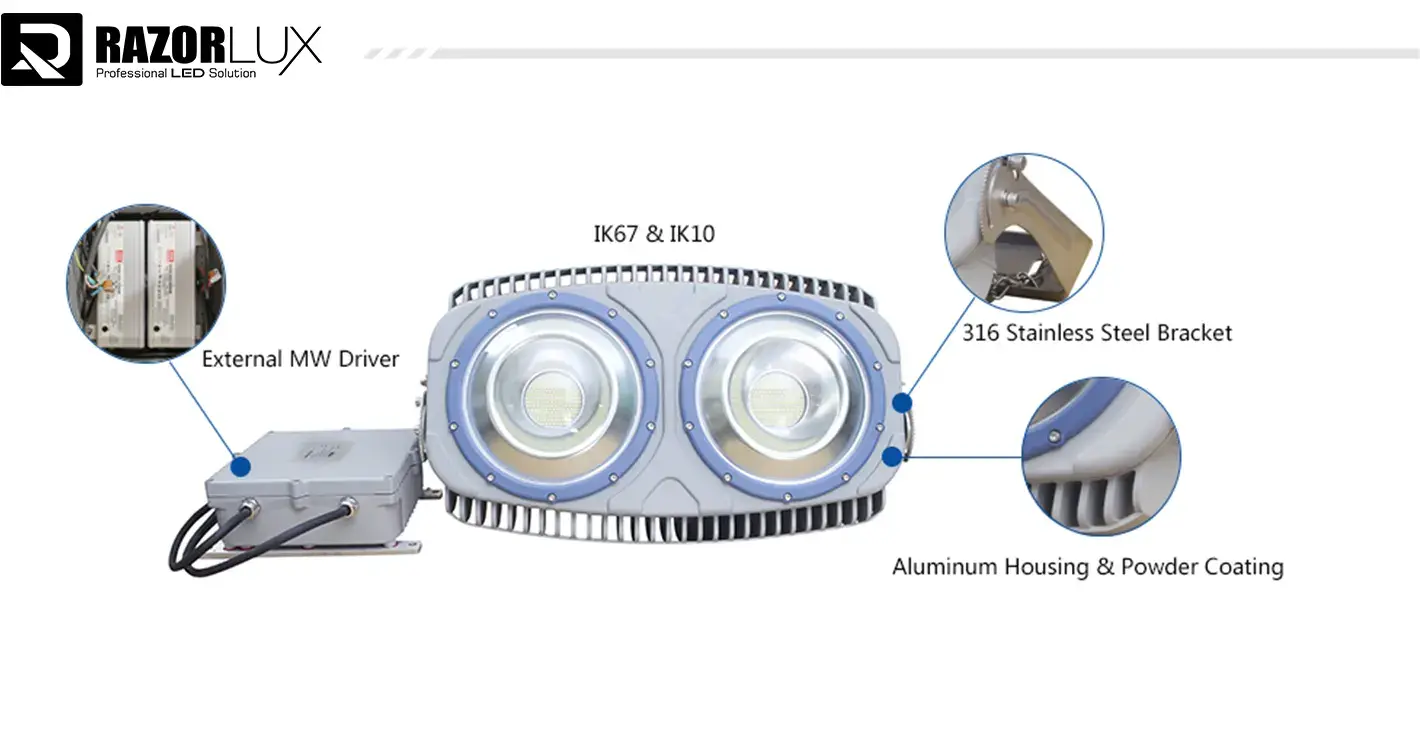
LEDs have changed the way workplaces are lit because they fix problems with older lighting systems. Halogen lights from the past give off too much heat, use a lot of power, and need new bulbs all the time. LED floodlights of today, on the other hand, are better at turning power into light that can be seen, which can save you up to 70% on costs. They have advanced thermal management systems, which are usually passive aluminium heat sinks that keep the junction temperatures below 85°C. This means that they can be used for more than 50,000 hours without breaking.
Why Proper Illumination Matters on Construction Sites
Having enough lights affects the safety of the workers, how much they get done, and how long the job takes. It has been shown that crashes happen less often in well-lit building zones. Workers can easily see things that could be dangerous, like surfaces that aren't level, machines that are moving, and things that are hanging in the air. Contractors can work longer hours when they can see what they're doing, which speeds up the project without lowering the quality. Good lighting not only keeps people safe, but it also helps with precise tasks that need the right way to see colours, like installing electricity, finishing work, and quality checks.
Types and Technologies of Construction Site Flood Lights
LED vs. Halogen: A Comprehensive Comparison
The choice between LED and gas flood lighting systems is very important when it comes to project costs and how well they work. When procurement managers know the technical differences, they can make better decisions that fit their projects. It takes 130 to 160 lumens per watt for LED Construction Site Flood Lights to work, while gas floodlights need 15 to 25 lumens per watt on average. The engine uses less fuel and gives off less CO2 when it is in this economy mode. Additionally, LED lights can work for more than 50,000 hours, which is ten times longer than gas bulbs. This implies that they don't need to be changed as often and don't need as much upkeep. Halogen lamps don't use electricity as well as regular lamps, but they are cheaper and start giving off light right away, without having to warm up. But because their surfaces are so hot, they can cause burns and fires in places where things that catch fire are present. Alternatives to LEDs stay cool to the touch even after being used for a long time. This makes the workplace safer. From a scientific point of view, LEDs let you change colour temperatures and beam angles more easily. Colour temperatures on new LED floodlights can be changed from bright white (2700K) to sunshine (6500K), so site managers can pick the light that works best for each job. Making sure that colours are seen correctly is important for finishing work and seeing safety signs. A Colour Rendering Index (CRI) value above 75 means that the colours are seen correctly.
Weather Resistance and Durability Features
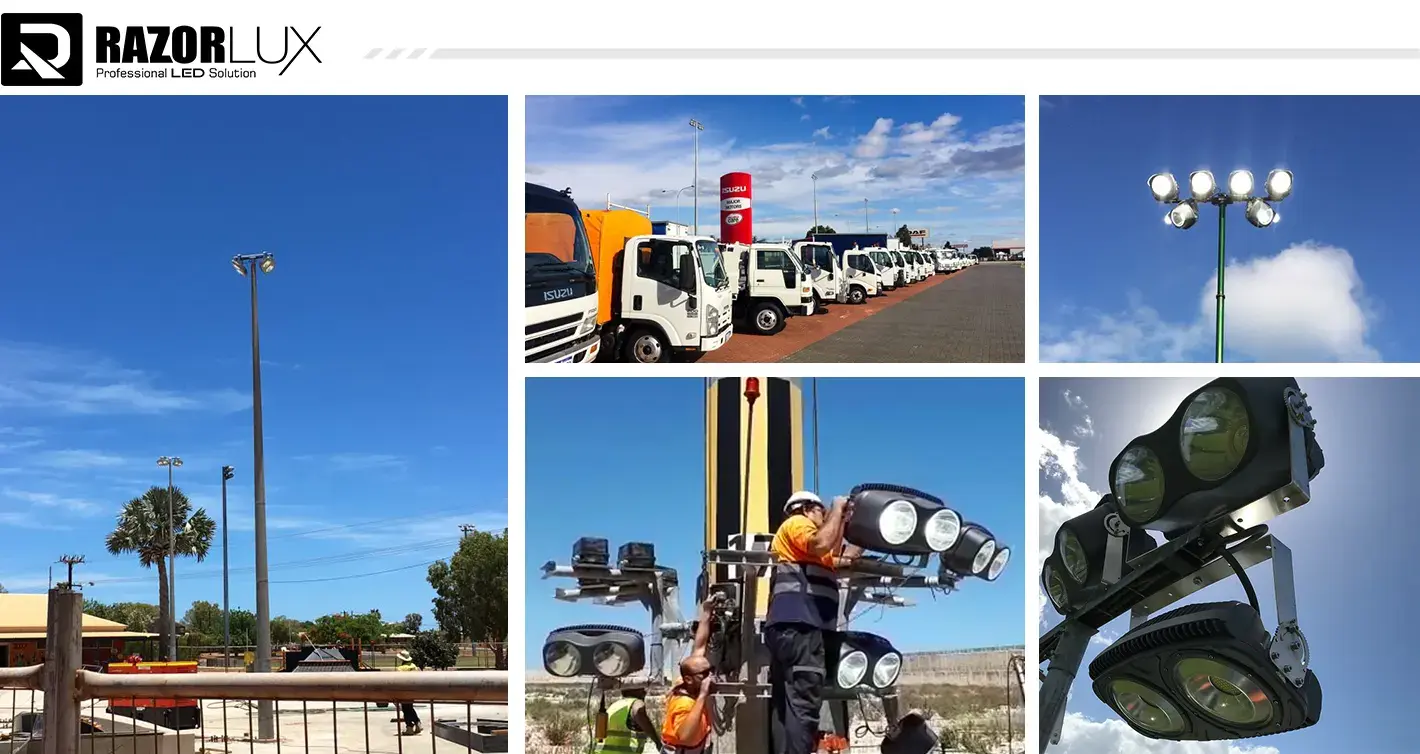
The lighting on building sites has to work in rough circumstances. When pros make floodlights, they have to keep working even if they get hit by rain, dust, high temperatures, or other things. Scores for Ingress Protection (IP) ratings show how hard it is for solids and liquids to get into a device. IP65 units keep dust out and defend against water jets coming from any direction, so they are good for most building jobs that need to be done outside. While IP67 taps are more water-resistant, they can still be buried in water for a short time. This makes them great for places that might flood or need to be maintained by pressure washing them often. By measuring how well a fitting can handle mechanical shocks, IK scores let you know how well it can handle impact. Floodlights with an IK10 grade can handle hits of 20 joules, which is about the force of dropping something 5 kg from 40 cm. Die-cast aluminium housings and tempered glass or polycarbonate lenses offer this level of protection. They keep equipment safe even if it accidentally touches tools or building materials. At the same time, temperature flexibility is very important. High-quality floodlights work well in temperatures from -40°C to 60°C, putting off the same amount of light whether it's snowing or very hot in the desert. High-tech thermal management systems keep things from getting too hot, and parts that can handle cold make sure they can start up reliably even when it's 0 degrees outside.
Portability and Mounting Options
At different stages of a construction project, different lighting needs come up. This means that there needs to be a variety of mounting options. Lights on portable tripods are great for making temporary work areas because they are easy to move as the project goes on. You can quickly connect them to steel structures with magnetic bases, and the aim can be fine-tuned for long- or short-term installations with changeable yoke mounts. Daisy-chaining: several fixtures can be linked together in a series. This makes wiring easier and speeds up the installation process. Some newer types can be set up wirelessly or have motion sensors that change the light based on who is in the room. This keeps things safe and saves energy when no one is using them.
How to Choose the Best Flood Lights for Large Construction Projects
Assessing Your Project's Lighting Requirements
The first thing you should do to pick the right Construction Site Flood Lights is to carefully look at the area. When managers buy things, they need to think about a lot of things to make sure the items they pick meet both short-term and long-term project goals. The size and shape of the spot determine how many lights are used and where they are put. In big, open spaces, you only need a few high-wattage units with wide beam angles. On the other hand, to get rid of shadows, sites with a lot of changes in slope may need more lights with focused beams. You need to know what will be done on the site to figure out how much light it's going to need. Most general building jobs need between 10 and 20 foot-candles, but more exact work may need 50 foot-candles or more. The goals for saving energy depend on the hours of operation. LED technology is great for projects that have long night shifts because it has lower running costs. Add up how much energy is used, how often lamps need to be replaced, and how much work needs to be done on maintenance over the expected length of the project. This will give you the total cost of ownership.
Key Technical Specifications to Compare
Lumen Output and Efficacy: Lumen output measures how bright something is, while lumens per watt measures how efficient something is. It takes less than half as much power for a 1000W LED floodlight to give off 130,000 lumens, which is the same amount of light as a 2200–2500W metal halide lamp. This makes generators work less, which saves a lot of fuel in places that can't connect to the power grid. Colour Temperature Selection: Cooler colour temperatures (5000K to 6500K) give off bright light that feels like daylight. This makes it easier to see and stay awake at night work. It's easier to see and do long tasks when the temperature is between 2700K and 3000K. Colour temperature lights that can be changed let you do different things on the same job. Beam Angle Options: You can choose from different beam angles. Narrow beam angles (40° to 60°) focus light over longer distances, which makes them good for lighting up big buildings or faraway work areas. Beam angles of 120 ° to 140 ° work well for large, open spaces. Some lights are made to work with security or border lighting because their beams are not all the same size. Power Supply Compatibility: Monoblock motors that work with 100V to 277V AC can connect to several different power sources, like generator outputs, temporary service panels, or permanent electrical infrastructure. Models that can take 100V to 800V DC can be hooked up to solar panels or battery backup systems, which is helpful in remote areas or for being ready for emergencies.
Matching Fixtures to Specific Use Cases
Different parts of the site and stages of the building have different lighting issues that need unique answers. For digging and laying foundations, you need fixtures that last a long time and put out a lot of light so that deep trenches and large excavation areas are well lit. Put on mobile light poles high-wattage LED floodlights with a wide beam that cover the whole area and can be moved as the work goes on. For high-rise and structure frame buildings, you need fixtures that can withstand vibrations well and have safe ways to place them. High-up floodlights that are meant to be attached to a crane or scaffolding need to be able to handle steady movement and wind loads. Security lighting and perimeter illumination benefit from lights that turn on when they sense movement and have narrow beam angles because they use less energy while shining a bright light when they sense movement. Light can't get into nearby homes because of asymmetric beam patterns, but they still cover enough of the edge.
Installation, Maintenance, and Safety Best Practices
Strategic Positioning for Optimal Coverage
Planning where to stand to get the best footage. When you put Construction Site Flood Lights in the right place, they give off more even light and use less energy. To cut down on glare and sky glow, site managers should raise lamps above the main work line and tilt lights 30 to 45 degrees downward. As the beams cross over each other, harsh shadows are eliminated, and switching zones are always well lit. For people who are working or using tools, don't put lights right behind them because it makes it harder to see. Putting lights on opposite sides of work areas spreads the light out, which makes it easier to see things that are three-dimensional and possible risks.
Electrical Safety and Installation Guidelines
When you install electricity the right way, it works safely and follows the rules for electricity. There are rules about how wiring should be done everywhere. In the US, it has to follow the National Electrical Code (NEC). Most temporary building lights need to have ground fault circuit interrupter (GFCI) safety so that people don't get shocked when it's wet. All of the electrical links should be kept safe in containers that are waterproof and can be used outside. Make sure the wires are properly held up so that people walking on them, cars, or construction tools don't damage them. If a cable run goes through a busy area, it needs strong safety measures, like cable bridges or buried conduit. Voltage changes happen a lot on construction sites where generators are used. LED floodlights that can work with 80V to 305V AC can handle these changes. Sensitive LED drivers are protected from short-term voltage spikes by built-in surge protection (4kV–10kV values). This makes the device last longer and reduces the number of failures.
Maintenance Protocols to Extend Operational Life
Fixtures last longer and give you a better return on your money if you take care of them daily. A preventive repair plan keeps the lighting quality the same throughout the project and cuts down on sudden breaks. More than once a month should be enough to clean the lenses and mirrors if you live in a dusty area. When dust and other particles get in the way of up to 30% of the light that comes out of an LED, it stops saving energy. Use soft cleaning products and cloths on lens surfaces to keep them from getting scratched. Check the electrical connections every three months and fix any that are loose. Also, look for signs of rust. Use dielectric grease to keep water out of outdoor links. This will help you keep the IP grade. Check the valves and seals often and replace any that are broken. Find out how the fixture works by seeing if the brightness or image clarity changes. In general, LEDs lose their brightness over time. However, if the driver fails, the brightness can drop quickly or flicker. Even after 50,000 hours, most good LED floodlights still work at 70% of their original brightness (L70 standard). This means they last as long as they're meant to.
Razorlux RGL-1000A: High-Performance Lighting Solution
Advanced Technical Specifications
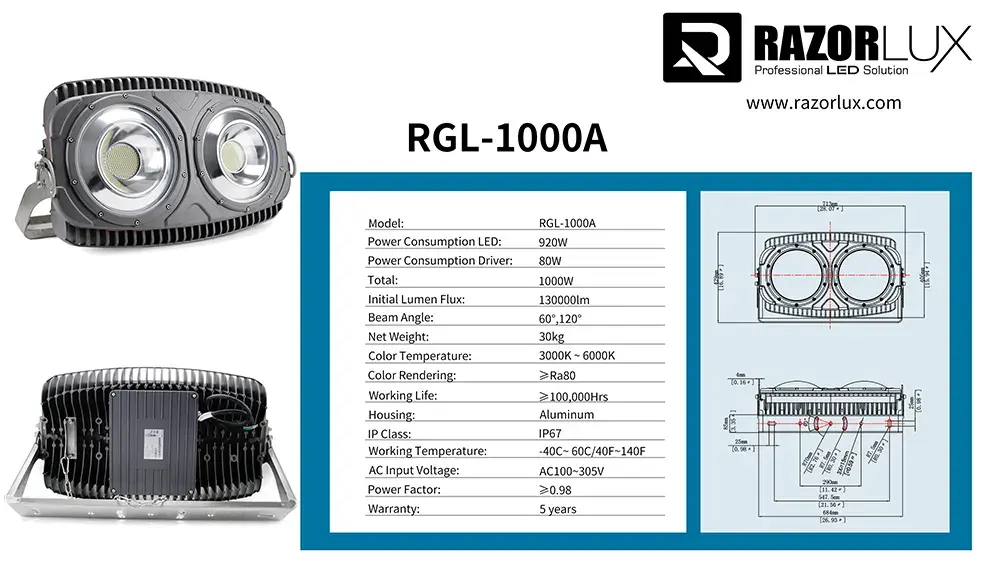
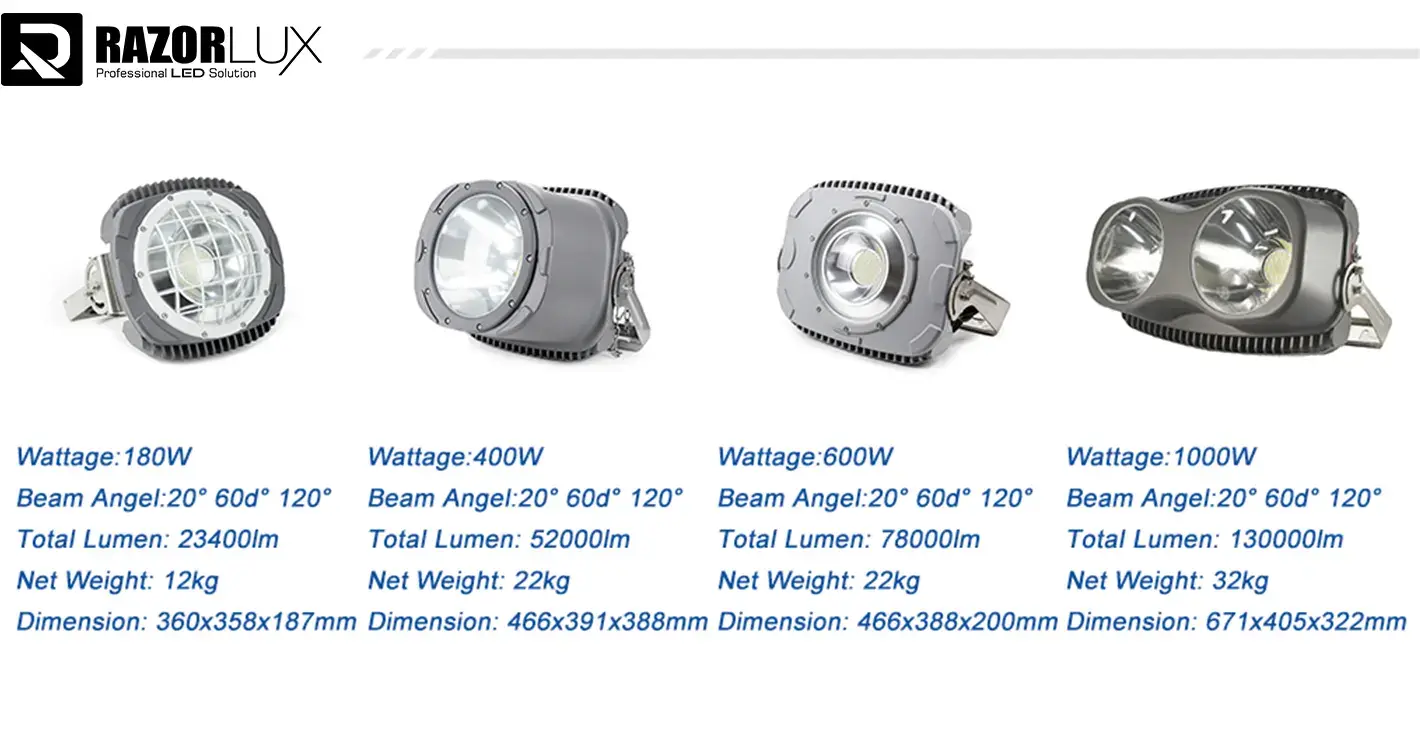
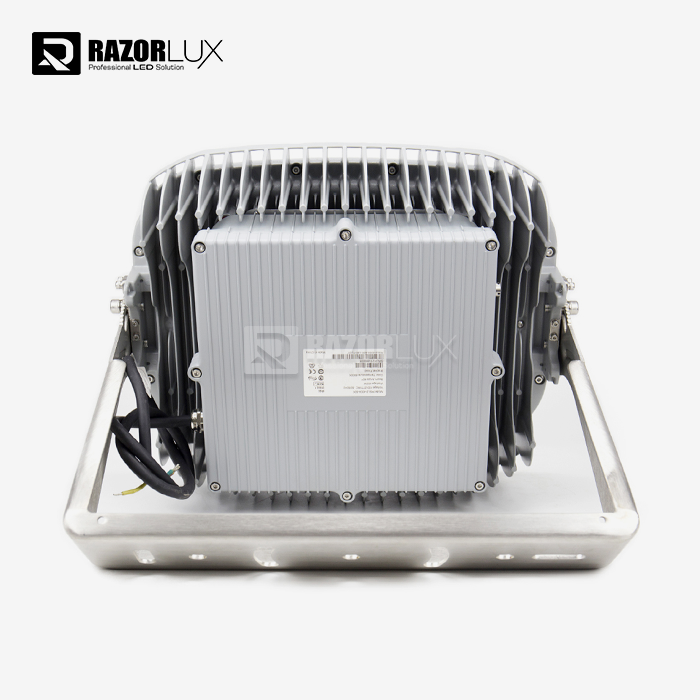
The Razorlux RGL-1000A was made with cutting-edge Construction Site Flood Lights technology so it could handle the tough needs of large building projects and heavy warehouse tasks. This high-end model takes the place of regular 2200–2500W HID lamps and gives off a steady 130,000 lumens of light at an amazing 130 lumens per watt. It only needs 1000W of power altogether. Our original multi-function design can be used in a lot of different mounting settings. From 80V to 305V AC for grid use, between 100V and 400V DC, and from 500V to 800V DC for green energy or building special industrial power systems, the fixture can take a very wide range of voltages. This gives you the freedom to not worry about how well it will work with different electricity systems in a place. The RGL-1000A is also not like other floodlights because it can change the position of its beam. The people who are in charge of getting things can pick from 40°, 60°, 120°, or asymmetric 140°x60° beam designs. This way, they don't have to buy a lot of different types of lamps to get the best light spread for each site plot. It can be changed from 2700K to 6500K, which means it can be used for a variety of jobs. It can be set to either warm ambient lighting or bright lighting that looks like daylight.
Uncompromising Durability and Protection
When lighting equipment is used on construction sites, it is constantly hit by water, dust, shocks, and temperatures that are very high and very low. Everything above is taken care of by strong security tools in the RGL-1000A. The basic level of entry protection is IP65, and you can get IP67 upgrades for places that need to be watertight. Aluminium is used to make the frame, and a powder finish keeps it from rusting. Straps made of stainless steel keep the structure strong even when it's moving and carrying big things. IK10 impact resistance is the best level. It keeps things from getting hit by tools, materials, or equipment by accident. Devices can work effectively in temperatures from -40°C to 60°C and humidity levels from 10% to 95% thanks to thermal management engineering. Without using mechanical fans, the LED junctions stay at the right temperature thanks to passive cooling from well-designed aluminium heat sinks. This gets rid of places where things often go wrong and makes maintenance easier. The RGL-1000A is well-built and easy to use, and it only weighs 30 kilos. Its 671mm x 405mm x 379mm size gives it a lot of surface area for transferring heat while still being a reasonable size for installing in tight spots or up high.
Superior Components and Reliability
We know that how long they last and how much they cost to own depend on the quality of the parts. Power sources made by Meanwell are used only in the RGL-1000A. These sources are known all over the world for being very stable and efficient. It is above 0.98 for the power factor and below 10% for the total harmonic distortion with these motors. This protects the electricity and keeps sensitive site gear from being harmed. Our LED modules come with Colour Rendering Index scores of Ra≥75 out of the box. We also have Ra-80 and Ra-90 options for uses that need colours that are even more accurate. You can use this skill to correctly judge the colours of things, read safety signs, and do quality control checks when there is artificial light around.Several foreign certificates show that we truly care about quality and safety. CE, RoHS, SAA, C-Tick, UL, DLC, CB, and ISO:9001 have all approved the RGL-1000A. This makes it easier to buy on international markets and makes sure it follows the rules for electricity and the environment in that country. We're sure that our goods will last, so we back them up with a guarantee that covers the housing for ten years and the LED modules and drivers for five years. This level of safety is much higher than what the industry needs. It gives buying managers peace of mind about the long-term value and holds producers responsible.
Procurement and Supplier Insights for Construction Site Flood Lights
Evaluating Total Cost of Ownership
You look at more than just the original buy price when you make a smart shopping choice. You also look at the costs over the whole life process. Premium Construction Site Flood Lights are more expensive than cheaper ones at first, but they usually pay for themselves in the first year because they work better and last longer. The energy that building lights use is their highest long-term cost. To get an idea of how much it costs to run each year, multiply the fixture's power by the number of hours it is on and the local energy rate. 4380 kWh are used by a 1000W LED lamp that is on all day. At $0.12 per kWh, a year's worth of electricity costs $526. A 2500W metal halide lamp that is similar would use 10,950 kWh and cost $1,314 a year. This is a $788 difference per light that makes LED technology better. Keep-up costs add up over the life of a job. Every 6,000 to 15,000 hours, metal halide and halogen lights need to be changed. This costs money for the parts and the technician's time and money. These costs are gone with LED floodlights that last 50,000 hours, which is great for features that are hard to get to.
Supplier Selection Criteria
Manufacturing Capabilities and Quality Control: Well-known businesses with full quality management systems, or at least ISO:9001 approval, show that they are committed to keeping production standards high. Find out where to get the parts, especially the important ones like power sources and LED chips. People who make good products choose brand-name parts over generic ones. Examples of these are Samsung LEDs and Meanwell drivers. Technical Documentation and Certifications: Full technical details, photometric data, and test reports from a third party help engineers compare and review products. Safe and eco-friendly standards are met with international licenses like UL, DLC, CE, and RoHS. This cuts down on the chance of being responsible and speeds up the approval process. Customization and OEM Capabilities: For big projects, it's often best to have choices that are made to fit the needs of the place. Standard stock goods can be made more valuable by adding custom beam angles, fastening tools, or built-in controls, among other things. Suppliers who offer modification services can do this. Responsive Customer Support: If you have technical questions or issues after installation, you need quick answers from experts. Check to see how well the seller communicates when you first ask about the sale. A lot of the time, how quickly and thoroughly they answer your questions before the sale is a good sign of how well they will help you after the sale. Ask for references from people who have worked on projects of the same size and type in the past.
Sample Testing and Validation
Construction Site Flood Lights: Before you buy a lot of something, ask for test units to see how the technology works in real life. When you try a sample, you can see if what the maker says about brightness, picture quality, durability, and build quality is true. Your tech team can check to see how simple it is to set up, if the beam pattern is right, and if it works with the mounting hardware you already have. Measure the light levels at different distances and directions to see how well the sample works in real life. When you measure performance, compare it to what the manufacturer says it should be and to similar products. When the faucets are used for a long time, pay close attention to how they handle heat. That's a sign of bad thermal management if the lights lose their shine or get too hot inside.
Installation, Maintenance, and Safety Best Practices
Professional Installation Guidelines
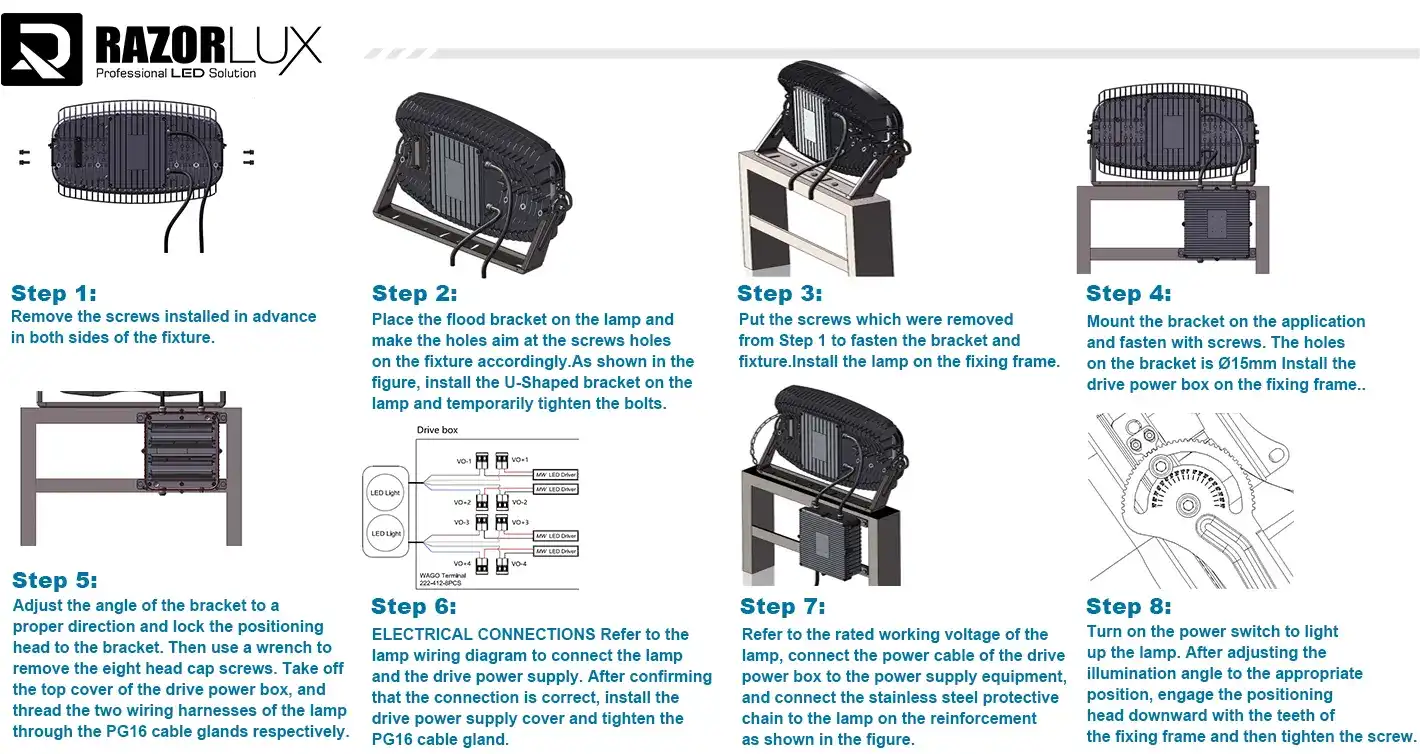
When fixtures are put in the right way, they work better, last longer, and are safer. Project managers can help make sure the work is done well by learning about the best ways to put things. Only experienced plumbers should do electrical work. Hardware from the maker that is made for the way of installation, like bracket attachment, pole mounting, or yoke mounting, should be used to firmly attach fixtures. It is important to make sure that the surfaces that hold the fixture can handle its weight as well as the wind loads that are expected. When used outside, hardware made of stainless steel is more resistant to rust than hardware made of anodised steel. Make sure the lights are pointed correctly so that they give off even light without any glare or light that gets in the way. People who make these things will give you aiming tools that you can use to find the right amount of beam overlap for even coverage. Most of the time, mounting heights of 6 to 12 meters are enough to light up building sites. However, the exact requirements rely on the site's plan and beam angle.
Preventive Maintenance Schedules
Set up regular times to fix things based on where they are and how often they are used. Places near dusty areas or the coast need to be checked on more often than places that are supposed to be safe. As part of the monthly check, you look for damage, make sure the lens is clean, and make sure the mount is in place securely. Clear glasses and reflections can be cleaned best with mild soaps and soft microfibre cloths. Don't use rough things that can scratch protected layers. Every three months, you should check the electricity to make sure that all the connections are tight, that the wires aren't broken, and that the GFCIs are working. If any of the waterproof covers or gaskets are worn out, you should repair them. Keep track of all the repair work you do so you can find problems or trends that emerge over time.
Safety Protocol Implementation
When it comes to building sites, lighting is very important for worker safety, so it's important that it's well taken care of and works well. Make sure there are rules for safety and that the lighting systems get the care they need during the job. Install backup lights or lights that can be moved in key work areas so that they can be used right away if the main systems go down. When things go wrong, keep spare fixtures and important replacement parts on-site to cut down on downtime as much as possible. Teach people on the job site how to find and report bad lighting right away. Something might be wrong if an electrical fixture flickers, dims, or stops working at all. It should be fixed right away. To fix lighting issues or add more light as needed, get workers to talk about where they think there isn't enough light.
Conclusion
You should think about how well the Construction Site Flood Lights work technically, how long they last, how much energy they use, and how much they cost altogether. With new LED lighting technology, older lighting systems are much less useful because it is less efficient, don't last as long, and need more maintenance. These pros can be seen in the Razorlux RGL-1000A, which is well-made and has a wide range of specs that make it useful for many tasks. If procurement managers carefully compare technical specs, look at all of their lighting needs, and work with reputable providers who offer high-quality goods and reliable support, they can find lighting solutions that improve safety, productivity, and project outcomes.
FAQ
What are the main advantages of LED Construction Site Flood Lights over halogen alternatives?
Halogen lamps use 5 to 10 times more energy than LED Construction Site Flood Lights. This means that LED floodlights use a lot less generator fuel and cost a lot less to run. Halogen lights only last about 2,000 hours, while LED lights last 50,000 hours or more. This means that LEDs don't need to be changed out as often and don't need as much upkeep. Also, LED technology works at much lower surface temperatures, so there is no chance of getting burnt, and there is a lower chance of fires on construction sites where materials can catch fire.
How do I determine the appropriate lumen output for my construction site?
How bright it needs to be depends on what's being done. For most building jobs, 10 to 20 foot-candles (100 to 200 lux) is enough light. But 50 foot-candles or more might be needed for precise work like finishing or setting up electrical wiring. To find out how many fixtures you need, multiply the square meters by the number of lux levels that you need and then divide by the number of lumens that each fixture puts out and its utilisation factor, which is usually between 0.7 and 0.8 to account for light loss and spread.
What maintenance intervals do LED construction floodlights require?
LED floodlights don't need as much maintenance as other kinds of lights. The best light output is achieved by cleaning the lenses once a month. Every three months, electrical checks are done to make sure that the connections are strong and the waterproof seal is in good shape. Most of the time, LED modules don't need any maintenance for years. On the other hand, halogen or metal halide lamps always need new bulbs. To get the most out of the rated 50,000-hour life span, keep the fixtures clean, the connections tight, and the safety plugs whole.
Partner with Razorlux for Superior Construction Lighting Solutions
People at Xi'an Razorlux Optoelectronic Technology Co., Ltd. have worked with LED lights for over twenty years and can help you with your next project. Because we are a dependable company that makes Construction Site Flood Lights, we come up with solutions that work well and are always there for you. The UL, DLC, CE, and RoHS certifications, along with a five-year warranty, make our RGL-1000A a great choice. It gives off 130,000 lumens at 130 lm/W. We help people who work in procurement with every part of a project, from giving them expert advice and making custom models to buying in bulk and giving them quick service after the sale. Get in touch with us at sam@razorlux.com to discuss your specific needs and learn why leaders in the marine, offshore, and heavy industrial sectors trust Razorlux for their most demanding lighting applications.
References
1. Chen, M. & Roberts, K. (2022). LED Lighting Technology in Industrial Applications: Performance Analysis and Economic Impact. International Journal of Construction Safety Engineering, 18(3), 145-167.
2. Industrial Safety Council. (2023). Lighting Requirements for Construction Sites: Compliance Standards and Best Practices. Washington, DC: National Safety Publications.
3. Morrison, T., Zhang, Y., & Patel, S. (2021). Energy Efficiency in Temporary Construction Lighting: Comparative Study of LED and Conventional Technologies. Journal of Building Services Engineering, 42(2), 89-104.
4. Patterson, R. (2023). Heavy-Duty Lighting Systems: Design, Installation, and Maintenance for Harsh Environments. New York: Technical Press International.
5. World Construction Safety Association. (2022). Illumination Standards for Large-Scale Building Projects: Global Guidelines and Regional Variations. Geneva: WCSA Publications.
6. Yamamoto, H., Schmidt, D., & Brown, L. (2021). Total Cost of Ownership Analysis for Industrial Lighting Systems. Construction Equipment and Technology Quarterly, 29(4), 213-231.
 VIEW MOREworkshop light fixtures
 VIEW MOREbest stadium lights
 VIEW MOREled sport court lighting
 VIEW MOREoutdoor led tennis court lighting
 VIEW MOREIndustrial Flood Lights Led
 VIEW MOREMarine Led Flood Lights
 VIEW MORE80ra LED Outdoor Sports Lighting Football Pitches 52000lm 400W Portable Stadium
 VIEW MORELed Bay Lighting Warehouse