


_1750326878398.png)

Are LED Area Flood Lights Suitable for Industrial Use?
Without a doubt, LED area flood lights are a great choice for commercial settings. When we look at lighting for shipyards, offshore platforms, manufacturing facilities, and other heavy-duty uses, these fixtures always meet all the important criteria: they last a long time in harsh conditions, use less energy than 130 lm/W, and don't need to be replaced as often, which means they last longer between maintenance cycles. Modern industrial flood lights are built to resist salt spray, high temperatures, shaking, and toxic environments. They have security grades of IP67 and IK10 and are certified by CE, UL, DLC, and DNV/GL. LED technology is the best choice for buying managers looking for long-term value in tough working settings because it performs well, is reliable, and doesn't cost a lot.
Understanding LED Area Flood Lights for Industrial Applications
How Semiconductor Technology Powers Industrial Lighting
LED technology is very different from other types of lighting because it uses semiconductor diodes to turn electricity straight into photons. This solid-state method gets rid of flimsy filaments and gas-filled tanks, making a strong answer that can handle shock, vibration, and the frequent switching cycles that are common in industrial settings. Because there are no warm-up periods, there is instant illumination, which is important for safety in shipyards and factories where being able to see right away keeps accidents from happening. We've been making lighting systems for over 20 years and have seen that the design of the thermal management directly affects how long they last. ADC12 die-cast aluminum housings are used in high-quality lights. They effectively remove heat from LED chips and drivers, keeping junction temperatures at the best level even in temperatures ranging from -40°C to +60°C.
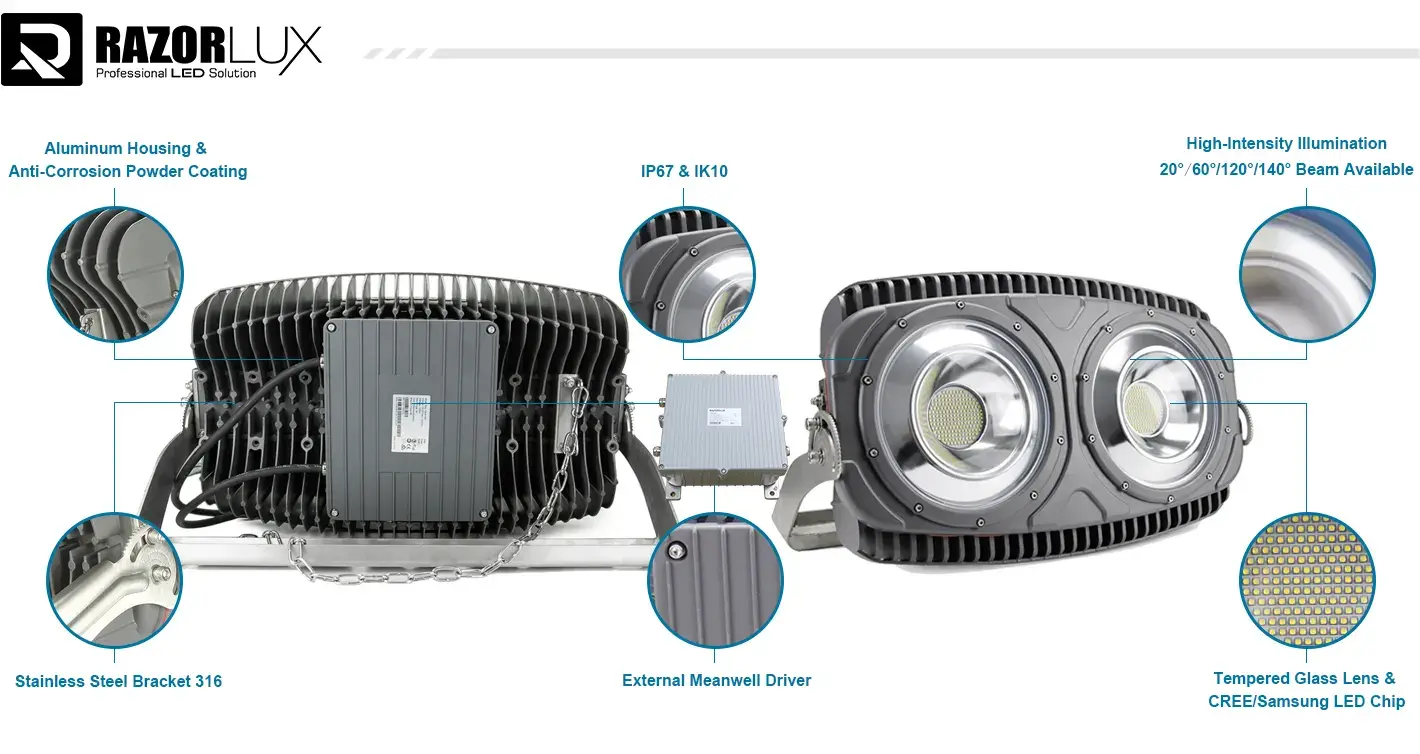
Core Components That Define Performance
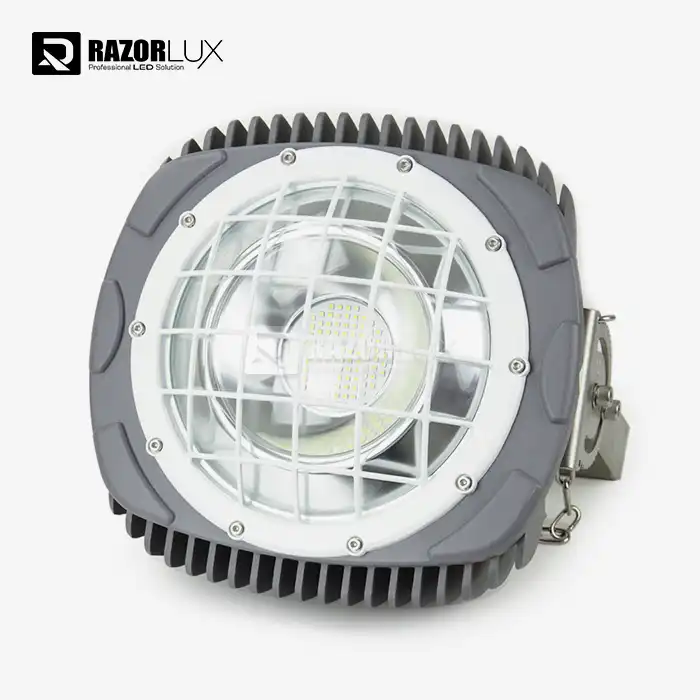
Professional-grade industrial flood lights are made up of several separate units that work together. The light source is made of Samsung or Philips LED chips, which provide uniform color rendering (CRI >75), which is important for quality control checks and careful assembly work. Mean Well drivers precisely control the flow of power with a constant current, keeping parts safe from voltage changes and increasing their lifespan. Impact-resistant fused glass lenses direct light with precise beam angles, ranging from 15° spots for high-mast uses to 120° spreads for area coverage. Marine settings don't rust the mounting frames made of stainless steel, and gasket seals with an IP67 rating keep water out, which would compromise electrical safety.
Advantages Over Traditional Lighting Technologies
When you compare LED options to metal halide or high-pressure sodium systems, you can see right away how much better they work. The amount of energy used drops by 60–75% while the brightness of light increases. A 1000W LED fixture with 130,000 lumens can replace a 1500W metal halide system, which lowers both electricity costs and building temperatures. LED systems also last a lot longer between maintenance cycles—after 50,000 hours of use, they still produce 70% of their initial output, while traditional sources only last 10,000 to 15,000 hours. This means fewer replacements, lower labor costs, and fewer breaks in production in factories that are open 24 hours a day, seven days a week. Getting rid of mercury and other dangerous materials also has a big positive effect on the environment. Using less energy also lowers carbon footprints, which is becoming more and more important for companies that want to meet their sustainability goals.
Performance Metrics and Selection Criteria for Industrial LED Flood Lights
Wattage and Lumen Requirements by Application
To choose the right lighting levels, you need to know both the size of the place and the visual tasks that will be done. For safe travel and inventory management, warehouses and storage facilities usually need 10 to 20 foot-candles (100 to 200 lux). This can be done with 200 to 400W lights placed 30 to 40 meters apart. For manufacturing floors with careful assembly, you need 30 to 50 foot-candles, which means placing 400 to 600W units closer together. For outdoor yards, loading docks, and exterior security, 600 to 1000W high-output lights placed on poles or building surfaces work best. Razorlux's unique multi-function design works with power ranges from 90W to 1200W. This lets procurement managers choose the exact output they need without wasting energy on too many or too few lights, which could be dangerous.
| Application Type | Recommended Lux Level | Typical Wattage Range | Mounting Height |
|---|---|---|---|
| Warehouse Storage | 100-200 lux | 200-400W | 6-10 meters |
| Manufacturing Assembly | 300-500 lux | 400-600W | 4-8 meters |
| Shipyard Decks | 200-300 lux | 500-800W | 8-15 meters |
| Port Container Yards | 150-250 lux | 600-1000W | 15-30 meters |
| Offshore Platforms | 250-400 lux | 800-1200W | 10-25 meters |
Color Temperature Impact on Productivity
LED area flood lights: The correlated color temperature (CCT) of workplace lighting has an impact on both how comfortable workers are and how well they can see. Cooler temperatures (5000–6500K) give off clear, daylight-like light that makes you more aware and better able to tell colors apart. This makes it perfect for quality control units and other places that need close attention to detail. Warmer temps (2700K–4000K) make it easier to see during long shifts while still letting you see what you're doing. Our lights can be set to any color temperature between 2700K and 6500K, so sites can get the best lighting for each area. In maintenance areas, uniform white 4000K might be used, while 5000K is better for camera performance around security perimeters. This adaptability makes sure that choices about buying are in line with practical needs and don't force sacrifices.
Durability Standards for Harsh Environments
Protection scores show how well an object can handle problems in the surroundings. The IP code is made up of two numbers. The first number tells you how resistant the material is to solid particles, and the second number tells you how resistant it is to moisture. The IP67 rating means that the product is completely dust-tight and can withstand temporary submersion up to one meter. This is very important in shipyards and offshore installations where wave action and wash-down procedures happen all the time. The IK rating scale shows how resistant something is to impact energy. IK10 means that the product can withstand 20 joules of impact energy, which is the same as a 5 kg mass being dropped from 400 mm. This amount of safety keeps people from getting hurt when tools are dropped, when a crane is used, or when they accidentally hit moving equipment that is common in industrial settings.
Real-World Performance Case Studies
A Norwegian shipbuilder recently switched from 400W metal halide lights to 600W LED area lights for their dry docks. The new lights provide 40% more even lighting while using 65% less energy. Welders could see joint preparation better because the colors were shown more accurately, which cut the number of defects by 18%. The fixtures have been working nonstop for three years, even when it was -25°C outside, and have never broken down. In the same way, an Australian port put 1000W LED high-mast lights with a 130 lm/W efficiency rating across their container storage yard. Because of the project, they saved $47,000 a year on power costs and didn't have to maintain their old high-pressure sodium system every month. Dock workers said they could see a lot better during the night shifts, which helped cut down on accidents involving goods by 22%.
Installation, Maintenance, and Energy Efficiency Considerations
Professional Installation Practices for Industrial Environments
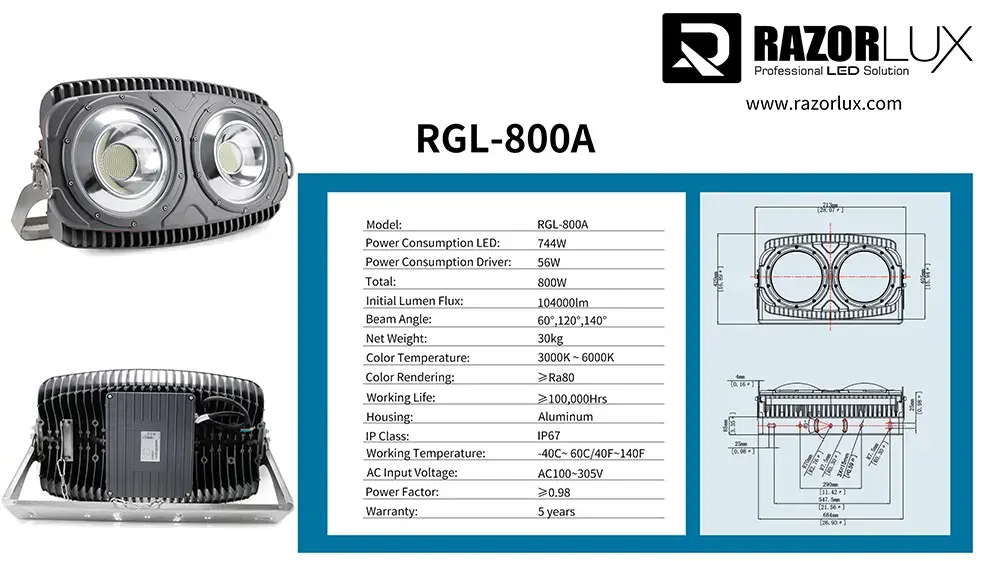
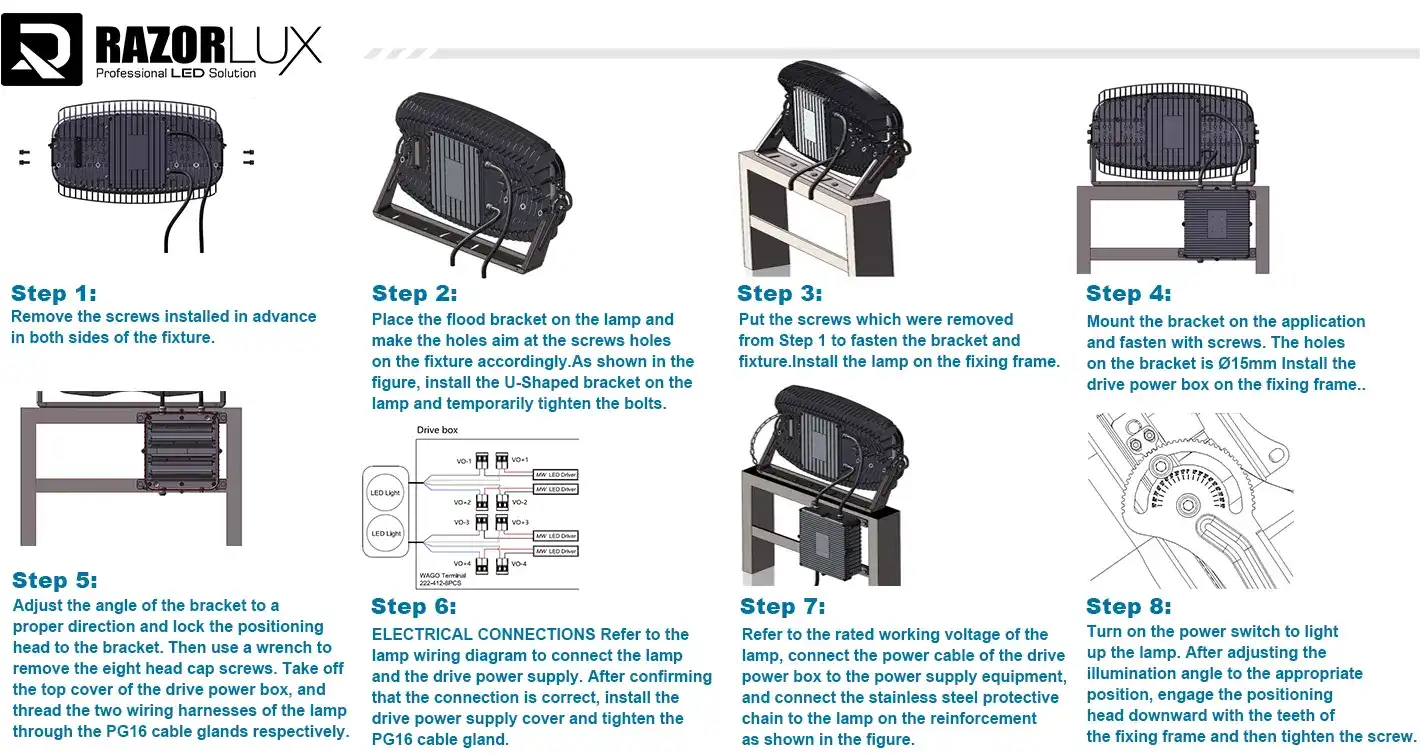
The best light spread and long-term mechanical safety are both guaranteed by proper placement. Before they can be installed, heavy-duty fixtures like our RGL-1000A type that weigh 32 kg need to be structurally evaluated. The mounting surfaces must be able to handle static loads as well as dynamic forces from wind, shaking, and heat expansion. Stainless steel clamps don't rust and let you change the angle from 0° to 90° for accurate shooting. When connecting electrical devices, you need to make sure that the power is compatible and that you are protected against spikes. Our lights can work with a lot of different voltages (AC90-305V, DC127-431V), which makes them easier to integrate into different types of electrical systems without the need for separate transformers. Putting in surge protection devices with a 10kV line-to-ground rating protects against lightning hits and grid switching transients that could damage sensitive driver electronics. Cable entry points can be failure causes if they are not properly sealed. Professional setups use marine-grade cable glands with compression seals. Threads are sealed with silicone before they are tightened to the required torque values. This attention to detail stops the moisture from getting in, which is what breaks 60% of fixtures too soon in tough settings.
Strategies to Maximize Energy Savings
In addition to the effectiveness of LED technology itself, there are a number of system-level methods that can help save even more energy. In many industrial settings, smart controls like access monitors, sun harvesting photocells, and networked lighting systems cut down on working hours by 30 to 40 percent. When there isn't much action in a building, motion-activated lights that run at 30% output use 70% less energy than lights that stay on full power all the time. Choosing lights with better efficiency ratings has a direct effect on running costs. The difference between 110 lm/W and 130 lm/W means that 15% less electricity is used for the same amount of light output. This is a big savings when you think about how many fixtures are used over decades. When looking at LED flood light providers, this feature should be given a lot of weight. Scheduling dimmer settings to match operating trends can save even more money. In factories with three shifts, the lights might be set to 100% output during production hours, 70% output during cleaning and repair windows, and 40% output during times when security isn't being closely watched. For these changes to work, the lights need to have good drivers that can dim smoothly and without flickering across a wide range of levels without shortening their life.
Maintenance Best Practices and Warranty Leverage
LED area flood lights: Regular checks find possible problems before they become problems or safety risks. Checking the lens's soundness, fitting security, and the lack of rust or damage should be done every three months. Cleaning off dirt and salt deposits that have built up over the year (which can lower light output by up to 30%), making sure gasket seals are still flexible, and using thermal imaging to find overheating parts that mean the driver is about to fail are all parts of yearly detailed inspections. Buying from companies that offer full warranties protects procurement investments. Our guarantee covers both parts and work for five years, and we offer expert support to help with problems and give advice. When procurement managers choose parts, they should make sure that the guarantee terms cover the specific area where they will be used. For example, some makers don't cover naval or high-vibration installs by default. Good documentation practices help with warranty claims and planning for upkeep. By keeping track of installation dates, working hours, and maintenance tasks, you can show that you're following the manufacturer's instructions and find trends that can help you make future purchases. Computerized repair management systems keep track of this information automatically for buildings that have a lot of lights.
Comparing Market Options: Choosing the Right LED Flood Lights, Supplier
Budget-Friendly vs. Premium Solutions
Price changes between LED industrial lighting goods are caused by differences in the quality of the parts, the level of technical rigor, and the standards of manufacturing. Budget lights that cost 40–50% less often use common LED chips with uneven binning, which causes color differences between lamps and faster brightness loss. Lower-quality drivers might work at first, but they'll break down quickly if the voltage changes or the temperature gets too high or too low. Premium options use parts from well-known companies, like LEDs from Samsung or Philips or drivers from Mean Well or a similar company, and they come with full testing documents. The higher original cost is usually covered by the energy savings that last 18 to 24 months. After that, the higher efficiency and longer lives make the investment worthwhile. When lighting fails in important places where safety is at risk or production is lost, premium specs are the smart way to handle the risk. Razorlux puts its goods in the premium category by integrating them vertically. Our research and development labs come up with unique optical designs and heat management solutions that are covered by more than 400 patents. Our ISO 9001-certified manufacturing processes make sure that the quality of each production run is the same. This mix gives buying managers faith in the stability they can define.
Supplier Credentials and Certification Verification
Manufacturers with a good reputation provide a lot of approval paperwork that shows they meet area safety and performance standards. In North America, products must be listed with UL or ETL; in Europe, they must be marked with CE and follow the LVD and EMC guidelines, and in naval settings they must be approved by DNV/GL or ABS. Instead of accepting "testing in progress" claims, procurement specifications should clearly require these certifications. In addition to product certifications, supplier credentials such as ISO 9001 quality management and environmental certifications (ISO 14001, RoHS compliance) show that an organization is committed to consistent processes. Companies with government-backed research designations, like our Xi'an LED Lighting Engineering Laboratory, which is approved by China's National Development and Reform Commission, show technical skills that go beyond basic manufacturing. Customer feedback gives us useful information about how the products work after they've been sold. Online reviews are helpful, but getting information directly from people who have worked in similar situations is more accurate. To make sure that promises about performance, reliability, and service timeliness are true, ask possible providers for contacts at facilities that match your needs. For example, dock managers can talk to references from other shipyards, and port operators can talk to references from other port operators.
Procurement Channel Optimization
| Procurement Method | Typical Order Size | Price Range | Lead Time | Best Use Case |
|---|---|---|---|---|
| Direct Manufacturer | 50+ units | Lowest | 4-8 weeks | New construction, major retrofits |
| Authorized Distributor | 10-100 units | Moderate | 2-4 weeks | Maintenance stock, phased projects |
| Online B2B Platforms | 1-50 units | Variable | 3-6 weeks | Pilot testing, emergency replacement |
| Local Electrical Supply | 1-10 units | Highest | Immediate | Emergency repairs, small upgrades |
Direct manufacturer relationships offer maximum cost efficiency for substantial projects while providing access to engineering support for custom solutions. Distributors add value through local inventory, faster delivery for urgent needs, and established service networks. Online B2B platforms facilitate comparison shopping and provide transaction protections, though verifying seller authenticity requires diligence. Understanding shipping terms prevents unexpected costs and delays. FOB (Free On Board) pricing requires buyers to arrange and pay for shipping from the origin port, while DDP (Delivered Duty Paid) includes all costs to the destination. For heavy industrial fixtures, shipping expenses can reach 15-25% of product cost, making this a significant procurement consideration. At Razorlux, we offer flexible shipping options including express delivery (3-7 days), air freight (5-10 days), rail transport (18-22 days), and sea freight (15-50 days), allowing procurement managers to balance urgency against logistics costs.
Negotiating Volume Discounts and Contract Terms
Large lighting projects allow for negotiations above and beyond stated prices. Manufacturers usually give discounts in levels, starting with 50 units and going down to 100, 250, and 500 units or more. Long-term framework deals that cover multiple projects over two to three years get better prices and make sure there is enough supply when the market is short. Payment terms affect how much money the project makes and how risk is distributed. Standard terms are a 30% fee, and the remaining 70% must be paid before the shipment. For repeat customers, scheduled payments that match project goals can be arranged. When building new relationships with suppliers, letter of credit agreements offer protection for both parties, but fees add 1% to 3% to the transaction costs. Warranty extensions beyond standard terms show trust in the maker while lowering buyer risk. Some sellers offer longer guarantees (7–10 years) for an extra fee. This is useful for setups where getting to the parts for fixes is hard or costs a lot of money. Making sure that the guarantee covers on-site expert help as well as new parts will keep you from having to pay for service costs you didn't expect.
Key Technical Specifications for Procurement Decision-Making
Understanding Input Voltage Flexibility
LED area flood lights: Depending on where they are and what they are used for, industrial buildings use different types of electricity systems. Three-phase power at 120V, 208V, 240V, or 480V is common in North American plants. In foreign sites, voltages of 230V, 400V, or special voltages for ocean platforms may be used. Fixtures that can handle a wide range of voltages (AC90–305V) eliminate compatibility issues and make design easier for companies with multiple sites. The ability to handle DC voltages increases the number of applications that can be used. DC power systems with voltages between 12V and 480V are often used in ships, mobile tools, and backup power systems. Our devices that accept DC127-431V input work perfectly in these settings without the need for inverters, which are more expensive, harder to use, and could break down at any time.
Beam Angle Selection for Coverage Optimization
Optical engineering studies how light moves across a target area. Narrow beam angles (15–30°) focus light into patterns that work well for high-mast lighting from 20 to 40 meters above. Medium beams (40° to 60°) are good for general area lighting from 8 to 15 meters above ground, while wide distributions (120° or asymmetric 140°x60°) are good for wall-washing and perimeter coverage. Choosing the right optics keeps areas nearby from getting too much light, which can cause light pollution and complaints from nearby properties. It also makes sure that there is enough light where it's needed—not stating beam width leaves dark areas that put safety and security at risk. Professional lighting makers offer photometric files (IES format) that let designers use software to model coverage before buying, which takes the guessing out of the specification process.
Weight Considerations for Structural Planning
Heavy-duty lights that are both strong and useful often weigh a lot. For example, our 1000W type weighs 32 kg. This means that mounting systems need to be looked at by engineers, especially for setups that are pole-mounted or hung from the roof. To make sure that poles and frames can withstand local storms, wind loading estimates must take into account the fixture's surface area and weight. Heavier fixtures usually mean that they are built more solidly, with better heat dissipation and longer-lasting casings. But too much weight makes fitting harder and adds extra structural needs that aren't necessary. High-strength aluminum metals offer good stiffness and heat performance at an acceptable weight. Stainless steel is only used for braces and tools that need to be highly resistant to rust.
Global Applications Across Industrial Sectors
Maritime and Shipyard Environments
Some of the toughest lighting conditions can be found in shipbuilding and repair shops. Salt spray speeds up rust, welding exposes you to high temperatures and UV rays, using a crane increases the risk of shaking and impact, and strict safety rules are enforced by vessel classification societies. Lighting systems must have either DNV/GL or ABS type approval, which shows they are safe for naval use. Deck lighting needs lamps with uneven beam patterns that send light down and forward while reducing glare so the bridge can see. Our fixing clamps are flexible, so you can aim perfectly, and the marine-grade powder finish and IP67 sealing make them resistant to salt spray. Shipyards in Norway, Singapore, and Australia have successfully installed our systems throughout their buildings and reported that they have worked reliably through all four seasons.
Oil and Gas Offshore Platforms
Offshore sites face both problems with the sea climate and the rules for being in a dangerous place. Lighting in areas where dangerous fumes or vapors might be present needs to be certified by ATEX or IECEx as safe for use in explosive atmospheres. Standard fixtures are used in accommodation modules and non-hazardous areas, while explosion-proof versions are used on drilling floors and in processing areas. Because offshore platforms are so far away, reliability is very important. To get to fixtures for maintenance, you need a helicopter and specialized technicians, which costs more than $2,000 per service call. Platforms that work in the North Sea, the Persian Gulf, and the Gulf of Mexico need lighting that works nonstop for three to five years before it needs to be shut down for repair. This operating description guides choices about what to buy, pushing for high-quality parts with full insurance support.
Heavy Manufacturing and Steel Mills
Extreme temperatures (up to 60°C near furnaces), heavy pollution from scaling and dust, and electromagnetic interference from induction equipment are all things that can be found in steel production plants. Fixtures need to have thermal management that can keep them at safe operating temperatures even when the temperature outside is getting close to the safe limits. They also need to be sealed so that conductive metal particles can't get in. High color rendering is important in quality control stations where workers check the finish on surfaces and look for flaws. Color temperatures above 4000K improve sharpness of vision and make eyes less tired after 12-hour shifts. Several steel companies in Southeast Asia and Eastern Europe have replaced their older high-bay lights with our LED options. This has saved them 55–68% on energy costs while also improving the quality of the lighting, which has led to measurable quality changes.
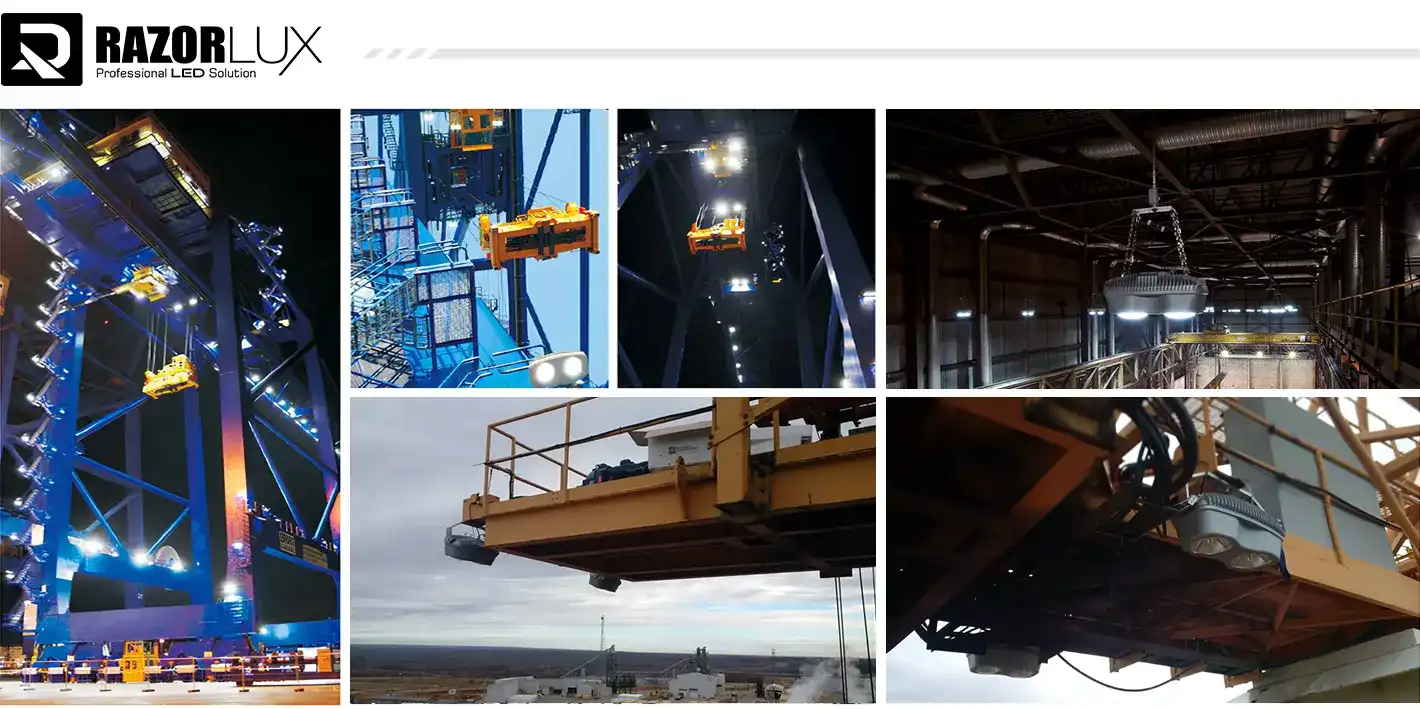
Because cranes and cars are always moving through container ports, the storage yards, entry roads, and loading docks need to be lit up all the time. High-mast lighting puts 600–1000W fixtures at 25–35 meter heights, creating overlapping coverage patterns that get rid of shadows and provide redundancy—if one fixture fails, the units next to it keep the minimum safe lighting levels up until the problem is fixed. Ports in Dubai, Rotterdam, and Melbourne have updated their lighting systems with LED systems and are reporting great results. The amount of energy used went down by 60–70%, repair visits went from once a month to once a year, and better light quality made security cameras for automatic container tracking systems work better. These case studies give buying managers strong evidence to use when they are thinking about similar changes.
Conclusion
LED area flood lights have shown that they are suitable for industrial use by performing better in all important metrics. Operating costs are cut by 60–75% compared to older systems, with energy efficiency higher than 130 lm/W, and lifespans of more than 50,000 hours greatly reduce the need for repair and production interruptions. Protection ratings of IP67 and IK10 make sure that the equipment works reliably in harsh conditions like marine environments, extreme temperatures, and heavy industrial settings. When making a purchase decision, it's best to look for suppliers that offer full technical documentation, well-known component brands like Samsung LEDs and Mean Well drivers, and a wide range of certifications such as UL, CE, DNV/GL, and ISO 9001. Because industrial lighting lasts a long time, it is smart to spend more money on high-quality parts at the beginning. This is because they give you a better return on your investment by being more reliable and performing better. With the right specifications and source choice, LED technology can turn industrial lighting from a problem that needs to be fixed over and over again into a strategic advantage that helps meet goals for safety, efficiency, and sustainability.
FAQ
What is the typical lifespan of LED area flood lights in industrial environments?
Professional-grade fixtures typically achieve L70 ratings of 50,000 to 100,000 hours, meaning they maintain at least 70% of initial light output at that operational point. Under typical industrial usage of 12 hours daily, this translates to 11-23 years before replacement becomes necessary. Harsh environments with extreme temperatures, vibration, or corrosive atmospheres may reduce lifespan by 20-30%, but LED technology still vastly outperforms traditional sources. Fixtures using quality components like Mean Well drivers and Samsung chips consistently reach rated lifespans, while budget alternatives may fail prematurely due to inferior driver electronics or inadequate thermal management.
How do LED flood lights perform in extreme weather conditions?
Modern industrial LED fixtures operate reliably across temperature ranges from -40°C to +60°C, covering virtually all outdoor industrial environments globally. IP67-rated sealing prevents moisture ingress during rain, snow, or temporary flooding, while marine-grade powder coating and stainless steel hardware resist corrosion from salt spray. High-wind stability requires proper mounting—fixtures should be secured to structural supports capable of withstanding local wind loads plus fixture weight and surface area. Offshore platforms and Nordic shipyards routinely deploy LED systems that function continuously through winter storms and summer heat without performance degradation or failure.
Are LED area flood lights cost-effective compared to traditional lighting?
LED systems demonstrate clear economic advantages despite higher initial costs. A typical 1000W LED fixture costs 2-3 times more than equivalent metal halide, but consumes 60% less electricity while lasting 5-8 times longer. The total cost of ownership calculation—including purchase price, installation, energy consumption, and maintenance over 10 years—shows LED systems cost 40-55% less. Energy savings alone typically recover the price premium within 18-30 months, with all subsequent savings representing pure cost reduction. For industrial facilities operating lighting 4,000+ hours annually, the financial case for LED technology is compelling.
Partner with Razorlux for Your Industrial Lighting Solutions
Razorlux has specialized in manufacturing LED area flood lights for over 20 years, accumulating deep expertise in marine, offshore, and heavy industrial applications. Our RGL-1000A model exemplifies our commitment to uncompromising quality—featuring Samsung LED chips, Mean Well drivers, IP67/IK10 protection, and 130 lm/W efficiency, backed by comprehensive certifications including UL, DLC, CE, and DNV/GL. As both manufacturer and supplier, we deliver competitive pricing for bulk orders while providing engineering support for custom solutions. Whether you're upgrading a shipyard, offshore platform, steel mill, or port facility, our team understands the technical requirements and procurement challenges you face. contact us at sam@razorlux.com for detailed specifications, photometric analysis, and competitive quotations. We offer flexible shipping options from express delivery to economical sea freight, along with five-year warranty coverage and responsive technical support. Visit razorlux.com to explore our complete product range and discover why procurement managers worldwide trust Razorlux as their LED area flood lights manufacturer for mission-critical industrial lighting projects.
References
1. Illuminating Engineering Society, "Recommended Practice for Lighting Industrial Facilities," IES RP-7-21, New York: IES, 2021.
2. U.S. Department of Energy, "Solid-State Lighting Program: LED Luminaire Lifetime - Recommendations for Testing and Reporting," Third Edition, 2020.
3. International Electrotechnical Commission, "Degrees of Protection Provided by Enclosures (IP Code)," IEC 60529:2013, Geneva: IEC.
4. Det Norske Veritas, "Rules for Classification of Ships - Part 4 Chapter 9: Electrical Installations," DNV-RU-SHIP, 2022.
5. American Bureau of Shipping, "Guide for Lighting and Signals Systems," ABS, Houston, 2019.
6. International Association of Ports and Harbors, "Sustainability Best Practices for Container Terminals: Energy Efficiency and Carbon Footprint Reduction," IAPH Technical Report, 2021.
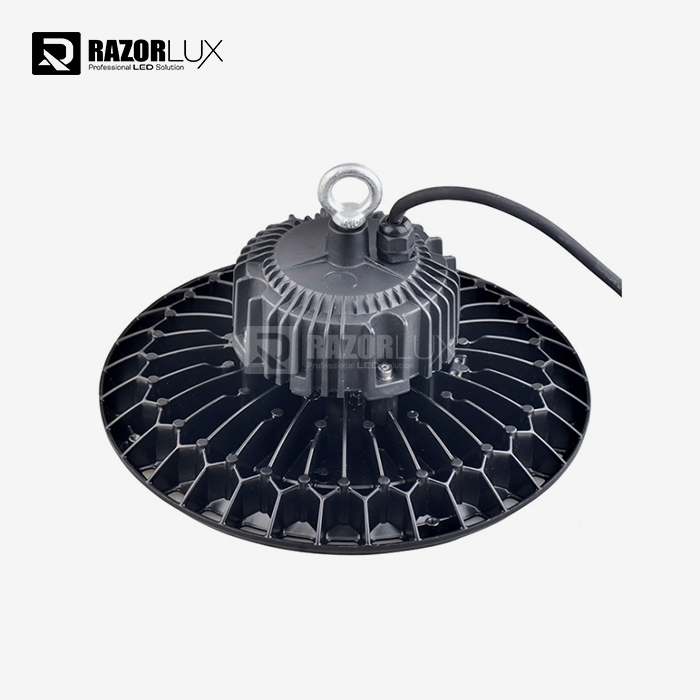 VIEW MOREled lights for garage workshop
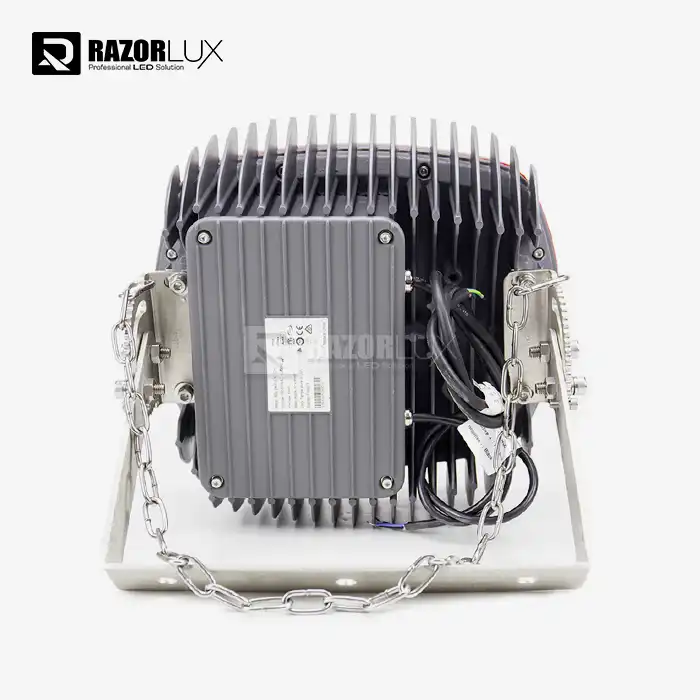 VIEW MORESailboat Deck Lights
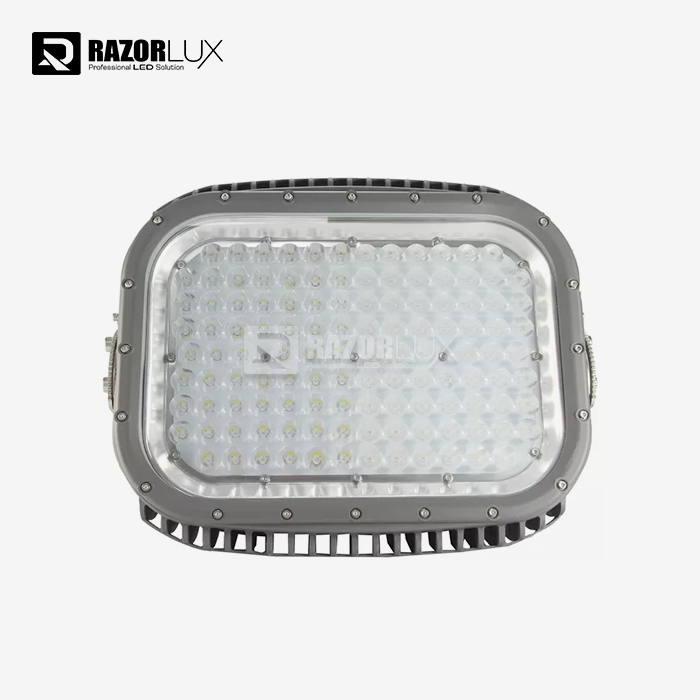 VIEW MORESMD Led Industrial Flood Light 500W 55000 Lm High Power Flood Light
 VIEW MOREHigh Mast Sports Arena Lighting 130lm/W 600 Watt Outdoor Stadium Lighting
 VIEW MORE240W 120lm/W Led Tennis Lights 347V Portable Floodlights
 VIEW MOREEMC 6500K Led Outdoor Sports Lighting Ip67 1200w Led Baseball Field Lights
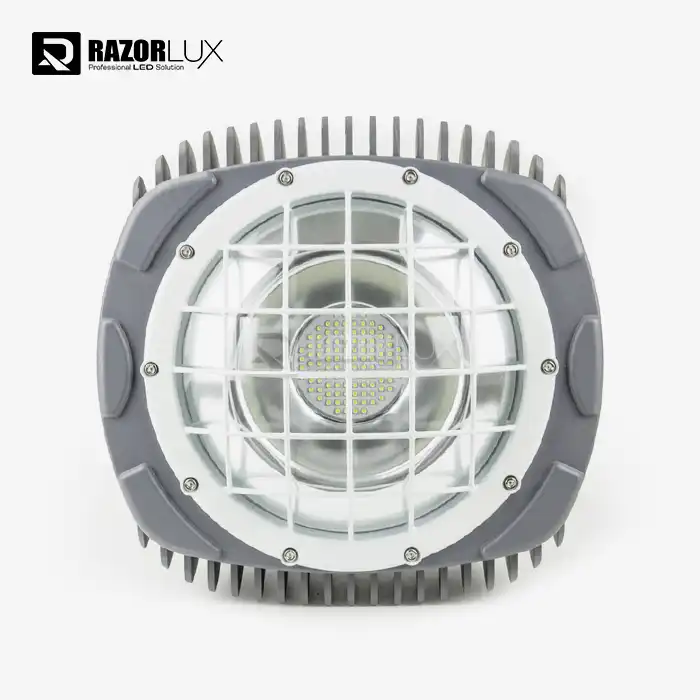 VIEW MOREMast Led
 VIEW MORESingle Head Flood Light