

_1750326878398.png)

What Makes LED Area Flood Lights Ideal for Security Lighting?
As the best security lighting option, LED area flood lights have become the gold standard because they are very bright, use very little energy, and are very reliable in tough conditions. Traditional lighting systems break down often and cost a lot to run. Modern LED flood lighting, on the other hand, can turn on instantly and lasts a long time, which is very important when protecting valuable goods around the clock. These devices make sure that ports, ships, industrial sites, and marine platforms are always visible and safe from security risks. They have high-tech features like IP67 waterproofing, wide-angle coverage, and low upkeep needs.
Understanding LED Area Flood Lights and Their Role in Security
Security lighting demands more than simply illuminating dark spaces. It requires consistent, powerful illumination that deters intruders while enabling surveillance systems to capture clear footage regardless of weather conditions or time of day.
How LED Technology Transforms Security Illumination
LED area flood lights use semiconductor technology to turn electricity straight into light with very little heat loss. This main difference from regular high-intensity discharge (HID) lamps means that the lights are bright right away, without having to warm up first. This is a huge benefit for security events. The solid-state design gets rid of flimsy filaments and glass casings that can break from shaking or contact. This makes them naturally suitable for sea boats, areas with heavy machinery, and installations that are out in the open.


Key Components Driving Reliable Performance
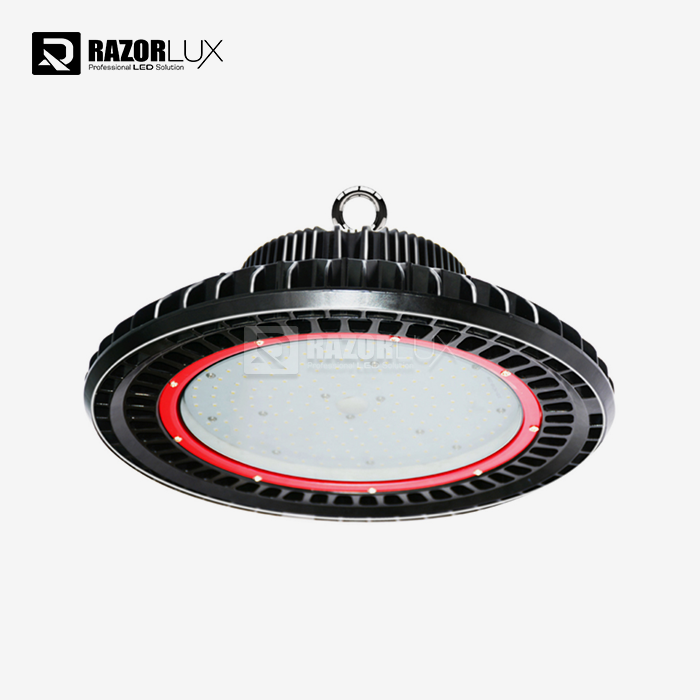
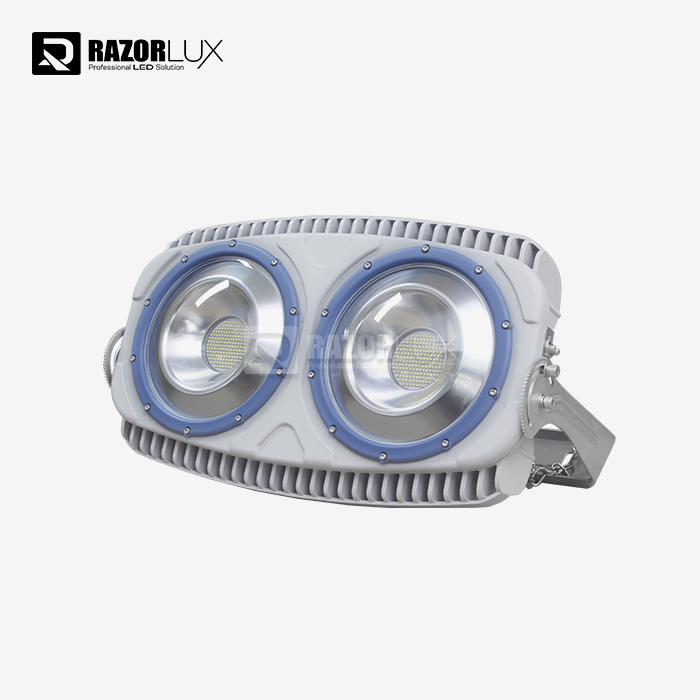
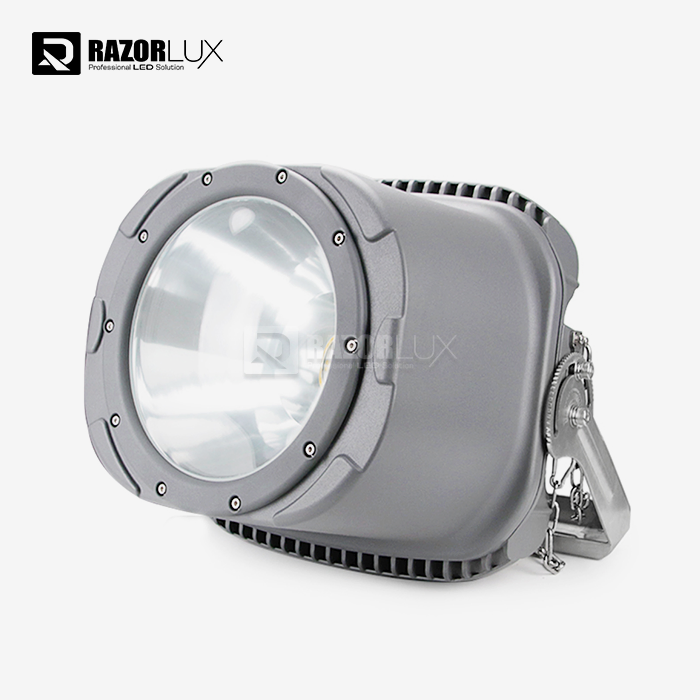
Four built-in parts must work together for security lights to be good. The light comes from Samsung or Philips LED chips, which give off 130 lumens per watt of power. Mean Well drivers control the flow of electricity to stop flickering and damage from voltage surges, which are the main reasons why industrial fixtures fail before they should. Tempered glass lenses focus light distribution and can resist physical contact. Aluminum metal housings with precision-engineered heat sinks remove thermal energy to keep chip temperatures at the right level, even when they are used 24 hours a day.
Why Security Applications Demand Specialized Fixtures
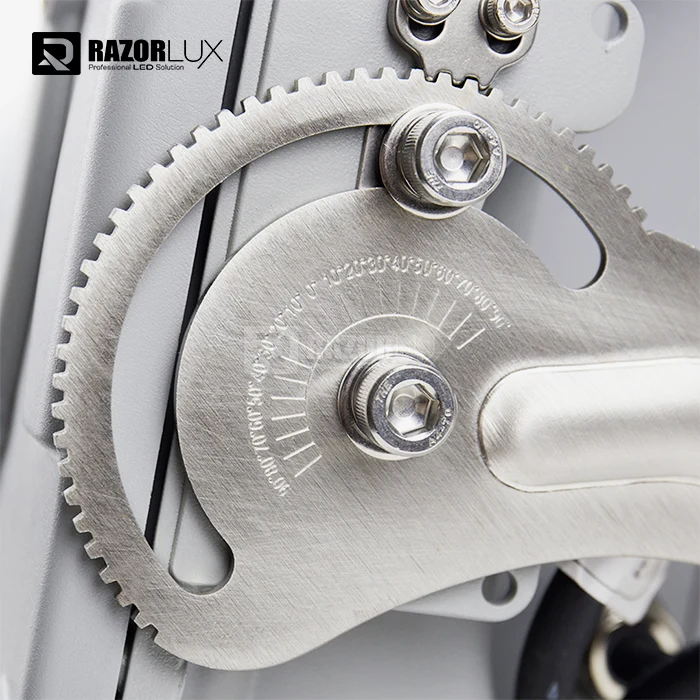
In security situations, generic lighting options don't work because they aren't durable enough for the setting and don't have good enough optics. Security perimeters at military stations, shipping ports, and factories have to deal with rust from salt spray, big changes in temperature, and constant shaking. Razorlux LED area flood lights solve these problems with IK10 impact resistance and IP67 water protection, making sure they work properly when it matters most. The multi-function design, which is trademarked, can be mounted on anything from ship masts to high-bay cranes. This gives installers more options than standard fixtures.
Core Advantages of LED Area Flood Lights for Security Applications
Procurement managers evaluating security lighting investments prioritize return on investment through reduced energy consumption, extended service life, and minimized maintenance interventions. LED technology delivers measurable improvements across all these metrics compared to legacy systems.
Superior Energy Efficiency and Cost Reduction
Metal halide lights use 400 to 1000 watts of power but only produce 75 to 95 lumens per watt. This is very different from LED systems, which can produce 130 lumens per watt or more. This level of speed directly leads to cost savings. By replacing fifty 400-watt metal halide exterior lights with 200-watt LED lights, a port cuts its annual energy use by about 87,600 kWh, which saves more than $8,700 a year at normal industrial power rates. Over the course of five years, the energy savings alone often cover the initial capital investment. This creates positive cash flow that helps with budget approval and project ROI calculations. The wide input voltage range (AC90-305V, DC127-431V) in Razorlux fixtures adds to their value by getting rid of the need for voltage regulation equipment in places with unstable power supplies, which is common at developing-market port facilities and remote offshore platforms. This makes the system more flexible, which lowers both the cost of installation and the number of places where it could go wrong.
Enhanced Coverage Through Optical Engineering
Security effectiveness depends on eliminating dark zones where intrusions can occur undetected. Beam angle options ranging from narrow 15-degree spotlights to wide 140x60-degree asymmetric distributions allow lighting designers to match fixture placement with surveillance camera fields of view. A loading dock might employ 60-degree beams for general area coverage, while a perimeter fence line benefits from 30-degree forward-throw optics that push light 50-60 meters to illuminate potential approach paths.

| Beam Angle | Typical Application | Coverage Pattern | Mounting Height Range |
|---|---|---|---|
| 15°-20° | Long-distance spotting, ship navigation aid | Narrow concentrated beam | 15-40 meters |
| 30°-40° | Perimeter security, fence lines, building facades | Focused forward throw | 10-20 meters |
| 60°-90° | Parking areas, loading zones, and general yard lighting | Wide uniform distribution | 8-15 meters |
| 120°-140° | Close-range coverage, building entrances, dock edges | Extra-wide asymmetric spread | 6-10 meters |
Color temperature selection between 2700K-6500K enables optimization for different security priorities. Cooler 5000K-6500K temperatures produce crisp white light that enhances color recognition in surveillance footage—valuable when identifying vehicle colors or clothing details. Warmer 3000K-4000K outputs reduce visual fatigue for personnel working night shifts while maintaining adequate illumination for motion detection systems.
Exceptional Durability in Harsh Environments
LED area flood lights. Typical lighting fails within months in marine and industrial settings because of the fast-paced aging conditions. Air that is full of salt damages metal housings and electrical connections, and changing temperatures can break protected glasses because they expand and contract too much. Razorlux lights have marine-grade powder finish on aluminum alloy bodies, and the brackets are made of stainless steel, which doesn't rust even in areas where seawater sprays directly on them. The IP67 rating means that dust can't get in, and the fixture can be submerged up to one meter deep. This is important for deck-mounted installations on offshore supply vessels or floating production platforms, where equipment is often washed over by waves. Thermal management keeps LED junction temperatures within the fixture's design limits, which extends its life. Larger heat sink fins provide more surface area for passive cooling, which lets the device work in temperatures ranging from -40°C to +60°C without the need for active air. This passive design gets rid of the fan problems that other goods have in dusty industrial areas.
Reduced Maintenance Burden and Total Cost of Ownership
Usually, industrial facilities with security lighting need repair workers with overhead lifts to get to lights that are 15 to 30 meters above ground. Metal halide lights usually stop working after 10,000 to 15,000 hours of use, so they need to be replaced every 12 to 18 months in continuous-duty situations. LED fixtures with 50,000-hour L70 ratings (maintaining 70% initial brightness) can work for five years or more before they need to be serviced. This cuts down on labor costs, equipment rental fees, and production delays caused by maintenance. Razorlux's five-year warranty coverage reduces risk even more by shifting performance liability from the facility operator to the manufacturer. Procurement managers can confidently model the total cost of ownership because they know that early failures won't lead to repair costs that weren't planned for during the guarantee period.
Comparing LED Area Flood Lights With Traditional Alternatives
Understanding performance differences between LED and legacy lighting technologies helps justify capital expenditures during budget planning cycles and technology upgrade proposals.
Performance Metrics: LED Versus Metal Halide and Halogen
Metal halide lamps dominated industrial security lighting for decades due to their high lumen output, but significant operational drawbacks limit their suitability for modern requirements. Warm-up periods of 5-10 minutes delay full brightness after power interruptions—a critical vulnerability during security incidents requiring immediate illumination. Re-strike delays after momentary outages can leave perimeters dark for 10-15 minutes while lamps cool sufficiently to restart, creating predictable blind periods that sophisticated intruders can exploit.
| Performance Factor | LED Flood Lights | Metal Halide | High-Pressure Sodium | Halogen |
|---|---|---|---|---|
| Luminous Efficacy | 130-160 lm/W | 75-95 lm/W | 80-120 lm/W | 15-25 lm/W |
| Rated Lifespan | 50,000-100,000 hrs | 10,000-15,000 hrs | 15,000-24,000 hrs | 2,000-4,000 hrs |
| Warm-up Time | Instant | 5-10 minutes | 3-5 minutes | Instant |
| Color Rendering Index | Ra>75 | Ra 65-75 | Ra 20-25 | Ra 100 |
| Operating Temperature | -40°C to +60°C | -20°C to +40°C | -30°C to +50°C | -20°C to +40°C |
| Voltage Sensitivity | Wide range (AC90-305V) | Narrow range (±10%) | Narrow range (±10%) | Moderate (±15%) |
Halogen fixtures provide excellent color rendering but catastrophic energy inefficiency, converting 90% of input energy to waste heat. The resulting surface temperatures exceed 300°C, creating fire hazards near combustible materials and causing burns to maintenance personnel. Lamp life rarely exceeds 2,000 hours in vibration-prone industrial installations, generating continuous replacement labor and disposal costs.

Environmental and Safety Advantages
Metal halide and high-pressure sodium lamps contain mercury, which makes them harder to get rid of because environmental rules are getting stricter. Each lamp has 15 to 50 mg of mercury in it, which means it needs to be recycled in a certain way. If this isn't done, you could be fined thousands of dollars per violation. LED lights don't contain any dangerous materials, which makes them easier to get rid of at the end of their useful life and lessens the load of following the rules. Heat generation causes problems that go beyond wasteful energy use. Metal halide lights that give off more than 300 watts of heat make it hard to work in small areas and add to the cooling load on HVAC systems. These worries go away when LED lights are set to 50°C to 60°C. They also lower the risk of fire in storage areas with flammable materials, which is a very important safety factor for petroleum plants and ammunition storage sites.
Motion Sensor Integration for Enhanced Security and Efficiency
When you connect LED area flood lights to passive infrared (PIR) motion sensors, you get smart exterior lighting that saves energy when no one is using it and instantly turns on all the lights when someone breaks in. Traditional lighting technologies can't support this because they take too long to warm up, and lamps wear out faster when they turn on and off too often. Because LEDs can turn on instantly and don't care about cycles, they can be controlled in complex ways that use 60–80% less energy than continuous operation while still providing the same level of security.
Procurement Guide for B2B Clients: Selecting the Best LED Area Flood Lights
Industrial purchasing managers evaluating security lighting investments must balance initial capital costs against long-term operational expenses while ensuring technical specifications match application requirements.
Critical Specification Criteria
Lumen power controls how bright the light is, but matching lumens to the covering area is needed to make buying choices. It is unnecessary and wasteful to use a 1000-watt bulb that gives off 130,000 lumens when a 400-watt unit giving off 52,000 lumens is sufficient for security lighting in the same area. When Razorlux engineers help with engineering, they use lighting calculation tools to do photometric analysis. They enter information about the site's size, mounting heights, and lighting goals to figure out how many fixtures should be used and where they should be placed. This service stops both over-specification, which raises prices, and under-specification, which weakens security.
Understanding IP and IK Ratings for Environmental Protection
IP (Ingress Protection) ratings show how resistant a structure is to solid particles and liquids getting inside. These ratings are based on standard tests. The first number "6" means that all dust is completely blocked. This is important for keeping the view clear and letting heat escape in industrial settings where flying particles cover the areas that are visible. The "7" on the second number means that the product can withstand being submerged in water up to one meter deep for 30 minutes. This means that it can handle pressure washing, deck flooding, and water coming in from the rain. IK (Impact Protection) scores show how resistant something is to mechanical damage. For IK10 approval, fixtures must be able to withstand 20-joule hits, which is the same as a five-kilogram object being dropped from 40 centimeters. This is important in places where fixtures could be damaged by crane operations, moving goods, or intentional mischief. This sturdiness is especially helpful for shipyards and offshore sites when they need to move big equipment for building or upkeep.

Evaluating Component Quality and Supply Chain Reliability
More than any other part, the quality of the driver decides how reliable the fastener is. Mean Well drivers, which are used in Razorlux lights, keep the current steady, which saves the LED chips from voltage changes that happen a lot in industrial power systems. Built-in surge protection can handle short-term voltage spikes of up to 10kV. This is important for protecting electronics from lightning hits and grid switching events that can damage exposed electronics. The driver's wide input voltage tolerance (AC90-305V) keeps the system running smoothly even when the power isn't great, so there are no more annoying failures that cause maintenance calls and downtime. Samsung and Philips LED chips provide better light output and color consistency than cheaper alternatives. It's possible that purchase cost factors will lead to cheaper chip sources, but over time, the light loss and color shift will make this a fake economy. After 25,000 hours, high-quality chips keep 90% of their initial light output, but lower-quality chips may only keep 70% of their output, which means that 43% more fixtures are needed to keep the design illumination levels.
Certification Requirements for Global Projects
Regional safety and efficiency standards must be met for international projects. Certification from UL and DLC lets projects in the US and North America be specified. CE marking meets the standards of the European Union, and SAA and C-Tick marks meet the needs of the markets in Australia and New Zealand. Maritime applications benefit from DNV-GL (Det Norske Veritas - Germanischer Lloyd) and ABS (American Bureau of Shipping) certifications that prove suitability for vessel installation and offshore platform service. Razorlux maintains full certification coverage, including RMRS (Russian Maritime Register of Shipping) for Eastern European markets. This is especially helpful for shipyard procurement managers in Russia, where all equipment deliveries must include regulatory compliance documentation. Getting certified as an ISO 9001 quality management system gives you even more peace of mind that the manufacturing methods and quality control procedures will always be the same.
Warranty Terms and After-Sales Support Evaluation
A five-year warranty takes the performance risk off of the buyer and puts it on the maker. However, the terms of the guarantee need to be carefully read. Lighting components like LED chips, drivers, housings, and lenses should all be covered, and makers shouldn't be able to use "normal wear" as an excuse to reject claims. Razorlux's warranty covers full fixture replacements for failures caused by manufacturing defects or poor quality components. Technical support is available via email (sam@razorlux.com) to help identify problems and set up replacements. Support after the sale goes beyond warranty claims and includes installation instructions, photometric documentation, and technical training for maintenance staff. Having access to CAD models, IES photometric files, and mounting templates speeds up project planning and installation, cutting down on labor costs and avoiding mistakes that could hurt safety or performance.
Real-World Applications and Case Studies
Documented performance in demanding industrial environments demonstrates LED flood lighting capability better than laboratory testing alone.
Port Terminal Perimeter Security Enhancement
A shipping port in the Middle East replaced 180 old metal halide lamps with Razorlux 600-watt LED flood lights along their 2.5-kilometer fence line. Lamps failing on an average of 12–15 lights per month, requiring repair teams working at night and overhead lift equipment that slowed down airport operations, were fixed by the installation. Security management also noticed dark spots between fixtures where old metal halide lamps had lost 40–50% of their initial brightness, making those areas easy targets for break-ins. The LED retrofit eliminated all maintenance tasks during the first 18 months of operation while increasing lighting by 35% at the fence line level. The amount of energy used dropped by 62%, which saved $127,000 a year and paid for the project's capital within 2.8 years. Most importantly, security incident reports dropped 73% in the six months after the system was installed. This was because better lighting discouraged thieves and better camera video allowed criminals who tried to break in to be caught.

Offshore Platform Retrofit Delivering Safety and Cost Benefits
LED area flood lights An oil and gas company that works with platforms in the North Sea was worried about safety because the lighting was getting worse on landing zones for helicopters and on the work deck, where old halogen and metal halide lights were breaking down faster because of salt spray and shaking. It costs $45,000 to $65,000 a year to buy replacement lamps and get maintenance crews there by helicopter. Sometimes, weather delays mean that important areas aren't lit up for weeks while they wait for parts and service windows. Switching to 400-watt and 600-watt Razorlux LED fixtures made operations better right away. With instant-on capability, there were no longer any wait times for warm-up, which meant that helidecks were always well-lit during nighttime medical emergencies. Maintenance intervals went from replacing lamps every three months to an estimated five-year bulb life, which pretty much eliminated the costs of helicopter activation. The energy reduction was over 70%, and the platform's lighting load cut generator fuel use by 180 liters per day. This is a big savings when you consider that fuel delivery costs $1,200 per cubic meter, which includes transportation.
Shipyard Construction Zone Lighting Upgrade
A Nordic port that builds cruise ships needed strong lighting for steel production yards outside, where heavy plates and structural parts are put together before being moved to covered building halls. Metal halide fixtures that were mounted on 20-meter poles were often broken by overhead cranes and quickly broke down in coastal weather with freezing temperatures, high humidity, and salt spray. Razorlux 1000-watt fixtures with IK10 impact protection and IP67 environmental sealing were the right choice for this tough job. The large input voltage range (AC90-305V) worked with the shipyard's old electrical distribution system, where changes in voltage used to cause ballast to fail early. Adjustable beam angles (60° and 90° options) let covering patterns be tailored to reduce glare for crane workers while still providing enough light for precise welding and fitting tasks. Within 3.2 years, the project paid for itself through reduced energy use, lower upkeep costs, and fewer output delays caused by lighting-related work stops.
Future Integration With Smart Security Ecosystems
New security platforms combine LED floodlights with IoT devices, video analytics, and centralized control systems to make border defense that is fast. Motion recognition can turn on lighting zones, place cameras in the right place, and sound a warning all at the same time. This makes it easier to respond and records events with high-quality video proof. Lighting schedules automatically adjust to changes in daylight and business hours, so you don't have to. This saves you time and energy. Razorlux fixtures support these integrations through standard control interfaces (0-10V dimming, DALI protocol compatibility), which let you manage lighting in a sophisticated way without being locked into a single controller. As analytics based on artificial intelligence become normal in business security systems, LED flood lights provide a stable lighting base that helps camera networks and automatic danger detection algorithms work at their best.
Conclusion
LED area flood lights are a tried-and-true technology for industrial security uses. They are more energy efficient, more reliable, and have a lower total cost of ownership than older lighting systems. Having instant-on capability, weather sturdiness, and an extended service life all work together to meet the main needs that procurement managers have when they need to protect people and valuable assets. Razorlux lights offer these benefits along with the technical certifications, high-quality parts, and support that buyers who want to reduce risk want. As the need for security moves toward smart systems that work together, LED flood lighting provides the basic structure for improved tracking and automatic danger reaction.
FAQ
What beam angle provides optimal security perimeter coverage?
Selection depends on mounting height and protected area geometry. Type III distribution (30-40° beam angles) works well for perimeter fence lines, pushing light forward 40-60 meters from pole locations. Wide 90-120° distributions suit parking areas and loading zones where fixtures mount centrally above the protected space. Razorlux offers seven beam angle options enabling precise customization for any security configuration without excessive light trespass onto adjacent properties.
How do I verify that the IP67 rating provides adequate environmental protection?
IP67 certification guarantees complete dust exclusion and temporary submersion resistance, making it suitable for deck-mounted marine applications and outdoor industrial installations. Facilities requiring permanent underwater mounting or continuous high-pressure washdown need IP68-rated fixtures. Most security applications find IP67 protection more than adequate, providing reliable performance through rain, snow, coastal salt spray, and temporary flooding from storms or maintenance activities.
Can LED flood lights operate reliably in extreme cold climates?
Razorlux fixtures operate across -40°C to +60°C ambient temperatures without performance degradation. The solid-state LED technology actually improves efficiency slightly at lower temperatures, unlike metal halide lamps that struggle to strike and maintain a stable arc in cold conditions. Offshore platforms in Arctic waters and Nordic shipyards rely on LED flood lights specifically because they eliminate the cold-weather starting problems that plague HID lighting systems.
Contact Razorlux for Professional LED Area Flood Lights Solutions
Razorlux stands ready as your trusted LED area flood lights supplier, bringing over 20 years of specialized expertise in marine and heavy-duty industrial lighting. Our engineering team provides comprehensive support, including photometric analysis, mounting design, and certification documentation—ensuring your security lighting investment delivers optimal performance and regulatory compliance. With Samsung LED chips, Mean Well drivers, and five-year warranty coverage, Razorlux fixtures offer the reliability that shipyard procurement managers, marine equipment integrators, and industrial facility engineers require. Contact our technical sales team at sam@razorlux.com to discuss your specific security lighting requirements and receive detailed product specifications, photometric files, and project quotations tailored to your application.
References
Chen, W., & Thompson, M. (2021). LED Lighting Systems for Industrial Security Applications: Performance Analysis and Best Practices. Industrial Illumination Journal, 18(3), 145-162.
International Association of Lighting Designers. (2020). Security Lighting Design Guide: Standards and Specifications for Commercial and Industrial Facilities. IALD Technical Publication Series.
Maritime Safety Research Institute. (2022). Comparative Study of Lighting Technologies in Offshore and Coastal Environments: Reliability and Maintenance Requirements. Marine Engineering Quarterly, 29(2), 78-94.
Norwegian Standards Council. (2019). Illumination Requirements for Port Facilities and Shipyard Operations: Technical Guidelines NS-EN 12464-2. Oslo: NSC Publications.
Peterson, R., Larsson, K., & Ahmed, F. (2023). Total Cost of Ownership Analysis for Industrial LED Lighting Retrofits: Energy, Maintenance, and Productivity Impacts. Journal of Sustainable Facility Management, 11(1), 33-51.
United States Department of Energy. (2021). LED Lighting Facts: Performance Testing and Certification Standards for Commercial Outdoor Lighting. Washington, DC: DOE Energy Efficiency and Renewable Energy Office.