


_1750326878398.png)

LED Area Flood Lights for Parking Lots and Yards Explained
LED Area Flood Lights are now the standard way for facilities managers and procurement professionals around the world to light up large outdoor spaces like parking lots and industrial yards. These high-performance luminaires provide strong, even lighting across large areas while consuming a lot less energy and requiring much less upkeep. In contrast to older lighting technologies, LED flood lights combine solid-state economy with precise vision to make places safer for workers, customers, and property. This piece will talk about why these lights are so important for current industrial and business settings, as well as how choosing the right maker partner can completely change your lighting system.
Understanding LED Area Flood Lights: What They Are and How They Work
The Core Technology Behind LED Illumination
Through a process called electroluminescence, semiconductor technology in LED Area Flood Lights turns electricity straight into light. When electricity flows through the LED chip—most high-end models have chips made by Samsung or Philips—electrons join with electron holes again, giving off energy in the form of photons. Because they are fundamentally different from incandescent or HID lights, they don't lose heat and can produce more than 130 lumens per watt of light. Because it is solid-state, there are no weak threads or gas tanks. This makes devices that can handle pressure, impact, and changes in temperature much better than older technologies.
Key Components That Determine Performance
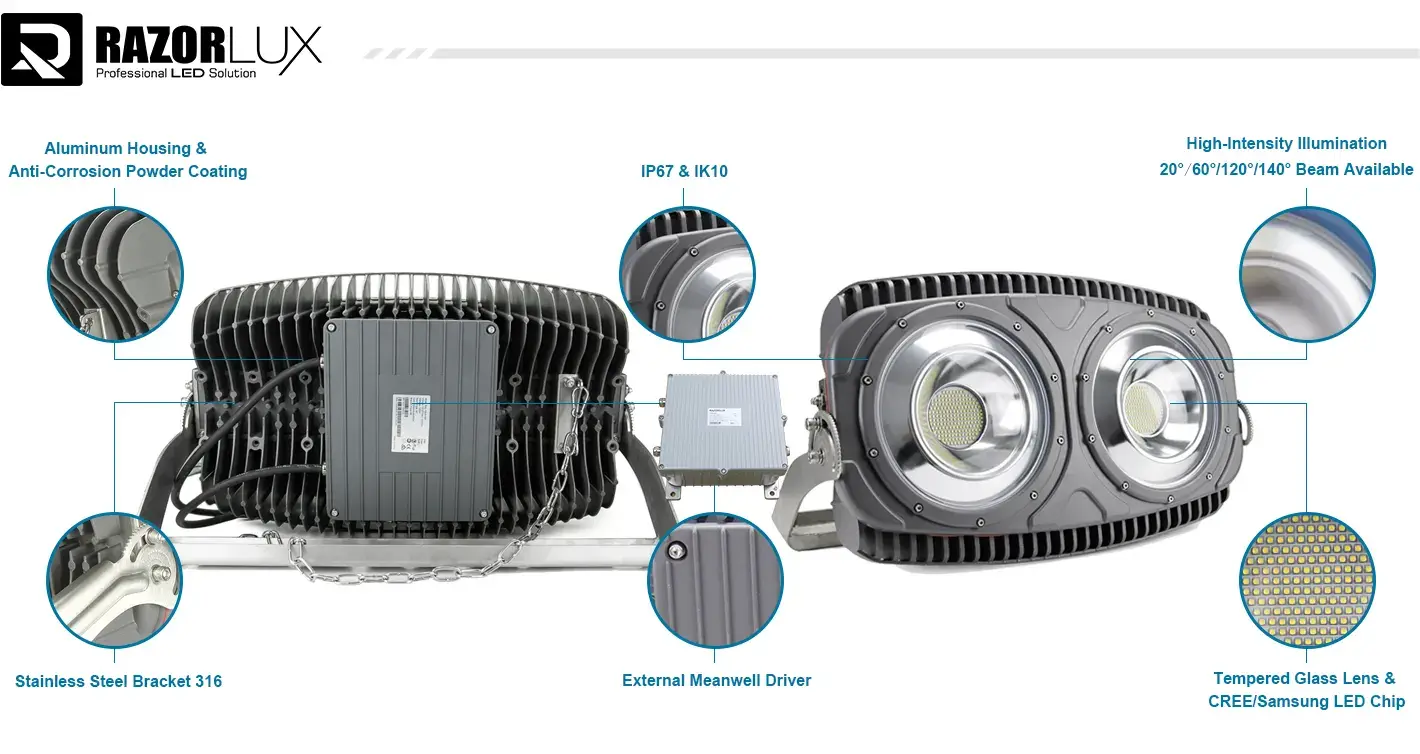
Modern flood lights have a lot of important parts that all work together. The LED driver, like the Meanwell units we use at Razorlux, controls the flow of power to keep the output steady and protects against voltage changes that happen a lot in industrial settings. Die-cast aluminum housings with improved fin shape control heat so that junction temperatures stay within safe working ranges even when the temperature outside is between -40°C and +60°C. Light direction is controlled by precision-engineered tempered glass lenses that can have a range of beam angles, from narrow 15° spots to wide 140°x60° uneven distributions. These lenses reduce spill and glare while increasing target illumination.
Advantages Over Traditional Lighting Technologies
The difference in performance between LEDs and regular HID or gas systems keeps getting bigger. When older lights are updated, they usually save between 60 and 70% of the energy they used before. This means that over the life of the fixture, the electricity costs will go down by a lot. Lumen upkeep traits are also very convincing; good LED systems keep more than 70% of their original output after 50,000 hours of use, while metal halide lamps lose half their brightness after 10,000 hours. Instant-on capability gets rid of the warm-up and restart restrictions of discharge lights, which is very important for security lighting and motion-activated uses. Getting rid of mercury and other dangerous materials is good for the environment because it makes dumping easier and supports business sustainable efforts.
Key Criteria for Choosing the Best LED Area Flood Lights for Parking Lots and Yards
Evaluating Lumen Output and Distribution Patterns
To do good lighting design, you need to know how bulb placement, mounting height, and optical performance are related. Maintaining a straight brightness of 5 to 20 foot-candles is what most industry standards call for in parking lots, but it depends on security needs and local laws. If placed at the right heights and beam angles, a 1000W LED bulb with 130,000 lumens can light up an area of 10,000 to 15,000 square feet. Depending on where the poles are placed, you can choose between Type III and Type V distributions. For even covering, perimeter mounting works best with forward-throw Type III patterns, while center-pole setups need balanced Type V distributions.
IP Rating and Environmental Protection Requirements
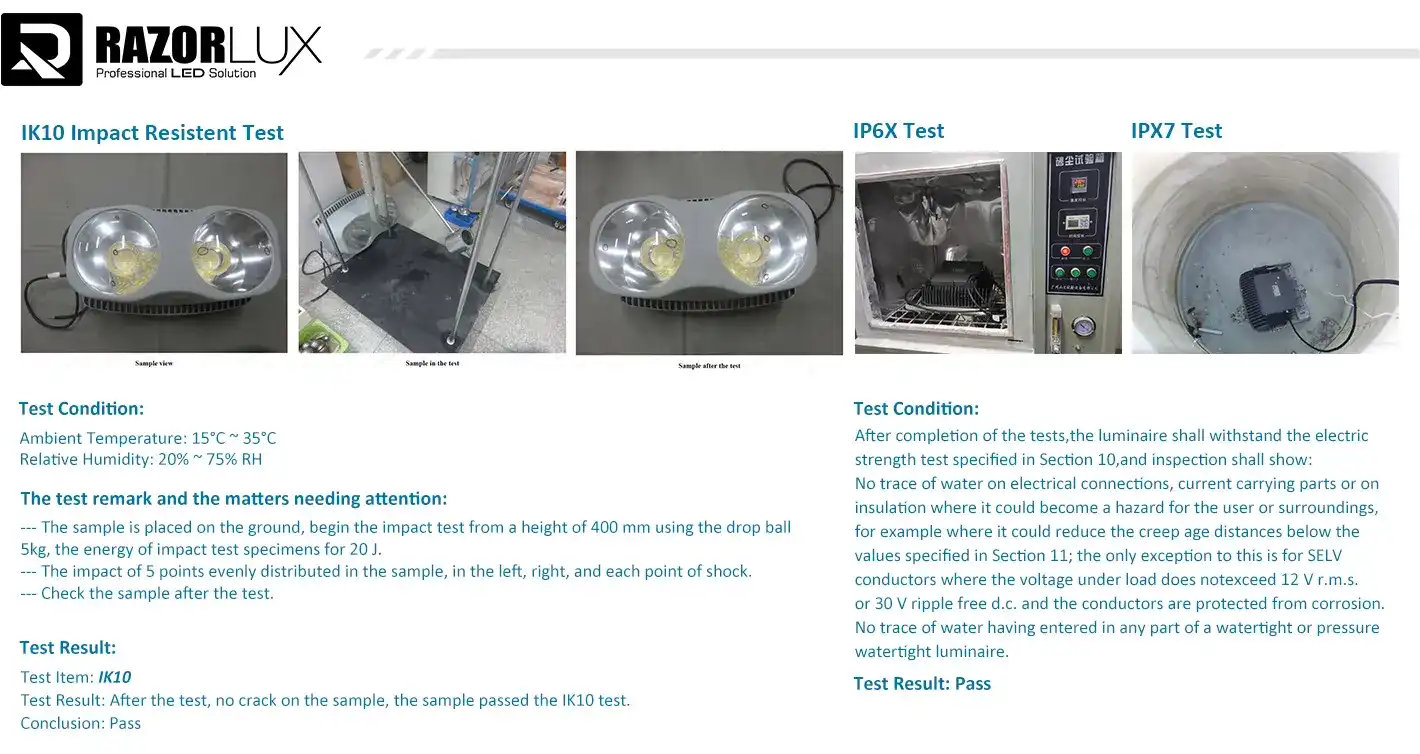
Fixtures that are outside are constantly exposed to water, dust, high temperatures, and things that rust. The IP (Ingress Protection) rating method gives a standard way to measure how well a seal keeps out outside elements. IP67-rated faucets completely block dust from getting in and can handle being submerged in water for a short time, so they are good for seaside areas and places where bad weather is common. The IK (Impact Protection) grade is also very important. If the building is IK10 certified, it can handle 20 joules of impact energy, which is the same as a 5 kg mass being dropped from 40 cm. This keeps it safe from theft and accidents in areas with a lot of traffic.
Color Temperature Selection for Application Optimization
LED Area Flood Lights The Kelvin scale of color temperature tells us a lot about how well we can see, how safe we feel, and how comfortable it is to look at. Most yards and parking lots look better when the white light temperature is moderate to cool, between 4000K and 5000K. This makes the contrast better and helps security cameras recognize colors naturally. The color temperature of our lights can be changed from 2700K to 6500K, so they can be tailored to specific design tastes or working needs. Color Rendering Index (CRI) numbers above 75 make sure that colors are correctly perceived, which is important for things like spotting cars, reading signs, and security tracking.
Energy Efficiency and Total Cost of Ownership Analysis
Smart buyers look at more than just the original purchase price. They also look at the total lifetime costs, which include things like energy use, upkeep work, new parts, and dumping fees. A light that gives off 130 lm/W and works 12 hours a day for a year uses about 4,380 kWh per 1000W unit. At an average rate of $0.12/kWh for industrial power, each fixture's annual energy costs hit $526. When you compare this to HID options that use 60% more energy, you can see that the return time is usually less than three years. This is before you even consider the upkeep saves from LEDs lasting 50,000 hours or more and the five-year warranties that good makers offer.
Top LED Area Flood Light Solutions in the Market: Brands and Models Overview
Industry-Leading Manufacturers and Their Market Positions
The market for business LED lighting has become more focused on a few well-known names that are known for their engineering quality and dependability. With decades of experience in lighting, Philips Lighting (now Signify) has a wide range of products that can be used in public, industrial, and business settings. Cree LED has built its name on its skill in semiconductors, and its lights have the highest efficiency scores in the business. Lithonia Lighting, which is owned by Acuity Brands, specializes in high-quality goods that come with a lot of lighting data and application support. These well-known companies compete with specialized ones like Razorlux, whose products are made to last in the toughest conditions thanks to their focus on naval and heavy-duty uses.
Razorlux RGL-1000A: Engineered for Extreme Environments
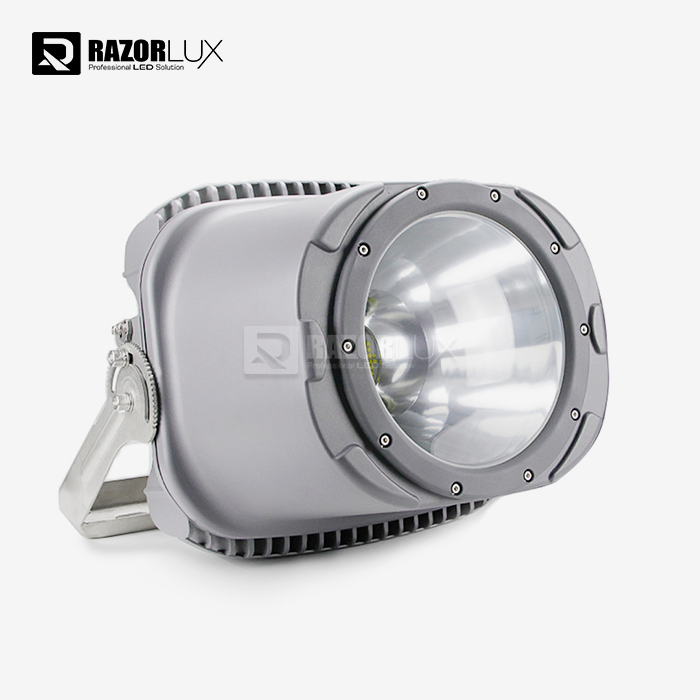
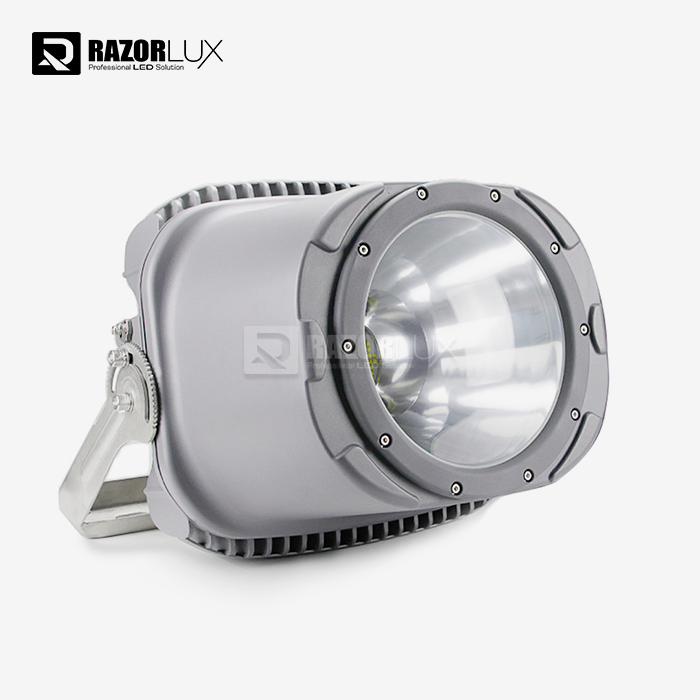
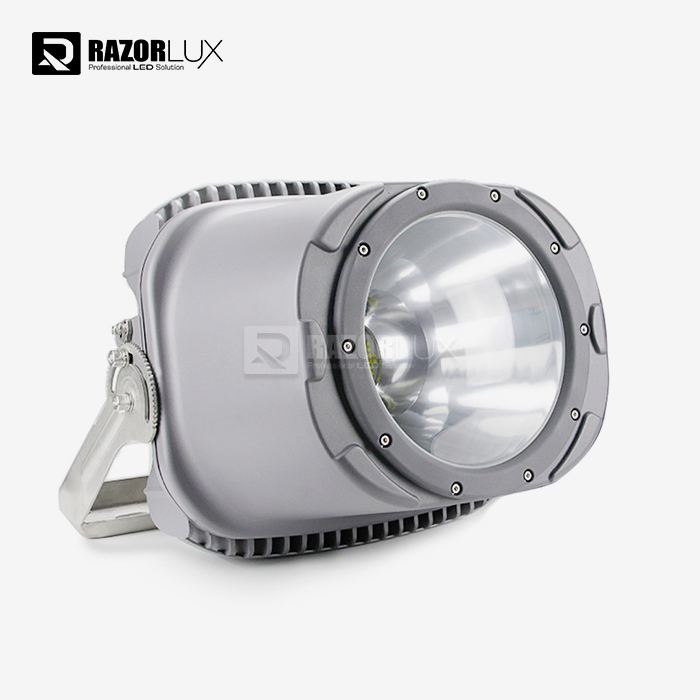
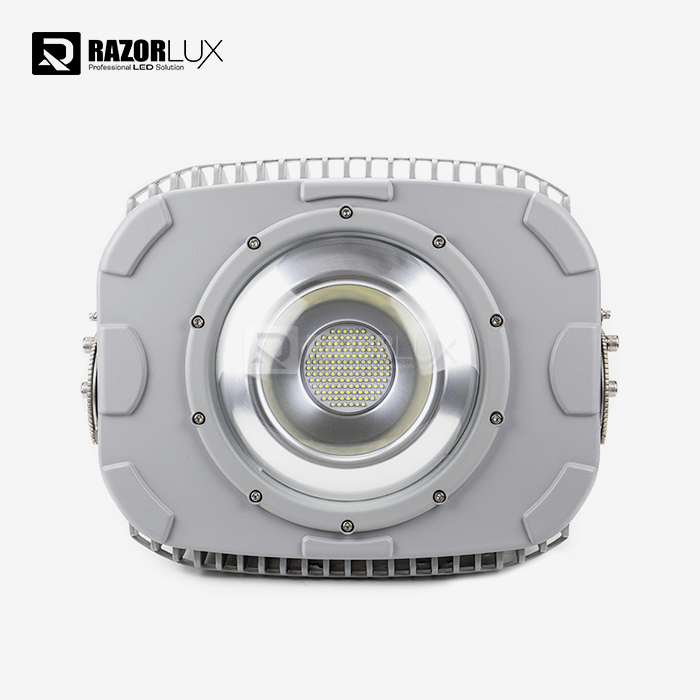
We made the RGL-1000A to solve the problems that procurement managers keep bringing up: early fails in tough settings, hard-to-understand installation steps, and not enough expert help. Our unique multi-function design can accept input voltages from AC100-305V or DC127-431V, so there are no worries about connectivity issues when using it in places with different power systems. The stainless steel clamp system makes installation safe and doesn't rust in marine settings, which is where aluminum and steel parts usually break. At 32 kg, the sturdy build is made of industrial-grade materials all over, including an aluminum alloy housing, a toughened glass lens, and an IP67/IK10-rated cage that can handle the rough conditions of docks, mines, and ocean platforms.
Comparative Analysis: Features That Differentiate Quality Solutions
When comparing goods, there are a number of technical differences between professional-grade tools and options made for consumers. The most important thing is the quality of the drivers. Generic drivers in cheap fixtures break after two to three years, but Meanwell drivers in high-end fixtures usually last longer than 50,000 hours. Thermal management has a direct effect on how long LEDs last. Our tests show that lowering the junction temperature by 10°C doubles the lifetime of an LED. The RGL-1000A has a lot of different certificates, such as CE, RoHS, SAA, C-Tick, UL, DLC, CB, ISO:9001, and RMRS. These show that it is compliant with marine classification societies and markets around the world.
Understanding Warranty Terms and After-Sales Support
Quality LED lights now come with normal five-year warranties, but the terms of these warranties vary a lot. Comprehensive warranties cover the whole device replacement, including the cost of sending. Limited warranties, on the other hand, may only cover parts, leaving the customer to pay for work and freight. Our guarantee at Razorlux covers the whole light system. It is backed by our Xi'an LED Lighting Engineering Laboratory and more than 436 patents. The real value of provider relationships goes beyond guarantee terms and includes access to expert advice, help with installation, and quick problem settlement. Our engineering team designs the lighting plan and calculates the brightness based on the needs of your place, making sure that everything works perfectly before the equipment gets there.
Installation and Maintenance Best Practices for LED Area Flood Lights
Pre-Installation Planning and Site Assessment
Thorough site study and color planning are the first steps to a successful lighting project. We suggest that you hire lighting experts to figure out the lux level for your building based on its needs, mounting heights, pole spacing, and any obstacles that might be in the way. Our team uses standard tools in the field to make optical plots that show expected amounts of illumination, regularity ratios, and compliance with standards like IESNA RP-20 for parking lot lighting. This upfront investment stops expensive situations like too much or too little lighting and makes the best use of bulb amounts to save money. It's just as important to check the electrical infrastructure. Make sure the circuits can handle the load, the voltage stays stable, and the current poles and ducts can fit the new fixtures without any changes.
Step-by-Step Installation Guidelines for Industrial Environments
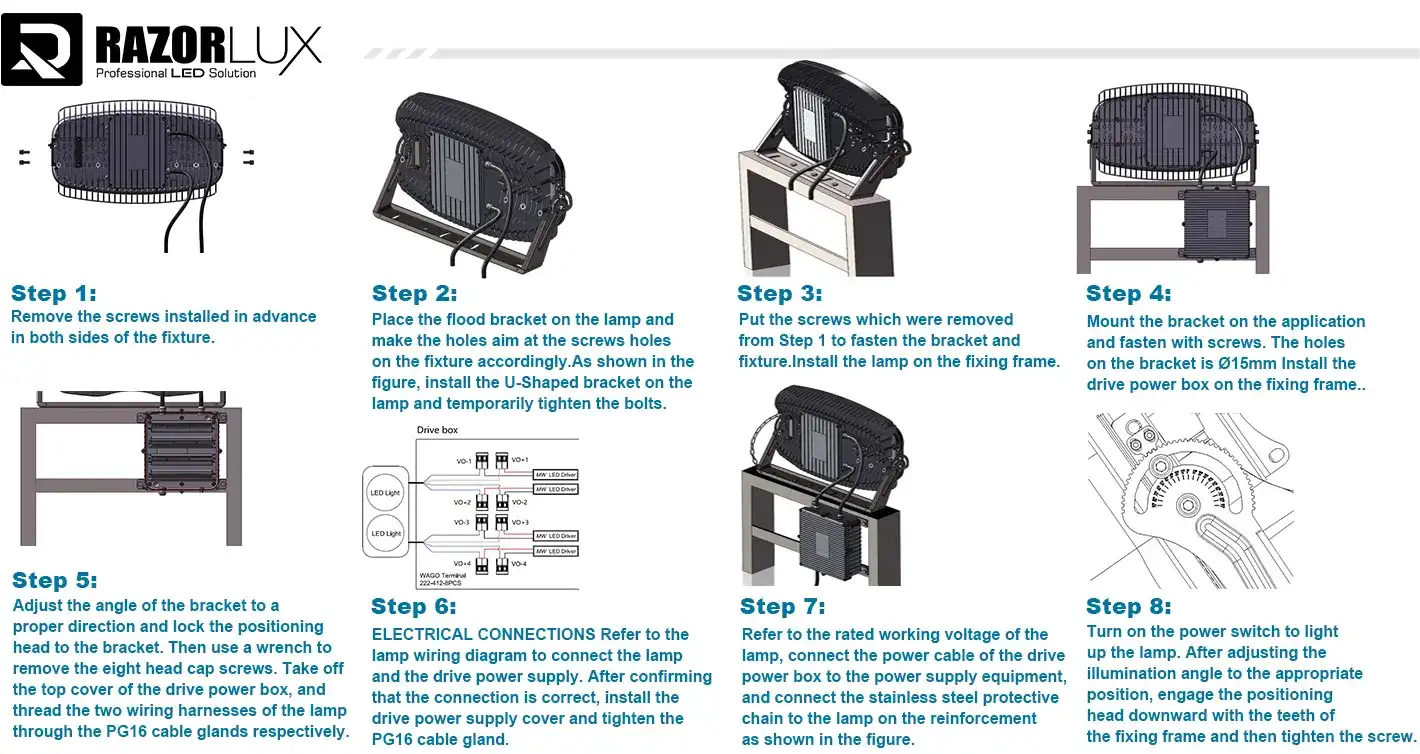
Professional installation starts with safety rules, such as lockout/tagout processes and the right safety gear for each worker. Use all the tools that came with the fixings to secure them. The stainless steel clamps on our units have anti-vibration locking nuts that are necessary in places with a lot of wind or mechanical vibration. It's important to pay attention to polarity and grounding when making electrical connections. The wide input voltage range (AC90-305V) allows for voltage changes, but it doesn't get rid of the need for stable, code-compliant wiring. Seal all cord entry points with the right glands to keep the IP67 rating. This is an important step that stops moisture from getting in, which is what causes 40% of earlier field failures. Allow the lights to work for 48 hours after placement before doing optical testing. This is because LED output stabilizes after the first heat cycling.
Preventive Maintenance Schedules to Maximize Lifespan
LED Area Flood Lights Compared to HID systems, LED lights require a lot less upkeep, but they should still be checked on a regular basis to make sure they keep working well. We suggest eye checks every three months to look for physical harm, signs of moisture getting in, and lens contamination that is hurting production. Fixtures should be cleaned with the right non-abrasive materials once a year, electrical connections should be checked for rust or looseness, and light loss should be tracked with photometric measurements. If you work in a coastal or toxic climate, check the mounting tools and container seals every six months and fix any damage before it affects the device. Keeping detailed service logs helps with guarantee claims and figuring out when to repair things before they break down and stop activities.
Troubleshooting Common Performance Issues
Most problems in the field are caused by mistakes made during installation, not by broken fixtures. Flickering usually means that the dimming systems aren't compatible, the electrical links are loose, or there isn't enough power. Early failures are often caused by heat stress from mounting sites that are too close together and don't have enough air flow, or by voltage spikes that are too strong for the driver to handle. When you order, make sure you get bins with consistent color temperatures so that the colors don't shift when you put them together in different settings. If the lights don't work, make sure the driver is getting the right amount of voltage, that no switches or fuses are tripped, and that the LED array is getting the right amount of voltage from the driver. Our technical support team (sam@razorlux.com) can help you figure out what's wrong and often fixes problems directly, so you don't even have to send the fixture back.
Procurement Guide: How to Buy LED Area Flood Lights for Your Business Needs
Defining Project Specifications and Performance Requirements
A thorough list of requirements is the first step to a successful purchase. Besides basic details like power and light output, you should also include important operating factors like temperature ranges, exposure to toxic environments, the certifications needed for your business and location, and the expected service life. Setting uniform specs for projects that span multiple places or steps stops problems with connectivity and makes management easier. When choosing providers, think about how you want to grow in the future. For example, Razorlux, which makes power ranges from 90W to 1200W, is consistent across a wide range of uses. Write down how the equipment will be mounted, any limitations on the power system, and any special needs, like the need for an emergency backup or the ability to work with building management systems.
Evaluating Suppliers Beyond Unit Price
The price per light is only a small part of how much it really costs to buy everything. Check the supplier's financial health and production capacity to make sure they can meet the size of your order and the deadlines you set. Ask for customer references from companies that work in similar fields and on similar-sized projects, and then call those references to talk about their real-life experiences. Check to see if the seller has expert support—suppliers with their own engineering teams offer much better help than buying companies that just resell foreign goods. Check the validity of the certification by asking for real copies with proof codes. The lighting business is full of fake certifications. Razorlux is a maker and a technical developer. The Xi'an LED Lighting Engineering Laboratory and the Shaanxi LED Lighting Technology and Research Center back them up, which makes sure that big projects get the engineering depth they need.
Navigating International Procurement and Logistics
When buying from foreign producers, it's important for people in the U.S. to know their shipping choices and wait times. Our logistics system has many ways to get things to where they need to go while keeping costs low: international express (3–7 days) for quick small orders; air freight (5–10 days) for medium-sized shipments; China–Europe Railway Express (18–22 days) for large amounts; and ocean freight (15–50 days) for big projects that need to save as much money as possible. Take into account possible delays, customs clearing, and taxes when planning project timelines. Established makers provide full paperwork, such as business bills, packing lists, certificates of origin, and product licenses, which makes the customs process easier. Think about sending packages to project holding areas instead of multiple job sites. This will cut down on the cost of handling per unit for big deploys.
Structuring Contracts for Long-Term Value
LED Area Flood Lights Strategic buyers discuss outline deals that set prices, terms, and standards for needs that will last for more than one year. These agreements make it possible to plan ahead for the budget and make sure that the supplier sticks to delivery dates and quality standards. Include rules for testing and approval of samples before mass production, staged deliveries that work with building plans, and clear warranty terms with written steps for making claims. Payment terms typically involve 30% payment with balance against copy of shipping papers or upon arrival, though established relationships may make more favorable arrangements. For mission-critical uses, you might want to spell out the number of extra fixtures you need and the sure supply of substitute parts for the entire planned service life.
Conclusion
LED Area Flood Lights have changed the way parking lots and industrial yards are lit up outside by using much less energy, lasting longer, and producing better lighting than older technologies. For projects to go well, technical details like light output, IP ratings, color temperature, and beam patterns that match the needs of the application must be carefully considered. Partnering with experienced makers that offer full technical support, strong product certifications, and proven performance in tough settings makes sure that projects meet practical goals and get the most out of their investments. When you use modern LED technology and smart buying habits together, you get lighting infrastructure that improves safety, cuts costs, and supports long-term building goals.
FAQ
What Lumen Output Is Required for Standard Parking Lot Applications?
Most parking facilities require maintained horizontal illuminance between 5-20 foot-candles depending on security needs and applicable codes. A 1000W LED fixture producing 130,000 lumens typically covers 10,000-15,000 square feet when properly positioned, though exact coverage varies with mounting height and beam distribution. Areas with higher security concerns or CCTV systems benefit from increased illumination levels reaching 20-30 foot-candles, requiring closer fixture spacing or higher wattage units.
How Does LED Lifespan Compare to Traditional Metal Halide Fixtures?
Quality LED fixtures like our RGL-1000A maintain over 70% of initial output beyond 50,000 operating hours—approximately 11 years at 12 hours daily operation. Metal halide lamps typically reach 50% output degradation within 10,000 hours, requiring replacement every 2-3 years. This five-fold lifespan advantage dramatically reduces maintenance costs and operational disruptions associated with relamping elevated fixtures in parking lots and yards.
Can LED Flood Lights Withstand Extreme Weather Conditions?
Properly specified LED fixtures easily handle severe weather when rated appropriately. IP67 certification indicates complete dust protection and capability to withstand temporary water immersion, making these fixtures suitable for locations experiencing heavy rain, snow, and humidity. Operating temperature ranges of -40°C to +60°C accommodate both arctic conditions and desert heat. Coastal installations benefit from marine-grade powder coating and stainless steel hardware resisting salt spray corrosion that rapidly degrades standard fixtures.
Partner with a Trusted LED Area Flood Lights Manufacturer
Razorlux brings over two decades of specialized LED engineering expertise to your most demanding lighting challenges. As a vertically integrated LED Area Flood Lights supplier, we control every aspect of production—from semiconductor Packaging to final fixture assembly—ensuring consistent quality backed by our five-year warranty and comprehensive certifications including UL, DLC, CE, and marine classification society approvals. Our team provides complimentary lighting design services, calculating optimal fixture placement and quantities for your specific site requirements. Whether you're upgrading a single parking facility or outfitting multiple industrial yards across your operation, we deliver competitive pricing on bulk orders without compromising the performance and reliability your projects demand. Contact our technical specialists at sam@razorlux.com to discuss your requirements and receive detailed product specifications, photometric data, and project-specific recommendations that transform your lighting infrastructure.
References
1. Illuminating Engineering Society (2022). "Recommended Practice for Outdoor Parking Facility Lighting." IESNA RP-20-21, New York.
2. U.S. Department of Energy (2023). "LED Lighting for Outdoor Applications: Performance, Efficiency, and Best Practices." DOE Solid-State Lighting Program Technical Report.
3. International Electrotechnical Commission (2021). "Degrees of Protection Provided by Enclosures (IP Code)." IEC 60529 Standard, Geneva.
4. Zhang, H. and Kumar, S. (2023). "Thermal Management in High-Power LED Luminaires: Design Strategies and Performance Analysis." Journal of Illumination Engineering, Vol. 18, pp. 234-256.
5. Marine Technology Society (2022). "Lighting Systems for Marine and Offshore Applications: Design Criteria and Certification Requirements." MTS Technical Standards Committee Report.
6. National Electrical Manufacturers Association (2023). "LED Drivers and Power Supplies: Performance Specifications and Testing Protocols." NEMA SSL 8-2023, Rosslyn, Virginia.
 VIEW MOREhigh power outdoor led lighting
 VIEW MOREoutdoor tennis lights
 VIEW MOREtennis court floodlights
 VIEW MORESuper Bright Outdoor Flood Light
 VIEW MORE120V Led Outdoor Flood Light
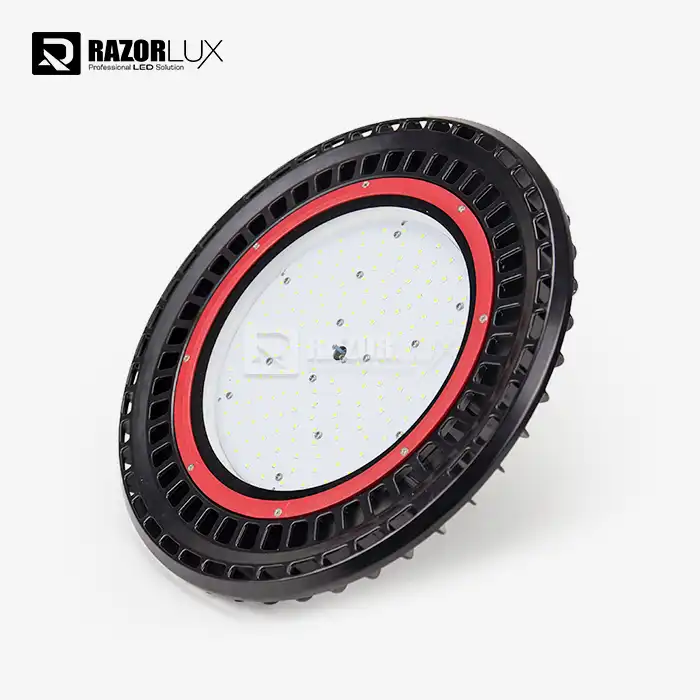 VIEW MORELed Ufo High Bay Light 150W
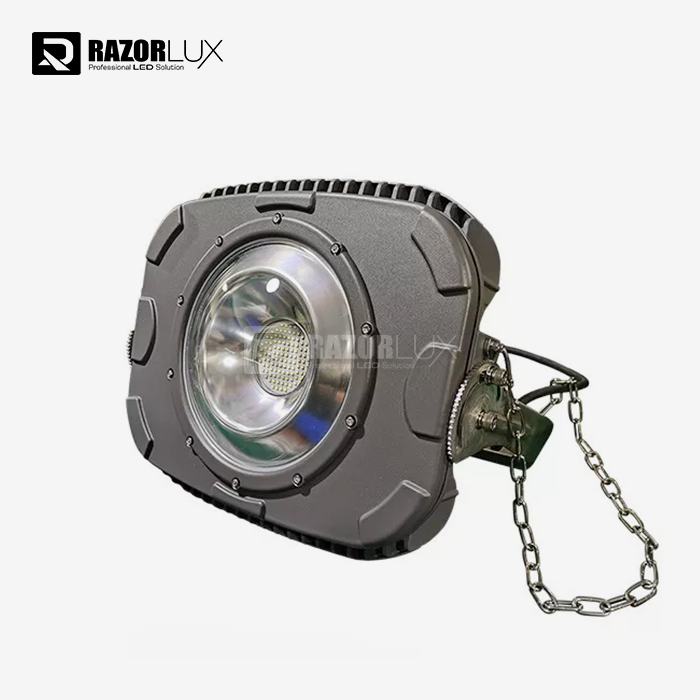 VIEW MORE500W Robust Heavy Duty LED Stadium Lights Arena LED Lighting
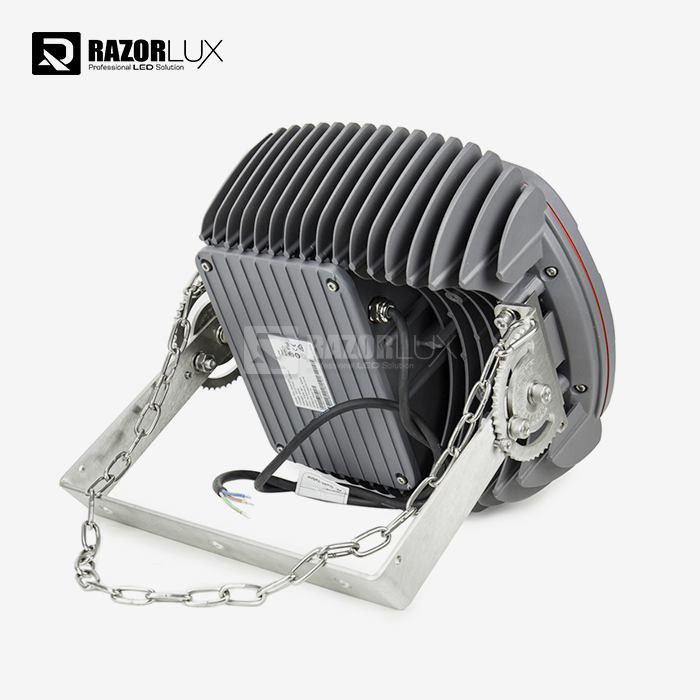 VIEW MORELed Baseball Stadium Lights