


_1750326878398.png)

Are Marine LED Flood Lights 120V Waterproof and Corrosion Resistant?
Marine LED Flood Lights 120V are made to be waterproof and immune to rust when they are made to industry standards. Good faucets have grades of IP65 or IP67, which means they protect against dust getting in and water jets or short soaking. Corrosion protection is provided by marine-grade metal housings, stainless steel brackets, and powder coatings that can handle being exposed to saltwater. But not all marine-rated lights provide the same level of safety. Buyers need to check the IP ratings, housing materials, and compliance certifications like RMRS, UL, and DNV to make sure the lights will work reliably in places like shipyards, offshore platforms, and heavy-duty maritime operations, where failure at the wrong time can cost a lot of money in lost time.
Understanding Marine LED Flood Lights 120V: Waterproof and Corrosion Resistance Basics
What Makes Marine Lighting Different from Standard Industrial Fixtures?
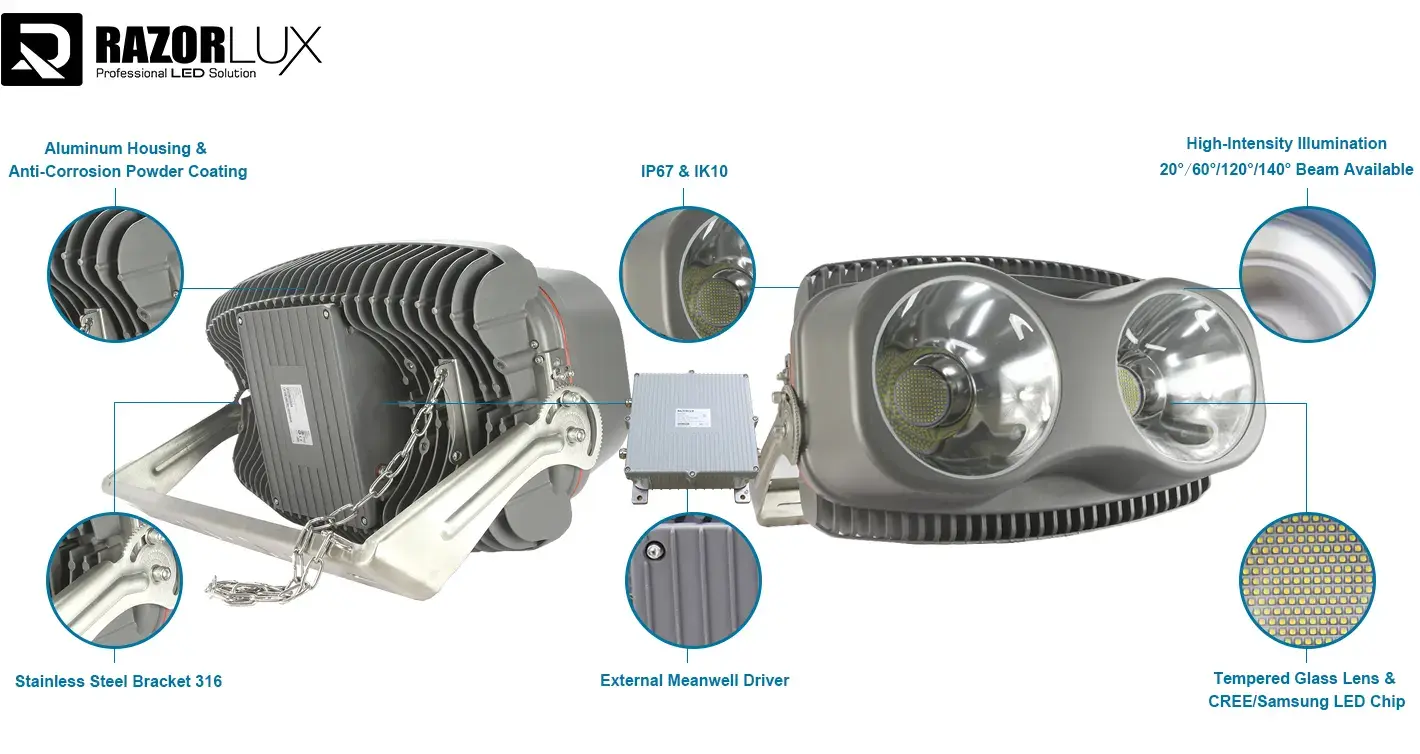
Marine settings are very hard to work in, unlike any other workplace setting. Galvanic rusting happens faster on metal surfaces that are exposed to saltwater spray all the time, and changes in humidity and temperature put stress on electrical parts. When put on ship decks or offshore rigs, standard industrial fixtures often break within months, even if they say they are waterproof. Marine-rated LED floodlights that work on 120V systems are made to last in these conditions with special housing materials, advanced sealing techniques, and electrical protection designed to handle the fluctuations in generator power that are common on boats. At Razorlux, our fixtures have die-cast aluminum housings that have been treated with thermoset powder coatings and stainless steel mounting brackets. The electrical processes that are set off by salt water don't affect these materials, so the structure stays strong even after years of constant use.
Understanding IP Ratings: What IP65 and IP67 Really Mean
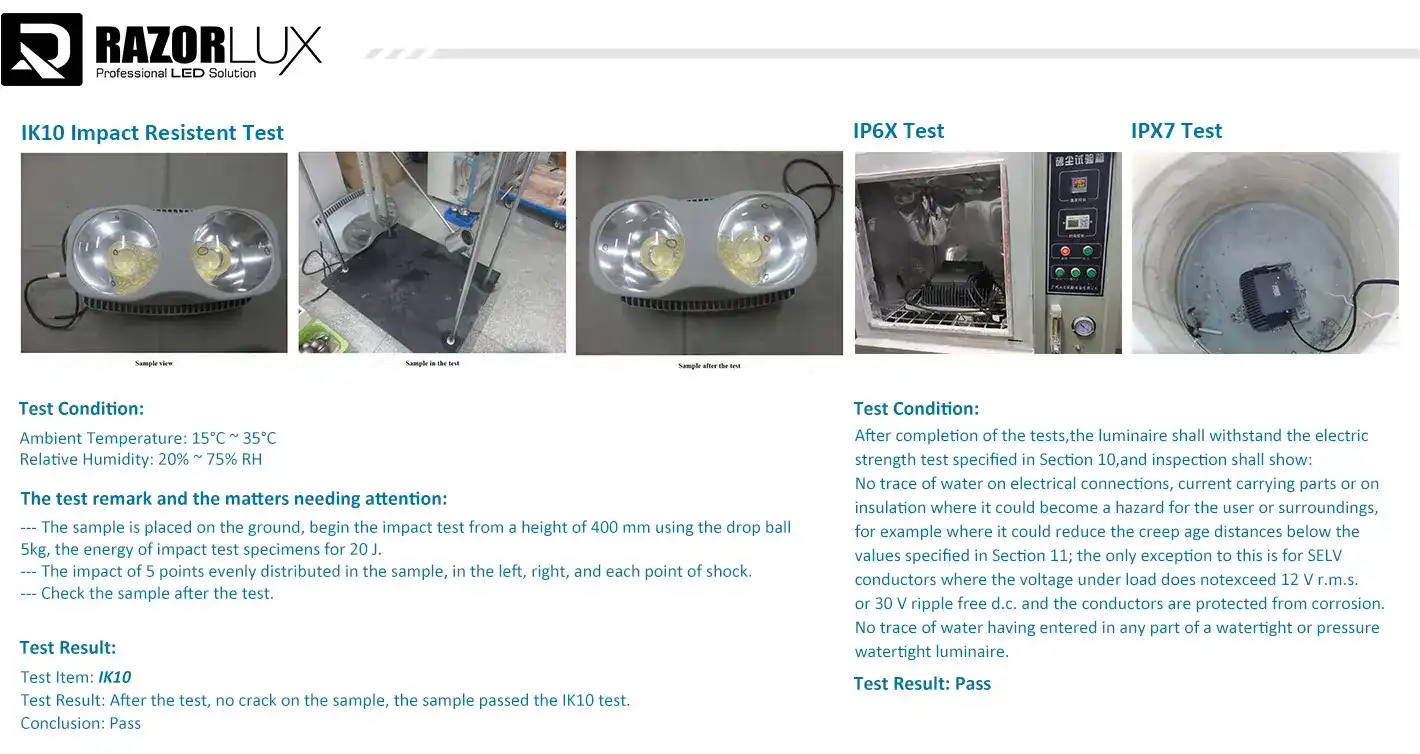
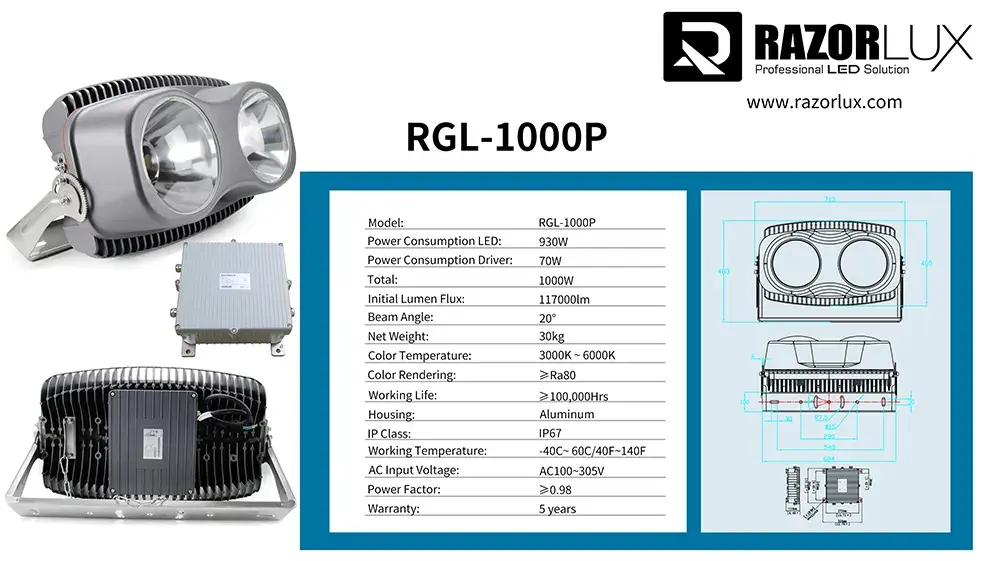
The Ingress Protection (IP) grade method tells you how well a fitting keeps solids and liquids out. The first number tells you about dust resistance (6 means dust-tight), and the second number tells you about water resistance. IP65 faucets can handle high-pressure water jets coming from any direction, which means they can be used for washing decks. IP67 units can withstand being submerged up to one meter for 30 minutes. This is important for installations in cargo holds or lower decks that might leak occasionally during high seas. Our RGL-1000P-L20 model has both IP65 and IP67 approval, which was confirmed by thorough testing. This dual grade gives you options for several installation areas, such as open deck areas that need to be resistant to jet washing and contained areas that need to be protected from submersion when condensation forms and water pools from time to time.
Corrosion Resistance Fundamentals: Materials That Survive Saltwater
Corrosion in marine environments occurs through multiple mechanisms. Saltwater acts as an electrolyte, creating galvanic cells between dissimilar metals. Oxygen-rich sea spray accelerates oxidation, while chloride ions penetrate protective layers. Marine-grade flood lights combat these threats through carefully selected materials and surface treatments. Key protective features include:
- Marine-grade aluminum alloy housings that naturally form protective oxide layers
- 316L stainless steel hardware with superior pitting resistance
- Multi-layer powder coating creates barriers against chloride penetration
- Silicone gaskets that maintain elasticity across temperature extremes
Razorlux fixtures undergo 1,000-hour salt spray testing per ASTM B117 standards, simulating years of coastal exposure. This validates corrosion resistance before products reach operational environments, reducing the risk of premature housing failure that compromises waterproof sealing.
How Do Marine LED Flood Lights 120V Work and Maintain Durability?
Electrical Architecture: Why 120V Systems Excel in Marine Applications
The 120V AC power system has clear benefits for bigger business ships, port infrastructure, and platforms out at sea. Unlike 12V or 24V DC systems, which need heavy-gauge wire and experience big voltage drops over long distances, 120V systems keep sending power consistently over long cable runs. This is important when putting in multiple posts on a 200-meter pier or a multi-level oil platform. Our unique multi-function design can handle a very wide range of input voltages, including AC 80–305Vac and DC 100–400Vdc, with the ability to go up to 800Vdc. This adaptability works with the changing voltage that comes with marine generators. When the engine load changes, it causes power spikes that regular fittings can't handle. Built-in surge protection up to 10kV protects sensitive LED drivers from damage during generator startup transients. The Meanwell power supply built into our units corrects the power factor (≥0.98) and keeps harmonic distortion low (<10%), meeting the high standards for electrical quality set by groups like the American Bureau of Shipping.
Engineering Features That Ensure Long-Term Waterproofing
Marine LED Flood Lights 120V. To make something waterproof, you need to do more than just seal the surface. When Razorlux lights are installed, they use various blocking methods to keep water out. The main seal is made by premium silicone gaskets that are pressed between the housing's parts. Important entry points, like cable glands, mounting clamps, and lens interfaces, get extra epoxy filling that covers the connections in waterproof glue. Thermal management is another factor that affects longevity. When LEDs are working, they produce heat. Changing temperatures cause seals to expand and shrink, which puts stress on them. Our housings have built-in heat-dissipation fins and thermal conductive paths that keep the temperatures at the LED junctions below critical levels. This keeps the light output and seal integrity intact for the 50,000-hour life of the fixture.
Installation Best Practices That Preserve Performance
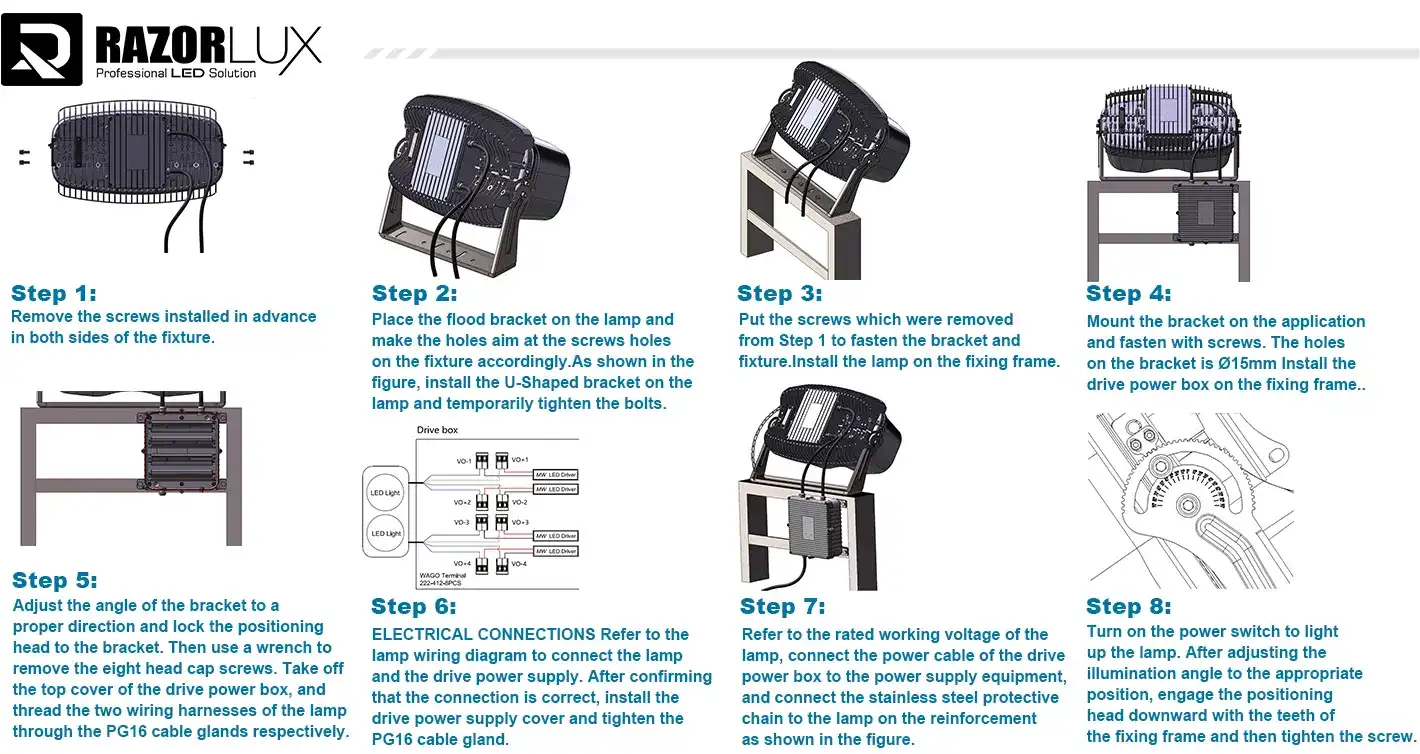
The waterproofing and rust protection are directly affected by how well the fitting was done. By mounting devices with the drain holes facing downward, water doesn't build up inside the housings. Cable openings need marine-grade glands with the right compression ratings—too much twisting ruins seals, and loose fittings let water in. On ships and in factories, vibration resistance is very important. Our fixing clamps are made of stainless steel and can be securely bolted to solid surfaces. Shock-absorbing washers keep engines and other machinery from making loud noises. If you don't mount something correctly, the connections will become loose, the seals will become weak, and the device will eventually break. When placing something in the environment, you should avoid direct seawater spray as much as possible and leave enough space for heat to escape. When set up properly, these lights provide reliable lighting for a wide range of challenging naval uses with little need for upkeep.
Comparison: Marine LED Flood Lights 120V vs. Other Lighting Options
120V LED Systems Versus 12V/24V Low-Voltage Alternatives
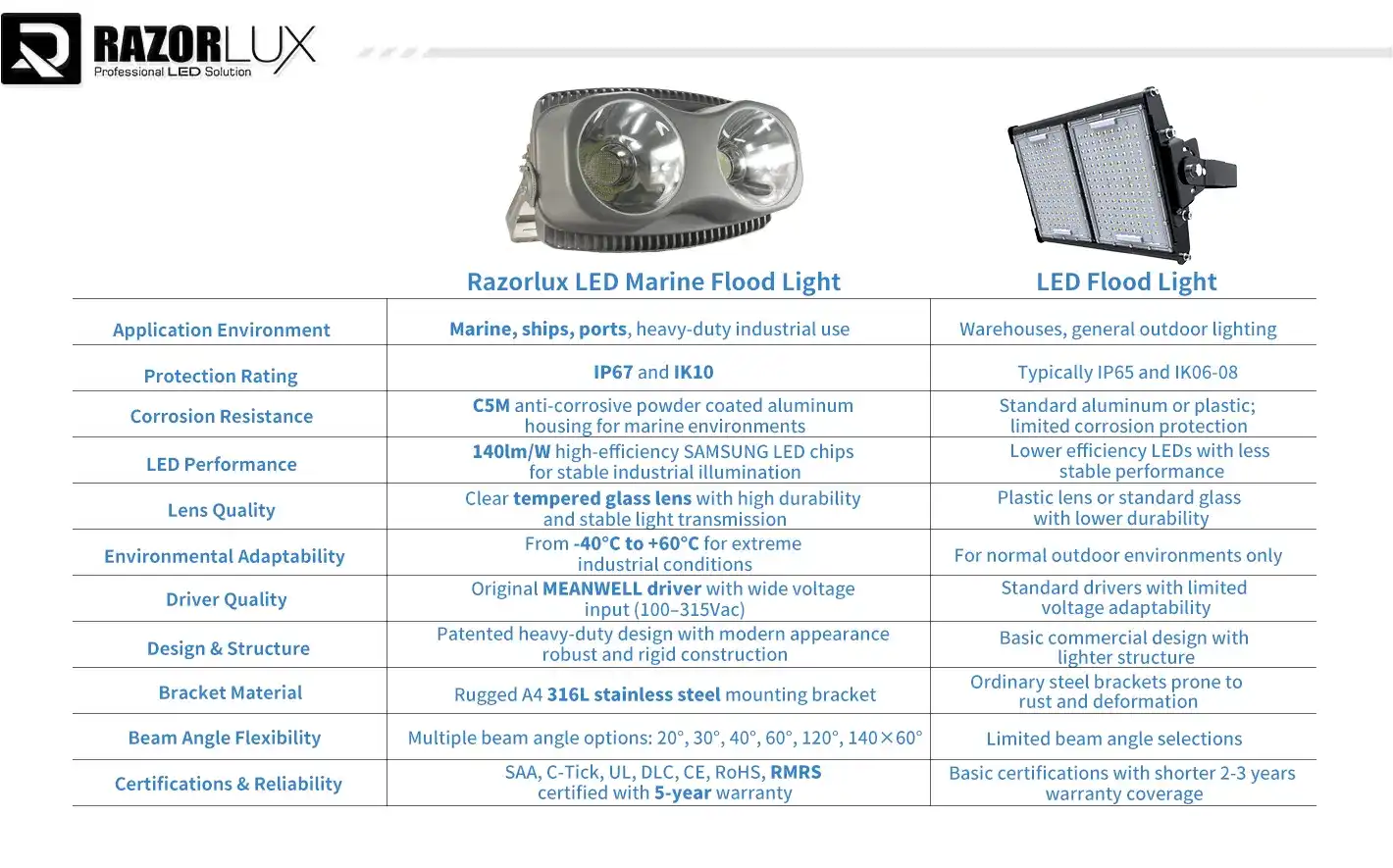
When evaluating voltage options for marine lighting, operational scale dictates the optimal choice. Low-voltage 12V and 24V systems suit smaller vessels with battery-powered electrical systems, offering inherent safety advantages through reduced shock risk. However, these systems encounter severe limitations in larger installations. Here's why 120V systems outperform low-voltage alternatives in commercial marine applications:
- Reduced conductor costs: 120V systems require significantly smaller wire gauges for equivalent power delivery
- Minimal voltage drop: Maintaining brightness across 50+ meter cable runs without oversized conductors
- Higher wattage capacity: Supporting 1000W fixtures delivering 105,000 lumens—unachievable with practical low-voltage systems
- Generator compatibility: Direct connection to standard shipboard AC power without DC converters
These factors make 120V configurations the professional standard for shipyards, offshore platforms, and port terminals where illumination intensity and coverage area justify higher-voltage infrastructure.
| Feature | 120V Marine LED | 12V/24V LED | Traditional Halogen |
|---|---|---|---|
| Energy Efficiency | 130 lm/W | 90-110 lm/W | 15-25 lm/W |
| Operational Lifespan | 50,000+ hours | 30,000-40,000 hours | 2,000-5,000 hours |
| Voltage Drop Sensitivity | Low | High | Moderate |
| Waterproof Rating | IP67 standard | Varies widely | IP54-IP65 typical |
| Typical Wattage Range | 100-1000W | 10-100W | 300-2000W |
LED Technology Versus Halogen and HID Legacy Systems
Traditional halogen and high-intensity discharge (HID) lamps still occupy many marine installations due to initial cost advantages and historical prevalence. However, operational realities favor LED replacement. Halogen bulbs operate at extreme surface temperatures, creating burn hazards and fire risks in enclosed spaces. Their 2,000-hour average lifespan necessitates frequent replacement—problematic on offshore platforms where maintenance access is limited and costly.HID lamps, including metal halide and high-pressure sodium varieties, offer better efficiency than halogen but require 10-15 minute warm-up periods. This delay compromises safety during emergency lighting needs and complicates motion-sensor integration for energy conservation. HID ballasts add failure points and maintenance burden. Razorlux LED fixtures deliver instant full-brightness output with 130 lm/W efficiency, replacing 2000-3000W HID lamps while drawing only 1000W total power. The energy savings alone justify replacement costs within 18-24 months for facilities operating lights continuously. Elimination of bulb replacement labor provides additional ROI that procurement managers recognize immediately.
Wired Systems Versus Solar-Powered Marine Lighting
Solar-powered marine lights appeal through their energy independence and simplified installation without electrical infrastructure. Coastal navigation markers and remote dock lighting represent appropriate solar applications where power access is impractical. However, solar systems face performance constraints in demanding marine operations. Battery storage limitations restrict continuous high-intensity output during extended darkness or overcast periods common in northern latitudes. The corrosive marine environment degrades solar panels and battery housings, reducing system lifespan below wired alternatives. Maintenance requirements for battery replacement and panel cleaning offset initial installation savings. Wired 120V LED systems deliver predictable, unlimited output independent of weather conditions. When reliable illumination is mission-critical—think cargo operations, emergency egress lighting, or security applications—solar alternatives introduce unacceptable performance variability. Razorlux fixtures provide the consistent luminosity that safety regulations and operational efficiency demand.
Selecting the Right Marine LED Flood Lights 120V for Your Business Needs
Critical Technical Specifications to Evaluate
Procurement managers face numerous specification variables when sourcing marine lighting. Understanding which parameters directly impact performance prevents costly mismatches between fixture capabilities and operational requirements. Luminous output measured in lumens determines effective illumination area. Our 1000W model delivers 105,000 lumens with a focused 20° beam angle—ideal for spot-lighting cargo areas, crane operations, or security perimeters requiring concentrated intensity. Applications demanding broader area coverage benefit from 40° or 60° beam angles that spread equivalent lumens across wider zones. Color temperature affects visibility and work accuracy. The 5700K "daylight" standard enhances color recognition critical for sorting cargo, identifying equipment markings, or conducting vessel inspections. Razorlux fixtures offer adjustable color temperatures from 2700K warm white to 6500K cool white, accommodating preference variations across international markets and specific operational contexts. Color Rendering Index (CRI) above 75 ensures accurate color perception. Our standard Ra≥75 specification meets commercial marine requirements, with Ra≥80 and Ra≥90 options available for specialized applications like paint inspection or medical spaces on cruise vessels where color fidelity is paramount.
Waterproof and Corrosion Standards: What Certifications Actually Verify
Marine LED Flood Lights 120V Certification marks validate manufacturer claims through independent testing, providing procurement teams with objective evidence of fixture capabilities. Understanding what each certification verifies prevents reliance on inadequate or irrelevant credentials.IP rating certifications from accredited laboratories confirm ingress protection levels through standardized tests. IP67 verification involves submerging fixtures in one meter of water for 30 minutes while monitoring for internal moisture. Razorlux products undergo testing at internationally recognized facilities, with documentation provided upon request. Marine classification society approvals, including RMRS (Russian Maritime Register of Shipping), DNV-GL, and ABS, validate compliance with stringent maritime equipment standards. These certifications require material analysis, environmental testing, and quality system audits—going far beyond basic electrical safety marks. Electrical safety certifications such as UL, CE, and SAA confirm safe operation within respective electrical codes. Our fixtures carry comprehensive international approvals, simplifying procurement across multiple geographic markets without requiring separate product specifications.
Evaluating Suppliers: Quality Indicators Beyond Price
Price comparisons dominate initial supplier evaluation, but the total cost of ownership depends heavily on product reliability and supplier support capabilities. Several factors distinguish professional marine lighting manufacturers from commodity suppliers. Manufacturing experience specifically in harsh-environment applications indicates engineering competence in addressing marine challenges. Razorlux brings over 20 years of specialized expertise with more than 200 patents covering LED Packaging, thermal management, and power control innovations. This background manifests in product features addressing real operational pain points. Component sourcing transparency reveals commitment to quality. We specify Meanwell power supplies—the industry benchmark for reliability—and provide complete component documentation. Manufacturers obscuring supply chain details often substitute inferior components to reduce costs, leading to premature failures.
Key supplier evaluation criteria include:
- Demonstrated case studies in similar marine applications
- Responsive technical support with marine-specific expertise
- Sample availability for pre-purchase testing and validation
- Clear warranty terms with accessible service infrastructure
- Documentation completeness, including test reports and CAD drawings
These factors separate suppliers capable of supporting long-term partnerships from transactional vendors offering minimal post-sale engagement.
| Supplier Type | Strengths | Considerations | Best For |
|---|---|---|---|
| Specialized Marine Manufacturers | Deep application expertise, rigorous testing, premium components | Higher unit costs | Mission-critical installations, harsh environments |
| General Industrial Lighting Companies | Broad product range, competitive pricing | Limited marine-specific knowledge | Protected installations, budget projects |
| Trading Companies/Distributors | Local inventory, simplified purchasing | Limited technical support, variable quality | Replacement parts, small quantities |
Pricing Dynamics and Bulk Purchase Negotiations
Marine LED flood light pricing reflects component quality, certification costs, and manufacturing standards. Units priced significantly below market averages typically compromise on materials, testing rigor, or component specifications—leading to hidden costs through failures and replacements. Our 1000W fixtures represent professional-grade solutions where upfront investment delivers exceptional lifecycle value through 50,000+ hour operational life, five-year warranties covering both LED modules and drivers, and minimal maintenance requirements. Bulk purchase arrangements provide economies of scale while maintaining quality standards. Procurement managers should request detailed quotations specifying exactly what components, certifications, and support services are included. Comparing equivalent specifications across suppliers reveals true value rather than simple per-unit pricing. Razorlux provides transparent pricing with itemized breakdowns, facilitating accurate comparisons.
Maintenance and Troubleshooting for Marine LED Flood Lights 120V
Routine Maintenance Practices That Extend Service Life
Even robust marine fixtures benefit from periodic inspection and cleaning. Establishing preventive maintenance schedules reduces unexpected failures and preserves optimal light output throughout operational life. Cleaning procedures should use non-abrasive materials and fresh water to remove salt deposits without scratching lens surfaces or damaging protective coatings. Avoid high-pressure washing directly at cable entry points where excessive force might compromise seals. Quarterly cleaning in high-spray zones prevents salt accumulation that accelerates corrosion and reduces light transmission through encrusted lenses. Seal inspection involves visual examination of gasket interfaces for compression set, cracking, or displacement. Early detection of gasket deterioration allows planned replacement before water ingress damages electrical components. Our fixtures feature accessible gasket designs enabling replacement without complete fixture disassembly. Electrical connection verification includes checking cable gland tightness and inspecting visible wiring for insulation damage. Marine environments cause metal connections to oxidize over time—applying dielectric grease during installation provides long-term protection. Annual connection inspection during scheduled maintenance periods prevents loose contacts that generate heat and potential fire hazards.
Common Failure Modes and Preventive Measures
Marine LED Flood Lights 120V Understanding typical failure mechanisms enables proactive intervention before catastrophic breakdowns occur. Temperature-related stress represents the leading cause of premature LED degradation. Operating fixtures beyond rated temperature specifications—whether from inadequate heat dissipation or extreme ambient conditions—accelerates lumen depreciation and shortens lifespan. Razorlux fixtures manage thermal loads through engineered heat sink designs and power supply efficiency optimization. Maintaining clearances around housings for air circulation prevents temperature accumulation. Installations in enclosed spaces benefit from auxiliary ventilation, ensuring ambient temperatures remain within the -40°C to 60°C operating range. Corrosion damage manifests as housing pitting, fastener degradation, and seal interface compromise. While our specialized coatings provide exceptional resistance, physical damage from impacts removes protective layers. Addressing scratches and paint damage promptly with marine-grade touch-up coatings prevents corrosion initiation at compromised sites. Preventive measures include:
- Regular inspection schedules aligned with facility maintenance programs
- Prompt repair of physical damage before moisture penetration occurs
- Verification that mounting hardware maintains secure fixture positioning
- Documentation of performance trends to identify gradual degradation patterns
These practices align with the quality-focused operations of professional shipyards and port facilities where reliability directly impacts productivity and safety outcomes.
Troubleshooting Guidance for Common Issues
Systematic analysis quickly finds the root causes of problems with parts that don't work right. If the whole device fails, it's usually because of a problem with the driver circuit or a loss of input power, not an LED failure. Checking the source voltage at the fixture's input ports separates problems with the power supply from problems with internal parts. Dimming or flickering output indicates that the voltage is unstable, connections are loose, or the driver is breaking down. Many irregular problems can be fixed by making sure the cables are intact and the connections are tight. As long as the power is stable and the connections are tight, replacing the driver will fix the problem. Our modular design lets us fix individual parts instead of replacing the whole fixture. If you see moisture inside sealed housings, it means that the gasket has failed or the housing is damaged and needs immediate attention. Using tools that aren't working right speeds up the rust damage to electrical parts. You can get in touch with our technical support team directly at sam@razorlux.com for help finding entry points and making fixes that work.
Conclusion
Marine LED flood lights 120V provide waterproofing and resistance to rust, which are important for hard marine and heavy industrial uses when built to professional standards. IP65 and IP67 ratings guarantee security against dust and water getting in, and marine-grade metal housings with special finishes don't rust in saltwater for long periods of time. For large-scale business setups, low-voltage options can't compare to the benefits of 120V electrical design when it comes to power security, wire efficiency, and high-wattage capacity. Instead of just looking at the original price, it's important to look at all the details, such as the quality of the parts, their certifications, and how well the provider can help with support. Razorlux lights have Meanwell drivers, all the foreign approvals, and strong warranties that professionals need for lighting important infrastructure.
FAQ
Are All Marine LED Flood Lights 120V Fully Waterproof?
Not automatically. The term "marine-rated" lacks a standardized definition without accompanying IP rating specifications. Lights marked IP65 resist pressurized water jets, while IP67 units withstand temporary immersion. Verify specific IP ratings and request test documentation before purchase.
How Can I Verify Corrosion Resistance Before Purchasing?
Examine housing material specifications—marine-grade aluminum and 316 stainless steel hardware indicate quality construction. Request salt spray test reports per ASTM B117 standards showing 1,000+ hour survival. Classification society approvals like RMRS or DNV validate corrosion resistance through independent assessment.
What Is the Expected Lifespan in Harsh Marine Conditions?
Quality fixtures achieve 50,000+ operational hours in marine environments when properly maintained. This translates to 10+ years of continuous operation or 15-20 years with typical duty cycles. Lifespan depends heavily on thermal management, installation quality, and preventive maintenance practices.
Contact Razorlux: Your Trusted Marine LED Flood Lights 120V Manufacturer
Procurement managers and marine facility operators seeking dependable illumination solutions benefit from partnering with a specialized Marine Led Flood Lights 120V supplier committed to quality and performance. Razorlux manufactures fixtures proven across global offshore platforms, shipyards, and port facilities where reliability is non-negotiable. Our 1000W RGL-1000P-L20 delivers 105,000 lumens with IP67 protection, RMRS certification, and comprehensive five-year warranty coverage supported by responsive technical expertise. We understand the procurement evaluation process and provide complete documentation, sample availability, and customization capabilities that engineering teams require. Reach out directly to sam@razorlux.com to discuss specific project requirements, request technical specifications, or arrange product samples for validation testing. Razorlux's 20+ years of marine lighting specialization ensure you receive solutions engineered for the environments where standard fixtures fail.
References
1. International Electrotechnical Commission. (2013). IEC 60529: Degrees of Protection Provided by Enclosures (IP Code). Geneva: IEC Central Office.
2. ASTM International. (2019). ASTM B117-19: Standard Practice for Operating Salt Spray (Fog) Apparatus. West Conshohocken, PA: ASTM International.
3. American Bureau of Shipping. (2021). Guide for Lighting Systems and Components. Houston: ABS Plaza.
4. Det Norske Veritas. (2020). Rules for Classification of Ships Part 4 Chapter 9: Electrical Installations. Oslo: DNV GL.
5. Illuminating Engineering Society. (2018). IES LM-79-19: Approved Method for Electrical and Photometric Measurements of Solid-State Lighting Products. New York: IES Publications.
6. Maritime and Coastguard Agency. (2017). Marine Guidance Note MGN 583: Lighting Requirements for Ships. Southampton: UK Department for Transport.
 VIEW MOREoutdoor court lights
 VIEW MOREbest outdoor basketball lights
_1748337916691.webp) VIEW MOREFlood Light Explosion Proof
VIEW MOREFlood Light Explosion Proof VIEW MORE75Ra Led Boat Flood Lights Lumitec Spreader Lights 120lm/W Aluminum Alloy Body
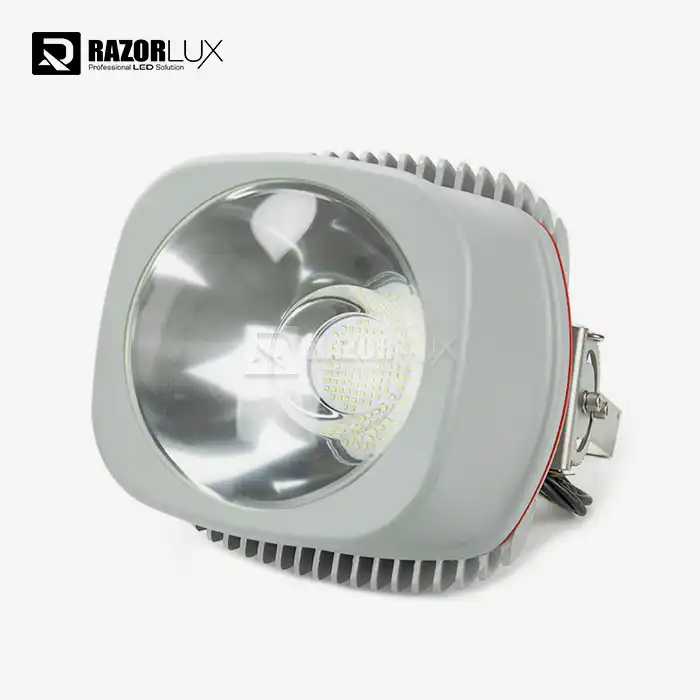 VIEW MOREOutdoor Led Arena Lights
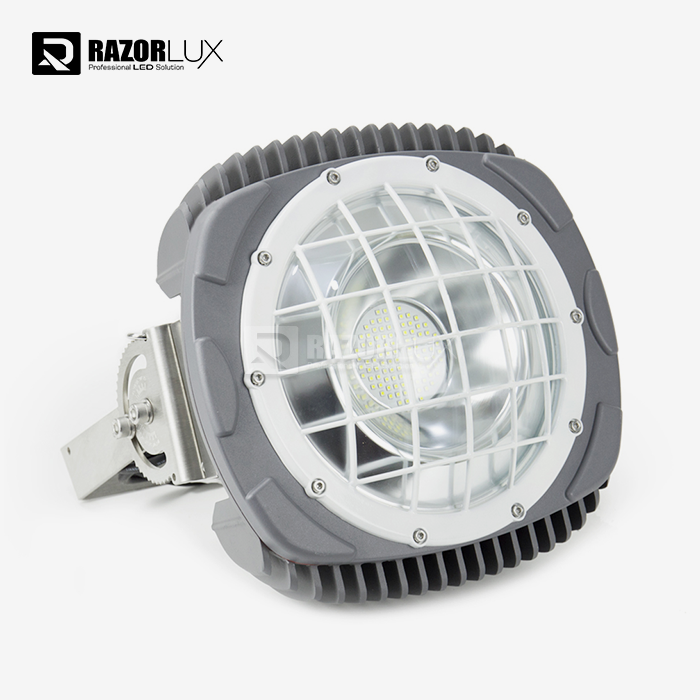 VIEW MOREExterior Led Floodlights
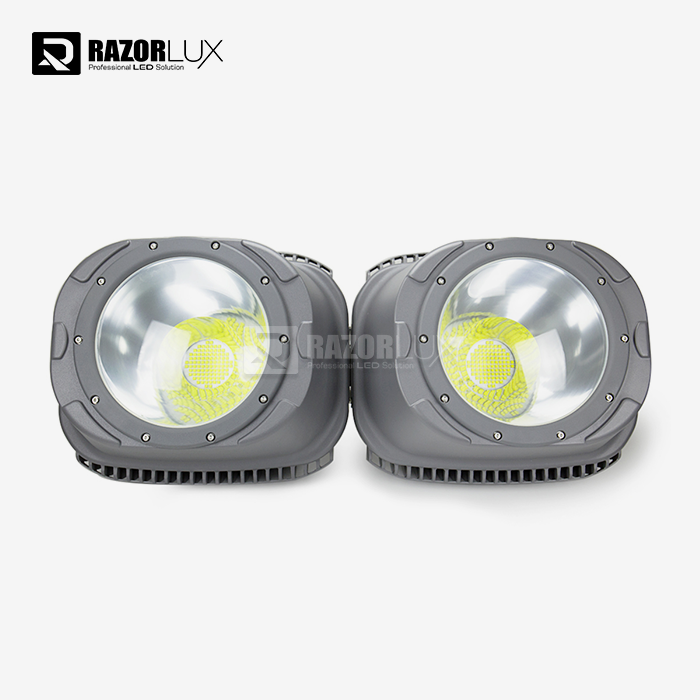 VIEW MOREMost Powerful Flood Light
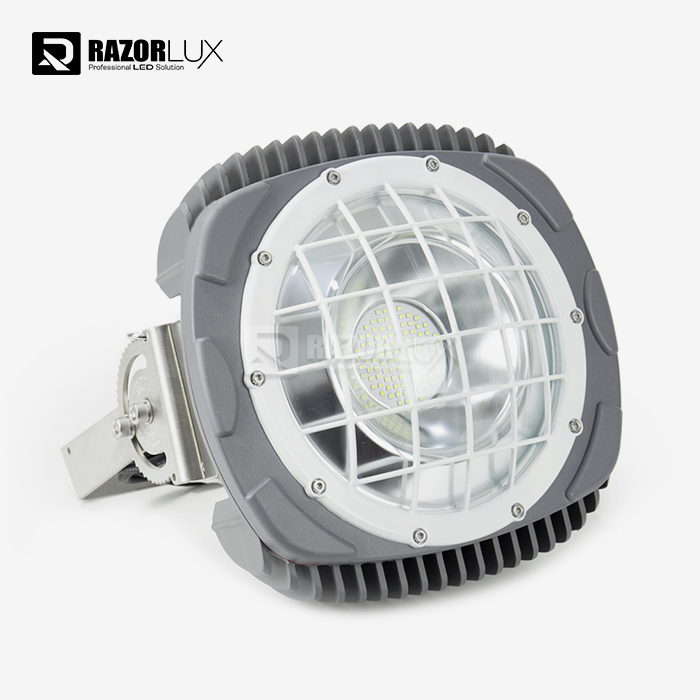 VIEW MORETennis Floodlights