

_1750326878398.png)

Marine Flood Lights 1000W: What Certifications Should You Look For?
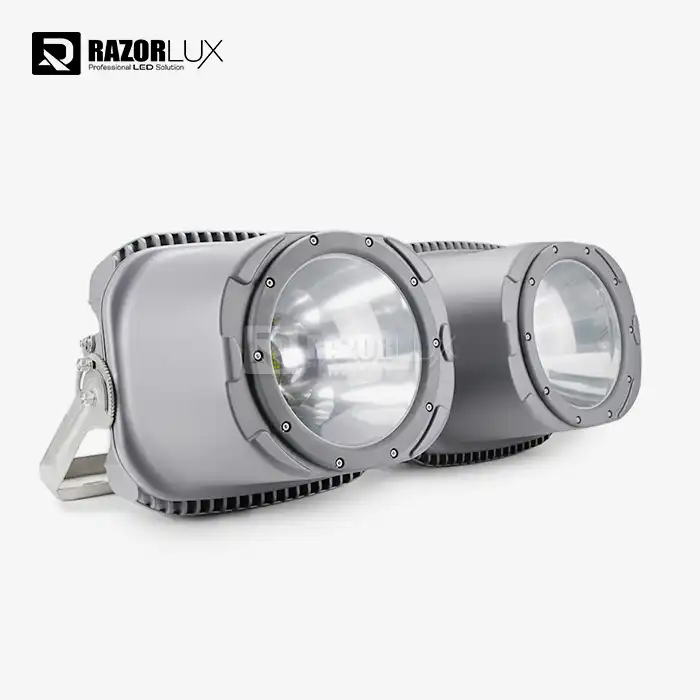
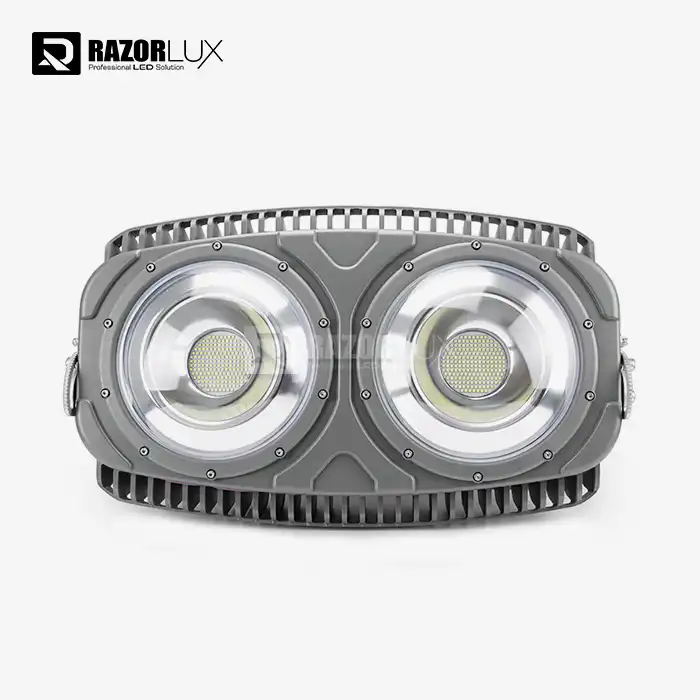
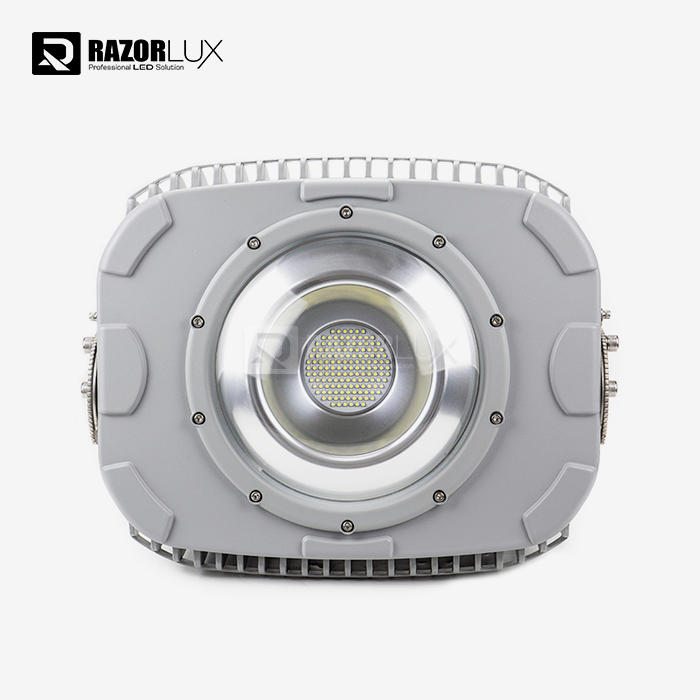
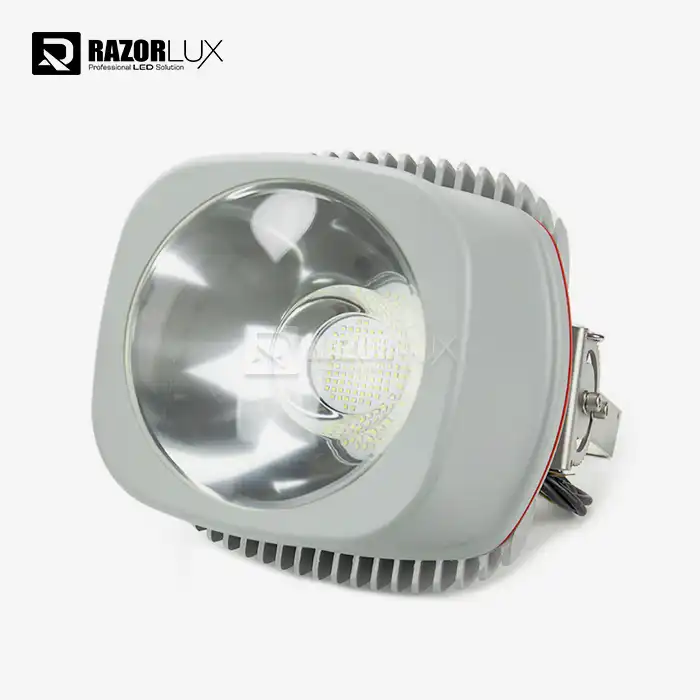
When purchasing high-output marine lighting, understanding which certifications truly matter can mean the difference between a reliable installation and a costly failure. Marine Flood Lights 1000W must carry specific credentials proving their ability to withstand saltwater corrosion, extreme temperatures, and the continuous vibrations inherent to maritime environments. Essential certifications include IP67 waterproofing, IEC electrical safety standards, UL for North American markets, CE for European compliance, and marine classification society approvals such as DNV GL, ABS, and RMRS. These credentials validate that lighting systems have undergone rigorous testing for corrosion resistance, impact durability (IK10), and operational stability across demanding maritime applications including offshore platforms, shipyards, and commercial vessels.
Understanding Marine Flood Lights 1000W and Their Certification Needs
Maritime lighting with a high density is an important part of keeping operations safe in ships, offshore energy, and port infrastructure. These unique luminaires give off a lot of light—often more than 130,000 lumens—that's meant to cut through thick fog, light up large deck areas, and ensure clear vision during important cargo operations or emergency reactions at night.
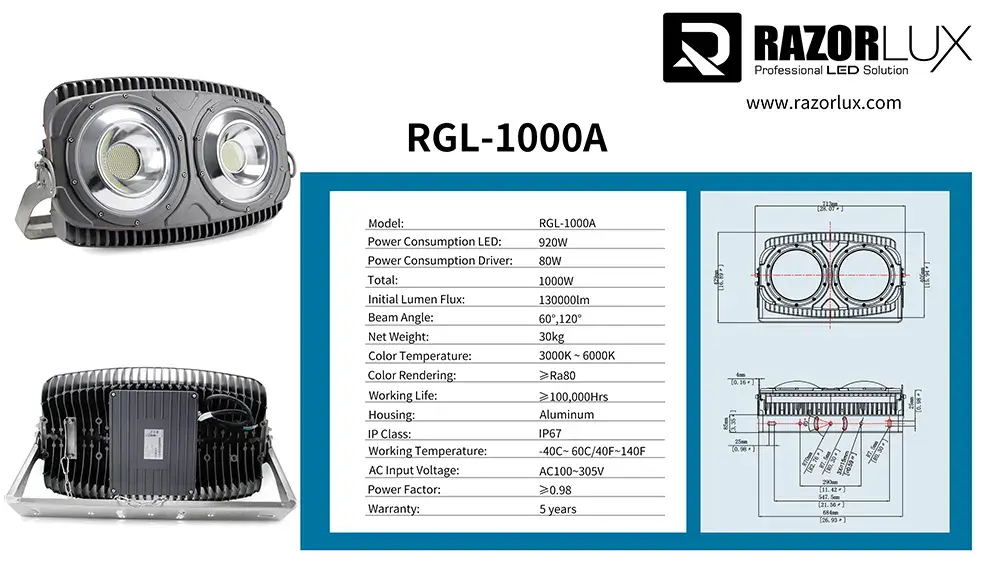
Traditional Metal Halide and High-Pressure Sodium lamps have been replaced by modern LED technology. This has completely changed what procurement professionals should ask their suppliers for. In the past, technologies needed a long time to warm up, and bulbs had to be replaced often because the filament would break from constant vibration. Modern LED solutions can turn on instantly and have dramatically longer operational lifespans of 50,000 hours or more. Because of this change, certification verification for Marine Flood Lights 1000Ws has become even more important. Now, buyers have to look at more than just basic protection. They also have to look at driver quality, heat management systems, and the photometric stability of LED modules in harsh circumstances.
Why Certifications Matter for Maritime Applications
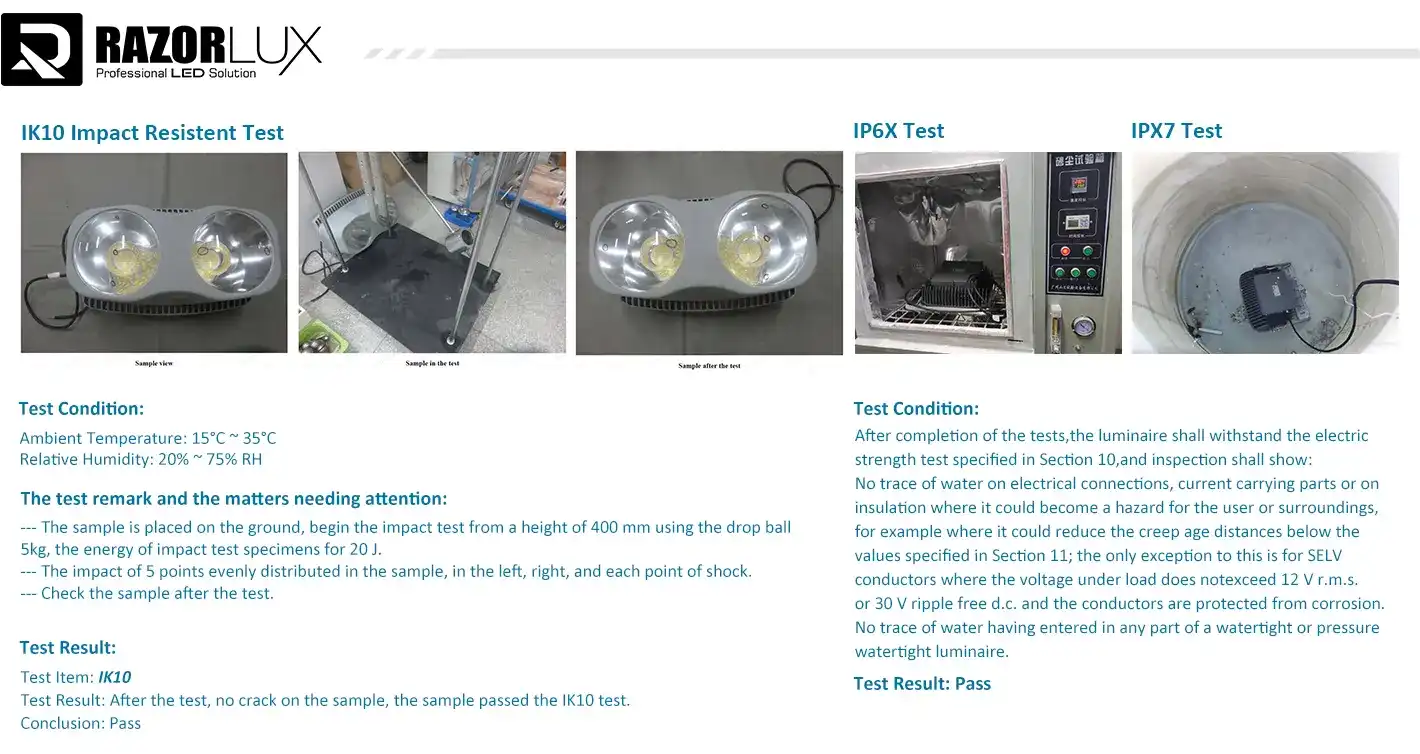
There are certification groups that check that manufacturers have made their goods strong enough to withstand these stresses. When a light fixture has real IP67 approval, testing labs have proven that dust can't get inside and that being submerged in water for up to one meter won't affect electrical safety. The lens and case can survive direct hits from a 5 kg object dropped from 40 cm, which is similar to tool drops or flying objects during storms.
Electrical safety certifications from groups like UL, CE, and SAA make sure that the driver circuitry has the right surge protection, keeps the power factor above 0.95 to keep the grid from straining, and keeps Total Harmonic Distortion below 10% to keep sensitive navigation electronics from being affected. These technical approvals directly lead to lower insurance costs, fewer upkeep tasks, and compliance with port authority rules that require approved equipment more and more.
The Real Cost of Uncertified Equipment
Shipyard and offshore facility procurement managers say that choosing lighting that isn't certified or isn't certified well costs a lot more than just the price of the light itself. If a floodlight fails during important cargo operations, work can stop for hours while new ones are found and installed. This can cost a lot more in penalty fees, missed shipping windows, and crew overtime than any savings from buying cheaper equipment. More importantly, when equipment breaks down and poses a safety risk, companies could be fined by the government or sued if accidents happen.
Insurance companies have also started to look more closely at equipment certifications. As a condition of coverage, some of the biggest marine insurers now want to see written proof that all electrical equipment on boats or platforms has the right licenses. Now that things have changed, checking certifications is an important part of risk management, not just a matter of taste.
Key Certifications to Look for When Purchasing 1000W Marine Flood Lights
To find your way around the world of certifications, you need to know which ones cover certain operational risks and which rules apply to your installation location and the type of vessel you are using. Different kinds of licenses are useful in different situations for Marine Flood Lights 1000Ws. In some cases, less well-known credentials may be more useful than well-known marks.
Waterproofing and Environmental Protection Standards
The Ingress Protection (IP) grade method is the normal way for businesses to judge how well an enclosure protects against solid objects and liquids. Maritime uses usually need at least IP67 certification, which makes sure that the device is completely dust-tight and protects it from short-term immersion. The first number (6) confirms that the fixture is completely protected against dust entry, even when exposed for a long time. The second number (7) confirms that the fixture can be submerged in water up to 30 minutes deep without water entering the electrical sections.
IP68-rated fixtures offer better protection for installations that will be hit directly by waves or cleaned with high-pressure water during regular maintenance. They can be submerged for more than one meter at a time. This is especially important for underground hull lights or fixtures on lower areas where equipment is often hit by rough seas. The manufacturer's technical documentation should be checked to see the exact depth and length of immersion. This is because IP68 lets makers set their own testing settings above and beyond the basic standard.
Electrical Safety and Performance Certifications
If a luminaire is UL certified for the North American market, it means that it meets the UL 1598 standards for construction, electrical safety, and performance. The UL mark shows that samples have been checked for odd operating conditions, temperature rise limits, and the integrity of the electrical insulation. UL also runs the Design Lights Consortium (DLC) program, which sets basic standards for effectiveness and checks claims of photometric performance. This is becoming more and more important as utility refund programs need DLC listings to be eligible for incentives.
The IEC 60598 series is the basis for all international safety standards for luminaires. It includes basic electrical safety rules as well as rules specific to marine settings (IEC 60598-2-18). This standard covers issues that are specific to the maritime industry, such as resistance to shock and vibration, protection against power supply fluctuations that happen a lot in ship electrical systems, and specific insulation needs for damp areas. Buyers should make sure that the approval information they are looking at refers to the right part of IEC 60598 for their installation setting.
| Certification | Issuing Body | Primary Focus | Geographic Relevance |
|---|---|---|---|
| UL | Underwriters Laboratories | Electrical safety, construction standards | North America |
| CE | EU Self-Certification | Low voltage safety, EMC compliance | European Union |
| SAA | Standards Australia | Electrical safety, AS/NZS standards | Australia, New Zealand |
| DLC | Design Lights Consortium | Energy efficiency, photometric performance | North America (utility programs) |
| CB | IECEE CB Scheme | International electrical safety mutual recognition | Global (test report acceptance) |
Marine Classification Society Approvals
Classification societies, such as DNV GL (Det Norske Veritas and Germanischer Lloyd), ABS (American Bureau of Shipping), Lloyd's Register, and RMRS (Russian Maritime Register of Shipping), set rules for how commercial ships, offshore installations, and related equipment should be built and inspect them. Their licenses go beyond basic electrical safety and check to see if they are right for certain types of vessels and types of work. A DNV GL Type Approval Certificate proves that lighting equipment is electromagnetically compatible with ship navigation systems, can handle the vibration patterns common to certain vessel classes, and keeps working at the right temperatures in the right operational zones (tropical, temperate, or arctic).
These approvals are officially needed for equipment to be put on classed vessels, which are ships that have to follow the rules set by the classification society in order to get insurance and entry to ports in many places. Early on in the specification process, procurement managers working on newbuilds or major refits should find out which classification society is in charge of their vessel. They should then make sure that all electrical equipment has the right type approval from that society or a recognized equivalent through mutual recognition agreements.
Explosion-Proof and Hazardous Location Certifications
Offshore oil and gas platforms, chemical ships, and LNG carriers need luminaires that have been approved for use in dangerous areas where there may be flammable gases, vapors, or dust that can catch fire. In the European Union, ATEX (Atmosphères Explosibles) certification governs the use of equipment in explosive environments. The certification divides equipment into groups based on the level of protection needed and the gases or vapors that apply. IECEx offers a global certification system with classification systems that are used all over the world, not just in Europe.
These approvals look at different ways to stop an ignition, such as explosion-proof housings that keep blasts inside, higher safety designs that stop sparks from happening normally, and intrinsic safety approaches that keep the amount of energy available below the ignition levels. The certification mark shows the Zone classification (Zone 1 for places where explosive atmospheres are likely to exist during normal operation, Zone 2 for places where such atmospheres are unlikely to exist or will only last for a short time) and the equipment group/gas classification (Group II for surface installations, with subgroups indicating different types of gas or vapor).
How to Verify Certification Authenticity and Compliance for 1000W Marine Flood Lights
Because fake certification marks and false paperwork are so common, verification is an important part of due diligence that procurement pros can't skip. Several high-profile cases of fake CE marks on electrical equipment have made port officials and classification societies pay more attention to Marine Flood Lights 1000Ws. In some places, supplier certifications must now be checked by a third party before equipment can be put into service.
Inspection of Certification Documents and Labels
The first sign of authenticity is that the luminaire body has real approval marks on it. These marks should be stuck on firmly (not like stickers that can be taken off and put back on), easy to read, and include any necessary control numbers or informed body identifiers. There is a control number in UL files that can be checked in the UL Product iQ database. CE marks must be the normal size, with a height of at least 5 mm, and if an informed body took part in the conformity assessment, their four-digit ID number must be shown next to the CE mark.
Common Red Flags and Warning Signs
Several patterns keep showing up with iffy approval claims. Statements like "meets IP67" or "CE standard" that aren't backed up by test reports suggest that there may not be any paperwork. If there are certification marks on marketing materials or Packaging but not on the product itself, it's likely that the supplier got certification for a different product and is wrongly saying that the two are the same. Model numbers that don't match up between quotes, actual products, and certification documents make it very hard to believe what was tested and approved.
Working with Recognized Manufacturers and Distributors
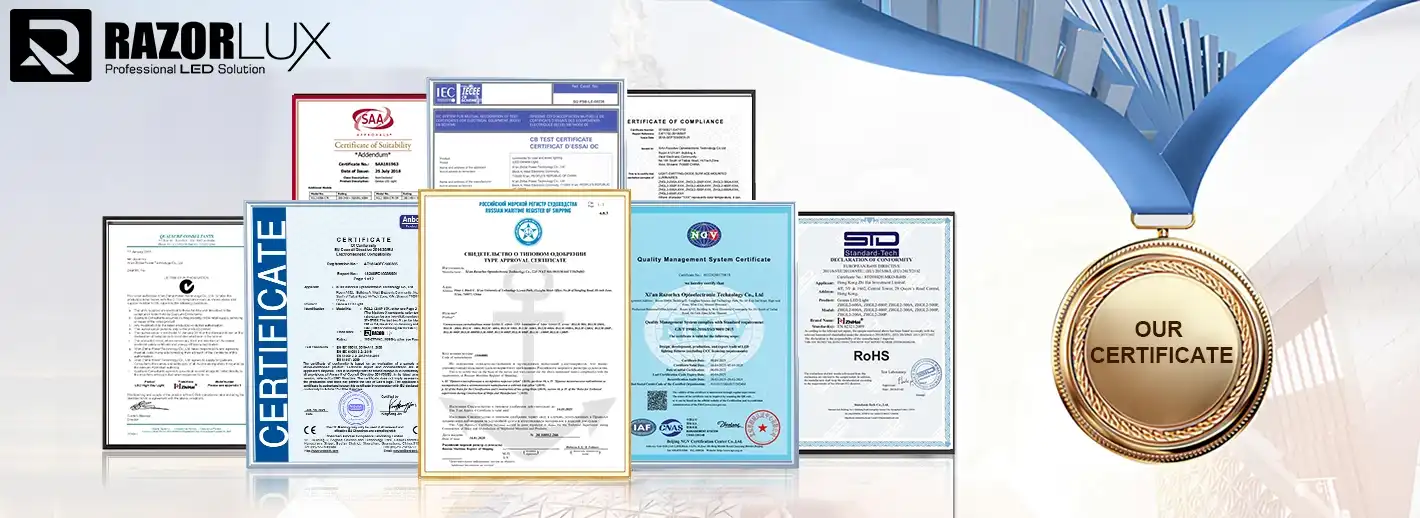
Building partnerships with makers whose certification processes are clear and who provide all necessary paperwork lowers the risk and work of proof. Companies like Razorlux, which has been around since 1998 and has all sorts of certifications and patents, like RMRS, CE, RoHS, SAA, UL, DLC, and CB, show a long-term commitment to quality and compliance that one-time certifications can't match.
Comparing Certifications: What Matters Most for Different Marine Applications?
The importance of different certifications changes a lot depending on the type of vessel, how it will be used, and where the Marine Flood Lights 1000W will be installed. When procurement professionals understand these differences, they can focus their verification efforts on certificates that directly reduce risks that are relevant to their application, rather than taking all certifications as equally important.
Commercial Shipping Vessel Requirements
Major classification societies classify container ships, bulk carriers, and tankers. These ships need luminaires that have type approval from the right society. Different classification societies, like DNV GL, ABS, Lloyd's Register, and others, have similar but not identical rules. This means that equipment that meets the standards of one society might not instantly meet the standards of another society without more tests or paperwork. Fixtures that have multiple classification society approvals make it easier for ships that operate internationally to follow the rules, no matter what class they are in.
Offshore Oil and Gas Platform Installations
Because they are in dangerous places and are exposed to harsh environments, fixed and mobile offshore platforms have the strictest approval rules. ATEX or IECEx certification is needed for installations in certain dangerous areas. The types of equipment that need to be certified are based on detailed drawings of the hazardous areas that were made when the building was designed. Most of the time, these installations call for equipment that is rated for Zone 1 or Zone 2. Group IIC classification works best for a wide range of gas and vapor types.
Impact resistance proven by IK10 testing is very important on offshore installations where crane operations, dropped tools, and flying objects during storms are constant dangers. The IK rating method checks how well something can absorb impact energy by dropping heavier and heavier objects from higher and higher heights. IK10 means that the fixture can withstand 20 joules of impact energy, which is the same as a 5 kg mass being dropped straight onto its weakest parts from 40 cm above.
Port and Terminal Operations
Shore-based port facilities don't have to go through as many approval steps as vessel-mounted equipment, but they still have to deal with saltwater exposure, vibrations from equipment used to move goods, and sometimes direct water impacts from storms or fire suppression systems. IP67 waterproofing is good enough for most port applications, but installations on piers that go out into open water need IP68 ratings for extra protection against wave action.
In addition, port setups can accept a wide range of voltages (AC 80–360V or DC 100–400V), which can handle the power changes that happen a lot in industrial settings where big motors start and stop all the time. This makes it possible to use less expensive tools to control the voltage and keeps sensitive driver electronics from getting damaged by bad power quality.
| Application Type | Critical Certifications | Key Performance Parameters | Primary Concerns |
|---|---|---|---|
| Commercial Vessels | DNV GL, ABS, RMRS, CE, UL | IP67, IK10, vibration resistance | Classification society compliance, multi-jurisdiction operation |
| Offshore Platforms | ATEX/IECEx, DNV GL, NORSOK | Zone 1/2 rating, C5-M corrosion resistance | Hazardous location safety, extreme corrosion, difficult replacement access |
| Port Terminals | IP67, DLC, UL/CE | High efficacy (130+ lm/W), wide voltage input | Energy costs, utility rebates, power quality tolerance |
| Shipyards | IP67, CE, local electrical codes | IK10 impact resistance, corrosion protection | Construction site abuse, welding interference, temporary installations |
| Fishing Vessels | Classification society (vessel-dependent), IP67 | High lumen output, vibration resistance | Cost constraints, easy maintenance, maximum brightness for fish attraction |
LED Versus Traditional Lighting Technology
Which technology you choose—LED, Metal Halide, or High-Pressure Sodium—has a big impact on certification compliance and operating performance. Due to the lack of mercury and other harmful materials in HID lights, LED systems are usually better able to meet environmental standards like RoHS (Restriction of Hazardous Substances). This makes it easier to get rid of things and lowers the environmental impact at the end of their useful life.
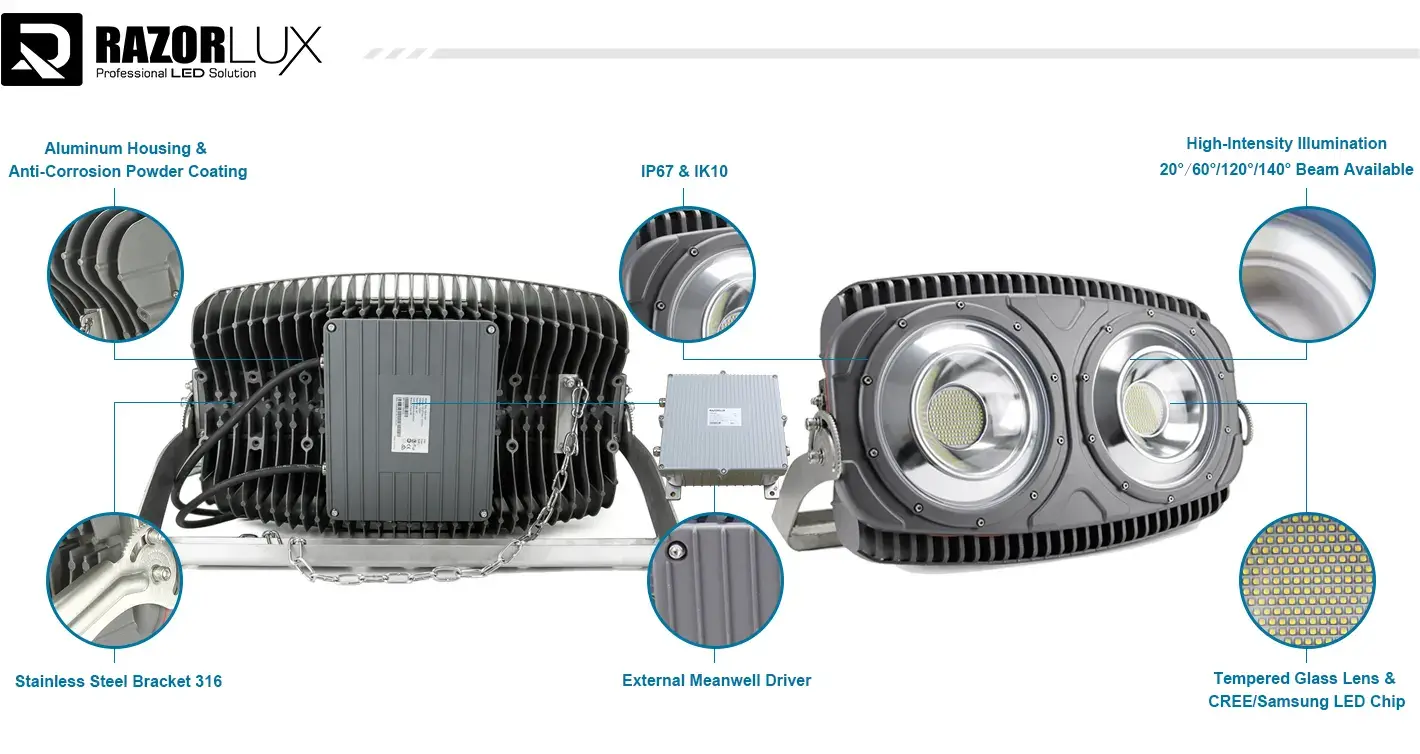
LED technology also makes it possible to include more surge protection in the driver circuits, since solid-state parts can handle safety devices that would normally get in the way of HID ballasts' high-voltage ignition needs. Good LED marine floods usually have Meanwell drivers with built-in surge suppression rated for 10kV or higher. This directly addresses the lightning and electrical surge risks that are common in maritime environments. Usually, traditional HID systems need extra surge protectors that cost more, are harder to set up, and add more places where things can go wrong.
Maintenance and Longevity: How Certifications Influence the Lifecycle of 1000W Marine Flood Lights
Certification affects more than just the decision to buy. It also affects how to maintain, where to find spare parts, and the total cost of ownership over the life of the Marine Flood Lights 1000Ws. When procurement workers understand these lifecycle effects, they can compare the real value of equipment instead of just comparing the prices to buy it.
Installation Standards and Maintenance Guidelines
As part of the certification process, certified equipment usually comes with full installation directions that spell out the right way to mount the device, the minimum distances needed for heat management, and the right way to install the cable gland to keep the IP rating. When certification compliance is needed by classification societies or insurance underwriters, following the manufacturer's installation instructions becomes legally important. This is because bad installation can void certifications and put you at risk of liability.
Warranty Frameworks and Long-Term Value
A warranty that covers everything shows that the maker is confident in both the quality of the design and the stability of the production. Established makers offer a 5-year warranty on the LED module and driver and a 10-year guarantee on the housing. This gives customers peace of mind that goes beyond certification testing and covers real working performance. The terms of the warranty should spell out the conditions of coverage, such as whether coverage is void for improper installation or unauthorized changes, and what proof is needed to back up warranty claims.
Energy Efficiency and Operational Cost Reduction
Electrical economy standards directly lead to cost savings that add up over thousands of hours of use. A Marine Flood Light 1000W that is 130 lm/W efficient gives off the same amount of light as a 2200–3000W Metal Halide bulb while using less than half as much electricity. Over the course of a fixture's 50,000-hour life, this will save more than 60,000 kWh of energy, which, at standard industrial rates, means saving more than $6,000 in power costs.
Power factor correction above 0.98 stops utility penalty charges, which are becoming more popular in industrial rate structures where sites with bad aggregate power factor have to pay extra. Active power factor correction in LED systems keeps the power factor close to unity across the entire operating range. This gets rid of these penalties while also lowering the amount of power that seems to be used, which puts stress on the electrical infrastructure. In ships with limited generator capacity, this is especially important because every kVA of power loss lets more equipment run without having to upgrade the power generation systems.
Conclusion
Selecting properly certified Marine Flood Lights 1000W requires balancing multiple certification frameworks that address waterproofing, electrical safety, marine classification society requirements, and potentially hazardous location approvals depending on specific installation contexts. IP67 ingress protection, IK10 impact resistance, and C5-M corrosion protection form the baseline for maritime applications, while UL, CE, and classification society approvals from DNV GL, ABS, or RMRS ensure regulatory compliance across different jurisdictions. Verification of certification authenticity through documentation inspection, database checks, and relationships with recognized manufacturers protects against counterfeit certifications that create safety and liability risks. The operational profile—whether commercial vessel, offshore platform, or port terminal—determines which certifications merit priority attention and verification effort. Lifecycle considerations including maintenance procedures, warranty coverage, and energy efficiency demonstrate how certifications influence total cost of ownership beyond initial purchase price.
Partner with Razorlux for Your Industrial Lighting Solutions
We at Xi'an Razorlux Optoelectronic Technology Co., Ltd. have been designing LED lighting solutions for the toughest industrial, naval, and offshore settings for more than twenty years. Our dedication to new ideas is shown by the 436 patents we have and the research that is constantly being done at our approved labs. As a reliable Most Powerful Flood Light provider, we offer more than just luminaires. We also provide full lighting solutions, such as design estimates, installation advice, and quick technical support for as long as your equipment is in use. Our RGL-1200P series is the best high-output LED technology on the market. It has 156,000 lumens of output, IP67/IK10 protection, Samsung LED chips, Mean Well drivers, and all the necessary international certifications. You can talk to our team at sam@razorlux.com about the needs of your project, ask for test samples, or get free lighting estimates. We're ready to show you how Razorlux's engineering know-how can make your industrial operations safer, more productive, and more cost-effective.
References
1. Illuminating Engineering Society of North America. (2020). IES Lighting Handbook, 10th Edition. New York: Illuminating Engineering Society.
2. Marine Equipment Directive (MED) Certification Working Group. (2019). Guidelines for Marine Lighting Equipment Type Approval. Brussels: European Commission.
3. U.S. Department of Energy. (2021). LED Lighting for Industrial Facilities: Energy Savings and Operational Benefits. Washington, DC: Office of Energy Efficiency & Renewable Energy.
4. International Electrotechnical Commission. (2018). IEC 60598-2-5: Luminaires - Part 2-5: Particular requirements - Floodlights. Geneva: IEC Standards.
5. American Bureau of Shipping. (2022). Guide for Lighting and Electrical Systems on Offshore Installations. Houston: ABS Technical Publications.
6. British Standards Institution. (2020). BS 5266-1:2016 - Emergency Lighting: Code of practice for the emergency lighting of premises. London: BSI Group.