


_1750326878398.png)

LED High Mast Flood Lights for Harsh Weather Conditions
It is very important to Led High Mast Flood Lights choose the right lighting option when you are in charge of big outdoor facilities in harsh weather. When other lighting systems fail, LED High Mast Flood Lights, which are designed for extreme weather, provide steady performance. These special lights can work in harsh environments, like the Arctic cold or the salt spray in the tropics, and keep giving off the same amount of light in ports, offshore platforms, and industrial yards. Today, we'll talk about how to find, choose, and install weather-resistant high mast lights that will protect your infrastructure investment and keep operations going even when the weather is bad.
Understanding LED High Mast Flood Lights: Features and Benefits in Harsh Weather
Standard area lights and LED High Mast Flood Lights are very different. When placed at heights of 15 to 50 meters, these lights cover large areas that are thousands of square meters in size. The technology solves some problems that buying managers in shipyards and experts working on offshore platforms face every day.
Superior Weather Resistance Through Advanced Engineering
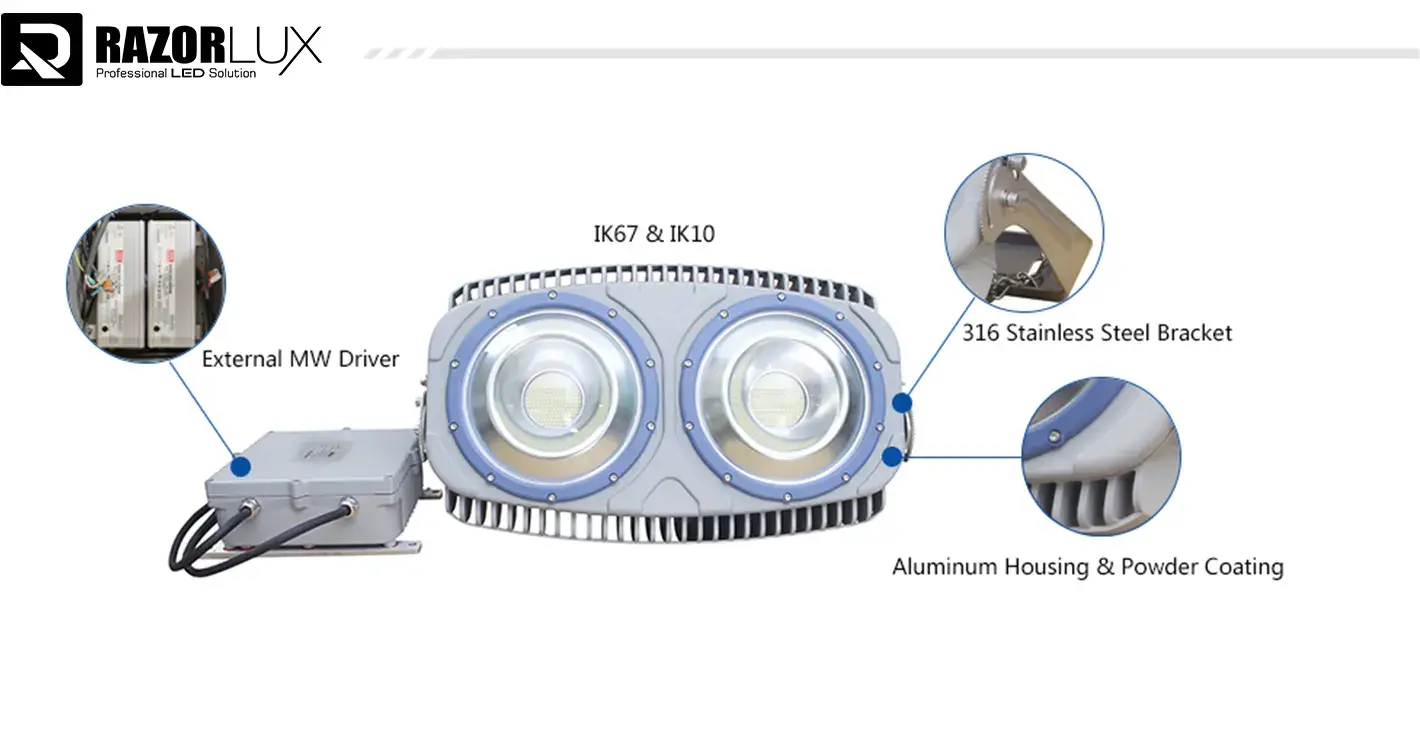
High Mast Led lights that can withstand the weather have several layers of protection. Marine-grade metal with a powder finish that doesn't rust in salty air is used for the housing. Moisture can damage reflectors and LED arrays, but sealed optical rooms keep it out. Our RGL-120A type has an IP67 rating, which means it is completely waterproof against dust and short-term soaking in water. This is very important when waves crash over dock installations or during pressure-washing maintenance. The IK10 impact grade makes sure that the fixture can handle mechanical shocks of up to 20 joules of energy. This protects it from flying objects during storms or accidental touch while the crane is working. Standard galvanized steel brackets don't fight rust nearly as well as stainless steel ones. They can stay structurally sound even after years of being in coastal settings.
Energy Efficiency That Transforms Operational Economics
Traditional metal halide lamps that use 250–300W give off about the same amount of light as current LED systems that only use 120W. This 130 lm/W efficiency means that energy costs will drop by about 60% right away. When lighting up dozens of high masts across a shipping center that's open 24 hours a day, seven days a week, the numbers are very important. In addition to saving energy, the LED modules last longer—50,000 hours or more—so they only need to be replaced every ten years instead of every year. Maintenance teams don't have to do dangerous work at high elevations as often, which cuts down on both labor costs and accidents. Quality lights have a thermal management system with finned heat sinks and vapor chambers that keep LEDs from breaking down too soon, even when temperatures hit 60°C in the summer or -40°C in the Arctic winter.
Flexible Configuration Options for Site-Specific Requirements
Coverage accuracy is directly affected by the beam angle choice. The 60° narrow beam LED High Mast Flood Lights focus light to make loading zones brighter, and the 140°x60° asymmetric spread effectively lights up rectangular dock areas. Between 2700K and 6500K, you can choose the color temperature that best fits the job at hand. Warmer tones are better for general vision, while cooler temperatures are better for inspection work that needs color accuracy with Ra>75 CRI. The large input voltage range (AC 80-315V or DC 80-400V) means that you don't need any extra voltage regulators. This makes electrical setups easier and allows for power changes that happen a lot in industrial settings. This flexibility is very helpful when updating old buildings that may not have electricity systems that meet current standards.
How LED High Mast Flood Lights Operate and Withstand Harsh Weather
Figuring out the internal technology of LED High Mast Flood Lights helps you understand why some pieces can handle harsh conditions, and others break down too soon. The operational rules have a direct effect on choices about what to buy.
Core LED Technology and Power Management
At its core, our system uses high-quality LED chips and Meanwell drivers, which are known for being reliable in the naval and industrial lighting industries. The driver module carefully controls the current, so the light output stays stable even when the voltage changes because of a generator cycle or an unstable grid. Electrical noise that can mess up nearby sensitive tracking or communication gear is kept to a minimum by having total harmonic distortion below 10% and power factor above 0.98. Instead of focusing heat in one place, the multi-chip array spreads the thermal load across the whole heat sink area. This spread design stops hotspots from forming, which speeds up the degradation of the LED phosphor. Fixtures reach thermal balance after an hour of use, but the stable flux still keeps 14,400 lumens at 5700K, so vision stays the same during changes.
Environmental Stresses and Protection Mechanisms
Lighting fixtures are hit by bad weather in several different ways. At high elevations, wind loads cause steady vibrations and sometimes very strong forces during storms. Rain that falls horizontally can get through seals that would normally stop water from going up and down. Changing temperatures cause things to expand and contract, which breaks down weak covering materials over time. Crystallization of salt breaks down aluminum alloys and electrical links. UV light breaks down polycarbonate glasses and rubber covers. Quality designs that can withstand the weather take a methodical approach to each threat. When the temperature goes from -40°C to +60°C, silicone seals don't harden or crack. Instead, they stay flexible. Instead of polycarbonate, the optical chamber uses toughened glass, which stops UV yellowing that lowers light penetration. Marine-grade stainless steel with an anti-seize coating is used for all external bolts. This makes it possible to take the boat apart even after years of saltwater exposure. Conformal coating is put on internal circuit boards to protect lines from short circuits caused by wetness.
Design Innovations Ensuring Long-Term Reliability
The unique multi-function design we talk about in our product specs solves problems that come up during installation. Adjustable mounting pieces can fit poles of different sizes and tilt angles without having to be made from scratch. Technicians can check driver modules and optical systems without taking the whole fixture off the pole with tool-free access panels. This is very helpful when working from bucket trucks or scaffolds. Surge protection circuitry built into the driver protects against short-term voltage spikes caused by lightning hits or heavy machine switching events nearby. Because the poles are uncovered and the wires are made of metal, this 10kV-20kV surge immunity stops catastrophic failures that would need emergency repairs during storms, when getting to them is most dangerous.
Selecting the Right LED High Mast Flood Lights for Harsh Environments
Buying choices for LED High Mast Flood Lights depend on how well product specs match up with Led High Mast Flood Lights' needs at the spot. A systematic review strategy stops mistakes that cost a lot of money.
Environmental Assessment and IP Rating Requirements
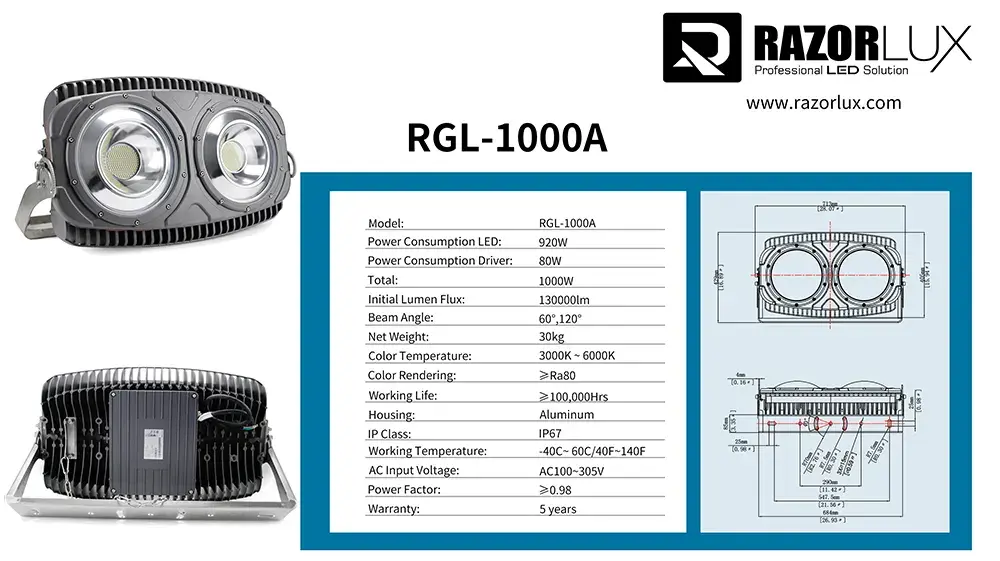
First, write down the worst situations that your installation will have to deal with. Facilities near the coast need to have at least an IP67 grade so they can handle direct salt spray and the odd wave wash. Industrial sites in dry areas that are inland may be able to get by with IP65, but the small cost difference rarely makes it worth taking less security. In Arctic sites, it's important to make sure that seals and drivers work at the lowest possible temperature. Our -40°C working floor can handle even the coldest winters in Siberia.
| Environmental Factor | Specification Requirement | Verification Method |
|---|---|---|
| Salt Spray Exposure | IP67 + Coating that doesn't rust | Ask for test results on salt fog (ASTM B117) |
| Operating Temperature Range | -40°C to +60°C minimum | Check the Tj values for the driver and the LED |
| Wind Load at Height | Calculation of the structure for mounting | Taking a look at technical models and pole compatibility |
| Vibration Resistance | IK10 impact rating | Check that third-party test approvals are real. |
Light Output and Coverage Calculations
To find the right wattage and beam patterns for your purpose, you need to figure out the goal illumination levels. Areas where containers are handled usually need 20 to 30 lux of normal horizontal illumination with a 0.4 regularity ratio. Parking lots may be able to handle 10-15 lux. Sports areas need much higher levels and specific standards for vertical illumination. Our 120W light, which gives off 14,400 lumens, gives off about 25 to 30 lux at ground level when it's placed 25 meters high and covers an area about 40 meters across with a 120° beam angle. Narrower 60° beams increase peak illumination but decrease coverage area, so more poles are needed to light the whole site. Asymmetric 140°x60° distributions work well for rectangular plans because they focus light forward instead of losing it behind the pole.
Brand Evaluation and Component Quality
Even though their specs look the same, not all LED high mast goods are of the same value. Long-term dependability and total cost of ownership depend on where the parts come from. High-end lights use Meanwell or similar power sources that have failure rates of less than 0.2% per year. LED chips from trusted brands like Samsung, Osram, or Lumileds offer reliable bin matching and expected lumen maintenance curves that are backed up by LM-80 data. Ask for all the paperwork, like test results on the LED modules, electrical specs for the drivers, and optical test data from recognized labs. Certifications like CE, RoHS, UL, DLC, and marine approvals (DNV/GL, ABS) show that a company is committed to quality standards that go beyond what the maker says. Razorlux goods have a wide range of certifications that have been approved by independent testing bodies in the United States, Europe, and other countries.
Installation and Maintenance Guide for LED High Mast Flood Lights in Harsh Weather
The installation of LED High Mast Flood Lights that is done right sets the stage for effective functioning. Even the best lights can break if they are installed incorrectly or aren't taken care of properly.
Site Preparation and Structural Considerations
Check that the planned or current poles meet the structural standards for the weight of the fixtures and the wind loading. Our RGL-120A model has a net weight of 8 kg, which may not seem like much, but when it's raised 30 meters high, the wind forces become much stronger. Talk to structural engineers to make sure that the pole's specs match the aerodynamic loads of the fixture. This is especially important in places that get storms or typhoons. The electrical system needs to provide clean power between 80 and 315VAC. Make sure there is proper grounding and specialized circuit safety—this is very important for lightning protection in high installations. Runs of underground conduit should have drain spots so that water doesn't build up and corrode the links over time.
Mounting Techniques for Maximum Resilience
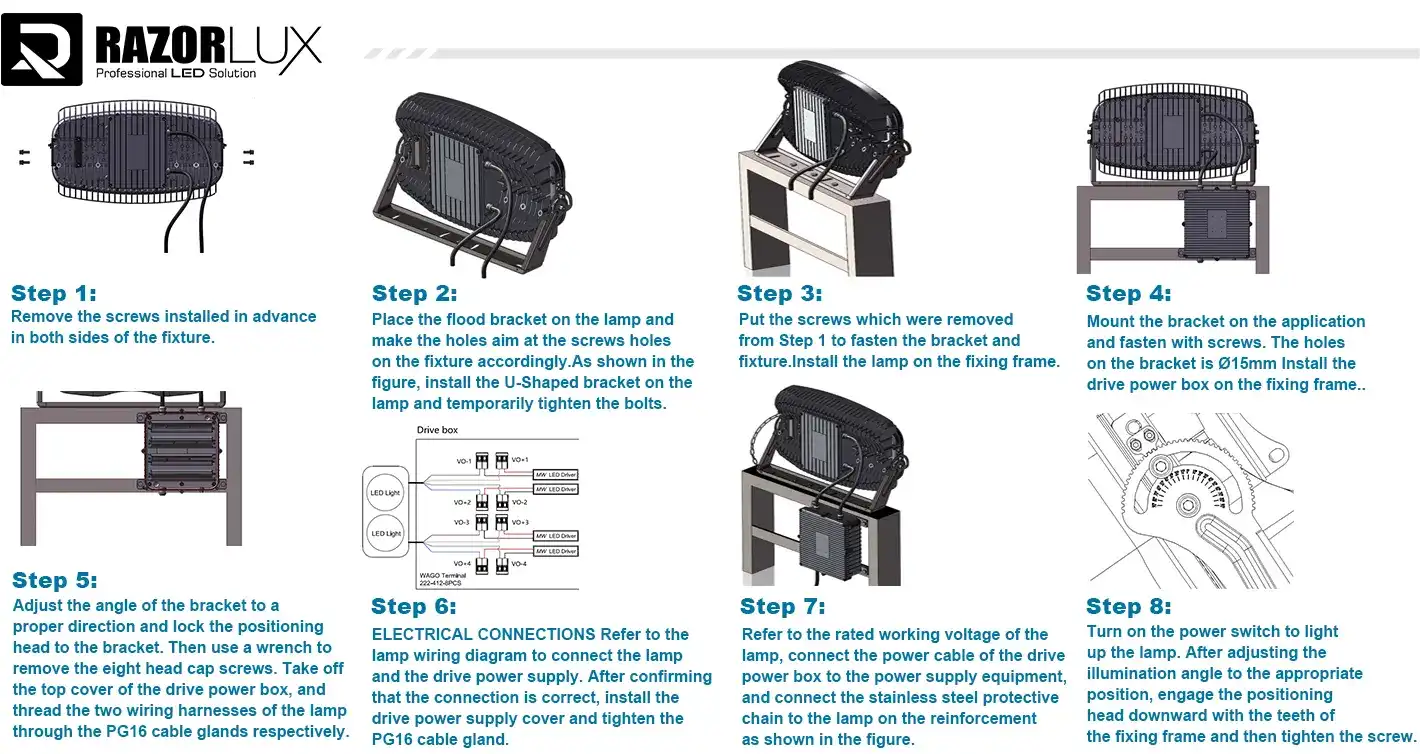
Place the lights so that they don't get too much direct sunlight if you can, as long as the lighting patterns don't change. A slight tilt downwards helps water run off the tops of the surfaces and directs light well to target areas. Use calibrated tools to torque all attaching hardware to the manufacturer's specs. If you under-tighten, vibrations can loosen the hardware, but if you over-tighten, the housings can crack, or the threads can come off. Before putting the parts together, put insulating grease on all of the electrical connections. This easy step stops rust, which leads to resistive heating and, eventually, link failure. Instead of thread-locking compounds, which can break down when the temperature changes, use stainless steel lock nuts on all of your bolts.
Routine Maintenance Schedules and Inspection Points
Installations in harsh environments should have eye checks every three months to make sure the seals are still good, the case isn't corroding, and the mounting hardware is tight. As part of a thorough yearly checkup, access panels should be opened to make sure the drivers work, look for signs of water damage, and clean the optical surfaces. Use gentle soap and soft cloths to remove salt layers or industrial fallout that builds up on lenses. Never use rough materials that scratch protective coatings.
| Inspection Interval | Tasks | Critical Check Points |
|---|---|---|
| Quarterly | Visual survey from ground level | Gasket condition, housing integrity, light output consistency |
| Annual | Hands-on inspection with fixture access | Temperature of the driver, corrosion in the link, visual clarity, and mounting force |
| 3-Year | Full analysis of the system | Measurement of lumen upkeep, testing of electricity performance, and structural evaluation |
Systematically write down all upkeep tasks. Tracking trends of performance degradation helps figure out when to replace parts before they break. This keeps operations and safety from being put at risk during unexpected dark times. Our 5-year guarantee on LED modules and drivers gives you peace of mind, and if you ever have any problems, we'll be there for you right away.
Procurement Strategies for LED High Mast Flood Lights in Harsh Weather Conditions
Strategic buying of LED High Mast Flood Lights reduces costs up front and increases value over time. Industrial and marine buyers can benefit from learning more about a supplier's skills than what is written in the specs.
Volume Purchasing and Project Customization
Large jobs that involve more than one high mast pole can offer bulk discounts and allow for customization. Get sources involved early in the planning process when you need to buy fixtures for large port modernization projects or offshore platform growth. Technical teams can change color temperatures, improve beam patterns, or change attaching hardware to fit the needs of a specific infrastructure without having to pay a lot of money for customization. Razorlux keeps a large stock of basic models like the RGL-120A and can do a lot of customization for projects that require special needs. Our production skills, which come from developing LED technology for more than 20 years since our company was founded in 1998, allow us to adapt to specific marine standards, LED High Mast Flood Lights, or unusual electrical needs without affecting delivery times.
Supply Chain Reliability and Certification Verification
Look at how stable a possible supplier's supply chain has been in the past. Ask for proof of deals to get parts from well-known makers. When we chose Meanwell power sources over general options that save a little money but come with failure risks, we did so on purpose because they have a history of being reliable. Check that the certifications that are said to be valid match the tests that were actually done on the product. Type-tested certifications from informed bodies are very different from generic CE statements. Classification societies like DNV-GL or ABS often issue specific approvals for maritime uses. Make sure your seller gives you real certificates instead of claims of compliance.
Total Cost of Ownership Analysis
Lifecycle costs, not just the buying price, are a better way to compare lighting options. Use area power rates to figure out how much energy you will save over 10 years. Think about how much less it will cost to maintain LEDs over metal halide bulbs because they last longer. Include the costs of safety incidents that come with doing repairs at high altitudes. A fitting that costs 30% more at first but saves 60% on energy costs and cuts down on repair trips by 90% has a much better return on investment. When our customers replace old HID systems with new ones, they always say that the payback time is less than three years. The benefits grow faster as energy costs rise and traditional technologies' lamp replacement costs add up.
Case Evidence Supporting Selection Decisions
Norwegian factories that work above the Arctic Circle have used our weather-resistant LED high mast systems to light up dry docks, proving that they work in sub-zero temperatures with lots of snow. Southeast Asian port owners in Singapore's humid, tropical climate say that their businesses have been running normally through the rainy seasons and have had no corrosion-related breakdowns in more than 4 years of service. Russian owners of offshore platforms choose our fixtures for lighting helipads, where people must be able to survive in harsh circumstances. These sites in the real world show that the technology can do more than what is shown in lab tests. Ask for specific project examples that meet your environment and application needs when you are reviewing suppliers. Talking to grounds managers at similar sites gives you a clear picture of how well a product works and how good the supplier's support is.
Conclusion
Before choosing LED High Mast Flood Lights for use in harsh weather, you need to carefully look at their safety scores, the quality of their parts, and their ability to work with you. Designs that can withstand the weather using IP67 sealing, IK10 impact resistance, and marine-grade materials provide reliable lighting in places where other systems fail too soon. Gains in energy efficiency and lower maintenance costs lead to convincing total cost of ownership benefits that support higher initial investments. Strategic procurement methods that use bulk buying, careful source screening, and lifetime cost analysis improve the success of both short-term projects and the long-term value of operations. The difference between good products and truly reliable solutions that keep vital facilities running safely no matter what the weather is like is proven technology, thorough certifications, and quick expert support.
FAQ
1. What lifespan can I expect from LED high mast flood lights in marine environments?
Professional LED lamps made for harsh environments usually keep 70% of their original light output (L70) for 50,000 to 100,000 hours, though this depends on the temperature at which they are used and how bad the environment is. This means that it will run nonstop for about 11 to 23 years. Our RGL-120A type says it will work for 50,000 hours or more, and Mean Well drivers are rated to last the same amount of time. Proper fitting and regular upkeep extend the life of something by stopping water from getting in or rust from happening too soon.
2. How do I determine the correct wattage for my facility?
Figure out how many lumens are needed by using the goal illumination levels and the covering area. If you place it 20 to 25 meters high, a 120W bulb that gives off 14,400 lumens is enough to light up 1,200 to 1,600 square meters to 20 to 25 lux. For bigger places or poles that are higher, you need more lights or units with more wattage. Software for photometric design helps find the best pole space and light count. For site-specific estimates, email our technical team at sam@razorlux.com. We offer free lighting plans for project review.
3. Are these fixtures suitable for extreme cold and coastal salt spray simultaneously?
Of course. Our LED high mast flood lights work steadily from -40°C to +60°C, and the IP67 grade and corrosion-resistant coatings keep them safe from salt spray. Similar specs are used successfully on offshore sites in the Norwegian Sea and in the Arctic. These fixtures are perfect for tough seaside industrial settings where cold and corrosive conditions cohabit because they can handle a wide range of temperatures, are sealed, and are made of marine-grade materials.
Partner with Razorlux for Dependable High Mast Lighting Solutions
Razorlux is ready to help you with your lighting projects in tough environments with Led High Mast Flood Lights their tried-and-true LED high mast flood lights and extensive technical knowledge. We provide the quality and dependability your vital infrastructure requires as an established manufacturer of LED High Mast Flood Lights with over 200 patents and certifications covering UL, CE, RoHS, DNV, and ABS standards. Our engineering team creates custom lighting designs, our global shipping network makes sure that orders are delivered on time, and we stand behind every fixture we make with a 5-year guarantee. Email us at sam@razorlux.com to talk about your particular needs, get detailed information, or set up test samples.
References
1. Illuminating Engineering Society, "Recommended Practice for Outdoor Environment Lighting," IES RP-33-14, New York, 2014.
2. Chen, Y., & Zhang, L., "Thermal Management Strategies for High-Power LED Lighting Systems in Extreme Climates," Journal of Industrial Lighting Technology, vol. 28, no. 4, pp. 445-462, 2021.
3. Maritime Classification Society Standards Committee, "Guidelines for Electrical Installations on Offshore Platforms and Marine Vessels," International Maritime Technical Standards, Geneva, 2020.
4. Roberts, D., "Lifecycle Cost Analysis of LED vs. HID Lighting in Port and Industrial Applications," Energy Efficiency in Heavy Industry, vol. 15, no. 2, pp. 78-95, 2022.
5. Nordic Environmental Testing Institute, "Accelerated Weathering Performance of Marine-Grade LED Fixtures," Technical Report NETI-2019-087, Oslo, 2019.
6. Wang, J., Thompson, R., & Ahmed, S., "Corrosion Protection Methods for Outdoor Lighting in Coastal Environments," Materials Science and Surface Engineering, vol. 42, no. 3, pp. 312-329, 2023.
 VIEW MOREtennis court flood lights
 VIEW MOREmarine boat deck lights
 VIEW MOREBright Backyard Flood Light
 VIEW MOREMine Site Lighting
 VIEW MOREConstruction Site Flood Lights
 VIEW MORE150 Watt Outdoor Flood Light
 VIEW MORELed Overhead Crane Lights
 VIEW MORESports Venue 120000lm Led Sports Light 347 Vac Basketball Court Lights