

_1750326878398.png)

Where to Buy a 400W Equivalent LED Flood Light with a 5-Year Warranty?
When sourcing industrial-grade LED flood lighting with robust warranty coverage, procurement managers typically turn to specialized manufacturers, authorized distributors, and verified B2B platforms. For a 400W Equivalent Led Flood Light, engaging directly with well-known manufacturers like Xi'an Razorlux Optoelectronic Technology Co., Ltd. and getting full warranty coverage guarantees genuine products, full certification paperwork, and quick technical support. Marine equipment providers, industrial lighting distributors with DNV or ABS certifications, and well-known online platforms that check seller qualifications and product compliance with CE, UL, and DLC standards are some other ways to buy.
Understanding the 400W Equivalent LED Flood Light
400W Equivalent LED Flood Light refers to LED lighting that gives off the same amount of light or more than 400-watt metal halide or high-pressure sodium lamps while using a lot less electricity. This comparison is based on lumen output instead of watts, since LED technology produces more light thanks to better semiconductor design and heat engineering.
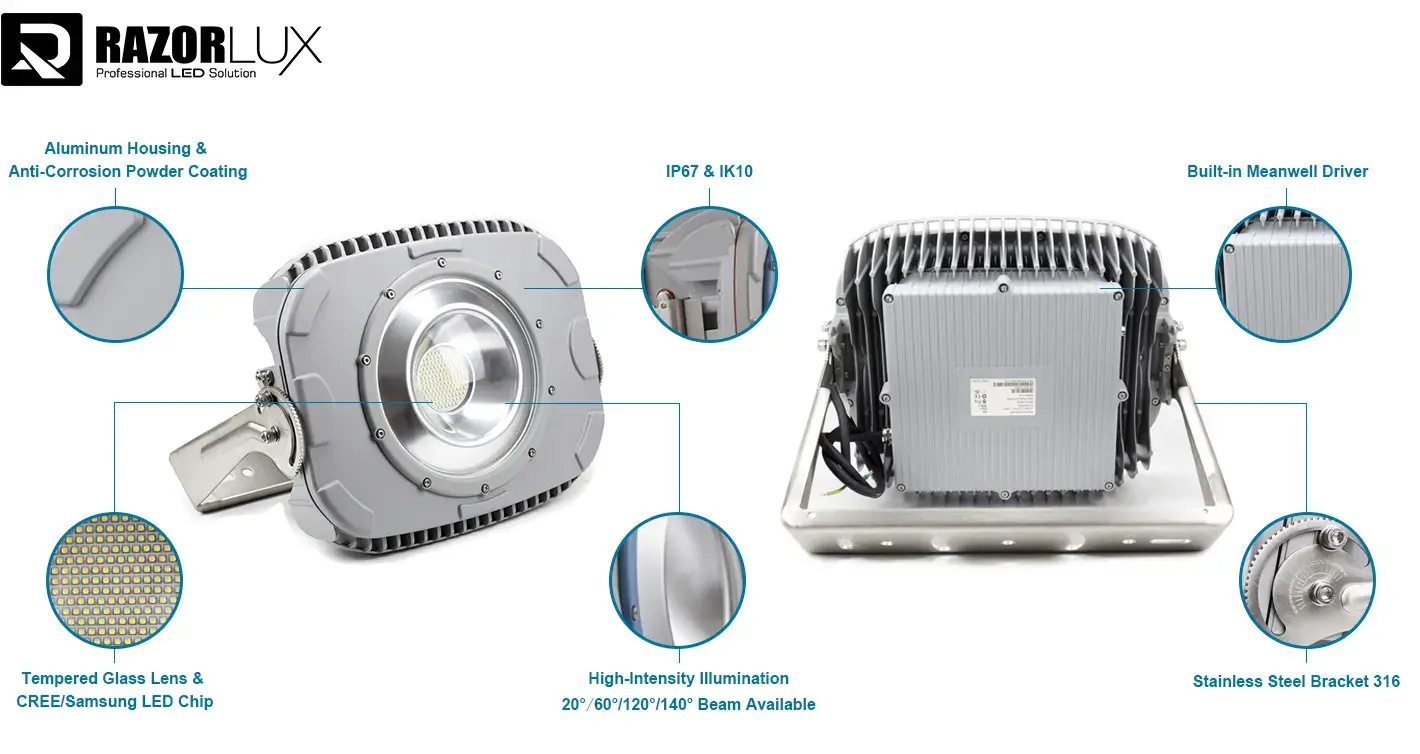
Lumen Output and Energy Consumption
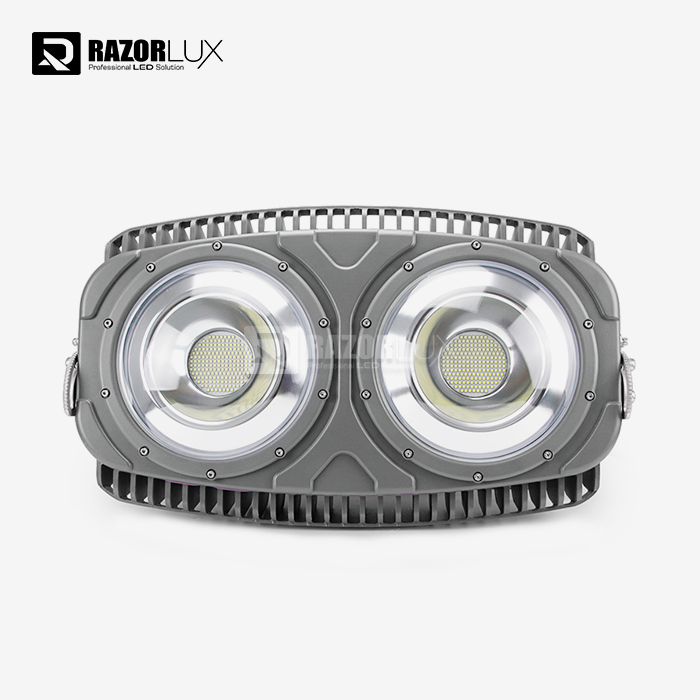
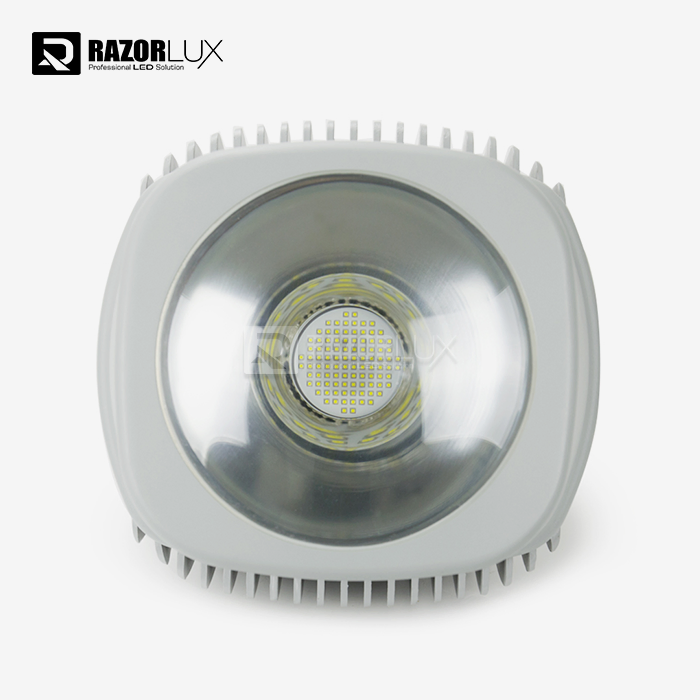
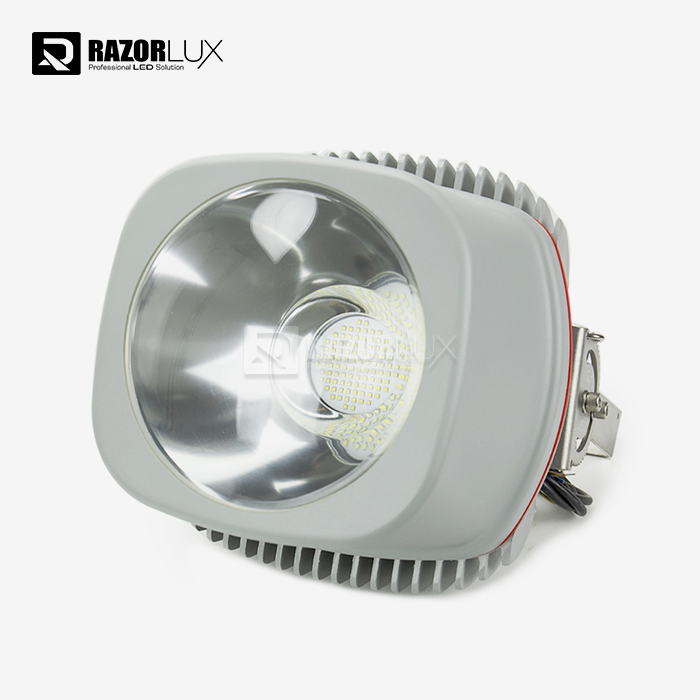
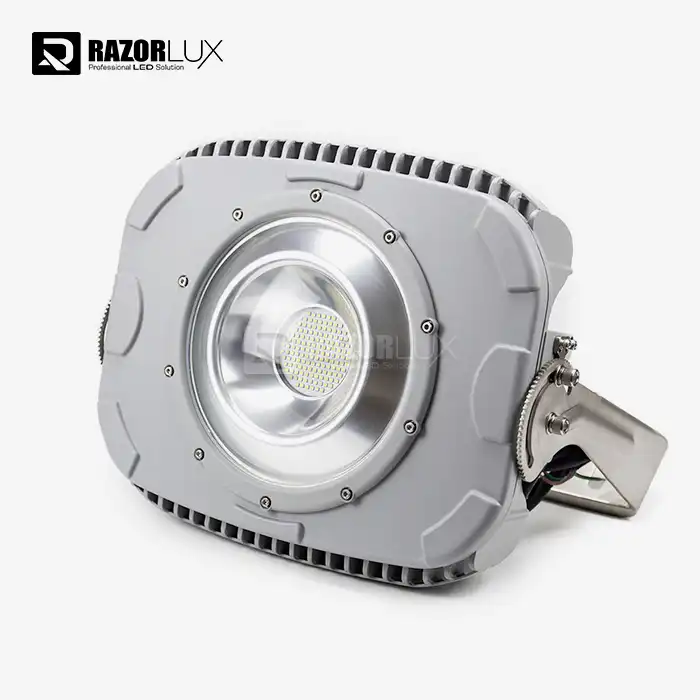
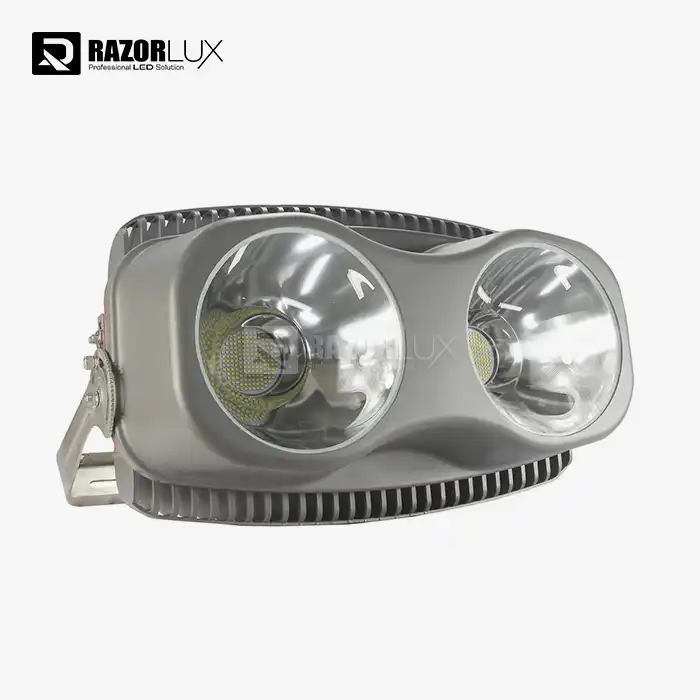
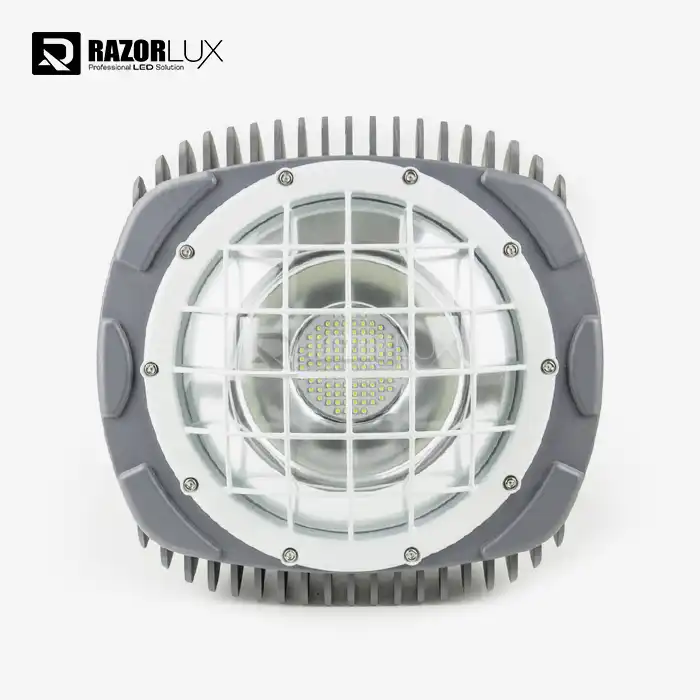
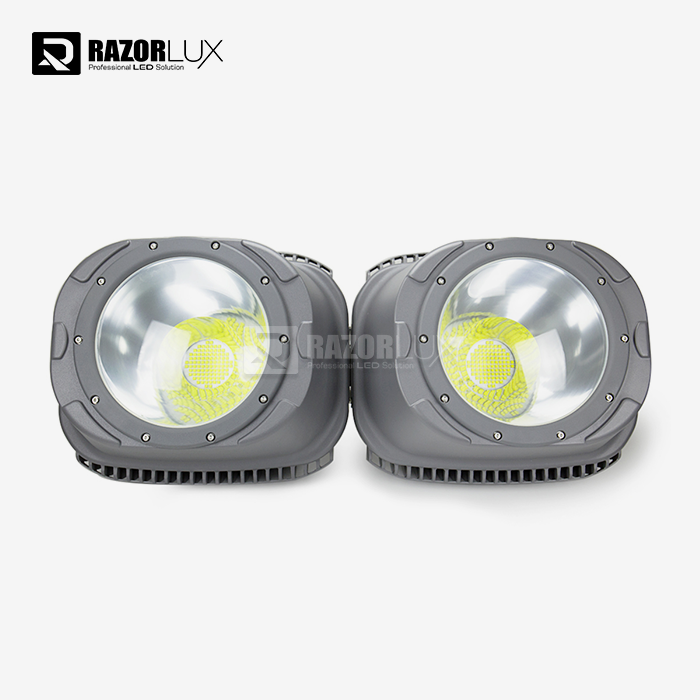
In this group, professional-grade LED flood lights usually put out between 48,000 and 52,000 lumens and use between 360W and 400W of power as a whole. The RGL2-400P type from Razorlux is rated at 130 lm/W and produces 48,000 stable lumens after temperature stability. It can replace 400–600W HID lamps and provides better optical control and direction accuracy. This performance means that more than 40% less energy is used than with older technologies. This is especially helpful in environments where things are always running, like offshore platforms where the cost of making electricity is still high.
In purchase specs, the difference between how much power an LED chip uses and how much power the whole system uses is very important. Good fixtures separate driver efficiency from LED array performance. Mean Well power supplies keep power factors above 0.98 and total harmonic distortion below 10%, which is needed to protect electrical infrastructure and meet maritime classification standards.
Color Temperature and Rendering Properties
For industrial uses, choosing the right color temperature based on the needs of the job must be done with great care. Neutral white (4000K–5000K) or daylight (5500K–6500K) color temperatures improve visual clarity and reduce eye pain during long shifts, making them ideal for places like ship repair yards and steel manufacturing plants that need to do precise work. At the same time, security software and perimeter lighting may choose cooler temperatures to make people more awake and improve the efficiency of monitoring.
Color Rendering Index (CRI) numbers above Ra75 make sure that materials, markings, and danger signs can be easily told apart. For inspection tasks that need to be very accurate, some marine applications may ask for the Ra80 or Ra90 options. Razorlux lets you change the color temperature between 2700K and 6500K, which lets buying teams standardize lighting across different areas of a building while keeping their source relationships the same.
Protective Ratings and Environmental Durability
The IP (Ingress Protection) rating system shows how resistant a device is to dust and water getting in. IP65 ratings make sure that dust can't get in and protect against low-pressure water jets coming from any direction. This is enough for outdoor areas that are covered. The IP67 certification means that the protection can be temporarily submerged up to a depth of one meter. This is very important for marine applications that are mounted on decks and offshore platforms that are exposed to wave action or washdown procedures.
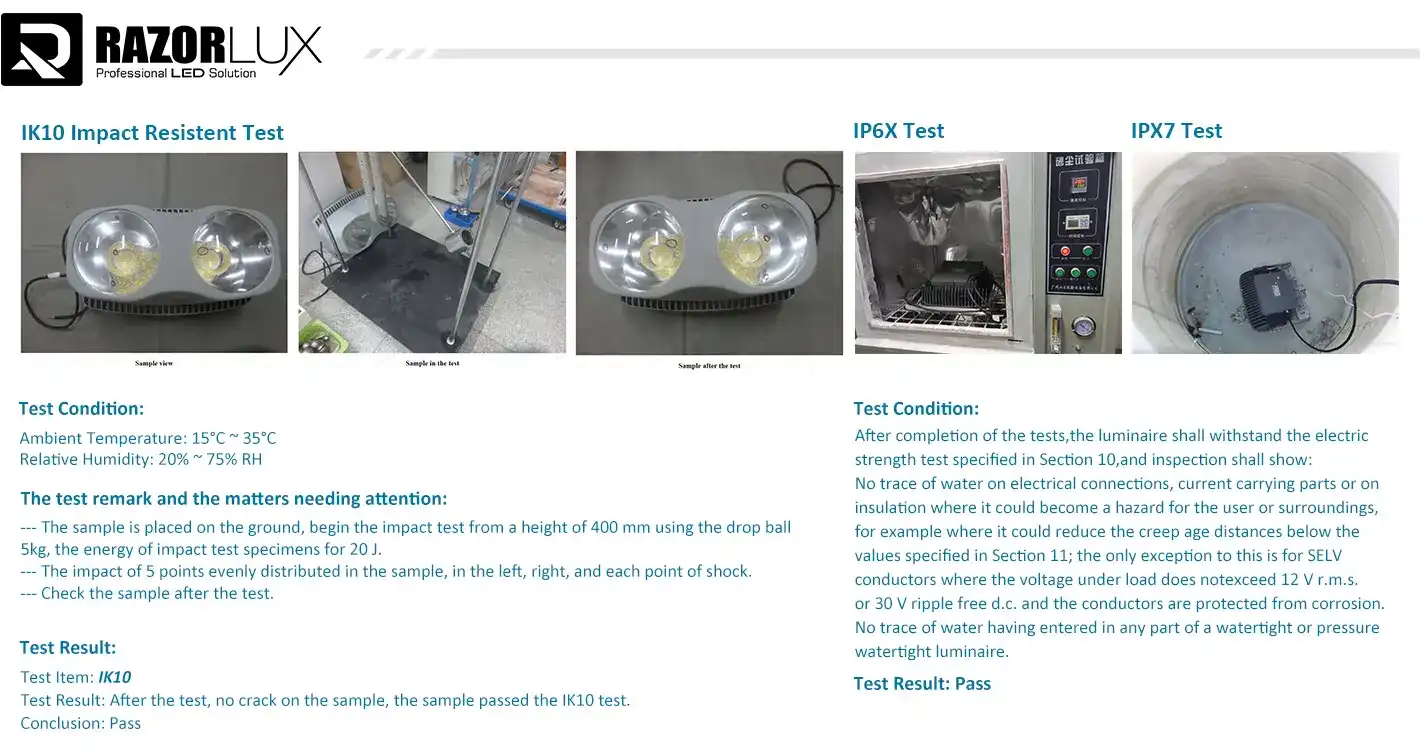
IK grades for impact resistance measure the mechanical endurance of a 400W Equivalent LED Flood Light. The IK10 classification can handle 20 joules of impact energy, which is the same as dropping a 5-kilogram object from 40 centimeters up. This is very important in industrial settings where high cranes are used, where people move things around, or where vandalism is a problem. Razorlux's industrial flood lights have both IP67 and IK10 ratings, which directly address buyers' concerns about premature failure in tough operational situations.
| Technical Parameter | Specification | Industrial Relevance |
|---|---|---|
| Luminous Efficacy | 130 lumens/W | 40 to 60 percent less energy is used than with HID |
| Total Lumen Output | 48,000 lm (stable) | Keeps lighting standards in line with IMO and SOLAS rules |
| Color Temperature Range | 2700K to 6500K | Adaptable to the lighting needs of different tasks |
| Color Rendering Index | Ra≥75 (Ra≥80 available) | Helps with accurate visual inspection and identifying safety markings |
| Operating Temperature | -40°C to 60°C | Fit for shipping lanes in the Arctic and sites in the Middle East |
| Ingress Protection | IP67 | Guards against ocean spray, dust storms, and cleaning jobs |
| Impact Protection | IK10 | Stands up to mechanical stress in busy industrial areas |
| Voltage Input Flexibility | 110V to 480V AC / 100V to 800V DC | International naval electricity systems can be used without adapters |
Beam Angle Selection for Application Optimization
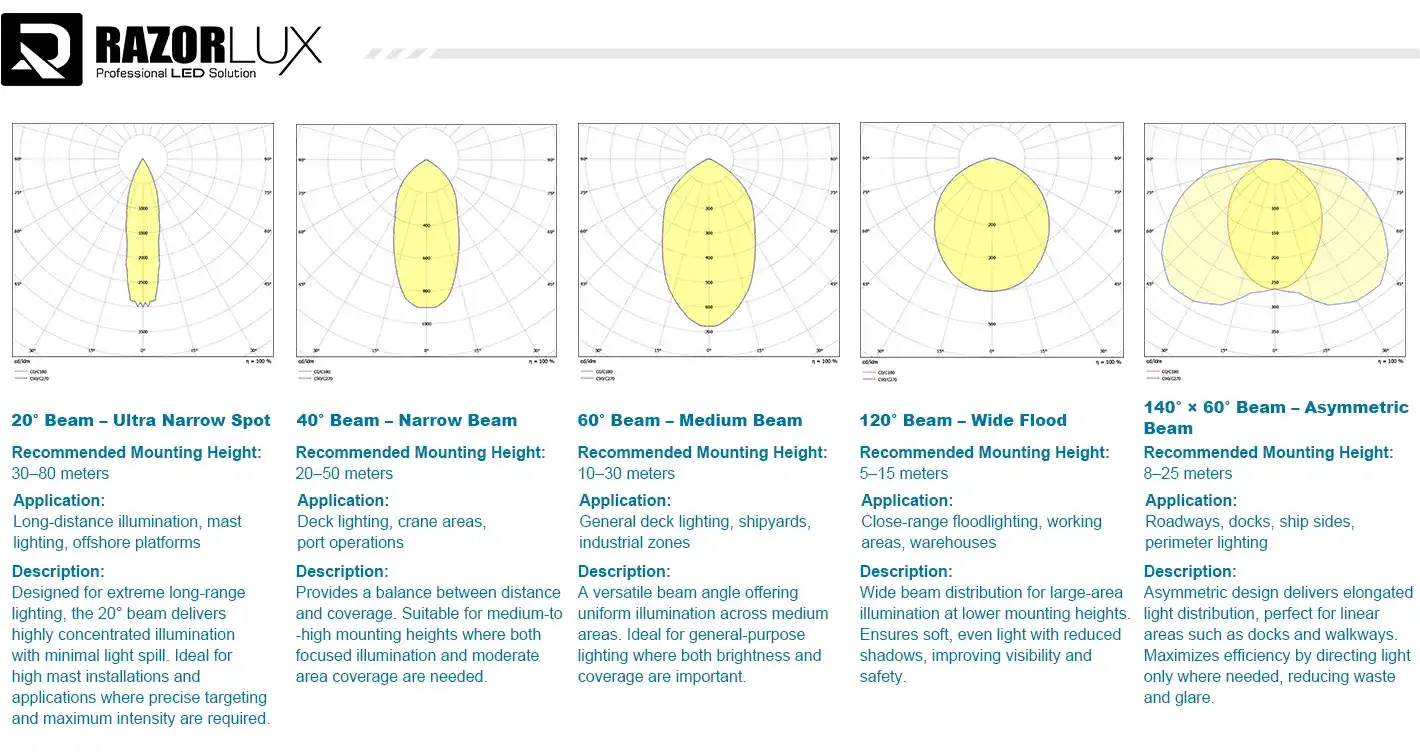
The angle of the beam decides how the light is spread and has a direct effect on how well the system works. A narrow 15° beam focuses light for high-mast use in port yards or targeted spotlighting on distant helidecks. Angles between 30° and 45° are good for general deck lighting and warehouse aisles where a modest spread combines coverage with mounting height. At this power level, wider asymmetric distributions aren't used very often, but they can be used for specific architectural or perimeter security needs.
To avoid over-illumination (which wastes energy) or inadequate coverage (which poses safety risks), the specs for purchases should match the beam angles with the mounting heights and spacing estimates. During the evaluation process, photometric data and lux distribution maps help technical teams make sure that the device choice improves both performance and the cost of installation.
Why Choose a 400W Equivalent LED Flood Light with a 5-Year Warranty?
The length of the warranty is a good way to see how well the product was made, what parts were used, and how well it was tested in real life. Longer warranty periods directly address the worries of purchasing managers about costs over the asset's lifetime, when to do maintenance, and how reliable the asset is in mission-critical situations.
Lifecycle Cost Reduction Through Warranty Assurance
A full 5-year guarantee changes the total cost of ownership estimates in a big way. In traditional HID lights, the lamps need to be replaced every 6,000 to 12,000 hours, and the ballasts need to be serviced every 3 to 4 years. Offshore platforms and marine vessels have to pay more for labor because of safety rules, limited access, and repair windows that require the vessels to be shut down. LED fixtures with 50,000-hour rated lifespans don't need to be replaced as often, and the guarantee guards against parts breaking down too soon.
Energy Efficiency and Operational Sustainability
The biggest part of the lifetime costs of lighting in buildings that are always open is the energy used. A 400W LED fixture that is on all the time uses about 3,504 kWh of electricity a year. With commercial energy rates averaging $0.10 to $0.15 per kWh, each fixture costs between $350 and $525 per year to run. Similar HID systems that use 600W would cost $527 to $588 a year, which is $175 to $263 a light a year. Over the life of the warranty, these savings add up to a lot for big setups with hundreds of fixtures.
Thermal Management and Build Quality Indicators
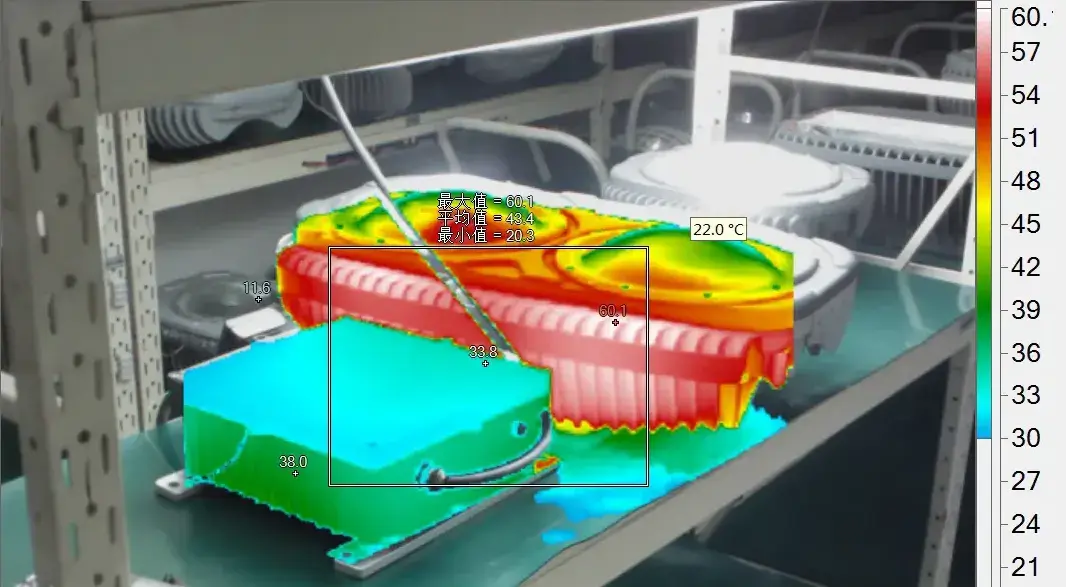
Strong thermal engineering builds trust in warranties. Managing the joint temperature has a direct effect on how well and how long an LED works. Die-cast aluminum housings with optimized fin geometry are used by high-quality manufacturers. This allows passive thermal dissipation to keep junction temperatures below 85°C even when the ambient temperature is 60°C.
Comparing Top Industrial LED Flood Light Manufacturers
To make a decision about what to buy for a 400W Equivalent LED Flood Light, you need to carefully look at what the manufacturer can do, where to get parts, their certifications, and their service infrastructure. Brands that are well-known for their quality usually charge more, but specialized makers may be able to offer better value through focused engineering and direct-to-buyer business models.
Established Industrial Lighting Brands
Big lighting companies have a lot of different products that cover a lot of different technologies and market sectors. Their industrial LED products are backed by large distribution networks, a well-known brand, and long-term relationships with specification engineers. Premium products from these companies usually come with warranties that last between 3 and 5 years, and service is handled by area wholesalers.
Specialized Marine and Heavy-Duty Lighting Manufacturers
Manufacturers who only work with tough environments know a lot about how to make things that don't rust, can handle shaking, and can pass marine certification processes. With over 20 years of experience focusing in marine and industrial lighting, companies like Razorlux learn a lot about each application. This helps them make design decisions and set quality control goals.
Component Quality as Differentiation
The LED chip and driver are the most important parts of the light for its function. Reputable manufacturers clearly list these parts because they know that knowledgeable buyers judge quality at the subsystem level. Samsung, Osram, and Lumileds chips are the best for high-end industrial uses because they have consistent binning, good thermal stability, and data on how to keep the lumen level.
The choice of driver is also very important. Mean Well power supplies are the most reliable in industrial and marine settings because they are well-built, can handle a wide range of input voltages, and have been shown to last under high temperatures. The RGL2-400P can work with both AC 110-480V and DC 100-800V input ranges, so it can be used with foreign marine electrical systems and new hybrid power installations without the need for extra adapters or special engineering.
| Manufacturer Type | Typical Warranty | Key Advantages | Procurement Considerations |
|---|---|---|---|
| Major Industrial Brands | 3 to 5 years | Widespread distribution, well-known brands, and a lot of products | More expensive goods, longer wait times, and distributor ties |
| Marine Specialists (Razorlux) | 5 years or more | Engineering tailored to the application, maritime certifications, and direct support | May need to be shipped internationally, with less of a local presence |
| Generic/Value Brands | 1 to 3 years | Less expensive at first | Not enough certification, doubts about the quality of the parts, and not enough technical support |
| Regional Manufacturers | Two to three years | Being close by means faster delivery | Different quality standards and a lack of international certification |
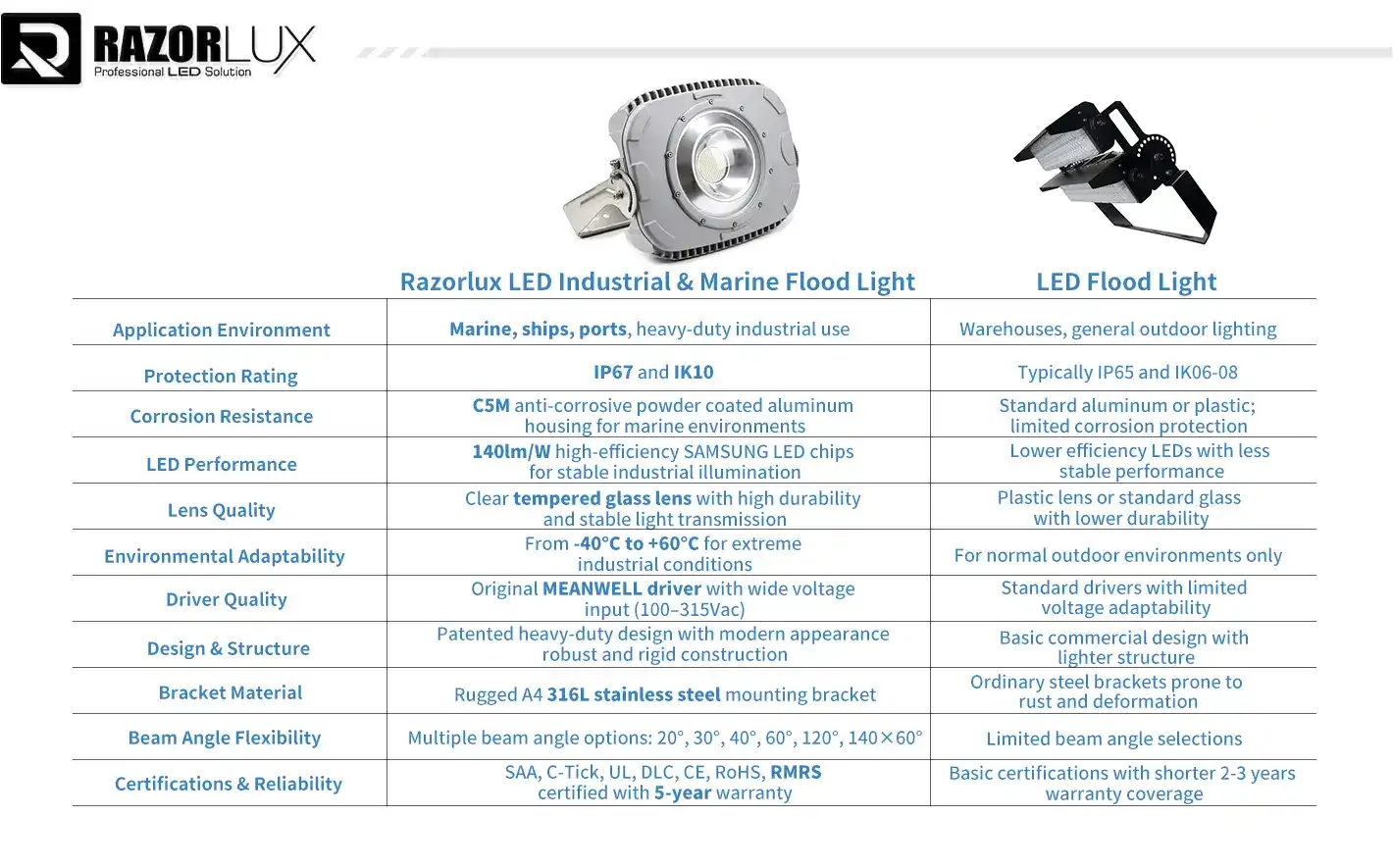
Certification and Compliance Documentation
Full approval portfolios show that the maker put money into checking the quality and getting ready for the market. For industrial and naval uses, important approvals include CE marking for markets in Europe, UL and DLC listings for installations in North America, and RoHS compliance for environmental rules. Marine-specific certifications like DNV-GL, ABS, and RMRS are very important for applications that are mounted on vessels or installed on offshore platforms, where product acceptance is based on classification society approval.
Where and How to Buy a 400W Equivalent LED Flood Light with a 5-Year Warranty
The choice of procurement method strikes a balance between price, authenticity assurance, access to expert help, and the ability to implement warranties. Professional buyers usually look at more than one buying choice based on the size of the job, the time frame, and how much risk they are willing to take.
Direct Manufacturer Engagement
There are many strategic benefits to buying directly from manufacturers, especially for large projects or companies that want to build long-term relationships with suppliers. When you buy something directly from the manufacturer, you don't have to pay the markups that distributors usually add on top of the price, which can save you a lot of money on big purchases. More importantly, direct relationships give you access to tech help, customization choices, and quality assurance documents from the plant level.
Authorized Distributors and Channel Partners
Regional distributors are very important in markets where having a local presence, being able to access inventory right away, and getting warranty service in the same country are all valuable. When operating facilities experience unexpected failures, distributors who keep stock on hand can meet pressing replacement needs faster than shipments directly from the plant. Also, wholesalers who know about local electrical codes, best practices for installation, and certification standards can help with application issues that makers from other countries might not be able to.
B2B Platforms and Online Marketplaces
Business-to-business sites like Alibaba, Global Sources, and Made-in-China have been around for a long time and help buyers find options and compare different suppliers. These platforms offer buyer security tools, verified seller badges, and transaction mediation services that make buying things internationally less risky. Social proof comes from reviews and scores from other customers, but buyers should be aware that fraud and gaming can happen.
Bulk Purchasing and OEM Arrangements
OEM or white-label deals with makers of 400W Equivalent LED Flood Light may be helpful for businesses that need a lot of lights on a regular basis. In return for volume promises, shipyards that outfit many ships, port officials that run large docks, or equipment wholesalers that serve the marine industry can get custom branding, Packaging, and even small technical changes.
Installation and Maintenance Tips for Optimal Performance
The longevity, consistency of performance, and validity of warranty claims are all directly affected by how well fixtures are installed and maintained. Technical teams can use manufacturer advice on how to deal with problems that are unique to an application and what the best ways to do things are.
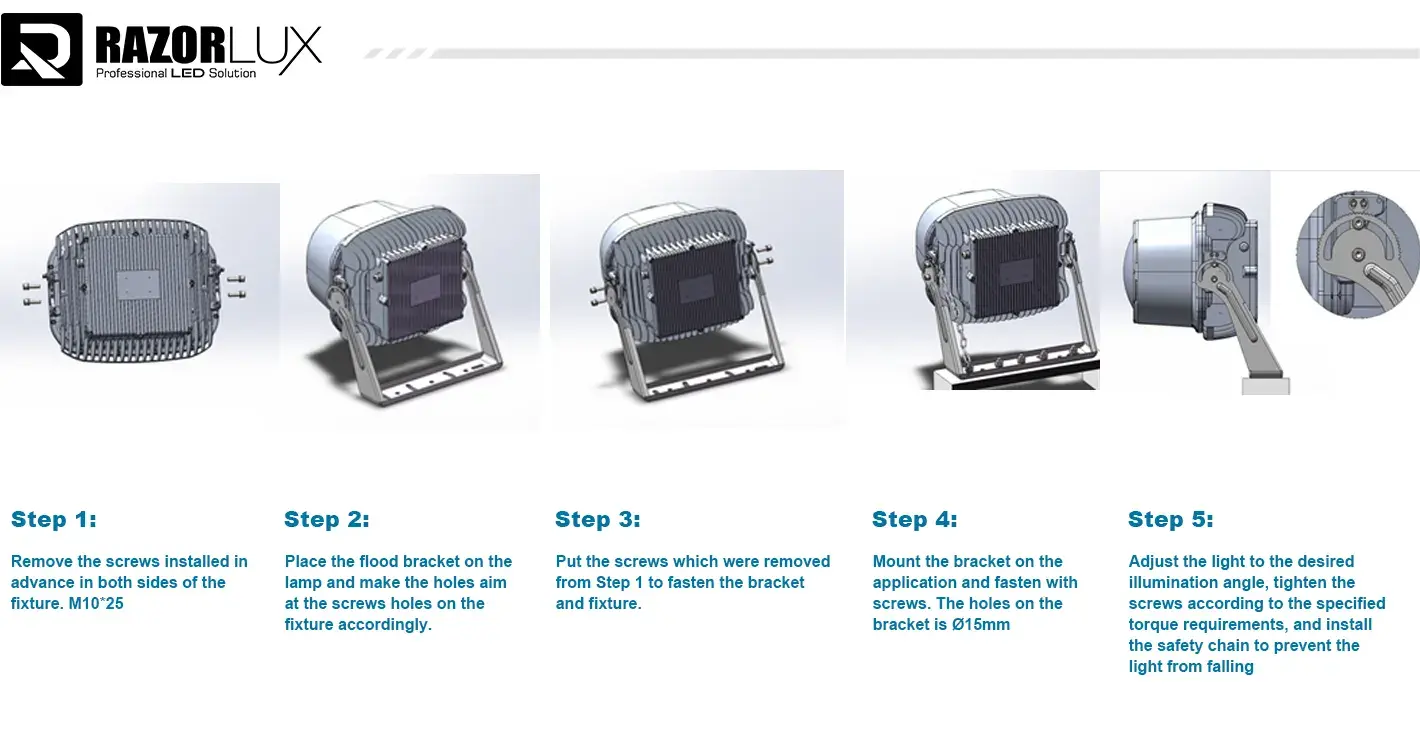
Pre-Installation Planning and Site Assessment
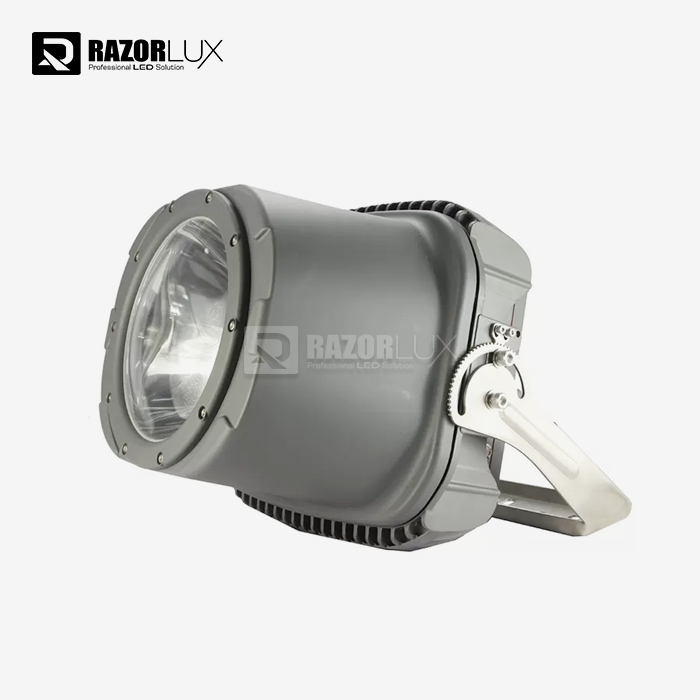
A thorough site evaluation that looks at things like the suitability of the mounting structure, the compatibility of the electrical infrastructure, and the environmental exposure factors is the first step to a successful installation. Mounting surfaces must be able to hold the weight of the device (19 kg for the RGL2-400P with the stainless steel bracket), plus extra weight for wind in open areas. Offshore platforms and ship deck installations need to look at how vibrations are transmitted and make sure that the mounting hardware has the right amount of separation or damping where mechanical equipment is working nearby.
Mounting Orientation and Beam Direction
For the best lighting performance, you need to pay attention to the calculations for fixture aim angles and spacing. There are three beam angles (15°, 20°, and 30°) that can be used to fit different mounting heights and coverage needs. Installation teams should use optical data to figure out the right distance between fixtures so that there isn't too much or too little light (which wastes energy) or coverage (which poses safety risks). When beam angles are narrow, even a small misalignment can have a big effect on how bright the target is lit. This makes aiming very important.
Preventive Maintenance and Inspection Protocols
Compared to their HID predecessors, LED lights don't need as much upkeep. However, they should be inspected on a regular basis to make sure they keep working well and to find problems early. Lens clarity, housing condition, mounting hardware integrity, and junction box seals should all be checked visually every three months. Cleaning schedules are needed in maritime and heavy industrial settings to get rid of salt buildup, industrial dust, and corrosive residues that damage housing finishes and optical performance.
Warranty Claim Procedures and Documentation
Knowing the warranty terms and how to file a claim before installing something saves your purchases and speeds up the settlement of problems when they happen. Razorlux offers a 5-year warranty on LED modules and drivers, as well as a separate 10-year warranty on the housing. People who buy something should keep all of the paperwork that comes with it, like invoices, installation dates, commissioning reports, and any letters that talk about customization or special needs.
Conclusion
For demanding marine and industrial uses, getting reliable, high-performance LED flood lighting like 400W Equivalent Led Flood Light means carefully looking at technical specs, maker capabilities, and buying methods. Solutions that offer long-term value are different from those that have hidden lifetime costs because they have strong engineering, full guarantee coverage, and established maker support. Razorlux's 400W equivalent fixtures meet important buyer needs by using tested parts, having a large portfolio of certifications, and making design improvements for specific uses that come from specializing for 20 years. If procurement managers want long-term dependability, quick technical help, and quality guarantee that can be checked, working directly with manufacturers is the best way to get the best performance, cost, and risk reduction for mission-critical lighting infrastructure.
FAQ
What actual power does a 400W equivalent LED flood light consume?
Even though "400W equivalent" means that the output is about the same as with traditional fixtures, LEDs usually use between 360W and 400W of total system power, which includes driver overhead. Razorlux's RGL2-400P uses a total of 400W (360W LEDs plus 40W driver), but it gives off 48,000 lumens at 130 lumens per watt. Compared to 600W metal halide lights that give off the same amount of light, this saves 40 to 60 percent of the energy.
Can these fixtures withstand offshore marine environments?
The IP67 and IK10 grades make sure that the device is well protected against mechanical contact, saltwater spray, and short-term immersion. The powder finish on the metal body keeps it from rusting, and the mounting brackets are made of stainless steel, which doesn't rust in naval environments. The operating temperature range of -40°C to 60°C is wide enough to cover harsh climates, from shipping lines in the Arctic to sites in the Middle East. Maritime certifications, such as those from DNV-GL and ABS, prove that the product is suitable for installation on ships and offshore platforms.
Why purchase from manufacturers rather than distributors?
When you work directly with a manufacturer, you avoid the 30–50% markups that come with distribution. You also get access to tech support and customization choices, and you know who is responsible for warranty service. Full technical documents, the chance to test samples, and clear prices are all benefits for buyers. Buyers in large quantities can work out OEM deals and framework agreements that guarantee a steady supply of goods for a long time. Manufacturers like Razorlux that have a lot of experience exporting can handle the logistics of international shipping and offer English-language support that is tailored to the needs of professional buyers.
Partner with a Trusted 400W Equivalent LED Flood Light Manufacturer
Xi'an Razorlux Optoelectronic Technology Co., Ltd. has been a leader in marine and heavy-duty LED lighting options for more than twenty years. They offer expert knowledge in these areas along with full quality guarantee. Our 400W floodlights have Mean Well power supplies, 130 lm/W efficacy, IP67/IK10 protection, and a full 5-year warranty that is backed by ISO 9001 certification and a lot of maritime approvals. We help with foreign buying by offering quick expert help, sample programs, the ability to make changes, and proof that our products meet CE, UL, DLC, DNV-GL, and ABS standards. Send an email to sam@razorlux.com to talk about your specific lighting needs, get technical specs, or set up a sample evaluation for your upcoming industrial or marine projects.
References
1. International Maritime Organization. (2022). "Guidelines on Energy Efficiency Measures for Ships: Lighting Systems and Controls." IMO Resolution MEPC.346(78).
2. Industrial Lighting Standards Committee. (2021). "Recommended Practices for Marine and Offshore Platform Illumination." American Bureau of Shipping Technical Publication ABS-127.
3. Zhang, H., & Morrison, R. (2023). "Lifecycle Cost Analysis of Industrial LED Lighting Systems in Harsh Environments." Journal of Maritime Engineering and Technology, 22(3), 145-162.
4. European Commission Directorate-General for Energy. (2022). "Energy Efficiency in Port Infrastructure: LED Technology Adoption and Barriers." EC Technical Report EUR 30894.
5. Chen, L., & Petersen, K. (2021). "Thermal Management Strategies in High-Power LED Fixtures for Marine Applications." IEEE Transactions on Industrial Electronics, 68(9), 8234-8245.
6. Det Norske Veritas. (2023). "Rules for Classification of Ships: Part 4 Chapter 9 - Electrical Installations, Section 12 - Lighting Systems." DNV-RU-SHIP Edition January 2023.