

_1750326878398.png)

Are Tennis Court LED Flood Lights Energy Efficient and Cost-Saving?
With measured energy savings and long-term cost saves that beat standard metal halide and halogen systems, Tennis Court Led Flood Lights have changed the way sports facilities are lit. Yes, the new LED floodlights made for tennis fields use very little energy and don't cost much. With luminous efficacy levels above 130 lm/W, these advanced lighting solutions use up to 60% less electricity than traditional systems. They also drastically lower maintenance costs by lasting longer and being more durable, making them great investments for facility managers, procurement supervisors, and engineering contractors.
Understanding Energy Efficiency in Tennis Court LED Flood Lights
What Makes LED Technology More Efficient Than Traditional Lighting?
In what ways does LED technology save more energy than regular lighting?
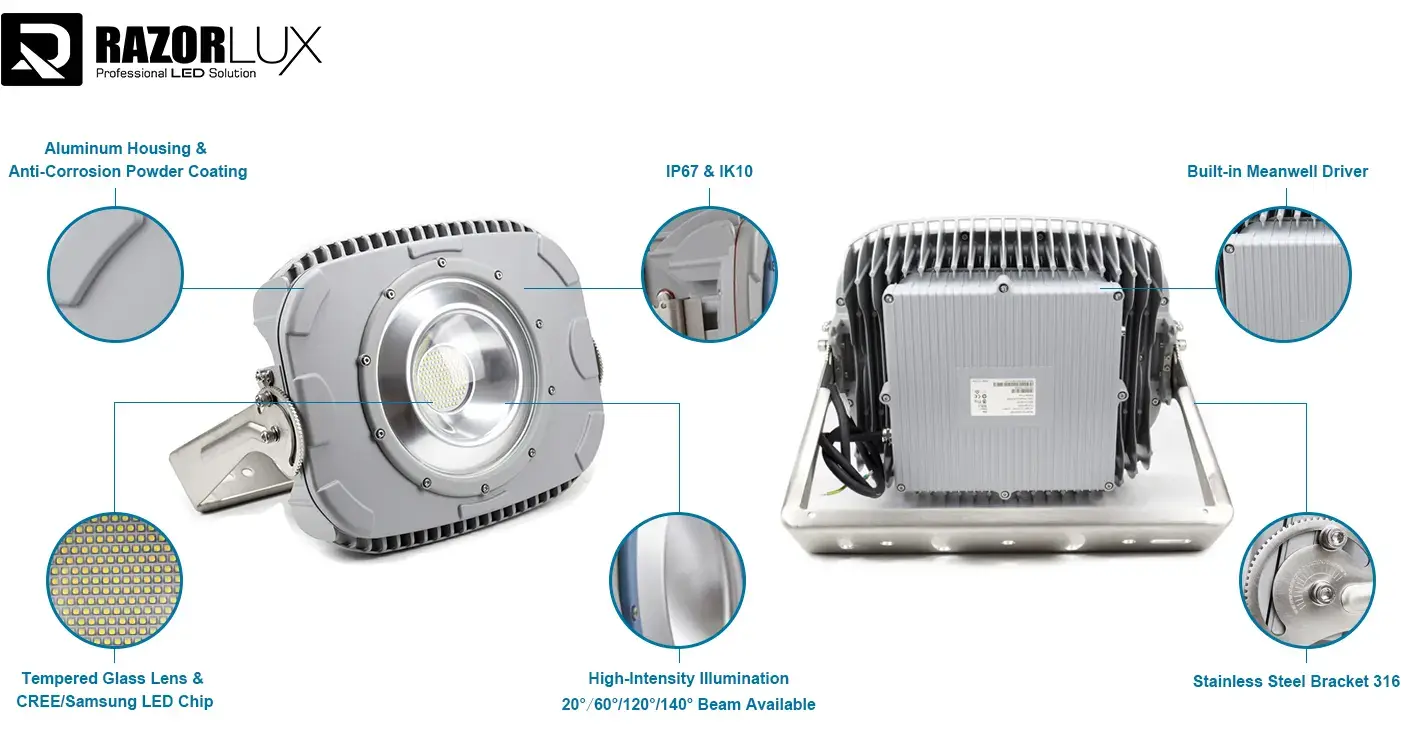
LED technology is better at turning light into electricity than metal halide or halogen options. Traditional lighting systems waste a lot of energy because they lose a lot of heat and only turn 30 to 40 percent of the electricity they receive into light that can be seen. About 80 to 90% of the energy that LED flood lights use is directly turned into light. This means that they lose less heat and produce more light per watt.
Lumen Output and Energy Consumption Comparison
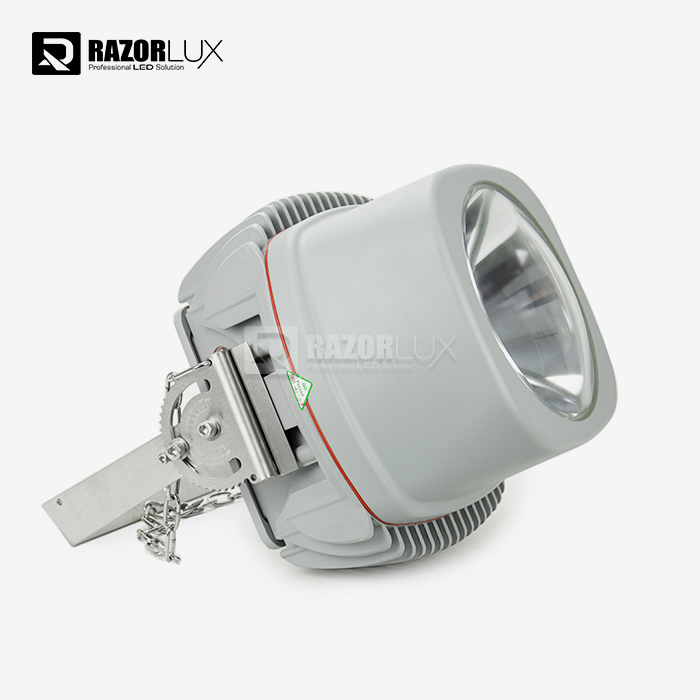
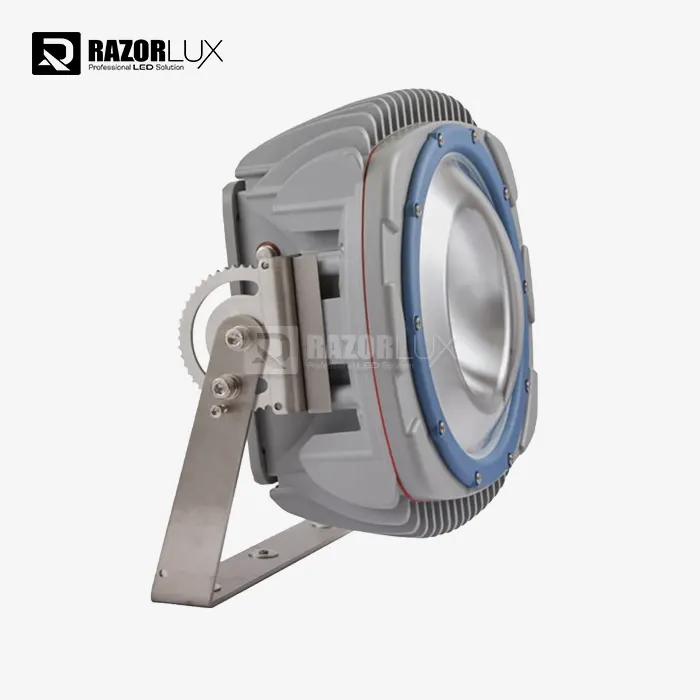
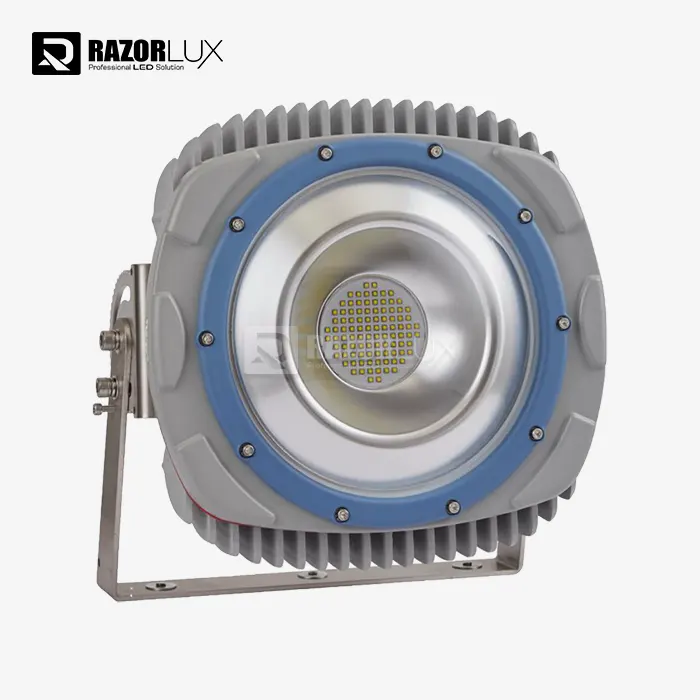
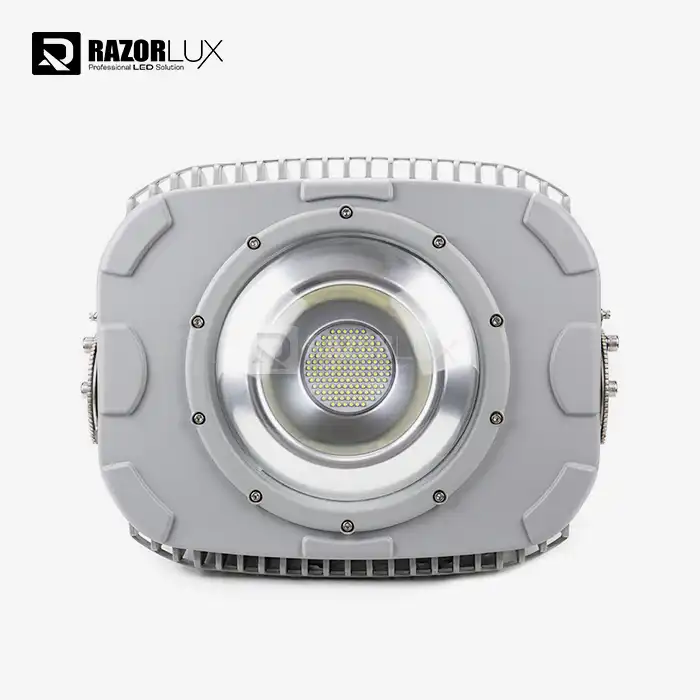
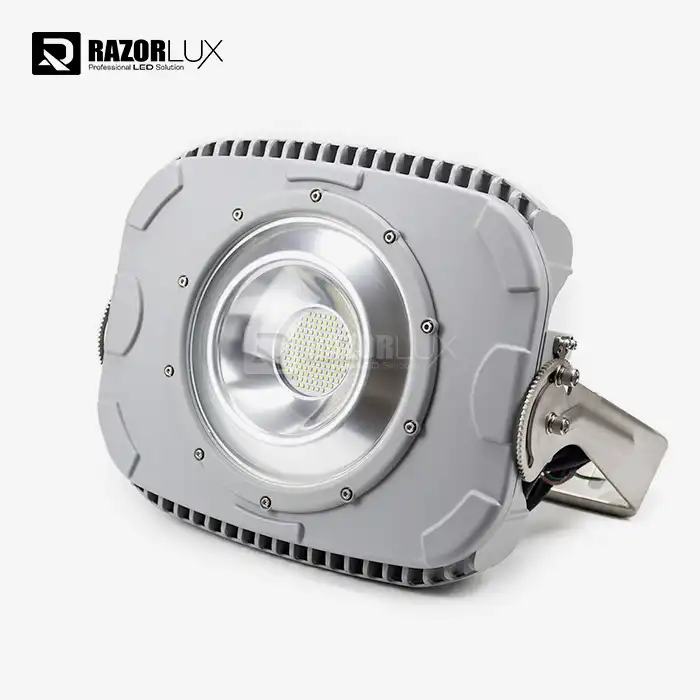
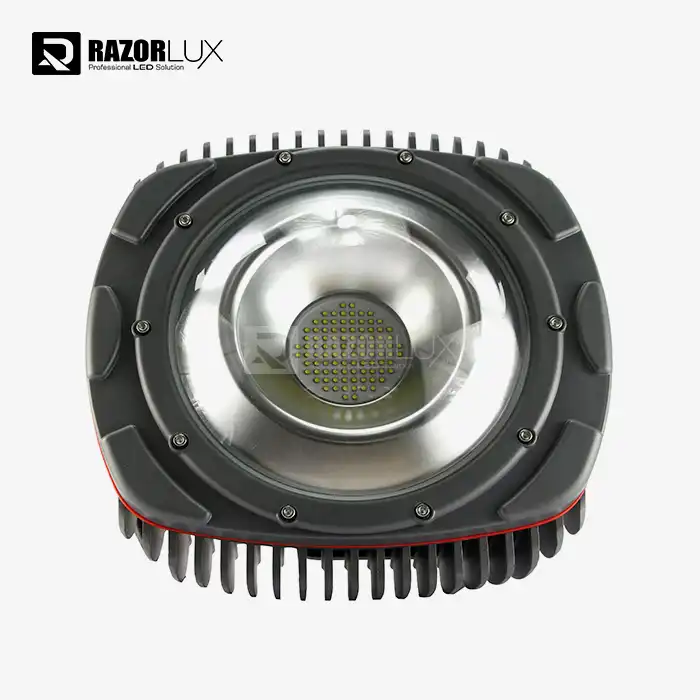
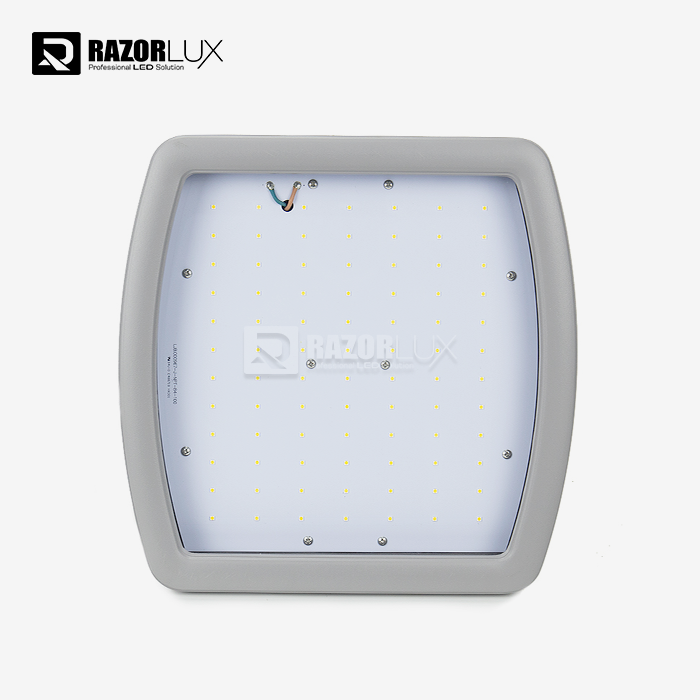
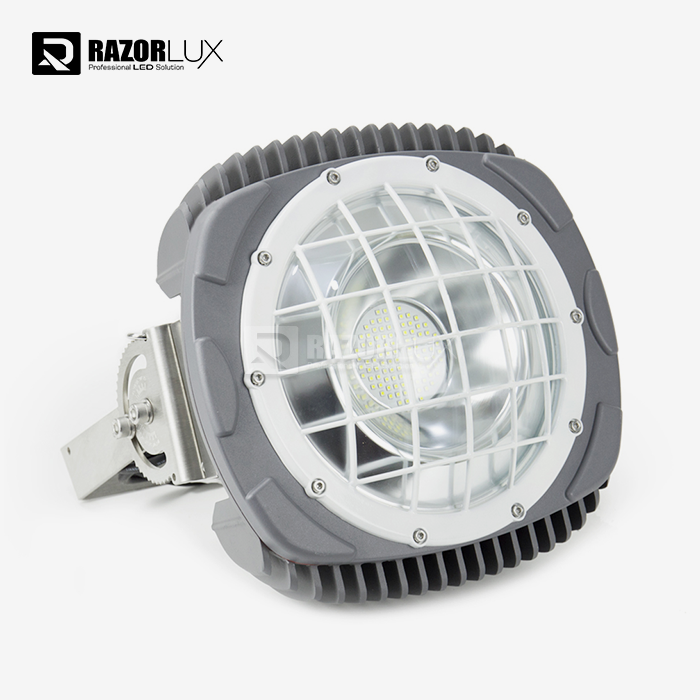
When buying workers look at lighting systems, they look at how much power they use and how bright they are. A 400W Led Floodlight can be used instead of an 800-1000W metal halide bulb and give off the same amount of light or more. The RGL2-400A type we have makes 52,000 lumens while only using 400W of power, which is 130 lights per watt. This performance directly leads to lower operating costs without lowering the level of awareness needed for tennis play at the leisure, club, or professional level.
| Lighting Technology | Power Consumption | Lumen Output | Efficacy (lm/W) | Heat Generation |
|---|---|---|---|---|
| Metal Halide | 1000W | 50,000 lm | 50 lm/W | High |
| Halogen | 1500W | 45,000 lm | 30 lm/W | Very High |
| LED (Razorlux RGL2-400A) | 400W | 52,000 lm | 130 lm/W | Minimal |
Meeting Lux Standards Across Different Court Classifications
Different tennis applications require specific illumination levels measured in lux. Recreational courts (Class III) need 200-300 lux for casual play, while club facilities (Class II) require 500 lux for competitive matches. Professional tournament venues (Class I) demand 750-1000+ lux to support broadcast-quality visibility and high-speed camera recording. LED floodlights meet these requirements efficiently because they maintain consistent brightness throughout their operational life, unlike metal halide systems that experience significant lumen depreciation within the first 6,000 hours of operation. Understanding these technical parameters helps engineering managers and facility operators select appropriate lighting solutions that balance performance requirements with energy budgets. Our products accommodate voltage inputs ranging from AC110-480Vac and DC100-800Vdc, providing installation flexibility across diverse electrical infrastructures without requiring additional adapters or transformers.
Cost-Saving Benefits of Switching to LED Flood Lights
Electricity Cost Reduction Through Lower Power Consumption
When you switch to LED lighting, your running costs go down right away because you use less power. Traditional 1000W metal halide systems that are used for 12 hours a day in buildings use about 4,380 kWh per bulb per year. When these are replaced with 400W LED lights, the annual energy use drops to 1,752 kWh, which is a 60% drop. Commercial energy rates are about $0.12 per kWh, so this saves each light $315 a year. For buildings with 8 to 12 floodlights, the total amount of power saved each year is $2,520 to $3,780.
Extended Lifespan and Reduced Maintenance Expenses
LED floodlights have working lifetimes of more than 50,000 hours, which is about 11 years of nonstop use at 12 hours a day. Metal halide lights need to be replaced every 6,000 to 10,000 hours, while an LED bulb only needs to be replaced 5 to 8 times its lifetime. Each repair costs between $80 and $150 for a lamp, plus labor costs to reach high lights, dumping fees, and possible court downtime during maintenance windows. Our methods get rid of these ongoing costs. The Razorlux RGL2-400A comes with a full 5-year warranty that covers both the LED modules and drivers. The case is also guaranteed for 10 years. This framework for warranties gives purchasing managers financial security and lowers risk, which are important factors when figuring out the total cost of ownership for big purchases like computers.
Smart Controls and Automation Features
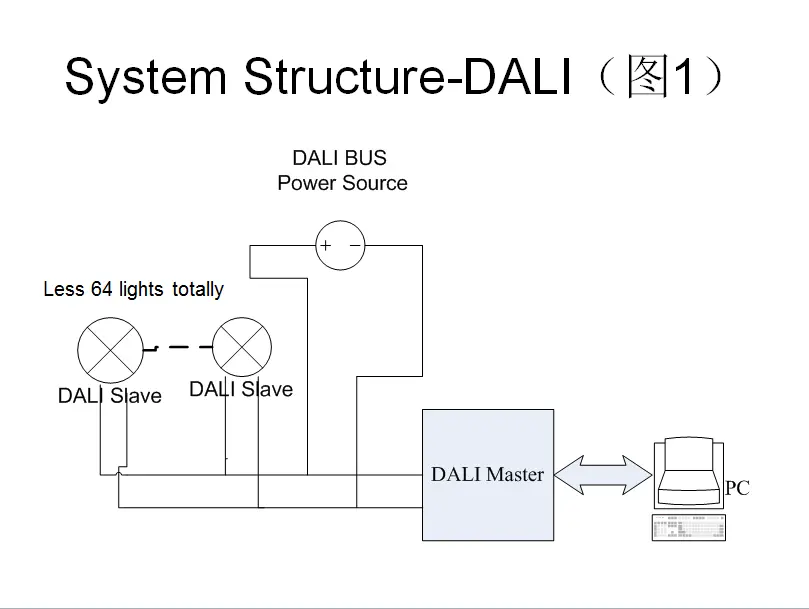
Adding advanced controls saves even more money than just using less energy. Facilities that can dim can lower the output during practice sessions or times when there isn't much traffic. This makes the fixtures last longer and uses 20–40% less energy. Motion sensors automatically turn on the lights when the court is being used, so they don't have to be run when the court is empty. When compared to traditional fixed-output systems, facilities that use smart controls report saving more than 70% on energy and maintenance. These operational efficiencies are especially helpful for port facilities, industrial complexes, and offshore platforms where lighting has to work all the time in harsh conditions. The IP67 grade and IK10 impact resistance of our lights make sure they work reliably in harsh conditions like salt spray, shaking, and temperature changes that make traditional lighting systems break down more quickly.
Selecting High-Performance Tennis Court LED Flood Lights for Demanding Applications
Critical Technical Specifications for Marine and Industrial Environments
Maritime shipping, remote platforms, and heavy industry all have unique lighting problems that can't be solved with standard sports lights. When equipment is used in places where salt spray is present or where chemicals are processed, corrosion protection becomes very important. When things need to work regularly from -40°C in the Arctic to 60°C in the tropics, temperature stability is important. Vibration protection is important on ships, drilling sites, and buildings that are close to heavy machinery. Our unique multi-function design meets these needs with strong construction and high-quality parts. The die-cast metal body with powder coating doesn't rust and can stand up to years of being in sea. Stainless steel fixing clamps make sure that the fitting is stable and won't come away from vibrations. The IP67 grade for ingress protection makes sure that the device stays dust- and watertight during submersion and pressure washing. IK10 impact strength guards against hits from tools, equipment, or moving objects that are typical in industrial settings.
Power Supply Reliability and Electrical Compatibility
The electrical grid of global sites and ships at sea is very different. Installations on land usually use standard AC power lines, but for safety reasons, floating sites may use DC power distribution. Different types of voltage devices are used on ships based on their class and the flag state's criteria. Our tennis court LED flood lights can handle this level of complexity because they can accept both AC110-480Vac and DC100-800Vdc input voltages without the need for external switches or transformers. This makes purchasing and installing them easier for international operations. Even though their electricity systems are very different, a port operator in Singapore and an offshore platform manager in Norway can both choose the same fixings. The built-in Mean Well power source has a power factor of at least 0.98 and a total harmonic distortion of less than 10%. This makes it safe to use in sensitive electrical settings and in line with grid quality rules.
Component Quality and Certification Requirements
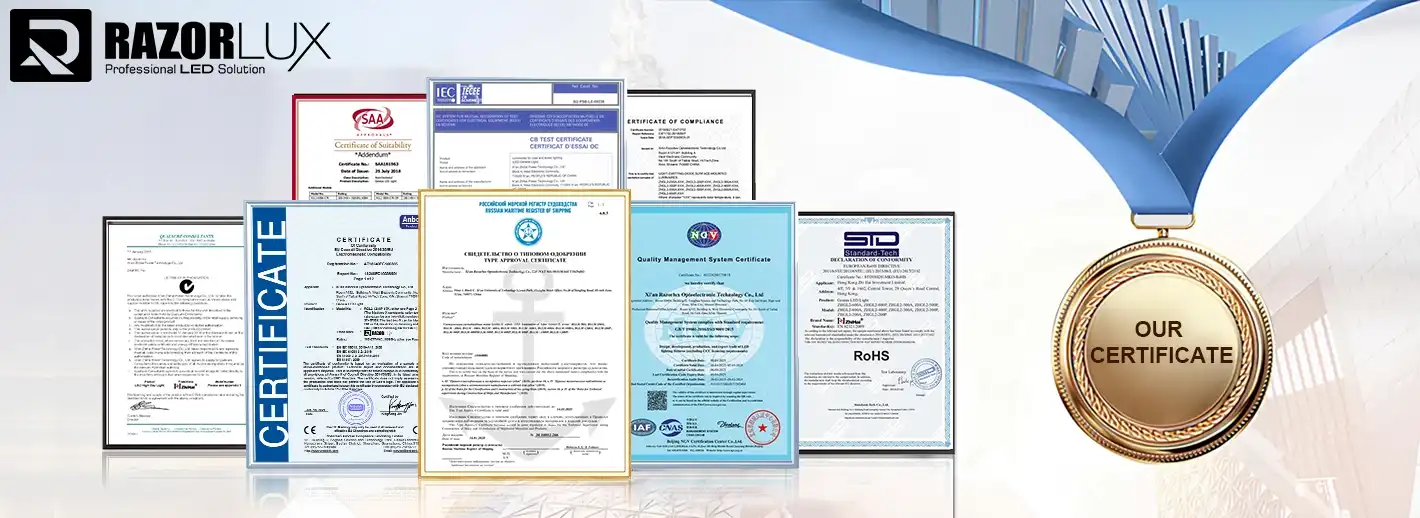
When reviewing providers, supply chain managers put a lot of weight on how easily parts can be tracked and how proof of approval is shown. Marine classification societies, insurance companies, and government regulators all need proof that foreign standards are being met. Our parts have a lot of approvals, like CE, RoHS, UL, DLC, SAA, C-Tick, CB, and ISO:9001. They also come with full technical paperwork and test results. The choice of components has a direct effect on how reliable they are over time. We use high-quality LED chips with color output of Ra>75 (Ra>80 and Ra>90 are also available upon request) and Mean Well drivers that have been used in tough environments around the world. This approach for the components makes sure that facilities don't break down too soon, which would stop operations and raise upkeep costs. These are problems that port buying managers and facility engineers always bring up during procurement reviews.
| Performance Parameter | Razorlux Specification | Industry Standard | Advantage |
|---|---|---|---|
| Luminous Efficacy | 130 lm/W | 100-120 lm/W | 10-30% higher efficiency |
| Operating Temperature Range | -40°C to 60°C | -20°C to 50°C | Broader environmental capability |
| IP Rating | IP67 | IP65 | Superior moisture protection |
| IK Rating | IK10 | IK08 | Enhanced impact resistance |
| Voltage Input Range | AC110-480V / DC100-800V | AC220-240V | Universal compatibility |
| Warranty Period | 5 years (modules/drivers) | 2-3 years | Extended protection |
Beam Angle Selection and Light Distribution
Proper illumination requires matching beam patterns to specific applications. Tennis courts benefit from asymmetric optics that project light across playing surfaces while minimizing upward spill and glare. Our fixtures offer multiple beam angle options—40°, 60°, 120°, and specialized 140°x60° asymmetric patterns—allowing lighting designers to optimize coverage based on mounting height, pole placement, and court dimensions. Narrow 40° beams suit high-mounted fixtures requiring focused throw distance. Medium 60° angles provide balanced coverage for standard installations. Wide 120° distributions work well for low-mounting applications or multi-purpose spaces. The 140°x60° asymmetric option delivers superior tennis court performance by directing more light forward across the court while reducing glare in players' sight lines—particularly important for competitive and professional venues.
Installation Best Practices and Maintenance Strategies for Maximum ROI
Professional Installation Standards and Mounting Considerations
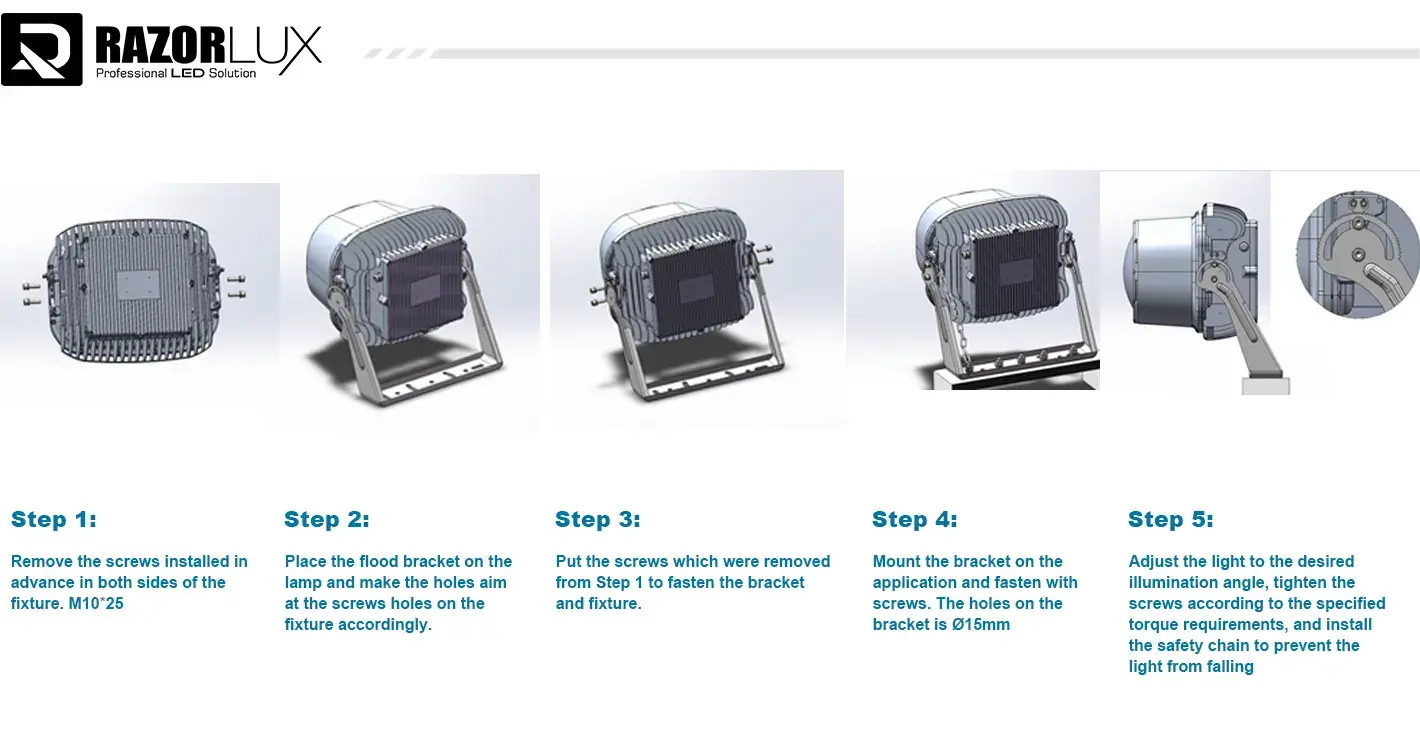
Installing something correctly sets the stage for long-term success and return on investment. The mounting height has a big effect on how evenly the light shines and how much energy it uses. Fixtures on tennis courts are usually placed 6 to 12 meters above the playing areas. The exact height depends on the beam angle, the amount of light needed, and where the poles are placed in relation to the court lines. Higher installation lowers the number of fixtures needed, but tighter beam angles are needed to keep the light level right. In tough settings, the quality of the electrical connections directly affects how reliable they are. For marine and industrial uses, it's important to pay attention to the choice of cable joint, the size of the conductors, and the closing of the junction boxes. Our fixtures can accept a range of wire entry setups, and glands that meet IP67 standards keep connections safe from water and other unwanted substances. Vibrations don't cause loosening if the right torque specs are used during assembly, and heat cycling lets the aluminum housings and steel mounting parts expand at different rates.
Preventive Maintenance and Performance Monitoring
The longer life of LED technology means that upkeep isn't needed as often, but careful maintenance improves performance and lifespan. Visual checks are done every three months to look for physical harm, faulty mounting brackets, and dirty lenses. A deep cleaning once a year gets rid of dust, salt layers, or industrial residue that makes it harder for light to pass through. Before a major failure happens, thermal imaging scans can find drivers that are hot or LED modules that are breaking down. Keeping detailed service records helps with warranty claims and long-term asset management. Dates of installation, upkeep tasks, performance measures, and part repairs should all be written down. This information lets site managers compare real performance to what the maker says it should be and find outliers that could mean problems are starting to form. Purchasing managers at shipyards really like this paperwork because it helps them figure out how reliable a seller is across multiple buying rounds.
Retrofit Planning and Upgrade Strategies
Switching from metal halide to LED technology in current systems needs to be carefully planned to get the most benefits while minimizing problems. Checking the structure of existing poles makes sure they can handle the weight of LED fixtures and wind loading. Our 15 kg fixtures usually put less of a strain on older systems, but the poles may not be in as good of shape as they were when they were first installed. An examination of the electrical infrastructure shows that the right-sized conductors and circuit safety are in place to allow LED systems to improve power factor and lower current draw. Phased repair methods keep operations as uninterrupted as possible. Facilities can select fields that get a lot of use or places that need the most care, showing ROI before making bigger improvements. Hybrid operation lets you compare performance side-by-side, which boosts trust in LED technology. Retrofits are often planned to happen during planned repair shutdowns at ports and offshore sites. Lighting upgrades are often combined with other infrastructure improvements to make work more efficient and reduce downtime.
Engineering Specifications and Performance Validation for Critical Infrastructure
Thermal Management and Junction Temperature Control
Keeping the junction temperatures of the semiconductor chip low is very important for the LED's long life. Too much heat speeds up light degradation and reduces working life. Because they are made of die-cast aluminum instead of pressed steel, our housings are better at moving heat from LED modules to the air around them. Thermal design is especially important in places with limited airflow, like ship engine rooms, industrial process areas, and offshore platform enclosures. If the thermal resistance is less than 0.5°C/W, the junction temperatures will stay within the manufacturer's specifications, even when operating in high ambient temperatures or for long periods of time. During setup, watching the temperature makes sure that there is enough cooling. During operation, regular thermal scans find heat loss that is getting worse due to contamination or rust. As long as the stated temperature performance is kept up, the L70 should last for more than 100,000 hours under normal working conditions.
Flicker-Free Performance for High-Speed Applications
Professional tennis courts and places with video security systems need lights that don't flicker. When simple regulated power sources are used to power standard LED systems, the strength changes at line frequency (50/60 Hz), which causes flickering and banding flaws in high-speed video recording. Our advanced drivers keep ripple current below 1%, which gets rid of noticeable flicker and lets you record video at over 1000 frames per second. This performance is important for more than just sports. Stable, flicker-free lighting is good for industrial quality control systems that use high-speed vision inspection, remote platform CCTV security systems, and dock manufacturing areas that use robotic welding. When evaluating suppliers for these uses, procurement managers should check the driver specs and ask for test results that show how well the driver works with flicker in real-world situations.
Surge Protection and Electrical Resilience
Lightning can cause power changes and electrical grid problems in outdoor systems. During thunderstorms, tall tennis court LED flood light poles are the best places to be hit because they send surge energy straight to equipment that is linked. Transient overvoltages can do a lot of damage to unprotected LED drivers, causing fixtures to fail and requiring expensive repairs in an emergency. Our built-in surge protection devices, which can handle up to 10kV (20kV is also available), protect drivers from transient events. Metal oxide varistors and gas discharge tubes send surge energy to ground before it can reach electronics that are sensitive to it. This security is very important for offshore sites that are far away and port facilities that are close to the coast. In case of an emergency, fixes can be very expensive and take a long time. Maritime classification groups are requiring more and more detailed surge protection in lighting standards. This means that this feature is now a requirement for purchase rather than a choice for improvement.
Color Rendering and Visual Comfort
The color rendering index measures how true to life colors objects are shown by lights compared to natural daylight. For basic sight, enough light is enough, but for relaxed vision and correct color discrimination, you need higher CRI values. For general sports and industrial uses, our standard Ra>75 specification works well. For applications that need more accurate colors, like medical facilities, quality inspection areas, and broadcast TV production, our Ra>80 and Ra>90 options are better. The color temperature can be changed from 2700K to 6500K to suit your needs. Warmer temperatures of 3000K make leisure centers more comfortable, while moderate temperatures of 4000K are good for most uses. Cool 5000–5700K is close to daylight, which helps people stay alert in work settings and makes the best conditions for taking videos. This makes it possible for single bulb types to meet a wide range of lighting needs in a building.
Strategic Procurement Advantages for Marine and Industrial Applications
Total Cost of Ownership Analysis for Capital Planning
When financial people make decisions about lighting purchases, they look at the total cost of ownership, which includes buying the equipment, hiring people to install it, using energy, and keeping the system in good shape over its expected lifetime. Because LED technology costs more up front than standard systems, it needs a good TCO study to show that it is worth it in the long run. The full figures include: Initial Investment: LED lights are two to three times more expensive than metal halide alternatives. Premium LED systems cost $8,000 to $12,000 to update an 8-light tennis court, while basic metal halide lights cost $3,000 to $4,000. However, LED systems don't need ballasts and can often have fewer fixtures because they are more optically efficient, which helps to offset some of their higher unit costs. Energy Costs: As we already said, LED systems use 60% less electricity than metal halide alternatives. Over 10 years of study, this saves between $25,000 and $38,000 for an 8-fixture installation, which is a lot more than the higher original cost. Maintenance Costs: Traditional systems need between 5 and 8 lamp changes during their working life, plus possible battery replacements. Over 10 years, the costs of parts and labor add up to $4,000 to $8,000 per device. Maintenance costs are cut by 80–90% for LED systems because they only need to be cleaned and inspected once in a while. Operational Flexibility: The instant-on feature gets rid of the 10-15 minute warm-up and restart delays that come with metal halides. Facilities can turn on lights only when needed instead of keeping systems on all the time, which cuts down on wasteful use. The ability to dim offers extra efficiency that isn't possible with standard methods.
Supply Chain Reliability and Delivery Performance
On-time delivery of parts that match building plans is important for keeping projects on track. Missed delivery windows cause delays in completion, lost income, and higher project costs by requiring more time for contractors to get to work. Xi'an Razorlux Optoelectronic Technology Co., Ltd. keeps a large inventory to support quick fulfillment for standard products and offers customization for project-specific needs. This is because purchasing managers give more weight to suppliers who consistently deliver on time and communicate about possible delays. Our long-term global shipping partnerships make sure that deliveries get to faraway places like offshore platforms, Arctic sites, and island posts, where transportation issues make buying things harder. Samples that can be tested before a purchase are made let expert teams confirm performance before placing big orders, which lowers the risk of buying.
Certification Documentation and Regulatory Compliance
Marine applications are closely watched by classification societies (like DNV/GL, ABS, and Lloyd's Register), flag state officials, and port state control officers. Industrial sites have to follow the rules set by OSHA, insurance companies, and local building codes. Full certification paperwork is needed for regulatory checks and the approval of new equipment. We offer full documentation packages that include CE statements of conformity, UL test reports, photometric test data, and material certifications. Marine-specific approvals speed up reviews by the classification society, and dangerous site licenses are good for industrial and offshore uses. This thorough paperwork cuts down on the time it takes to buy something and lowers the chance that the approval process will go wrong, which can slow projects or lead to costly design changes.
Future-Ready Lighting Solutions and Technology Integration
IoT Connectivity and Remote Management Capabilities
New IoT tools for smart buildings and factories can connect tennis court LED flood lights to full site management systems. Fixtures that are linked to a network allow for online tracking, automated control, and performance data that help with planning preventative maintenance. More and more, procurement managers are asking for lighting that is ready for the Internet of Things (IoT) to help with digital change and make operations more efficient. Our product plan includes wireless communication protocols and sensor integration, which get facilities ready for future technology usage. Retrofit-compatible control units let smart features be added to systems that are already in place without having to update the whole system. This upgrade path saves current investments and lets technology be adopted gradually, based on how ready the company is and how much money is available.
Sustainability Goals and Green Procurement Requirements
Demand for energy-efficient equipment is driven by regulations and corporate promises to sustainability. This lowers carbon loads and environmental effects. These goals are directly supported by LED lighting, which uses less energy and doesn't contain any harmful materials like metal halide and fluorescent systems do. More and more, procurement policies need lifetime environmental impact assessments and sustainability approvals from suppliers. Our manufacturing processes focus on using reusable materials, lowering the amount of toxic substances used, and making things that use less energy. RoHS compliance makes sure that goods follow European rules about dangerous materials like lead, mercury, and others. This environmental placement meets the needs of green buying and helps sites' sustainability reports and approval programs.
Adaptive Lighting and Human-Centric Design
Research shows that lighting affects people's awareness, comfort, and success in ways other than just their ability to see. Adaptive systems change the brightness and color temperature during working shifts to help keep circadian rhythms in sync and keep people from getting tired. Industrial facilities that use human-centered lighting report happier workers and fewer accidents. For example, tennis courts currently focus on even lighting, but locker rooms, maintenance shops, and administrative offices next to the courts could use adaptive lighting. By choosing fastener platforms that can handle future control changes, facilities will be ready to use these technologies as they become more widely known and cost-effective.
Conclusion
Tennis court LED flood lighting has been shown to save a lot of money and energy because it uses less power, lasts longer without needing to be serviced, and works better every time. Modern LED systems, like our RGL2-400A type, use 60% less electricity than metal halide alternatives, but they give off better light and give you more options for how they can be used. Total cost of ownership research shows strong financial gains, even though the initial investment is higher. Within two to three years, savings on energy and upkeep cover the extra costs. These benefits don't just apply to tennis for fun; they also apply to naval, offshore, and industrial settings that need strong building, full licenses, and reliable performance in harsh conditions. Strategic buying that focuses on technical standards, component quality, and source dependability guarantees the success of projects and long-term operating happiness.
FAQ
Can LED fixtures replace existing 1000W metal halide systems using current poles and electrical infrastructure?
Replacement feasibility depends on structural and electrical assessment results. LED fixtures typically weigh less and impose reduced wind loading compared to metal halide systems, making existing poles structurally adequate in most cases. Electrical infrastructure usually accommodates LED systems since power requirements decrease significantly—400W LED versus 1000W metal halide. However, older installations may have deteriorated wiring insulation or inadequate grounding requiring upgrades regardless of fixture type. Professional site assessment identifies any necessary infrastructure improvements before retrofit implementation.
What maintenance requirements do LED floodlights have compared to traditional systems?
LED systems require minimal maintenance compared to traditional lighting. Metal halide lamps need replacement every 6,000-10,000 hours, requiring elevated work platforms, disposal of hazardous materials, and potential court downtime. LED fixtures eliminate lamp replacements for 50,000+ hours—typically 10-15 years. Recommended maintenance includes quarterly visual inspections and annual lens cleaning to remove dust or salt deposits reducing light transmission. This reduced maintenance particularly benefits facilities with difficult access or remote locations where service calls involve substantial mobilization costs.
How do asymmetric beam patterns improve tennis court lighting compared to standard symmetric distributions?
Asymmetric optics project light forward at specific angles rather than in circular patterns. This allows fixtures to mount outside court boundaries while directing illumination across playing surfaces, reducing direct glare when players look upward, tracking lobs. Symmetric beams require central mounting directly above courts to achieve uniform coverage, placing light sources in players' sight lines and creating uncomfortable glare. Asymmetric designs improve visual comfort while maintaining illumination uniformity across the court surface.
Partner with Razorlux for Premium Tennis Court LED Flood Light Solutions
Razorlux delivers industry-leading LED illumination systems engineered specifically for demanding marine, industrial, and heavy-duty applications where reliability and performance prove essential. As a Tennis Court Led Flood Lights manufacturer with over 200 patents and 25 years of manufacturing excellence, we provide comprehensive solutions from initial specification through long-term operational support. Our RGL2-400A fixtures combine 130 lm/W efficiency, IP67/IK10 protection ratings, universal voltage compatibility, and premium Mean Well drivers backed by comprehensive 5-year warranties. Procurement managers serving shipyards, offshore platforms, port facilities, and heavy industrial complexes benefit from our technical expertise, complete certification documentation, and customization capabilities addressing project-specific requirements. We maintain substantial inventory supporting rapid delivery while offering sample units for pre-purchase validation. Contact our technical team at sam@razorlux.com to discuss your lighting requirements, request detailed specifications, or arrange sample evaluation. Let us demonstrate how Razorlux LED technology reduces your operational costs while enhancing illumination quality and system reliability across your critical infrastructure.
References
1. Illuminating Engineering Society, "Recommended Practice for Sports and Recreational Area Lighting," IES RP-6-21, 2021.
2. U.S. Department of Energy, "LED Lighting for Sports and Recreation Facilities: Energy Savings and Performance Benefits," DOE Solid-State Lighting Program, 2020.
3. International Tennis Federation, "ITF Lighting Guidelines for Tennis Facilities," Technical Department Publication, 2019.
4. American Society of Testing and Materials, "Standard Test Method for Photometric Testing of Floodlights," ASTM E1747-15, 2018.
5. Marine Equipment Directive Compliance Guidelines, "Lighting Systems for Maritime Applications: Standards and Certification Requirements," European Maritime Safety Agency, 2021.
6. National Electrical Manufacturers Association, "NEMA Standards Publication for High-Intensity Discharge and LED Floodlighting Equipment," NEMA FL-1-2020, 2020.