


_1750326878398.png)

How Do 120 Volt LED Outdoor Flood Lights Perform in Extreme Weather?
When looking for outdoor lights that can handle tough conditions, 120 Volt LED Outdoor Flood Lights are the most reliable option. These high-voltage LED lights work the same from -40°C to 60°C, and their IP65/IP67-rated covers keep water out and prevent corrosion. Unlike low-voltage options, they don't cause voltage drop problems over long wire runs and have higher light density, often more than 130 lumens per watt. Strong drives and heat management systems work together to keep things running smoothly even when the temperature changes, there is salt spray, or there is a lot of humidity. These lights are essential for ships, offshore platforms, and industrial sites where uninterrupted lighting directly affects safety and operating continuity. They are made of high-tech materials like powder-coated aluminum housings and stainless steel brackets that protect important parts.
Understanding the Impact of Extreme Weather on High-Voltage LED Flood Lights
Environmental factors that hurt performance and life are always a problem for outdoor lighting systems. Changes in temperature, toxic atmospheres, and water getting inside try the limits of electrical parts and the strength of the housing. If you are in charge of purchasing things for ships, ports, or large factories, you need to know about these weaknesses so that you don't have expensive failures or safety issues.
Temperature Fluctuations and Electrical Stability
The junction temperature of LEDs and the capacitors in drivers are directly affected by temperatures well above and below zero. When temperatures outside of the device's design limits are exceeded, thermal runaway can speed up light loss and shorten its useful life. On the other hand, cold temperatures can lead to brittle failures in housing materials that aren't very good or condensation inside optical chambers. Quality LED flood lights made for industrial use have active thermal management. Aluminum heat sinks with optimized fin shapes get rid of heat quickly, and wide input voltage ranges (AC80-305Vac) can handle the unstable power grid that is typical in remote sites.
During our tests in Norwegian docks, devices that kept junction temperatures below 85°C while they were continuously running had a 40% longer service life than units that weren't properly thermally designed. This information shows how important it is to choose goods that have clear instructions for thermal stress tests.
Moisture Ingress and IP Rating Requirements
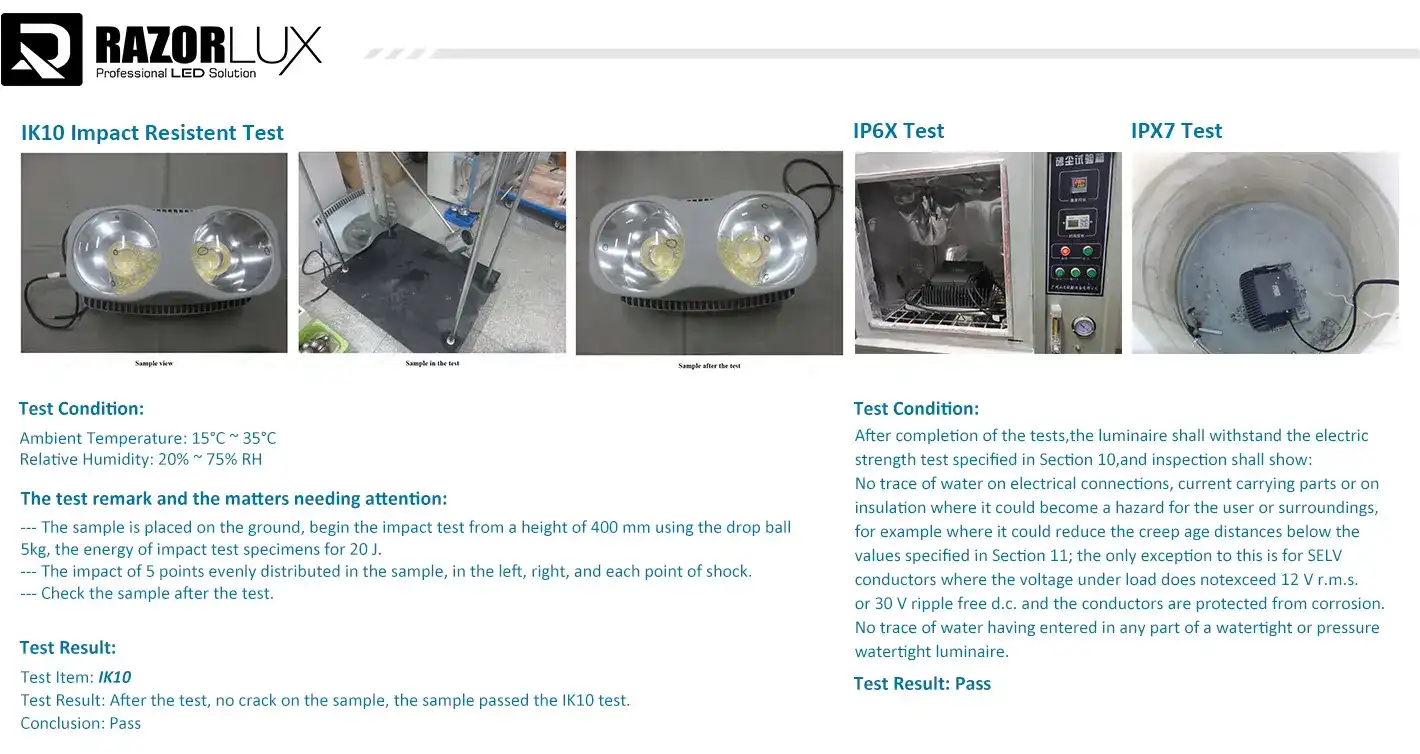
Water getting into outdoor lights is still the main reason why it fails. IP (Ingress Protection) grades set standard requirements. For example, IP65 protects against low-pressure water jets coming from any direction, and IP67 guarantees resistance to immersion up to one meter for 30 minutes. These scores have a direct relationship with the quality of the gasket, the seal, and the shape of the cable gland.
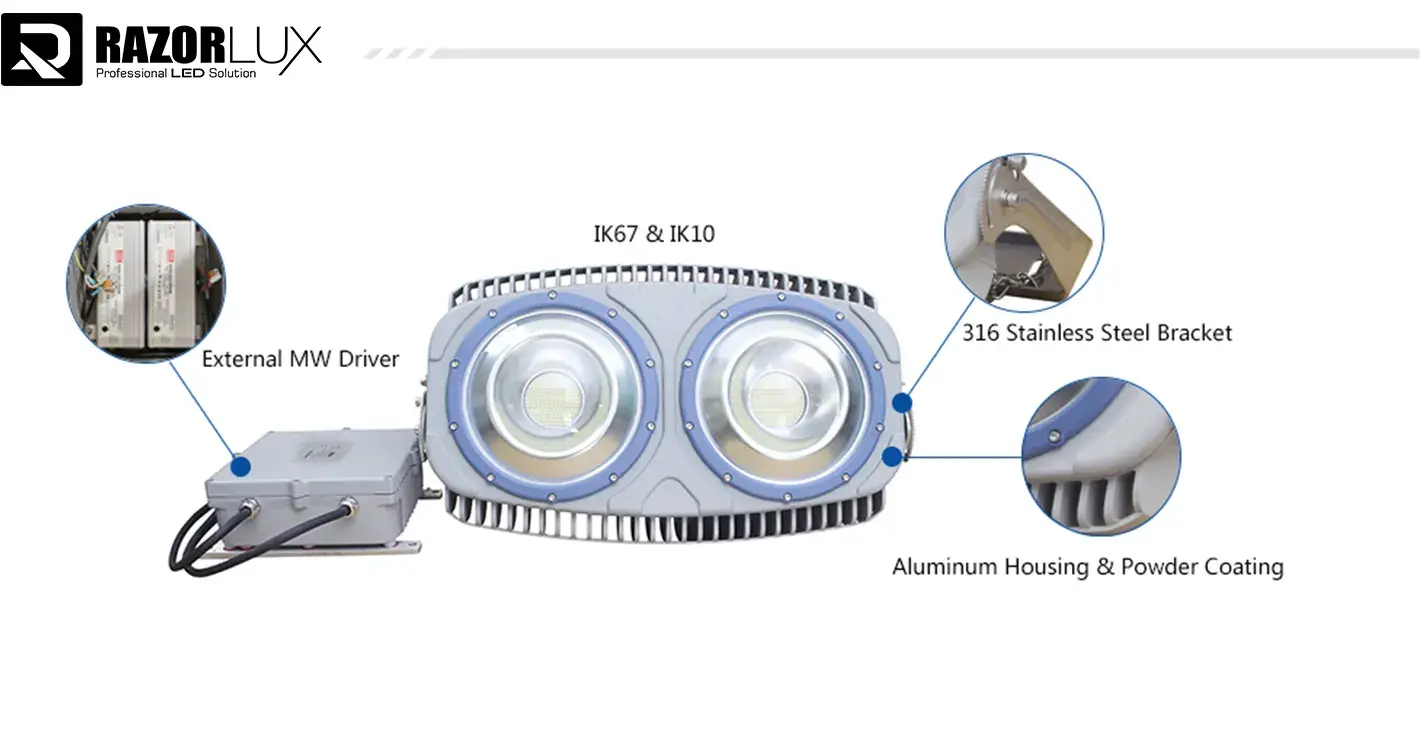
Fixtures with marine-grade silicone seals that are rated IP67 stop galvanic rusting at connection points in coastal and offshore areas where salty mist is always present. We suggest making sure that makers test their products with salt spray according to ASTM B117 for at least 96 hours to make sure that powder-coated aluminum housings and stainless steel parts stay strong in conditions that speed up corrosion.
Wind Load and Structural Resilience
Winds that are moving quickly put mechanical stress on instrument bodies and fixing brackets. Fixtures that don't have enough structural support may become loose, move out of place, or get stress cracks over time. The IK (Impact Protection) rating—IK10 means resistance to 20 joules of impact energy—shows how well a fastener can handle both intentional damage and moving objects during storms.
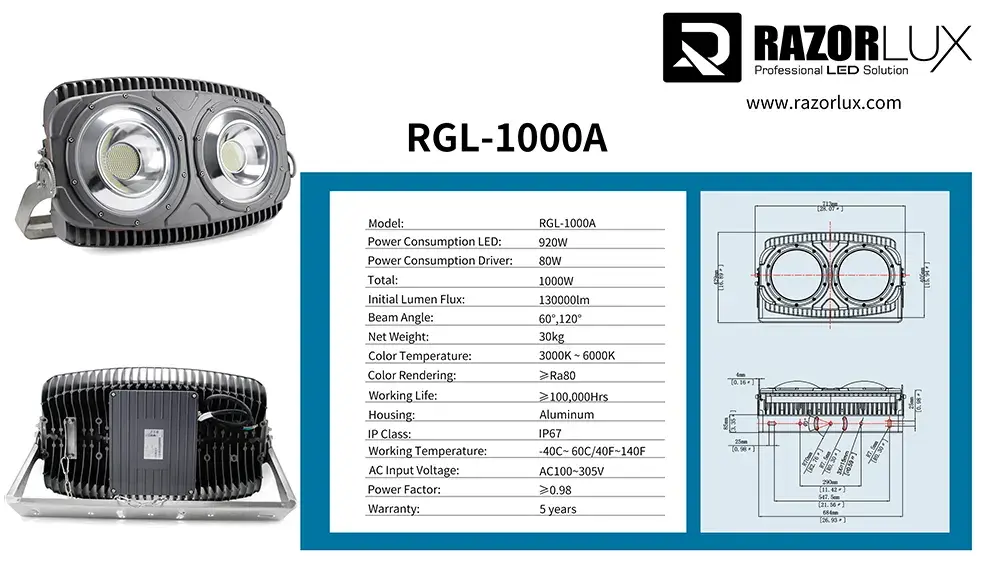
Razorlux's 1000W type has a strong 30 kg metal housing and a stainless steel bracket system with strengthened mounting points. It is made to stay attached even in Category 3 storm wind speeds. This engineering method meets the important need for safety in open dock and platform setups where moving fixtures could cause dangerous dark areas.
Technical Performance of Line-Voltage LED Fixtures in Harsh Environments
Depending on how well LED outdoor lighting works in harsh environments, installations will either meet their expected return on investment or become care headaches. Specifications like how well they work, how reliable the drivers are, and how consistent the light is show how the lamps handle stress in situations other than the lab.
Energy Efficiency Across Temperature Ranges
LED efficiency, which is measured in brightness per watt, usually goes up a little when it's cooler, but it can go down if the temperature isn't managed properly. Constant-current drivers that account for changes in forward voltage make sure that high-quality fixtures keep their effectiveness fixed across their rated working range. A lamp with 130 lm/W efficiency and 1000W input gives off 130,000 lumens, which is more than enough to replace standard 2200–2500W metal halide lights and save over 60% on energy costs.
Because of this efficiency, business costs are cut immediately. At $0.12/kWh, a shipyard that uses 50 lights for 4,000 hours a year saves about $45,000 a year on power costs compared to old HID technology. This money can be used for fleet upkeep or building upgrades.
Lifespan and Lumen Maintenance
A rated lifespan of more than 50,000 hours means that it can be used nonstop for 11 years, or for 17 years if it is used 8 hours a day. Lumen maintenance, which is the percentage of the original light output that is kept over time, is very important for apps that need to keep things visible for safety reasons. High-quality lights keep 90% of their lumen output (L90) for more than 30,000 hours thanks to Mean Well drivers made for harsh conditions and expensive Samsung or similar LED chips.
Our work with port authority installations in Queensland showed that fixtures with documented L90 performance got rid of the need for replacements every 10 years during infrastructure upgrades. This cut the total cost of ownership by 35% compared to other options that needed replacements every 10 years.
Optical Consistency Under Environmental Stress
Stability of color temperature and beam pattern consistency have a direct effect on how well something works. When phosphor coatings break down because of UV or heat stress, lights that were rated at 5700K move toward the blue or yellow spectrums. This is called correlated color temperature (CCT) shift. This lack of uniformity makes things look bad and makes it harder to draw colors for detailed work.
Over the course of their estimated life, Razorlux lights keep the CCT within ±200K thanks to UV-stabilized optical lens materials and hermetically sealed LED modules. Beam angle choices (40°, 60°, 120°, and 140°x60°) allow for different mounting heights and coverage needs. This makes sure that light distribution patterns stay consistent even when the housing expands and contracts due to changes in temperature.
Material Engineering for Weather Resistance and Durability
The way 120-volt LED outdoor flood lights are built affects how well they can handle damage from the weather. The choice of materials, how they are treated on the outside, and how well the parts are put together determine whether a piece will last for decades or only a few years.
Housing Materials and Corrosion Protection
Marine-grade aluminum metals have the best strength-to-weight ratio and doesn't rust. When powder coating is added after chemical conversion treatment, it protects against industrial pollution and salt spray. To make sure there is enough security, the coating thickness must be checked using dry film thickness tests. For marine use, this is usually between 60 and 80 microns.
When aluminum housings are connected to steel buildings, galvanic corrosion doesn't happen because the brackets and attaching tools are made of stainless steel (304 or 316 grade). By specifying different metal isolation gaskets at all contact places, electrochemical processes that would otherwise speed up the breakdown of materials are stopped.
Optical Components and UV Degradation
Lenses made of tempered glass or polycarbonate cover LED arrays and keep light penetration above 92%. Cheaper plastic options turn yellow and crack when exposed to UV light for a long time, which cuts light output by 30% in three years. Tempered glass doesn't break when it comes in touch with quick changes in temperature, like when cold rain hits hot fixtures. This is an important safety feature for installations above ground.
Putting anti-reflective coatings on optical lenses makes them 3–5% more efficient at first and keeps their clarity by stopping dust and moisture from sticking to them. This improvement, which at first glance seems small, adds up to big lumen-hour gains over many years of use.
Sealing Technologies and Cable Management
Multi-stage sealing systems, which include compression seals, threaded cable glands with strain relief, and breather vents with hydrophobic coverings, keep wetness out and keep the pressure inside the system even when the temperature changes. Breather vents stop a common type of failure where protected devices get condensation inside from going through repeated temperature changes, which damages electrical parts.
Vulnerability zones are where cables enter a building. Marine-rated cable glands with multiple compression rings and IP68 ratings (higher than the fixture body rating) make sure that the weakest spot is stronger than the minimum standards. This stops water from running along the insulation of the conductor.
Installation and Maintenance Protocols for Maximum Reliability
Fixtures last longer and keep their lighting performance when they are installed correctly and maintained regularly. When installation methods don't provide the right protection or when repair plans don't take into account expected wear patterns, even the toughest equipment breaks down early.
Mounting Considerations for Structural Integrity
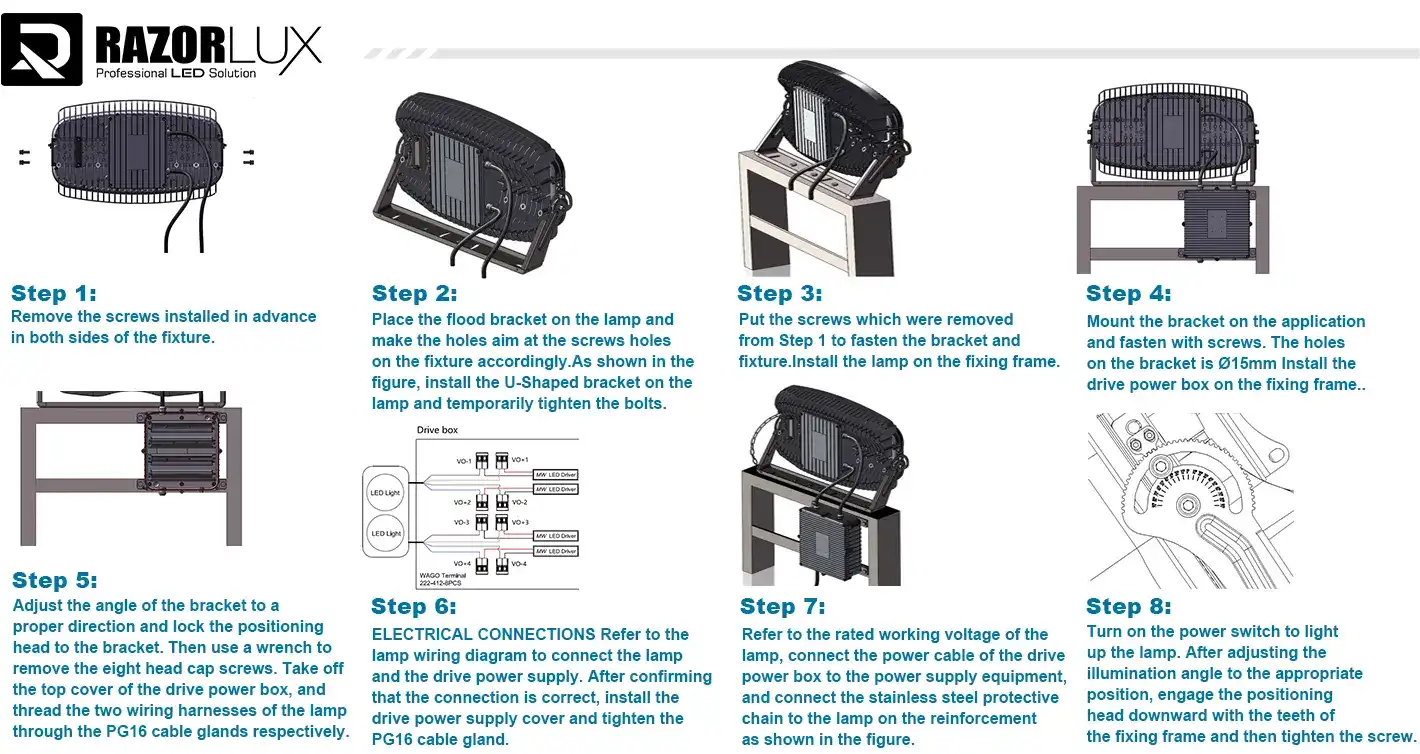
The way a fixture is positioned affects how heat moves and how water drains. Installing at a downward angle lets rain roll off of optical surfaces instead of pooling, and it also keeps draining holes clear. When mounting above 10 meters, anti-drop safety cables must be used as a backup hold, which is required by workplace safety rules for installations above 10 meters.
During installation and yearly checks, the torque requirements for mounting bolts must be checked. These range from 15 to 25 Nm, based on the form of the bracket. It's possible for nearby machines or waves to slowly open connections, which can throw off lighting patterns and put stress on electrical connections.
Electrical Infrastructure and Surge Protection
Line-voltage systems need specialized circuits with overcurrent protection that are big enough to handle the total load connected plus an extra 25% for safety. Ground fault circuit interrupters (GFCI) keep people safe, but they may trip too often in damp places. To find the best balance between safety and working continuity, look for industrial-grade units with changeable trip limits (30 mA is normal).
When placed at distribution panels, transient voltage surge suppressors (TVSS) keep lights safe from lightning-caused surges and switching transients that happen a lot in industrial electrical systems. There is more than enough surge protection inside Razorlux lights to meet IEEE C62.41 Category C standards. There is also protection at the panel level, which protects the whole lighting circuit.
Preventive Maintenance Schedules
Visual checks every three months find early signs of gasket compression, cloudy lenses, or rust on the fixing hardware. Every year, there are thorough checks that include checking the torque, cleaning the lenses with non-abrasive solutions, and using thermal imaging to look for unusual working temperatures that could mean the driver is wearing out or that heat isn't getting away properly.
Recording upkeep tasks, such as taking photometric readings and making temperature profiles, creates baseline data that shows performance trends before problems happen. By taking care of small problems before they get worse, this preventative method cuts down on emergency fixes and increases the life of equipment.
The table below shows the maintenance tasks and time frames that are suggested for tough climate applications:
| Maintenance Activity | Quarterly | Annually | Biennial |
|---|---|---|---|
| Visual Inspection (mounting, lenses) | ✓ | ✓ | ✓ |
| Lens Cleaning | ✓ | ✓ | ✓ |
| Gasket Condition Assessment | — | ✓ | ✓ |
| Torque Verification | — | ✓ | ✓ |
| Thermal Imaging | — | ✓ | ✓ |
| Photometric Testing | — | — | ✓ |
| Electrical Connection Inspection | — | ✓ | ✓ |
This organized method evenly distributes upkeep resources and manages risks, making sure that important lighting equipment stays in line with safety and performance standards.
Comparative Analysis: LED Versus Alternative Lighting Technologies
When choosing the right lighting technology, you need to know the trade-offs between the initial investment, the operating costs, the upkeep needs, and the stability of the performance. There are many technologies available, but LED lights are the best choice for harsh weather because they have benefits that stand out more in those circumstances.
LED Versus Metal Halide and High-Pressure Sodium
Metal halide and high-pressure sodium lights are two examples of traditional HID (High-Intensity Discharge) technologies that have been used in industry for decades. However, they have major problems when used in harsh settings. Warm-up times of 5 to 15 minutes delay lighting after the power goes out, which is a very important safety problem in an emergency. Facilities are left in the dark for up to 20 minutes during restart times after short power blackouts.
A lamp that works nonstop for 10,000 to 15,000 hours needs to be replaced every one to two years, which means regular repair costs and downtime. Color rendering (CRI 20–65 for HPS and 65–70 for MH) isn't as good as LED lights with CRI >75 for fine work. Lumen loss rates of 20–40% over the lamp's lifetime mean that initial placements need to be over-designed to make sure there is enough light at the end of its life.
These problems are solved by LED technology, which can turn on instantly, lasts for 50,000 hours or more, renders colors more accurately, and keeps brightness management above 90% after 30,000 hours. The higher original cost—usually two to three times as much as HID equivalents—is recouped within two to four years by lower energy use, upkeep work, and replacement parts.
Weatherproofing Challenges Across Technologies
HID lights need separate ignitors and ballasts that can be damaged by water and changes in temperature. Capacitor-based ballasts often break down in hot places, and magnetic ballasts are heavier and less efficient at the device level. Adding external parts increases the number of failure spots and makes weatherproofing harder.
Integrated LED driver designs combine power transfer inside the light housing, which cuts down on the number of connection places where water can get in. Razorlux models have wide input voltage ranges (AC80-305Vac) that can handle voltage changes without the need for extra control. This makes it easier to set up electrical infrastructure in remote areas where power quality isn't stable.
Total Cost of Ownership Analysis
A full cost comparison over 10 years shows that LED is more profitable, even though it has higher initial costs:
| Cost Factor | Bladelux 1000W LED | 2500W Metal Halide |
|---|---|---|
| Initial Equipment Cost | $1,200 | $450 |
| Installation Labor | $150 | $150 |
| Annual Energy Cost (4000 hrs, $0.12/kWh) | $480 | $1,200 |
| Maintenance Labor (10 years) | $200 | $800 |
| Replacement Lamps/Components | $150 | $600 |
| Total 10-Year Cost | $7,150 | $14,650 |
This study shows that over the lifetime of an asset, 51% of its costs can be saved. This does not include the efficiency gains that come from better visibility and less downtime for upkeep. These numbers mean a lot of capital savings for procurement managers who are looking at lighting changes for large facilities with multiple buildings or fleets of ships.
Procurement Specifications for Extreme-Weather Applications
Technical specifications turn operational needs into measurable factors that providers need to prove through testing and paperwork. Procurement managers in the marine, offshore, and heavy industrial sectors need specific factors to make sure that the tools they buy can handle the conditions in those areas without breaking down too soon.
Critical Performance Parameters
Extreme-weather 120 Volt LED outdoor flood lights should meet at least these requirements:
Ingress Protection: The IP67 grade was confirmed by testing by a third party in line with IEC 60529 standards. Test results showing resistance to submersion and dust exclusion under pressure difference conditions mimicking rain caused by wind should be included in the paperwork.
Impact Resistance: The IK10 grade was proven by IEC 62262 drop-weight tests. This makes sure that fixtures can handle being hit by tools, equipment, or other trash that is common in industrial settings.
Operating Temperature Range: -40°C to +60°C, nonstop use without degrading. Manufacturers should give information on thermal management, such as joint temperature estimates at the highest possible atmospheric temperature.
Luminous Efficacy: At least 120 lumens per watt at the bulb level (not the chip level), taking into account the efficiency of the driver and any optical losses. Verification comes from independent photometry reports from approved labs that use integrating sphere measures.
Color Rendering Index: At least a CRI of 75 is needed, and a CRI of 80 or higher is best for tasks that need to accurately tell colors apart. Test results should show that the CCT stays stable over the rated life by using methods for accelerated aging.
Driver Specifications: Mean Well, or similar industrial-grade drivers with a power factor of at least 0.98 and a THD of less than 10%, are required. Grid disturbance can be handled without extra control when the input voltage range is wide. Surge safety that meets IEEE C62.41 Category C makes things more resilient in the face of short-term events.
Certification and Compliance Documentation
International certifications show that a product meets safety and efficiency standards in a certain area. Important certificates include:
North American Markets: UL 1598 (Luminaires) and DLC (DesignLights Consortium) Premium listings are needed to be eligible for energy-saving incentives. CSA C22.2 approval is needed for sites in Canada.
European Markets: Products must have CE markings that include the Low Voltage Directive (LVD) and Electromagnetic Compatibility (EMC) statements. RoHS compliance papers show that restricted chemical testing has been done.
Marine Applications: Type approval from DNV (Det Norske Veritas), GL (Germanischer Lloyd), or ABS (American Bureau of Shipping) for ships and offshore platforms is used in marine applications. These certificates check that the product can withstand vibrations, electromagnetic interference, and corrosion in maritime settings.
Quality Systems: ISO 9001:2015 certification shows that a company is committed to consistent quality management practices, which are important for keeping supply lines secure and making sure that products can be tracked.
Razorlux keeps complete certification files for these standards, which gives procurement teams paperwork that makes the process of evaluating and approving bids faster.
Warranty and Service Support Evaluation
Manufacturers offer guarantees on their products because they believe in the strength of the design and the quality of the parts. Standard 3-year warranties are the norm in the industry. Razorlux's 5-year warranties, on the other hand, show that they are expensive and lower the total cost of ownership by providing longer safety terms.
The warranty terms should include different coverage lengths for the LED modules, drivers, and housing parts, since they all fail in different ways and cost different amounts to replace. A 5-year warranty on the LEDs and drivers and a 10-year warranty on the housing help ensure that mechanical parts last longer than electronic parts when they are properly defined.
Check how quickly the service is in addition to the length of the guarantee. Manufacturers who offer dedicated technical support, quick quote return (24–48 hours), and samples for engineers to test show that they want to build partnerships, not just business relationships. Case study evidence, especially from installations that took place in similar environments, gives customers faith that goods will work as promised in real life.
Conclusion
When properly installed and kept, 120-volt LED outdoor flood lights that use line power have been shown to work reliably in the harshest circumstances. By paying close attention to IP ratings, material choice, temperature management, and the quality of the parts, these lights provide years of steady lighting for safety-critical tasks. By switching from old HID technologies to LED ones, you can save over 60% on energy costs, avoid having to do as much upkeep, and get better light quality.
The people who work in procurement can benefit from knowing the technical details that set standard goods apart from engineered solutions made to withstand harsh weather. Specifications that stress test performance, approve parts, and provide full warranties protect capital investments and keep operations running in marine, offshore, and industrial settings where lighting failures pose unacceptable risks to safety and productivity.
FAQ
What makes 120-volt LED outdoor flood lights better for harsh weather than low-voltage ones?
Line-voltage lights get rid of the voltage drop problems that happen with low-voltage systems when cables are long, so the brightness stays the same across sites that are spread out. Their strong internal drivers can handle bigger input voltage changes (80–305Vac), which are common in remote areas. Additionally, their higher power capacity lets single lights put out more lumens, which makes installation easier.
What do IP numbers mean for weather safety in the real world?
IP65 guards against water jets coming from any direction, so it can be used in places that are partly or fully covered. IP67 makes sure that it can withstand being submerged up to 1 meter for 30 minutes, which is needed for situations like direct rain, spray zones, or rare flooding. For marine and remote uses, IP67 should be the bare minimum to protect against salt spray and wave action.
What kinds of care can make LED flood lights last longer in tough conditions?
Visual checks every three months find new problems before they become serious. Lens cleaning, gasket checking, mounting hardware torque verification, and thermal imaging to find odd working temperatures should all be done once a year. Every two years, photometric testing keeps track of light output and finds units that need to be replaced before they break.
Are LED flood lights with more wattage better than a bunch of lights with lower power?
Single high-wattage fixtures are easier to install and have fewer failure points than multiple smaller units that produce the same amount of lumens. When the power goes up, thermal control gets harder, which requires better engineering. Quality 1000W lights work just as well as smaller units while making infrastructure easier to use and lowering the need for long-term upkeep.
Partner with Razorlux for Industrial-Grade LED Flood Light Solutions
Razorlux is an expert in making 120-volt LED outdoor flood lights. They have over 20 years of engineering experience dealing with the unique problems of naval and heavy-duty uses. Our 1000W RGL-1000A type gives off 130,000 lumens at 130 lm/W, which is more than 2500W metal halide lights, and works reliably from -40°C to +60°C. With IP67 protection, IK10 impact resistance, Mean Well drivers, and stainless steel construction backed by 5-year warranties, our solutions don't break down early or require a lot of care like cheaper products do. You can email sam@razorlux.com to get technical specs, case study data, and sample review programs that are made to fit the needs of your project.
References
1. Illuminating Engineering Society. IES TM-21-19: Projecting Long-Term Lumen Maintenance of LED Light Sources. New York: IES Publications, 2019.
2. International Electrotechnical Commission. IEC 60529:2013 Degrees of Protection Provided by Enclosures (IP Code). Geneva: IEC Central Office, 2013.
3. National Electrical Manufacturers Association. ANSI/NEMA C136.31-2019: American National Standard for Roadway and Area Lighting Equipment - Luminaire Vibration Testing. Rosslyn: NEMA, 2019.
4. Det Norske Veritas. DNV-CP-0377: Offshore and Marine Lighting Systems - Design and Installation Guidance. Høvik: DNV GL, 2017.
5. U.S. Department of Energy. Solid-State Lighting Program: LED Luminaire Lifetime—Recommendations for Testing and Reporting. Washington: DOE Office of Energy Efficiency, 2020.
6. American Society for Testing and Materials. ASTM B117-19: Standard Practice for Operating Salt Spray (Fog) Apparatus. West Conshohocken: ASTM International, 2019.
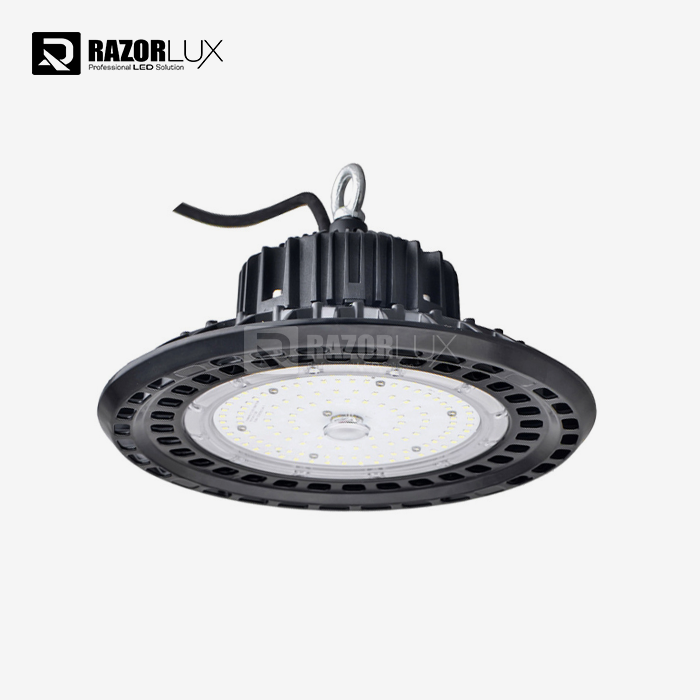 VIEW MOREwork shop lights
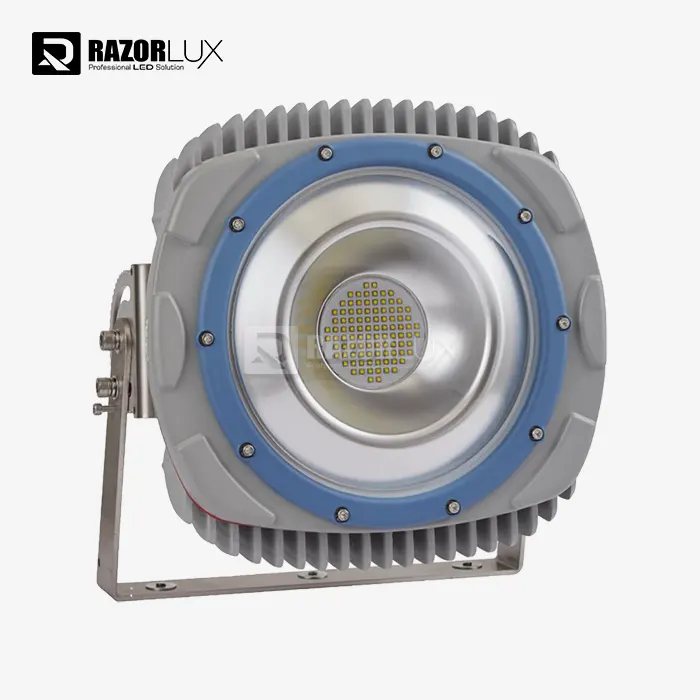 VIEW MOREindoor badminton court lighting
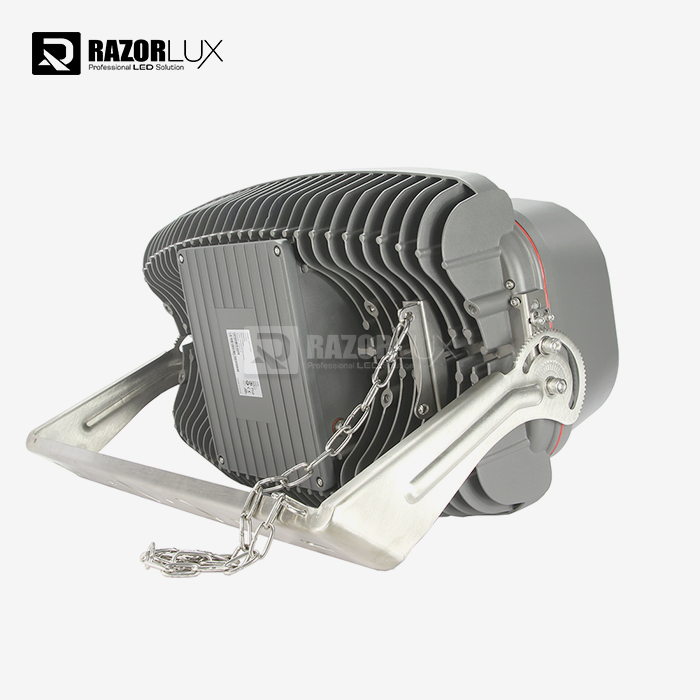 VIEW MOREcricket stadium flood light
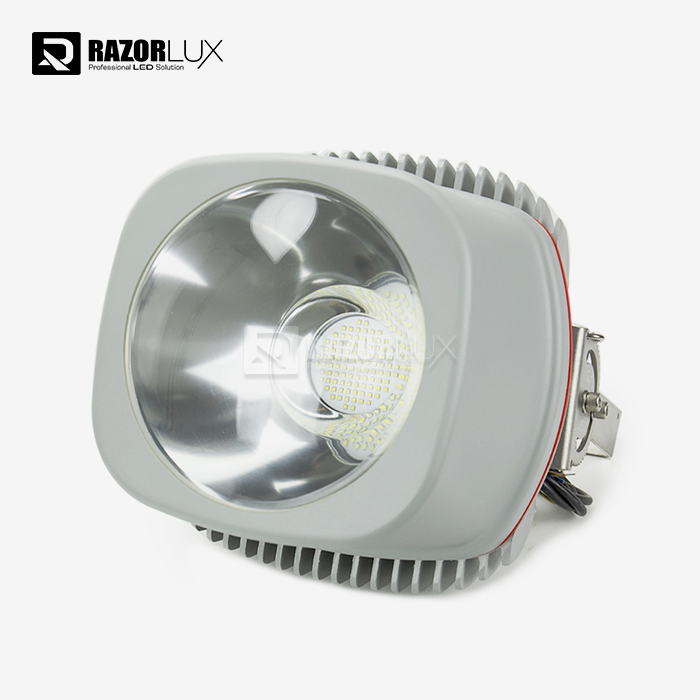 VIEW MOREled flood light projector
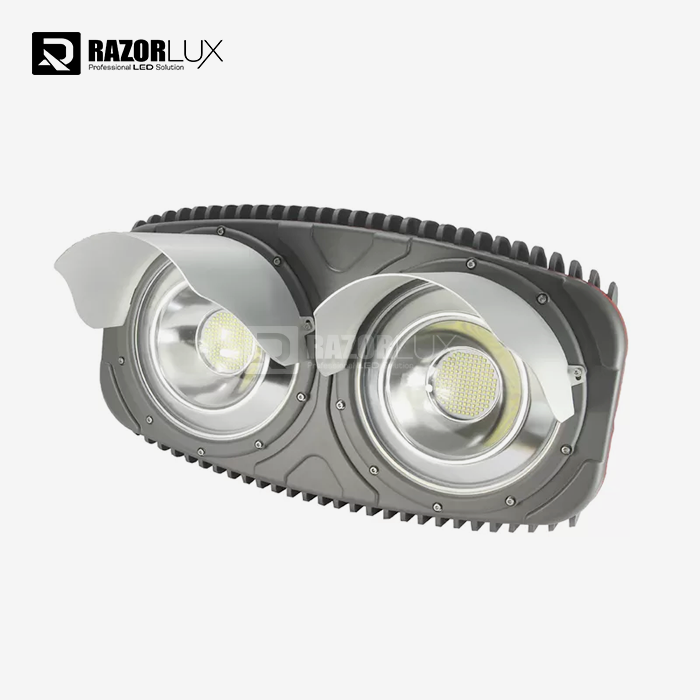 VIEW MOREDie Cast Waterproof Led Flood Light Outdoor 6000K Saa Aluminum Alloy
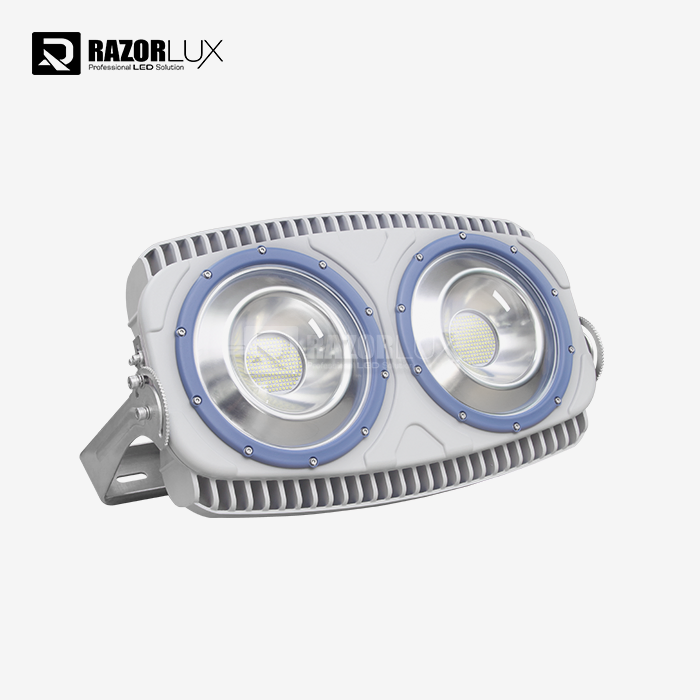 VIEW MORE1000W Stadium Light
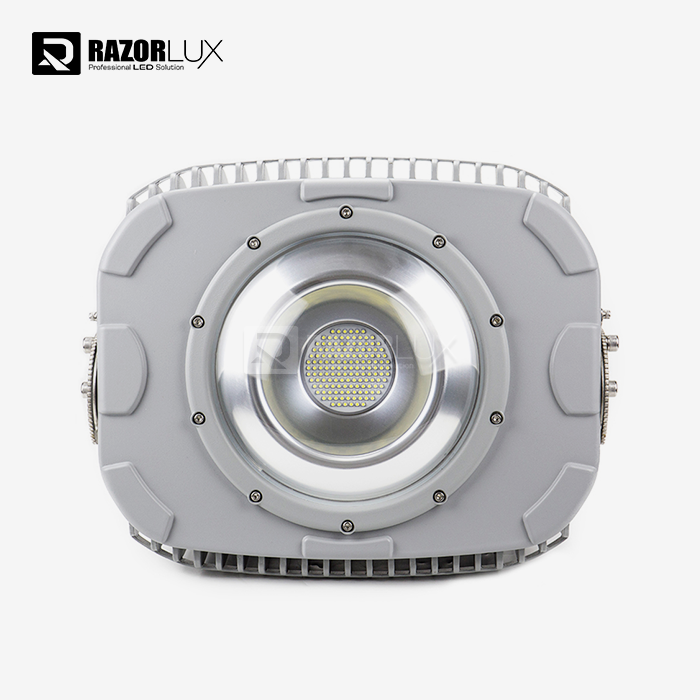 VIEW MORE400W Led Floodlight
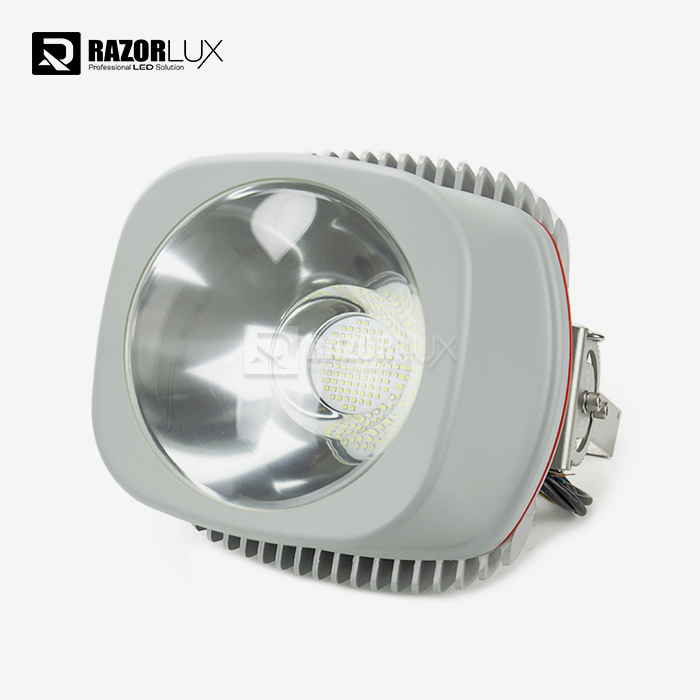 VIEW MORE120 Volt Outdoor Spotlight