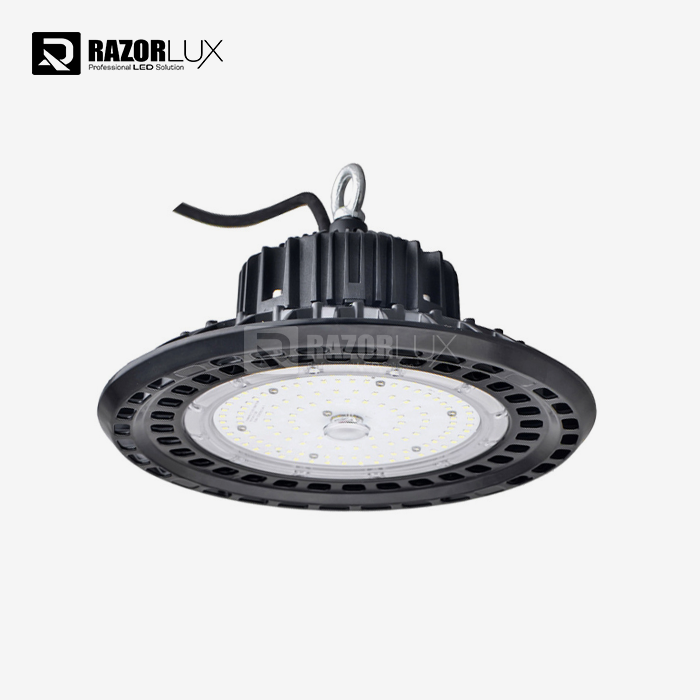
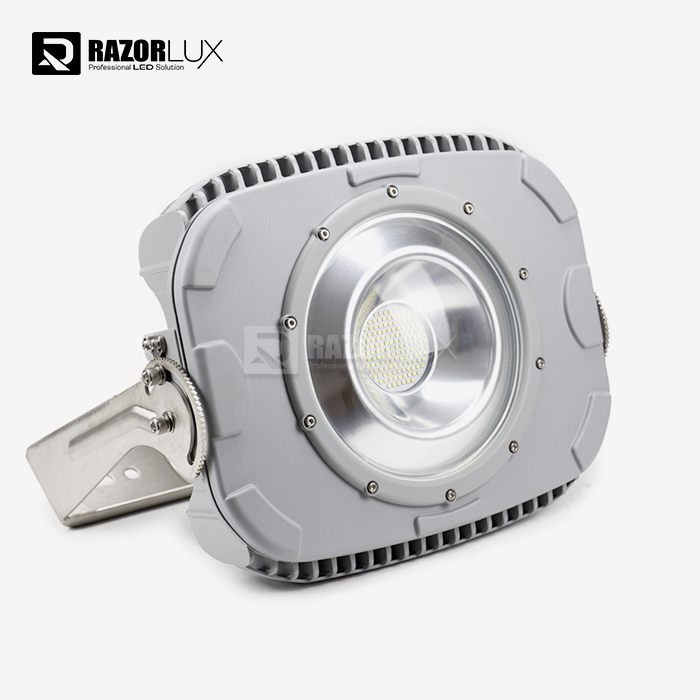
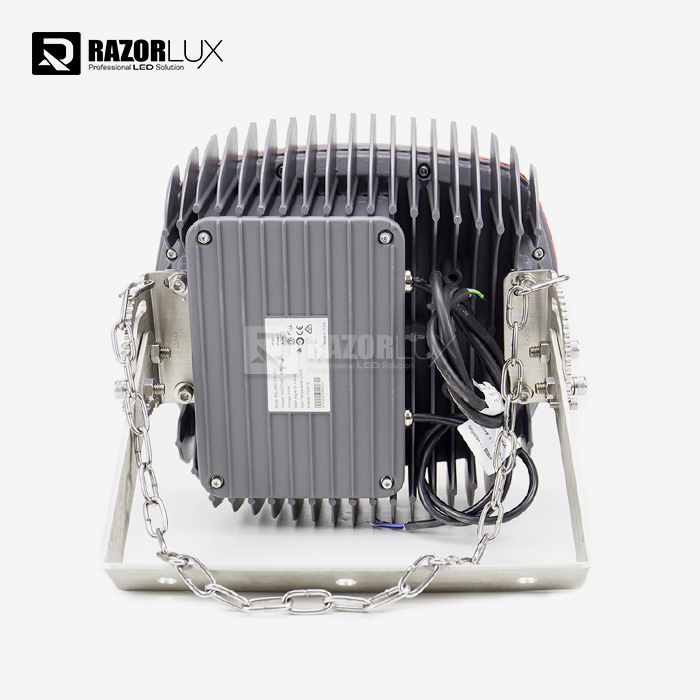
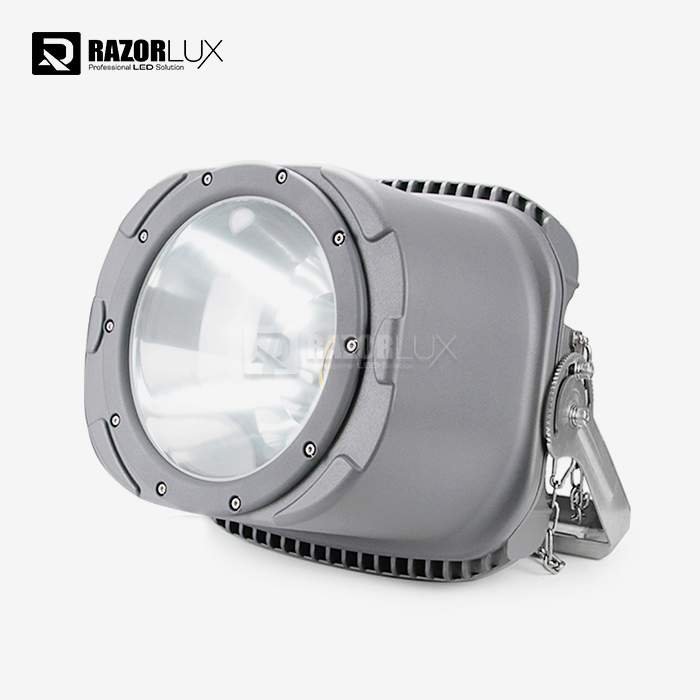
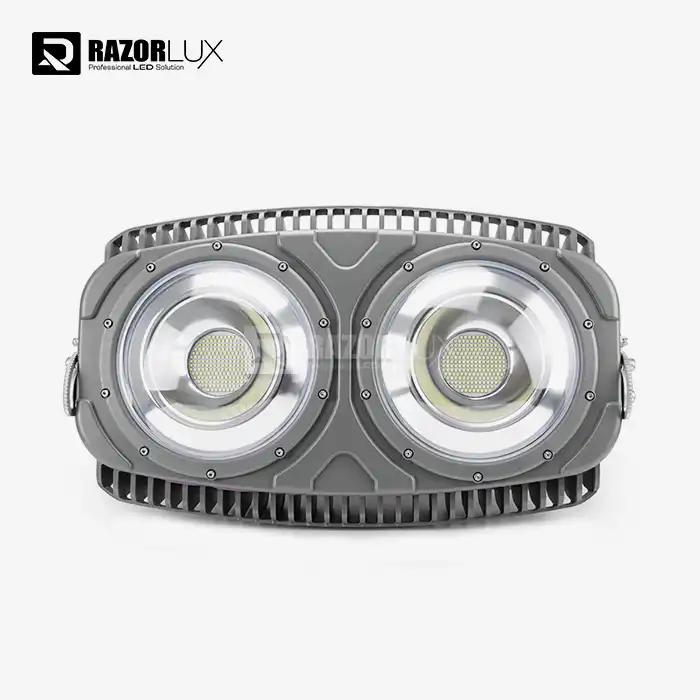
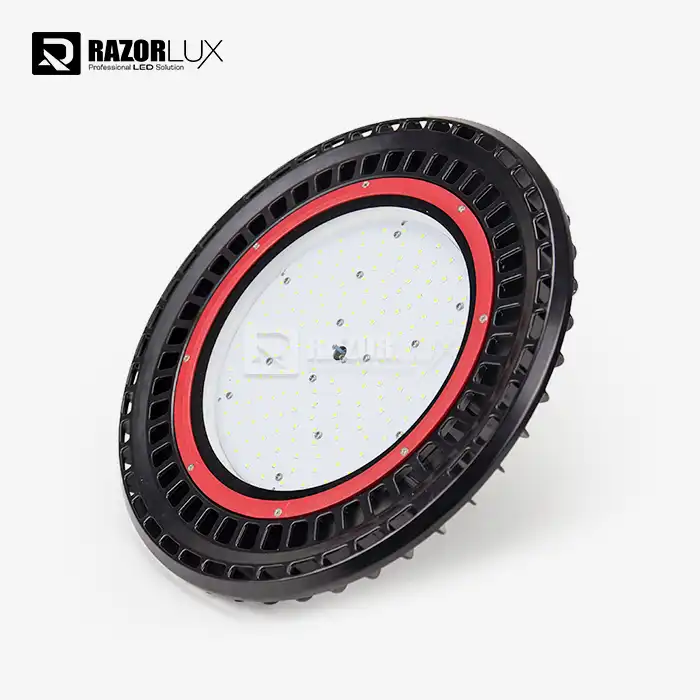
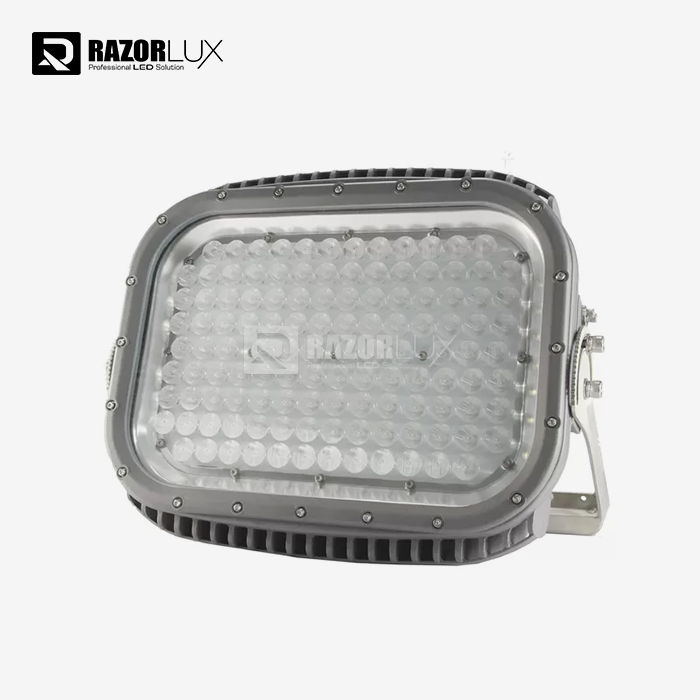
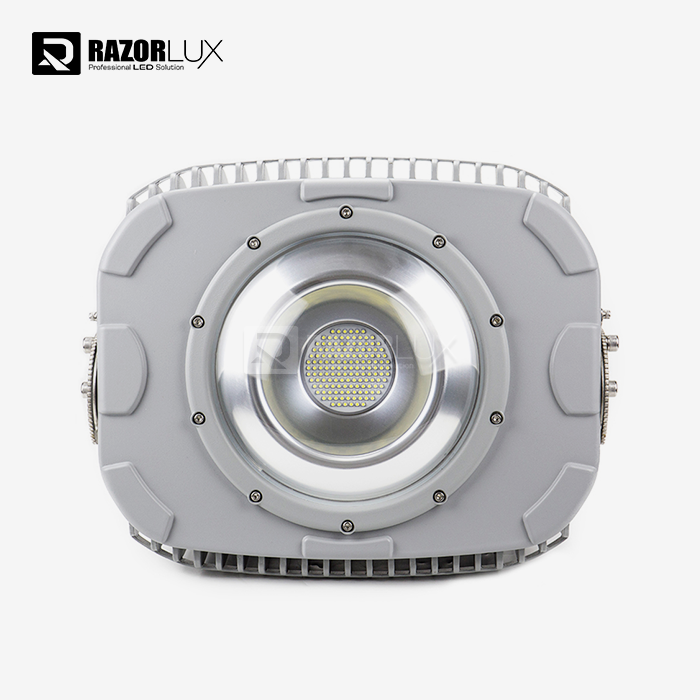
Led High Mast Flood Lights represent a transformative shift in large-scale outdoor illumination, delivering powerful lighting while drastically cutting energy consumption and operational expenses. These advanced fixtures combine semiconductor technology with intelligent design to convert electrical energy into brilliant light with minimal waste. Compared to traditional metal halide or high-pressure sodium lamps, modern LED high mast solutions achieve energy savings of 50-70% while providing superior brightness, longer lifespans, and reduced maintenance requirements. The substantial cost reductions stem from lower electricity bills, fewer replacement cycles, and decreased labor needs—making them an economically sound investment for ports, shipyards, industrial facilities, and infrastructure projects worldwide.
Understanding LED High Mast Flood Lights and Their Energy-Saving Benefits
High pole lighting frameworks have long served as a basic foundation for illuminating endless open-air zones where visibility and security are fundamental. Conventional frameworks depended on metal halide or high-pressure sodium lights mounted on posts extending from 20 to 50 meters tall. These routine innovations, although useful, devoured intemperate control and required visit support due to brief operational lifespans.
LED innovation revolutionized this scene by presenting semiconductor-based light sources that, on a very basic level work in an unexpected way. Or maybe than warming fibers or ionizing gases, LEDs create photons through electroluminescence—a process where electrical current passes through semiconductor materials, discharging vitality as unmistakable light. This component dispenses with the considerable vitality misfortunes inborn in older technologies.
How LED Technology Achieves Superior Efficiency?
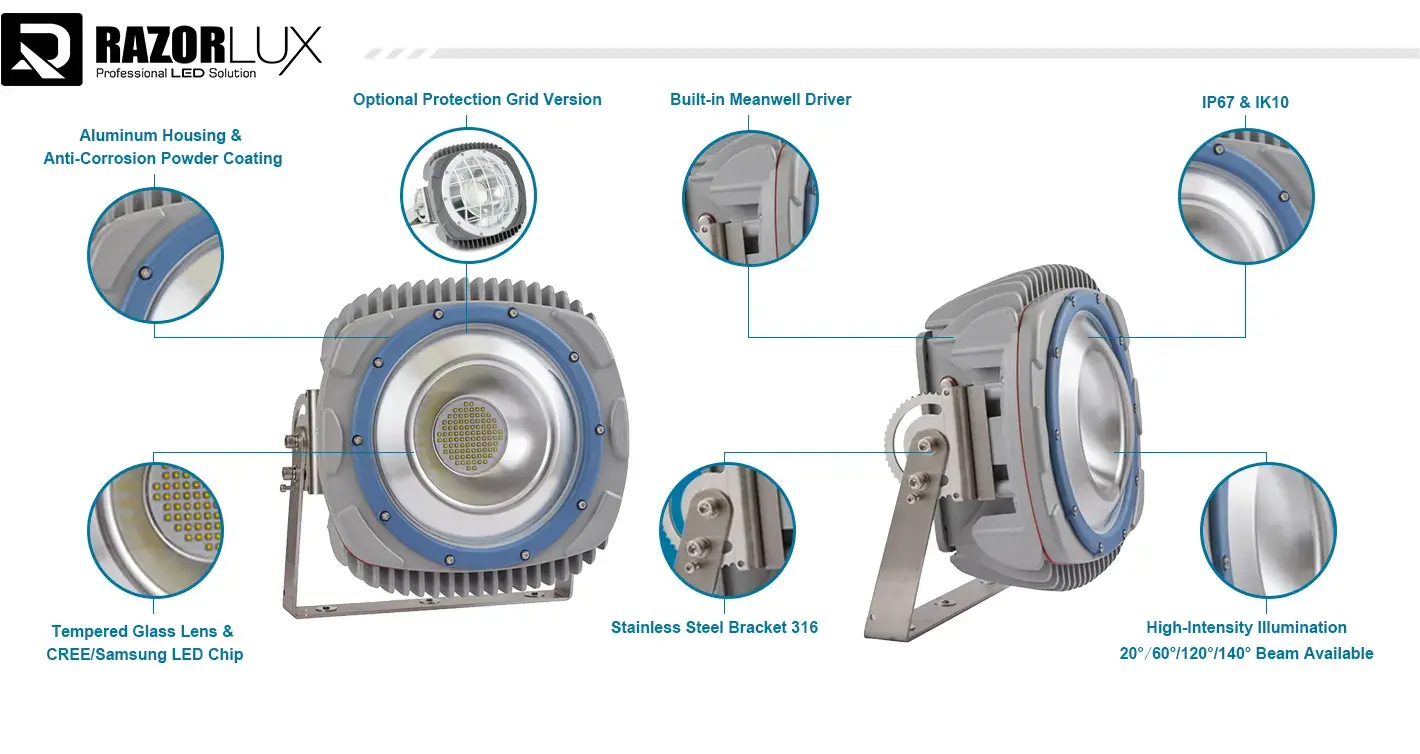
The vitality productivity of Driven lighting stems from a few specialized progressions working in concert. Quality Driven chips presently accomplish brilliant viability surpassing 130 lumens per watt, meaning they produce essentially more obvious light per unit of power consumed. Our Razorlux RGL-120A show embodies this effectiveness, conveying 14,400 lumens of steady flux while devouring a fair 120 watts of additional power—effectively supplanting 250-300 watt Covered up lights with prevalent performance.
Advanced warm administration frameworks play an equally basic part. LEDs are delicate to heat, which can corrupt execution and abbreviate life expectancy. Cutting-edge tall pole surge lights join aluminum lodging with powder coating and modern warm dissemination plans that keep up ideal working temperatures indeed in demanding situations. This warm control guarantees steady light yield and secures the Driven chips from untimely failure.
Intelligent driver innovation speaks to another productivity breakthrough. Premium control supplies from producers like Meanwell direct current absolutely, keeping up control variables over 0.98 and keeping add up to consonant mutilation underneath 10%. These determinations interpret straightforwardly to diminished power waste and lower utility costs. The wide input voltage extend of AC 80-315V or DC 80-400V disposes of the require for extra connectors, assist streamlining energy conversion.
Environmental Adaptability Without Performance Compromise
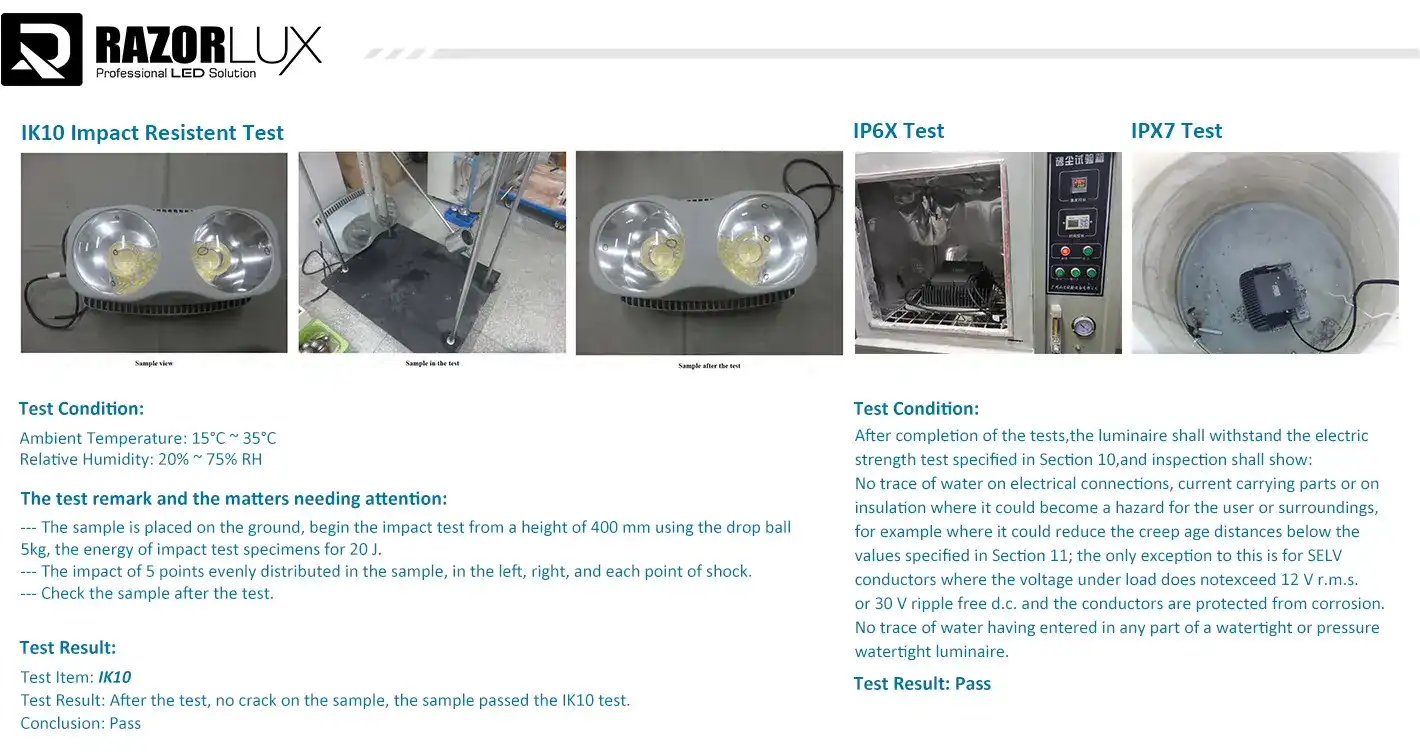
Industrial and marine environments present harsh conditions that traditional lighting struggled to withstand. Salt spray, extreme temperatures, humidity, and physical impacts degraded conventional fixtures rapidly. LED high mast flood lights engineered for these applications incorporate IP67 ingress protection and IK10 impact resistance ratings, ensuring reliable operation across temperature ranges from -40°C to 60°C.
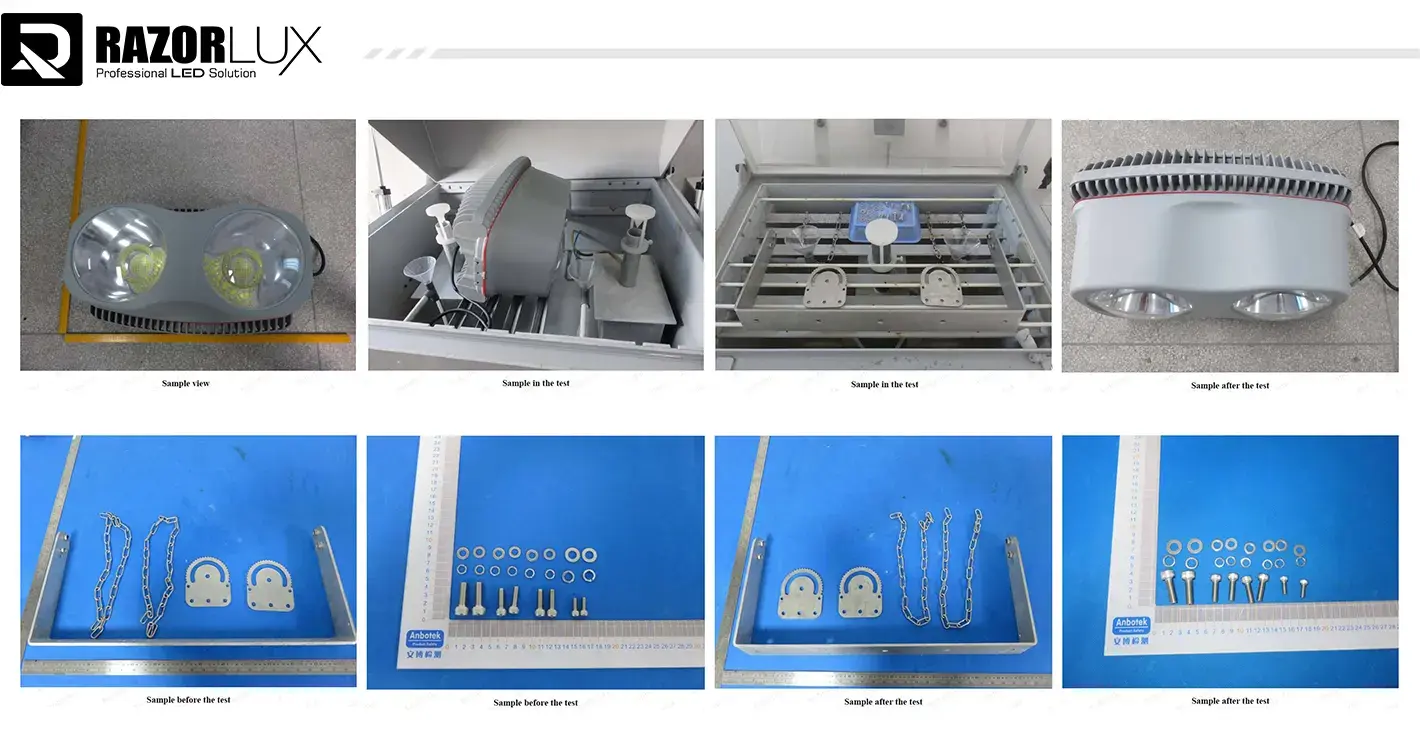
The stainless steel brackets and vigorous aluminum development ensure touchy components, whereas the fixed plan avoids dampness interruption and erosion. This natural flexibility implies lighting frameworks keep up their proficiency appraisals throughout their operational life rather than encountering progressive corruption common with more aged technologies.
Comparing LED High Mast Flood Lights with Traditional Lighting Solutions
Understanding the performance gap between LED and conventional lighting technologies helps quantify the energy and cost savings potential. The comparison reveals why procurement managers across maritime, industrial, and infrastructure sectors increasingly specify LED solutions for their projects.
Performance Metrics That Matter
| Performance Factor | LED High Mast Lights | Metal Halide/HPS Lamps |
|---|
| Luminous Efficacy | 130+ lm/W | 60-90 lm/W |
| Operational Lifespan | ≥50,000 hours | 10,000-20,000 hours |
| Warm-up Time | Instant illumination | 5-15 minutes |
| Color Rendering Index | Ra≥75 (up to Ra≥90) | Ra 20-70 |
| Power Factor | ≥0.98 | 0.4-0.6 (uncorrected) |
| Maintenance Frequency | Minimal (5-10 years) | Annual replacement cycles |
The data illustrates why LED technology delivers superior value beyond simple energy consumption. The instant-on capability eliminates warm-up periods, crucial for safety-critical applications where immediate full illumination is essential. Higher color rendering indices improve visibility and worker safety by accurately rendering colors and enhancing contrast recognition.
Energy Consumption Analysis
Energy investment funds constitute the most promptly quantifiable advantage. A normal 400-watt metal halide installation, when bookkeeping for counterweight misfortunes, really consumes around 455 watts from the electrical supply. Working 12 hours every day, this translates to 5,460 watts per installation per day, or 1,993 kWh annually.
Our 120-watt Driven tall pole surge light gives comparable or prevalent light while expending only 120 watts. Working on the same plan yields 1,440 watts of daily utilization, or 526 kWh annually—a lessening of around 73%. At mechanical power rates averaging $0.12 per kWh in numerous markets, this single installation spares generally $176 every year. Mechanical offices ordinarily convey hundreds of tall pole lights, duplicating these savings substantially.
Durability and Weather Resistance Impact
The strong IP67 security review implies these installations stay fixed against clean entrance and can withstand brief submersion in water—essential for coastal establishments, shipyards, and seaward stages where salt spray and driving rain are steady challenges. Conventional installations with lower assurance appraisals fizzled more often as possible in such situations, requiring untimely replacement.
Impact resistance appraised at IK10 guarantees the lodging withstands extreme mechanical impacts up to 20 joules of vitality. This strength demonstrates important in mechanical settings where coincidental contact from gear, flotsam and jetsam, or upkeep exercises might harm lesser installations. The combination of natural and physical security straightforwardly decreases substitution costs and amplifies the compelling operational life well past the as of now noteworthy 50,000-hour Driven rating.
How LED High Mast Flood Lights Help Reduce Operational and Maintenance Costs?
Beyond direct energy savings, LED high mast flood lights generate substantial cost reductions through decreased maintenance requirements, improved operational efficiency, and regulatory compliance benefits. These factors often surpass energy savings in total cost of ownership calculations.
Maintenance Cost Reduction Through Longevity
The 50,000-hour operational life expectancy of quality-driven installations on a very basic level changes upkeep planning. Working 12 hours every day, this translates to roughly 11.4 hours of benefit; however, recently substitution becomes essential. Conventional metal halide lights regularly require yearly replacement, now and then more often than usual in harsh environments.
Consider a harbour office with 100 tall pole lighting fixtures. Conventional innovation requires acquiring 100 replacement lights yearly, planning lift hardware rental, and distributing specialized labor for establishments at noteworthy heights. Substitution light costs ordinarily run from $50-150 per unit, labor costs averaging $200-400 per installation when accounting for lift gear, security conventions, and specialist time. Yearly support costs effectively surpass $25,000-50,000 for this facility.
LED frameworks dispense with these repeating costs for their whole operational life. The introductory venture in quality-driven installations pays profits through reduced replacement cycles, decreased lift gear rentals, and redeployed support personnel. Our five-year guarantee on Driven modules and drivers gives extra assurance, ensuring against untimely disappointments and startling replacement costs during the initial operational period.
Smart Control Integration for Optimized Energy Use
Modern LED high mast flood lights integrate seamlessly with intelligent control systems that further optimize energy consumption. Motion sensors, daylight harvesting systems, and programmable dimming schedules reduce electricity use during low-activity periods without compromising safety.
A shipping terminal might implement zoned lighting that maintains full illumination in active cargo handling areas while dimming peripheral zones to 30% capacity during low-traffic hours. This adaptive approach can reduce total energy consumption by an additional 20-40% beyond the inherent LED efficiency gains, compounding cost savings substantially.
The precise controllability of LED technology enables these sophisticated management strategies. Traditional HID lamps cannot dim effectively and require lengthy restrike times after being turned off, forcing continuous operation. LEDs respond instantly to control signals, allowing dynamic adjustment matching actual operational needs.
Regulatory Compliance and Sustainability Benefits
Increasingly stringent environmental regulations and energy efficiency standards impact procurement decisions across industries. LED lighting systems typically exceed requirements set by energy codes, potentially qualifying for utility rebates, tax incentives, or accelerated depreciation schedules that improve project economics.
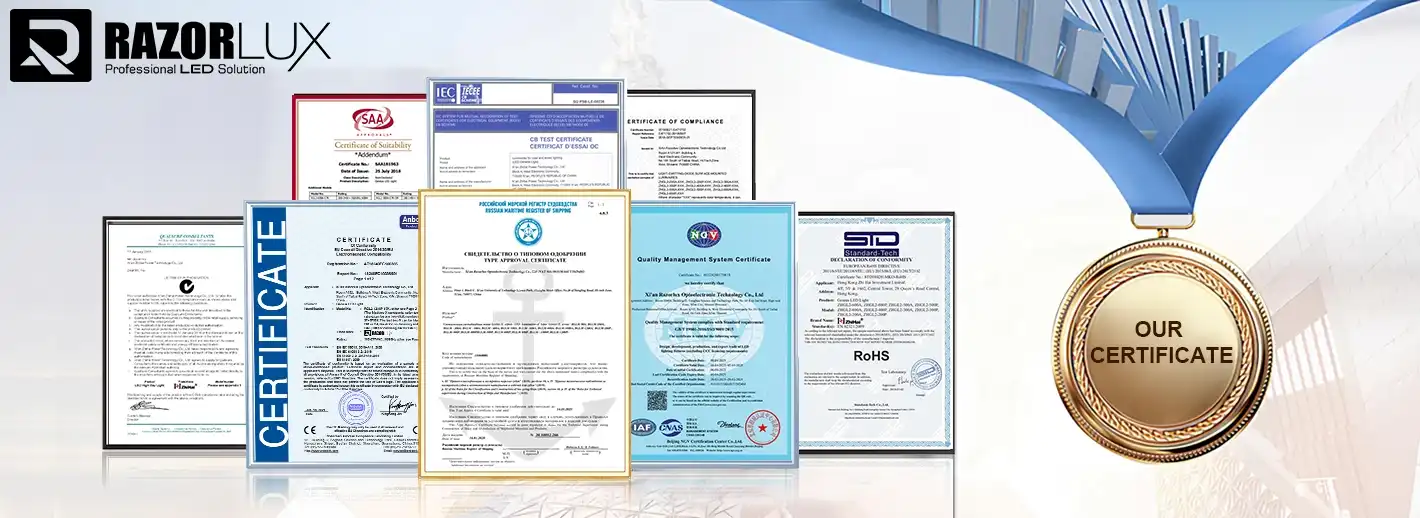
Certifications including CE, RoHS, UL, and DLC demonstrate compliance with international safety and environmental standards. These certifications streamline procurement processes, particularly for multinational projects where regulatory requirements vary across jurisdictions. The RoHS compliance ensures freedom from hazardous substances like mercury—present in some traditional lamps—simplifying disposal and reducing environmental liability.
Corporate sustainability initiatives increasingly factor into capital equipment decisions. LED lighting directly supports carbon footprint reduction goals through decreased electricity consumption. Many organizations track and report environmental metrics, making energy-efficient infrastructure investments strategically valuable beyond pure financial returns.
Procurement Considerations for B2B Clients: Selecting the Right LED High Mast Flood Lights
Procurement managers responsible for major lighting projects must evaluate multiple factors beyond initial purchase price to ensure optimal long-term value. A systematic evaluation framework helps identify solutions that meet technical requirements while delivering favorable total cost of ownership.
Critical Technical Specifications
Beam angle selection profoundly impacts lighting effectiveness and energy efficiency. High mast applications typically require precise light distribution to illuminate target areas uniformly while minimizing light trespass and upward spill. Our fixtures offer multiple beam angle options—60°, 120°, and 140°x60°—allowing customization to specific mounting heights and coverage requirements. Narrower beams concentrate light over longer distances from taller poles, while wider angles suit lower installations or broader area coverage.
Color temperature affects visibility, worker alertness, and operational safety. Industrial environments often specify 5000K-6500K for crisp, daylight-like illumination that enhances visual acuity and reduces eye strain during precision tasks. Marine applications might prefer slightly warmer temperatures around 4000K-5000K to reduce glare in foggy conditions. Our customizable range from 2700K-6500K accommodates diverse operational preferences.
The table below outlines key specification considerations aligned with common industrial applications:
| Application Environment | Recommended IP Rating | Suggested Color Temperature | Ideal Beam Angle | Priority Certifications |
|---|
| Coastal Ports & Shipyards | IP67 | 4000K-5000K | 60° or 140°x60° | DNV/GL, CE, RoHS |
| Offshore Platforms | IP67 | 5000K-6500K | 60° | ABS, ATEX, IECEx |
| Industrial Yards & Warehouses | IP65 | 5000K-6500K | 120° | UL, DLC, CE |
| Highway & Infrastructure | IP65 | 4000K-5000K | 140°x60° | DLC, LM-79, LM-80 |
| Mining Sites & Construction | IP67, IK10 | 5000K-6500K | 60° or 120° | UL, CSA, IK rating |
Understanding these application-specific requirements prevents costly specification errors and ensures lighting systems perform optimally in their intended environments. The combination of environmental protection, appropriate light distribution, and verified certifications creates a foundation for reliable long-term operation.
Total Cost of Ownership Analysis
Sophisticated procurement teams evaluate lighting investments through comprehensive lifecycle cost modeling rather than simple purchase price comparison. This analysis incorporates initial capital costs, installation expenses, energy consumption over expected lifespan, maintenance requirements, and eventual disposal or recycling costs.
LED systems typically carry higher upfront costs than traditional alternatives—a quality LED high mast fixture might cost 2-3 times more than a comparable HID fixture initially. However, the total cost calculation rapidly shifts in LED's favor when operational expenses are factored across the 50,000-hour lifespan.
A practical example illustrates this clearly. A facility replacing 50 traditional 400W metal halide high mast fixtures with 120W LED equivalents faces an initial LED investment approximately $40,000 higher. Operating 4,000 hours annually at $0.12/kWh, the LED system saves roughly $6,720 annually in electricity costs alone. Eliminating annual lamp replacement cycles saves an additional $12,500 in materials and labor. The combined $19,220 annual savings achieves payback in approximately 2.1 years, with continued savings throughout the remaining operational life.
Supplier Evaluation and Partnership Criteria
Selecting a reliable lighting supplier proves as important as choosing the right product specifications. Procurement managers should evaluate manufacturers on multiple dimensions that impact project success and long-term satisfaction.
Manufacturing capability and quality control systems directly influence product reliability. Suppliers operating GMP-certified facilities with established quality management systems—such as ISO 9001 certification—demonstrate commitment to consistent production standards. Our facility holds comprehensive certifications and maintains rigorous quality protocols throughout the manufacturing process.
Component sourcing transparency matters significantly. LED fixtures incorporating premium components from recognized manufacturers like Samsung LED chips and Meanwell power supplies offer greater reliability and performance consistency. Procurement teams should request detailed bills of materials and component specifications to verify quality claims.
Warranty terms and after-sales support capabilities protect against premature failures and operational disruptions. Standard warranties typically cover 2-3 years, but premium manufacturers offer extended coverage reflecting confidence in product durability. Our five-year warranty on LED modules and drivers, plus ten-year housing warranty, provides exceptional protection. Equally important is responsive technical support—issues arising during installation or operation require rapid resolution to minimize downtime and project delays.
Customization capabilities enable lighting solutions precisely tailored to unique project requirements. Marine and industrial applications often present specialized challenges requiring modified mounting configurations, specific voltage inputs, or custom beam patterns. Manufacturers offering OEM and ODM services can develop application-specific solutions that off-the-shelf products cannot address adequately.
Documentation and Certification Requirements
Complete technical documentation streamlines project approvals and regulatory compliance verification. Comprehensive product datasheets should include photometric data, electrical specifications, mechanical drawings with mounting details, material certifications, and test reports validating performance claims.
Third-party certification from recognized testing laboratories provides independent verification of safety and performance standards compliance. Certifications relevant to marine and industrial applications include UL and DLC for North American markets, CE and RoHS for European compliance, SAA and C-Tick for Australian projects, and specialized marine certifications like DNV/GL and ABS for vessel and offshore installations.
Procurement teams often maintain approved vendor lists requiring suppliers to submit qualification documents before consideration for bidding opportunities. Manufacturers maintaining current certifications and readily providing complete documentation facilitate smoother procurement processes and reduce administrative burden on purchasing departments.
Razorlux: Your Trusted LED High Mast Flood Lights Manufacturer and Partner
Xi'an Razorlux Optoelectronic Technology Co., Ltd. brings over two decades of specialized experience in marine and heavy-duty LED lighting solutions to industrial clients worldwide. Founded in 1998, we have evolved into a comprehensive manufacturer offering end-to-end capabilities from research and development through production, quality assurance, and after-sales support.
Our engineering team holds over 200 patents covering LED Packaging technologies, advanced power control systems, and innovative structural designs optimized for harsh industrial environments. This deep technical expertise enables us to develop lighting solutions that address the specific challenges faced by shipyards, offshore platforms, ports, and heavy industrial facilities.
Product Excellence Through Quality Components
The Razorlux RGL-120A model exemplifies our commitment to performance and reliability. This high mast flood light achieves 130 lm/W efficiency while providing 14,400 lumens of stable, consistent illumination. The patented multi-function design adapts seamlessly to diverse working environments, from Arctic offshore platforms to tropical shipyards.
Premium Meanwell power supplies ensure reliable operation across wide input voltage ranges—AC 80-315V or DC 80-400V—without requiring additional adapters. This flexibility simplifies installation and accommodates varying power supply conditions common in industrial settings. The high power factor above 0.98 and low total harmonic distortion below 10% minimize electrical system stress and maximize energy efficiency.
Multiple beam angle options including 60°, 120°, and 140°x60° enable precise light distribution tailored to specific mounting heights and coverage requirements. Customizable color temperatures ranging from 2700K through 6500K accommodate varying application preferences and environmental conditions.
The robust IP67 ingress protection and IK10 impact resistance ratings ensure reliable operation in the most demanding environments. Stainless steel mounting brackets resist corrosion from salt spray and chemical exposure, while the aluminum housing with powder coating provides excellent thermal management and environmental protection across operating temperatures from -40°C to 60°C.
Comprehensive Support Throughout the Project Lifecycle
We recognize that successful lighting projects extend beyond delivering quality products. Our pre-sales consultation services help procurement teams evaluate technical requirements, compare options, and develop specifications aligned with project objectives and budget parameters. Technical drawings, photometric analysis, and application engineering support facilitate informed decision-making.
Sample programs allow testing and evaluation before committing to volume orders. We provide customized samples and prototypes enabling your technical teams to verify performance, assess quality, and confirm compatibility with existing infrastructure. This hands-on evaluation builds confidence and reduces procurement risk.
Production flexibility supports both standardized and customized requirements. OEM and ODM services enable development of application-specific solutions incorporating your specifications, branding requirements, or unique mounting configurations. Our manufacturing capacity handles projects ranging from small specialty orders through large-scale infrastructure deployments.
Logistics coordination ensures timely delivery regardless of project location. We offer flexible shipping options via air, rail, and sea freight, working with reliable carriers to maintain delivery schedules. Secure packaging protects products throughout transit, minimizing damage risk and ensuring fixtures arrive ready for installation.
After-sales support provides ongoing assistance throughout the operational life of your lighting investment. Our technical team responds rapidly to installation questions, troubleshooting needs, or warranty claims. The comprehensive five-year warranty on LED modules and drivers reflects our confidence in product reliability and provides financial protection against premature failures.
Proven Performance in Demanding Applications
Our LED high mast flood lights serve critical infrastructure projects across maritime, industrial, and heavy-duty applications worldwide. Shipyards rely on our fixtures for consistent illumination during vessel construction and repair operations where precision work demands excellent visibility. Offshore platforms depend on our lights' environmental resilience and safety certifications for round-the-clock operation in harsh marine conditions.
Port facilities achieve substantial energy savings while maintaining superior illumination for cargo handling operations. Industrial complexes including steel mills, paper manufacturing plants, and large warehouse operations benefit from reduced maintenance requirements and improved lighting quality that enhances worker safety and productivity.
These diverse applications validate our engineering approach and demonstrate the real-world performance that procurement specifications seek to achieve. Our commitment to quality, supported by comprehensive certifications including CE, RoHS, SAA, C-Tick, UL, DLC, CB, and ISO 9001, provides the documentation and assurance required for major infrastructure projects.
Procurement managers seeking a reliable LED high mast flood lights supplier will find Razorlux offers the technical expertise, manufacturing capability, quality components, and comprehensive support necessary for successful project outcomes. We invite you to contact our team at sam@razorlux.com to discuss your specific requirements and discover how our lighting solutions can reduce your energy costs while improving operational performance.
Conclusion
Led High Mast Flood Lights deliver compelling energy savings and cost reductions that transform the economics of large-scale outdoor illumination. The combination of superior luminous efficacy, extended operational lifespan, reduced maintenance requirements, and enhanced durability creates a value proposition that extends far beyond simple energy consumption comparisons. Procurement teams evaluating lighting solutions should employ comprehensive total cost of ownership analysis incorporating initial investment, operational expenses, maintenance costs, and regulatory compliance factors. Selecting a qualified manufacturer offering premium components, comprehensive certifications, customization capabilities, and responsive support ensures project success and maximizes long-term value.
Frequently Asked Questions
1. What is the typical lifespan advantage of LED high mast lights compared to traditional options?
Quality LED high mast flood lights achieve operational lifespans exceeding 50,000 hours, representing approximately 11-12 years of service when operating 12 hours daily. Traditional metal halide or high-pressure sodium lamps typically last 10,000-20,000 hours, requiring replacement every 1-2 years under similar operating conditions. This 2.5-5x lifespan advantage eliminates multiple replacement cycles, dramatically reducing maintenance costs and operational disruptions associated with fixture replacement at significant mounting heights.
2. How do LED fixtures achieve energy savings in industrial applications?
LED technology achieves energy savings through multiple mechanisms working together. Superior luminous efficacy exceeding 130 lm/W means LEDs generate substantially more visible light per watt of electricity consumed compared to traditional technologies operating at 60-90 lm/W. This fundamental efficiency gain typically reduces power consumption by 50-70% while maintaining equivalent or superior illumination levels. Advanced power supplies with high power factors above 0.98 minimize electrical losses, while intelligent thermal management ensures consistent performance throughout the operational life. Integration with smart controls including dimming systems and occupancy sensors can reduce energy consumption by an additional 20-40% by matching illumination levels to actual operational needs.
3. What factors should procurement teams prioritize when selecting LED high mast flood lights for outdoor industrial sites?
Procurement evaluation should encompass environmental durability specifications including IP67 ingress protection and IK10 impact resistance to ensure reliable operation in harsh conditions. Verification of relevant certifications such as CE, RoHS, UL, DLC, and marine-specific approvals like DNV/GL or ABS demonstrates compliance with safety and performance standards. Component quality matters significantly—premium LED chips and power supplies from recognized manufacturers provide superior reliability. Beam angle options should match mounting heights and coverage requirements, while color temperature selection affects visibility and operational safety. Total cost of ownership analysis incorporating energy savings, maintenance reduction, and warranty coverage provides more accurate value assessment than simple purchase price comparison.
4. Can LED high mast lights operate reliably in extreme marine environments?
Premium LED high mast flood lights engineered specifically for marine applications incorporate design features that enable reliable operation in coastal and offshore environments. IP67 ingress protection ensures complete sealing against salt spray, moisture, and dust intrusion. Stainless steel mounting hardware and corrosion-resistant aluminum housing with specialized coatings withstand continuous exposure to corrosive marine atmospheres. Operating temperature ranges from -40°C to 60°C accommodate extreme climate variations from Arctic to tropical regions. Specialized certifications from marine classification societies like DNV/GL and ABS verify compliance with stringent maritime safety and performance requirements. These combined features enable trouble-free operation in shipyards, offshore platforms, ports, and coastal infrastructure applications where environmental challenges rapidly degrade inferior lighting equipment.
5. What documentation should suppliers provide to support procurement decision-making?
Comprehensive technical documentation facilitates informed evaluation and streamlines approval processes. Complete product datasheets should include electrical specifications, photometric data with IES files, mechanical drawings showing dimensions and mounting details, and material specifications. Third-party test reports validating performance claims for lumen output, efficacy, and environmental ratings provide independent verification. Certification documents demonstrating compliance with relevant safety and performance standards applicable to your market and application build confidence and satisfy regulatory requirements. Case studies or reference installations in similar applications demonstrate proven performance. Clear warranty terms, after-sales support policies, and technical support availability information help assess long-term partnership potential. Reputable manufacturers maintain current documentation readily accessible to procurement teams throughout the evaluation process.
Partner with Razorlux for Superior LED High Mast Lighting Solutions
Razorlux stands ready to support your lighting infrastructure projects with industry-leading LED high mast flood lights engineered for exceptional performance and reliability. Our technical team brings deep application expertise across marine, industrial, and heavy-duty environments, ensuring we understand your unique challenges and requirements. We invite procurement managers, engineering contractors, and facility operators to explore our comprehensive product range and discover how our solutions deliver measurable energy savings and cost reductions.
contact us at sam@razorlux.com to request detailed technical specifications, discuss customization options, or receive personalized project quotations. Our responsive sales team provides rapid quotes, complete documentation, and clear communication throughout the procurement process. We offer sample programs enabling hands-on evaluation before volume commitments, plus flexible shipping options ensuring timely delivery to project sites worldwide.
Browse our full catalog at razorlux.com to review detailed product information, download technical drawings and photometric files, and access certification documents. Whether you require standardized solutions or custom-engineered systems, Razorlux delivers the quality components, manufacturing excellence, and comprehensive support that successful projects demand. Let us demonstrate how partnering with an established LED high mast flood lights manufacturer can optimize your lighting infrastructure while advancing sustainability objectives and reducing total cost of ownership.
References
1. International Energy Agency (IEA). Energy Efficiency 2023: Analysis and Outlooks. Paris: IEA Publications.
2. Illuminating Engineering Society (IES). Lighting Handbook: 10th Edition. New York: IES Press.
3. U.S. Department of Energy. Solid-State Lighting Technology Fact Sheet. Washington, DC: DOE Office of Energy Efficiency and Renewable Energy.
4. European Commission. EU Ecodesign and Energy Labelling Regulations for Lighting Products. Brussels: Publications Office of the European Union.
5. Narendran, N., & Gu, Y. Life of LED-Based White Light Sources. Journal of Display Technology, IEEE.
6. DNV. Guidance on Electrical Installations and Lighting Systems for Marine and Offshore Applications. Oslo: Det Norske Veritas.



_1750326878398.png)