

_1750326878398.png)

What Features Should You Look for in 120 Volt LED Outdoor Flood Lights?
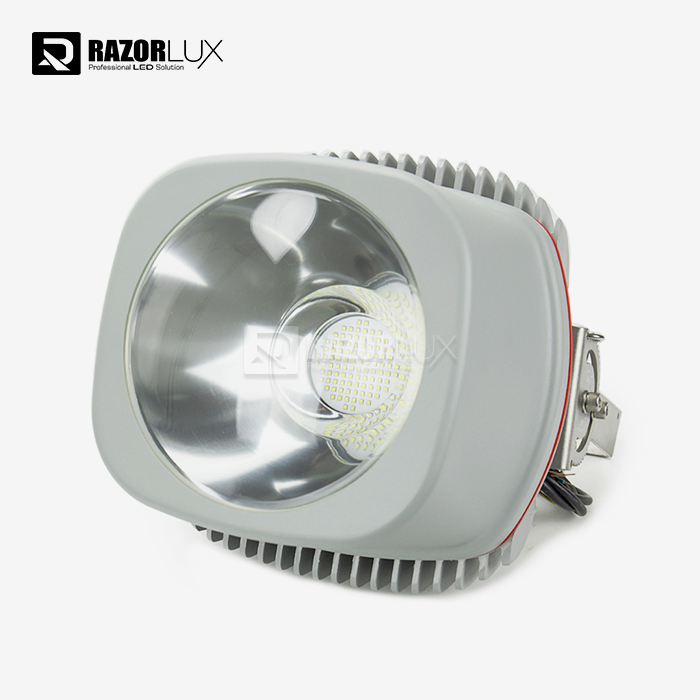
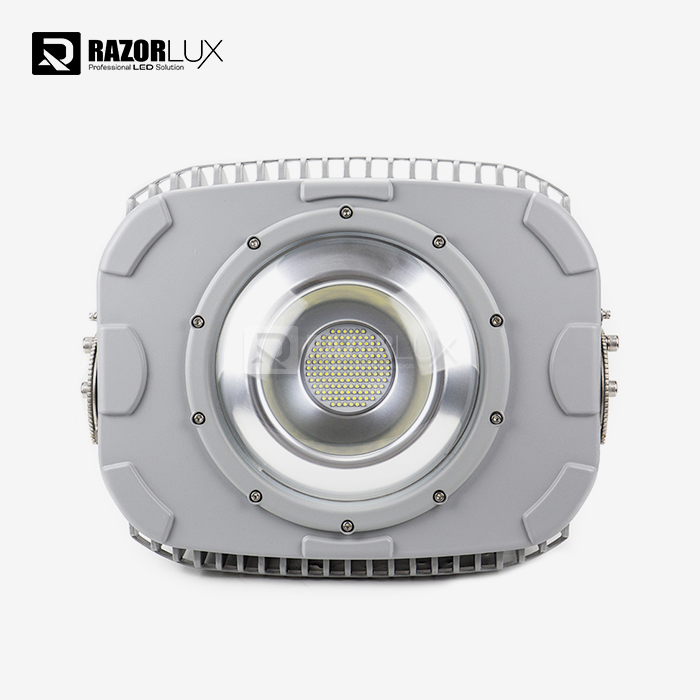
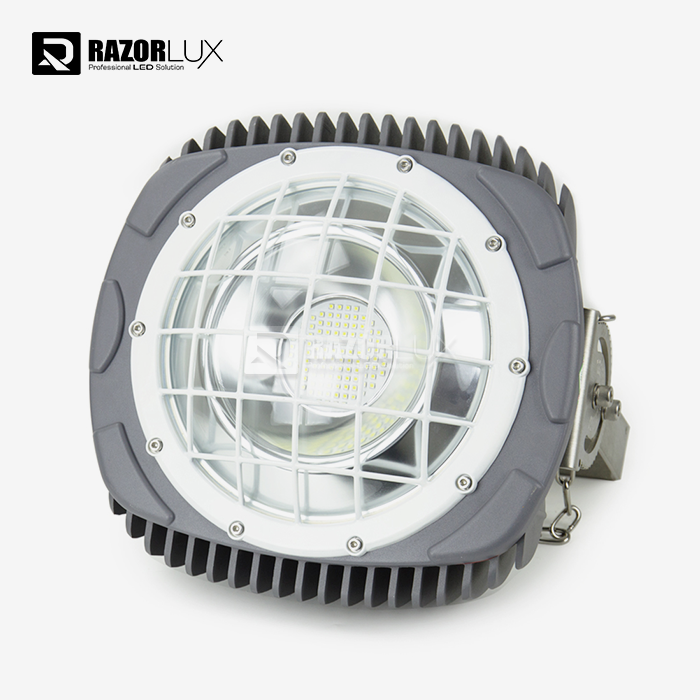
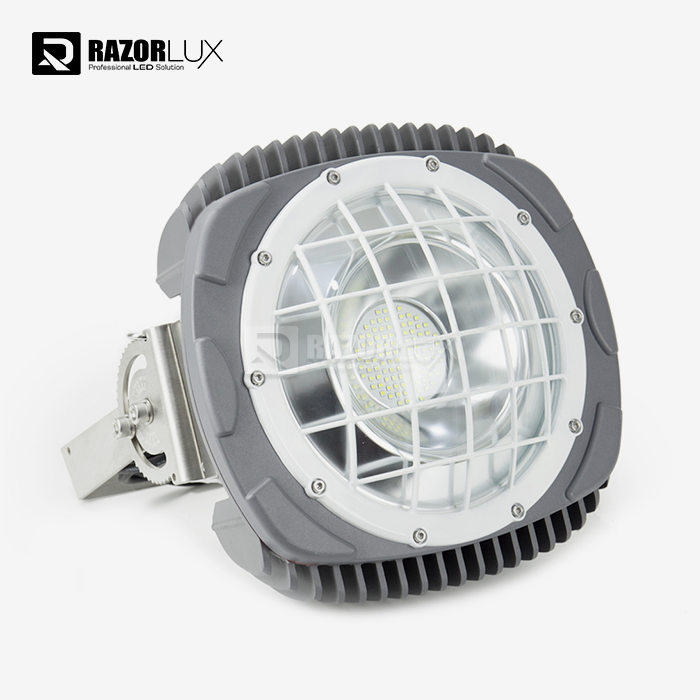
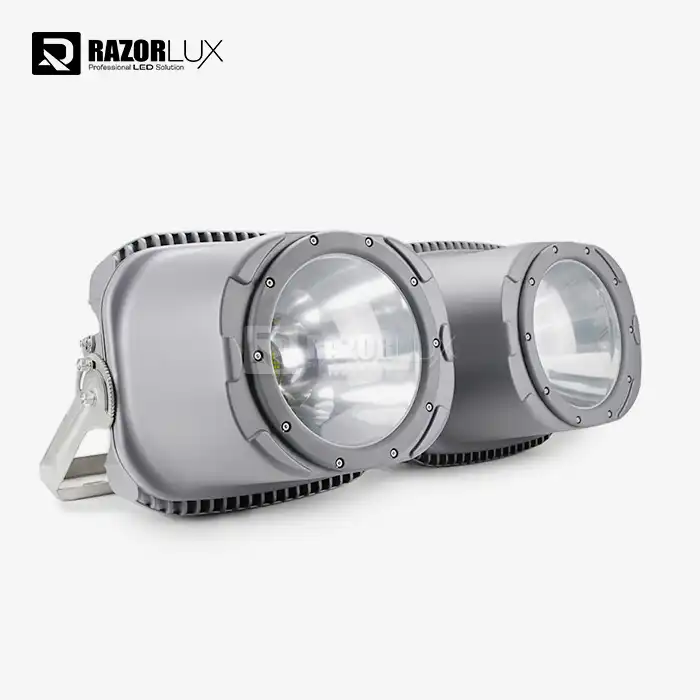
Professionals look at 120 Volt LED Outdoor Flood Lights as the best outdoor lighting for harsh settings because they last a long time, use little energy, and work with standard electrical systems. High ingress protection ratings (IP65 or IP67), strong lumen output (usually 130 lm/W or more), corrosion-resistant housings, stable power sources from well-known names like Mean Well, and a wide range of certifications, such as UL, CE, and maritime-specific approvals, are some of the most important features. These lights have to be able to handle high and low temperatures, salt spray, and mechanical impacts while still providing steady lighting for more than 50,000 hours.
Understanding the Unique Advantages of 120 Volt LED Outdoor Flood Lights
Maritime and heavy-duty industrial areas need lighting options that are both easy to use and work very well. At Razorlux, we've seen that purchasing managers and tech teams are choosing 120 Volt LED outdoor flood lights more and more because they are easier to connect to current systems.
Direct Compatibility with North American and Global Electrical Standards
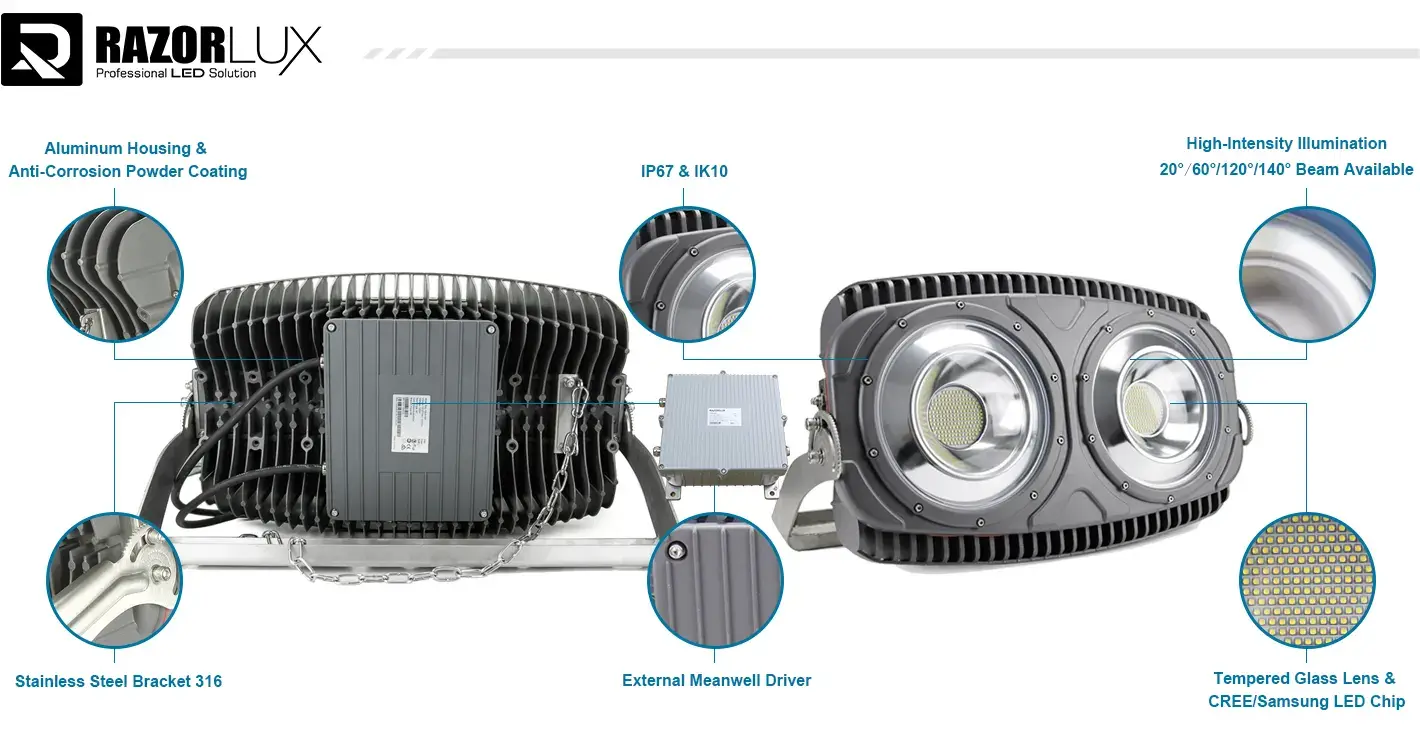
Electrical systems based on 120V lines are common in shipyards, offshore platforms, and port facilities in places like the US, Canada, and some parts of Southeast Asia. This voltage range gets rid of the need for external step-down transformers, which often break down in harsh naval settings. When our engineering team made the RGL-1000A, they made sure it could handle a very large range of voltages, from AC 80V to 305V and DC 100V to 400V. This is so it could handle the voltage changes that happen with generator-powered offshore sites and old shore-based electrical lines. This unique multi-function design shows that we know that things don't always go according to the rules in the textbook.
Superior Energy Conversion and Operational Cost Reduction
Over a period of years, energy efficiency has a direct effect on operating spending. Our tests show that LED technology working at 130 lumens per watt gives off the same amount of light as standard 2,200–2,500W metal halide lamps while only using 1,000W of power. This means that facility managers who are in charge of running steel mills or container ports 24 hours a day, seven days a week, will use about 55% less power. One shipping company with three coastal ports said that replacing 240 traditional lights with our 120-volt LED outdoor flood lights saved them more than $47,000 a year in energy costs. These numbers are especially useful for purchasing supervisors who are looking at the total cost of ownership during the buying process.
Thermal Management and Lifespan in Extreme Climates
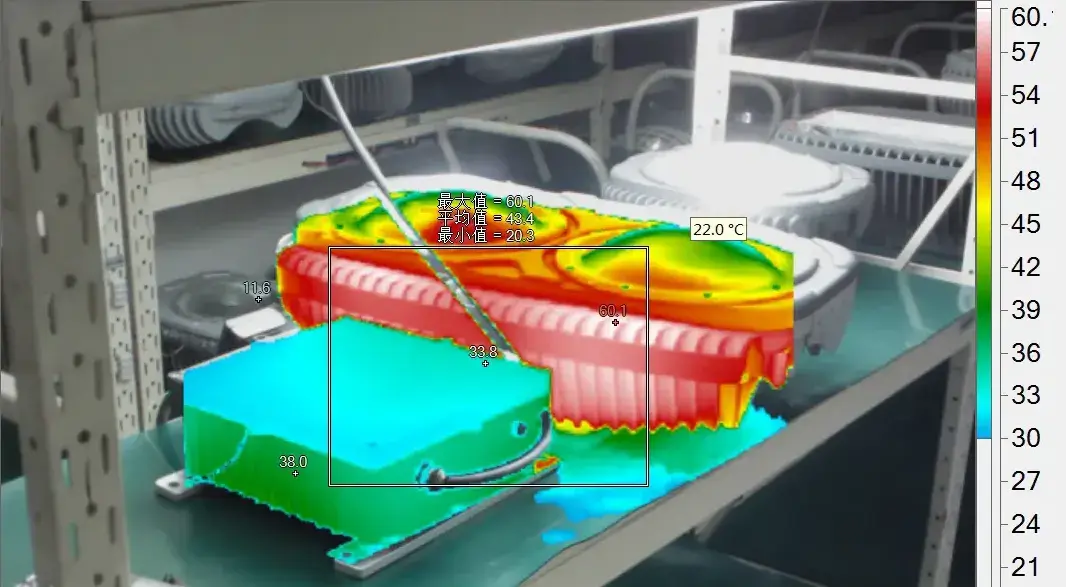
Extreme temperatures determine how equipment works in trade lines in the Arctic, refineries in the Middle East, and mining ports in Australia. Our housings are made of die-cast metal that has been coated with a special powder that helps heat escape from temperatures ranging from -40°C to 60°C (-40°F to 140°F). Effective thermal management is directly linked to LED longevity. Our lights have rated lifespans of more than 50,000 hours because joint temperatures stay below critical levels. This is very important for people who are in charge of remote platforms because repairing broken lights costs a lot of money and requires renting expensive cranes and boats.
Critical Technical Specifications for Heavy-Duty Applications
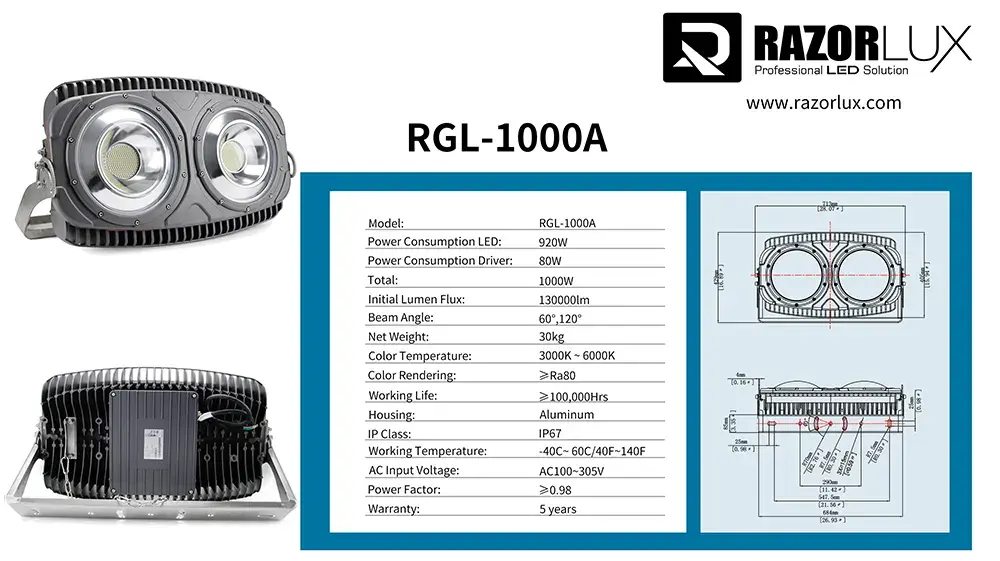
It takes more than just reading marketing promises to choose the right 120 Volt LED outdoor flood lights for marine and commercial settings. Technical specs show if equipment will work consistently in corrosive environments, when it is subjected to mechanical shock, and when water gets inside.
Ingress Protection Ratings: IP65 and IP67 Explained
IP grades describe how well something is protected against solid objects and liquids. The "6" in IP65 means that it is completely dust-tight, which is important to keep gritty particles from building up in cement plants or grain ports. The second number tells you how resistant something is to water: IP65 can handle water jets from any direction, while IP67 can handle being submerged for a short time up to one meter. Our basic fixtures are certified to IP65, but they can be upgraded to IP67 for uses like underwater pen lighting or placements on floating docks where waves may temporarily submerge lower-mounted lights. This adaptability helps us meet the different needs we see in different marine zones.
Impact Resistance: IK10 Rating for Mechanical Durability
The IK rating method rates how resistant something is to mechanical impacts. IK10 is the best level of safety, offering 20 joules of impact energy. In real life, this means that our devices can handle being hit by flying tools, accidentally touching a crane, or storm-driven debris. Purchasing managers at shipyards who know how much broken equipment costs, like that IK10-rated housing, don't need to be replaced as often in high-traffic work areas. A 96-hour ASTM B117 salt fog test proved that the 30 kg stainless steel bracket system we use spreads structural loads and doesn't rust when exposed to salt spray.
Power Supply Reliability: Mean Well Driver Integration
In field settings, a power source failure is the most common reason why LED fixtures fail too soon. We only use Mean Well drivers because independent reliability studies show that the Mean Time Between Failures (MTBF) is more than 500,000 hours at 25°C. These drivers keep the power factor above 0.98 and the Total Harmonic Distortion below 10%. This keeps sensitive tracking and communication gear on ships from being affected. The driver works with the same wide voltage range as the LED array, which is a big plus because power sources that have smaller error windows than the lighting parts they serve are less safe.
Surge Protection for Grid and Generator Power Scenarios
Marine electrical systems often experience voltage changes of more than 2 kV, especially when engines start up, shore power connects, or lightning hits nearby infrastructure. Our built-in surge safety circuits, which meet IEEE C62.41 standards, protect the electronics inside from these harmful events. One Norwegian offshore platform operator wrote that after putting our lights, they had no lighting problems during a stormy season when 40% of competitor units weren't protected against surges well enough. This proof in the real world is more important than just lab test results.
Performance Parameters That Define Illumination Quality
More than just brightness numbers are needed to get the job done. More and more, people who work in procurement are looking at how 120 Volt LED outdoor flood lights provide useful lighting where it's needed, with little light pollution and the right color rendering for each job.
Luminous Efficacy and Lumen Maintenance
Our 130 lm/W efficacy number shows stable output after thermal equilibrium. The "after 1 hour" remark in our standard of 130,000 lumens at 5700K recognizes that 120-volt LED outdoor flood lights have a small drop in output when they are first turned on. In contrast to makers who quote theoretical maximum output, this standard is honest. More importantly, we promise lumen maintenance above 70% at 50,000 hours (L70), which means that bulbs keep 91,000 lumens even when they are almost dead, which is still more than many new standard fixtures. Progressive fading is a problem with lower-quality LED goods, but this long-lasting performance gets rid of it.
Beam Angle Selection for Application-Specific Coverage
Different settings need different ways of distributing light. Our different beam angles—40°, 60°, 120°, and uneven 140°×60°—are designed to handle different situations:
- Narrow 40° beams focus the power and throw directed light over large container yards or bulk material storage piles. From 25 meters above the fixing height, the concentrated candela output can reach work areas.
- 60° medium beams are good for general area lighting in ships and manufacturing shops because they provide even lighting with good uniformity ratios. For 80% of perimeter security lighting jobs, engineering companies choose this choice.
- Wide 120° beams can cover lower mounting heights, like building facades or covered loading docks. They evenly light up vertical surfaces, getting rid of dark spots where CCTV is less useful.
- Asymmetric 140°×60° patterns are used for specific tasks, like lighting along the edges of piers so that they don't overlight waters nearby. This is because the patterns cover a longer area along the dock sides. This lowers worries about light pollution, which is becoming more and more required by environmental laws in fragile seaside ecosystems.
Being able to define beam angles during procurement means that the wrong optics don't have to be used, which is a flexibility that industrial equipment sellers value when handling a wide range of projects.
Color Temperature and Rendering Considerations
We have color temperatures ranging from 2700K to 6500K, but 4000K to 5700K is most often needed for marine uses. This range gives you clear vision for inspection jobs while reducing the harsh glare that comes with higher color temperatures. Our normal CRI of Ra>75 is good for safety lighting, but we can also provide Ra>80 or Ra>90 units on request for places that need to be able to tell colors apart accurately, like paint inspection bays in ship repair shops or quality control stations in factories. Being able to change these factors shows that we want to provide solutions that are right for each application instead of goods that work for everyone.
| Parameter for Performance | Specifications as Standard | Impact in Real Life | Options for customization |
|---|---|---|---|
| Shining Effectiveness | 130 lm/W (after an hour) | 55% less energy use than HID | You can get up to 140 lm/W. |
| Angle of Beam | 40°, 60°, 120°, 140°×60° | Coverage that fits the application | Made-to-order asymmetric optics |
| Temperature of Color | 2700K to 6500K | Visibility that fits the task | White that can't be changed |
| Index for Color Rendering | Ra > 75 (Ra > 80 and Ra > 90 is possible) | Correct labeling of materials | Customization of spectrum possible |
| Factor of Power | ≥0.98 | Less loss of electricity | N/A—the same across the range |
Comparing Voltage Options: Why 120V Excels in Certain Scenarios
Compatibility with other electrical systems affects how hard it is to install, how safe it is, and how much upkeep is needed over time. Knowing when 120 Volt LED outdoor floodlight setups are better than other voltages helps procurement teams make better specs.
120V Versus Low-Voltage (12V-24V) Systems
Landscape planners and home contractors like low-voltage systems because they think they are safer, but they make things a lot harder when used in businesses. Based on estimates of voltage drop, it takes 83.3 amps to give 1,000W of power at 12V and only 8.7 amps at 120V. For long distances, this means much thicker wires—a 100-meter cable run needs 70 mm² copper lines for 12 V delivery and only 4 mm² for 120 V—so that the voltage loss stays below 5%. Just because it costs more to make things, higher power distribution is better in big buildings.
When dozens of lights join to central transformers, the installation process gets more complicated. One engineer from the port authority talked about their experience with a low-voltage exterior lighting system that needed seventeen different 1,500W transformers, each of which was a maintenance problem. Some of the ways that transformers can fail are when they get too hot, when water gets into the cables through the glands, or when the core gets too full during voltage drops. These middle failure points are gone from our 120 Volt LED outdoor flood lights completely.
120V Versus High-Voltage (240V-480V) Alternatives
240V single-phase or 480V three-phase distribution is often used in factories in Europe, Asia, and Australia. These systems work well to give large amounts of power, but they also pose a higher risk of electrical shock, so stricter safety rules are needed. Our wide input voltage range (80-305Vac) supports both 120V and 240V nominal supplies. This gives international companies that manage buildings with different electrical standards more options when they buy things. A Malaysian shipyard operator said that choosing dual-voltage fixtures for their growth project made it easier to keep track of extra parts. The same units are used in both their Singapore (240V) and U.S. (120V) activities.
Higher volts also make it harder to use compact and temporary lights. People who work in construction and plan events like that can use 120V equipment that can connect to normal generator outputs and temporary distribution panels without the need for special transformers or interlocks.
Grid Stability and Power Quality Considerations
Power quality problems can happen when electrical equipment is old, and activities depend on generators. During our tests in sites in the Russian Arctic, we saw steady voltage changes between 90V and 140V while generators were paralleling. These are the kinds of conditions that would destroy rival fixtures within weeks. The AC 80–305V input range we designed specifically handles these real-world instabilities. Offshore platform engineering managers see this as an important feature for equipment life in remote sites where service access is limited to weather windows.
Material Construction and Environmental Resistance Features
In settings that are corrosive and physically demanding, the life of a fixture relies mostly on the materials used and the way they were built, not just the electronic specs. Our 120 Volt LED outdoor flood lights are engineered to endure.
Housing Materials: Aluminum Alloy Selection and Surface Treatment
For die-cast housings, we use ADC12 aluminum alloy, which was chosen because it has the best mix of strength, heat conductivity, and protection from corrosion. The makeup of the metal, which is usually 10–12% silicon, makes it very fluid during casting, removing the porosity flaws that let water in. After being cast, the housings go through a chromate conversion treatment and then a polyester powder coating that is applied electrostatically. Tests that speed up the aging process have shown that this two-layer treatment is resistant to salt spray for more than 500 hours. After five years of being exposed to the tropical coast in Queensland, one port facility had no rust. This was in stark contrast to painted steel parts that needed to be replaced within 18 months.
Optical Components: Tempered Glass and Polycarbonate Options
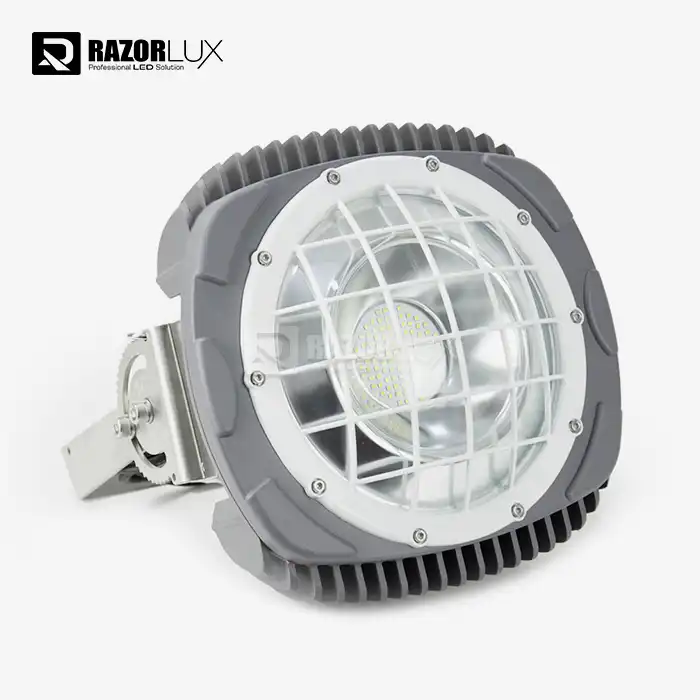
When choosing a lens material, you have to weigh the benefits and drawbacks of visual clarity, impact resistance, and heat shock tolerance. Tempered glass lenses are better at resisting scratches and staying clear over time, which makes them better for fixed installations where cleaning is hard to get to. Polycarbonate options are better at withstanding impacts, which is important for fixtures that will be put in places where flying objects or mischief are a worry. Both fabrics have UV stabilizers that stop the yellowing that happens in cheaper goods and make it harder for light to pass through. As standard, our tempered glass comes with an anti-reflective layer that keeps light loss to less than 3%, making sure that as much light as possible gets through.
Gasket and Sealing Systems
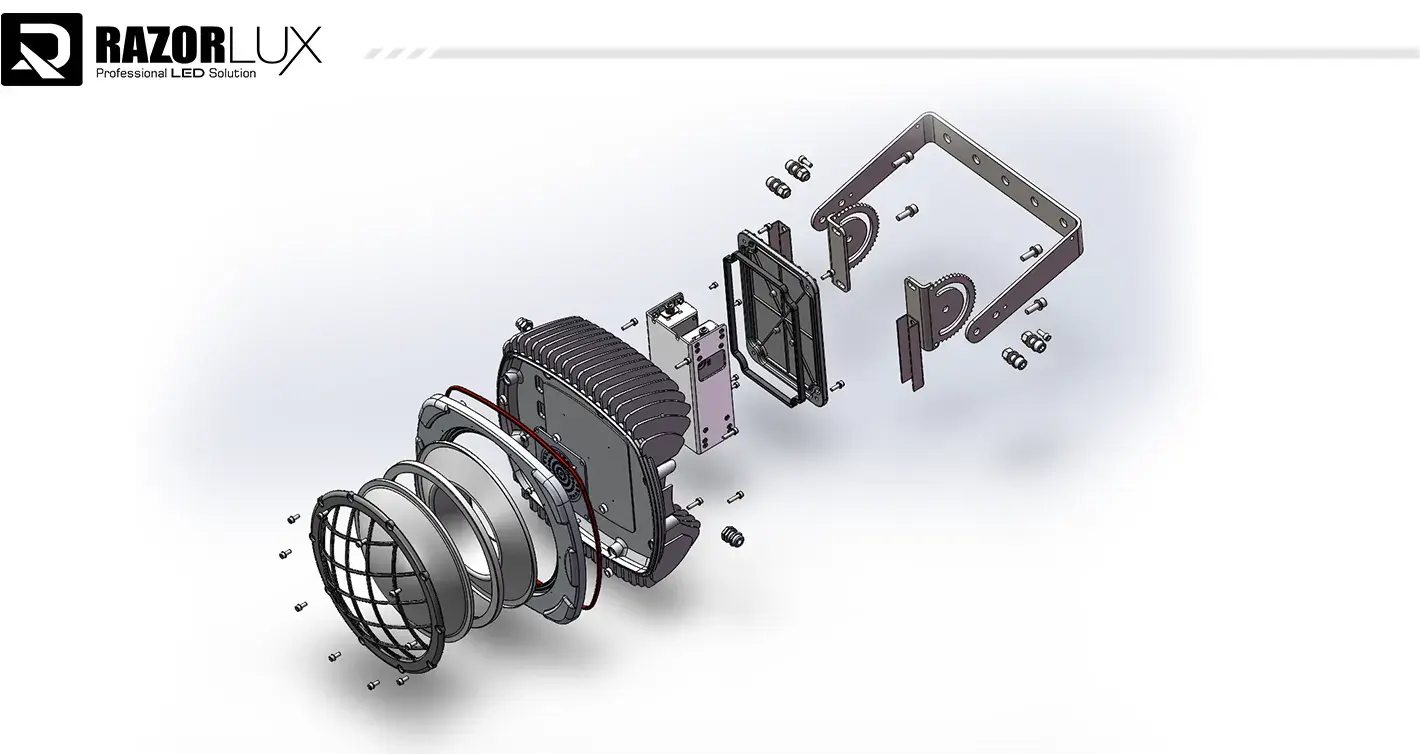
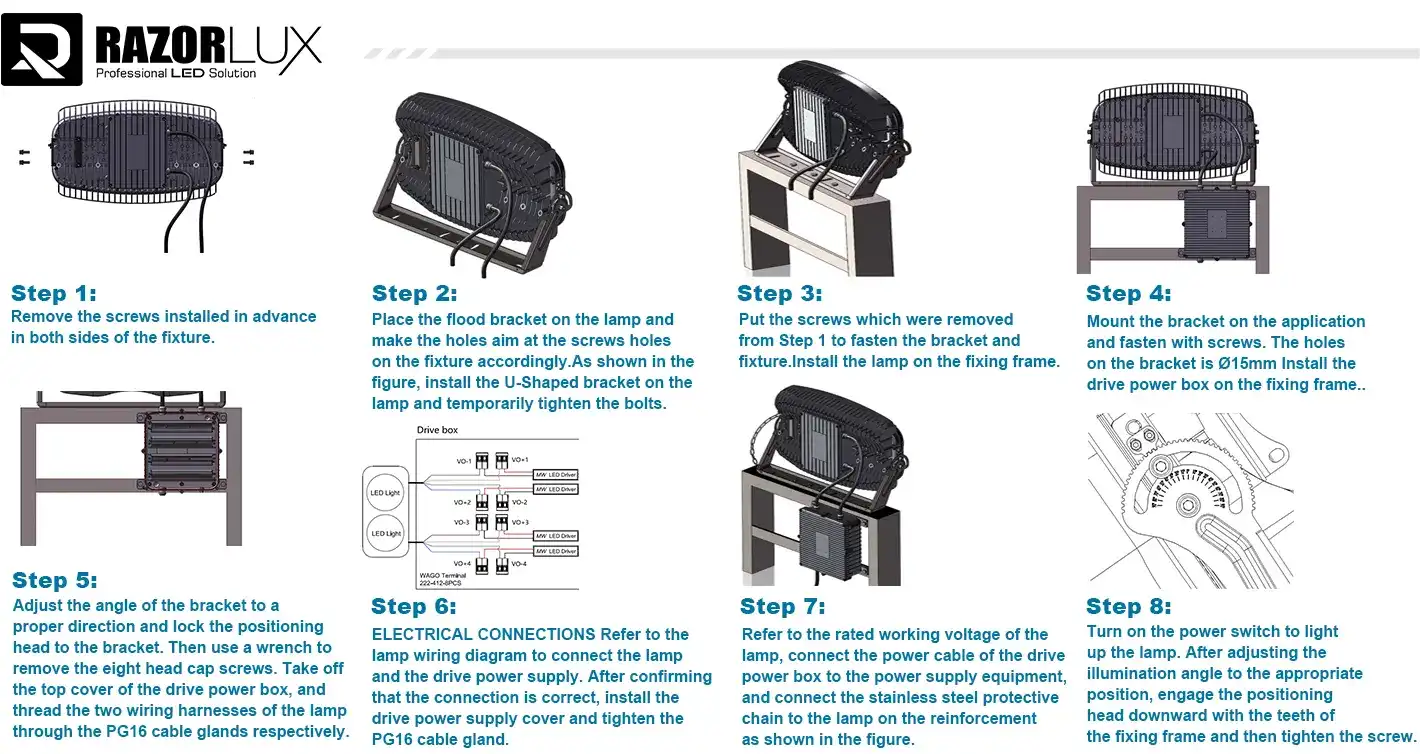
For IP67 approval, gasket connections must be carefully engineered. We use silicone rubber gaskets that are 70 Shore A hard, which means they keep their tension set resistance from -40°C to +60°C. The holes in the gasket have geometric features that keep them from being too compressed and make sure the contact pressure is higher than what is required by the IP67 test. Cable glands use double-seal PG-type fittings with parts made of brass or stainless steel to fit cables with sizes between 6 mm and 12 mm. It is very important to install cable glands correctly. We include thorough torque specs and installation guides because we know from experience in the field that most warranty claims related to moisture intrusion are caused by incorrect gland tightening.
Mounting Hardware: Stainless Steel Bracket Engineering
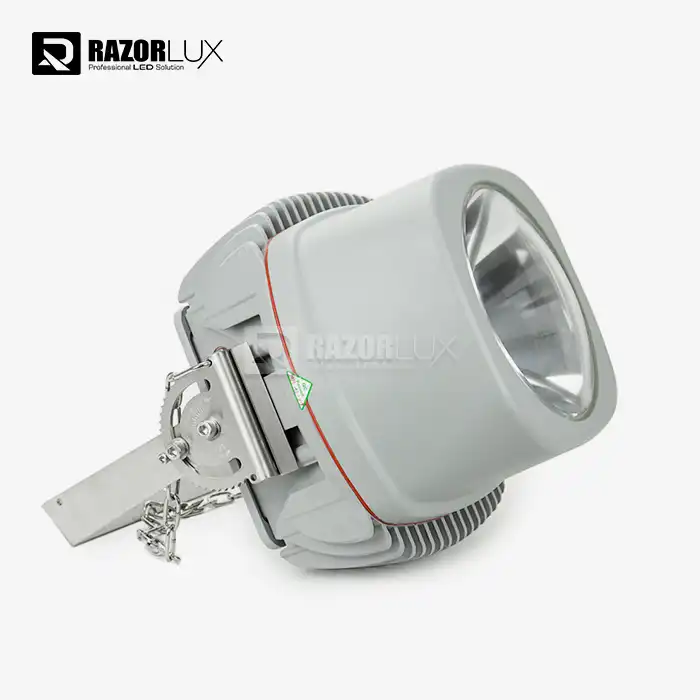
Our 1,000W light weighs 30 kg, so it needs strong ways to be mounted. Our bracket system is made of 316L stainless steel, which is a marine-grade metal that has molybdenum added to it to make it more resistant to salt corrosion. The bracket design allows for yoke mounting, trunnion mounting, and direct surface connection. It also has adjustment ranges that allow for placement within ±90° vertically and within 360° horizontally. Vibration resistance meets IEC 60068-2-6 standards, which is very important for installations on crane booms, ship masts, or close to machinery that moves back and forth. One steel mill said that our 120-volt LED outdoor floodlights stayed in the right place even though they were close to rolling mills that were constantly vibrating, while rival units needed to be realigned every six months.
| Construction Part | Specifications and material | Resistance to the environment | Advantage for Maintenance |
|---|---|---|---|
| Housing | Powder coating on ADC12 aluminum alloy | Salt spray protection for 500 hours or more | No rust; finish lasts 10 years or more |
| Lens | Tempered glass that has an AR finish | It's resistant to impact and scratches. | Keeps 97% of communication going for a long time |
| Gaskets | Rubber made of silicone, 70 Shore A | Temperature stability from -40°C to +60°C | Keeps seal integrity for more than 50,000 hours |
| Holder | Steel 316L stainless steel | Marine-grade protection against rust | No upkeep; lasts a lifetime |
| Cord Glands | Double rings and brass or stainless steel | IP67 when set up correctly | Field-replaceable; can be adjusted without tools |
Certification Requirements for Maritime and Industrial Compliance
More and more, procurement specs call for detailed certification paperwork, especially for projects involving insurance companies, classification societies, or government regulatory bodies for 120 Volt LED outdoor flood lights.
Maritime Classification: DNV, ABS, and Lloyd's Register
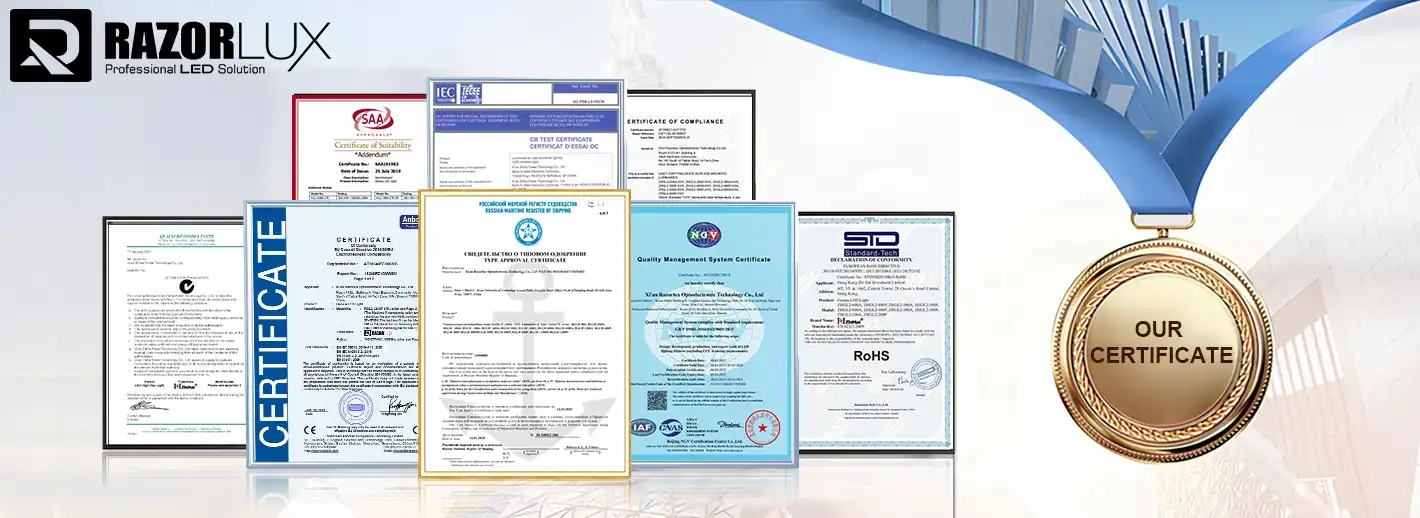
Certain groups, like Det Norske Veritas (DNV), the American Bureau of Shipping (ABS), or Lloyd's Register, must approve marine vehicle systems. These groups check electrical equipment against standards, like IEC 60092-506 for 120 Volt LED Outdoor Flood Lights, to make sure it can handle vibrations, electromagnetic interference, and flame spread. Our fixtures have DNV Type Approval, which is a guarantee that buying managers at shipyards say is necessary for building new ships. Getting permission required a lot of tests, which included:
- Tests for vibration at 2-13.2 Hz that meet IEC 60068-2-6 intensity 2A
- Check for electromagnetic compatibility according to IEC 60533
- Validation of ingress protection through submersion and jet spray tests
- Cycling the temperature between -25°C and +55°C
One Norwegian shipbuilder said that DNV-approved parts speed up the classification survey process because they don't have to wait for individual approvals for uncertified equipment, which can cause delays in the project.
North American Safety Certifications: UL and DLC
Luminaires that have UL 1598 approval show that they meet electrical safety standards for things like insulation, grounding, temperature management, and photobiological safety. Our UL listing makes it easier for contractors and site managers in the US and Canada to specify our products, since building rules and insurance standards often require certified goods. The Design Lights Consortium (DLC) listing independently checks performance claims like lumen output, effectiveness, and power usage. This lets people who qualify for utility refund programs use the lights. Several port officials have said that fixtures that were on the DLC list helped their projects get rewards that covered 25–40% of the cost of the equipment. This made the projects much more profitable.
European Conformity and Global Market Access
The CE mark shows that a product meets European standards, such as the Low Voltage Directive (2014/35/EU), the EMC Directive (2014/30/EU), and RoHS requirements that limit the use of dangerous materials. Our goods also have CB certification under the IECEx scheme. This makes it easier to get into markets in 53 countries because test records are recognized by all of them. This wide range of certifications is especially useful for multinational companies and engineering firms that work on projects in different parts of the world, since the same product specification can be used in facilities in Norway, Singapore, Qatar, and Australia, without the need for different ones for each area.
Installation Considerations and Electrical Integration
Successful 120 Volt LED outdoor floodlight operations rely on using the right installation methods that are tailored to the electricity infrastructure and surroundings of the place.
Wiring Methods for Harsh Environments
Marine and heavy industrial areas need wiring methods that are different from those used in homes or businesses. For systems that could be damaged by mechanical forces, we suggest armored wire or rigid metal tubing. When choosing cables, you should think about how hot or cold the room is around them. A 1,000W fixture doesn't produce much heat outside of it, but wires that can handle 90°C may be needed in hot areas or small rooms. To make sure everything works safely and doesn't interfere with electromagnetic fields, the grounding electrodes must have a resistance of less than 25 ohms at the installation site, which can be proven by tests.
Dimming and Control Integration
Lighting is becoming more and more a part of building control systems in modern site management. Our light bulbs have 0-10V dimming inputs that let them work with astronomical clocks, occupancy sensors, and centralized control platforms. The dimming range goes from 100% output to 10% output, and the light stays stable and doesn't flicker at any point in that range. One automaker used occupancy-based dimming in their outdoor storage yard and saved an extra 35% on energy costs on top of the savings from switching to LEDs. When no one is there, the fixtures automatically dim to 30% output while still providing the bare minimum of security lighting.
Surge Protection and Circuit Design
We suggest setting up separate circuits for outdoor lighting loads and adding Type 2 surge protectors (SPDs) to distribution panels in places where lightning is common or at buildings that have generators for power. The SPD investment—usually $150 to $300 per panel—is a cheap way to protect against the costs of replacing equipment and the time it takes to fix problems caused by surges. When choosing the right size circuit breaker, you should take into account the inrush current that happens when the LED driver first turns on. For example, our steady-state draw is 8.7A at 120V, but the momentary inrush may hit 35A for 1-2 milliseconds. Slow-blow or electronic trip breakers stop annoying trips when multiple lights are turned on at the same time.
Long-Term Cost Analysis and Total Ownership Considerations
It is known that operational costs are the most important part of lifetime costs for equipment that is used constantly for many years. This is taken into account when making decisions about purchases that go beyond the initial purchase price for 120 Volt LED Outdoor Flood Lights.
Energy Consumption Modeling
A single 1,000W 120 Volt LED Outdoor Flood Light that is on for 4,380 hours a year (12 hours a day) uses 4,380 kWh a year. At an average rate of $0.12/kWh for commercial power in North America, the cost of energy each year is $526. The same HID light bulb that uses 2,400W costs $1,262 a year, which is $736 more. With 100 fixtures, the yearly energy savings add up to $73,600. Even though high-quality LED lights cost a lot, they usually pay for themselves in less than two and a half years, and the years after that are just savings. These numbers are especially useful for companies that run ports and docks and have to keep track of hundreds of fixtures spread out over big sites.
Maintenance Cost Reduction
In hard-to-reach places, maintenance costs often go up faster than energy costs. To replace a broken HID light 30 meters up on a container crane, you need special lift tools, traffic control, and a lot of people. Each job can easily cost $800 to $1,200. Usually, a HID lamp lasts between 8,000 and 15,000 hours, which means it needs to be replaced every two to three years. With our 50,000-hour LED lifespan, this upkeep won't need to be done for 10 to 15 years. One mining port in Australia decided that putting off repair was reason enough to switch to LEDs, even before energy savings were taken into account. The 5-year guarantee on both the LED modules and the drivers gives you extra financial security during the important early operating period.
Performance Degradation and Replacement Timing
In contrast to HID technology, which fails horribly, LEDs lose power over time. According to our L70/50,000 hour grade, 70% of lights will still be producing at least 70% of what they were producing at 50,000 hours. Strategic planning for replacements takes into account the fact that even "failed" LED lamps often provide enough light for non-essential tasks. Several clients have used a cascading redeployment strategy, whereby lights that are taken out of main security lighting after 60,000 hours are moved to secondary uses like equipment storage areas or walking paths, where they can be used for longer and earn more money before being thrown away. This method makes the best use of assets while keeping the right amount of lighting in all areas of the building.
Real-World Application: Case Study from Offshore Platform Deployment
A North Sea offshore platform operator came to us to ask for new 120 Volt LED outdoor flood lights for their work deck and helideck. The old metal halide lights kept breaking down because of corrosion from salt spray and vibrations from digging. The harsh climate, with temperatures ranging from -15°C in the winter to +30°C at its hottest points in the summer, constant salty wind, and the need to be operating 24 hours a day, seven days a week, was the ultimate test for any lighting equipment.
We asked for 48 of our RGL-1000A lights with an IP67 upgrade, 60° beam angles, and a color temperature of 5700K. It was very important to have a wide input voltage range because the platform's generator system had voltage swings from 95V to 135V when loads were being transferred. During a planned repair shutdown, installation took place, with our technical support team helping the platform's electricity crew from afar.
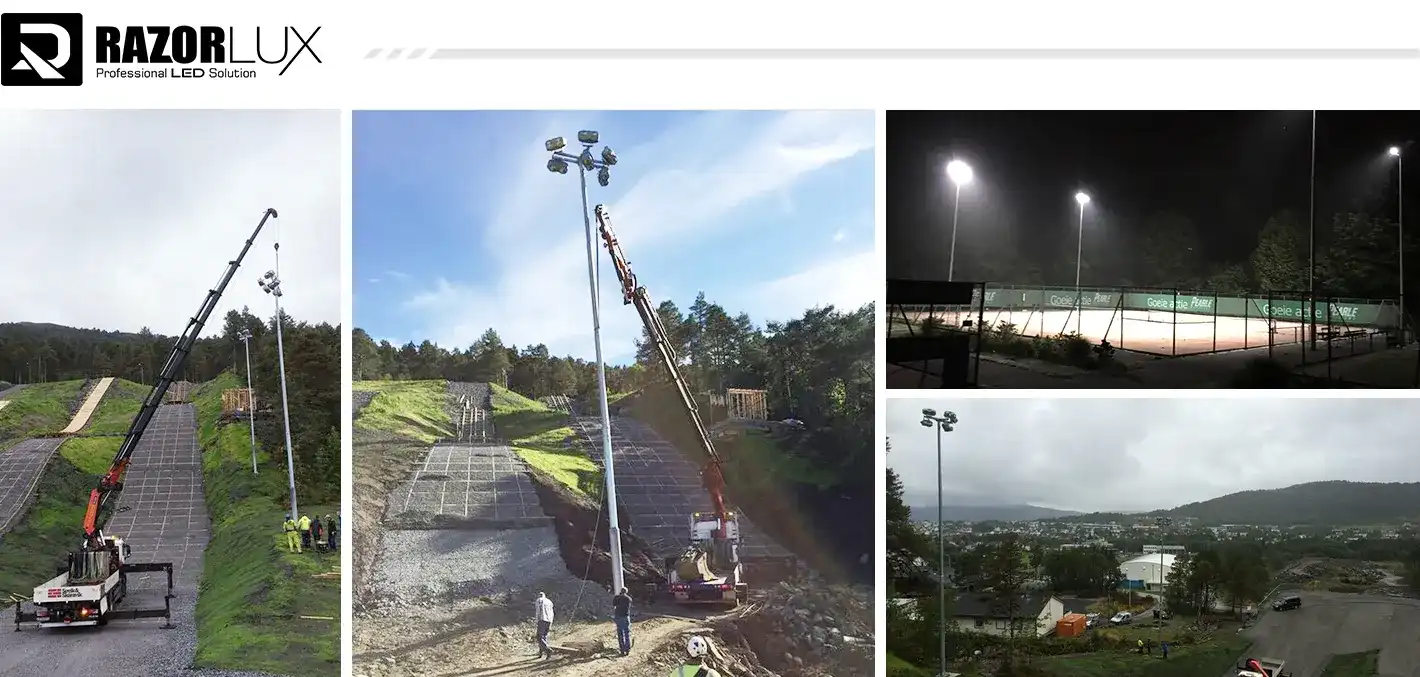
Three years after installation, the platform manager says that none of the fixtures have broken and that no repair work has been done other than regular cleaning. The constant lighting has made the helideck safer for activities at night, and pilots have said that they can see better than with the old system. Energy tracking shows that lighting uses 58% less electricity, which helps the platform reach its total efficiency goals.
Most importantly, the lighting's dependability got rid of a whole group of emergency maintenance calls that used to need expensive helicopters to bring in repair experts. This case shows the real value that can be gained when lighting requirements are perfectly matched to the needs of the application. This is a rule we follow in all of our work with clients.
Conclusion
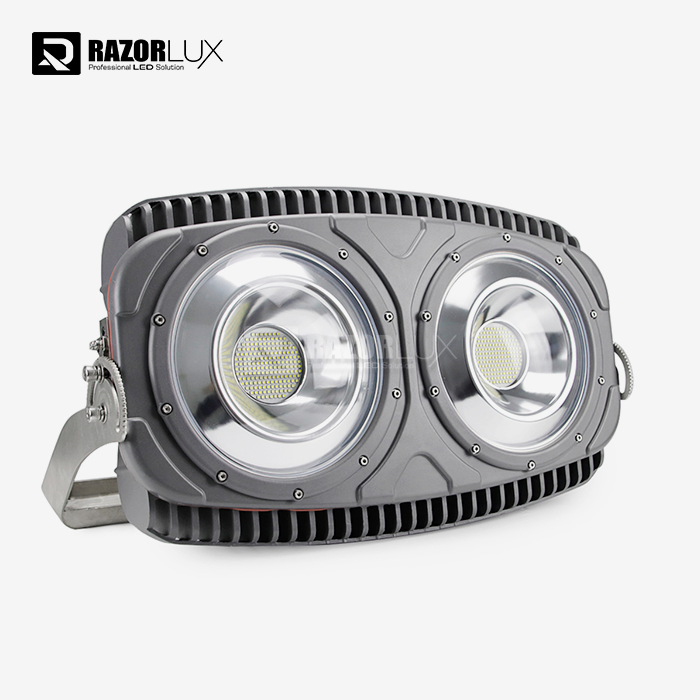
When choosing the right 120-volt LED outdoor floodlights for harsh naval and industrial settings, you need to look at their performance specs, build quality, certification compliance, and how much they will cost in the long run. Some important things to think about when making a choice are IP67 ingress protection, wide input voltage tolerance, reliable component sources, and full marine certifications. Razorlux has been a leader in harsh-environment LED solutions for 20 years. Our experience helps us make products that can handle toxic environments, mechanical stress, and unstable electricity while still providing long-lasting lighting and lowering running costs. The RGL-1000A is a good example of this method because it has a marine-grade housing, a Mean Well driver that is reliable, and the ability to work with a range of voltages. It also has 130 lm/W of efficiency. Our application-focused engineering gives procurement professionals lighting solutions that really meet the needs of shipyards, offshore platforms, and big industrial sites. This leads to measurable improvements in reliability, lifecycle costs, and project success.
FAQ
What makes 120-volt flood lights suitable for marine environments?
Lighting used in marine environments needs to be able to handle salt spray, high temperatures, and vibrations while still working reliably. Why are 120 Volt LED outdoor flood lights good for use in coastal settings? The large input voltage range (AC 80–305V) can handle the different power quality levels that are common on ships and on land. IP67 ingress protection stops water from getting in, even if the object is temporarily submerged by waves. Marine-grade stainless steel bolts and specially powder-coated housings make the design resistant to corrosion. This means that it won't break down in salty environments. These combined features, which have been approved by both the DNV and ABS classification societies, give the lights a long service life even in harsh conditions that would normally destroy them quickly.
How do I calculate the number of fixtures needed for my facility?
The amount of light needed depends on the type of work and the rules that apply. For security lighting, 10 to 20 lux of normal brightness is needed, while 200 lux or more may be needed for places with a lot of detail. To find the total lights needed, multiply the area by the necessary lux and then divide by the per-fixture lumen output, taking into account the utilization factor, which is usually between 0.6 and 0.85 and depends on the mounting height and fixture distribution. Our technical team does free lighting calculations using AGi32 or DIALux software. They make photometric plans that check for code compliance and find the best places for fixtures to go based on the shape of your site.
Can these fixtures integrate with existing building automation systems?
Our light fixtures have 0-10V dimming connections that work with major building control systems, such as those made by Johnson Controls, Honeywell, and Schneider Electric. Integration makes it possible to set lighting plans, dim lights based on usage, and keep an eye on energy use through the main control system. We give thorough interface specs and work with contractors who do controls during the planning phase to make sure the integration goes smoothly. Some clients have asked for custom changes, like support for the DMX512 system or wireless control modules. Our tech team looks at these requests and can usually meet the specific control needs of bigger projects.
Partner with Razorlux for Your Heavy-Duty Lighting Requirements
Razorlux is ready to help you with your next lighting project with designed solutions that have been tested and shown to work in the harshest settings in the world. We are a specialized 120-volt LED outdoor floodlight maker with over 200 patents and 20 years of experience in marine and industrial lighting. We know what shipyard buying managers, platform engineers, and facility directors look for in a supplier. Our RGL-1000A fixtures are 130 lm/W efficient, come with a 5-year warranty, and are fully certified by DNV, UL, and CE. They are also backed by fast expert support. Whether you're specifying lighting for new vessel construction, retrofitting aging port infrastructure, or upgrading industrial facility illumination, our team provides the application expertise and product customization flexibility your project demands. Contact our technical sales team at sam@razorlux.com to discuss your specific requirements, request product samples, or obtain detailed photometric calculations. We invite you to experience the measurable difference that purpose-engineered lighting solutions deliver in operational reliability and lifecycle value.
References
1. Marine Electrical and Electronics Engineering Standards, International Electrotechnical Commission, IEC 60092 Series, 2019 Edition.
2. Illuminating Engineering Society of North America, "Recommended Practice for Outdoor Environment Lighting," ANSI/IES RP-33-14, New York, NY, 2014.
3. International Electrotechnical Commission (IEC). IEC 60092-506: Electrical Installations in Ships – Special Features. Geneva: IEC, 2020.
4. DesignLights Consortium (DLC). Technical Requirements for Outdoor Lighting Products. DLC Qualified Products List (QPL), 2024.
5. Underwriters Laboratories (UL). UL 1598: Luminaires Safety Standard. Northbrook, IL: UL Solutions, 2023.
6. U.S. Department of Energy (DOE). Solid-State Lighting Technology Fact Sheet: LED Outdoor Area Lighting. Washington, DC: DOE, 2023.