

_1750326878398.png)

How Bright Is a 400W Equivalent LED Flood Light in Real Use?
https://www.razorlux.com/led-outdoor-flood-light/outdoor-ground-flood-lightsWhen procurement managers look at industrial lighting for ships, offshore platforms, or heavy-duty buildings, they often have the same question: how bright is a 400W Equivalent Led Flood Light when it's actually being used? The answer is very important because not enough light can put workers at risk, cause projects to take longer than planned, and raise costs. In real life, a good 400W equivalent LED floodlight usually gives off between 48,000 and 52,000 watts. It can be used instead of 400–600W metal halide or high-pressure sodium lighting and uses a lot less energy. This lumen output means that you can see very well across big deck areas, loading zones, and maintenance areas where dependability in tough conditions is a must.
Understanding Brightness and Performance of LED Industrial Lighting
What "400W Equivalent" Actually Means for Marine and Industrial Applications
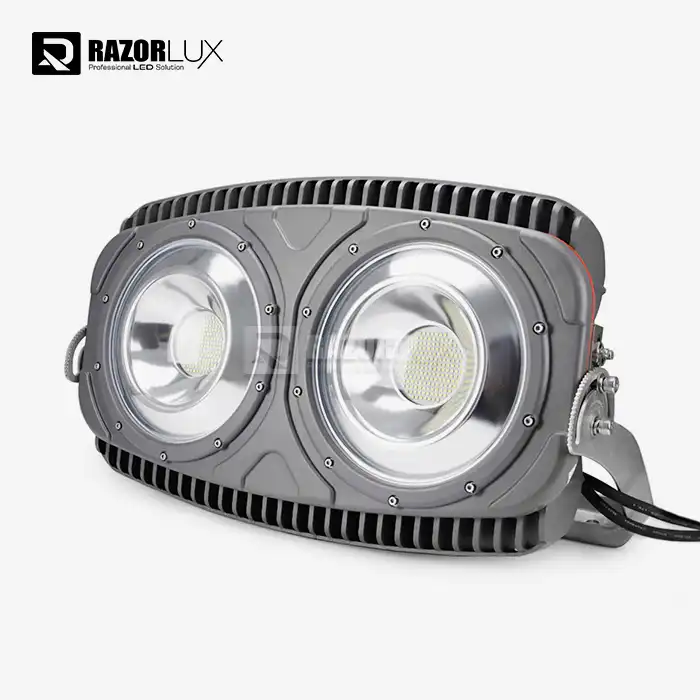
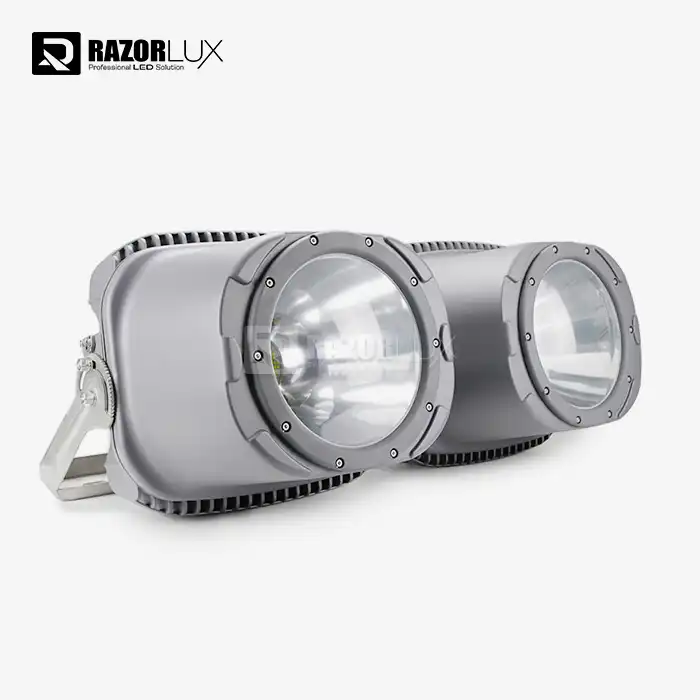
The word "equivalent" refers to how much light they produce, which is the same as or more than regular 400W HID lamps. It does not refer to how much power they use. At Razorlux, our 400W equivalent LED flood light is 130 lm/W efficient, which means that after an hour of use, it produces about 48,000 stable lumens. This is very important for dock managers and engineers working at remote facilities who need constant lighting without the 20–30% lumen loss that happens with metal halide systems that are getting old. LED lights can be turned on right away, unlike older technologies that need 15 to 20 minutes to reach full brightness. This is very important for emergency maintenance situations on drilling sites or during night-shift vessel repairs.The total power use stays at 400W (360W LEDs plus 40W driver), but the lighting efficiency is much better than with older technologies. A 600W metal halide lamp used to be needed to light up a deck, but now our 400W equivalent LED floodlight can do the same job and do it better, with better color rendering and regularity. This efficiency directly leads to less load on generators in remote sites and lower costs for electrical infrastructure in port facilities.


Lumen Output and Real-World Visibility Standards
A lot of the time, buying managers at shipyards want to know if 48,000 lumens meets the standards set by the classification society for deck lighting. DNV-GL and ABS standards say that working deck areas need between 20 and 50 lux, based on how hard the job is. The 15°, 20°, and 30° beam angles on our fixture make it possible to precisely distribute light at mounting heights of 10 to 30 meters, which is typical for gantry crane installations and dock lighting arrays.After an hour, the stable flux rate of 48,000 lumens at 5700K shows the real steady output, taking into account how well the driver manages heat and performs. This standard is very helpful for naval equipment integrators who are making technical documents for approval by the classification authority. This output is kept by the device from -40°C to 60°C, which was proven by testing it in a thermal room according to IEC standards. Testing with salt spray (ISO 9227) shows that the IP67-rated housing keeps its optical performance even after 1,000 hours of constant contact. This is very important for ships that work in Arctic or warm seas.
Energy Consumption Comparison Against Traditional Technologies
When you look at how much energy a normal port building retrofit job uses, the difference in operating costs is very clear. Think about a shipping port that needs 50 floodlights that are on all year long:
| Technology Type | Unit Power | Total Fleet Consumption | Annual Energy Cost (USD 0.12/kWh) | Maintenance Hours/Year |
|---|---|---|---|---|
| 600W Metal Halide | 660W (with ballast) | 132,000 kWh | $15,840 | 250 hours |
| 400W HPS | 455W (with ballast) | 91,000 kWh | $10,920 | 180 hours |
| 400W LED (Razorlux) | 400W | 80,000 kWh | $9,600 | 25 hours |
In addition to saving $6,240 a year on energy costs compared to metal halide systems, the lower upkeep costs are also very important. Facility managers for offshore platforms say that replacing a lamp on a 25-meter tower takes two workers, lifting tools, and about three to four hours of work, which includes following safety rules. With foreign labor costs topping $150/hour, the 50,000-hour LED lifespan compared to the 8,000-hour HID rated life saves a lot of money on labor costs. The Mean Well power source and modular driver design make it possible to change parts without taking out the whole fixture. This was a design feature that ship repair center engineers specifically asked for because dry-dock plans are so tight.
Color Temperature Selection for Different Marine Environments
Between 2700K and 6500K, the color temperature range covers a wide range of needs in the marine and industry sectors. 5000K-5700K (daylight) choices make welding areas and steel manufacturing areas in shipyards better by increasing contrast and making it easier on the eyes to do precise work. The high color rendering index (CRI ≥75, with ≥80 and ≥90 available upon request) is necessary for tasks like quality control, paint inspection, and figuring out how much rust there is. Correctly seeing colors has a direct effect on the quality of the work.Offshore platform owners are asking for 4000K (neutral white) more and more for lifeboat posts and places where helicopters can land. This color temperature makes it easy to see without the sharp blue cast of 6500K, which can make it hard to tell how deep something is when safety is at risk. Our engineering team works directly with lighting companies to build photometric distributions using AGi32 or DIALux software. Before buying any equipment, they make sure that it meets heliport lighting standards (ICAO Annex 14). As the temperature can be changed from warm (2700K) for living areas to cool (6500K) for machine rooms, a single fixture platform can be used to meet the needs of different parts of a ship or building.
Key Comparisons to Guide Your Procurement Decisions
LED Flood Light Performance Versus Higher-Wattage Alternatives
People who put together marine equipment often wonder if choosing a 500W or 600W LED light is better than a 400W setup. Instead of just increasing lumen output, the choice is based on mounting height, the amount of illumination needed, and the total cost of ownership. Our project data from installations in Singapore ports shows that choosing the right beam angle and placing fixtures correctly leads to better consistency than just raising the watts.It might look like the 600W LED with 78,000 lumens, placed 18 meters away, is better than the 400W equivalent LED flood light with 48,000 lumens. However, photometric analysis shows that coverage that overlaps from 400W equivalent LED flood lights that are properly spread and have 30° beam angles gets better uniformity ratios (average-to-minimum of 3:1 versus 5:1 for fewer, higher-wattage units). This is very important for jobs that involve moving containers because shadows and hotspots can be dangerous. It's also important to think about the electrical infrastructure. Current 20A circuits can safely handle 400W lights, but 600W units might need expensive circuit changes.The 400W configuration's ability to control temperature also makes fixtures last longer in humid areas. The junction temperature (Tj) of our 400W fixture stays below 85°C at 40°C outdoor temperatures that are typical in ports in the Middle East and Southeast Asia. This means that the L70 decline point (70% lumen maintenance) is exceeded by more than 50,000 hours. Higher-wattage fixtures that work at high Tj speeds up the breakdown of phosphor and the aging of driver components. If thermal limits are passed during peak summer conditions, guarantees may not be valid.

Total Cost of Ownership Analysis for Procurement Managers
Industrial equipment supplier buying supervisors need detailed TCO forecasts to show why capital expenditures are better than operational budget allocations. When you properly account for energy, upkeep, and disposal costs over a 10-year service period, the original cost of the fixture only makes up 15–25% of the total cost over its lifetime.
| Cost Component | 400W Metal Halide | 400W LED (Razorlux) | 10-Year Differential |
|---|---|---|---|
| Initial Equipment (per fixture) | $180 | $650 | -$470 |
| Installation Labor | $200 | $200 | $0 |
| Energy (40,000 hours @ $0.12/kWh) | $3,168 | $1,920 | +$1,248 |
| Lamp Replacements (5 cycles) | $400 | $0 | +$400 |
| Maintenance Labor (125 hours) | $18,750 | $1,500 | +$17,250 |
| Disposal Costs (hazardous) | $50 | $10 | +$40 |
| Total 10-Year Cost | $22,748 | $4,280 | +$18,468 |
This study uses the assumption that foreign workers are paid $150 an hour and takes into account the hidden costs of stopping production for repair. In places that are always in use, like shipyards and remote drilling sites, LED conversion projects usually pay for themselves in 18 to 24 months. If a port or dock management company centralizes its buying processes, it can arrange bulk discounts that cut the return on investment (ROI) to less than 16 months for fleet replacements of more than 100 units. Razorlux's ISO 9001-certified quality systems back up the 5-year guarantee on LED modules and drivers, which lowers the risk of buying even after the initial choice.
IP Rating Importance in Harsh Marine Environments
The difference between IP65 and IP67 ingress protection ratings is very important for ship lighting tech companies. Both grades offer dust-tight security (IP6X), but they have very different levels of moisture resistance. IP65 certification means that you are safe from water jets coming from any direction. This is enough for covered decks and industrial zones with some safety. IP67 approval means that the device can be submerged up to 1 meter for 30 minutes. This is important for installs on weather decks, dock lighting that is affected by waves, and offshore platforms where seawater pressure washing is a normal part of maintenance. Our stainless steel clamp system and corrosion-resistant housing treatment stop the fast wear and tear that happens in salt-spray settings. The powder-coated metal body is tested with salt fog for 1,000 hours according to ASTM B117. There are no signs of red rust or coating delamination. This longevity is especially useful for sites in the Russian Arctic and offshore platforms in Norway. These places experience temperature changes of up to -40°C and thermal shock from heating equipment, which causes stresses that weaken fixture seals. The IK10 impact resistance grade (20 joules of impact energy) keeps mechanical damage from happening while moving goods and maintaining the ship. Shipyard project managers like this standard because it lowers the number of claims for damage caused by accidents like crane operations, sandblasting, and the expected effects of mishandling equipment in crowded work areas.

Installation and Practical Use Cases in Commercial and Industrial Settings
Mounting Configurations for Shipyard and Offshore Applications
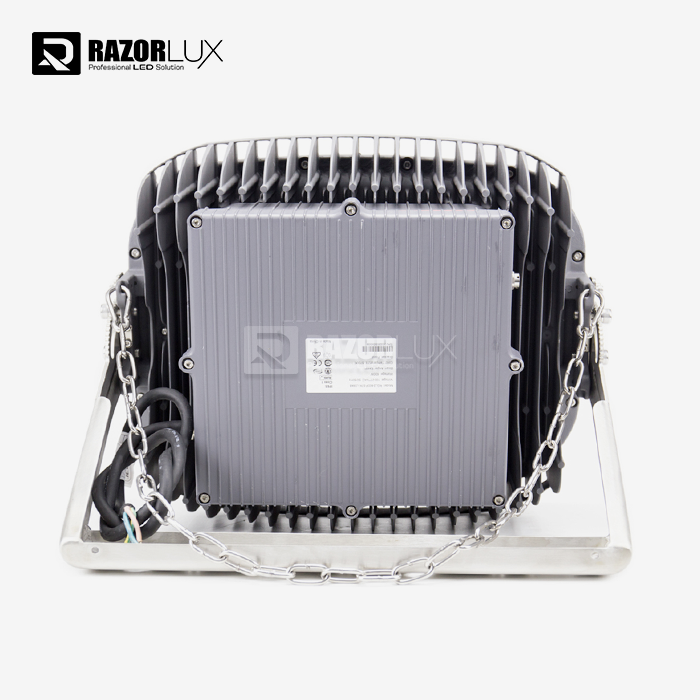
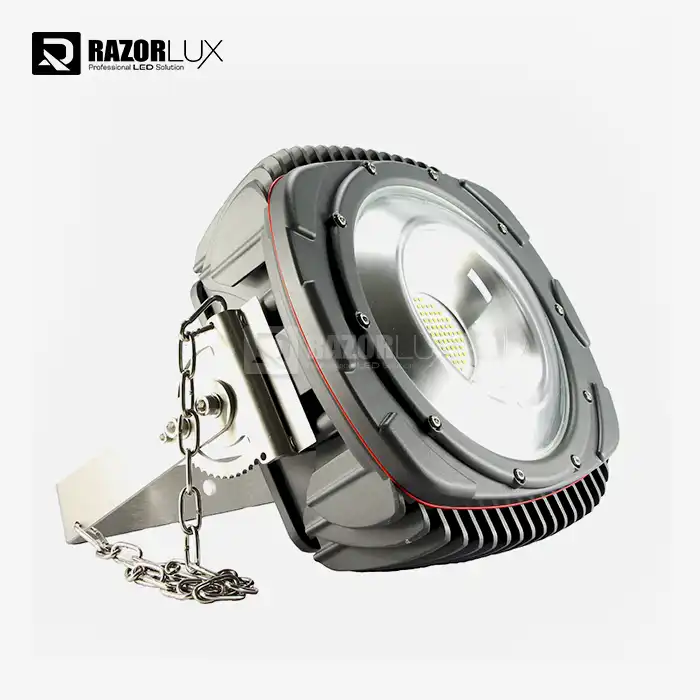
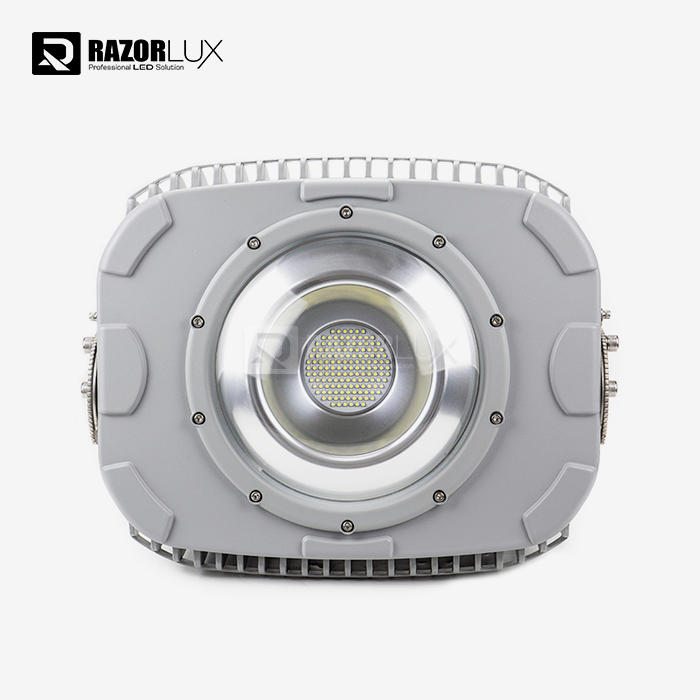
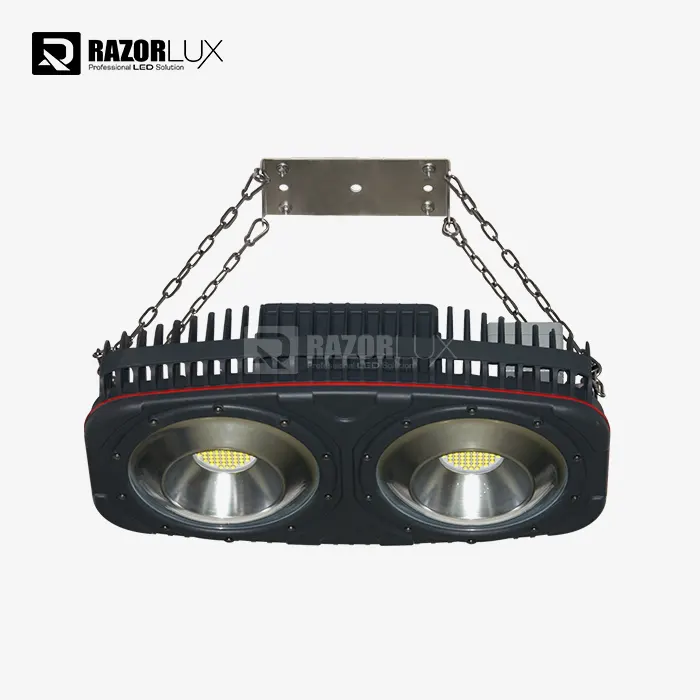
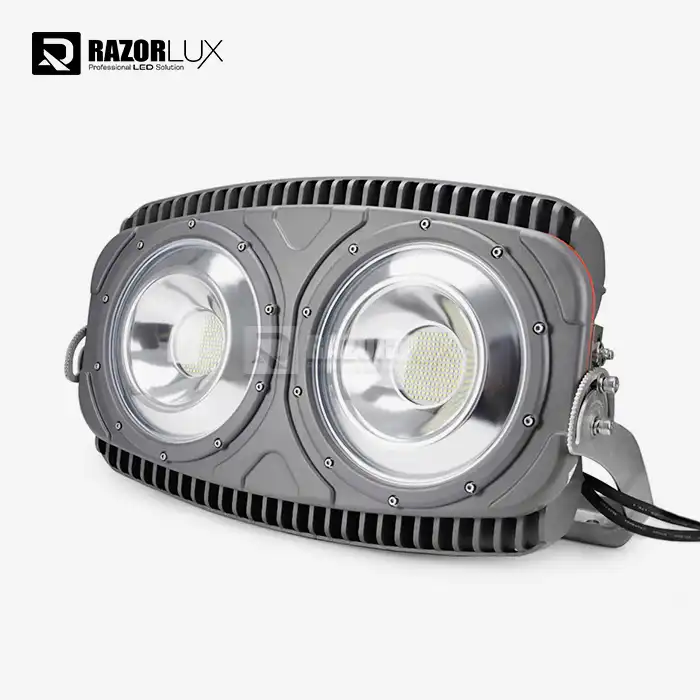
The original multi-function bracket design can be used in a wide range of mounting situations, from heavy industrial settings to marine ones. The stainless steel bracket can be used for a trunnion yoke, wall mounting, ceiling suspension, and pole mounting (40–100 mm diameter) without the need for extra accessory parts. This adaptability is very important for marine equipment integrators who are in charge of repair projects where the mounting infrastructure already exists is different for each type of vessel or building area.The right way to put something together has a big effect on how well it works and how long it lasts. The connection between the mounting height and the shooting angle controls both the amount of light and the glare. As a general rule, mounting heights of 8 to 12 meters work well for general area lighting in dock manufacturing halls and stores with 30° beam angles. For high-bay uses in steel mills and container ports, 15° beam angles make the useful coverage range 20–25 meters. The bracket can be adjusted up or down by ±90° and rotated around 360°, which lets you aim precisely after installation, which is important when the actual conditions are different from what was planned.Electrical connection procedures must account for the wide input voltage range (AC 110-480V, DC 100-400V, and high-voltage DC 500-800V). Because of this, external transformers are not needed on ships that use 440V ship service power or on offshore sites that use 380V industrial distribution. The power factor is at least 0.98, and the total harmonic distortion is less than 10%. This means that it can work with generator-based power systems that are popular on mobile offshore drilling units. In these places, the electrical quality can affect other sensitive navigation and communication gear.

Real-World Performance in Port and Offshore Installations
400W equivalent LED flood light performance claims can now be backed up by a recent installation at a container port in Singapore. The building switched out 84 metal halide lights (each 600W) for Razorlux 400W equivalent LED floodlights in six berths that handle post-Panamax ships. Before the installation, tests showed that the average brightness at deck level was 18 lux, with a uniformity ratio of 6:1. This was less than the 25 lux minimum standard set by the port operator, which raised safety worries for the lashing team.After the installation, optical testing showed that the average brightness was 42 lux and the regularity had improved to 3.2:1. The practical effect went beyond just numbers. Cargo operations at night raised throughput by 12% because it was easier to see where the spreaders were and what containers they were. In the first year, there were 31% fewer cases of equipment damage. This was directly due to better lighting of deck hazards and hatch coaming edges. During the 18-month review period, the terminal's repair department said that no lamps failed. During the same time period the year before, 47 metal halide lamps had to be replaced.An installation on an offshore oil rig in Australia shows how well it works in harsh conditions. The building is in a tropical storm zone, which means it is regularly hit by waves up to 45 meters high and winds that last for more than 60 knots. During rainy times, salt spray and humidity get very close to 100%. After 24 months of nonstop use, a check showed no signs of seal degradation, optical surface corrosion, or lumen loss above what was specified by the maker (L90). The platform's electrical boss really liked how the lights could be turned on right away in emergency situations when the backup generators kicked in. This is an important safety feature that HID technologies don't have because they need strike time.

Addressing Common Installation Challenges
When switching from lower-intensity HID lamps to higher-lumen LED ones, shipyard buying managers often worry about how to control glare. The problem comes from the fact that LEDs only emit light in one direction, while standard technologies emit light in all directions. This problem can be solved by specifying the right beam angles and directing the fixtures correctly. Narrower beams (15–20°) direct light downward for high-mounting uses, while 30° beams cover a greater area at lower heights. For uses that need to follow strict upward light ratio (ULR) rules in coastal areas with dark-sky laws, anti-glare devices like louvers and shields are available.People from the Middle East, where summer temperatures can reach over 50°C, often have questions about thermal control. The metal housing with built-in heat sink fins keeps the junction temperature within accepted ranges by convective and radiative cooling. It does this without the need for active ventilation, which can cause seal breaches and dust buildup. The working temperature range of -40°C to 60°C gives you enough room for error, even if the product is directly in the sun. Long-term testing in our weather room confirms that the device can work at a constant 55°C for 1,000 hours without shutting down or losing power.Specifications for vibration protection are very important for setups on ships, mobile drilling rigs, and factories that use a lot of heavy equipment. Our fixtures are tested according to MIL-STD-810G Method 514.6 (vibration) and Method 516.6 (shock), which proves they can withstand conditions that are worse than what is normally required by marine classification societies. The mechanical robustness answers an unspoken worry of offshore facility managers: equipment must be able to handle not only normal working conditions but also the unexpected ones that happen in real maritime settings, like dropped tools, high-pressure washdown, and emergencies.
Market Overview and Procurement Insights for Marine LED Lighting
Certification Requirements for International Marine Projects
Lighting engineers who work on projects involving flagged vessels or sites on offshore platforms have to meet strict certification standards that change depending on the classification society, flag state, and operating authority. The basic set of requirements includes CE marking for markets in Europe and UL/DLC listing for projects in North America. DNV/GL (Det Norske Veritas/Germanischer Lloyd) and ABS (American Bureau of Shipping) are marine-specific certifications that prove agreement with vibration, electromagnetic compatibility (EMC), and environmental protection standards that go beyond what is required by the business industry.The list of certifications for our product (CE, RoHS, SAA, C-Tick, UL, DLC, CB, and ISO 9001) covers most of the buying requirements found in markets around the world. The SAA and C-Tick marks are very important for projects in the Australian mining industry and at ports. CB scheme licensing is recognized by 53 countries, which speeds up the approval process for international engineering firms working on multiple projects at the same time in different places. Issues about supply chain stability were made by port and dock management companies, who wanted proof of consistent quality control methods. The ISO 9001 manufacturing certification directly answers these issues.
Supply Chain Considerations for Large-Scale Projects
Heavy industry factories and shipyards can't afford delays in purchasing materials that throw off their plans for other projects. Failures to deliver lighting equipment have effects that go beyond the immediate project: dock facilities miss scheduled dates for berthing vessels, delays in launching offshore platforms cost more than $500k per day in lost production, and shipyard penalty clauses have six-figure financial effects. Mature suppliers keep extra supplies on hand for big projects, offer delivery plans that are broken down into stages that match up with building goals, and include written delivery promises with penalties for not meeting expectations.Razorlux can make projects with as few as 50 units and as many as 5,000 units or more without having to wait for long lead times because they have established supply relationships with component sources like Mean Well drivers and expensive LED chips. Our project management team works with general builders and electrical subcontractors to make sure that deliveries happen at times that work for installation crews. This cuts down on the need for storage on-site and the risk of damage from the weather. Production dates that are clear, including when to buy parts, put them together, test them, and handle transportation, give procurement managers the information they need to confidently plan projects.Disruptions in geopolitics and logistics mean that the supply chain needs to be more resilient than just relying on one source. Our production operations keep qualified backup suppliers for important parts on hand. This way, we can keep running even when regional problems affect our main supply lines. This extra security was helpful during recent shortages of semiconductors, when the industry's ability to produce them was limited by a lack of drivers. Our established source relationships and inventory management kept delivery performance high, while rivals had to wait 16–24 weeks for parts to arrive.
Negotiating Favorable Terms for Volume Procurement
When engineering contractors and MRO service providers work with project-based budgets, they need price systems that take volume promises into account and allow for phased purchases. Standard business terms offer savings of 2 to 5 percent for orders over 100 units. There is more room for negotiation for promises over 500 units or multi-year framework deals. When talking about prices, you should talk about more than just the unit cost. You should also talk about the total project economics. For example, longer payment terms (30–60 days instead of upfront payment), consignment inventory plans for ongoing repair programs, and including expert support all lower the effective procurement cost.Supervisors of procurement should set up requests for quotes in a way that encourages fair prices while still figuring out the total value. Some of the things that are included in a full RFQ are detailed specifications (not just "400W Equivalent Led Flood Light"); a commitment to buy with options for quantities; payment terms and conditions; warranty expectations; technical support needs during installation and commissioning; and guarantees that spare parts will be available. This level of detail allows for accurate quotes and cuts down on arguments about the project's scope after it has been awarded, which can damage budgets.Warranty terms should be carefully looked at for longer than the advertised length. A 5-year guarantee doesn't mean anything if there isn't a clear description of failure, quick RMA processes, and advanced replacement methods that keep operations running as smoothly as possible. Our promise covers LED modules and drivers for 5 years, and housing parts are guaranteed against rust and holes for 10 years. For projects with more than 50 units, the advance replacement policy ships new fixtures within 72 hours of failure notice. This is very important for remote sites where access to equipment needs a boat and good weather.
Making the Smart Choice for Your Industrial Lighting Investment
Aligning Technical Specifications with Operational Requirements
The process of making technical specifications works better when procurement teams, building operations, and engineering experts talk to each other in an organized way. Overlighting, which means selecting too many lumens or watts, wastes money on capital and running costs without providing any practical benefits. Underlighting makes safety, efficiency, and following the rules less safe. The specification optimization method takes into account the total cost of ownership over the expected service life, mounting height restrictions, servicing access limitations, and task-specific illumination requirements (IESNA guidelines for industrial environments).For welding and precise construction work, shipyard manufacturing areas usually need 300 to 500 lux. For safe goods handling, the yard areas of container terminals need 20 to 30 lux. Offshore helidecks need an average of 10 lux and certain regularity ratios that are set by ICAO regulations. There isn't a single "standard" light setup that can meet all of these different needs. Beam angle, lumen output, and color temperature should be carefully chosen for each application zone. Using a shared platform (our 400W equivalent LED floodlight) and different optical setups in a modular design approach lets you be flexible with specifications without creating a lot of different part numbers that make it harder to keep track of extra parts.Environmental factors affect design choices in more ways than just choosing an IP rating. Facilities that deal with a lot of airborne contaminants, like steel mill scale dust, port cargo leftovers, or hydrocarbon aerosols from offshore platforms, benefit from elements that are easy to clean without taking them apart. The sealed optical cylinder keeps the inside from getting dirty, which hurts output in designs that aren't sealed. Chemical exposure risks in chemical plants and factories mean that fastening materials need to be checked to make sure they are compatible with certain process chemicals. Our expert team does a study of how well different materials work together and can recommend better coatings or different housing materials for harsh chemical conditions if needed.
Long-Term Value Beyond the Purchase Price
The framework for making buying decisions should look at lighting tools as an asset that will be used for a long time, not just as something that needs to be bought. The price difference between acceptable tools and optimized solutions may not seem like much at first, but it adds up over the course of operations. Let's look at two situations. Option A costs $520 per fixture and has a 120 lm/W efficiency, a 3-year guarantee, and normal support. The Razorlux option B costs $650 per light and has a 130 lm/W economy, a 5-year warranty, and full technical support. For a project with 100 fixtures that runs for 5,000 hours a year:The difference in energy costs (130 lm/W vs. 120 lm/W for the same amount of light) saves about $6,400 a year. Over the five years, the additional warranty lowers the chance of having to replace the item and the costs of doing so by about $8,000. The extra cost of $13,000 paid off in five years, with a total economic gain of more than $40,000. This is a 200%+ return on investment, and that's before you consider the higher output that comes from better lighting and fewer operational interruptions.
Maintenance Strategy and Lifecycle Management
Planning ahead for maintenance can stretch the life of fixtures and keep them from breaking down during important activities. The rated life of 50,000 hours (L70) means that it can be used continuously for 10 years or 20 years with normal port facility use (2,500 hours per year). Environmental factors, like salt spray, temperature cycles, and contamination buildup, speed up degradation, so they need to be inspected and cleaned on a regular basis, even when the business isn't open.Regular care includes eye checks every six months to make sure the seals are still intact, the mounting hardware is in good shape, and the optical surface is clean. Once a year, thorough reviews should check the electrical connections, measure the voltage and current to see if the driver is wearing out, and do optical spot checks to make sure the output levels are still stable. The modular driver design lets you change the driver without taking off the fixture. This takes only 20 minutes, while with integrated designs, you have to take off the whole fixture from high-mounting positions, which can take several hours. Strategies for keeping spare parts stocked weigh the costs of keeping supplies against the risk of operations. Offshore platforms, naval dry docks, and steel mill continuous-process areas are all examples of important facilities that need to keep 5–10% of extra fixtures on hand so they can be replaced right away. Applications that aren't as important may depend on supplier wait times and temporary lights while fixtures are being replaced. Our promise to provide extra parts means that drivers, optical assemblies, and mounting tools will be available for 10 years after production stops. This helps site managers who are planning operations that will last 15 to 20 years.
Conclusion
In real life, industrial-grade 400W equivalent LED flood lights are brighter and work better than just measuring lumens. They also use less energy, last longer, and have a lower total cost of ownership. Fixtures made for harsh conditions like salt spray, temperature changes, vibrations, and impacts are needed in marine and heavy-duty uses, not generic goods aimed at industrial markets. The right way to evaluate something is to look at its photometric performance, which should be confirmed by independent tests; its certification status, which should meet the needs of the project; and its manufacturer's abilities to make sure of supply chain stability and expert support throughout its lifecycle. When comparing original cost to operational economics, procurement choices always support high-quality solutions that offer measurable value through lower energy use, less maintenance, and higher operational safety over long service periods.
FAQ
How can I tell the difference between marketing claims and real energy efficiency?
Ask certified labs for IES LM-79 photometric test results that show the measured lumens and input power under normal test settings. To find the luminous effectiveness, divide the total amount of light (lumens) by the power that is being used (watts). Reputable makers easily give these reports; evasive answers are a sign that the information might not be accurate. Our 130 lm/W rate comes from testing by a third party that showed 48,000+ lumens at 400W input power. This rating has been confirmed by ongoing quality control testing of different production runs.
What kind of support should I expect from a reputable company?
Professional naval LED lights usually come with 5-year warranties that cover the LED modules and drivers. The case corrosion warranties last for 7–10 years. The warranty terms should make it clear what failures mean, how to file a claim, and what the solution is (repair vs. replacement). Our guarantee covers early replacement for projects with more than 50 units, which keeps operations running as smoothly as possible. Carefully look over the limitations. Usually, damage from bad construction, voltage surges that go beyond what's allowed, or illegal changes will not be covered.
Can these fixtures handle rough weather in ocean settings?
Fixtures that meet IP67 ingress protection and IK10 impact resistance, along with a corrosion-resistant treatment that has been proven to work through salt spray tests, can safely work in marine settings. Temperature requirements should cover the full range of working temperatures. For example, our -40°C to +60°C rating covers activities in the Arctic and tropical platforms. UV-stabilized lens materials keep lenses from turning yellow and breaking when they are exposed to sunlight. The proof is in the installations that have been recorded: offshore platforms in Australia's storm zone and facilities in the North Sea of Norway have shown that they can keep working in harsh conditions. Call for case studies and references.
Partner with Razorlux for Your Marine LED Lighting Requirements
Razorlux has earned the trust of shipyard purchasing managers, offshore platform engineers, and port facility operators across Northern Europe, Southeast Asia, and the Middle East through uncompromising quality and responsive technical support. Our 400W equivalent LED flood light combines proven performance—48,000 stable lumens, IP67 environmental protection, IK10 impact resistance—with the certifications your projects demand (CE, UL, DLC, DNV-GL). As an established 400W equivalent LED floodlight manufacturer since 1998, we maintain the production capacity, component supply relationships, and technical expertise supporting projects from 50 to 5,000+ units without extended lead times. Whether you're replacing aging metal halide systems or specifying equipment for new construction, our engineering team provides the photometric precision and mechanical reliability mandatory for maritime operational success.
Whether you are upgrading outdated metal halide systems, improving safety in harsh environments, or selecting high-performance LED flood lights for new industrial projects, our engineering team can provide professional lighting design support, customized solutions, and project consultation. For detailed specifications, photometric data, bulk purchasing requirements, or technical assistance, please contact Razorlux through sam@razorlux.com and discuss your next industrial lighting project with our specialists.
References
1. International Electrotechnical Commission (IEC). IEC 60529: Degrees of Protection Provided by Enclosures (IP Code).
2. Illuminating Engineering Society (IES). IES LM-79-19: Approved Method for Electrical and Photometric Measurements of Solid-State Lighting Products.
3. Illuminating Engineering Society (IES). IES LM-80: Measuring Lumen Maintenance of LED Light Sources.
4. International Organization for Standardization (ISO). ISO 9227: Corrosion Tests in Artificial Atmospheres — Salt Spray Tests.
5. International Maritime Organization (IMO). Guidelines and Standards for Maritime Safety and Marine Equipment Requirements.
6. American Bureau of Shipping (ABS). Rules for Classification of Marine and Offshore Installations — Environmental, Electrical, and Equipment Requirements.