


_1750326878398.png)

How to Calculate LED Sports Lighting Fixtures for Your Field?
To figure out the best Led Sports Lighting Fixtures solution for your pitch, you need to know the size of the venue, the lighting needs for your sport, and how well the fixtures are working. To sum up, the process starts with figuring out how many lumens are needed based on the field area and the desired lux levels. Next, fixtures with the right beam angles and mounting arrangements are chosen. Modern LED technology, like Razorlux's 120W bulb that delivers 130 lm/W efficiency, lets you precisely control the light's colour and saves energy in ways that older metal halide systems can't. Accurate estimates make sure that the light is spread out evenly, cut down on glare for players and fans, and maximise running costs over the fixture's 50,000-hour life.
Understanding the Basics of Stadium LED Lighting Technology
What Defines Professional Sports Field Illumination
Since the days of high-intensity discharge lights, professional sports lighting has changed a lot. Modern LED options can turn on right away, so they don't need the 15 to 20 minute warm-up times that older systems did. Solid-state LEDs are at the heart of the technology. They directly turn electrical energy into visible light with very little heat loss. When procurement managers look at lighting upgrades, they need to know that LED fixtures deliver targeted illumination through precision optics instead of reflectors, which lose 30–40% of their efficiency. Because of this basic difference, a 120W LED can replace a 250–300W metal halide lamp and give you better visibility.
Core Components That Impact Field Performance
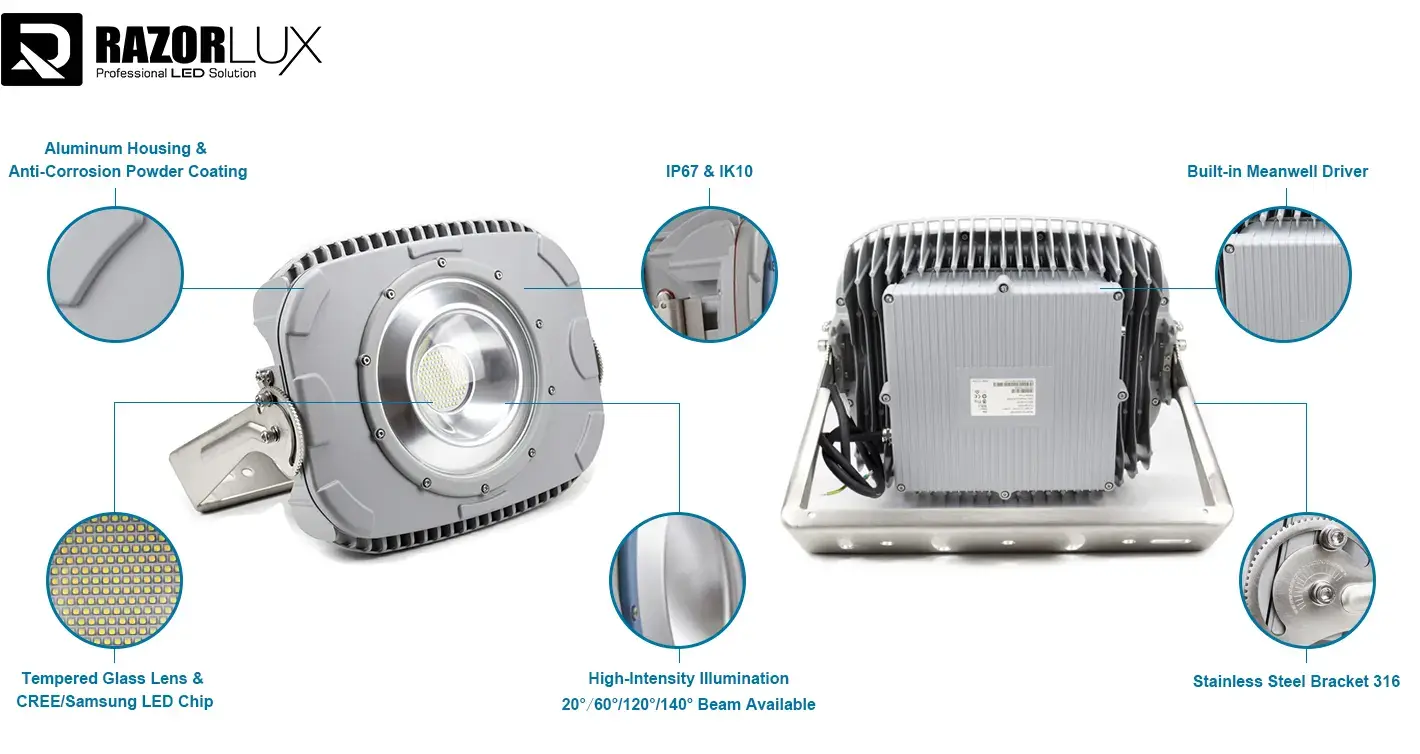
The LED array, the driver, and the heat control system are the three most important parts of any high-performance fixture. Razorlux uses Samsung chips and Meanwell drivers, which are known around the world for being reliable in tough conditions. The driver can work with a lot of different voltages (AC80-315Vac, DC80-400Vdc), so it can keep working even when the power grid changes, which can happen in industrial and port settings. The thermal design has a direct effect on brightness upkeep, which is the rate at which light output decreases over time. Fixtures that don't get rid of heat well may lose 30% of their brightness in 10,000 hours, but systems that are properly designed will keep 90% of their output after 50,000 hours.
Why Traditional Metal Halide Falls Short
There are basic problems with metal halide technology that make the total cost of ownership higher. In addition to using a lot of energy, these systems lose a lot of lumens over time, often dropping to 60% of their original output by the middle of their life and needing to be replaced too soon. The change in colour over time makes the pitch look uneven, which is a problem for television sites that need to show colours consistently. Maintenance costs go up because lamps need to be replaced often and special tools are needed to get to high-mast installations. One shipyard site manager in Norway said that switching to LED saved more than 40,000 EUR a year on repair costs. This was mostly because they didn't have to rent a crane to change the bulbs on 35-meter poles.
Step-by-Step Calculation Method for Optimal Lighting Design
Determining Your Field's Base Requirements
First, write down the size of your playing area and the type of sport. A normal football field is about 105m x 68m (7,140 m²), but tennis courts only need 668 m². Minimum light levels are set by international standards like EN 12193: for leisure football, the level of light needs to be 200 lux on average, for professional football, it needs to be 500 lux, and for broadcast-quality installations, it needs to be 1,000 to 2,000 lux with strict uniformity ratios. For ball tracking and camera work, vertical illuminance—light hitting vertical surfaces—becomes very important. Make a list of the maximum mounting heights as well. For community fields, poles are usually 15 to 25 meters high, while professional stadiums may use 30- to 40-meter installations.
Calculating Total Lumen Output Needed
It's simple: Total Lumens = Target Lux × Area (m²) × Maintenance Factor ÷ Utilization Factor. The upkeep factor (usually between 0.7 and 0.8 for LED) takes into account how much dirt builds up and how much lumens are lost. The utilization factor, which ranges from 0.4 to 0.6, shows how much light actually gets to the playing surface instead of being absorbed or sent in the wrong direction. Think about a football field that needs 500 lux over 7,140 m² and has an upkeep factor of 0.75 and a utilization factor of 0.5: (500 × 7,140 × 0.75) ÷ 0.5 = 5,355,000 lumens total. Before beam effectiveness and mounting setup are taken into account, this estimate gives you a starting point.
Selecting Fixture Quantity and Placement Strategy
Once the total lumen demand is known, it can be divided by the output of each fixture. After temperature stabilisation, Razorlux's RGL-120A gives off 14,400 lumens at 5700K. Using the last case as a guide, 5,355,000 ÷ 14,400 equals about 372 events. But the beam angle has a huge effect on this number. A 60° beam focuses light into a smaller area with more power. LED Sports Lighting Fixtures, this means that more lamps are needed, but spill is better controlled. A 140° × 60° asymmetric distribution may cover more ground per fixture, but it might not be as even. For rectangular areas, four-corner mounting works well because the covering overlaps, which keeps shadows to a minimum. For bigger events that need to meet broadcast standards for uniformity ratios (usually ≥0.7 minimum-to-average ratio), six- or eight-pole setups work best.
Table 1: Illuminance Requirements by Sport and Competition Level
| Sport Type | Recreational (lux) | Competitive (lux) | Broadcast (lux) | Uniformity Ratio |
|---|---|---|---|---|
| Football | 200 | 500 | 1,400 | 0.6 / 0.7 |
| Tennis | 300 | 500 | 750 | 0.7 |
| Basketball (outdoor) | 200 | 500 | 1,400 | 0.6 |
| Athletics track | 200 | 500 | 1,000 | 0.5 |
Factoring in Environmental Protection Ratings
The needs of the working environment must be taken into account in your assessment. Facilities along the coast and offshore platforms need fixtures with an IP67 rating that can handle being submerged for a short time and being hit by salt spray all the time. Razorlux's stainless steel frames and casings that won't rust directly meet this need. The IK10 impact rating makes sure that fixtures can handle the hits from balls and other equipment that are common in sports venues. Extreme temperatures are also important. Fixtures that can work in temperatures ranging from -40°C to 60°C can handle both the cold of the Arctic in Norwegian factories and the heat of the desert in Middle Eastern ports. These needs should be made clear in the procurement specs, since lower-rated fixtures might be cheaper at first but break after a few months of use in harsh circumstances.
Comparing LED Solutions with Legacy Lighting Systems
Initial Investment Versus Lifecycle Value
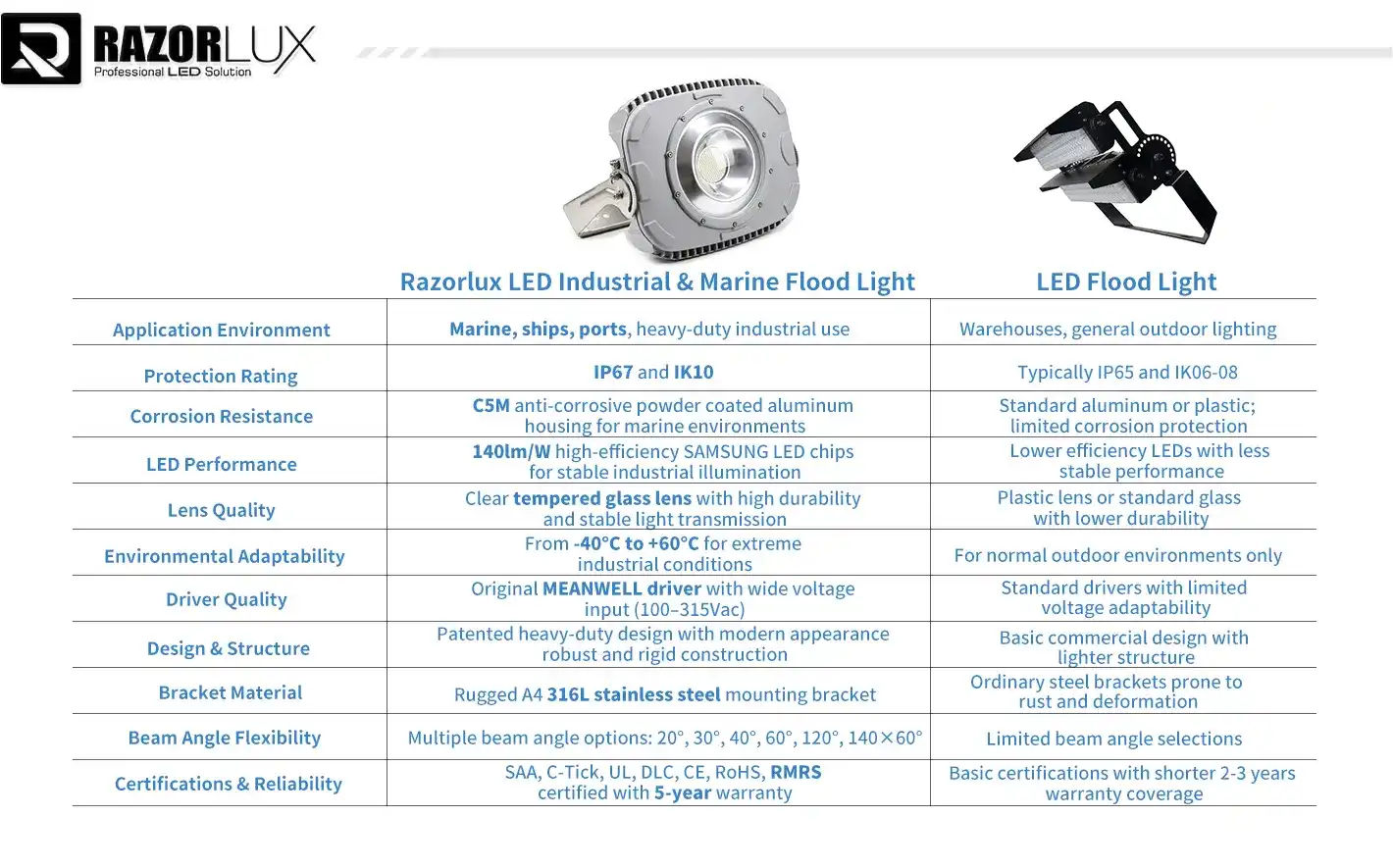
LED fixtures usually cost two to three times as much up front as similar metal halide systems, which can be hard on the budget at first. Total cost of ownership analysis, on the other hand, tells a different story. At $0.12/kWh, a 120W LED that uses about 1,050 kWh per year costs $126 in electricity, while a 300W metal halide replacement costs $315. Over a 50,000-hour life, which is about 17 years of daily use for eight hours, energy savings alone are more than $3,200 per bulb. When you consider that LEDs don't need to be replaced like metal halide bulbs do every 6,000 to 10,000 hours and cost $80-150 each plus labour, they have 40–60% lower lifecycle costs, even though they cost more to buy.
Performance Metrics That Matter to Operators
There is a direct link between uniformity ratios and player safety and game quality. Metal halide systems have trouble keeping the light level constant across big fields. This leads to bright spots under lamps and dark areas between poles. Because LEDs are directed and have precise visual control, they can meet the standards of the International Olympic Committee by having uniformity ratios of 0.7 or higher. The colour rendering index (CRI) changes how easily coloured things can be seen, which is very important in sports where ball colours need to be distinguished. The standard for Razorlux lights is Ra >75. For places that need broadcast-quality colour reproduction, Ra >80 and Ra >90 are also available. Flicker, which is measured as ripples of less than 1% in good LED drivers, stops strobing effects that get in the way of working quickly with a camera and can make your eyes hurt after a while of use.
Environmental Impact and Regulatory Compliance
Metal halide and high-pressure sodium lights contain mercury and lead. LED technology gets rid of these elements, making them easier to get rid of and lowering the environmental impact. Cutting down on energy use directly lowers your carbon footprint—a 70% drop in energy use per fixture adds up over big systems. In many places, Dark Sky compliance is now required to keep wildlife and residential areas from being affected by light pollution. Because LEDs have better optical control, they don't let light spill up, and properly installed lamps send more than 95% of power below horizontal. Razorlux goods have CE, RoHS, and several marine certifications (DNV/GL, ABS) that make them legal to buy in a wide range of regulatory settings, from EU markets to ports in the Middle East.
Table 2: LED vs. Metal Halide: Side-by-Side Comparison
| Parameter | LED (120W) | Metal Halide (300W) | Advantage |
|---|---|---|---|
| Luminous Efficacy | 130 lm/W | 75-85 lm/W | LED: 50% more efficient |
| Rated Lifespan | 50,000 hours | 10,000 hours | LED: 5× longer |
| Warm-up Time | Instant | 15-20 minutes | LED: Immediate full output |
| Color Stability | Consistent | Degrades significantly | LED: Maintains appearance |
| Annual Energy Cost (8h/day) | $126 | $315 | LED: 60% lower |
Procurement Considerations for Reliable Lighting Suppliers
Evaluating Certifications and Quality Documentation
The technical details on a datasheet don't mean much if they haven't been checked by a third party. Ask for LM-79 photometric test results that show real lumen output and beam spread, not just guesses. According to the literature for the LM-80/TM-21, the L70 lumen maintenance (the number of hours until output drops to 70% of original) gives a reasonable idea of how long the device will last. For marine and industrial uses, claims of corrosion protection are checked with salt spray tests according to ASTM B117. Razorlux keeps its ISO 9001 certification and product approvals from several classification societies. This paperwork pleases technical review committees and shortens the time it takes to get projects approved. Before shortlisting sellers, purchasing managers should ask for full technical files that include IP/IK test certificates, EMC compliance records, and proof of surge protection.
Understanding Warranty Terms and Their Implications
The fact that both LED modules and drivers are covered by a five-year warranty shows that the maker is confident in the choice of components and the heat design. Carefully read the guarantee terms; some don't cover problems caused by voltage spikes, bad fitting, or environmental factors, so they don't protect you in real life. Check to see if the guarantee service needs sending fixtures back to the maker, which would cause more downtime, or if it offers replacement units ahead of time. The different warranty periods for the housing (often 10 years), LEDs (5 years), and drivers (5 years) show how often things break, with drivers being the most common culprit. Suppliers with local service centers or authorised repair networks cause less trouble than those that need warranty claims to be shipped internationally.
Customization Options for Project-Specific Needs
Standardised goods don't always meet all the needs of a project perfectly. When you change the beam angle, you can adjust the light to fit your pole's shape and mounting height. Choosing a colour temperature between 2700K (warm) and 6500K (cool sunshine) changes how bright and moody something seems. Warmer tones work better in public areas for fun, while cooler temperatures make it easier to see for games. Modern installations need to be able to integrate control systems. DMX512, DALI, and 0-10V dimming interfaces allow for dynamic lighting scenes and energy management. Razorlux's patented multi-function design lets it work with a variety of mounting options and add-ons, such as anti-glare louvres for placements near viewing areas and asymmetric optics that keep light away from properties next to the light source.
Maintenance Strategies for Long-Term Performance
Establishing Preventive Inspection Schedules
An occasional check is good for even LED technology that doesn't need to be maintained. Visual checks done every three months find obvious problems like damage, loose mounting hardware, or water getting into sealed enclosures. Light meters should be used at key places in the field during yearly thorough inspections to find lost lumens or broken fixtures before they affect the level of play. Cleaning times depend on the location. For example, installations near the coast may need to be washed every six months to get rid of salt deposits, while venues in the middle of the country may only need to be cleaned once a year. LED Sports Lighting Fixtures: Keep track of the numbers for baseline illumination during setup so that you can use them as a guide for future comparisons. As part of the procurement specifications, suppliers should be asked to provide suggested maintenance schedules and a list of wear items that should be replaced at regular intervals.
Addressing Common Operational Issues
Flickering usually means that the driver isn't working right or that the dimming controls aren't compatible. Using non-dimmable drivers on dimming circuits makes the lights act strangely. If there are differences in colour across a field, it means that fittings from different production batches with small CCT differences were mixed. To avoid mismatches when replacing fixtures in the future, it's best to order extras from the same batch. Problems with voltage are often to blame for early failures. Make sure the quality of the power coming in meets the requirements of the fixture, as constant overvoltage speeds up the degradation of the LEDs and drivers. For smart-controlled systems, keep the firmware up to date and quickly fix any network connection problems to keep automatic functions from stopping working. Razorlux's technical support team helps with troubleshooting by drawing on decades of knowledge from setups in both naval and industrial settings.
Planning for Component Replacement and Upgrades
Even though LEDs last 50,000 hours, drivers may need to be replaced every 30,000 to 40,000 hours, based on the temperature at which they are used and the quality of the power. Choose fixtures with drivers that can be replaced in the field instead of integrated designs that need the whole fixture to be replaced. Keep a stock of important parts like drivers and lenses that are the right size for your installation's redundancy needs. Upgrades may be needed before the product's end of life because of new technology. For example, newer generations of LEDs are 15-20% more efficient, and control systems can add features like occupancy sensing or daylight harvesting. Compare the payback from extra energy savings to the prices of the retrofit to figure out the upgrade's return on investment (ROI). Some venues replace parts of their equipment every 5 to 7 years so they can keep up with the latest technology without having to pay for a full replacement.
Why Razorlux LED Solutions Deliver Measurable Value
Proven Track Record in Demanding Environments
Razorlux has been making lighting systems for the world's toughest environments since 1998. While the North Atlantic is stormy, our fixtures light up ship decks, oil rigs in the water that have to deal with salt spray and shaking, and port facilities that are open 24 hours a day, seven days a week. The same engineering that meets the needs of maritime classification societies like DNV, ABS, and others also makes sure that sports facilities that are exposed to weather and mechanical stress are reliable. Over 200 patents on LED Packaging, thermal management, and structural design show that companies are always coming up with new ideas that lead to better performance. When shipyard buying managers and industrial site engineers switch to our systems, they regularly report that upkeep costs go down by 40 to 60 percent.
Technical Specifications That Meet Real-World Demands
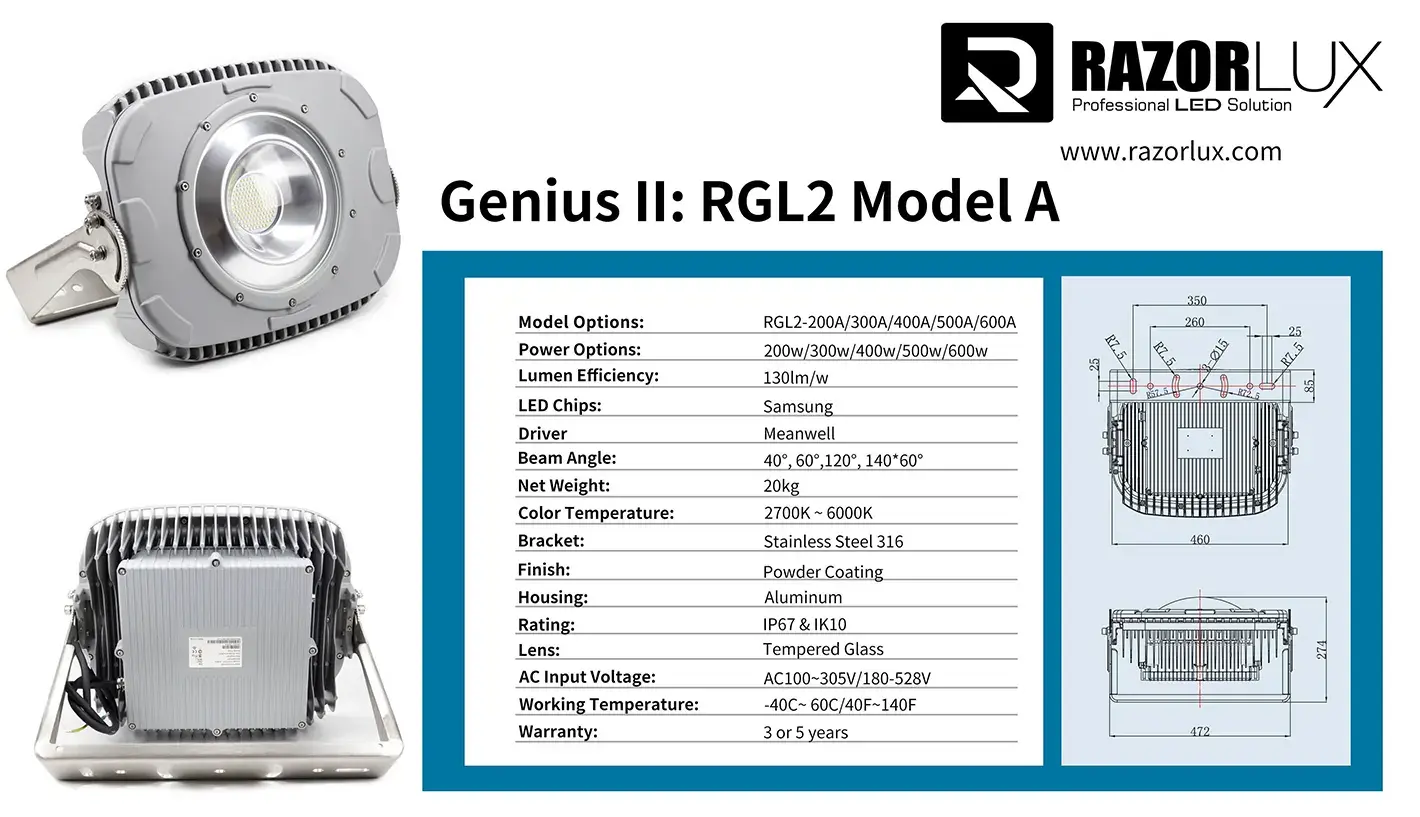
At 130 lm/W, the RGL-120A produces 14,400 lumens and can replace 250–300W metal halide lights while only using 120W in total. Samsung LED chips give stable light with little colour change over time, and Meanwell drivers can handle voltage changes from 80Vac to 315Vac without the need for extra equipment. The IP67 rating makes sure that the safety is dust-tight and waterproof for short-term submersion, and the IK10 rating means that it can handle the roughest ball sports. Because it can work in a wide range of temperatures (-40°C to 60°C), it can be installed anywhere, from the Arctic to a desert. Stainless steel frames don't rust in coastal areas where most lights break after two to three years. These specs aren't just marketing claims; they're written-down performance metrics that have been tested by a third party and shown to work in thousands of installations.
Comprehensive Support Throughout Project Lifecycle
It takes more than reviewing product datasheets to find the right seller. Razorlux offers advice before the sale, which includes photometric calculations and 3D lighting simulations that let you see how the field will look before you buy. Custom sampling lets your expert team test performance in real-world settings, which lowers the risk of buying something. Every shipment comes with full technical documentation, such as installation manuals, wiring diagrams, and maintenance guides. This cuts down on questions from contractors and delays in installation. Our warranty covers both LEDs and drivers for five years, and if they ever break, we'll replace them ahead of time so that your building can keep running. We offer on-site operational help and training for your maintenance staff for big projects.
Conclusion
To figure out how much Led Sports Lighting Fixtures you need, you need to know about illuminance standards, how to accurately measure brightness output, and how to strategically place fixtures while taking into account beam angles and mounting setups. Modern LED technology saves 50–70% of the energy used by older systems while also offering better symmetry, instant-on functionality, and a lifespan of decades with little upkeep. The initial investment premium is usually paid back within three to five years through lower running costs, and the total amount saved over the lifetime is often more than sixty percent. For successful procurement, you need to work with experienced Led Sports Lighting Fixtures providers who can give you certified photometric data, full certifications, and ongoing technical support. Razorlux has been making reliable lighting solutions for over 25 years for marine, industrial, and heavy-duty uses. These solutions are designed to work in the harshest environments in the world.
FAQ
How many LED fixtures do I need for a standard football field?
A football pitch for fun (105m x 68m) that needs 200 lux usually needs 100–150 lights, each rated at 120–150W, based on the height and angle of the beam. To compete in fields that need 500 lux, you need fixtures with 250 to 400 watts. Broadcast-quality setups with 1,400 lux or more may need 700 or more lamps or higher-wattage units (500 to 1,000 W) to get the right amount of light and evenness. The exact amounts depend on how the poles are set up, how high they are mounted, and which beam patterns are chosen.
What's the realistic lifespan of LED sports lighting compared to metal halide?
Good LED lights, like Razorlux's RGL-120A, can work for more than 50,000 hours before they lose 70% of their original power, which is about 17 years of use at 8 hours a day. Metal halide lamps usually need to be replaced every 10,000 hours, which is about 3.4 years if they are used the same way every day. After the rated hours are up, LEDs keep their colours more consistent and lose lumens slowly instead of all of a sudden, which means fewer emergency replacements.
Can LED fixtures integrate with existing control systems in our facility?
Today's LED drivers work with several different control methods. Razorlux lights can work with 0-10V analogue dimming, DALI (Digital Addressable Lighting Interface) systems, and DMX512 systems, based on how they are set up. Choosing the right driver during procurement is usually needed for integration with building control systems or smart stadium platforms. In repair projects, wireless control units can add smart features without having to rewire the old system.
Partner with Razorlux for Expert LED Sports Lighting Solutions
Your facility's performance and running costs will be impacted for decades by your choice of Led Sports Lighting Fixtures maker. Razorlux has been making reliable products for 25 years in some of the world's toughest places, like Arctic shipyards and offshore platforms at the equator. The RGL-120A and RGL-1000A models have been tested and proven to work well. They come with Samsung chips, Meanwell drivers, and full five-year warranties. In addition to products, you get photometric design advice, custom sampling programs, and technical support that gets back to you in hours, not days. Our team knows how to do the math, get the right permits, and run a project in a way that makes it successful, whether it's improving a community field or putting in broadcast-quality stadium lighting. Email our tech team at sam@razorlux.com to talk about your unique needs, ask for photometric analysis, or set up a review of a sample. Check out our full line of marine-grade LED options at razorlux.com. They are made to perform above and beyond in sports, industrial, and heavy-duty settings.
References
International Commission on Illumination. (2019). Guide on the Lighting of Sports Facilities. CIE Publication 169:2020. Vienna: CIE Central Bureau.
European Committee for Standardization. (2017). Light and Lighting – Sports Lighting. EN 12193:2018. Brussels: CEN.
Illuminating Engineering Society. (2020). Recommended Practice for Sports and Recreational Area Lighting. ANSI/IES RP-6-20. New York: IES.
U.S. Department of Energy. (2021). LED Lighting for Sports Fields and Stadiums. Solid-State Lighting Technology Fact Sheet. Washington, DC: DOE Office of Energy Efficiency and Renewable Energy.
International Association of Lighting Designers. (2018). Best Practices for Stadium and Arena Lighting Design. IALD Technical Memorandum 28. Chicago: IALD.
Federation Internationale de Football Association. (2022). Football Stadiums: Technical Recommendations and Requirements – Lighting. 6th Edition. Zurich: FIFA Infrastructure Division.
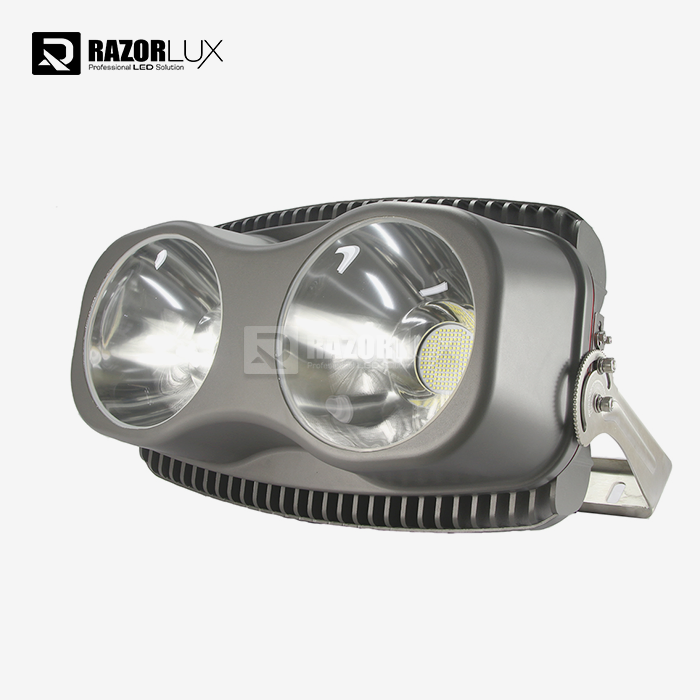 VIEW MOREoutdoor rink flood lights
 VIEW MOREled arena flood lights
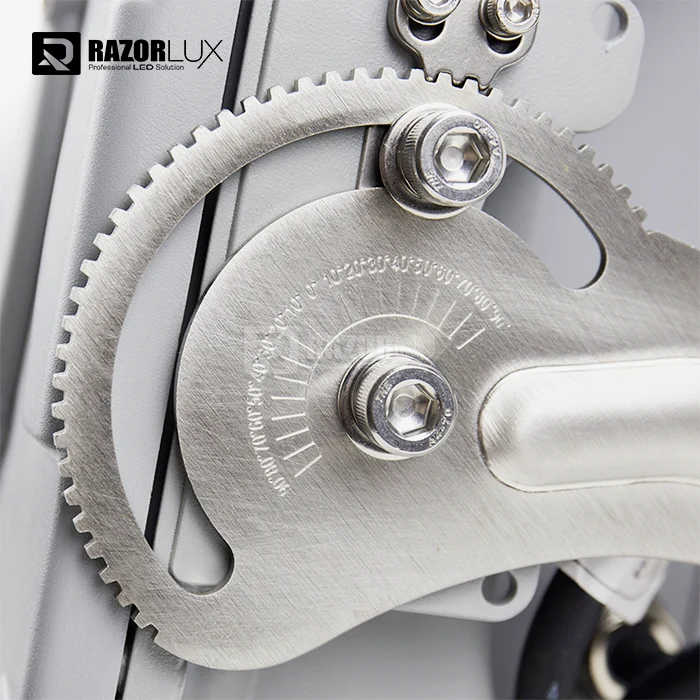 VIEW MOREled flood light for football field
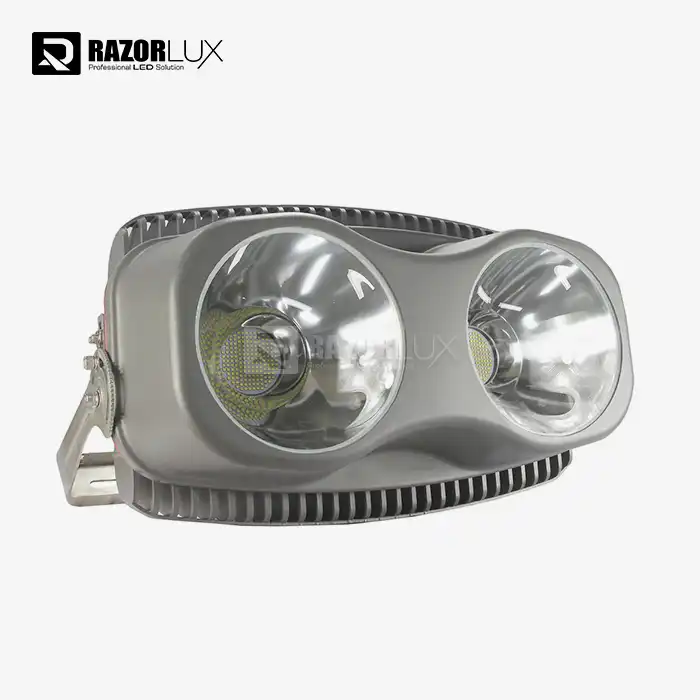 VIEW MORE1000 Watt Led Stadium Lights
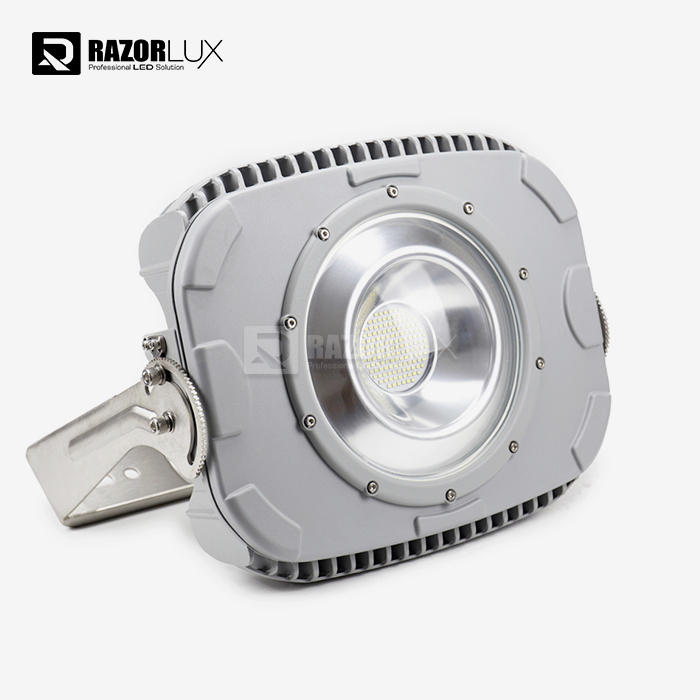 VIEW MORE2700K Outdoor Flood Light
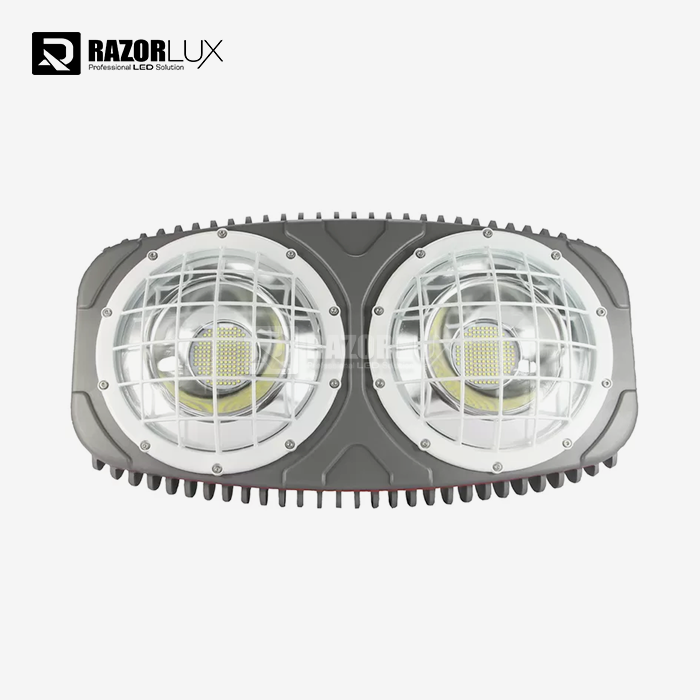 VIEW MOREIp65 Backyard Stadium Lights 600W 5700K Solar Powered Flood Lights
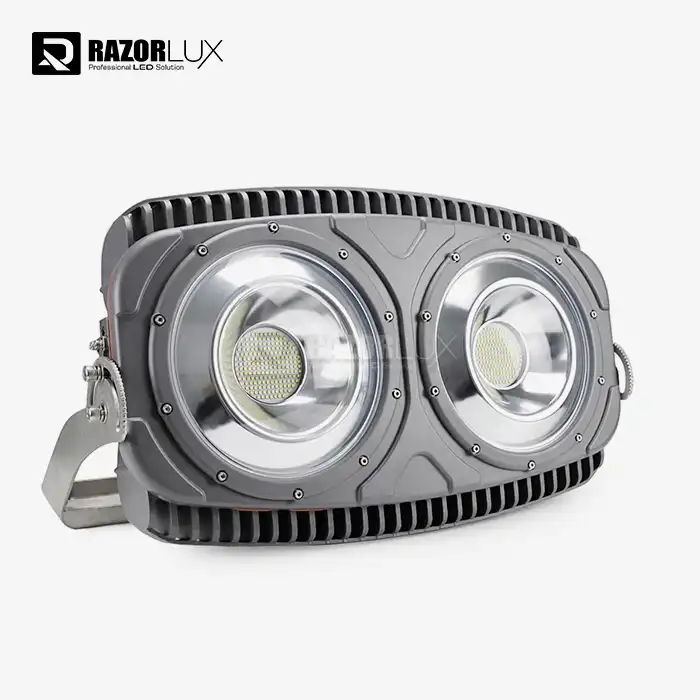 VIEW MORELED Area Flood Lights
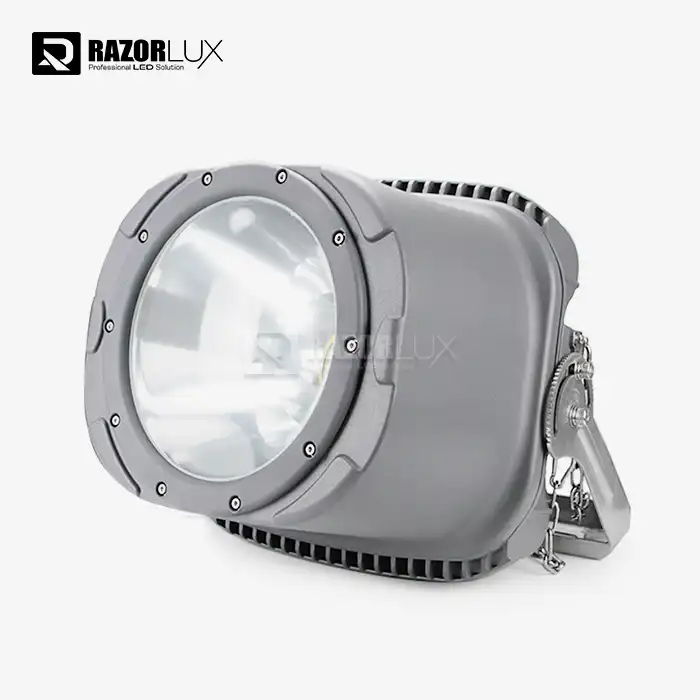 VIEW MOREDimmable Led Flood Light Fixtures