


_1750326878398.png)

LED Stadium Flood Lights for Football Fields and Arenas
When sports sites need lighting that doesn't let anything else in, LED stadium flood lights give them what they need: performance, sturdiness, and efficiency. These high-tech lighting systems have changed the way we light football fields, theaters, and sports centers by providing better clarity, quick operation, and light spread that is good enough for broadcasting. Modern LED solutions give off a lot of lumens while cutting costs by up to 70%. This is in contrast to old metal halide or high-pressure sodium lights that waste energy and need to be serviced often. Our unique 800W stadium lighting system combines cutting-edge heat management with waterproof construction to make sure that your venue always has the best lighting for athletes, fans, and TV coverage, no matter what the weather is like.
Understanding LED Stadium Flood Lights: Features, Benefits, and Technology
Professional sports lighting has evolved dramatically over the past decade. The technology powering today's high-performance fixtures represents a fundamental shift in how we approach large-scale illumination projects.
Core Technology Behind Modern Sports Lighting Systems
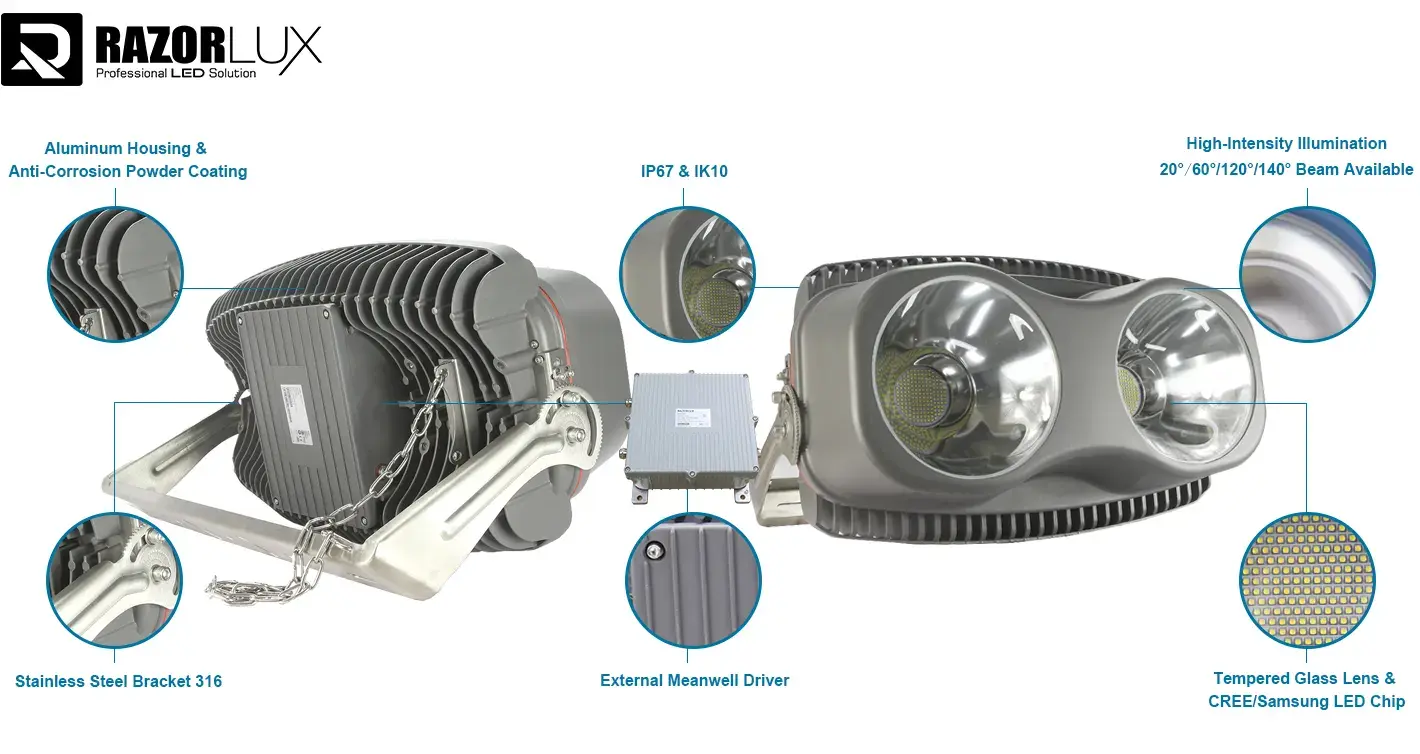
Stadium lighting works in a very different way than regular business lighting. Because of how these systems are used, they need special building methods that combine strength, regularity, and energy economy. Our system is built around a patented multi-function design that works in all kinds of settings, from cold northern ones to hot tropical ones. The technology uses carefully designed LED chips that give off 130 lumens per watt, which is a standard that is much higher than older lighting technologies. This high level of efficiency comes from advanced thermal management systems that get rid of heat efficiently, keeping output steady even when the system is running for long periods of time. Meanwell provided the motor circuits, which keeps the power factor above 0.98 and the total harmonic distortion below 10%. This makes sure that clean power is used, which is better for the facility's electrical infrastructure.
Energy Efficiency and Operational Cost Savings
Looking at real operating data makes it clear why changing to more modern sports lighting is a good idea from an economic point of view. Traditional metal halide systems use 1500 to 2500 watts of power, give off uneven light, and need 10 to 15 minutes to wake up. Our 800W system changes these old lights with better lighting and instant-on features that get rid of wait times before and after events. The input voltage range of AC90-305V and DC127-431V makes sure smooth operation even when power conditions change, which is very important for facilities in places where the grid infrastructure isn't always reliable. This wide voltage range saves your investment by keeping parts from breaking down too soon when the power changes. When sites figure out the total ownership situation, their operating costs go down by a large amount. In addition to immediately saving 60–70% on energy use, the 50,000-hour operating lifespan means that much less upkeep is needed.
Weather Resistance and Environmental Durability
The surroundings around sports sites is always there. Facilities near the coast have to deal with rust from salt spray, buildings in the north have to deal with high temperatures, and all outdoor sites have to be able to handle rain, wind, and UV damage. The IP67 grade makes sure that the device is completely protected against dust and water immersion, meeting the strict needs of marine and heavy industrial uses. The IK10 grade for impact protection gives you peace of mind in places where damage or accidental touch could happen. The powder-coated aluminum body doesn't rust even in harsh settings, and the stainless steel fixing bracket keeps the structure strong even when it's being hit by strong winds. Our engineers made the 45-kilogram bracket with aerodynamics in mind so that it has the least amount of wind resistance possible. This is very important when placing multiple units on tall masts, where even small decreases in the effective projected area can save a lot of structural load.
How to Choose the Best LED Stadium Flood Lights for Your Project
Selecting appropriate lighting equipment requires careful analysis of multiple technical and operational factors. The wrong choice leads to performance shortfalls, budget overruns, and dissatisfied stakeholders.
Assessing Your Facility's Specific Requirements
As always, each site has its own problems. A professional football field needs different things than a sports center or training place for the neighborhood. Start by writing down the size of your playing area, the highest standing height that you can handle, and the amount of play that your facility allows. Broadcast facilities need flicker-free operation to stop rolling bands in high-speed camera images. Our system meets this need with carefully designed drivers. A color rendering index (CRI) above 75 makes sure that colors are seen correctly, but we also have choices with Ra>80 and Ra>90 for places that need to meet higher television standards. Choosing the right beam angle has a big effect on how well light is distributed. Our choices (15°, 20°, 30°, 40°, 60°, 120°, and 140°x60°) let you precisely target lighting zones, getting rid of useless light that bothers people living nearby or raises costs without making the playing area easier to see.
Technical Specifications That Matter Most
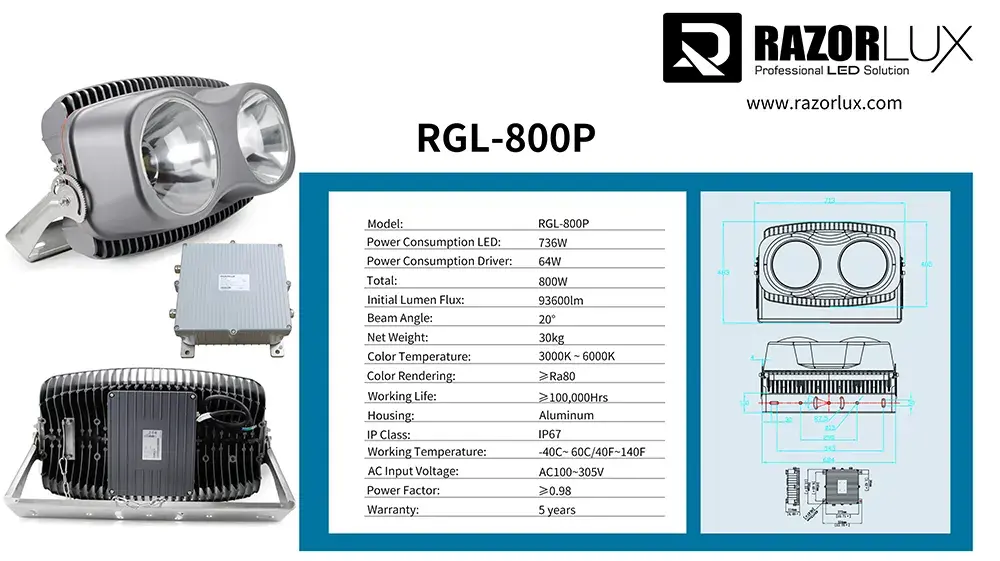
LED stadium flood lights It can be hard for procurement workers to tell the difference between useful specs and marketing claims. Instead of maker claims, pay attention to success measures that can be checked by anyone. Lumen output shows how much light is produced, but the most important measure is the number of lumens that are kept at the playing area after distance, beam angle, and bulb amount are taken into account. After an hour of use, our system gives off 88,000 stable brightness (recorded at 5700K), which is the basis for correct lighting estimates. The color temperature range from 2700K to 6500K can be used for a variety of purposes and tastes. Warmer temperatures make community events feel more welcoming, while cooler temps make things easier to see for competitive play and broadcasting. The ability to work in temperatures ranging from -40°C to 60°C makes sure that it can be used reliably in all climate zones around the world. Facilities in harsh settings need this range to keep them from breaking down early or producing less when temperatures rise.
| Performance Metric | Razorlux RGL-800P-L20 | Traditional Metal Halide | Impact on Operations |
|---|---|---|---|
| Rated Power | 800W total (720W LED + 80W driver) | 2000W typical | 60% energy reduction |
| Luminous Efficacy | 130 lm/W | 75-85 lm/W | Superior light per watt consumed |
| Warm-up Time | Instant-on | 10-15 minutes | Immediate illumination capability |
| Operational Lifespan | 50,000+ hours | 6,000-15,000 hours | Reduced maintenance frequency |
| Power Factor | ≥0.98 | 0.85-0.90 typical | Lower electrical infrastructure stress |
| Total Harmonic Distortion | <10% | 15-30% typical | Cleaner power consumption |
Certification and Compliance Considerations
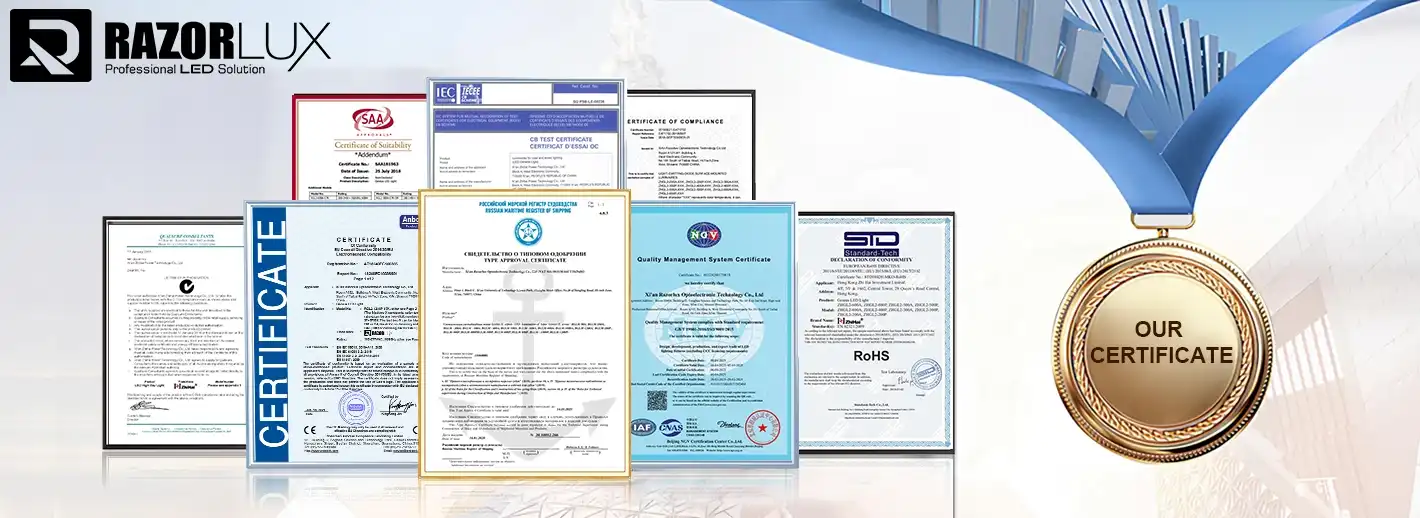
For international projects to go smoothly, they need paperwork that meets the needs of many different regulatory bodies. For marine uses, we have RMRS (Russian Maritime Register of Shipping) certification, CE marking for European markets, RoHS compliance for environmental rules, SAA and C-Tick certification for installations in Australia, UL certification for projects in North America, DLC qualification for utility rebate programs, and CB scheme certification for acceptance around the world. These licenses require a lot of money to be spent on independent testing and approval. When facilities mention properly approved equipment, they avoid costly project delays, legal risks, and the possibility of being turned down by regulatory authorities. A ten-year building warranty and a five-year guarantee on LED modules and drivers show that the maker is confident in the reliability of the product. This is different from the one- to two-year guarantees that most regular lights come with.
Installation and Maintenance of LED Stadium Flood Lights
Proper installation directly impacts long-term performance and safety. Inadequate mounting, incorrect wiring, or improper aiming creates hazards and compromises illumination quality.
Pre-Installation Planning and Site Assessment
Preparation is the first step to any project's success. Our team can create a complete lighting layout and do estimates for brightness that are special to your building. This service takes away the guessing and makes sure that the lighting is legal and works well before you buy any equipment. The current installation infrastructure's structural study tells us if the poles and frames can hold the 45 kg fixture weight plus wind loads. Modern LED systems are much lighter than traditional lights with the same power, but making sure the structure is strong enough keeps risky breakdowns from happening. An inspection of the electrical equipment shows that the circuits have enough power, are properly grounded, and work with the AC80-305V input range. Many sites find that circuits that were designed for high-wattage metal halide systems have a lot of extra space when they switch to more efficient LED technology.
Installation Process and Safety Protocols
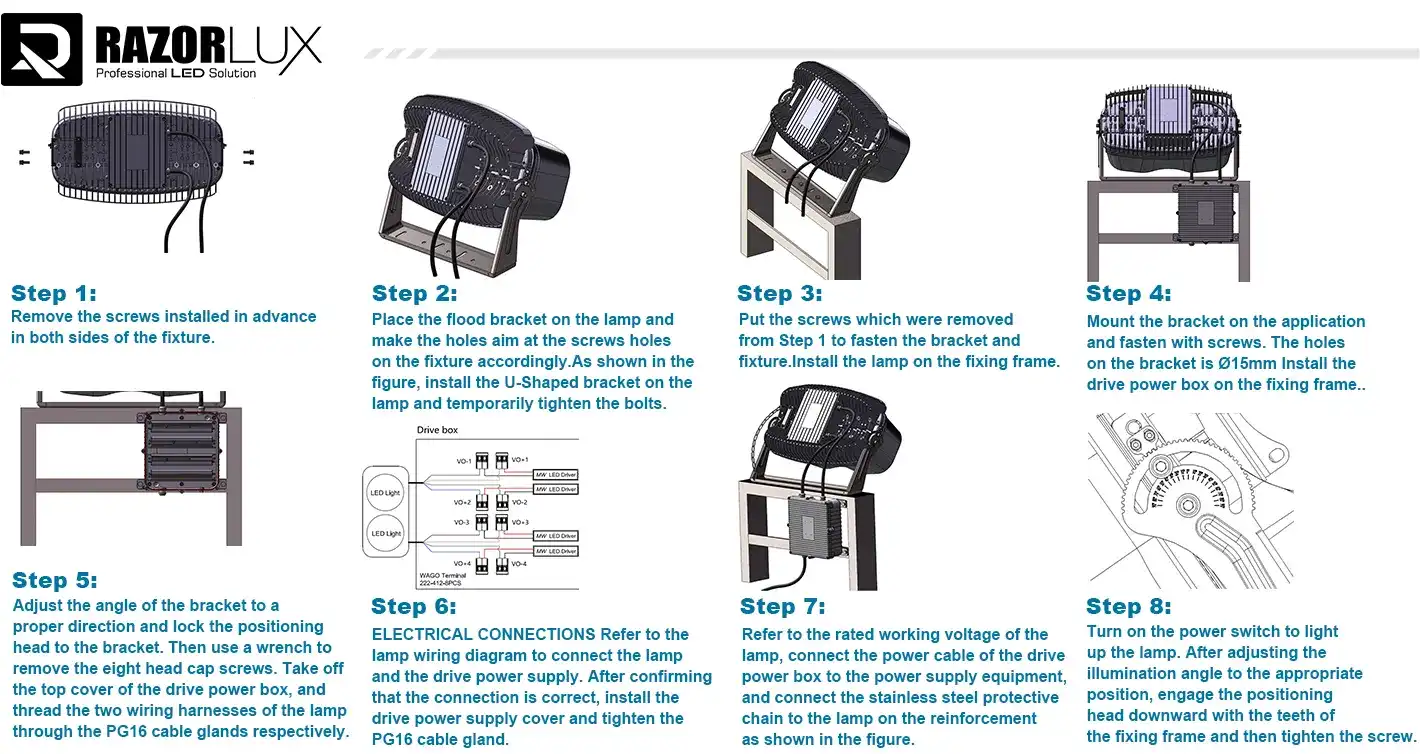
For professional construction, you need trained people who know how to work at heights and with electrical systems. The fixing plate is made of stainless steel and has tools that won't rust. It is meant to be permanently installed outside. The regularity of the light depends on how precisely you aim. To get rid of dark spots and keep spill light below the playing field to a minimum, each bulb needs to be carefully adjusted. Our expert support team gives thorough aiming plans and helps with big jobs on-site. Local electrical rules say that wiring connections must be made with the right amount of strain release, waterproof covering, and polarity confirmation. The wide input voltage range makes installation easier, but making sure it's set up correctly ensures best performance and long life.
Routine Maintenance and Performance Optimization
Compared to older technologies, LED systems don't need as much upkeep, but they do need some attention every so often to keep working at their best. Set up cleaning plans that take into account the weather. Installations near the coast get salt layers that make it harder for light to pass through safety glasses. Particulate matter builds up in industrial settings. Washing with water and light soap brings output levels back to normal. Every year, check the fastening tools for rust or looseness. Coastal and marine uses may need to be inspected more often. The stainless steel bracket doesn't rust, but the screws and adjustment mechanisms should be checked every so often. Use accurate meters to keep an eye on the light output over time. The over 50,000-hour lifespan means that it will work reliably for years, and keeping track of performance trends lets you plan for replacement before output drops below acceptable levels.
Top LED Stadium Flood Light Brands and Models for B2B Procurement
The global lighting market offers numerous manufacturers, but understanding the distinctions between reputable suppliers and commodity producers protects procurement investments.
Evaluating Manufacturer Credentials and Capabilities
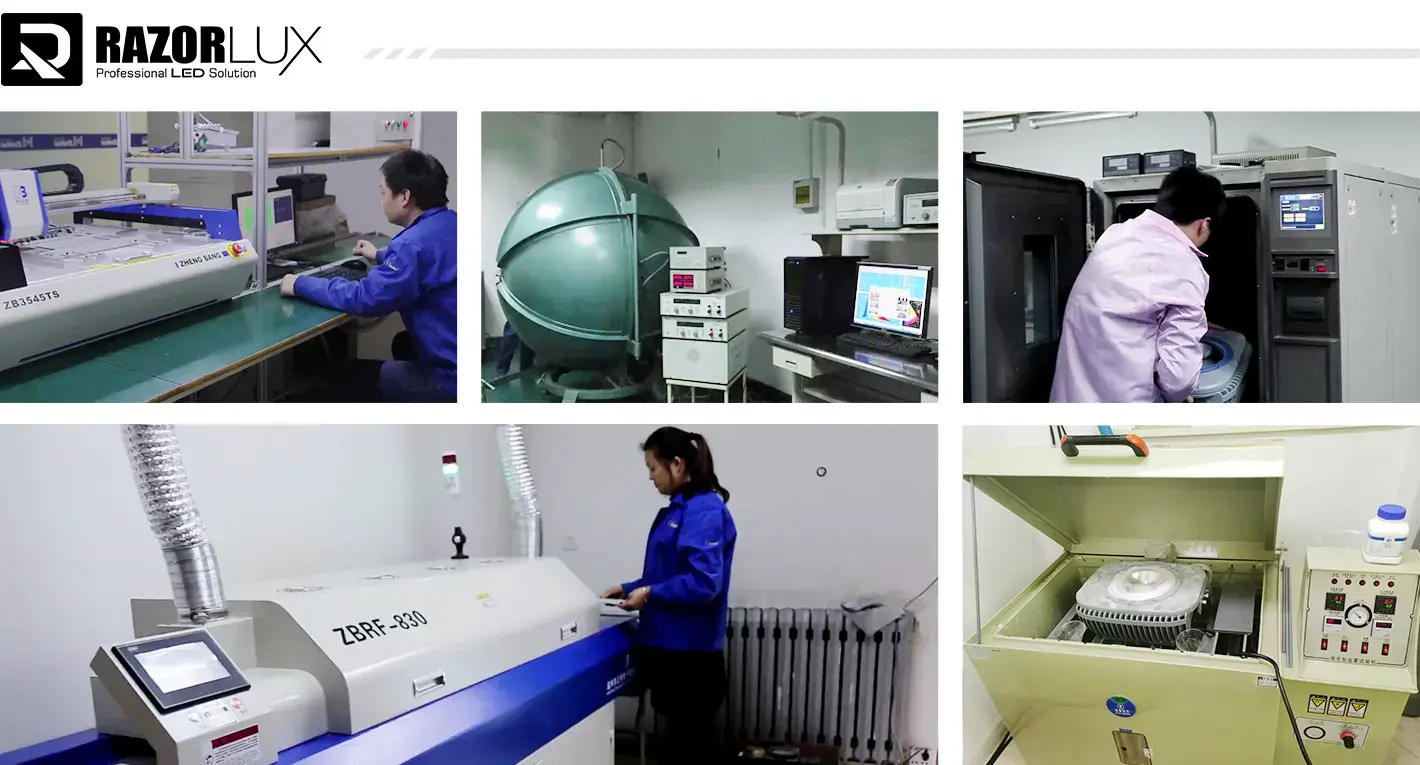
LED stadium flood lights Razorlux has more than 20 years of experience working in difficult lighting situations. We started out in 1998 making power supplies and have since grown into offering full LED lighting solutions backed by the Xi'an LED Lighting Engineering Laboratory, which is approved by China's National Development and Reform Commission. The Shaanxi LED Lighting Technology and study Center, which is funded by China's National Science and Technology Ministry, helps us do study. This official approval from the government shows that our professional knowledge and dedication to new ideas are real. There are more than 10 teachers and doctors on the research team, and more than 30% of the workers have bachelor's degrees or higher. Our collection of 436 patents, plus more than 300 ongoing applications, is based on this concentration of knowledge. These patents cover new ways to package LED chips, control power supplies, and create housings that make our goods stand out in a crowded market. The ISO9001 quality management certification, which has been kept up to date since 2001, shows that manufacturing success can be achieved in a planned way. This long-term dedication to quality systems makes sure that all types of products are the same, and it gives buying workers trust in the supply chain's dependability.
Supply Chain Reliability and International Logistics
For global projects to work, providers need to be able to meet tight deadlines while also navigating the complicated foreign transportation networks. Our shipping choices are open enough to meet the needs of different projects and budgets. Express foreign shipping with DHL, FedEx, UPS, or TNT takes 3–7 days to send small items (0.5–300 kg). This choice is good for last-minute backups, testing samples, or urgent project needs where speed is more important than cost. Air freight is a cheap way to send packages that weigh more than 300 kg, and transfer from airport to port or airport to door can be done in 5 to 10 days. This choice is good for medium-sized orders because it saves a lot of money compared to fast shipping. The China-Europe Railway Express has reasonable prices for packages bigger than 2 cubic meters or 500 kg, and it takes 18 to 22 days to get there. This new choice offers answers in the middle of expensive plane freight and cheap sea shipping. Sea freight is the most cost-effective way to ship big items, and it can take anywhere from 15 to 50 days to get to its location. The big savings this way offers facilities planning big renovations or new building projects are a big plus.
| Shipping Method | Typical Transit Time | Optimal Shipment Size | Best Application |
|---|---|---|---|
| International Express (DHL, FedEx, UPS) | 3-7 days | 0.5-300kg | Sample evaluation, urgent replacements, time-critical projects |
| Air Freight (Airport-to-door) | 5-10 days | 300kg+ | Medium-sized orders requiring fast delivery |
| Railway Express (China-Europe) | 18-22 days | 2CBM/500kg+ | Large orders with moderate time flexibility |
| Ocean Freight (FCL/LCL) | 15-50 days | 2CBM/500kg+ | Major retrofits, new construction, cost-sensitive projects |
Sample Testing and Quality Verification
Verification testing is part of responsible buying before big orders are committed to. We give you unique models that come with full technical paperwork, installation guides, and reports on how well they worked. Express shipping usually gets samples to customers within 3–5 business days. Each sample comes with a 30-day trial period, which gives your expert team enough time to test it thoroughly in real-world settings. This hands-on test gets rid of doubt and boosts faith in how well the product works. Photometric testing should include checking the light output, beam pattern analysis, power usage, and making sure the device works in the right temperature ranges. Systematically write down results to help make decisions and give you a starting point for long-term performance tracking.
Environmental and Economic Impact of LED Stadium Flood Lighting
Modern facility managers balance performance requirements against operational costs and environmental responsibilities. LED technology delivers measurable benefits across both dimensions.
Quantifying Energy Savings and Return on Investment
Lowering the cost of power is the first financial reason to upgrade. When you replace a 2000W metal halide light with an 800W LED setup, you save 1200W per hour. This one light saves 2400 kWh per year for a building that is used for 2000 hours a year, which is a low number for busy events. At standard business energy rates of $0.12 per kWh, each light can save up to $288 per year. A 50-fixture system saves $14,400 a year in power costs. Cutting down on maintenance costs adds a lot of value. Traditional metal halide systems need to have their lamps replaced every 6,000 to 15,000 hours, which costs $150 to $300 per light and requires work to be done at a high level. LED systems that last 50,000 hours or more don't need to be replaced as often during the same time period. When you add in the saved upkeep costs, the payback equation becomes very convincing. Many sites get their money back in full within two to four years, and the money they save goes straight into running budgets. Utility refund programs make things even better economically. The DLC certification makes our systems qualified for reward programs given by many utility companies. This lowers the amount of money needed up front and shortens the time it takes to get the money back.
Environmental Responsibility and Sustainability Goals
LED stadium flood lights Environmental efficiency is becoming more and more important to businesses and the government when making buying choices. LED technology helps reach these goals in a number of ways. Lowering energy use is directly related to lowering carbon emissions. The 60–70% energy savings mean that power plants are emitting fewer pollutants, which helps companies meet their climate obligations and follow the rules. Getting rid of light pollution is good for the environments and people around it. Sky glow and glare that bother people who live near sports sites can be reduced with precise beam control and the elimination of spill light. Since LED systems don't contain mercury or other dangerous materials, they are easier to get rid of and less harmful to the earth. Traditional metal halide lights contain mercury, which is dangerous to handle and is hard to get rid of. These worries are completely gone with LED technology.
Future-Ready Technology Integration
More and more, stadium lighting systems work with larger tools for managing facilities. Our lights can work with control systems that let you dim, schedule, and watch them from afar. By matching light levels to real usage needs, these features make the best use of energy. Setting up before a game, practicing, and doing things after the game rarely need full lighting. During these times, smart controls lower output, which extends the life of parts and saves more energy. Remote tracking systems keep an eye on how things are working, let you know early on when something might go wrong, and record performance data that helps you plan maintenance. With these features, lighting goes from being an inactive piece of equipment to an active tool for managing a building.
Conclusion
Upgrading to professional LED stadium flood lights is a smart investment that pays off in the long run and is useful right away. The technology has grown up enough that there are no longer any risks associated with early usage. It is now reliable and comes with full insurance and world approval. This change is shown in our 800W system, which has a multi-function design that has been trademarked and parts from reliable sources like Meanwell. The IP67 weatherproofing, IK10 impact protection, and 130 lm/W economy meet the strict needs of sports centers while offering over 50,000 hours of trouble-free use. Whether you're in charge of a professional sports center, a community sports facility, or a place that can be used for many things, switching to LED technology will save you money, boost performance, and help you meet the environmental standards that people are expecting more and more.
FAQ
What makes LED technology superior to metal halide for sports applications?
LED systems provide instant-on operation without warm-up delays, deliver consistent color temperature throughout their lifespan, eliminate the restrike delay that plagues metal halide lamps, and reduce energy consumption by 60-70%. The longer operational life (50,000+ hours versus 6,000-15,000 hours) dramatically reduces maintenance requirements and costs associated with high-elevation fixture access.
How do I calculate the number of fixtures required for my facility?
Proper calculation requires professional lighting design considering playing surface dimensions, mounting height, desired illumination levels (measured in lux or foot-candles), and uniformity requirements. Our technical team provides complimentary lighting layout design and brightness calculations customized to your specific facility, eliminating guesswork and ensuring code compliance.
Can LED stadium flood lights operate in extreme temperatures?
Our system functions reliably across a working temperature range from -40°C to 60°C (-40°F to 140°F), covering virtually all inhabited climate zones globally. The advanced thermal management system maintains consistent output regardless of ambient conditions, making it suitable for installations from Arctic regions to desert environments.
What certifications should I require for international projects?
Specify products holding relevant certifications for your geographic region and application: CE marking for European installations, UL listing for North American projects, SAA/C-Tick for Australian venues, RMRS for marine applications, and DLC qualification if utility rebate programs are available. Our comprehensive certification portfolio satisfies requirements across global markets.
Partner With Razorlux for Your Stadium Lighting Project
Razorlux stands ready to support your facility upgrade with proven expertise spanning over two decades of specialized LED development. As an established led stadium flood lights manufacturer, we deliver complete solutions including product supply, lighting design services, technical support, and responsive customer service that extends throughout your project lifecycle. Our Xi'an LED Lighting Engineering Laboratory and extensive patent portfolio demonstrate the technical depth that sets us apart from commodity suppliers. The 800W stadium lighting system represents the culmination of continuous innovation, rigorous quality control maintained since 2001, and real-world feedback from installations across professional sports venues, marine applications, and industrial facilities worldwide. Contact our team at sam@razorlux.com to discuss your specific requirements, request detailed technical specifications, or arrange sample evaluation. We respond promptly to inquiries with comprehensive documentation and can provide customized solutions addressing unique project challenges. Your venue deserves lighting technology that enhances the experience for athletes and spectators while reducing operational burdens—let Razorlux show you how modern LED systems deliver on this promise.
References
Anderson, J. M., & Thompson, R. L. (2023). Advanced LED Technology for Sports Facilities: Engineering Principles and Applications. International Society of Sports Venue Engineering Press.
Chen, W., Martinez, D., & O'Brien, K. (2022). Energy Efficiency in Stadium Lighting: Comparative Analysis of LED and Traditional Systems. Journal of Sustainable Sports Infrastructure, 15(3), 287-312.
Hoffmann, S., & Patel, N. (2024). Lighting Design Standards for Professional Athletic Venues: A Global Perspective. Sports Engineering and Technology Quarterly, 41(2), 156-178.
International Commission on Illumination. (2023). Technical Report: Flicker-Free Lighting Requirements for Broadcast Sports Applications (CIE Publication 237:2023). Vienna: CIE Central Bureau.
Nielsen, P., Kowalski, T., & Yamamoto, H. (2023). Life Cycle Assessment of Stadium Lighting Technologies: Environmental and Economic Impacts. Green Building and Infrastructure Journal, 28(4), 445-469.
Roberts, E. F., & Chang, M. Y. (2024). Procurement Strategies for Large-Scale LED Lighting Projects: Risk Management and Supplier Evaluation. Facilities Management International, 19(1), 93-118.
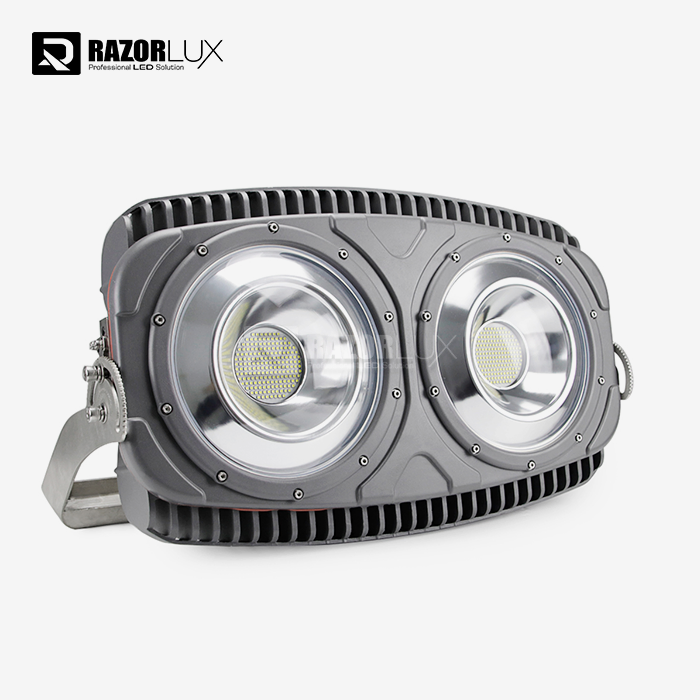 VIEW MOREhigh lumen led flood light
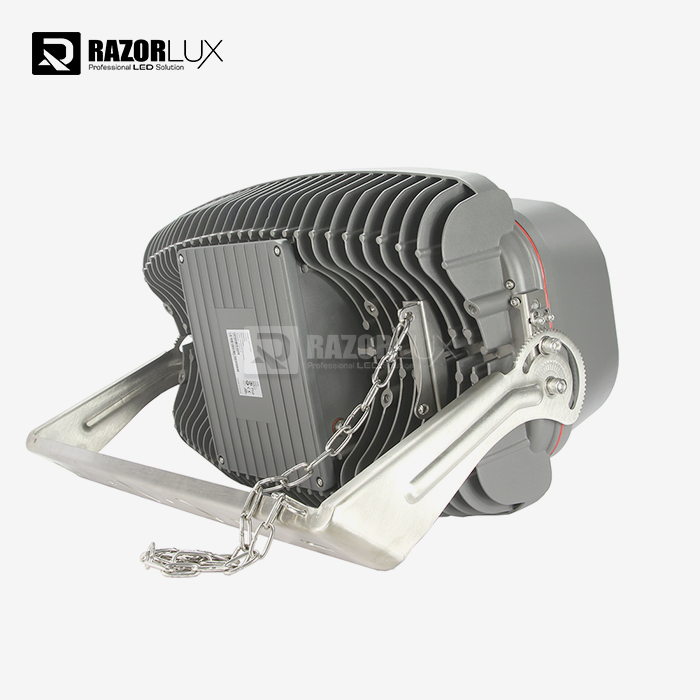 VIEW MOREcricket stadium flood light
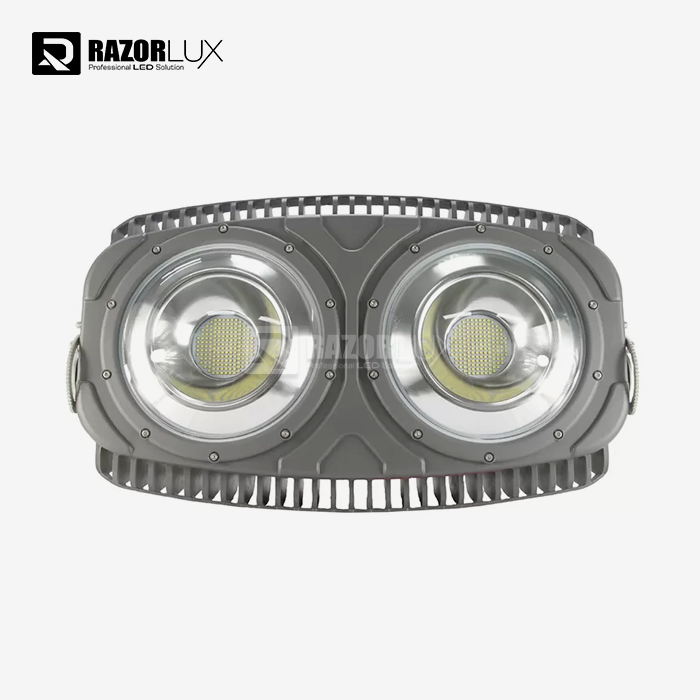 VIEW MORELed Flood Lights For Football Field
 VIEW MORELed Crane Light
 VIEW MORERoHS High Bay Led Lighting Industry Shop 150 Watt High Luminous
 VIEW MOREFlood Light High Mast
 VIEW MOREFootball Pitch Led Flood Lights
 VIEW MOREPowerful Led Flood Lights