


_1750326878398.png)

Marine LED Flood Light Benefits: Energy Efficiency & Durability
When marine operations require reliable lighting in tough settings, Marine LED Flood Light technology provides unmatched performance through exceptional energy efficiency and superior durability. These new lighting options use up to 80% less electricity than older ones and can survive harsh saltwater conditions. This makes them necessary for ships, offshore platforms, and port sites all over the world. Marine Led Flood Lights are a great investment because they last more than 50,000 hours and provide steady, bright lighting for important seafaring activities. They also save money on upkeep costs.
Understanding Key Performance Parameters
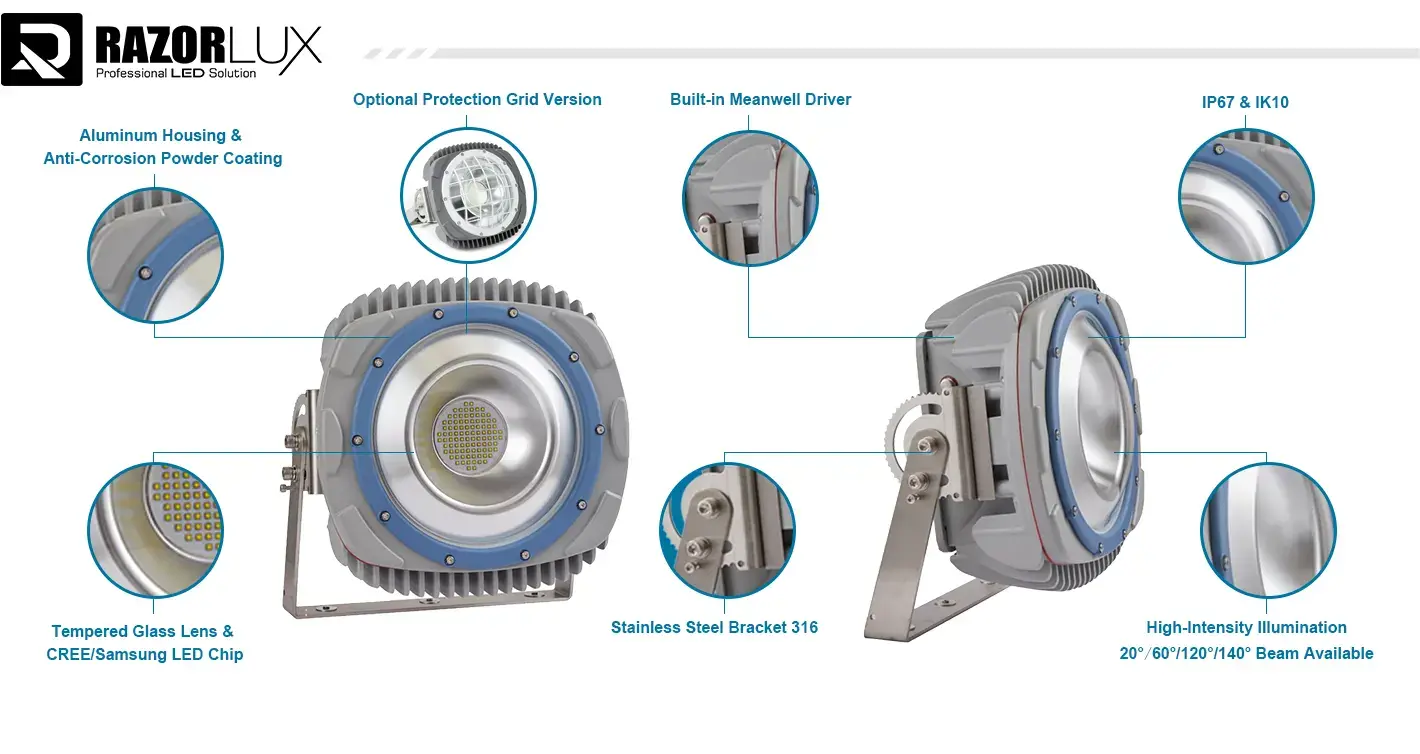
For marine lighting uses, there are specific technical standards that set professional-grade options apart from more basic ones. The Razorlux 180W marine LED flood light meets these important standards with its 130 lumens per watt efficiency rate, which means it gives off 23,400 lumens while being waterproof to IP67 standards and impact-resistant to IK10 standards.
Another important factor is the input voltage's freedom. Our marine LED flood light waterproof systems can work with both AC90-305V and DC127-431V sources, so they can be installed on a wide range of vessel electrical systems. This flexibility gets rid of connectivity worries and lowers the amount of material that marine companies need to keep on hand for different types of vessels.
There are different colour temperature choices, from 2700K to 6500K, to meet different operating needs. When you're navigating, warmer temps make it easier to see, and when you're doing maintenance work, cooler temperatures make it easier to get things done. The Ra>75 colour rendering index makes sure that colours are seen correctly, which is important for safety checks and identifying tools.
Choosing the right beam angle has a big effect on how well the light works. Options ranging from 15° to 140°x60° can be used for a wide range of tasks, from focused searchlights to general lighting on the deck. Because of this, single product groups can meet a wide range of lighting needs in marine systems.
Core Benefits of Energy Efficiency
In naval uses, the amount of energy used has a direct effect on both operating costs and the environment. Marine LED flood lights that are energy-efficient use 70–80% less power than metal halide or halogen options. This means that ships can save a lot of fuel, and buildings on land can use less power.
LED improvements in efficiency help battery-powered boats a lot. Traditional 400W metal halide lights use about 450W when you add up the ballast losses, while similar LED systems use only 150–180W overall. This decrease makes it possible for smaller, lighter battery systems and increases the amount of time that can go by without being charged.
Another benefit of effectiveness is that it makes heat. 60 to 70 per cent of the electricity used by traditional naval lighting is wasted as heat, which means that more cooling systems are needed and working conditions are uncomfortable. Over 90% of the electricity that comes in is turned into visible light by LED technology. This lowers heat loads and the need for HVAC systems.
Good LED drivers have power factor adjustment built in to make sure that the electricity is used as efficiently as possible. Meanwell drivers with >0.95 power factor rates are used in Razorlux naval lighting systems. These drivers improve generator performance and lower fuel use for vessel activities.
| Advantage | Description | Benefit |
|---|---|---|
| Energy Consumption | LED systems reduce power demands by 70-80% compared to metal halide/halogen | Substantial fuel savings for vessels, reduced grid consumption for shore facilities. |
| Battery Efficiency | Traditional 400W metal halide uses 450W, while LEDs consume 150-180W | Extended operational time between charges, smaller, lighter batteries |
| Heat Generation | LEDs convert >90% of energy into light, minimal waste heat | Reduced cooling needs and better working conditions |
| Power Factor Correction | Meanwell drivers with >0.95 power factor rating | Optimised generator performance and reduced fuel consumption for vessels |
| Environmental Impact | Lower power consumption reduces environmental footprint | Significant reductions in operational costs and environmental impact |
Exceptional Durability in Marine Environments
Normal lighting methods don't work in marine settings because of the unique problems they have. Salt spray speeds up rust, vibrations break connections, and changes in temperature put stress on materials. These problems can be solved by using special building methods and picking the right materials for professional marine LED flood lights.
Resistance to corrosion and durability
The marine-grade powder covering on the aluminium body makes it very resistant to rust and keeps the structure's integrity when it's hit. The stainless steel fixing clamps will never rust or seize in saltwater, so you won't have to worry about the maintenance problems that come with steel hardware that rusts and seizes up over time.
Lights that don't break easily
Lenses made of tempered glass are made to resist hits from moving objects and high-pressure washing. Unlike plastic options that turn yellow and break when exposed to UV light, toughened glass stays clear throughout the life of the device. Anti-reflective coats let more light through while cutting down on glare, which is important for safe navigating.
Resistance to Vibration
On working boats, where engine noises and wave movement cause constant mechanical stress, vibration protection is very important. When attaching components internally, shock-absorbing materials and safe fastening methods are used to make sure that electrical connections stay intact even when the components are moving all the time.
Temperature cycling and compatibility of materials
Changing temperatures, from the heat of engine rooms to the cold of the Arctic, is very hard on the stability of materials. Care is taken when choosing components to make sure that their thermal expansion fits and that the materials stay stable across working ranges of -40°F to 140°F. This makes sure that the system works reliably in a variety of weather conditions.
Razorlux Marine LED Solutions vs. Other Brands
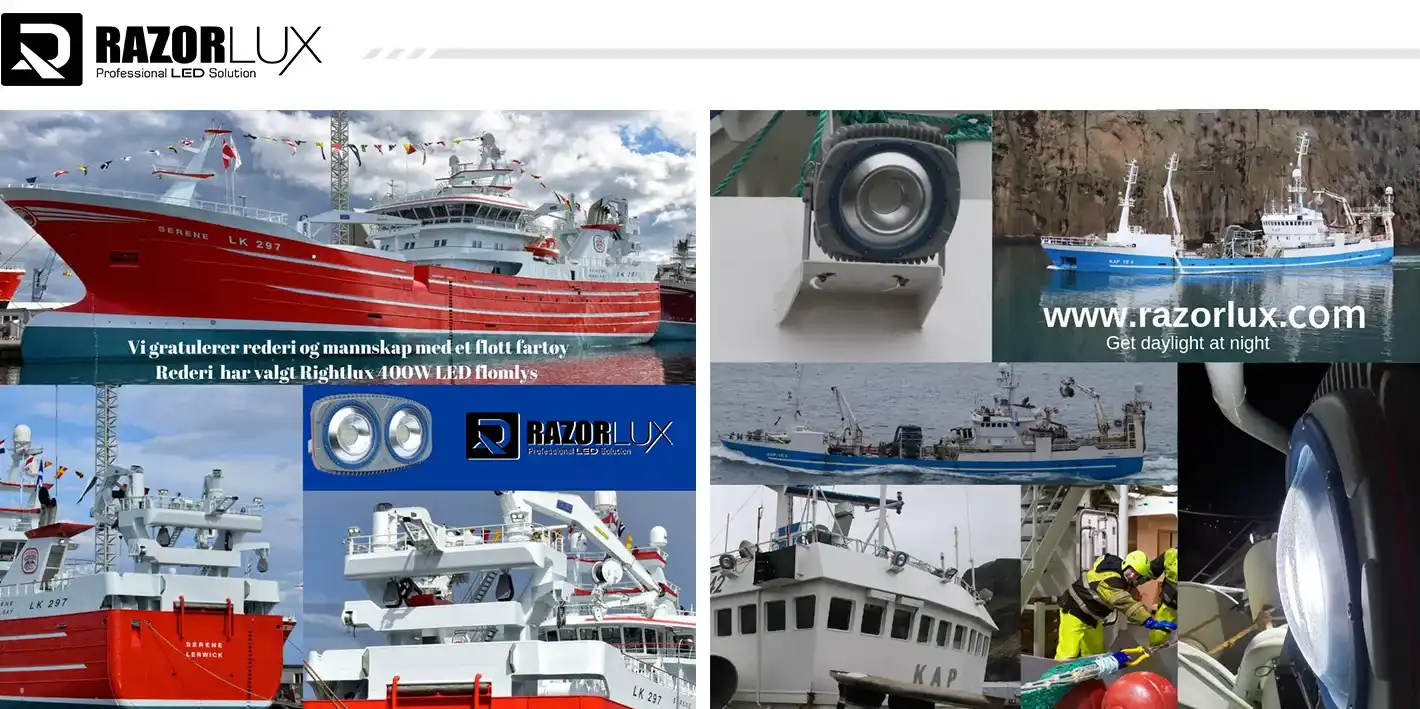
When you compare component specs and approval compliance, you can see how the quality differs. A lot of rivals use standard LED chips and drivers that don't have any features that make them work with boat electronics. Meanwell drivers and Samsung or Philips LED chips are used in Razorlux marine LED flood light systems to ensure steady performance and a long lifespan.
Certification compliance tells the difference between professional-grade goods and consumer-level ones. Many of our competitors only offer basic IP ratings without marine-specific testing, but our RMRS marine approval proves that it is suitable for use on business vessels. For products to be accepted on the global market and follow the rules, they must be CE, UL, and RoHS compliant.
Experience in manufacturing affects how reliable a product is and how well it supports its users. Razorlux has been developing and making LEDs for more than 25 years, so they have a deep knowledge of the needs of marine applications. This knowledge leads to design details that younger companies often miss, such as better heat management, strong electrical links, and thorough testing procedures.
The length of the warranty shows how confident the maker is in the product's reliability. Our 5-year guarantee covers more than the usual 2-3 years in the business, giving your investment more safety for a longer time. This extra covering includes the ability to get new parts and expert help during the guarantee time.
| Feature | Razorlux Marine LED Solutions | Competitors |
|---|---|---|
| Component Quality | Samsung/Philips LED chips, Meanwell drivers | Generic LED chips, basic drivers |
| Certification Compliance | RMRS, CE, UL, RoHS, marine-specific certifications | Basic IP ratings, lacks marine-specific testing |
| Manufacturing Experience | 25+ years of LED development, marine application expertise | Less experience, often overlooking design details |
| Thermal Management | Improved thermal management and robust connections | Basic thermal management is prone to overheating |
| Warranty Coverage | 5-year warranty, parts availability, and technical support | 2-3 year warranty, limited support |
Maximising Benefits Through Proper Selection and Installation
For best performance, lighting specs must be matched to the needs of the product. Deck lighting usually works best with wide beam angles (120° to 140°x60°), which cover a lot of ground evenly. Narrower beams (15° to 40°) are better for navigation and security because they spread light farther and cause less light pollution.
When choosing power, you should think about how much lights you already have and what your business needs. In most cases, a 100W marine LED flood light can replace 250–300W metal halide lamps, and 200W LED lights can replace 400–500W traditional lights. It uses a lot less energy than other sizes while giving off the same amount of light or more.
The placement of an installation affects both how well it works and how easy it is to do upkeep on it. Mounting heights between 8 and 12 feet provide the best light spread while still allowing for easy repair access. Do not put devices right above work areas, where upkeep work could get in the way of operations.
Marine-grade wire and waterproof junction boxes are needed for electrical hookups. Use tinned copper wire that is approved for use in naval settings, and make sure that all of the connections are properly sealed to keep water out. To keep lighting circuits separate from other electrical systems, you might want to add individual circuit security.
Regular repair improves efficiency and makes things last longer. Cleaning it once a month gets rid of the salt buildup that lowers the light output, and checking the electrical connections once a year stops failures caused by rust. LED technology gets rid of the need to change lamps, but after 8–10 years of continual use, driver parts may need to be serviced.
Conclusion
Marine LED flood light technology is the best way to light up boats that need to be seen at night. When you add in the fact that it lasts for more than 50,000 hours and saves up to 80% of energy, you have strong economic benefits over standard options. Marine-specific design and materials make sure that the product will last longer and work reliably in the toughest ocean conditions. When looking for naval lighting options, it's best to go with well-known brands that have a lot of experience in the field, plenty of certifications, and long warranties. Investing in high-quality LED technology saves energy right away and provides years of trouble-free lighting for important marine activities.
FAQ
Q1: What kinds of certifications should I look for in a marine LED flood light?
A: Check to see if it has been approved by RMRS or a similar marine classification group. It should also have an IP67 waterproof grade and IK10 impact protection. UL, CE, and RoHS approvals make sure that products sold in foreign markets are safe and follow all safety rules.
Q2: How do I figure out what power I need for my project?
A: A marine LED flood light of 50W typically replaces a 150W metal halide fixture, a 100W LED fixture replaces a 250W metal halide fixture, and a 200W LED fixture replaces a 400W metal halide fixture. When choosing a size, think about the hanging height, the area it needs to cover, and how it will be used.
Q3: Can these lights work with both AC and DC power?
A: Good naval LED lights can work with a wide range of voltages, so they can be used with both AC and DC systems. The Razorlux units can work with either AC90-305V or DC127-431V, so they can be used with a variety of vessel electrical systems.
Partner with Razorlux for Professional Marine Lighting Solutions
Razorlux stands as your trusted marine led flood light manufacturer with over 25 years of industry expertise and 200+ patents in LED technology. Our proven track record serving commercial vessels, offshore platforms, and port facilities worldwide demonstrates our commitment to quality and reliability. contact us at sam@razorlux.com to discuss your specific marine lighting requirements and receive expert guidance on optimizing your illumination investment.
References
1. International Maritime Organisation. "Guidelines for Marine Lighting Systems Performance Standards." IMO Maritime Safety Committee, 2023.
2. Society of Naval Architects and Marine Engineers. "Energy Efficiency in Marine Lighting: LED Technology Assessment." SNAME Technical Publication, 2022.
3. American Bureau of Shipping. "Requirements for LED Marine Lighting Systems." ABS Rules for Building and Classing Steel Vessels, 2023 Edition.
4. International Electrotechnical Commission. "Marine Navigation and Radiocommunication Equipment - Part 3: LED Lighting Performance Standards." IEC 60945-3, 2022.
5. Det Norske Veritas GL. "Certification Requirements for Marine LED Lighting Equipment." DNV-GL Maritime Standards, 2023.
6. United States Coast Guard. "Marine LED Lighting Systems: Safety and Performance Guidelines." USCG Navigation and Vessel Inspection Circular, 2022.
 VIEW MORE500W Halogen Floodlight Led Equivalent
 VIEW MORELarge Outdoor Flood Lights
 VIEW MOREoutdoor volleyball lights
 VIEW MOREmarine led deck lights
 VIEW MORELow Mast Light
 VIEW MOREFootball Field 140F Led Stadium Lights 1000 Watt 5700K Sports Lighting Fixtures
 VIEW MOREBest Led Floodlights
 VIEW MORESports Flood Lights Outdoor