


_1750326878398.png)

How Bright Are Marine LED Flood Lights 120V for Night Navigation?
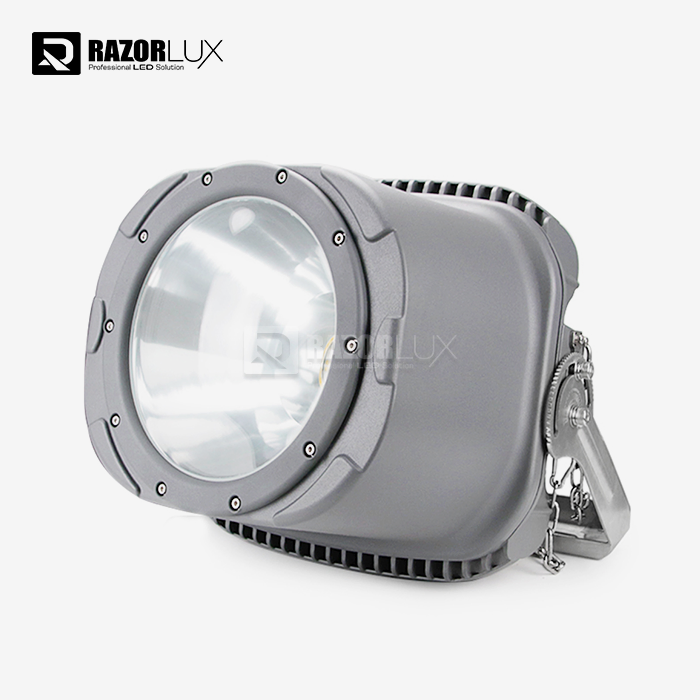
When figuring out how much light is needed for marine operations at night, Marine LED Flood Lights 120V usually give off between 80,000 and 130,000 lumens, though this depends on the wattage and setup. Our RGL-1000P-L20 model puts out a steady 105,000 lumens and has great beam control, which is bright enough to successfully light up deck areas up to 200 meters away. This light output makes it easy to see for jobs like tracking, moving goods, and keeping an eye on safety when there isn't much light. 120V marine LED systems are the best choice for business ships, offshore platforms, and port facilities that need stable lighting at night because they have a high brightness output, focused beam angles, and better color rendering.
Understanding Marine LED Flood Lights 120V: Brightness and Functionality
In the last twenty years, marine lighting has changed a lot. Razorlux has been in business since 1998 and has seen this change firsthand. Today's LED flood lights are a huge improvement over standard halogen or metal halide lighting in terms of performance.
How LED Technology Delivers Superior Brightness
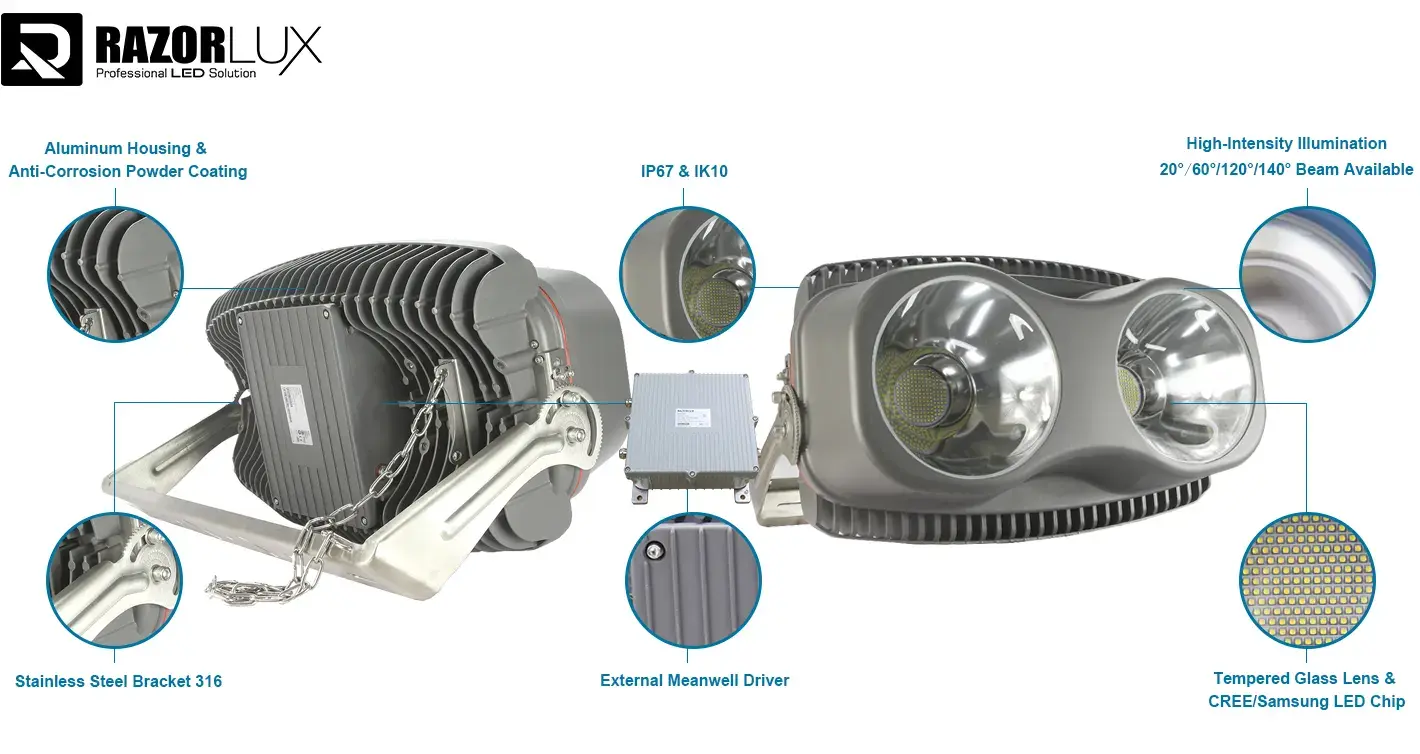
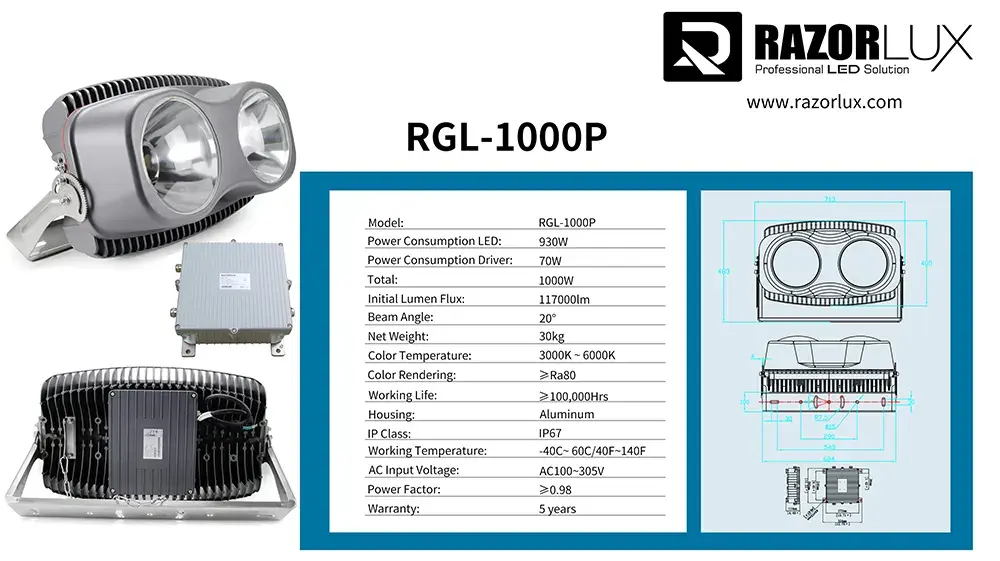
One of the best things about LED boat flood lights is that they can turn electricity into visible light very efficiently. Modern LED systems can produce more than 130 lumens per watt of light, while incandescent lights waste about 90% of their energy as heat. This efficiency means that the light is brighter without using more power, which is important for ships that run on generators or are connected to the shore. Our engineering team has optimized the RGL-1000P-L20 to provide a steady flux output of 105,000 lumens. This number shows how bright it really is after thermal stability, not the potential peak that fades quickly in regular lighting. The 20-degree beam angle was carefully planned to focus this large amount of light into a controlled pattern that penetrates fog and sea mist much better than larger, more scattered beams.
Voltage Compatibility and Electrical Integration
The 120V standard takes into account how things really are in North American marine systems. A lot of ships, especially those that work in U.S. shoreline seas, use 120V AC circuits for extra equipment. Our tools can handle input voltages from 80V to 305V AC, so they can work reliably even when the voltage onboard generators changes. This wide input tolerance means that you don't need any extra voltage control equipment. This makes installation easier and lowers the number of places where something could go wrong. The Meanwell power source that is built into our systems keeps LED performance stable across this voltage range. The motor part only uses 100W, but it sends 900W to the LED grid, so the power factor is more than 0.98. In naval settings, where every watt counts toward fuel use and operating costs, this economy is very important.
Measuring Brightness: Lumens vs. Practical Illumination
A lot of the time, people who work in procurement get confused between raw light requirements and useful illumination. Even though a bulb with 100,000 lumens sounds amazing, a lot of that light is wasted because it doesn't have the right visual design. We solved this problem by using precise reflector geometry and anti-reflective coatings on our toughened glass lenses. The 20-degree beam pattern makes a focused column of light that is perfect for aiming at specific work areas like loading zones, gangways, or objects in the way. There are different beam angles for different uses. For example, bigger 60-degree optics are good for general deck lighting, while narrow 10-degree beams are better for searchlights that need to be seen from far away.
Key Performance Dimensions Influencing Brightness and Suitability
Brightness specifications tell only part of the performance story. The harsh marine environment demands fixtures engineered to maintain their luminous output over years of continuous exposure to corrosive conditions.
Environmental Protection Standards: IP67 and Beyond
Our fixtures get IP67 ratings, which means they are completely safe from dust and can withstand being submerged in water up to one meter deep for 30 minutes. This approval is very important when waves hit objects on the deck or when high-pressure washing is used to get rid of salt buildup. The closing system uses marine-grade silicone seals and stainless steel gear that can stand up to constant exposure to saltwater without breaking down. In working port settings, impact protection is also very important. Based on the IK10 grade, our housings can withstand hits of up to 20 joules, which is the same as dropping a 5-kilogram object from 40 centimeters. This makes it strong enough to avoid damage from flying goods, dropped tools, or accidents that happen while the ship is running.
Material Selection for Long-Term Performance
The die-cast metal body goes through a special powder finishing process that is made to prevent rust in sea environments. Normal industrial coatings break down quickly in saltwater, but our multi-layer protection system has been tested and shown to last more than 1,000 hours of salt spray tests according to ISO 9227 standards. The stainless steel fixing plate makes installation safe and prevents galvanic rusting when attached to steel buildings. The choices of materials have a direct effect on how bright the light stays over its lifetime. As protective layers wear off, moisture gets into LED holes and breaks down the phosphor, leading to less light output. Our building methods make sure that the full 50,000-hour rated lifespan means that the light stays the same, not dropping by 30–50% like most cheap bulbs do after just a few years of sea service.
Color Temperature and Visual Perception
Marine Led Flood Lights 120V, between 2700K and 6500K, the color temperature range meets a variety of workplace needs. Warmer 3000K temperatures make crew rooms and mess areas more comfortable places to work, which helps keep your eyes healthy during long night shifts. A cooler 5700K output improves your eyesight for precise tasks like reading navigational charts or checking machinery. A color rendering index above Ra75 makes sure you can see colors correctly, which is important for things like finding signal flags, reading painted markings, or telling the difference between corrosion and surface staining during inspections. For specific uses that need accurate color separation, higher CRI choices (Ra80 or Ra90) are offered.
Comparative Analysis: Marine LED Flood Lights 120V vs Alternative Solutions
Selecting optimal lighting technology requires understanding how different systems perform across multiple parameters relevant to marine operations.
LED vs. Traditional Lighting Technologies
| Performance Factor | LED (Our RGL-1000P) | Metal Halide | Halogen |
|---|---|---|---|
| Luminous Efficacy | 130 lm/W | 65-85 lm/W | 15-25 lm/W |
| Warm-up Time | Instant full brightness | 5-10 minutes | Instant |
| Operational Lifespan | 50,000+ hours | 6,000-15,000 hours | 2,000-4,000 hours |
| Heat Generation | Minimal (efficient thermal management) | Extreme (fire hazard concern) | Very high |
| Vibration Resistance | Excellent (solid-state) | Poor (filament/arc tube failure) | Poor (filament breakage) |
| Color Stability | Consistent throughout life | Shifts significantly with age | Consistent but inefficient |
This comparison reveals why maritime operators increasingly specify LED technology despite higher initial acquisition costs. The total cost of ownership calculation favors LEDs overwhelmingly when factoring replacement labor, disposal costs, and energy consumption over a five-year operational period. Traditional metal halide fixtures require frequent bulb replacements, each necessitating technician time and vessel downtime. On offshore platforms where maintenance requires helicopter transport of personnel and materials, these service calls become extraordinarily expensive. Our five-year warranty on both LED modules and drivers eliminates these concerns.
120V vs. 240V System Considerations
The voltage choice affects more than just how well the two systems work together electrically. Higher voltage systems (240V) need less current to provide the same amount of power, which lets smaller gauge wires be used over long cable runs. This is a big plus for big ships where fixtures might be 100 meters or more away from the power lines. Our fittings can accept both 120V and 240V through the same link, which is helpful for ships that travel to different countries where shore power standards are different. These lights can be used in any setting because they can handle a wide range of input voltages (80 to 305V AC), even the 277V systems that are popular in big business buildings.
Integrated Control Systems and Adaptive Brightness
More and more, modern marine activities need lighting systems that are smart and can adapt to different circumstances. Our basic lights give off a steady full-output light, but we can customize them with 0-10V dimmer control for uses that need different levels of brightness. This feature lets automated systems turn down the lights when there isn't much going on, which extends the life of parts and lowers energy use. Motion sensor integration is another improvement that is especially useful for security purposes. Deck areas can have low lighting when they're not being used, and when people enter the area, the lighting will automatically go up to full brightness. This method strikes a balance between the need for security tracking and the need to save energy. It also lowers light pollution in seaside areas that are sensitive to it.
Installation and Maintenance Best Practices for Optimized Brightness
Proper installation directly impacts both initial performance and long-term brightness retention. We've developed comprehensive installation protocols refined through hundreds of maritime projects worldwide.
Pre-Installation Assessment and Planning
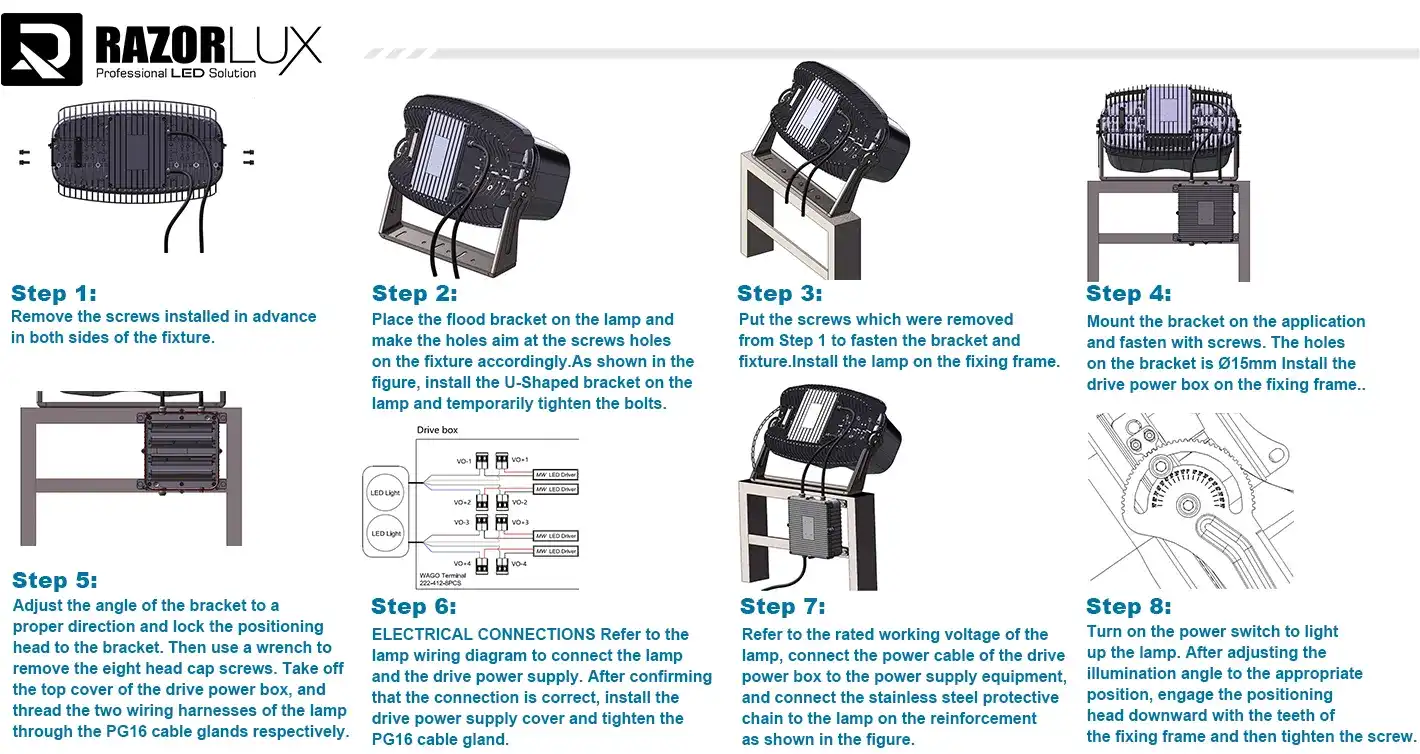
Before installing any device, you should check to see if the area is structurally sound. Marine boats are constantly shaking because of the engines and the waves. The fixing points must provide rigid support to keep the structure from wearing out. For deck installs, we suggest using welded stainless steel backing plates, which spread the mounting loads over bigger structure areas. Evaluating the electrical system is also very important. Make sure that the circuit breakers and wire size match the power needs of the fixtures correctly. At 120V, our 1000W model uses about 8.3 amps. Make sure the circuits have enough capacity and safety gaps. Marine-grade waterproof links that can withstand being outside all the time must be used for connections.
Mounting Position and Beam Angle Optimization
To get the lighting patterns you want with the focused 20-degree beam, you have to be very careful when you aim it. We give you full optical data that shows how the light is spread at different mounting heights and angles. Most of the time, fixtures placed 8 to 12 meters above deck level and angled 15 to 25 degrees downward provide the best coverage for work areas. Avoid putting fixtures in places where they will collect water or trash. IP67 protection stops water from getting in, but built-up material speeds up rust on the outside and can stop heat from escaping. Mounting with a small downward tilt lets water drain away while keeping the right lighting angles.
Routine Maintenance Protocols
Marine LED Flood Lights 120V. Even though LED technology is low-maintenance, it needs to be checked on a regular basis to make sure it stays bright. We suggest checks every three months, which should include the following steps: Visual inspection of the housing looks for signs of wear and tear in the powder coating, especially around seams and fastener sites. If you notice film damage early, you can fix it before water gets to the metal plates. Cleaning the lens gets rid of salt buildup and biological growth that slowly blocks light. Clean with clean water and soft cloths; don't use rough cleaners that can damage protected layers. Even a small layer of salt can cut the brightness by 20 to 30 percent. Electrical connection verification checks the terminals for rust and makes sure the ground connections stay tight. Vibration slowly loosens screws; re-torque mounting bolts and electrical connections to specification during each check. These maintenance tasks take very little time but greatly increase the life of fixtures and keep them at the right brightness levels. Our technical support team makes thorough repair plans that are based on the working environment. For example, operations in warm seas with a lot of biological fouling need more frequent attention than operations in the Arctic.
Procurement Insights: Choosing the Best Marine LED Flood Lights 120V
Navigating the marine LED marketplace requires understanding how to evaluate manufacturers and align product specifications with operational requirements.
Certification Compliance and Quality Verification
Marine lighting that is legal must have certifications from well-known classification groups. The Russian Maritime Register of Shipping (RMRS), Det Norske Veritas and Germanischer Lloyd (DNV-GL), and the American Bureau of Shipping (ABS) have all given their approval to our work. For these certifications, strict testing protocols must be followed to prove performance in harsh conditions, such as vibration testing at 3G acceleration, thermal cycling between -40°C and +60°C, and salt spray exposure for more than 1,000 hours. Other electrical certifications include UL listing for North American markets, CE marking for European compliance, and RoHS verification to make sure there are no harmful substances. Our quality management system is ISO 9001:2015 certified, which means that the standards of production will be the same for all batches. Before finishing specs, procurement pros should ask to see full certification paperwork. Bad goods often say they are compliant without showing test results that can be checked. For possible clients' convenience, we keep a full library of certifications that clearly back up all of our performance claims.
Component Sourcing and Supply Chain Reliability
The dependability and regularity of the fixture's light are directly affected by the quality of its internal parts. We only recommend Meanwell power sources because they are the standard for naval and commercial use. Over millions of installation hours around the world, these drivers have shown that they are very reliable. Trying to save money by using cheaper power sources always ends in early failures and expensive guarantee claims. The choice of LED chip has an equal effect on performance. Our lights use high-quality LED clusters that were chosen for their high lighting efficiency and low brightness loss over their stated lifetimes. Giving information about the chip makers and lumen upkeep data (L70 or L80 grades) makes long-term performance standards clear.
Customization Capabilities for Specialized Applications
| Customization Option | Application Benefit | Procurement Consideration |
|---|---|---|
| Extended voltage range (DC 100-800V) | Solar power systems, hybrid electric vessels | Specify during initial order; requires a different driver configuration |
| Alternative beam angles (10°-120°) | Task-specific illumination optimization | Available as standard options; specify based on photometric analysis |
| Enhanced CRI (Ra80, Ra90) | Color-critical inspection tasks | Slight reduction in overall lumens; specify if color accuracy is essential |
| Explosion-proof housings (IECEx) | Tanker vessels, petrochemical facilities | Requires separate certification; significant lead time increase |
| Emergency backup systems | Regulatory compliance for passenger vessels | Integrated battery backup available; impacts fixture dimensions |
Our engineering team collaborates with clients to develop solutions addressing unique operational challenges. This customization capability distinguishes professional marine lighting suppliers from commodity product distributors. We've developed specialized configurations for fishing vessel deck lighting, offshore helipad illumination, and port gantry crane integration—each optimized for specific brightness distribution patterns and environmental conditions.
Pricing Strategy and Total Cost Analysis
Marine LED Flood Lights 120V. The initial cost of the fixtures is only one part of the economy of a lighting system. A full study must include the cost of installation, the amount of energy used during operation, the frequency of upkeep needed, and the time between planned replacements. LED technology costs more than older technologies, but it's a better investment when you look at the total costs over its entire life. Our price structure shows the high-quality parts and strict quality control that make our boat service reliable. We offer discounts for big projects and keep our prices clear, so there are no surprises for features that are important to the customer. Five-year warranties on LED modules and drivers protect you financially against the early failures that happen with cheap goods. Care is taken with the details of foreign projects' deliveries. We work with experienced freight forwarders who know what the marine industry needs. They make sure that the right paperwork is sent to customs and set up arrival times that work with the plans for building or fixing up ships. There are choices for fast delivery for replacements that need to be sent right away when unexpected problems stop activities.
Conclusion
Choosing the right naval lights is a big choice that will affect working safety, crew efficiency, and the cost of long-term upkeep. Marine LED flood lights 120V with 105,000 lumens give you the light you need for difficult sailing and work tasks at night, and they can withstand the hard conditions that are common in marine settings. Strong construction, high-quality parts, and thorough certifications all work together to make sure stable performance over long service lives. If procurement professionals know about the technical factors that affect brightness, such as luminous efficacy, beam control, environmental protection, and color rendering, they can choose lighting systems that are truly suitable for their operational needs instead of settling for solutions that don't meet their needs just because they are cheaper at first.
FAQ
How bright should a marine LED flood light 120V be for effective night navigation?
Effective brightness depends on mounting height and coverage area, but fixtures delivering 80,000-130,000 lumens typically provide adequate illumination for most maritime applications. Our 1000W model, producing 105,000 stable lumens, illuminates deck areas up to 200 meters with sufficient clarity for safe navigation and cargo operations. The concentrated 20-degree beam angle maximizes effective distance compared to wider, diffused patterns. Procurement specifications should consider not just total lumens but also beam control, color temperature for visual acuity, and whether the rated output represents initial peak or thermally-stabilized performance.
What are the main safety features to look for in marine LED flood lights 120V?
Prioritize fixtures with IP67 or IP68 ingress protection, confirming complete water and dust sealing, plus IK10 impact resistance for mechanical durability. Certification from maritime classification societies like ABS, DNV-GL, or RMRS verifies compliance with industry safety standards through rigorous testing protocols. Quality power supplies with surge protection (4kV minimum) prevent damage from electrical transients common in generator-powered systems. Marine-grade corrosion-resistant construction using stainless steel brackets and specialized protective coatings ensures structural integrity, preventing failures that create safety hazards during critical operations.
Can I retrofit existing marine lighting systems with 120V LED flood lights without rewiring?
Most retrofits proceed smoothly since our fixtures accept standard 120V AC connections. The wide input voltage tolerance (80-305V AC) accommodates systems with voltage fluctuations. Verify existing circuit capacity handles LED power requirements—our 1000W fixtures draw approximately 8.3 amps at 120V. Mounting patterns may differ from legacy fixtures requiring minor bracket modifications, but electrical connections typically utilize existing infrastructure. We provide retrofit consultation services, evaluating your specific installation and recommending optimal approaches for transitioning to LED technology while minimizing modification costs and vessel downtime.
Get Expert Guidance from Razorlux—Your Trusted Marine LED Flood Lights 120V Manufacturer
At Razorlux, we understand the complexities of marine lighting procurement and stand ready to support your project from initial specification through long-term operation. As an established Marine Led Flood Lights 120V supplier with over 200 patents and global certifications, we deliver solutions proven across thousands of installations worldwide. Our technical team provides detailed photometric analysis, customization consultation, and sample units for evaluation in your specific environment. Contact sam@razorlux.com today to discuss your requirements with specialists who combine deep maritime industry knowledge with cutting-edge LED technology expertise. We offer competitive pricing for bulk orders, flexible delivery schedules, and comprehensive five-year warranty protection backed by responsive technical support.
References
1. Illuminating Engineering Society. (2021). Marine Lighting Guidelines: Standards for Vessel and Offshore Platform Illumination. IES Technical Memorandum TM-31-21.
2. International Maritime Organization. (2019). Requirements for Navigation and Signal Lights on Merchant Vessels. SOLAS Convention Chapter V, Regulation 22.
3. American Bureau of Shipping. (2020). Guide for LED Lighting Systems for Marine and Offshore Applications. ABS Technical Publication.
4. Society of Naval Architects and Marine Engineers. (2022). Energy Efficiency in Marine Electrical Systems: LED Technology Applications. SNAME T&R Bulletin 3-59.
5. Det Norske Veritas. (2021). Type Approval Requirements for Marine LED Luminaires. DNV-GL Class Guideline DNVGL-CG-0339.
6. National Institute of Standards and Technology. (2020). Solid-State Lighting Performance Metrics for Marine Environments. NIST Special Publication 1234.
 VIEW MORE100 Watt Led Outdoor Flood Light
 VIEW MOREbasketball court flood lights
 VIEW MORELed Mine
 VIEW MORE150 Watt Outdoor Flood Light
 VIEW MORE500 Watt Led Stadium Lights
 VIEW MOREHazardous Area Lighting Fixtures
 VIEW MORE240W 120lm/W Led Tennis Lights 347V Portable Floodlights
 VIEW MOREDimmable Led Flood Light Fixtures