


_1750326878398.png)

Where to Buy a Reliable 1000 Watt Led Sports Light?
If you want a reliable high-intensity lighting solution for stadiums, industrial yards, or outdoor sports facilities, you should only buy from a reputable company with a track record of success. A dependable 1000 Watt Led Sports Light should be purchased from a company that offers thorough certifications, clear specs, and strong customer service. Razorlux is the kind of supplier that procurement managers can trust for mission-critical lighting installations that need to work for a long time and meet international standards. They have been making products for over 20 years and have more than 200 patents.
Understanding 1000 Watt LED Sports Lights: Features and Benefits
What Defines a Professional-Grade 1000W LED Sports Fixture
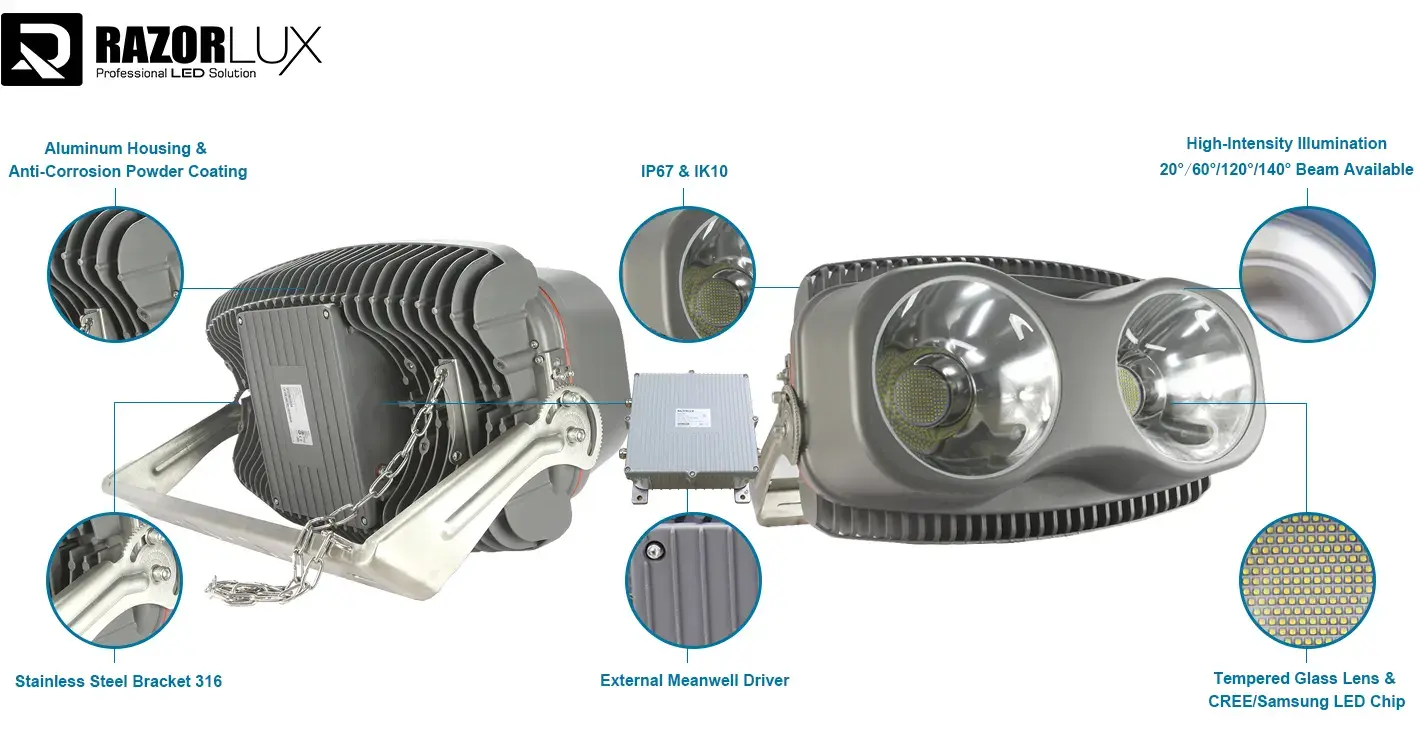
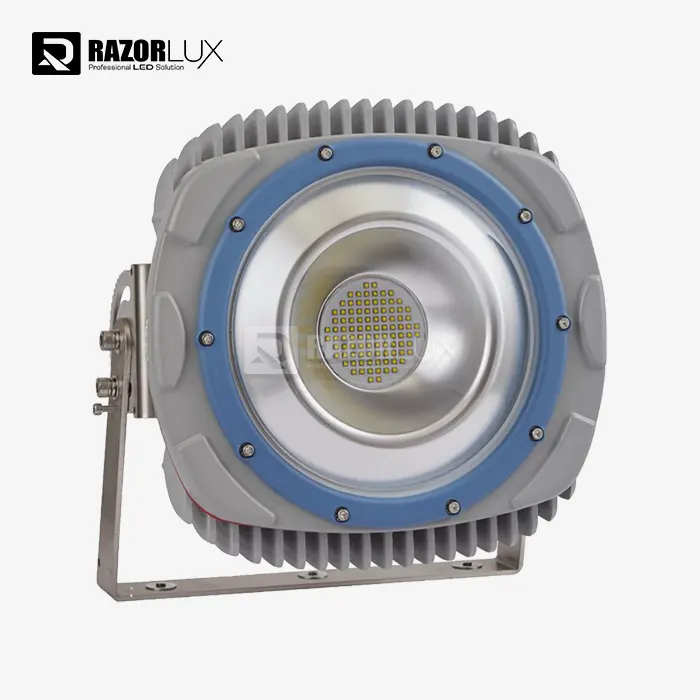
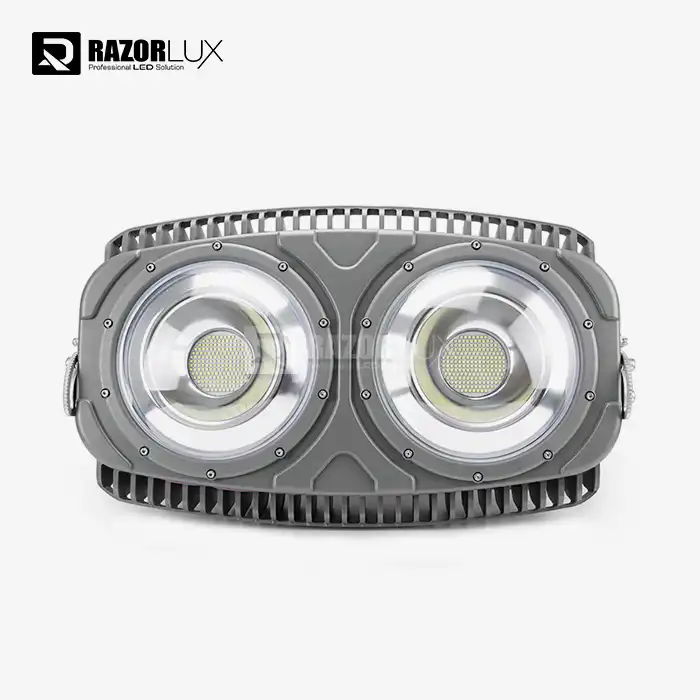
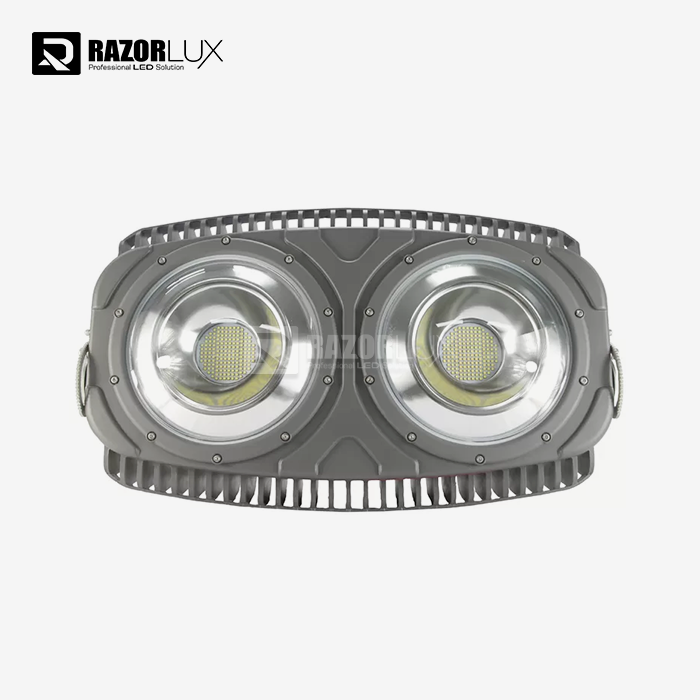
Professional 1000 Watt LED Sports Lights are designed to replace 2000- to 3000-watt metal halide or high-pressure sodium lamps. They provide the same or better lighting while using a lot less energy. These fixtures usually put out at least 130,000 lumens of light. They do this by using advanced LED chip technology and precise optics to spread light evenly over large playing surfaces. Razorlux's RGL-1000A model is a great example of this type of light. It has a stable output of 130,000 lumens at 5700K colour temperature after thermal stabilisation, which means that both players and television cameras can see it clearly. Die-cast aluminium housings with a powder finish are used in the structure design of high-quality 1000 Watt LED Sports Lights. These housings provide excellent temperature management through natural convection. As a result, cooling fans are no longer needed, which cuts down on failure points and maintenance needs. The unique multi-function bracket design lets it be mounted on poles, walls, or ceilings, so it can be used in a variety of settings without the need for special mounting tools.
Energy Efficiency and Long-Term Cost Savings
Newer technologies like fluorescent lighting are not nearly as efficient as LED lighting. A 1000 Watt LED Sports Light gives off 130 lumens per watt, the same amount of useful light as a 2500W metal halide system while using about 60% less energy. Based on average U.S. commercial rates, this means that a stadium with 40 fixtures that run 8 hours a day would save more than $35,000 a year on electricity costs alone. In addition to saving energy directly, LED technology gets rid of the warm-up and cool-down times that discharge lights need. With instant-on technology, lights reach full brightness in seconds, instead of the 15 to 20 minutes that metal halide systems need. This speed is very helpful when there are delays because of bad weather or emergencies that need instant lighting. The longer working lifespan—more than 50,000 hours for good fixtures—dramatically lowers the number of times they need to be replaced. Metal halide lights need to be replaced every 6,000 to 15,000 hours, but LED units keep working at 70% of their original brightness for more than ten years of normal use. This long life is especially useful in high-mast situations where changing lamps requires special lift equipment and poses a safety risk.
Superior Light Quality for Athletic Performance
How well an item renders colours has a direct effect on how athletes see things and make quick choices. As usual, quality 1000 Watt LED Sports Lights have a Colour Rendering Index (CRI) of Ra>75. For broadcast uses, Ra>80 and Ra>90 choices are also available. Higher CRI values make sure that the colours of team uniforms, field markings, and equipment are correctly perceived, which is best for both the players and the fans. Colour temperature ranges from 2700K to 6500K can be changed, which lets building managers make the lights work best for different sports and environments. For fast-paced sports like hockey or basketball, cooler temperatures (5000–6500K) make it easier to see and stay alert. On the other hand, warmer tones (3000–4000K) make training facilities or venues that can be used for more than one thing more comfortable. You can change the beam angle to 40°, 60°, 120°, or an uneven 140°x60° design. This lets you fine-tune the light distribution to fit the mounting height, field size, and spill light limits. Narrow beam angles focus light for stadiums with high masts, while wider spreads work for lower mounting heights or lighting around the edges of a stadium.
Critical Buying Considerations for 1000 Watt LED Sports Lights
Defining Your Application Requirements
Before making a procurement choice, operational factors should be carefully looked at. The mounting height determines the beam angle and optical accuracy needed. For installations above 25 meters, narrow 40° or 60° beam angles are usually needed to keep footcandle levels at ground level and keep light trespass to a minimum. When the mounting height is between 12 and 20 meters, bigger ranges help because they mean fewer fixtures are needed. Certain protections are needed because of the way the environment is. For installations near the coast, you need IP67-rated enclosures that are resistant to corrosion in marine environments. On the other hand, IP65 protection may be enough for inland installations. The RGL-1000A comes with an IP65 basic rating and can be upgraded to an IP67 rating, so the specifications can be aligned with the exposure levels at each site. IK10 impact resistance makes sure that the product will survive vandalism, accidental contact during maintenance, and impacts from heavy weather debris.Voltage compatibility is especially important for foreign projects or places where the electricity infrastructure isn't standard. A wide range of input voltages—AC 80–305Vac or DC 100–400Vdc with an extended range of 500–800Vdc—ensures stable operation even when grid conditions change, so you don't need voltage regulation equipment. This makes installation easier and gets rid of any places where the power transfer system could go wrong.
Essential Performance Specifications
Lumen power is the most basic measure of how well a light is delivering light, but optical efficiency and distribution control are also very important. When placed correctly, the 130,000 lumen output of professional 1000 Watt LED Sports Lights is strong enough for Class II and III sports venues. Check that the lumen values given are stable performance values after thermal balance and not cold-start tests that overstate what the light can actually do. Power factor and harmonic distortion change how well an electricity system works and how much it costs to run. Good LED drivers keep power factors above 0.98 and total harmonic distortion below 10%. This makes sure that power is used efficiently and meets utility standards. A low power factor not only loses energy but could also lead to extra fees on business electricity bills. Environmental compatibility is determined by the operating temperature range. The temperature range of -40°C to +60°C for industrial-grade sports lights means they will work reliably in both cold and hot conditions. If fixtures don't have good thermal management, LEDs or drivers may fail before they should when outdoor temperatures rise above the design limits. This is especially likely to happen in the summer afternoon when the fixtures are directly exposed to the sun.
Certification and Compliance Verification
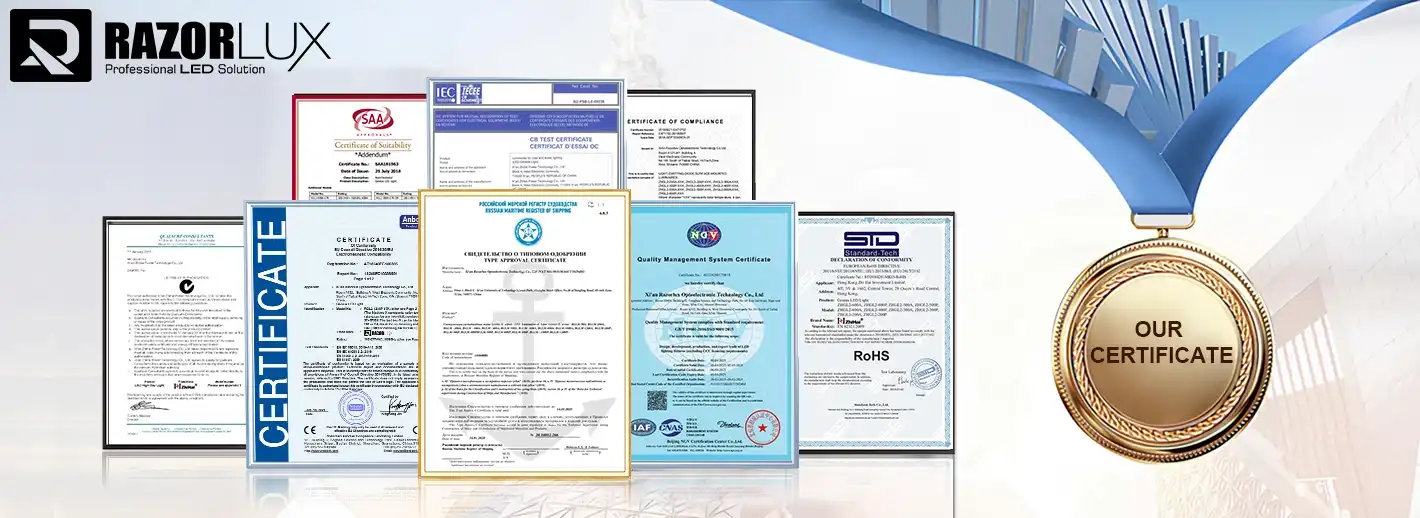
International certifications prove that a product is safe, works well, and doesn't harm the environment. For the North American market, UL and DLC listings show that electricity safety and energy-saving promises have been checked by a third party, while CE marking shows that the product meets safety standards in the European Union. The SAA and C-Tick certifications meet the needs of Australia and New Zealand, and the CB plan licenses make it easier to be accepted in more than one place. Environmental compliance standards, such as RoHS, make sure that goods don't contain any harmful materials. This helps them meet the stricter rules on electrical waste. When a company gets ISO 9001 quality management certification, it means that their manufacturing processes use organised quality controls and methods for ongoing growth. The provenance of a component has a big effect on its reliability and longevity. High-end lights use LED chips from well-known companies and power sources from Meanwell or a similar brand that have been tested and proven to work reliably in the field. Using branded drivers that meet the specifications instead of generic ones directly leads to longer operating life and lower failure rates.
Warranty Coverage and After-Sales Support
Comprehensive guarantee terms show that the maker is sure the product will last. Standard 5-year coverage on LED modules and driver guards against premature component failure, and 10-year housing guarantees show that the structure is expected to last. Carefully read the guarantee terms—some makers put in place strict conditions that make coverage less useful. How quickly problems are fixed depends on the infrastructure for after-sales support. Manufacturers with dedicated technical teams can help with planning the installation, fixing problems, and making the system work better. Total cost of ownership goes down, and operating interruptions are kept to a minimum when replacement parts, full technical paperwork, and installation instructions are easy to get. During the procurement review process, responsive contact is especially helpful. Professionalism is shown by suppliers who give quick quotes, clear answers to technical questions, and detailed specifications. This leads to reliable long-term partnerships.
Where to Buy Reliable 1000 Watt LED Sports Lights: Trusted Suppliers and Platforms
Direct Manufacturer Sourcing Advantages
When you buy directly from well-known makers, you avoid the markups that come from middlemen and get access to technical support and customisation options. Razorlux has been in business since 1998 and has a lot of different manufacturing sites. They are a great example of the benefits of direct sourcing because their purchasing managers work directly with engineering teams that can meet specific application needs and give detailed technical specs. Having a direct relationship with the maker makes it easier to get all the product paperwork you need, like photometric data files (IES/LDT formats), installation plans, and the compliance certificates you need for project requirements and permit applications. This documentation makes the design and review process easier, which shortens the time it takes to finish a job and clears up any questions about what the product can do. Customisation options become accessible when working with manufacturers possessing in-house design and production capabilities. Voltage requirements, mounting hardware configurations, control system integration, and even housing colours can be changed to fit the needs of the project, without having to worry about what the distributor has in stock.
Evaluating Online B2B Marketplaces
Business-to-business tools make it easy to connect with multiple providers and compare prices and features. When using these platforms, give more weight to sellers whose credentials have been checked, who have a history of transactions, and who communicate clearly. Read what other customers have said, paying special attention to what they say about the quality of the product, how reliable the delivery was, and how easy it was to settle disputes. Before committing to an order, ask for thorough specs and proof of certification. Legitimate makers are happy to give you all the technical information you need, but sellers you don't trust might give you vague descriptions or refuse to share performance data that can be checked. Demand to see real test results from reputable labs instead of believing promises that aren't backed up.When buying from suppliers you don't know, sample evaluation is especially helpful. The small cost of evaluation samples lets you check the quality of the build, the optical performance, and the ability to work with existing infrastructure before committing to large orders. When customers ask for samples, most reputable manufacturers will gladly provide them, and the costs of the samples may be applied to future orders for production.
Authorized Distributor Networks
Regional wholesalers do more than just make sure that products are available. They also offer localised technical support, keep supplies on hand for quick delivery, and handle warranty service without having to ship the product internationally. Authorised distributor links make sure that customers can get real products with full maker support instead of gray-market goods whose origins aren't clear. When choosing wholesalers, check directly with manufacturers to make sure they are authorised. Authorised partners get expert training, access to guarantee support systems, and first choice when supplies are low. They can also make it easier to talk to factory tech teams when certain apps need specific help. Distribution partnerships are especially helpful for projects that need to be maintained or expanded over time. Local inventory availability cuts down on long wait times for replacement fixtures or extra units, and established relationships make it easier to place repeat orders and make sure that prices and terms are always the same.
International Procurement Logistics
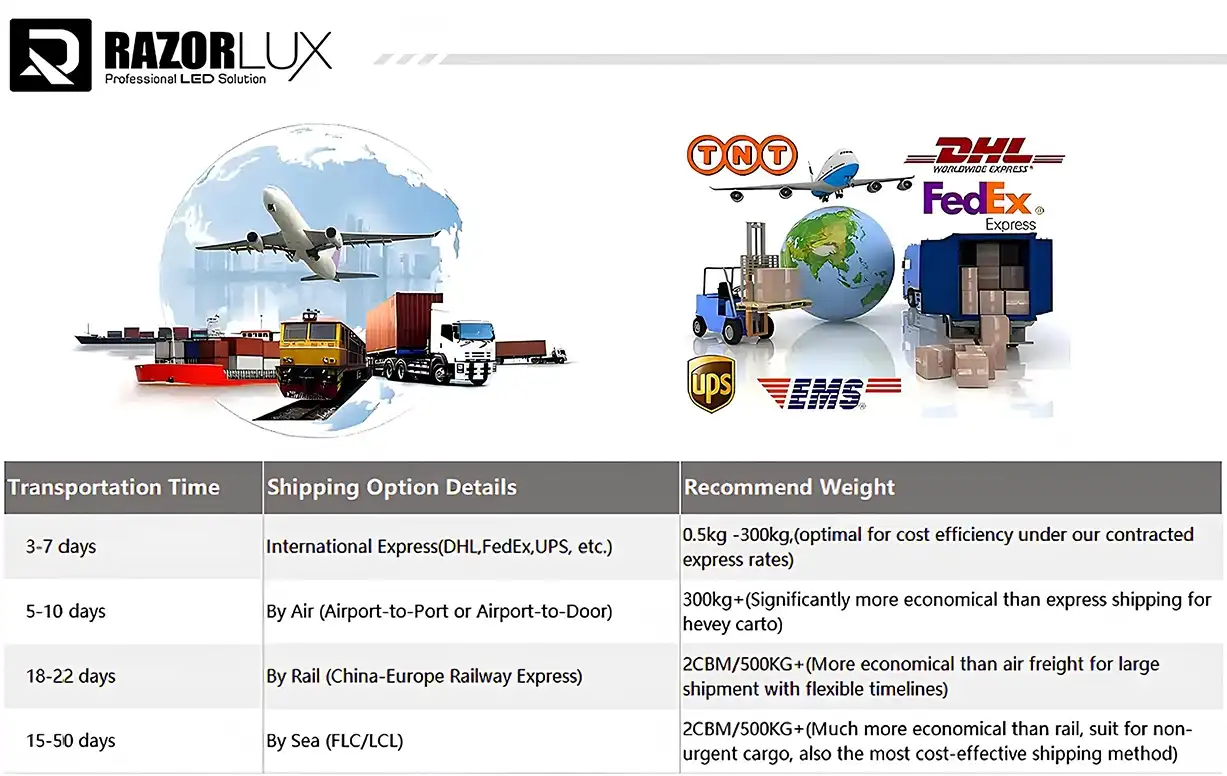
When you buy something across borders, you have to think about more than just the product's specs. Shipping methods weigh the cost of delivery against the speed of delivery. Sea freight is the most cost-effective way to move big orders with open schedules, while air freight is better for urgent projects even though it costs more per unit. Manufacturers with a lot of experience can help with sending plans and paperwork, which makes clearing customs easier. The definitions of Incoterms make it clear who is responsible for shipping costs, insurance, and customs duties. When you buy something FOB (Free On Board), you have to plan for foreign shipping and pay for it. But when you buy something DDP (Delivered Duty Paid), all costs are covered until the goods are delivered. By understanding these terms, you can avoid costs you didn't expect and get a better idea of where risks are transferred during shipping. Expectations for lead times should take into account production plans, delivery times, and possible delays at customs. Standard products may ship in two to three weeks, but customised goods may take four to six weeks or longer, based on how complicated they are. Manufacturers can set priorities for production and speed up handling when needed when they have clear information about project schedules.
Comparison Guide: Selecting the Best 1000 Watt LED Sports Light for Your Needs
Evaluating Wattage Options for Different Venues
The best fixture wattage relies on the area's size, the height at which it will be mounted, and the amount of illumination that is wanted. To give you an idea, 1000 Watt LED Sports Lights work well at installation heights of 20 to 35 meters in stadiums, giving off 200 to 500 lux at ground level (based on the number of fixtures and where they are placed). Facilities with 12–18-meter poles may be able to get the same amount of light from 500–750W fixtures with wider beam spreads, which would lower the initial cost and the long-term cost of energy use. Instead of simple measurements, the link between fixture power and covering area is based on photometric principles. The coverage area doesn't double when the fixture's wattage is doubled because the inverse square law says that as distance from the source increases, light intensity decreases. Photometric software is used in proper lighting design to model specific setups, figuring out the best fixture count, placement, and shooting angles to get even lighting with little over-lighting. When figuring out cost-effectiveness, you have to look at the whole system's costs, not just the prices of the fixtures. Higher-wattage lights cost more per unit, but they are easier to install because they need fewer mounting frames and electrical connections. When you add up the costs of poles, wires, and labour, a job that needs eight 1000W fixtures may end up being cheaper overall than one that needs sixteen 500W units, even though the individual fixture costs are lower.
Key Performance Features for Outdoor Applications
Professional sports lighting is different from general-purpose fixtures because it can withstand the weather. The IP67 grade makes sure that there is no dust on the product and that it can withstand being submerged in water up to 1 metre deep for 30 minutes. This is very important for fixtures that might be exposed to wind-driven rain, snow, or high-pressure washing during maintenance. Even faucets with an IP65 rating are safe from most weather conditions because they can withstand water jets coming from any direction without letting the water get inside. Corrosion resistance is very important in coastal areas or chemically exposed industrial settings. Salt spray, acidic precipitation, and airborne contaminants can't damage marine-grade powder coating, stainless steel gear, or electrical sections that are blocked off. Quality makers test their products for 1000 hours with salt spray, which proves that they will last for a long time in conditions that speed up rusting and are the same as years of being exposed to salt water at the coast. Vibration tolerance affects how reliable something is in places with a lot of wind or where mechanical stress is present. Solid-state LED technology naturally resists vibration better than filament or arc-based sources, but the overall durability depends on how well the fixture is built. Strong die-cast housings, vibration-damped mounting gear, and manually secured internal components make sure that the fixture can keep working even in environments that would damage a less durable one.
| Feature Category | Premium Specifications | Standard Specifications | Impact on Performance |
|---|---|---|---|
| Ingress Protection | IP67 (submersion-resistant) | IP65 (jet-spray resistant) | IP67 recommended for coastal or harsh weather zones; IP65 adequate for most inland applications |
| Impact Resistance | IK10 (20 joules) | IK08 (5 joules) | IK10 essential for vandalism-prone areas and low mounting heights |
| Corrosion Protection | Marine-grade coating + stainless steel | Standard powder coating | Marine-grade treatment mandatory for coastal installations within 10km of saltwater |
| Operating Temperature | -40°C to +60°C | -20°C to +50°C | Extended range necessary for extreme climate regions |
| Voltage Range | 80-305Vac universal input | 100-277Vac standard | Wide voltage acceptance improves compatibility with variable grid conditions |
Color Temperature and Lighting Environment
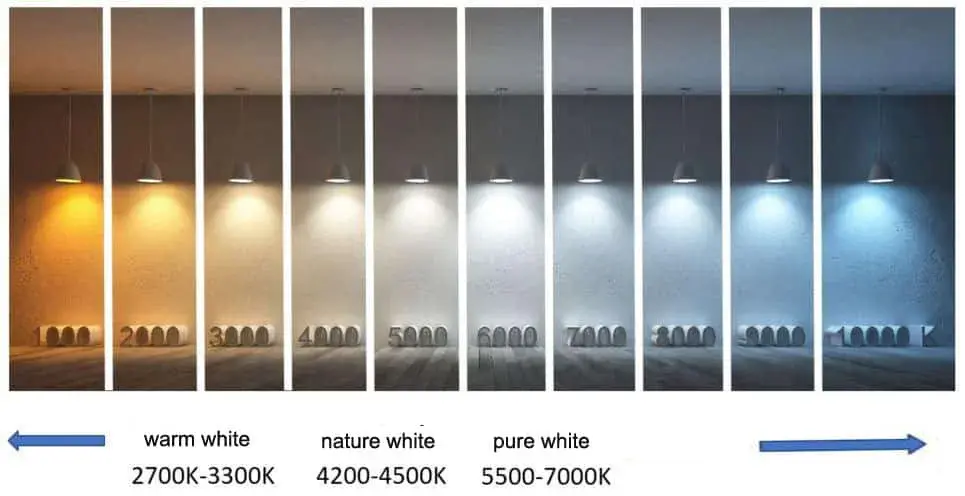
The colour temperature you choose affects how well you can see, how the room feels, and how well you follow the rules. Cool white lighting (5000-6500K) gives off clear, bright light that is best for professional sports broadcasts and fast-paced activities that need sharp vision. The blue-rich range makes contrast and awareness better, but long-term contact may make the world harsh to look at.Neutral white (4000–4500K) has balanced properties that make it good for multi-use spaces that host both competitions and community events. This middle temperature renders colours well and makes the viewing experience comfortable for both participants and spectators in a wide range of settings.Warm white (2700–3500K) creates a friendly atmosphere that works well in exercise centers, training areas, and other places that value comfort over sight. Even though warmer temperatures are fine for most activities, they might not meet the needs of broadcast-quality lighting or sites for top competitions. Adjustable color temperature capabilities, available in premium fixtures, provide flexibility to optimize lighting characteristics for different events without requiring multiple fixture sets. This versatility proves valuable for multi-use venues hosting diverse activities with varying lighting preferences.
Advantages and Limitations of High-Power LED Systems
When compared to older technologies, LED sports lighting has huge advantages. Cutting energy use by 50–70% has a direct effect on running costs and helps with sustainability efforts and carbon reduction goals. Getting rid of delays for warm-up and maintenance cuts down on operational complexity and makes the facility more responsive. Better light quality through high CRI, less glare, and better regularity makes sports more enjoyable for both players and fans. Because broken lamps don't contain dangerous materials like mercury, they are easier to get rid of and don't pollute the environment. However, LED systems need more money up front than standard options—a good 1000 Watt LED Sports Light could cost three to five times as much as a metal halide system of the same size. When making a purchase decision, it's better to look at the total cost of ownership over the whole life of the system instead of just comparing the costs of buying it. LED systems usually pay for themselves in two to four years and save a lot of money over their useful life. This is because they use less energy, require less maintenance, and need to be replaced less often. Thermal control is still very important for long-term performance. Even though LED technology makes less heat than incandescent sources, the focused nature of LED panels means they need good heat escape to keep junction temperatures from rising, which speeds up lumen loss. To keep LED junction temperatures within safe working ranges, high-quality lights use thermal interface materials, oversized heat sinks, and better airflow paths.
Technical Specifications: Razorlux RGL-1000A LED Sports Light
Comprehensive Performance Data
The Razorlux RGL-1000A is industrial-grade sports lighting that was made for tough situations where efficiency and dependability can't be sacrificed. The stable light output of 130,000 lumens and 130 lumens per watt make this fixture a good replacement for 2000–3000W metal halide systems, even though it only uses 1000W of power (900W for the LEDs and 100W for the driver).
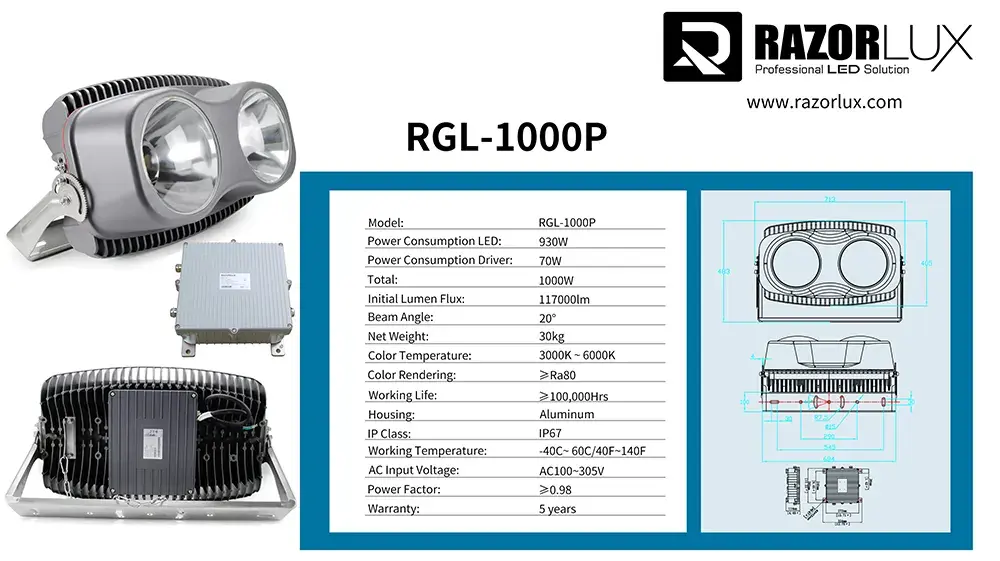
| Specification | Value | Specification | Value |
|---|---|---|---|
| Model | RGL-1000A | Power Consumption | 1000W (900W LED + 100W driver) |
| Luminous Flux | 130,000 lm (stabilized) | Luminous Efficacy | 130 lm/W |
| Beam Angle Options | 40°, 60°, 120°, 140°x60° | Color Temperature | 2700K-6500K (customizable) |
| Color Rendering | CRI ≥Ra75 (Ra80/Ra90 available) | Working Lifespan | >50,000 hours (L70) |
| IP Rating | IP65 standard (IP67 upgradeable) | IK Rating | IK10 (20 joule impact) |
| Input Voltage | AC 80-305V / DC 100-400V / DC 500-800V | Power Factor | ≥0.98 |
| THD | <10% | Operating Temperature | -40°C to +60°C |
| Housing Material | Die-cast aluminum + powder coating | Mounting Bracket | Stainless steel multi-position |
| Dimensions | 671×405×379 mm | Net Weight | 29 kg |
| LED Warranty | 5 years | Driver Warranty | 5 years (Meanwell) |
| Housing Warranty | 10 years | Certifications | CE, RoHS, SAA, C-Tick, UL, DLC, CB, ISO:9001 |
Application Versatility
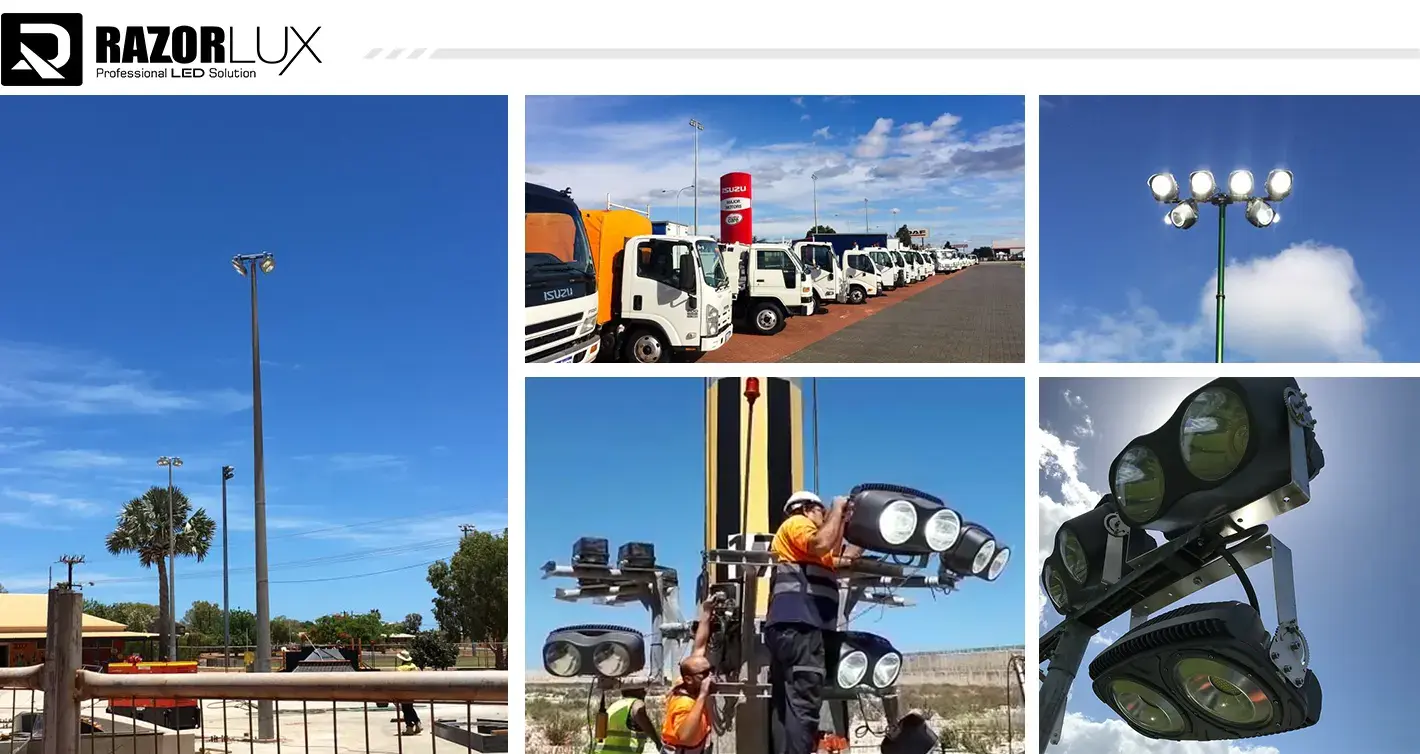
The patented multi-function design of the RGL-1000A makes it work in a wide range of installation settings. Mounting brackets that can be adjusted allow for pole-top, trunnion, yoke, or pendant designs without the need for special tools. This adaptability makes inventory easier for site managers who are in charge of more than one type of place. It can accept a wide range of voltages (80–305Vac), so it works with a lot of different types of electrical infrastructure. This includes international voltage standards, off-grid systems with changing voltages, and DC power applications in renewable energy installations. The higher DC voltage range (500–800Vdc) is useful for specific tasks in transportation systems and industrial process settings. Thermal performance across the full -40°C to +60°C operating range keeps the light output stable in harsh environments, from arctic outdoor facilities to heated industrial spaces that are enclosed. Tolerating up to 95% relative humidity keeps condensation-related failures from happening in tropical climates or indoor pools.
Quality Components and Construction
The choice of components has a direct effect on how reliable and consistent the system will be in the long run. The RGL-1000A has Meanwell power sources, which are known as the best LED drivers in the business and have been used in millions of units with no problems. This part choice was made on purpose to prioritise operating continuity over the small cost savings that come with generic options. The die-cast aluminium housing is structurally rigid and has excellent thermal conductivity, which makes it easy for heat from the LED arrays to escape to the outside world. Multi-layer powder coating protects against UV damage, chemical attacks, and mechanical wear and tear while keeping its good looks over a long period of time. Stainless steel fastening gear is resistant to corrosion and keeps working properly in harsh conditions. The modular internal design makes it easier to do maintenance and replace parts if they need to be. This supports environmentally friendly practices by repairing instead of throwing away.
Real-World Applications and Case Studies
Professional Sports Stadium Installations
For professional competition and broadcast production, lighting systems at major sports venues have to meet strict performance standards. Depending on the sport, Class I facilities must have minimum maintained illuminance levels of 500 to 2000 lux and uniformity ratios (minimum to average illuminance) of 0.6 or better to get rid of dark spots and shadows that hurt the quality of play and camera exposure. When built and placed correctly, the RGL-1000A's precise optics and high light output make these high standards possible. A normal football field with 120–160 fixtures on four corner towers that are 35 meters tall can get 800-1200 lux of horizontal illumination with uniformity above 0.7, which meets FIFA Class I standards for international games and TV broadcasts. For high-frame-rate television cameras and slow-motion playback systems, performance that doesn't flicker is important. Good LED drivers keep the current flow steady with little ripple. This gets rid of the flickering that comes from discharge lights, which makes video footage look strobish and makes people with photosensitive conditions uncomfortable to look at.
Industrial and High-Mast Lighting Applications
1000 Watt Led Sports Lights are also very important in industrial yards, port facilities and transportation infrastructure, not just in sports venues. For security cameras and 24-hour operations, container ports need to make sure that all of their huge storage areas are always lit up. In high-mast setups with poles 30 to 40 meters high, 4 to 8 fixtures are placed on each pole to light up rings 60 to 80 meters in diameter with 20 to 30 lux of steady illumination. Industrial-grade sports lights are built to last and are protected from the environment, so they can handle the rough conditions of these uses, like vibrations from vehicles, flying particles, temperature changes, and limited access for upkeep. Continuous-duty facilities benefit most from LEDs' long life and dependability because they avoid the problems with productivity and safety that come with replacing lamps on very high poles all the time. Instant-on capability gets rid of the pauses that come with HID systems, letting you get full lighting right away after the power goes out or you turn it off by hand. This responsiveness improves the ability to respond to security threats and the flexibility of operations in industrial settings.
Specialized Venue Requirements
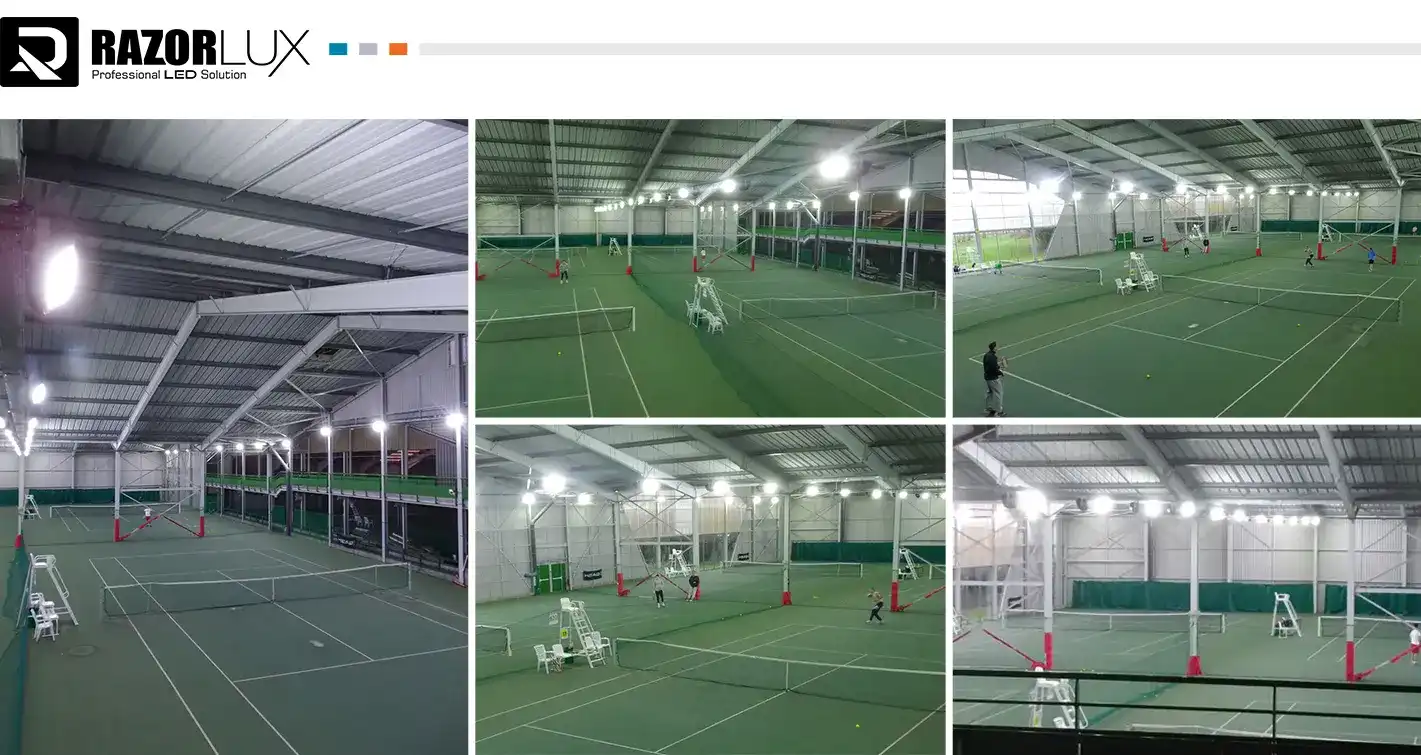
Indoor stadiums, gyms, and ice rinks are special places because they need to be well-lit, look good, and be comfortable for people who are watching. Quality 1000 Watt Led Sports Lights have low glare and precise beam control, which makes the playing surface bright and even while limiting the amount of light that spills into seating areas and makes it hard to see.In ice rinks, the playing surface stays close to freezing while the air above it hits 15-20°C. This means that the fixtures have to work well even when the temperature changes. Its wide operating temperature range means that the RGL-1000A always gives the same output, no matter what the weather is like where you are.It's easier for fixtures to fit into existing buildings when they have small profiles and clean designs that match the look of a modern building instead of taking over the space with their industrial bulk. There are different beam angles that can be used to make the light spread fit the size and shape of the floor.
Conclusion
Sourcing reliable 1000 Watt Led Sports Light requires careful evaluation of technical specifications, manufacturer credentials, and long-term support capabilities. Quality fixtures deliver transformative benefits through energy efficiency, superior light quality, and reduced maintenance costs. By partnering with established manufacturers like Razorlux, procurement managers ensure their facilities receive high-performance lighting solutions that meet professional standards while generating significant long-term economic value. As the sports and industrial sectors continue transitioning toward sustainable infrastructure, investing in professional-grade LED technology represents the most effective strategy for achieving optimal illumination and operational excellence.
FAQ
How do I determine if a 1000W LED fixture suits my stadium requirements?
How well the lights work depends on the type of sport, the level of competition, and the size of the venue. Professional places that host high-level competitions and shows usually need 500 to 2000 lux, while recreational venues can work well with 100 to 300 lux. Choosing the right fixture is directly related to the height of the pole. Poles higher than 25 meters usually need 1000 Watt Led Sports Lights with narrow beam angles to provide enough ground-level illumination, while lower mounting heights can get the same results with lower-wattage lights and wider distributions. Hire skilled lighting designers to use photometric software to model your exact setup. Make sure that the suggested systems meet the standards that apply, such as EN 12193 for European installations or IES suggestions for North American projects.
What warranty and support should I expect from reputable suppliers?
Professional-grade light fixtures should come with at least a 5-year warranty that covers the LED modules and power sources. Some high-end makers offer housing guarantees that last up to 10 years. The warranty terms should make it clear what the coverage conditions are, how to get a replacement, and when you can expect a response. Check the manufacturer's after-sales support, such as technical help during installation, troubleshooting advice, and the availability of replacement parts. Suppliers like Razorlux have support teams that are always available to help with communication and technology issues. These teams make it easier to complete projects and provide long-term operating support.
Can these fixtures integrate with smart lighting control systems?
Modern LED sports lights have more and more control features that let you operate them from a distance, dim them, and connect them to building management systems. For theatre lighting, the RGL-1000A works with 0-10V analogue control, DALI (Digital Addressable Lighting Interface), and DMX512 dimming protocols. These capabilities enable energy optimization through scheduling and daylight harvesting, preset scene configurations for different event types, and dynamic lighting effects for entertainment events. Specify control requirements during procurement to ensure selected fixtures include necessary interfaces, or confirm compatibility with third-party control systems deployed in your facility.
Partner with Razorlux: Your Trusted 1000 Watt LED Sports Light Supplier
Razorlux delivers proven reliability for procurement managers seeking dependable high-intensity illumination solutions. Our RGL-1000A model combines exceptional 130 lm/W efficiency with robust IP67-capable construction, backed by comprehensive 5-year warranties and responsive technical support. With over 200 patents and manufacturing excellence since 1998, we provide the quality and consistency your projects demand. Our expert team assists with application-specific recommendations, detailed technical documentation, and volume pricing structures that optimize project budgets. contact us at sam@razorlux.com to discuss your requirements, request evaluation samples, or access our complete product specifications and certification documentation for seamless procurement processes.
References
1. Illuminating Engineering Society (IES). (2019). The Lighting Handbook: Reference and Application, 10th Edition. Illuminating Engineering Society.
2. International Commission on Illumination (CIE). (2019). CIE 150:2019 — Guide on the Limitation of the Effects of Obtrusive Light from Outdoor Lighting Installations. Commission Internationale de l’Éclairage.
3. European Committee for Standardization (CEN). (2018). EN 12193:2018 — Light and Lighting: Sports Lighting. European Committee for Standardization.
4. U.S. Department of Energy (DOE). (2023). LED Lighting: Energy Efficiency and Long-Term Performance. Office of Energy Efficiency & Renewable Energy.
5. International Electrotechnical Commission (IEC). (2013). IEC 60529: Degrees of Protection Provided by Enclosures (IP Code). International Electrotechnical Commission.
6. DesignLights Consortium (DLC). (2024). DLC Technical Requirements for LED Lighting Products. DesignLights Consortium.
 VIEW MORE500W Halogen Floodlight Led Equivalent
 VIEW MOREled volleyball lights
 VIEW MORE120 Volt Led Outdoor Flood Lights
 VIEW MORELED Flood Lights For Sports Field
 VIEW MOREConstruction Emergency Led Explosion Proof Light 80w 8000lm Paint Booth Light
 VIEW MORE400w Dimmable LED Flood Light High Lumen Narrow Beam
 VIEW MORE400W Led Floodlight
 VIEW MOREMulti Colored Flood Lights Outdoor