

_1750326878398.png)

Best Industrial LED Flood Lights Outdoor for Large Facilities
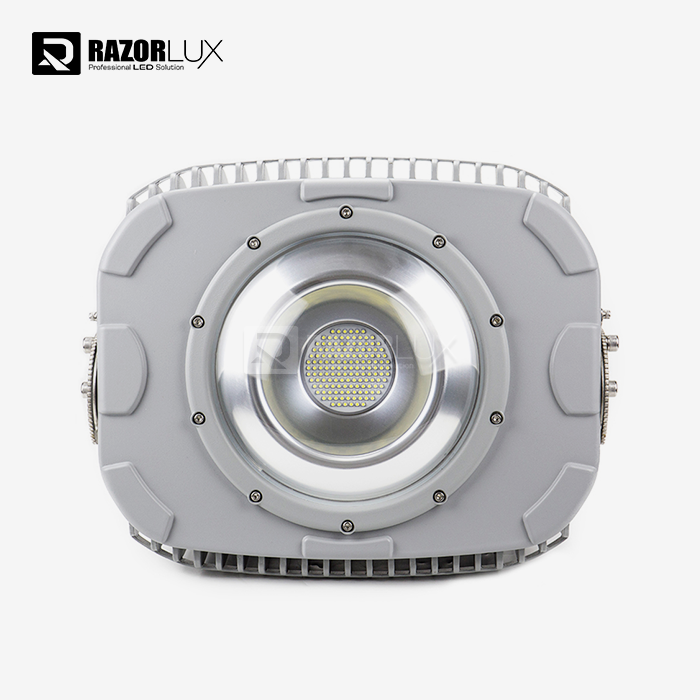
Big businesses need to get the right high-intensity outdoor lighting system for their needs. This can affect how well they work, how safe they are, and how much they cost in the long run. Industrial flood lights made of LEDs: Outdoor lights that light up big spaces like docks, workshops, transportation hubs, and ocean sites use very little power. They use cutting-edge solid-state lighting technology to do this. Industrial Led Flood Lights Outdoor Metal halide or high-pressure sodium lights that are no longer made are dull and old LED lights are brighter and last longer. It doesn't last as long or shine as brightly when it's rough. Industrial, marine, and heavy-duty areas are just a few of the rough places around the world that Razorlux's LED flood lights are made to work.
Understanding Industrial LED Flood Lights Outdoor
When you have a lot of industrial space, you need outdoor flood lights that work well to keep things safe, clear, and busy. There is no water, salt spray, or mechanical stress that these light fixtures can't handle. They are made to work in hot and cold temperatures. Even so, they still give off steady, good light.
What Makes Industrial LED Flood Lights Different from Standard Outdoor Lighting
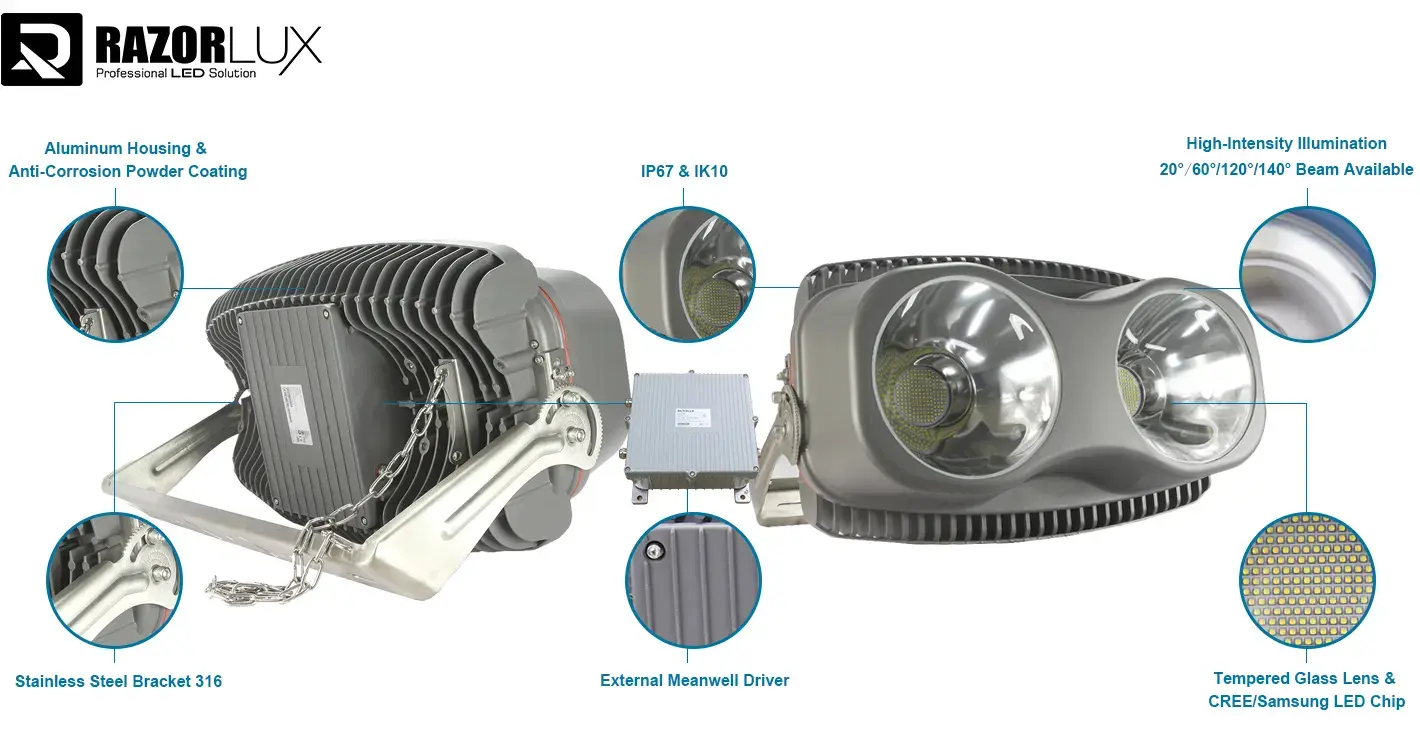
In many important ways, they are not the same as flood lights for homes or businesses. They can run all the time, 24 hours a day, seven days a week, thanks to modern LED chipsets like SMD3030 or 5050 and strong heat control systems. Heavy-duty metal that has been powder-sprayed is mostly used to make the housing. Some of them meet IP65 or IP67 standards, which means they keep water and other things out. They use business-level drivers from well-known names like Meanwell to make sure that industrial flood lights work well with a wide power range (AC 80-305V or DC 100-800V). The fact that old HID systems always need to be fixed is a big issue that this design theory solves. It also works right away to make buildings safer and use up to 70% less energy. You don't have to wait for the lights to warm up.
Key Technical Specifications That Matter
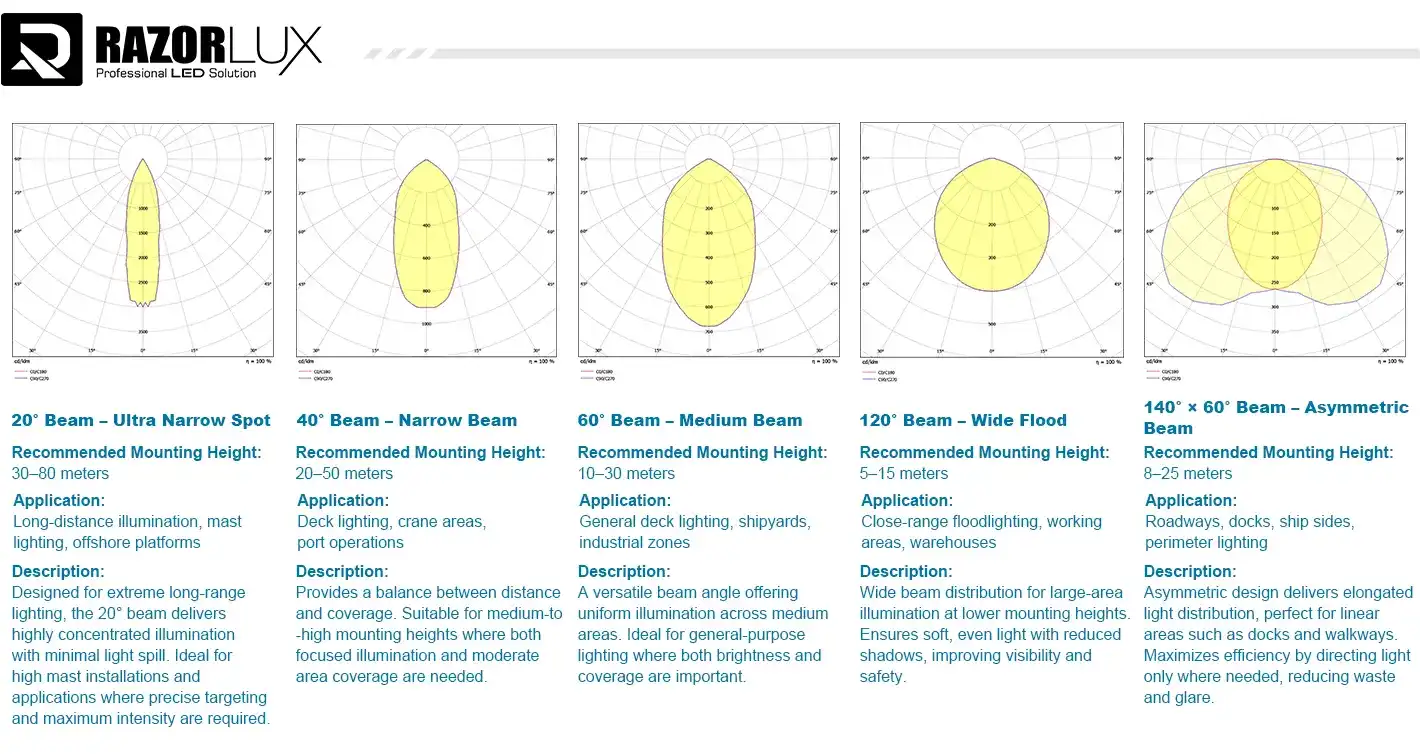
People whose job it is to buy things for big buildings need to remember a few key points. It tells you how much light is being made. For work, it takes between 100,000 and 130,000 watts to light up large yards or bus stops. lm/W stands for lumens per watt, which is a unit used to measure how much light something gives off. Because it gives off 130 lm/W or more, they save a lot of money over the lamp's life. You can change the colour temperature based on the job and the light. It goes from 2700K (warm white) to 6500K (cool sunshine). If the Colour Rendering Index (CRI) is above 75, you can see colours correctly. This is very important for making sure safety and quality. The beam angles are 40°, 60°, 120°, and 140°x60°, and they are not all the same. You can spread the light in a way that works with the shape of your building this way. That gets rid of the bad light and makes the ground floor brighter.
Durability and Environmental Protection Standards
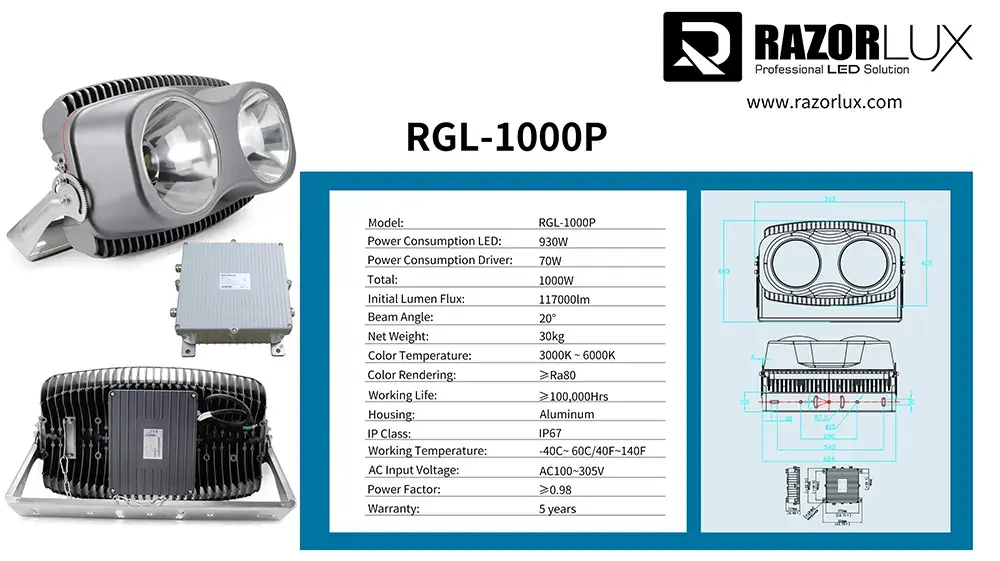
Inside a plant, the lights must still work even if it's wet, dusty, moving, or very hot or cold. You can see how hard it is for solids and water to get into a device by its IP grade. Lights that can handle water and dust jets can be used anywhere outside of an IP65-rated plant. You can protect yourself from short-term floods if you get IP67. It works great in places that get a lot of water or are near water. IK scores are also very important since they show how hard something is to hit. The same amount of force is needed to drop something 5 kg 40 cm, which is 20 joules. They can be used in places where a lot of people walk by or where someone might touch something by accident. It can be anywhere from -40°C to +60°C, so make sure the gear works well in both Arctic shipyards and Middle Eastern refineries. The engines can always start, even when they are cold, because they have low-temperature motors that are made just for that purpose.
How to Choose the Best Industrial LED Flood Lights Outdoor for Large Facilities
To pick the best lighting, you need to be organised and think about your technical needs, the area, and the total cost of ownership.
Assessing Your Facility's Lighting Needs
Before you can choose, you need to do a full lighting check. Make a note of how high the lights need to be, then measure the space. Then, take a look around to see what could be blocking the light. Different parts of the building need to be lit up. Landing docks need even lights so cranes can work safely. Not-quite-straight beams can cover more ground and make the area around a house less bright. Find out what the building is used for. Buildings that have more than one shift can benefit from moving sensors or systems that use less power when not in use. How safe the materials you pick are will rest on things like how close you are to the water, chemical fumes, or very hot or very cold weather. As you plan your new installs, make a list of the things that are already there. This will help you make sure that they will work with the things that are already there.
Comparing Wattage, Lumen Output, and Energy Efficiency
You should know how these things are connected before you decide what to do. The Razorlux RGL-1000 One type is an outdoor 1000W industrial LED flood light that puts out 130,000 lumens and 130 lumens per Watt. This much light can be made with half as much power as two 2200–2500W metal halide lamps. A lot of money can be saved because of the big drop in power use. If you leave ten of these lights on for a year at a time, they will save about 48,000 kWh of energy compared to old lights. That's a huge cut in the cost of electricity. Look at the Total Harmonic Distortion (THD) number when you have to decide what to do. When the number is less than 10%, it is safe to use electricity. It won't hurt electronics or put more stress on the generator. The energy being sent is being used well if the power factor is more than 0.98. This means you won't have to worry about heavy energy costs that come with older lighting types. This can be done with a good driver, like a Meanwell unit. The light source will stay the same for at least 50,000 hours if this is done. Prices slowly go down over time as things get cheaper. That's not going to happen now.
| Performance Parameter | Razorlux RGL-1000A | Typical Metal Halide | Advantage |
|---|---|---|---|
| Sized Power | 1000W | 2200W to 2500W | About 55 to 60% less energy is used |
| Effectiveness that shines | 130 lumens/W | 50–70 lm/W | 86 to 160% more efficiency |
| How Long Operations Last | 50,000 hours or more | 10,000 to 15,000 hours | 3–5 times longer life span |
| Get ready to warm up | Instant-on | From 3 to 10 minutes | Right away, full brightness |
| When to do maintenance | Not much | Changing lamps a lot | Less money spent on work |
Since these specs were met, LED technology has become the standard for modern companies that want to balance performance with cost.
Evaluating Protection Ratings and Build Quality
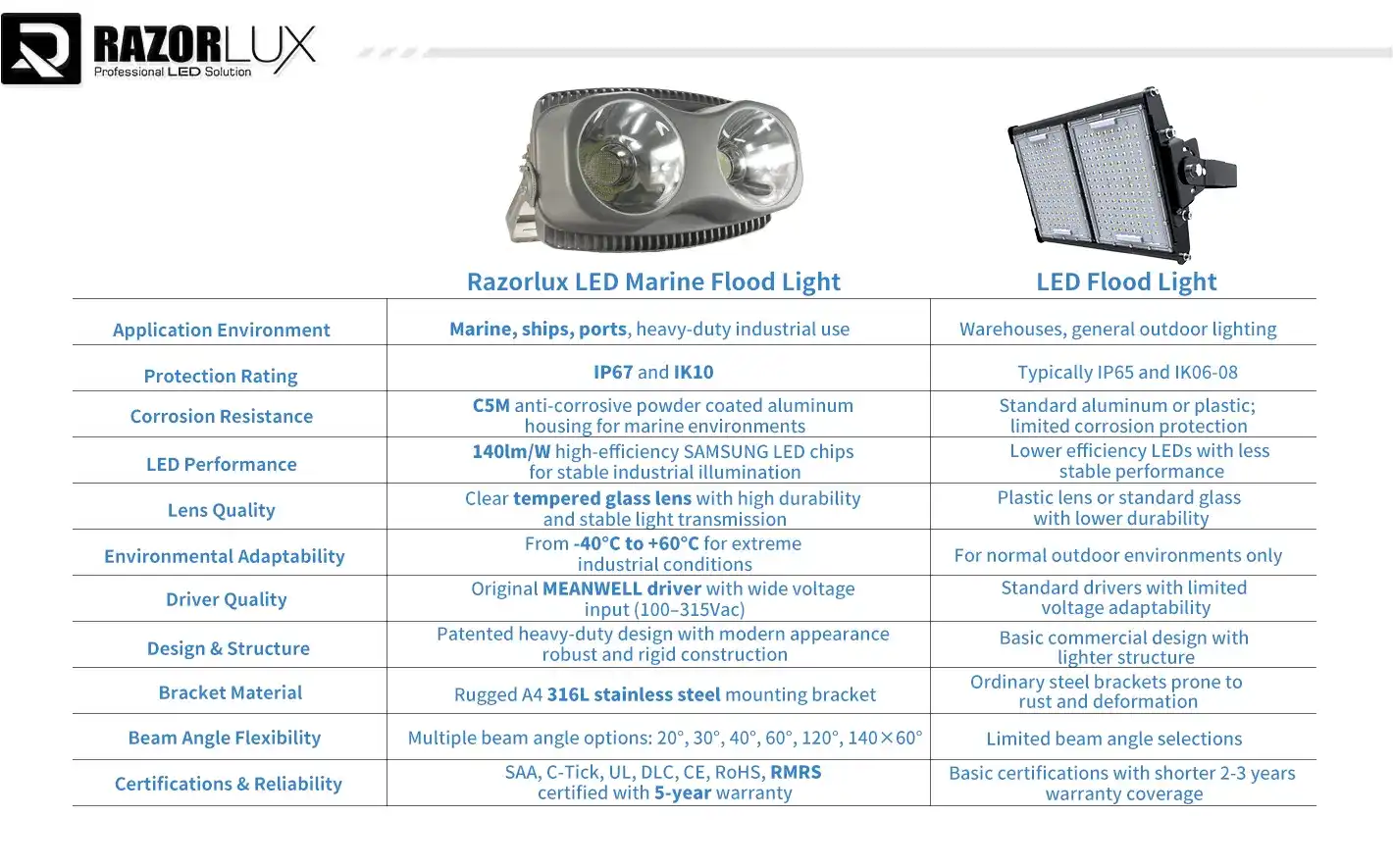
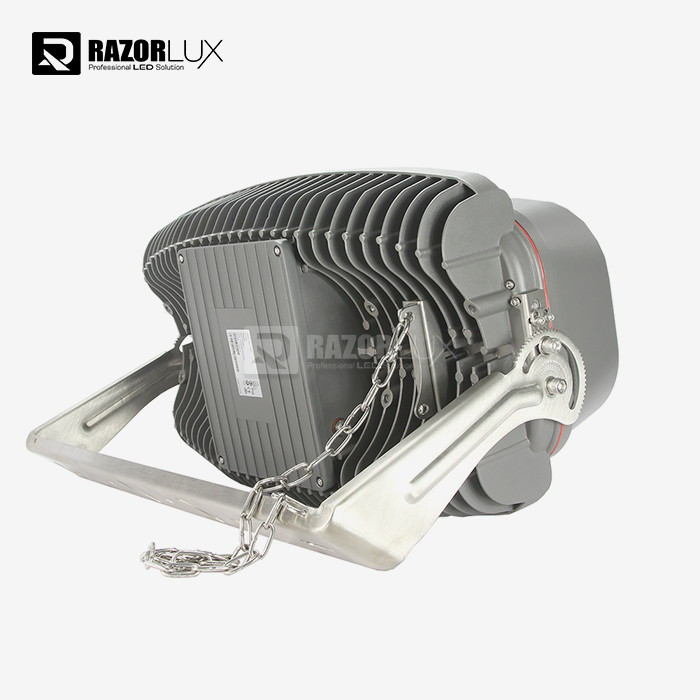
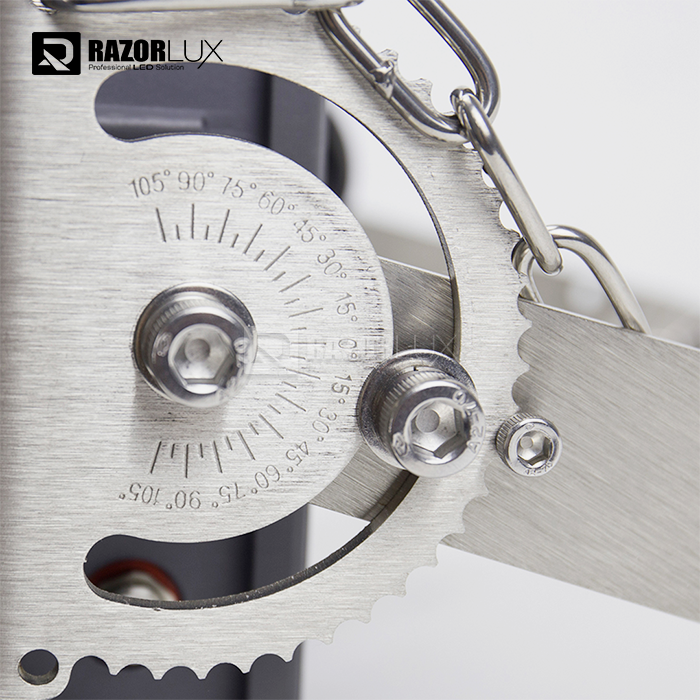
Both safety and the total cost of ownership are directly linked to how well the car was built. Take a look at how the house is built. Marine-grade metal that has been covered in multiple layers of powder is better at keeping rust away than steel or plastic. The bracket system needs to be made of stainless steel and have adjustable angles for fixing. It will be easy to move the brackets if the building plan changes, and the brackets can be put in the right place during installation. Designing for thermal management is important, but it's easy to forget about. For example, finned heat sinks with the right amount of surface area stop junction temperature buildup, which would otherwise speed up colour shifting and lumen loss. There are different thermal routes for the LED module and driver section in high-end lights. This makes the parts last longer. When optical systems use tempered glass lenses with anti-reflective coatings, they protect the inside parts and keep the light transfer strong. How well the seal works in the long run rests on how good the gasket is. Silicone or EPDM gaskets that can handle UV light, ozone, and changing temperatures will keep their IP ratings for the life of the fixture. Regular rubber gaskets, on the other hand, may harden and crack after just a few months.
Certification Requirements for Industrial Applications
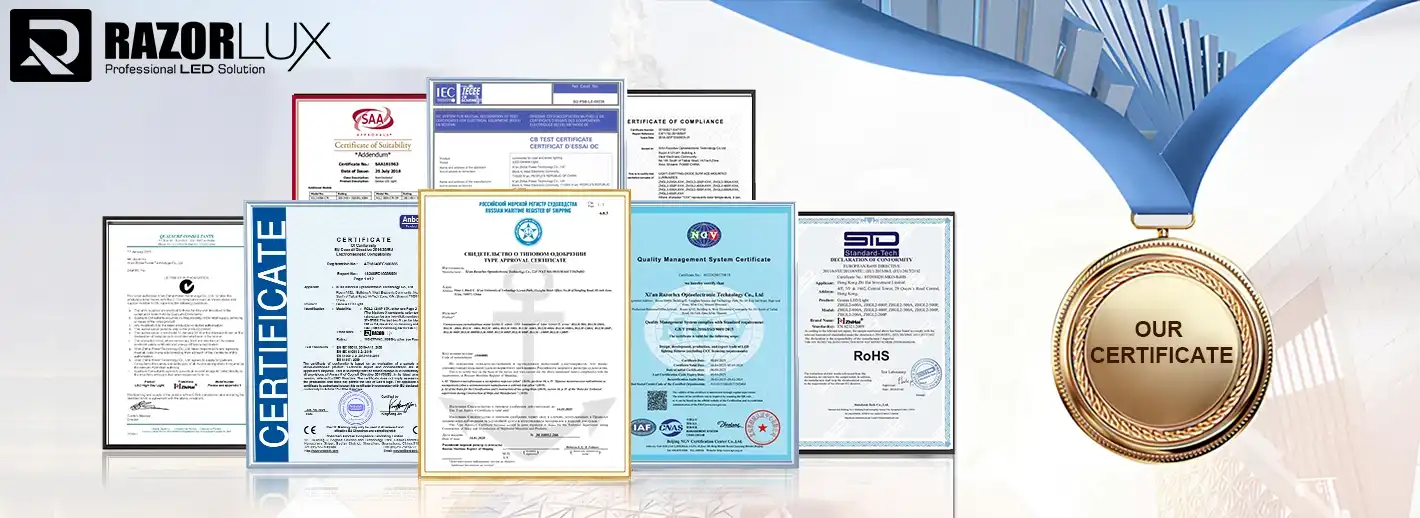
With an international license, you can be sure that safety, speed, and compliance with the law have been checked by a third party. If a product has the CE mark, it means that it follows the European Union's rules for safety, health, and the environment. RoHS certification shows that harmful substances like lead and mercury are not present, which is becoming more and more important for people who care about the environment when they buy things. For areas in North America, you need to have UL and DLC entries. Most of the time, you need to be eligible for DLC to get utility refund programs that can pay for 20–40% of the cost of installation. Certifications that are specific to naval use are needed. Approvals from DNV-GL (Det Norske Veritas - Germanischer Lloyd) and ABS (American Bureau of Shipping) make sure that the product can be installed on ships by checking how well it works in sea settings and how well it resists vibrations. You need to have SAA and C-Tick licenses to sell in Australia and New Zealand. Industrial LED Flood Lights Outdoor: The ISO 9001 certification for the factory makes sure that the same steps are always taken to check the quality. This makes it less likely that batches will be different, which could make upkeep or future growth harder.
Installation and Maintenance Best Practices for Industrial LED Flood Lights
If you install and take care of the lighting system correctly, it will work well, keep people safe, and give you a good return on your money.
Pre-Installation Planning and Safety Considerations
Careful planning is the first thing that needs to be done for an installation to go well. Check the mounting structure on-site to make sure it can hold the 29 kg weight of the device and its installation tools. This is a lot of wind load that needs to be handled properly. Make sure the electrical equipment is up to speed. Check the circuit protection, wire gauge, and pipe size to make sure they can safely handle the whole load that is linked. For photometric modelling, using software like DIALux or AGi32 can help you figure out where to put fixtures, how to shoot them, and how their beams should be shaped before you buy them. This way, you can avoid having to pay a lot of money to move them later. Work with the people who run the building to schedule the work for times when it will cause the least amount of trouble. Set up areas for the equipment to be staged and use the right lifts, ladders, or high work platforms to make sure that the mounting spots are safe to get to. The installation teams should have the right licenses and know how to safely connect to the building's power systems. Check the building's safety rules and the local electricity codes to make sure.
Step-by-Step Installation Process
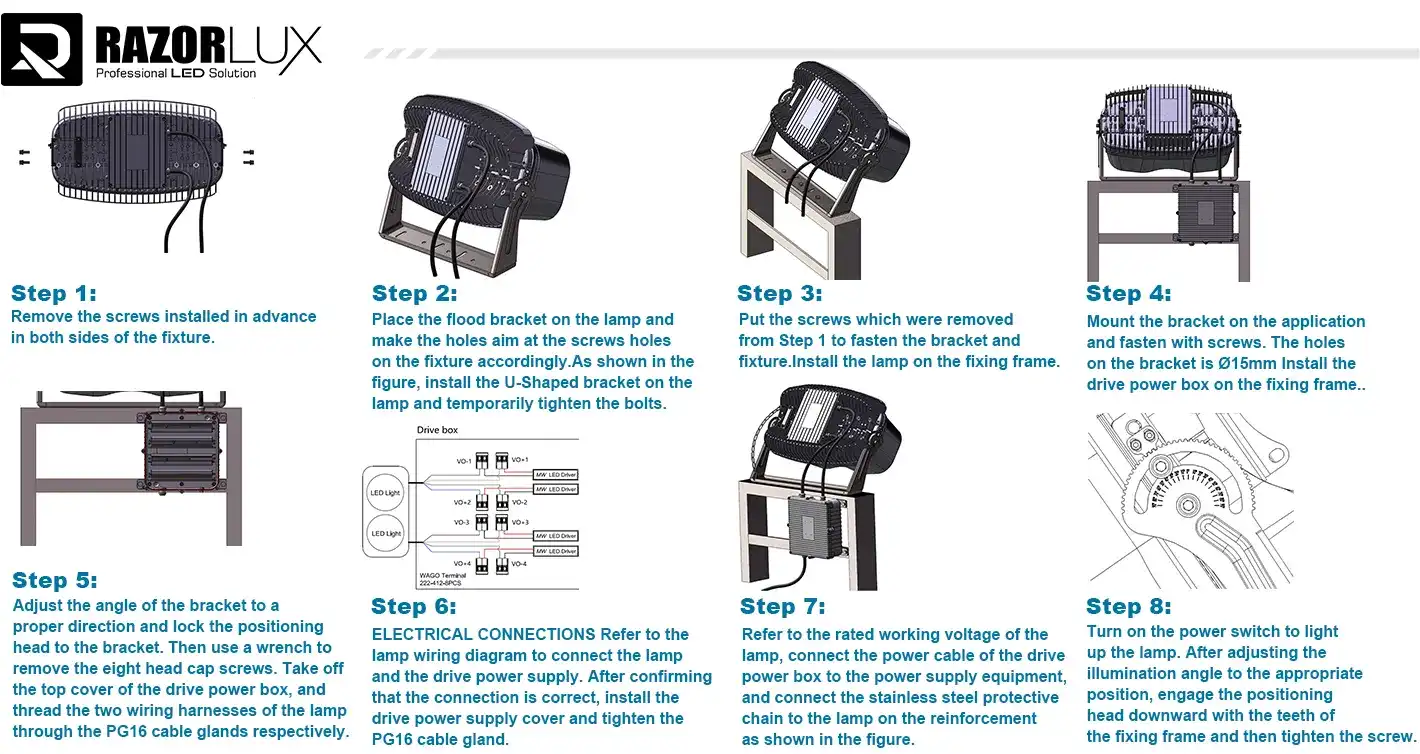
Industrial LED Flood Lights Outdoor: Putting something together usually takes more than one step. Connect the stainless steel bracket safely to the structure it's supporting. Make sure the fitting is level and that all the screws are tight enough. To get the beam coverage you want, put the fixture on the bracket and change the angle of aim. Laser positioning tools help you get it right. By code, supply wires must be run through weatherproof conduit and kept away from hot surfaces and motorised equipment. You need to join the wires inside the driver compartment by colour. The live wire is brown or black, the neutral wire is blue, and the ground wire is green-yellow. Put the right surge protectors in the places where they are needed. On the other hand, 10kV surge suppressors keep important motor electronics safe in places where lightning strikes or electrical noise are common. Before you turn the power on, check that the lens is clean and the lock is in the right place. Before starting the installation, make sure it works by comparing the lighting at ground level to the design goals and writing down the exact conditions as they were found. This will help you in the future.
Routine Maintenance and Troubleshooting
Maintenance for Industrial LED Flood Lights Outdoor isn't as important as it was for older technologies, but they should still be checked often to make sure they're working well. Every three months, they are looked at visually to see if there is any damage, lens discolouration, or rust on the outside. Every year, the lenses are cleaned with the right non-abrasive cleaners to get rid of dirt that has built up and can lower light output by 20–30%. Check the gasket's condition and the attaching hardware's strength. Retorque the screws if you need to, because movements from nearby equipment can slowly loosen the connections. To keep the electricity safe, check to see if the ground is level. Checking the brightness output with a good light meter is important. Sudden drops in brightness could mean there is a problem with the driver, while slow drops could mean the LED modules have hit the end of their useful life. Fix the flickering right away because it usually means the driver isn't stable, which could make the whole system not work. That way, you can find trends and make a budget for changing fixtures that have been used for more than 50,000 hours. Keep track of what was found during checks, repairs, and part replacements.
Common Issues and Solutions
Even though they work well most of the time, industrial LED lights do break down every once in a while. Most of the time, loose connections or not enough voltage are to blame for irregular function. When the building is fully loaded, make sure that the supply voltage stays in the range that the fixture recommends. Changes in colour temperature show that there is thermal stress. Clean the heat sink and make sure that air can flow around the device. Having water inside the lens means the seal has broken. This needs to be fixed right away to keep the driver from getting hurt. A lot of work needs to be done to fix an LED bulb that won't light up at all. Check the fixture's power source, the driver's output voltage, and the links between the LED units. You can change the drivers or LED modules in a lot of good makers' lights without having to throw away the whole thing. One example is Razorlux. This makes repairs much cheaper and cuts down on downtime by a lot.
Energy Efficiency and Performance Optimization for Industrial Lighting
To save money and help the environment, use as little energy as possible to get the right amount of light.
Calculating Return on Investment
Switching to LEDs saves energy and makes money that can be tracked. Twenty 2500W metal halide light fixtures are swapped out for 1000W Industrial LED Flood Lights Outdoor that are used for four thousand hours a year. This saves 60,000 kWh a year. At a rate of $0.12 per kWh, this will save $7,200 a year on electricity bills. Adding an extra $1,500 a year means less work is done on the building. The bulbs in metal halides need to be re-lit every 12 to 18 months. This process takes time and costs $150 per light. On the other hand, LEDs don't need much care. Industrial LED Flood Lights Outdoor, most investments earn back their value in two to four years. The money saved goes straight to the bottom line. Most of the time, moving to LED lights is worth more than 200 to 300 percent of the initial investment over 10 years. This makes it one of the best ways to make a building better.
Optimizing Light Distribution and Reducing Waste
When lighting is designed well, it only shines where it's needed and doesn't move up or down or side to side. With asymmetric beam patterns, light is focused on work areas instead of being spread out over nearby homes or into the sky. There is less need for fixtures with this method, and the lighting at ground level is more even. When you use task-specific lighting, you only put better lights in important work areas and darker lights in traffic areas and storage areas. The need for sight and the amount of energy used are both met by this layered method. Buildings and tools with shiny sides can help lights work better without adding more lights. Regular measurements of photometry make sure that the actual level of lighting is the same as what was planned, without being too bright and wasting energy.
Advanced Control Systems and Automation
These days' LED light bulbs have smart control systems that use the least amount of energy possible based on what's going on. People occupancy monitors dim or turn off lights when they sense that a room is empty. This works great in large buildings or yards where work isn't always being done. Daylight collection systems turn off the lights when there is enough natural light in the room. A lot of the time, this happens in buildings with clear roofs or big doors. Setting the lighting levels based on time makes sure that they match up with shift schedules, output goals, and safety needs. Systems that are connected to each other allow for centralised monitoring and control. This helps facility managers find issues and fix them before they get in the way of work. You can make plans to save energy that take into account all of these areas when you connect the building management system to the energy management system, security system, and process control system.
| Control Strategy | Energy Savings Potential | Best Applications | Implementation Complexity |
|---|---|---|---|
| Senses of occupancy | 30–50% in places where people only often use them | Places to store things and warehouses | Moderate |
| Getting food during the day | 20% to 40% in places with natural light | Yards that are open and buildings with skylights | Moderate |
| Setting times | 15 to 30 percent by matching trends of movement | Several shifts of work | Low |
| Lack of dimmer controls | 10–25% in places where demand changes | Changes in the places where work needs to be done | Moderate |
| Managing things through networks | 5 to 15 percent more by optimising it | A lot of zones in big buildings | High |
Adding even simple settings makes LEDs more energy-efficient. This cuts down on the time it takes for them to pay for themselves and saves you money in the long run.
Compliance with Environmental Standards
More and more, industrial sites have to meet environmental standards set by regulators and meet customer expectations. Because LED lights use less energy, get rid of harmful materials like mercury that were used in older technologies, and cut down on light pollution, they help reach these goals. It's helpful for buildings that want to meet LEED or other green building standards to have lighting systems that use less energy. It's easier to report your carbon footprint if you can show that moving to LEDs has cut down on emissions. A lot of places will give you money back or discounts if you switch to lighting that uses less energy, and you usually need DLC-qualified goods to be able to take advantage of the deals. Companies can improve their sustainability reports and get better press with customers and partners who care about the environment if they keep track of the environmental benefits of lighting changes.
Procurement and Supplier Insights: How to Buy Industrial LED Flood Lights Outdoor
When you buy things strategically, you make sure you get good ones at fair prices that will last for a long time.
Evaluating Supplier Credentials and Capabilities
Getting the right provider is very important for a project's progress. Find out how long the business has been making the item. Razorlux, for instance, has been making naval and industrial lights for more than 20 years. They know a lot about how to use their goods and can promise that they will work. Look at their intellectual property to see what they own. If you have 200 or more patents, that means you're really coming up with new ideas and not just copying other people's work. Check approval portfolios for uses and target markets to make sure that goods meet local rules without having to be changed, which can cost a lot of money. Find out how much the suppliers can produce and how they handle their stock. Companies that keep a lot of stock can quickly meet pressing needs, and flexible manufacturers can meet the needs of customers who want things to be made just the way they want them. Customers can trust consistent processes when a company has quality management certifications like ISO 9001. Specialised testing labs like salt spray chambers, thermal cycling, and photometric laboratories make sure that products meet requirements. Check out recommendations from people who work in the same area as you. Launches that go well in related apps show that you know what you're doing.
Direct Manufacturing vs. Distributor Relationships
How you buy something depends on how big the job is, how much customisation you need, and how much ongoing help you need. There are many benefits to working directly with manufacturers like Razorlux. For example, you can get engineering advice on how to make products work best for your needs, make changes that you can't make through distributors, get lower prices since no middlemen are taking a cut, and talk about technical issues more easily. This method works well for big projects, standard deployments across the whole building, or when the requirements need to be changed. Industrial Led Flood Lights Outdoor: When you work with a wholesaler, you can get local goods to repair things quickly, buy a lot of different products from one place, and set payment terms for small businesses. For some projects, a hybrid approach is best. To buy a lot of fixtures, direct relationships with manufacturers are used, while accounts with distributors are kept for repairs and other parts that come up quickly.
Customization and OEM Services
It is normal for lighting systems to be made to fit the needs of an industrial building. You can change the beam patterns to fit different building shapes, make custom mounting brackets for structures with odd shapes, set custom colour temperatures that work best for certain tasks, change the length of the cables to make installation easier, and connect to control systems that are unique to the building. Firms can put their own name on goods with OEM services. This is helpful for workers and developers who work with many end clients. To make customisation relationships work well, there should be clear conversation about what is needed, testing of samples before mass production, and written change management methods to keep things from getting confusing. Companies that do a lot of research and development (R&D) and have production methods that are easy to change can meet different needs and still keep their quality and delivery promises.
Warranty Coverage and After-Sales Support
A full warranty keeps your money safe and shows that the company that made the product trusts it to be good. The LED modules and drivers in high-end industrial LED flood lights are usually covered by guarantees that last for 5 years. Some of them even guarantee the case for 10 years. Carefully read the guarantee terms to understand the difference between normal wear and a defect. Also, make sure that problems caused by installation are covered. Finally, make sure you understand how to file a claim, including how long it takes to get a response and how to send back a defective product. Technical help during installation, troubleshooting advice for operating problems, replacement parts available for as long as the fixture is in use, and programs to change goods as technology improves are all parts of after-sales support that go beyond the guarantee. Make it easy to get in touch with certain account managers or technical support people so that when you need help right away, you don't have to waste time and energy figuring out how to use general customer service systems.
Logistics and Delivery Considerations
With good transportation planning, you can avoid delays that cost a lot of money. If you need standard goods or unique designs, you should know about the different wait times. For inventory items, you should know about the difference between build-to-order needs. Go over how to pack things so they don't get broken while they're being shipped. Fixtures shouldn't need to be fixed or adjusted before they can be put in place. You should make it clear what terms like FOB, CIF, DDP, etc. mean and how the costs are split. When you buy something from another country, you should know about import taxes, how to get it through customs, and what paperwork you need. Set up the right places to receive and store the things so that the shipping and installation times work together. Lots of packages that need to be stored for a long time might not be the best choice for big projects. Instead, deliveries should happen in steps to match the progress of building or installing.
Razorlux Industrial LED Flood Lights: Engineered for the Toughest Environments
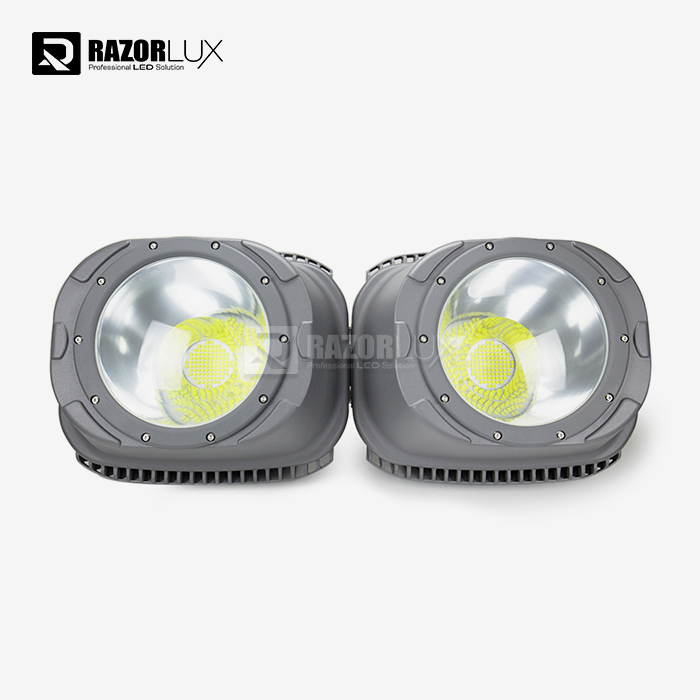
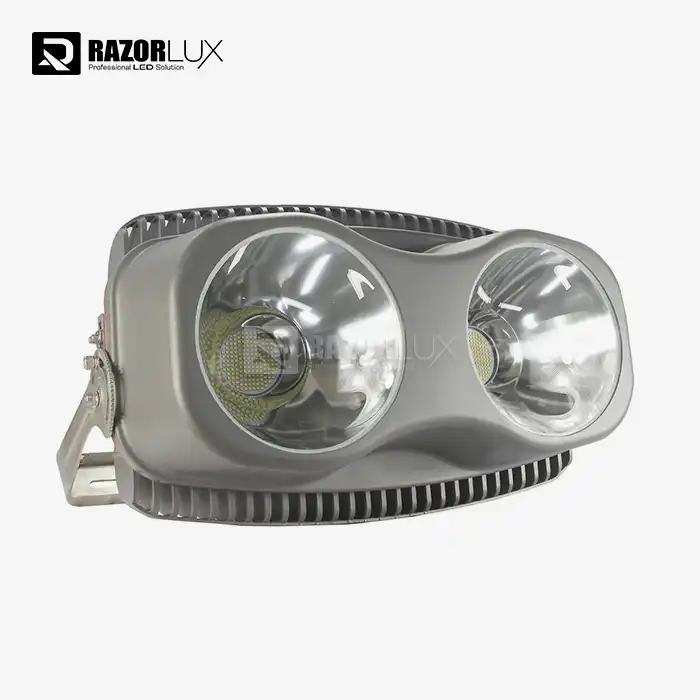
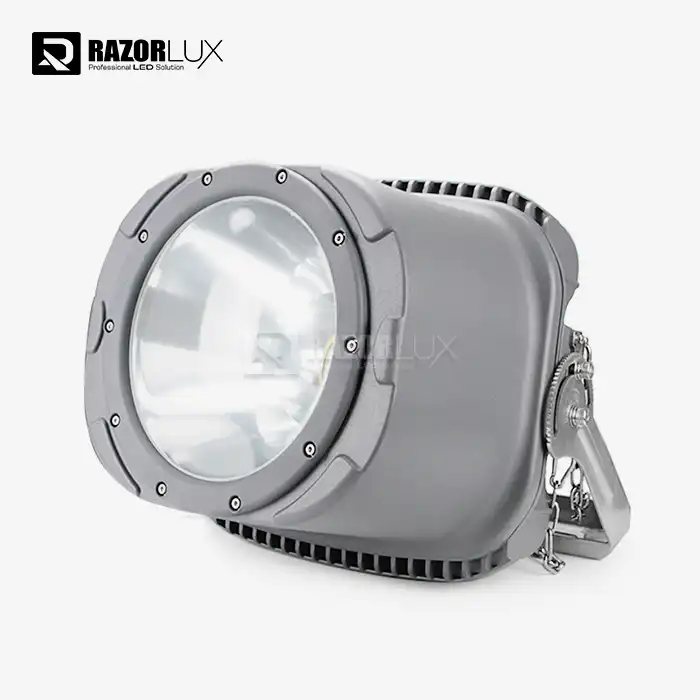
Because Razorlux does great research and makes great products, like our RGL-1000A model, the company is one of the best outdoor Industrial LED Flood Lights. This 1000W powerhouse gives off stable light at 130,000 lumens. It can replace old 2200W to 2500W metal halide fixtures and use a lot less energy and require a lot less maintenance.
Exceptional Performance Specifications
The RGL-1000A is 130 lm/W bright because its parts fit together well. Good LED chips that give a steady output, Meanwell drivers that keep the current steady, and better optical systems that let the most light through are some of these. You can adjust the beam angle to 40°, 60°, 120°, or a strange 140°x60°, which lets you spread the light out carefully for different jobs. You can choose a colour temperature between 2700K and 6500K. Warm white can make a room feel calmer, and cool sunshine can help you see better when you're working close up. If the power grid changes, which can happen in industrial settings, it will still work reliably because it can handle AC 80–305V or DC 100–800V. The electricity is clean because it has a high power factor (>0.98) and low harmonic distortion (<10%). In other words, the energy being sent is better.
Marine-Grade Construction and Environmental Protection
The RGL-1000A was built to work even when the weather was bad. Metal that is safe for marine use was used to make it, and a powder layer keeps it from rusting in chemicals, salt spray, and dirty air. Protection against water and dust (IP65), which can be raised to IP67 protection, keeps them out. IK10 impact resistance means it can be used in places with a lot of foot traffic. With the strong stainless steel fixing bracket, it is safe to install and possible to point accurately. It also stays put even when close machines or cars shake it. Factory floors in the Middle East to ships in the Arctic can all use it as long as the temperature doesn't drop below -40°C or rise above +60°C. It can handle up to 95% of humidity, which means it can be used near the ocean or in warm areas where water can damage less durable fixtures.
Comprehensive Certification Portfolio
The RGL-1000A has been approved by many different countries to meet a wide range of legal requirements and standards for various uses. A CE mark means that the item follows the rules of the European Union. If it has a UL or DLC mark, it means it works with North American rules and can be used for customer return programs. RoHS approval is a good way to get rid of dangerous materials that are bad for the environment. Approvals from marine groups like DNV-GL and ABS make sure that the installation can be done on a ship and meets certain needs, like being able to handle vibrations and electric fields. More regional approvals, like the SAA and C-Tick, make it possible to do business anywhere in the world. Razorlux's plants are ISO 9001-certified, so customers know that all of the fixtures they make are made with the same high standards of quality.
Extended Warranty and Support Commitment
For 5 years, we cover the LED modules and drivers in our goods, and for 10 years, we cover the case. This shows that we have faith in the marine-grade builds we use. In the business world, this level of protection is far above what is expected. It shows real quality instead of planned decline in value. Our customer service team is always available to help you. They can answer questions about how to use a product before you buy it and help you set it up and fix problems as you go. We have extra parts on hand in case we need to fix something in the field. Some building parts can be used again instead of being thrown away, which saves money and the environment in the long run.
Conclusion
When looking for the best Industrial Led Flood Lights Outdoor for big buildings, you should think about how well they work properly, how long they last, how much energy they use, and how much they cost altogether. In many ways, LED lighting is much better than older lighting. It costs less, lasts longer, gives off better light, can be used right away, and needs less maintenance. It's important to carefully read over the technical specs that match the needs of the building before you buy. You should also look into the history of the supplier and the quality of the work, get a full warranty, and make sure you can get help after the sale. Working with makers who have a lot of experience with industrial uses can help businesses find lighting solutions that make them safer, more productive, and more efficient while also making a lot of money. When you switch to LEDs, you're not only getting better tools, you're also making a smart investment in the building that will pay off for a long time.
FAQ
What IP Rating Do I Need for Outdoor Industrial Flood Lights?
IP65 keeps dust out and keeps water jets out. It can be used in most outdoor industrial places, like yards that are open to the weather, loading docks, and installations that are put on buildings. When you upgrade to IP67, you get extra safety against short soaking. This is what you should do for installations near water features, on the coast where the weather can be rough, or in places that get pressure washed. They both work well in rain, snow, and humidity. Which one you choose relies on how dangerous exposure is at your location.
How Long Do Industrial LED Flood Lights Last Compared to Metal Halide Fixtures?
Metal halide systems only last between 10,000 and 15,000 hours. Good Industrial LED Flood Lights Outdoor for factories, on the other hand, last at least 50,000 hours before they need to be changed. This 3–5 times longer lifespan means less maintenance issues and lower long-term costs. Discharge lamps fail all at once, but LEDs lose their light slowly over time. This means that changes don't have to be done quickly when the power goes out, but can be planned ahead of time.
Can I Install Motion Sensors or Dimming Controls with Industrial LED Flood Lights?
It's easy to dim new LED light sources, and many of them also work well with systems that use sunlight and occupancy monitors. Before you buy the driver, make sure it works with the type of control you want to use, like a 0-10V analogue dimmer, a DALI digital system, or a wireless network. Adding settings to LEDs makes their energy-saving benefits even better. This could double the money saved in places where people or natural light change often. Before you sign off on the specs, make sure you talk to your provider about how you want the controls to work together.
Partner with Razorlux for Your Industrial Lighting Needs
Razorlux's tried-and-true Industrial LED Flood Lights Outdoor can change the way the outside of your building looks. We are a specialised producer with more than 20 years of experience working with heavy-duty industrial, military, and offshore challenges. Our RGL-1000A and related products combine energy efficiency, marine-grade durability, and comprehensive certification portfolios backed by industry-leading 5-year warranties. Whether you're upgrading a single facility or implementing standards across multiple locations, our engineering team provides application-specific consultation, customization capabilities, and responsive after-sales support. Contact our procurement specialists at sam@razorlux.com to discuss your requirements, request technical documentation, or arrange sample evaluation. Discover why leading shipyards, ports, and industrial facilities trust Razorlux as their lighting partner—illuminate your operations with confidence.
References
1. International Association of Lighting Designers. (2023). Industrial Outdoor Lighting Design Guidelines: Best Practices for Safety and Efficiency. International Association of Lighting Designers.
2. Illuminating Engineering Society (IES). (2020). The Lighting Handbook: Reference and Application. 11th Edition. Illuminating Engineering Society.
3. U.S. Department of Energy. (2023). LED Lighting: Energy Efficiency and Environmental Benefits. Office of Energy Efficiency & Renewable Energy.
4. International Electrotechnical Commission (IEC). (2018). IEC 60529: Degrees of Protection Provided by Enclosures (IP Code). International Electrotechnical Commission.
5. DesignLights Consortium (DLC). (2024). Technical Requirements for LED Lighting Products. DesignLights Consortium.
6. International Organization for Standardization (ISO). (2015). ISO 9001:2015 Quality Management Systems — Requirements. International Organization for Standardization.
_1748337998981.webp)