

_1750326878398.png)

Waterproof LED Flood Light 400W Lifespan and Maintenance Tips
When you're managing procurement for shipyards, offshore platforms, or heavy industrial facilities, lighting failures aren't just inconvenient—they can halt operations and compromise safety. A Waterproof LED Flood Light 400W represents a significant investment in operational continuity, yet many procurement managers struggle to predict actual service life and implement effective maintenance protocols. This guide addresses those challenges directly, drawing on field data and engineering insights to help you maximize the return on your lighting infrastructure investment while ensuring reliable illumination in the most demanding marine and industrial environments.
Understanding the Lifespan of Waterproof LED Flood Light 400W
The operational lifespan of industrial-grade LED flood lighting depends on multiple interconnected factors that extend far beyond simple hour calculations. When we discuss a 50,000-hour rated life for premium fixtures, we're referring to the L70 benchmark—the point at which light output degrades to 70% of initial lumens. However, actual field performance varies considerably based on environmental stressors and installation quality.
Component Quality Determines Real-World Performance
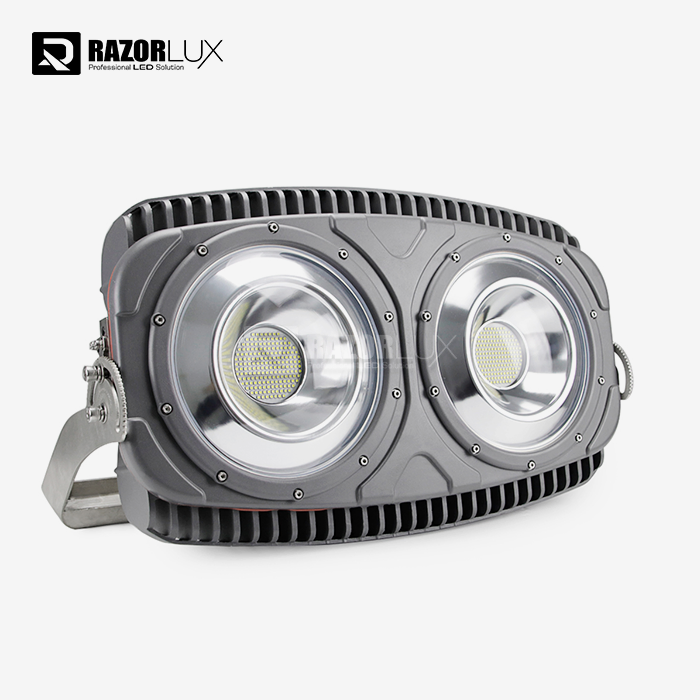
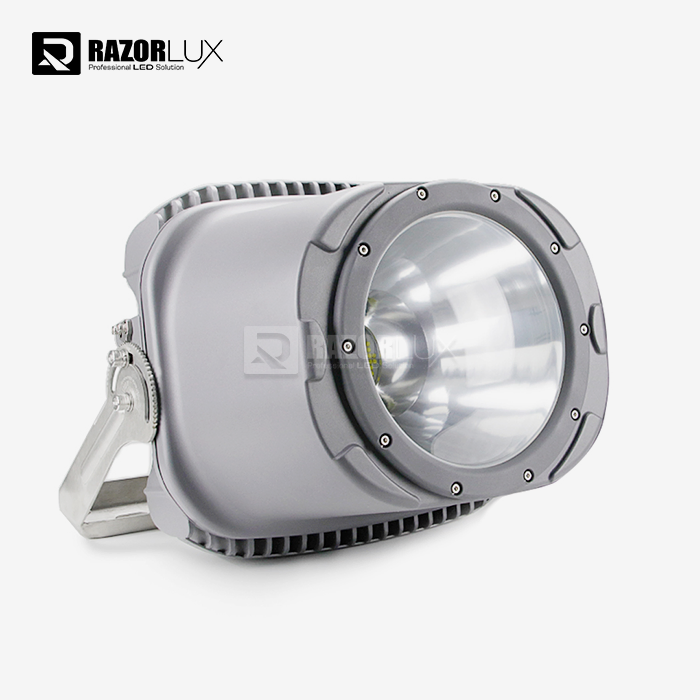
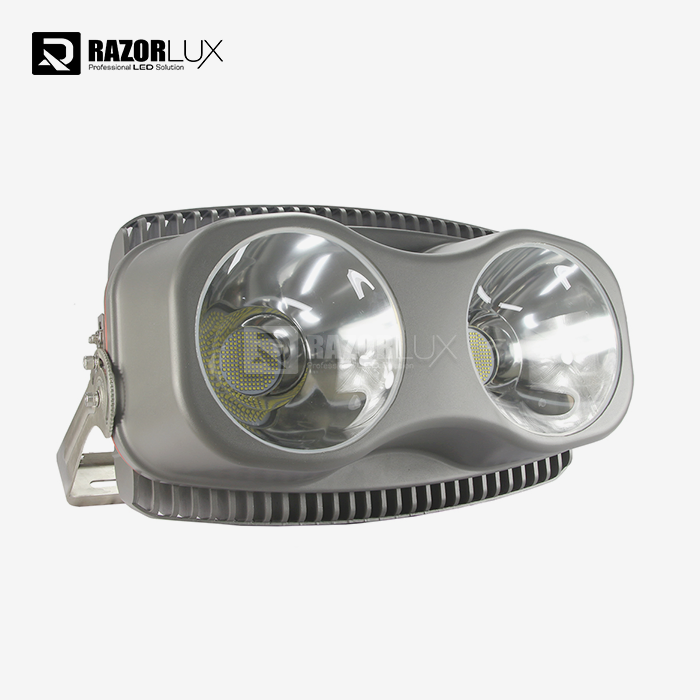
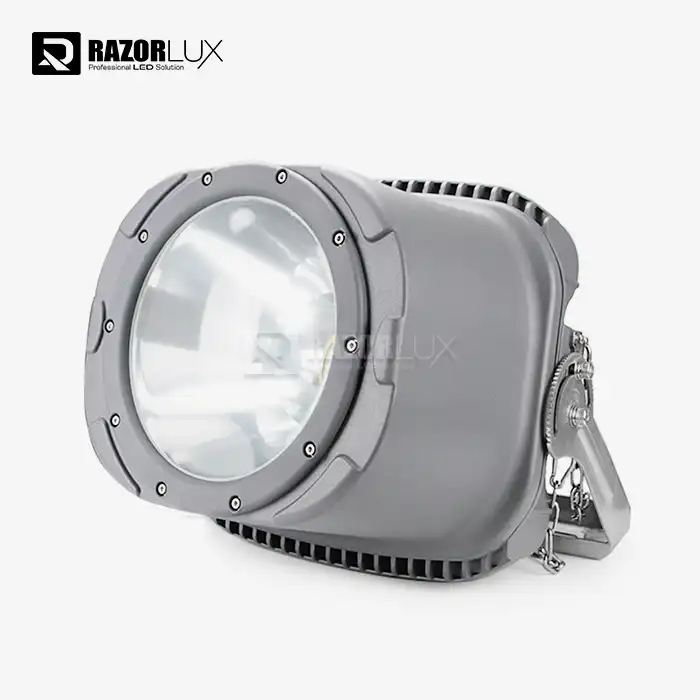
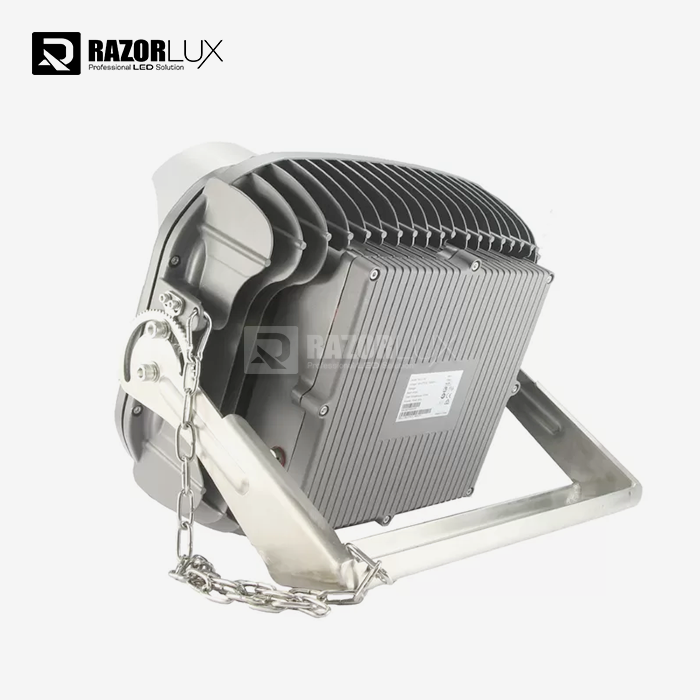
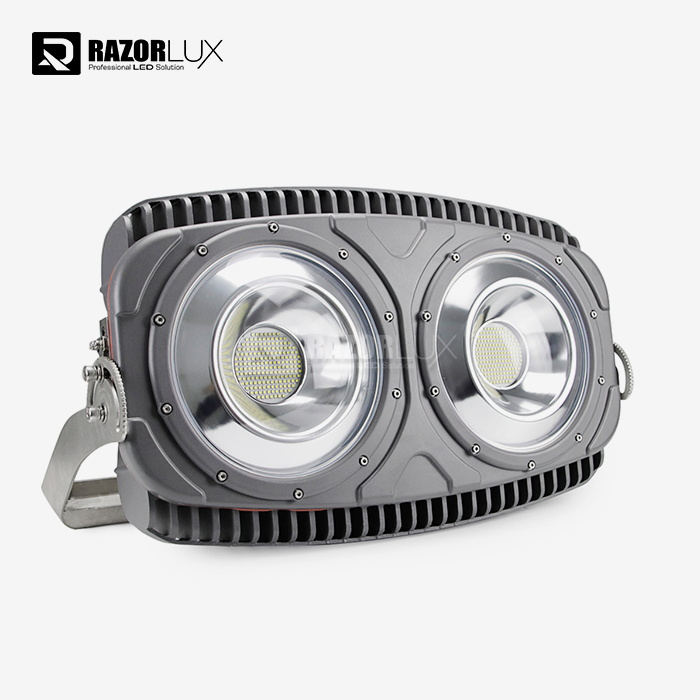
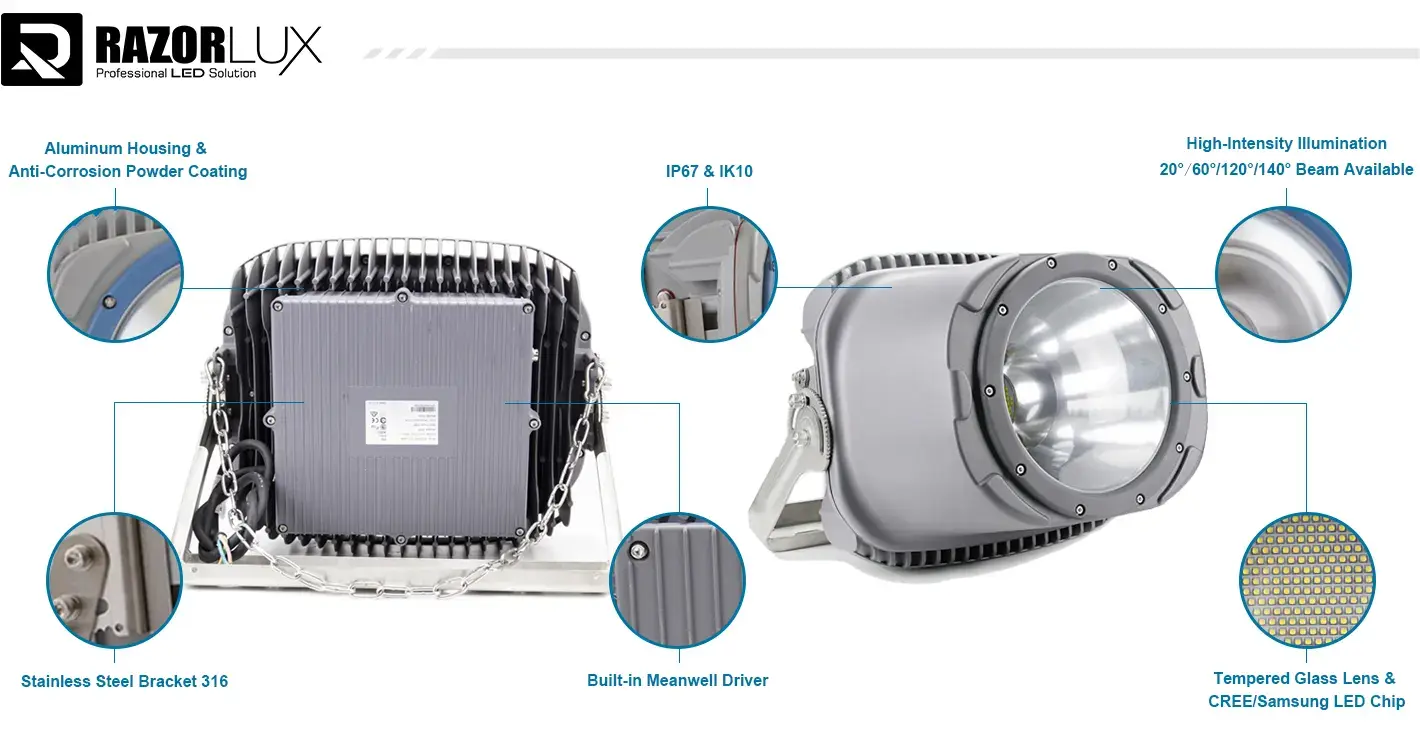
At Razorlux, our engineering team has observed that the weakest link typically defines fixture longevity. A 400W fixture incorporating premium Samsung LED chips paired with Meanwell drivers consistently outperforms units using generic components by 30-40% in harsh environments. The driver—essentially the fixture's power management system—faces particular stress in marine applications where voltage fluctuations and salt-laden air create challenging operating conditions. Our RGL2-400P model addresses this through robust power supply design that handles AC90-305V and DC127-431V inputs without additional adapters, providing stable operation across diverse electrical infrastructures from Norwegian shipyards to Qatari offshore platforms.The thermal management architecture also plays a decisive role. High-purity die-cast aluminum housings with optimized fin geometry dissipate heat effectively, keeping junction temperatures within safe parameters. When junction temperatures exceed 85°C consistently, LED degradation accelerates exponentially. Our fixtures maintain Tj below this threshold even in ambient temperatures reaching 60°C, thanks to advanced thermal pathway engineering developed in our Xi'an LED Lighting Engineering Laboratory.
IP67 Rating and Environmental Resilience
The IP67 certification means complete dust impermeability and protection against temporary immersion up to one meter depth. This matters profoundly in dock environments where pressure-washing operations and wave action regularly assault lighting infrastructure. However, the IP rating alone doesn't tell the complete story. The quality of gaskets, the precision of housing machining, and the implementation of pressure equalization systems all contribute to maintaining that seal over years of thermal cycling.Thermal cycling—the repeated expansion and contraction as fixtures heat during operation and cool when dormant—creates the primary challenge for seal integrity. Lesser fixtures develop microscopic pathways for moisture ingress within 18-24 months of coastal installation. Our stainless steel mounting brackets and specialized gasket compounds resist this degradation, as evidenced by installations at Australian port facilities that have maintained full IP67 integrity through seven years of continuous service.
Operational Environment Impact on Service Life
A fixture installed under a covered loading dock experiences vastly different stresses compared to one mounted on an exposed oil platform 200 kilometers offshore. Salt spray, UV exposure intensity, ambient temperature extremes, and vibration profiles all affect component aging rates. During our collaboration with a Norwegian shipyard, we documented that fixtures in direct spray zones experienced 22% faster lumen depreciation compared to sheltered installations—until we implemented enhanced conformal coating on driver boards and upgraded to marine-grade powder coating on housings.Temperature extremes warrant particular attention. Our fixtures maintain full functionality from -40°C to +60°C, but continuous operation at temperature extremes accelerates aging. In Middle Eastern applications where ambient temperatures regularly exceed 45°C, we recommend installing fixtures with additional thermal headroom or implementing smart controls that reduce power during peak heat periods when full illumination may not be necessary.
Essential Maintenance Tips to Extend the Lifespan
Proactive maintenance represents the most cost-effective method to protect your lighting investment and avoid unexpected failures during critical operations. A structured maintenance program addressing both preventive care and early problem detection can extend practical service life by 35-50% compared to run-to-failure approaches.
Scheduled Inspection and Cleaning Protocols
Establishing quarterly inspection schedules for coastal and industrial installations provides optimal balance between diligence and resource efficiency. During these inspections, maintenance teams should examine specific critical elements systematically. Lens surfaces accumulate salt deposits, industrial particulates, and biological films that reduce light transmission by 15-30% within six months in harsh environments. Cleaning requires appropriate techniques—abrasive materials scratch polycarbonate lenses and compromise UV-resistant coatings, while high-pressure washing can force water past gaskets.We recommend this cleaning approach: First, rinse with low-pressure fresh water to remove loose contaminants. Second, apply a mild alkaline solution (pH 8-9) with soft microfiber cloths to dissolve salt and organic deposits. Third, rinse thoroughly and inspect gaskets and cable glands during the drying period. This process, performed quarterly, maintains light output at 90-95% of clean-fixture levels throughout the service life.Electrical connection integrity requires equal attention. Terminal blocks and connector pins in harsh environments develop oxidation and micro-corrosion that increases contact resistance. This generates heat and voltage drops that stress the driver. Annual electrical inspections using thermal imaging cameras can identify developing hot spots before they cause failures. Connections showing temperature elevations of 10°C above ambient warrant cleaning and re-torquing to specification.
Early Problem Detection Through Performance Monitoring
Waterproof Led Flood Light 400W Modern LED fixtures fail differently than traditional HID lighting. Rather than catastrophic burnout, you'll typically observe gradual lumen depreciation or color shift. However, driver failures can occur suddenly, particularly following electrical storms or grid disturbances. Training maintenance personnel to recognize early warning signs prevents minor issues from escalating into costly emergency repairs.Watch for these indicators: flickering or strobing suggests driver instability or thermal protection activation; progressive dimming beyond expected depreciation curves indicates LED degradation or driver output decline; color temperature shifts toward blue spectrum signal phosphor layer degradation; and visible moisture inside the lens requires immediate attention regardless of whether the fixture still operates.Documentation proves invaluable for large installations. Recording initial light measurements at commissioning provides baseline data for comparison during maintenance inspections. When fixtures fall below 80% of initial output earlier than expected, investigation into environmental factors or installation issues can prevent similar problems across the installation.
Installation Best Practices for Maximum Longevity
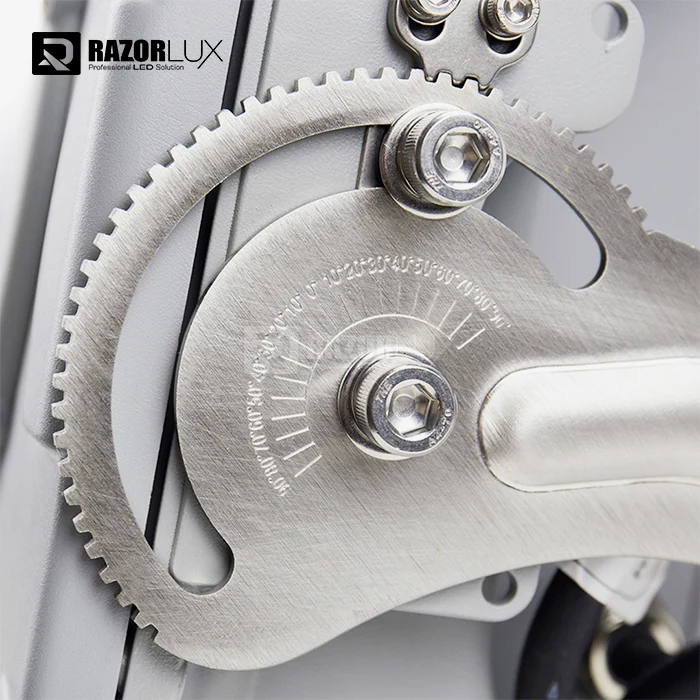
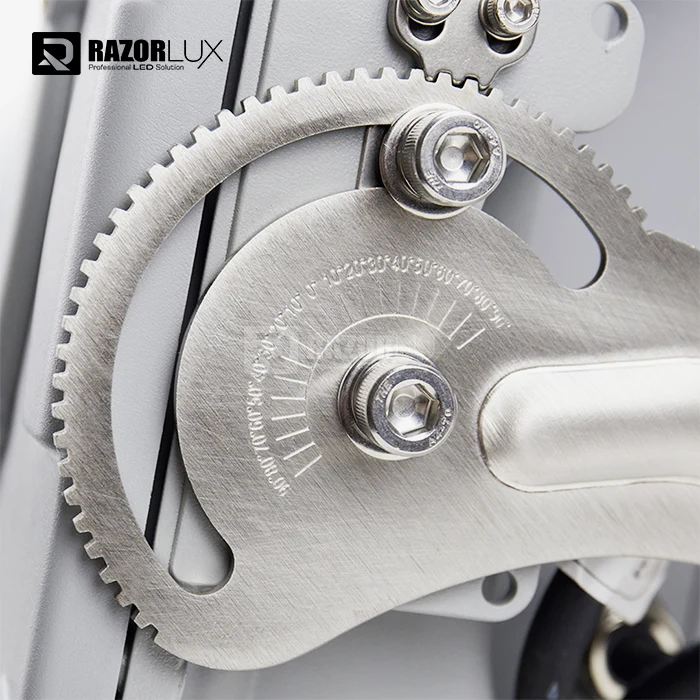
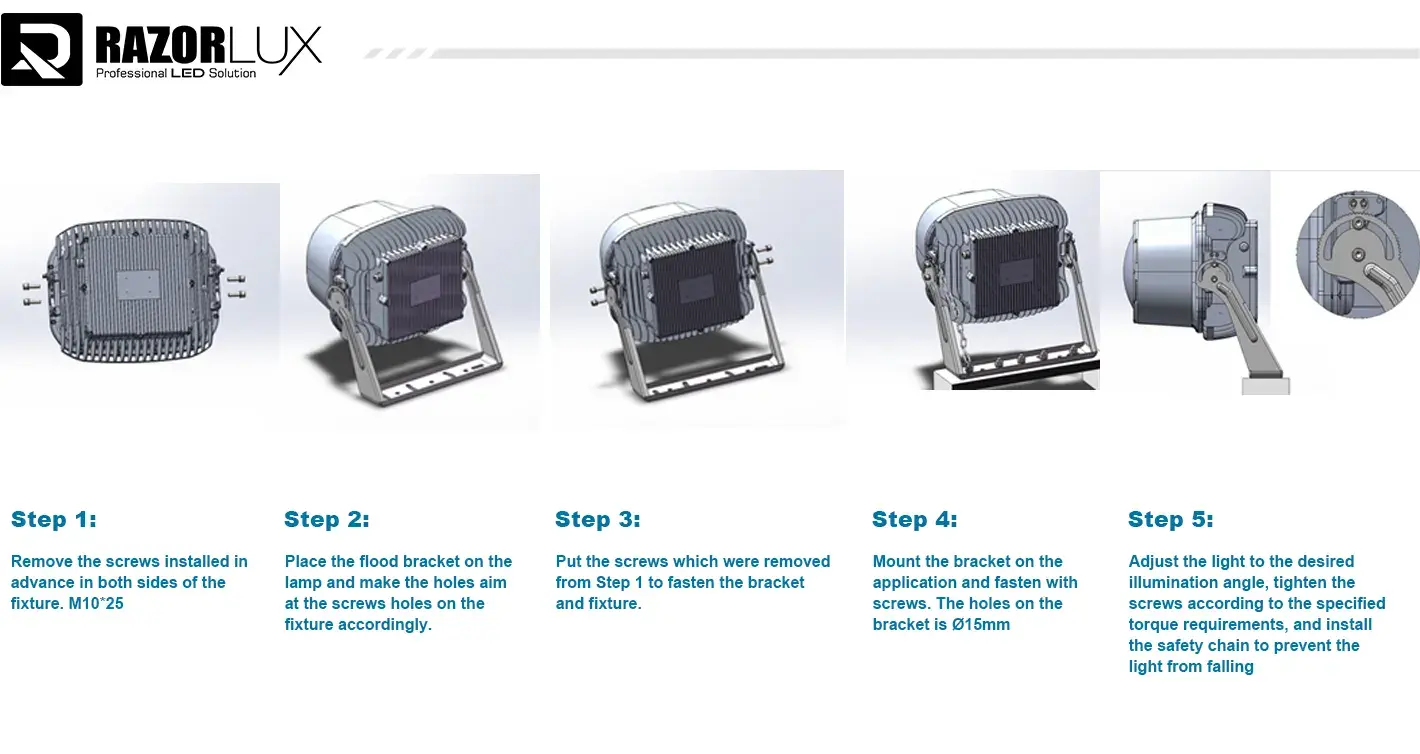
Proper installation establishes the foundation for long service life. Even the most robust fixture underperforms when installation compromises its protective features. Mounting angle affects both illumination effectiveness and fixture longevity—positioning that allows water pooling on horizontal surfaces creates unnecessary stress on seals. Our multi-function bracket design accommodates angles from 15° to 120°, enabling optimal positioning that sheds water naturally while directing light precisely where needed.Cable entry represents a critical vulnerability point. The IP67 rating depends absolutely on proper cable gland installation. Cables should enter from below when possible, creating a downward path that resists water entry through capillary action. Cable glands must be torqued to manufacturer specifications—under-tightening allows water ingress while over-tightening deforms gaskets and creates leak paths. After installation, we recommend applying marine-grade sealant around the gland exterior as an additional barrier, particularly in direct-spray locations.Electrical considerations extend beyond basic wiring correctness. Voltage quality at the fixture matters significantly. Installations distant from distribution panels may experience voltage drop that forces drivers to draw higher current, generating excess heat and shortening component life. Conductors should be sized to maintain voltage within ±5% of nominal at the fixture. Our wide input voltage range (AC90-305V) provides tolerance for imperfect electrical infrastructure, but optimal performance requires stable supply within rated parameters.
Performance and Energy Efficiency Maintenance
Energy efficiency represents one of the primary justifications for LED adoption, yet this advantage diminishes without proper maintenance. A 400W LED fixture at 130lm/W efficiency delivers 52,000 lumens while consuming less than one-third the energy of the 1000-1500W metal halide fixtures it replaces. However, dirty lenses and degraded components can erode these savings substantially over time.
Understanding Power Consumption and Efficiency Metrics
The 130lm/W efficacy of our fixtures represents system-level efficiency—total light output divided by total power consumption including driver losses. This metric matters more than theoretical LED chip efficiency because it reflects actual operational performance. When evaluating competing products, procurement managers should verify whether published efficiency figures represent chip-level or system-level measurements, as the difference can reach 20-25%.Power factor also deserves attention in large installations. Our fixtures maintain ≥0.98 power factor with <10% total harmonic distortion, ensuring efficient use of electrical infrastructure capacity. Low power factor fixtures draw reactive current that increases distribution system losses without contributing to illumination. In installations with hundreds of fixtures, poor power factor can necessitate oversized transformers and cabling, increasing capital costs and ongoing energy waste.Real-world energy savings depend on maintaining design efficiency throughout the service life. Our testing protocol subjects fixtures to 3000-hour accelerated aging at elevated temperatures while monitoring lumen output, power consumption, and thermal performance. Fixtures that pass this validation maintain 90% of initial efficiency at the 25,000-hour midpoint and 85% at 50,000 hours under normal operating conditions.
Factors Affecting Light Output and Efficiency
Multiple mechanisms contribute to efficiency degradation over time. LED junction temperature increases cause reduced light output and accelerated aging—a 10°C junction temperature increase roughly halves expected service life. Dust accumulation on heat sinks insulates the fixture, raising internal temperatures and creating this exact scenario. Annual cleaning of heat sink fins using compressed air or soft brushes removes this insulation and maintains thermal performance.Optical degradation also impacts efficiency. UV exposure gradually yellows polycarbonate lenses and degrades anti-reflective coatings, reducing light transmission by 3-5% annually in intense sun environments. Our fixtures use UV-stabilized materials that limit this degradation to under 1% annually, but even premium materials require periodic inspection. Lenses showing visible yellowing or haziness should be replaced to maintain illumination quality and efficiency.Driver efficiency declines with component aging, particularly electrolytic capacitors in harsh temperature environments. While our Meanwell drivers use premium capacitors rated for 70,000+ hours at elevated temperatures, installations in extreme conditions may benefit from mid-life driver replacement. This proactive approach costs less than emergency replacement and avoids the operational disruption of unexpected failures.
Smart Control Integration for Energy Optimization
Modern LED technology enables sophisticated control strategies that reduce energy consumption beyond fixture efficiency alone. Motion sensors, photocells, and dimming controls can cut lighting energy use by 40-60% in applications with variable occupancy or ambient light availability. Our fixtures support multiple control protocols, allowing integration into building management systems or standalone control schemes.A shipyard implemented occupancy-based controls in covered working bays equipped with our 400W fixtures. During active work periods, fixtures operate at full output. When bays remain unoccupied for 15 minutes, lighting reduces to 30% output, maintaining safety illumination while cutting energy use. This strategy reduced lighting energy consumption by 48% compared to constant full-output operation, with payback on control system investment achieved within 14 months.Dimming provides additional benefits beyond energy savings. Operating fixtures at 80% output reduces power consumption by approximately 22% while decreasing lumen output by only 20%—a net efficiency gain. More significantly, reduced drive current lowers junction temperatures and dramatically extends service life. Fixtures operated continuously at 80% power may achieve 70,000-80,000 hours to L70 depreciation rather than the rated 50,000 hours at full output.
How to Choose the Right Waterproof 400W LED Flood Light for Your Business
Waterproof Led Flood Light 400W Selecting appropriate fixtures requires matching technical specifications to application requirements while considering total cost of ownership rather than solely purchase price. The lowest-cost fixture frequently generates the highest lifecycle cost through premature failures, poor energy efficiency, and excessive maintenance demands.
Critical Specification Evaluation Criteria
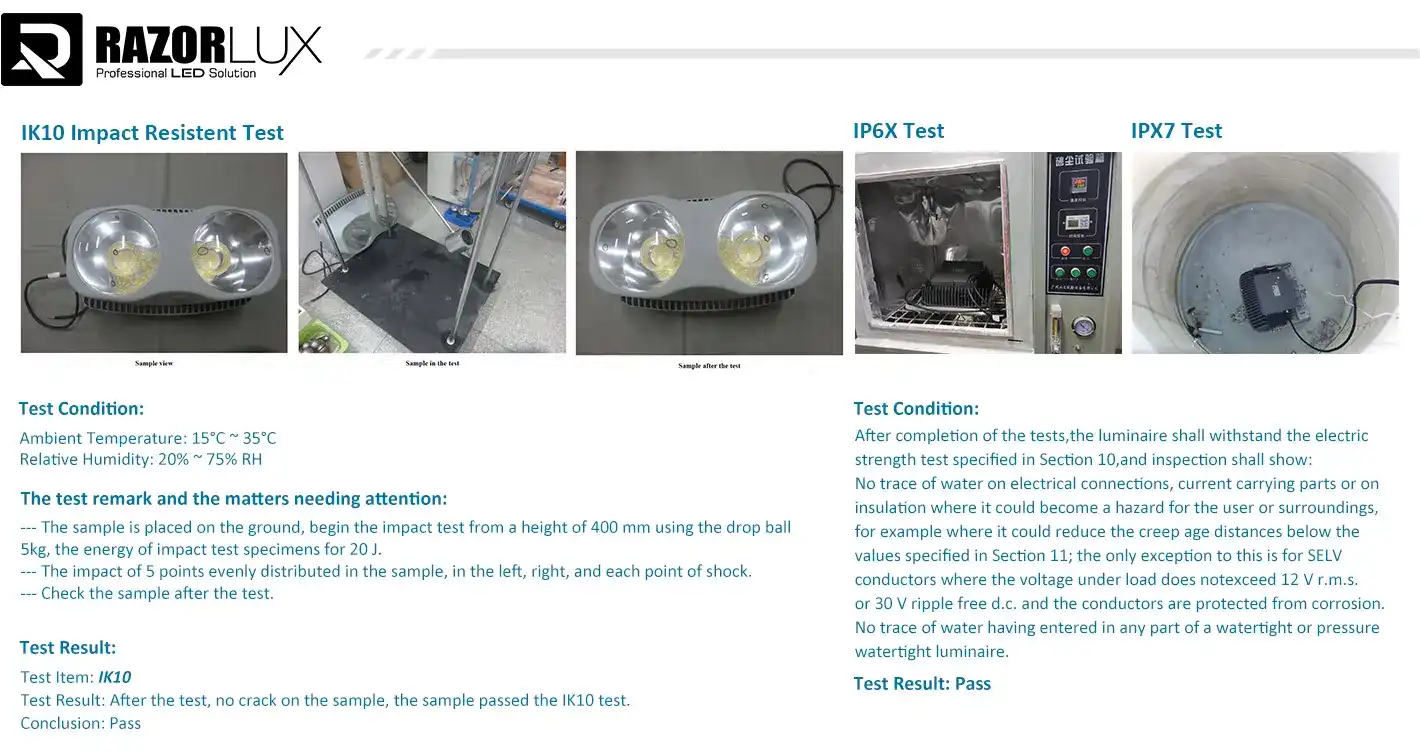
The waterproof rating represents your first decision point. While IP65 suffices for covered areas with occasional moisture exposure, marine and offshore applications demand IP67 minimum protection. The single-digit difference carries significant implications—IP67 fixtures withstand temporary immersion while IP65 units resist water jets but may fail if submerged. For deck installations or locations subject to wave action, the IP67 specification provides essential protection margin.Impact resistance measured by IK rating matters in industrial environments where fixtures face mechanical hazards from crane operations, cargo handling, and maintenance activities. Our IK10 rating represents the highest protection level, withstanding 20 joules of impact energy—equivalent to a 5kg mass dropped from 40cm. Lesser IK ratings may cost less initially but create liability exposure and replacement costs when damaged by routine industrial operations.Lumen output requires careful evaluation relative to application needs. The 48,000 stable lumens from our RGL2-400P model suit large area illumination, but excess illumination wastes energy while potentially creating glare problems. Proper lighting design considers mounting height, spacing, required illuminance levels, and uniformity. Our technical team provides complimentary photometric analysis, using industry-standard software to model proposed installations and verify performance before purchase commitments.
Component Quality and Certification Verification
Premium components justify their cost through superior reliability and performance. Samsung LED chips provide industry-leading efficacy and lumen maintenance, maintaining 95% of initial output at 25,000 hours compared to 85-88% for economy chips. Meanwell drivers dominate industrial applications because their failure rates run 65-70% lower than generic alternatives. When specification sheets list "premium components," verify specific brands—marketing claims don't always match component reality.Certification compliance confirms that independent testing laboratories have validated safety and performance claims. Our fixtures carry RMRS (Russian Maritime Register of Shipping), CE, UL, and DLC certifications among others, demonstrating compliance with diverse international standards. For marine applications, classification society approvals like RMRS or DNV prove particularly valuable, as they specifically address maritime environment challenges. These certifications require substantial documentation and testing, so their presence indicates manufacturer commitment to quality and compliance.The five-year warranty on LED modules and drivers, backed by our decade warranty on housings, reflects confidence in component selection and manufacturing quality. However, warranty terms deserve careful review—some exclude environmental damage or require specific maintenance procedures. Our warranty provides straightforward coverage with responsive claim processing, reflecting 25+ years of manufacturing experience and financial stability.
Comparing Power Options and Customization Capabilities
The 400W power level suits most large-area applications, but comparing adjacent wattages ensures optimal selection. A 300W fixture might provide adequate illumination for lower-mounting applications while reducing energy costs by 25%. Conversely, very high mounting installations or areas requiring high illuminance might benefit from 500W fixtures rather than increasing 400W fixture density. Photometric modeling resolves these decisions definitively, avoiding both under-illumination problems and energy waste from over-specification.Customization capabilities address unique application requirements that standard products don't accommodate perfectly. Our engineering team regularly modifies beam angles, color temperatures, and mounting configurations for specific projects. A Middle Eastern port facility required narrow 15° beam angles to minimize light pollution while achieving required deck illuminance from high mounting positions. Standard 60° beams would have created excessive spill light and required more fixtures. Custom 15° optics solved both issues, reducing fixture count by 40% while meeting environmental regulations.Color temperature selection affects visibility and worker comfort. Our standard 5700K provides crisp white light that enhances visual acuity for detailed work. However, some applications benefit from 4000K neutral white, which reduces harsh shadows and creates more comfortable lighting for extended-duration tasks. Both options maintain Ra>75 color rendering, ensuring accurate color perception critical for inspection tasks and safety marking visibility.The table below summarizes key specification considerations:
| Specification | Standard Requirement | Premium Option | Application Consideration |
|---|---|---|---|
| IP Rating | IP65 | IP67 | Marine/offshore demand IP67; covered industrial areas accept IP65 |
| IK Rating | IK08 | IK10 | Cargo handling and crane operations require IK10 protection |
| Efficacy | 110-120 lm/W | 130+ lm/W | Higher efficacy reduces operating costs proportionally over fixture life |
| Power Factor | >0.90 | >0.95 | Large installations benefit from high PF to optimize electrical infrastructure |
| Input Voltage Range | 100-277V | 90-305V AC, 127-431V DC | Wider range accommodates unstable power and diverse global standards |
| Warranty | 3 years | 5+ years | Extended warranty indicates manufacturer confidence and reduces risk |
Supply Chain Considerations for Project Success
Reliable delivery and consistent product quality matter as much as technical specifications. Project schedules incorporate lighting installation milestones, and delayed deliveries create costly cascading delays. Our dual-facility operation in China and the United States, combined with strategic inventory management, enables responsive delivery even for large orders. Recent shipyard projects in Norway and Singapore received full fixture deliveries within scheduled windows, allowing projects to maintain momentum.Batch consistency ensures that fixtures installed across multi-phase projects maintain uniform appearance and performance. Color temperature, beam pattern, and cosmetic finish should match precisely between initial installations and later expansion phases. Our manufacturing quality control processes and comprehensive testing procedures deliver this consistency. When a Russian shipyard ordered additional fixtures 18 months after initial installation, the new units matched original installations perfectly in light quality and appearance.
Troubleshooting Common Issues and Avoiding Pitfalls
Waterproof Led Flood Light 400W even premium fixtures occasionally experience problems, typically stemming from installation errors, environmental challenges, or component failures. Understanding common issues and appropriate responses minimizes downtime and prevents minor problems from escalating into major failures.
Installation-Related Problems and Solutions
Improper cable gland installation creates the single most common failure point for IP67 fixtures. When maintenance teams report internal moisture despite IP67 ratings, cable entry typically represents the cause. Proper installation requires stripping cable jackets to precise lengths, positioning gaskets correctly, and torquing glands to specification. Over-tightening deforms rubber gaskets and creates leak paths, while under-tightening leaves gaps. Following manufacturer torque specifications and applying appropriate thread sealant prevents these issues.Voltage-related problems manifest as premature driver failures, flickering, or inconsistent operation. While our wide input voltage range tolerates poor power quality better than most fixtures, sustained operation at voltage extremes stresses components unnecessarily. Measuring voltage at fixtures rather than at distribution panels reveals voltage drop through supply cables. If measurements show voltage outside the nominal ±10% range, increasing conductor size or relocating distribution points corrects the problem.
Thermal issues arise when installation compromises heat dissipation. Mounting fixtures in recessed locations without adequate airflow or placing them adjacent to heat-generating equipment elevates operating temperatures and accelerates aging. Our fixtures tolerate 60°C ambient temperatures, but sustained operation at this extreme cuts expected service life substantially. Where high ambient temperatures cannot be avoided, reducing fixture output through dimming or selecting higher-capacity fixtures operated at reduced power maintains longevity.
Environmental Challenge Mitigation
Salt spray creates particularly aggressive corrosion conditions that degrade fixtures over time. Standard powder coating provides protection for inland industrial installations but may prove inadequate in direct marine spray zones. Enhanced marine-grade coating, available as a factory option, extends protection substantially. Existing installations in severe environments benefit from annual inspection and touch-up of any coating damage before corrosion penetrates to the substrate.UV exposure gradually degrades polymers and gaskets, reducing flexibility and creating crack propagation points. While premium materials resist UV damage effectively, extreme environments—such as the intense sunlight at Middle Eastern latitudes combined with elevated ambient temperatures—accelerate degradation. Fixtures showing gasket hardening or cracking during inspection require immediate gasket replacement to maintain IP67 protection. Keeping spare gasket kits enables maintenance teams to address this proactively rather than waiting for moisture ingress to force reactive replacement.Vibration in industrial environments, particularly near heavy machinery or on offshore platforms subject to wave action, can loosen mechanical fasteners and electrical connections over time. Annual retorquing of mounting bolts and electrical terminals during routine maintenance prevents failures from this mechanism. Applying appropriate thread-locking compounds during installation provides additional security against vibration loosening.
Warranty Claims and Technical Support
When fixtures fail despite proper installation and maintenance, efficient warranty processing minimizes operational impact. Documentation accelerates claim resolution—photographs of installation conditions, failure symptoms, and environmental factors help technical teams diagnose problems rapidly. Our technical support team, reachable at sam@razorlux.com, provides responsive analysis and coordinates replacement shipments typically within 72 hours for warranty-covered failures.Understanding warranty exclusions prevents surprises. Physical damage from impacts, improper installation, and operation outside specified parameters typically fall outside warranty coverage. However, our technical team assists with diagnosis and provides replacement parts at preferential pricing even for non-warranty situations. This support reflects our commitment to customer success beyond contractual obligations.For complex installations or unique applications, our engineering team offers on-site commissioning support and training. This service, particularly valuable for first-time deployments of marine-grade LED systems replacing traditional HID lighting, ensures proper installation practices and helps maintenance personnel understand system characteristics. A Malaysian port facility utilized this service during their lighting infrastructure upgrade, resulting in flawless installation and zero failures during the first 18 months of operation.
The table below outlines common problems and solutions:
| Problem Symptom | Likely Cause | Solution | Prevention |
|---|---|---|---|
| Internal moisture visible | Cable gland installation error | Re-seal cable entry; verify gasket condition | Proper torque; sealant application; downward cable entry |
| Premature driver failure | Voltage issues or thermal stress | Measure voltage at fixture; verify ventilation | Appropriate conductor sizing; adequate clearances |
| Flickering or dimming | Electrical connection oxidation | Clean and retorque connections | Annual electrical inspection; thermal imaging |
| Accelerated lumen depreciation | Excessive junction temperature | Verify mounting provides adequate cooling | Avoid recessed mounting; clean heat sinks annually |
| Housing corrosion | Coating damage in marine environment | Apply touch-up coating; consider enhanced finish | Marine-grade coating for severe environments |
Conclusion
Maximizing the service life and performance of Waterproof Led Flood Light 400W in demanding marine and industrial environments requires understanding the interplay between component quality, installation practices, and proactive maintenance. The 50,000-hour service life potential of premium fixtures becomes reality only through attention to these factors. Our experience across hundreds of installations worldwide demonstrates that proper selection, installation, and maintenance protocols extend practical service life by 40-50% compared to run-to-failure approaches. The resulting reductions in maintenance costs, energy consumption, and operational disruptions typically return the investment in premium fixtures within 18-24 months while delivering superior illumination quality throughout their extended service life. As procurement professionals balance capital costs against operational reliability, these considerations ultimately determine project success and long-term value.
FAQ
What operational lifespan can I expect from a premium 400W waterproof LED flood light?
Under proper operating conditions with appropriate maintenance, premium fixtures featuring quality components like Samsung chips and Meanwell drivers typically deliver 50,000 hours to L70 depreciation—the point where lumen output reaches 70% of initial levels. This translates to approximately 11 years of continuous operation or 17+ years at 8 hours daily. However, harsh marine environments with extreme temperatures, salt spray, and vibration can reduce practical service life by 20-30% without enhanced protective measures. Conversely, installations implementing dimming controls and operating at 80% output frequently achieve 70,000+ hours of service life due to reduced thermal stress on components.
How often should waterproof LED fixtures in marine environments undergo maintenance inspections?
Quarterly inspection schedules provide optimal balance for coastal and offshore installations. These inspections should address lens cleaning, gasket condition verification, electrical connection integrity, and thermal performance assessment using infrared thermography. Annual comprehensive inspections should include detailed electrical testing, retorquing of all mechanical and electrical connections, and replacement of any degraded gaskets or seals. Facilities in particularly severe environments—direct spray zones or extreme temperature locations—benefit from monthly visual inspections to identify developing problems before they cause failures.
Can existing waterproof LED fixtures be upgraded with sensors or improved drivers?
Most quality fixtures allow component replacement, though feasibility depends on specific design. Our RGL2-400P model features a modular driver design that enables replacement without disturbing the LED module or housing seals. Adding external control devices like photocells or occupancy sensors typically requires no fixture modification, as these integrate into the supply circuit. However, resealing after opening the fixture requires care to maintain IP67 protection—using appropriate gasket sealant and torquing hardware to specification proves essential. When contemplating mid-life upgrades, consulting with the manufacturer's technical team ensures compatibility and proper procedures.
Partner with Razorlux for Superior Waterproof LED Lighting Solutions
Razorlux stands ready to support your marine and industrial lighting projects with industry-leading Waterproof Led Flood Light 400W solutions backed by 25+ years of engineering excellence. As both manufacturer and technical partner, we deliver comprehensive support from initial specification development through commissioning and ongoing maintenance. Our RGL2-400P model, featuring 130lm/W efficiency, IP67 protection, and IK10 impact resistance, addresses the demanding requirements of shipyards, offshore platforms, and heavy industrial facilities worldwide. We maintain substantial inventory for responsive delivery and offer customization capabilities to address unique application requirements. Our technical team provides complimentary photometric analysis and application engineering support, ensuring optimal fixture selection and installation design. Contact our procurement specialists at sam@razorlux.com to discuss your specific requirements and request technical documentation. We serve major maritime and industrial clients across North America, Southeast Asia, the Middle East, and beyond with the responsive service and reliable products your operations demand.
References
1. Illuminating Engineering Society. (2020). IES LM-79-19: Approved Method for the Electrical and Photometric Measurements of Solid-State Lighting Products. New York: IES Publications.
2. U.S. Department of Energy. (2021). LED Luminaire Lifetime: Recommendations for Testing and Reporting (Third Edition). Washington, DC: DOE Solid-State Lighting Program.
3. International Electrotechnical Commission. (2019). IEC 60529: Degrees of Protection Provided by Enclosures (IP Code). Geneva: IEC Publications.
4. Narendran, N., & Gu, Y. (2019). Life of LED-Based White Light Sources. Journal of Display Technology, 15(4), 280-288.
5. Marine Equipment Directive Standards Committee. (2018). Guidelines for LED Lighting Systems in Marine and Offshore Applications. London: Maritime Technology Publications.
6. Zhang, H., & Liu, S. (2022). Thermal Management and Reliability Analysis of High-Power LED Flood Lighting Systems. IEEE Transactions on Industrial Electronics, 69(3), 2847-2856.