

_1750326878398.png)

How Long Do Construction Site Flood Lights Last?
Before starting a project in a city or business, buyers and builders often wonder, "How long will our lighting equipment actually last in real life?" Construction sites need to have lighting systems that work well and last a long time. Construction Site Flood Lights. We call these flood lights. The tech they use and the way they are built make these units last a long time. Good LEDs, like Razorlux's, last between 50,000 and 100,000 hours. In other words, they will work for more than ten years, even if they are used all night. On the other hand, halogen or metal-halide choices only last 5,000 to 10,000 hours. This means they cost a lot and need to be changed often. Projects take longer to finish and cost more to keep up.
Understanding Construction Site Flood Lights and Their Lifespan
Before starting a project in a city or business, buyers and builders often wonder, "How long will our lighting equipment actually last in real life?" Construction sites need to have lighting systems that work well and last a long time. We call these floodlights. The tech they use and the way they are built make these units last a long time. Good LEDs, like Razorlux's, last between 50,000 and 100,000 hours. In other words, they will work for more than ten years, even if they are used all night. On the other hand, halogen or metal-halide choices only last 5,000 to 10,000 hours. This means they cost a lot and need to be changed often. Projects take longer to finish and cost more to keep up.
LED vs. Halogen: Core Differences in Technology
LEDs work because of semiconductor diodes. They can change energy very well because when electricity flows through them, they give off light. Halogen lights, on the other hand, have a bright, hot tungsten bulb inside. Up to 90% of the power is turned into heat. When the temperature changes a lot and the filament is stressed, the bulb breaks down quickly. On the other hand, LED lights can last at least 50,000 hours. If you run a business or work from home, you will save money over time because upkeep will take less time.
Operational Lifespan Benchmarks by Light Type
LEDs work because of semiconductor diodes. They can change energy very well because when electricity flows through them, they give off light. Halogen lights, on the other hand, have a bright, hot tungsten bulb inside. Up to 90% of the power is turned into heat. When the temperature changes a lot and the filament is stressed, the bulb breaks down quickly. On the other hand, LED lights can last at least 50,000 hours. If you run a business or work from home, you will save money over time because upkeep will take less time.
How Lifespan Translates to Project Budgets
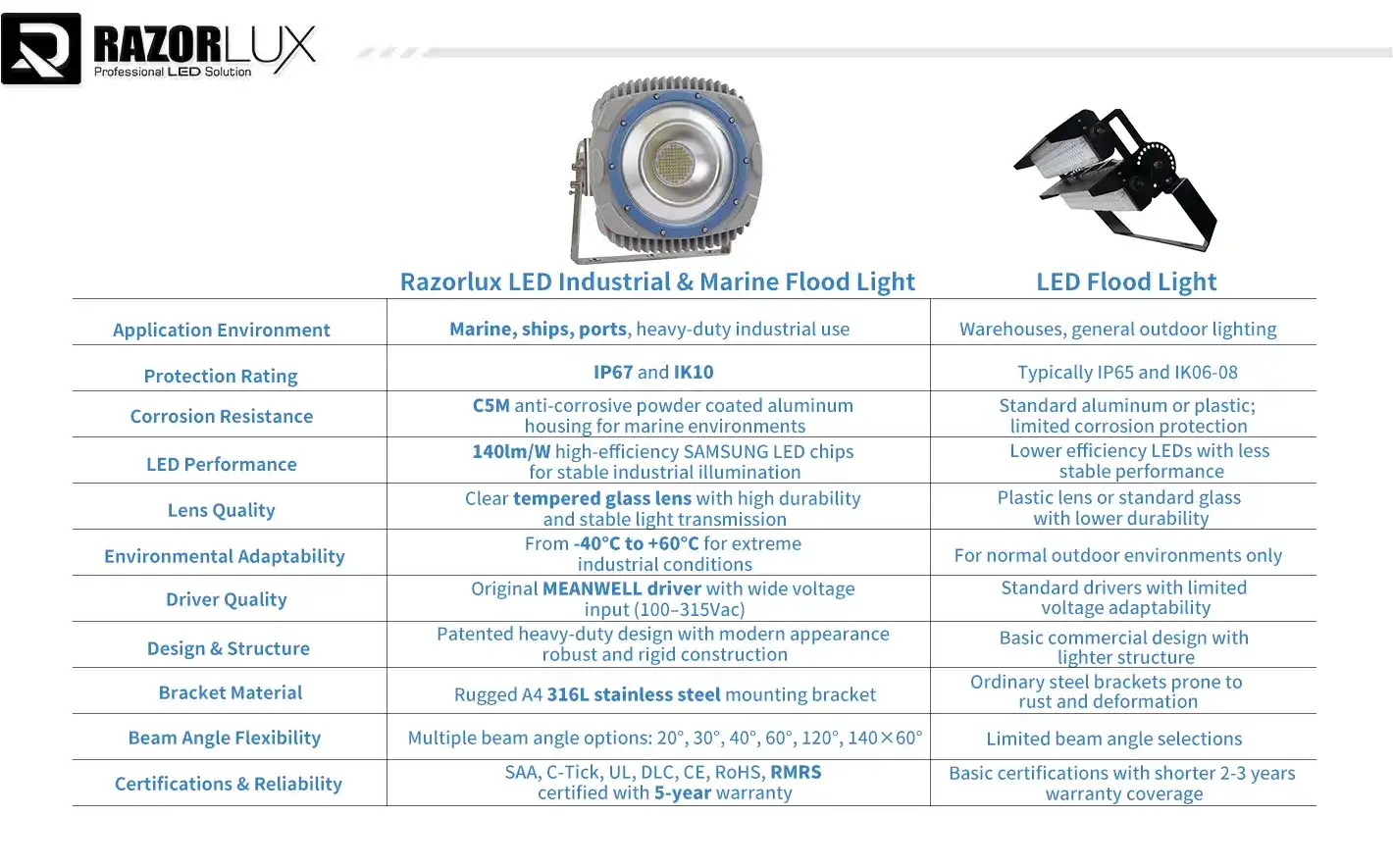
Each type of lighting technology has a different chance of working. LED flood lights still give off about 70% of the light they did at first after 50,000 hours, which is the L70 standard used in naval and industrial specs. Halogen units are broken by the time they reach 5,000 hours. After only 2,000 hours, they start to fade. In the middle are metal-halide lights. That being said, they only last 10,000 to 15,000 hours before they change colour and take a long time to warm up. This makes them less useful in an emergency. The type of battery used makes a big difference in portable models that run on batteries. Lead-acid batteries break down more quickly, especially in difficult places like ocean or Arctic construction sites. Lithium-ion batteries, on the other hand, can be charged and drained 500 to 1,000 times.
Key Factors Affecting the Lifespan of Construction Site Flood Lights
t's possible for even the best-designed lighting systems to stop working when they are misused or exposed to outside stresses. If buyers know about these things, they can pick the right amount of safety and make repair plans that keep their tools safe. Building sites have dust, water, salt spray, and changes in temperature that wear down materials more quickly. This includes construction site flood lights.
Environmental Conditions and Ingress Protection
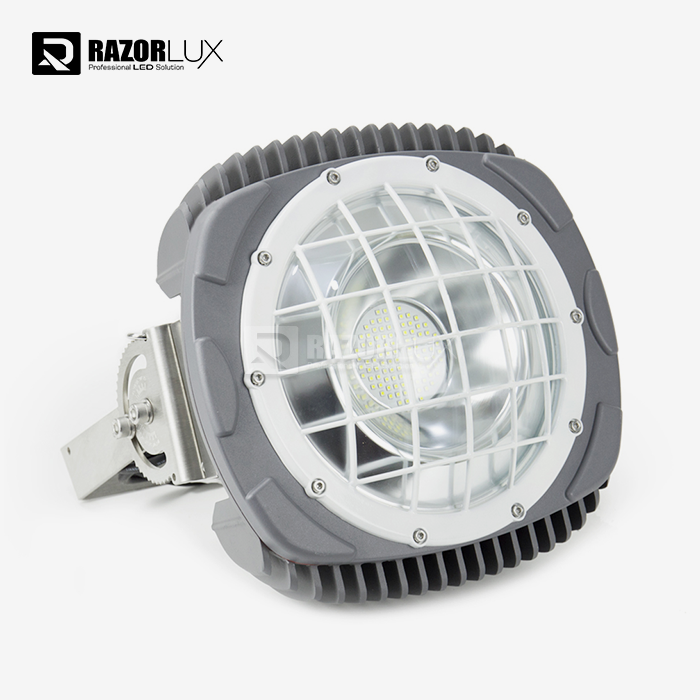
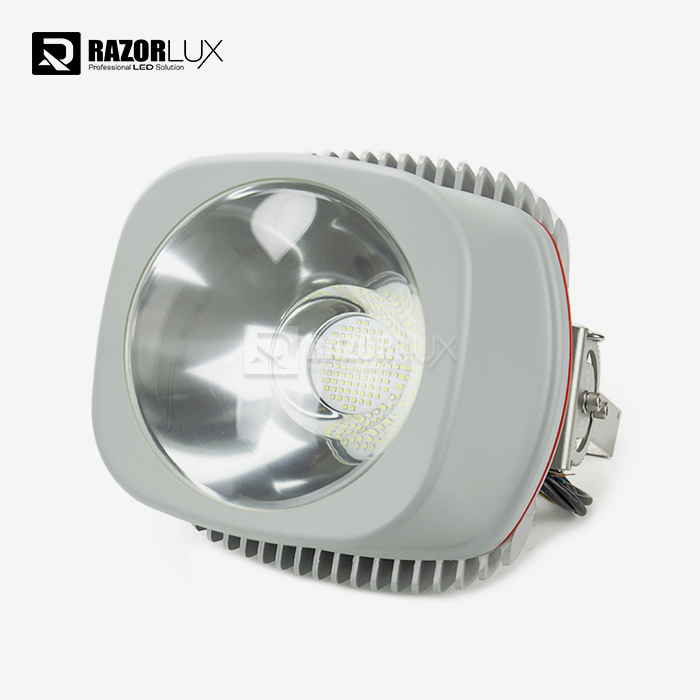
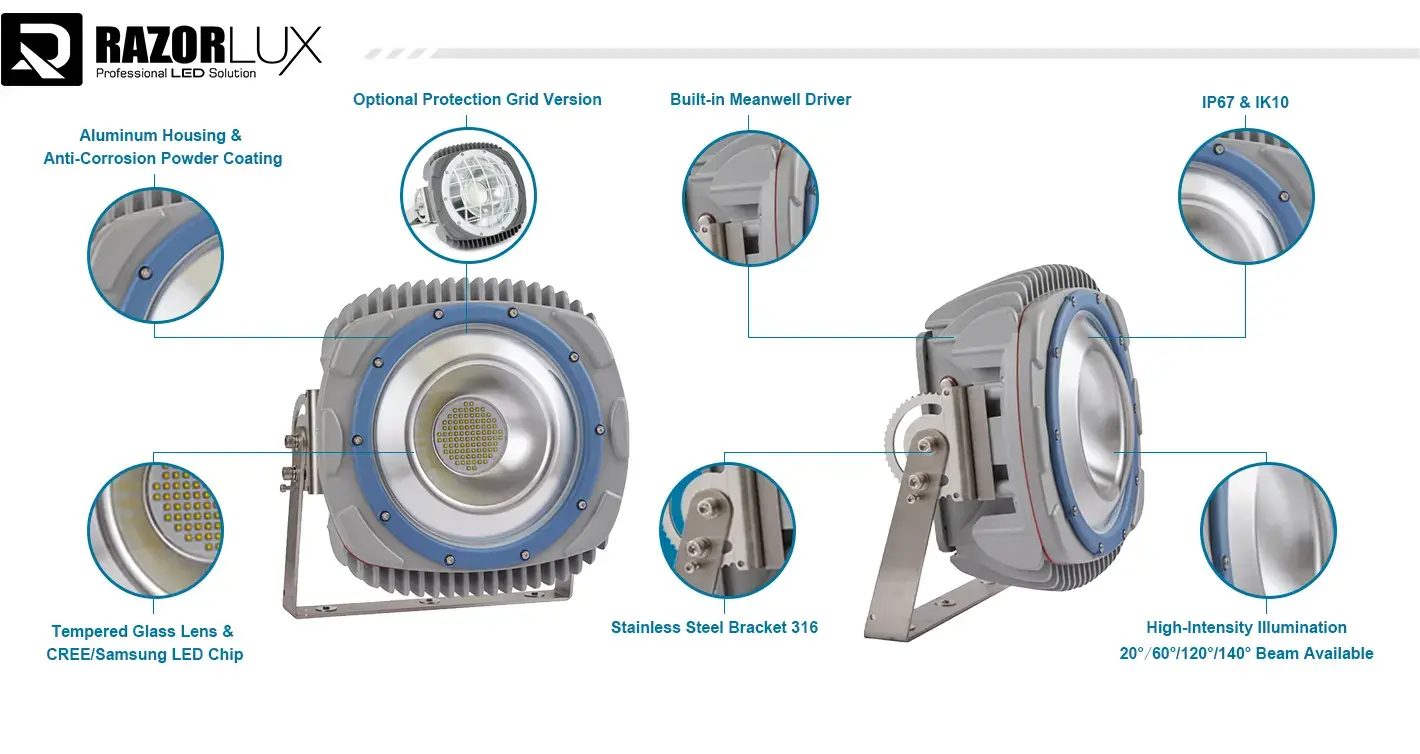
Scores for Ingress Protection (IP) show how safe a unit is against these threats. When something has an IP65 grade, it means that it can keep out dust and water jets coming from any direction. This is enough for most construction sites. IP67 units can handle being submerged for a short time. This makes them good for docks where people might submerge them by accident during floods or washdowns. Razorlux's RGL-1000A model comes with IP65 protection and can be upgraded to IP67, so it can meet the needs of customers in both sea and heavy industry. If you don't close it properly, water can get into the driver circuits and corrode the connections. This causes the circuits to fail before the LED chips do.
Thermal Management and Junction Temperature
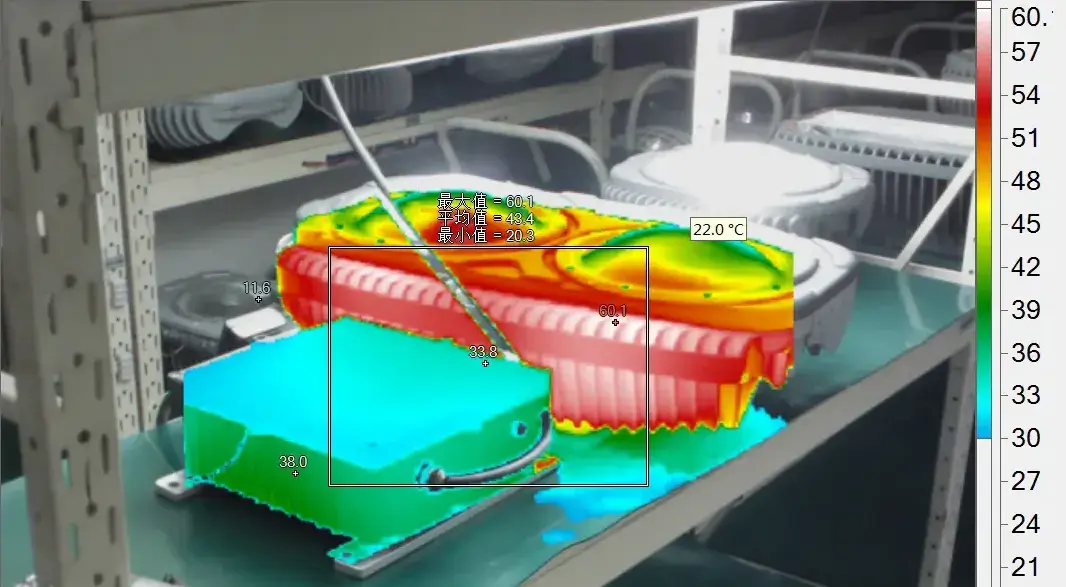
Another name for junction temperature is the heat at the semiconductor die. This temperature has a big impact on how long an LED lasts. For every 10°C above the best temperature for function, half of the expected life is lost. Professional-level floodlights are made of die-cast aluminium bodies with specially designed fins that passively remove heat. This keeps junction temperatures below 85°C even in the hottest summer months. The 50,000-hour rate of a unit could drop to 20,000 hours or less if it doesn't have the right temperature design. It could reach 110°C or higher. Purchasing managers should ask different companies for thermal simulation data and LM-80 test reports that show how well LEDs work at high temperatures and for a long time.
Voltage Fluctuations and Power Quality
Another name for junction temperature is the heat at the semiconductor die. This temperature has a big impact on how long an LED lasts. For every 10°C above the best temperature for function, half of the expected life is lost. Professional-level floodlights are made of die-cast aluminium bodies with specially designed fins that passively remove heat. This keeps junction temperatures below 85°C even in the hottest summer months. The 50,000-hour rate of a unit could drop to 20,000 hours or less if it doesn't have the right temperature design. It could reach 110°C or higher. Purchasing managers should ask different companies for thermal simulation data and LM-80 test reports that show how well LEDs work at high temperatures and for a long time.
Usage Patterns and Duty Cycles
How long a tool lasts depends on how often it is used and how often it is used. LEDs don't get too stressed when they are turned on and off a lot. This makes them perfect for lighting plans that change over time or to detect motion. Halogen and HID lights, on the other hand, get heat shock every time they are turned on and off, which makes the filament or wire break down faster. Because LEDs can work nonstop, they will safely light up remote sites that need to be lit up 24 hours a day, seven days a week. Timed lighting zones in mines are made easier by the fact that the same technology can handle cycles. When buyers know how the equipment will be used, they can match the specs of the equipment to how it will be used. This way, buyers don't lose money on equipment that isn't up to par or have to update equipment that isn't up to par too soon.
Comparing Construction Site Flood Lights: Longevity and Efficiency
It's important to think about how much something costs at first, how long it will last, and how much energy it uses. LED technology is the standard for professionals, even though it costs more at first. A close look at the differences between them shows why. Flood lights for construction sites that use LED technology last longer and work better.
| Light Type | Lifespan (Hours) | Luminous Efficacy (lm/W) | Energy Waste as Heat | Typical Applications |
|---|---|---|---|---|
| LED | 50,000 – 100,000 | 130 – 170 | ~10% | Shipyards, offshore platforms, permanent installations |
| Halogen | 2,000 – 5,000 | 15 – 25 | ~90% | Short-term temporary work, legacy system replacements |
| Metal Halide | 10,000 – 15,000 | 75 – 100 | ~60% | Large area illumination where upfront cost is prioritized |
| Battery Portable | 500 – 1,000 cycles | Varies | Depends on battery chemistry | Emergency response, mobile inspection tasks |
Energy Efficiency and Operating Cost Analysis
While metal-halide systems need 2,200 to 2,500W to produce the same amount of light, LED floodlights with 130,000 lumens use only about 1,000W. Over 10,000 hours of use, which is typical for a single phase of a project, the LED unit saves 12,000 to 15,000 kWh. At a typical industrial electricity rate of $0.12/kWh, this saves between $1,440 and $1,800 in energy costs per fixture, which is often more than the extra cost of LED technology. Companies that run ports and docks and have hundreds of fixtures can save hundreds of thousands of dollars a year on energy costs. This makes capital expenditures worthwhile even when the government has strict rules about how purchases can be made.
Durability in Harsh Environments
The marine and heavy industry settings present special problems. Aluminium housings will rust faster if they are not properly treated with powder coatings and stainless steel hardware. The marine-grade aluminium body and stainless steel mounting base of the RGL-1000A don't rust, even when left out in the ocean for long periods of time. Impact protection of IK10 makes sure that you will be okay if you get hit by dropped tools or other debris, which happens a lot on building sites. Even though portable units are flexible, they have to be able to handle being moved and transported roughly. Stable fixing makes fixed installs better because it lowers mechanical stress and increases the life of both the housing and the internal parts. When shipyard buyers look at long-term dependability, they put these durability factors ahead of photometric performance.
Maintenance Requirements and Downtime
Using old lighting methods means replacing lamps often, which means using overhead lifts or ladders to get to them, which slows down work that's already being done. Each replacement cycle costs money for labour, renting tools, and the safety risks that come with working at heights. With LED systems, this job is done for 5 to 10 years, so maintenance crews can focus on more important things than changing bulbs all the time. When parts do need to be fixed, modular designs with LED arrays and driver units that can be switched out make fixes easier. Razorlux offers detailed service documentation and spare parts, so even installations that are far away or offshore can be quickly brought back online. This continuation of operations is especially important for oil and gas plant managers, who have to deal with lighting problems that put worker safety and the rules at risk.
Procurement Considerations: Selecting Durable Flood Lights for Your Projects
Both technical standards and business terms have an effect on the results of a procurement. To find the best options, buyers have to sort through product datasheets, certification standards, and suppliers' abilities to find the best Construction Site Flood Lights.
Critical Technical Parameters
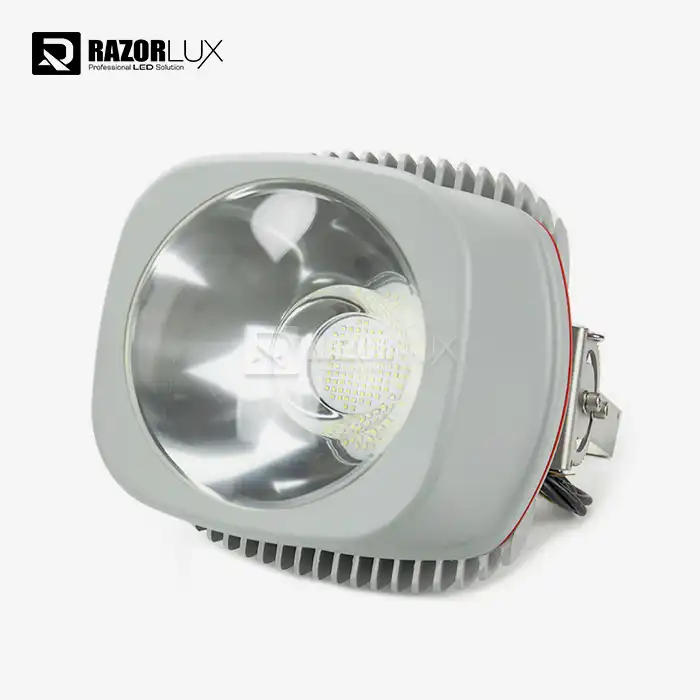
A device meets basic lighting standards based on its lumen output, which measures how much light it gives off. The RGL-1000A gives off 130,000 lumens at 130 lm/W, which is enough to replace 2,200W HID systems while lowering the demand on the power grid. The colour temperature affects how well people can see and how comfortable they are at work. Daylight white (5000K–6000K) makes contrast better for close-up work, and neutral white (4000K) cuts down on glare in places with a lot of reflection. A colour rendering index (CRI) above Ra75 means that colours can be seen correctly, which is important for finding electrical wires and doing final checking work. Beam angle choices of 40°, 60°, 120°, and 140°x60° let you adapt to the shape of the site and focus light where it's needed instead of wasting energy lighting up areas that aren't needed.
Certification and Compliance Requirements
Regional safety standards must be followed for international tasks. In Europe, CE marking lets you get into markets, while in North America, installations must have UL and DLC listings. For marine uses, approvals from a classification society like DNV/GL or ABS are needed to make sure that the equipment can handle the vibrations, salt fog, and electromagnetic interference that are common on boats. Razorlux's RGL-1000A has been certified by CE, RoHS, SAA, C-Tick, UL, DLC, CB, and ISO:9001. This makes the approval process easier for engineering companies and international shipyards. Purchasing managers in Qatar or Norway can choose a single product family instead of handling versions that are specific to each area. This makes inventory management easier and saves time.
Warranty Terms and After-Sales Support
A full guarantee shows that the company that made the product is confident in its durability. Razorlux covers both LED modules and drivers for five years, and the case for ten years. These are the best warranties in the industry and protect buyers from problems that happen too soon. Effective after-sales support includes technical advice during the development of specifications, help with installation through video tutorials and site visits, and quick delivery of spare parts. When it comes to industrial equipment suppliers that work with remote mining operations or construction projects in the Arctic, how quickly they can respond can mean the difference between small problems and costly delays in the project. Setting up pre-approved spare parts inventories and local service partnerships lowers risk even more in serious situations.
Total Cost of Ownership Calculation
The purchase price is only a small part of the costs that will come up over time. A full TCO study looks at how much energy is used, how often things need to be replaced, the cost of upkeep labour, the cost of disposal, and the penalties for downtime. LED systems cost 20–40% more than halogen alternatives, but they save 80–90% on energy costs and don't need to be replaced for ten years. Buyers can figure out how long it will take to get their money back using spreadsheet-based TCO models. For LED conversions, this is usually between 18 and 36 months in ongoing operation cases. When engineering firms are putting together bids for multi-year infrastructure projects, they use these models to show budget-conscious clients how valuable their services are. They often win contracts by suggesting LED specifications that lower operational costs despite higher initial capital costs.
Installation and Maintenance Guide to Maximize Flood Light Lifespan
Proper construction methods and regular upkeep schedules have a direct effect on how long Construction Site Flood Lights last and whether they break down early. Proper planning and professional installation are essential for maximizing equipment life.
Pre-Installation Planning
Photometric modelling, which uses software to mimic light levels across the work area, is the first step in putting lights where they need to be. This analysis finds the best place for each fixture, cuts down on the number of units needed, and makes sure that OSHA 1926.56 or similar regional standards that require minimum foot-candle levels are met. Electrical infrastructure checks make sure that the site's generators or utility lines can provide the needed wattage with enough extra power for the LED driver to start up. Mounting structure checks make sure that poles, beams, or platforms can hold the weight of the fixture and wind loads. The 30 kg weight of the RGL-1000A needs strong connection points that can handle dynamic loading.
Mounting and Electrical Connection Best Practices
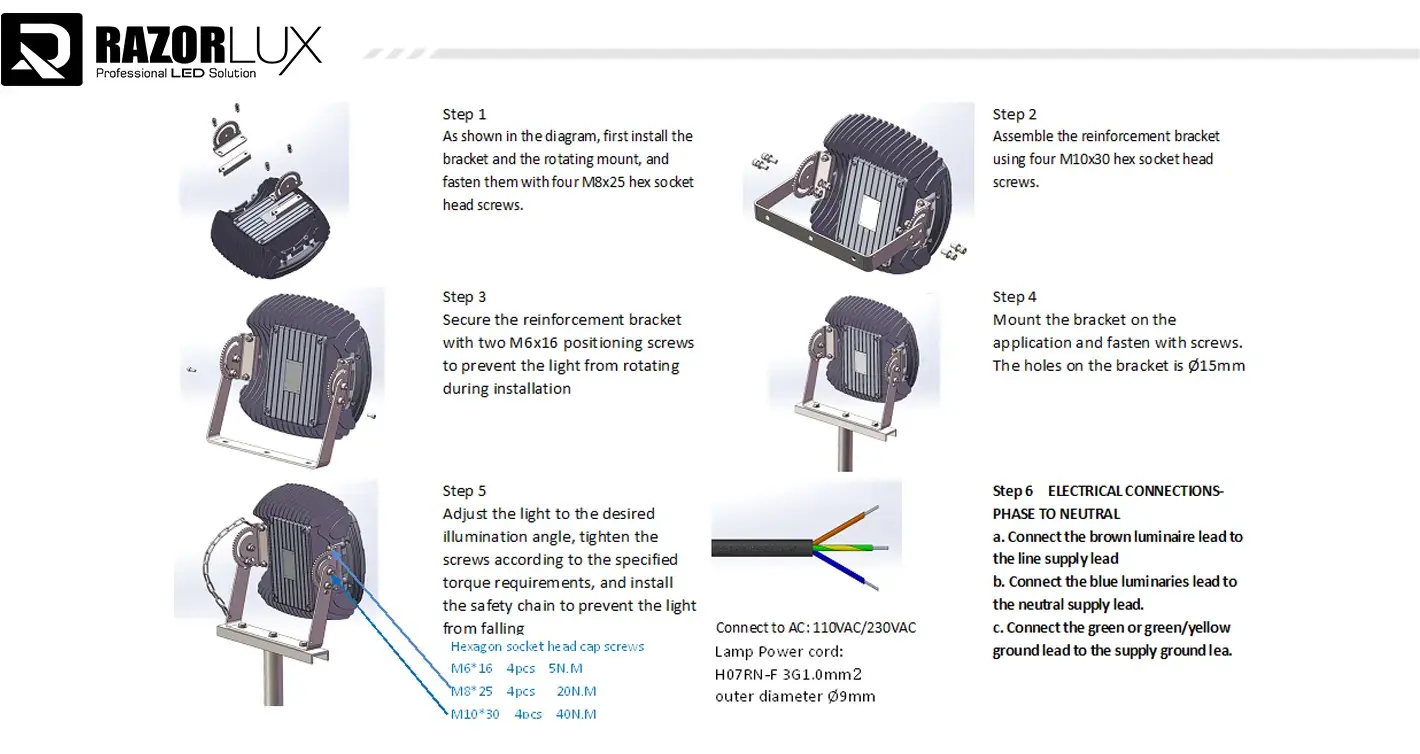
Secure fixing stops failures caused by shaking and keeps the beam oriented the same way every time. Fixtures are attached to vertical poles with stainless steel U-bolts or heavy-duty clamps, and pivot brackets let you make exact changes to the aim. Marine-grade terminals with dielectric grease must be used for electrical connections to keep them from rusting, especially near the coast. Putting cables in through pipe joints keeps IP ratings high by stopping water from getting in. Ground fault prevention devices keep housings from getting energised when shielding fails. Before turning on circuits, qualified electricians should make sure that all of the terminals are properly torqued and that the polarity is correct. Lighting engineering companies that are in charge of installation teams stress these points so that there aren't any guarantee issues or callbacks.
Routine Maintenance Schedules
Even LED systems that don't need much care can benefit from regular checks. Cleaning lenses every three months gets rid of the dust and salt that build up on them over time and reduces light transmission by 10–20%. Electrical tests are done once a year to check for early signs of wear and tear by measuring driver output voltage, power factor, and insulation resistance. Mechanical inspections look at fastening gear to see if it has rusted or come loose from vibrations and changes in temperature. Thermal imaging studies find things that don't get rid of heat well enough before they break. Keeping track of these tasks in maintenance management systems helps guarantee claims and planning for the end of the product's life. Port and dock facility engineering managers work lighting maintenance into larger preventative maintenance plans. This makes crew schedules more efficient and keeps terminal operations running as smoothly as possible.
Troubleshooting Common Issues
Systematic analysis stops repairs that aren't needed when fixtures don't work right. Dimming or flickering usually means a problem with the driver, not the LEDs. 70% of reported problems can be fixed by checking the input voltage and replacing the drivers. Thermal problems, like clogged fins, blocked ventilation, or placement in small areas without enough airflow, are often to blame for LEDs breaking down too quickly. Corrosion in the housing means that the IP ratings aren't right for the surroundings or that the gaskets are broken and need to be replaced. Photometric testing measures how much light is lost and tells you whether it is cheaper to clean, replace the drivers, or replace the whole bulb. Razorlux's technical support team helps buyers with remote diagnostics and gives maintenance technicians decision trees that walk them through troubleshooting protocols. This cuts down on downtime and the cost of parts that aren't needed.
Advanced Technologies Extending Floodlight Lifespan
New technologies are expected to make LEDs last longer than current standards, and they will also add operating intelligence that makes upkeep even cheaper for Construction Site Flood Lights.
Smart Drivers with Adaptive Power Management
Next-generation LED drivers have microprocessors built in that constantly check the working conditions and change the output to get the longest life. Dimming methods automatically lower output at night when it's cooler and not needed at full light. This lowers junction temperatures and adds 20 to 30 percent to the life of the chip. Voltage compensation circuitry keeps the LED current stable even when the input voltage changes. This keeps the driver from failing too soon. IoT connectivity for remote monitoring lets maintenance teams know about problems before they happen. For example, if output starts to drop, replacements are made during planned downtime instead of emergency repairs. It is very helpful to have these features for offshore platforms because service calls by helicopter cost tens of thousands of dollars each way.
Advanced Materials for Corrosion Resistance
In most situations, aluminium and powder covering are enough to protect things, but nautical uses should use better materials. Anodised aluminium housings make an oxide layer that lasts longer and is better at blocking salt spray than coats alone. Using Grade 316 marine stainless steel hardware gets rid of the weaker spots in normal systems where corrosion can happen. With UV-stabilized chemicals, polycarbonate glasses don't yellow or crack over time, which lowers their IP ratings. When heated and cooled thousands of times, silicone seals keep their shape better than rubber ones. Shipyard buying managers who request lighting for ships that will be used for decades are increasingly asking for these material upgrades and are willing to pay 10-15% more for them in return for less upkeep over the course of the ship's life.
Modular Design for Field Serviceability
When one part of a traditional integrated floodlight breaks, the whole thing is useless. Modular designs split drivers, LED arrays, and optical systems into pieces that can be swapped out in the field. Instead of replacing the whole fixture when a driver fails after 40,000 hours, technicians just swap out the module. Targeted repairs can also be done with LED displays that have normal mounting connections. This way of thinking about design cuts down on waste, lowers the need to keep extra parts on hand, and makes fixtures last longer—up to 100,000 hours or more. Purchasing managers at industrial equipment suppliers like being able to sell standard modules instead of full fixtures for every lighting model in use. This lets them get fixes done faster and save money on inventory.
Industry-Specific Lifespan Expectations
Even for lighting models that are exactly the same, different operational environments put different stresses on them, which changes how long they are expected to last. Construction Site Flood Lights must be tailored to the specific needs of each industry sector.
| Industry Sector | Typical Environment | Expected LED Lifespan | Key Degradation Factors |
|---|---|---|---|
| Shipyards | High humidity, salt spray, vibration | 50,000 – 70,000 hours | Corrosion, thermal cycling from welding operations |
| Offshore Oil & Gas | Extreme weather, salt fog, vibration | 60,000 – 80,000 hours | Harsh environment, but continuous operation reduces thermal cycling |
| Steel Mills | High ambient heat, dust, and electromagnetic interference | 40,000 – 60,000 hours | Elevated temperatures accelerate LED degradation |
| Port & Dock Facilities | Moderate conditions, occasional submersion | 70,000 – 90,000 hours | Well-maintained environments extend lifespan |
| Mining Operations | Dust, vibration, temperature extremes | 50,000 – 70,000 hours | Particulate ingress and mechanical shock |
Shipyards and Ship Repair Facilities
Spots of high heat put stress on nearby parts when welding, and when grit blasting, sharp dust gets into housings that aren't sealed well enough. Sometimes loads hanging from the crane hit the lights, and the crane's frequent moves shake the lights. Even with these issues, LED systems with an IP67 rating and IK10 impact safety usually work for 50,000 to 70,000 hours in these conditions. Between 50 and 200 people work for companies that fix ships. They like it when problems are fixed quickly because it keeps them from having to delay the delivery of the ship and pay fines. Repairs can be done the same day if extra driver modules and LED arrays are on hand. This has less of an effect on the project.
Offshore Platforms and Marine Installations
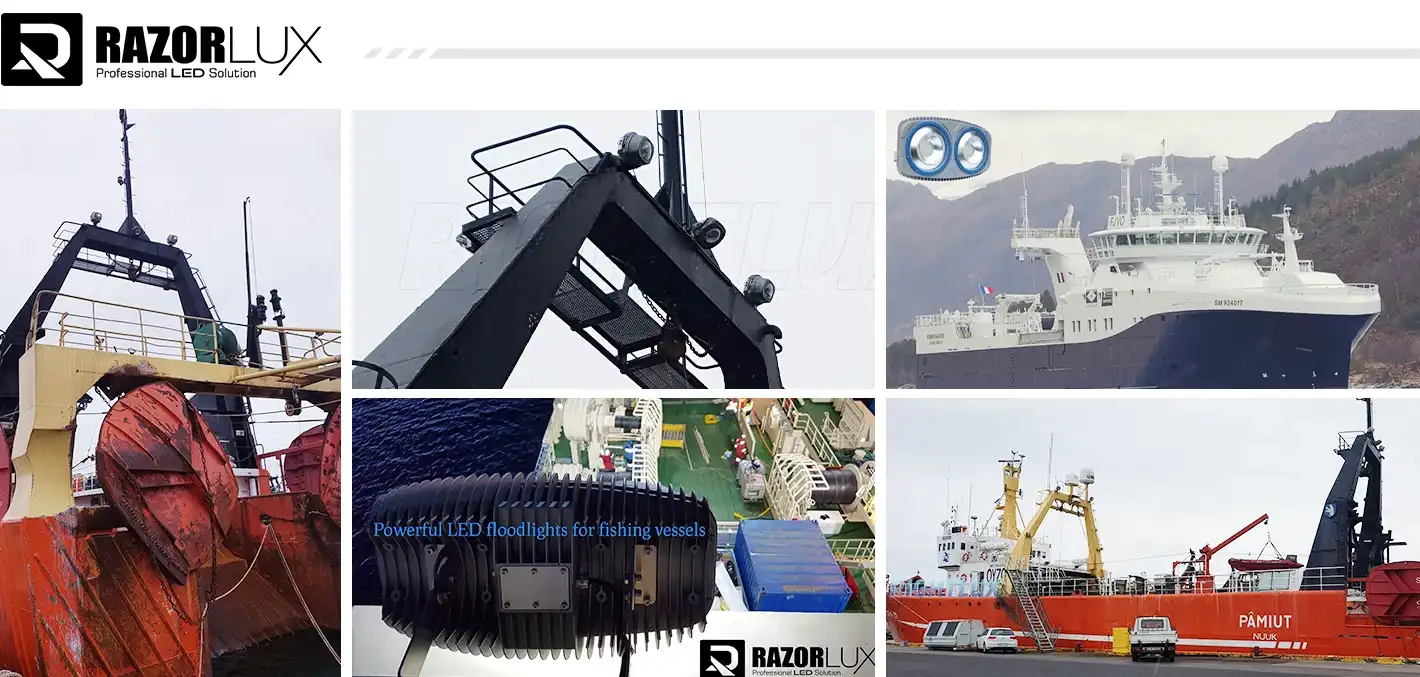
Running all the time, 24 hours a day, seven days a week, in salt fog is the hardest use case. It's strange, but LEDs can last longer when they are used all the time without thermal cycling than when they are only used sometimes. The fixtures that are connected to the level decks are always being hit by waves, UV light, and strong winds. They will last for 60,000 to 80,000 hours if you pick the right materials and seal them with IP67. Offshore platform facility engineering managers give more weight to service providers that have a lot of marine certifications and have done well on similar projects in the past. People who want to buy something pay a lot of attention to case studies that show success over a number of years in the North Sea or the Gulf of Mexico.
Heavy Industrial Manufacturing
Heavy machinery, high temperatures, and chemical atmospheres that break down materials are all things that lightning in steel and paper mills has to deal with all the time. These things mean that they are expected to last only 40,000 to 60,000 hours less than in places that are better for them. You can lower these stresses by picking devices that better handle heat and driver circuits that are protected from EMI. The more controlled conditions inside these buildings' large warehouses make it possible for goods to last for at least 70,000 hours. In factories with 100 to 500 workers, upfront cost limits are weighed against the amount of work that isn't getting done because of bad lighting. This means that LED systems that use less energy and have predictable lifespans are a smart financial choice.
Conclusion
Construction Site Flood Lights made with professional-grade LED technology can work for more than 50,000 hours in rough conditions. That's more than ten years of reliable service. Better temperature control, strong electrical design, and marine-grade materials that don't break down in rough situations are what make this last so long. When buying lights, procurement teams should look for units that have the right IP and IK ratings, a wide input voltage tolerance, and all the necessary certifications for the places they will be used. LEDs are always better purchases than other types of lights, even though they cost more at first. This is because they use less energy and don't need to be changed as often. Putting up lights the right way and keeping them in good shape will make them last longer and help keep people safe while working on a project.
FAQ
How often should I replace LED flood lights on construction sites?
Professional Construction Site Flood Lights that are listed for 50,000 hours need to be replaced every 8 to 12 years if they are used for 10 to 12 hours a day during the night shift. Every 6 to 12 months, halogen alternatives need to be replaced. A yearly check of the light output lets you know when units are getting close to the end of their useful life, before they break.
Does professional installation affect lifespan?
If qualified technicians mount, connect, and seal your electronics properly, they can add 20 to 30 percent more life to them compared to installations that aren't done right and let water in or create hot spots of temperature. When you pay for professional installation, you get fewer warranty claims and downtime for your business.
Are LED flood lights cost-effective for short-term projects?
LEDs often make up for their higher prices, even for projects that last 6 to 12 months. Units can be moved to new projects, spreading the cost of the investment over more than one place. For contractors whose project schedules change often, rental programs for high-performance LED systems give them flexibility without requiring them to make a capital commitment.
Partner with Razorlux for Long-Lasting Construction Site Flood Lights
Razorlux has been a trusted provider of Construction Site Flood Lights for over 20 years, with LED innovations that have been used in maritime, industrial, and heavy-duty applications around the world. Our RGL-1000A model has a comprehensive five-year warranty and meets the standards of CE, UL, DLC, and the marine classification society. It gives off 130,000 lumens at 130 lm/W. Our knowledge helps shipyard purchasing managers, offshore platform engineers, and industrial equipment sellers choose lighting options that work in harsh conditions and cut energy costs by 60 to 70%. Email our technical team at sam@razorlux.com to talk about your project needs, get sample units to test on-site, or get a full photometric study that is made to fit the shape of your site. We give you all the paperwork you need, like technical drawings, installation guides, and certification packages that make the buying process easier and meet the needs of technical review. Choose Razorlux for lighting systems that are built to last and give your projects the light they need.
References
1. Illuminating Engineering Society, "Recommended Practice for Outdoor Construction Lighting," ANSI/IES RP-18-21, 2021.
2. Department of Energy, "LED Lighting for Construction and Temporary Work Sites: Energy Savings and Performance Benchmarks," Technical Report DOE/EE-1876, 2020.
3. Marine Equipment Trade Association, "Guidelines for Selecting Marine-Grade Lighting Equipment," META Standard 47-2019.
4. International Association of Lighting Designers, "Long-Term Performance of LED Systems in Industrial Environments," Research Bulletin Vol. 15, Issue 3, 2022.
5. American Society of Mechanical Engineers, "Maintenance Practices for LED Illumination in Harsh Environments," ASME Technical Paper PVP2021-62847, 2021.
6. National Electrical Contractors Association, "Installation Standards for Temporary and Permanent Construction Lighting," NECA 500-2020.