

_1750326878398.png)

How to Choose the Right LED Stadium Flood Lights System?
To choose the right LED stadium flood lights system, you must first know what kind of lighting your place needs, how much energy it can handle, and how it will be used. When making a choice, it's important to pay attention to important technical details like light output (usually 88,000 lumens or more for 800W systems), IP grades for weather protection, beam angle accuracy, and certification compliance. Modern stadium lighting has to provide broadcast-quality lighting while also being able to weather harsh conditions like ocean salt spray and Arctic temps. This means that longevity, efficiency, and performance stability must be at the heart of any good purchase choice.
Introduction
In the last ten years, stadium lighting has changed a lot. Moving from old metal halide systems to new LED technology is more than just a change to the equipment; it's a complete rethinking of how sports places provide performance, safety, and the fan experience. For purchasing managers at shipyards, port facilities, offshore platforms, and industrial complexes looking for durable lighting solutions, the needs of stadiums are eerily similar: both need lighting that will last, work consistently in harsh conditions, and be cost-effective in the long run. This guide helps procurement professionals in the maritime, heavy industrial, and infrastructure sectors make decisions that are hard to make. The technical issues that need to be thought about are the same whether you're lighting up a business dock, an offshore fishing rig, or a seaside manufacturing plant. We'll look at how modern LED flood lighting technology solves important operational problems like corrosion resistance in salt-spray environments and maintaining performance during temperature extremes. It also delivers measurable returns through lower energy use and longer maintenance intervals. In today's B2B procurement world, decisions need to be based on detailed technical documentation, verifiable certifications, and proven case studies. Our method takes into account that your expert team will be looking at optical data, your buying department will be looking at the total cost of ownership, and your management will need to be sure that the seller will be reliable and provide help after the sale. This complete buying guide gives you the information you need to make choices that meet your business needs and financial goals.
Understanding LED Stadium Flood Lights: Core Concepts and Benefits
High-intensity LED flood lighting systems are complex technical solutions that are made to evenly light large areas while allowing precise control over how the light is spread. These systems are different from others because they use solid-state semiconductors to turn electrical energy directly into photons. This gets rid of the flaws that come with filament-based or gas-discharge lights.
How LED Technology Differs from Traditional Lighting
Traditional metal halide and high-pressure sodium systems make light by releasing electricity in gas tanks under pressure. These systems lose a lot of heat and take a while to get fully bright. LED technology works very differently—solid-state LEDs give off light right away when current flows through semiconductor materials, letting them work at full brightness right away with little heat loss. In naval and industrial settings, where quick lighting can change safety rules and operating readiness, this difference is very important. Because LED systems don't have any fragile filaments or pressure parts, they are also better at resisting vibrations. This makes them perfect for use on ships and in heavy machinery, where mechanical stress would break down standard lights.
Energy Efficiency and Cost Reduction
Metal halide systems usually give off 60 to 90 lumens per watt, but professional-grade LED flood lighting gives off more than 130 lumens per watt. A 1500W to 2500W standard lamp can be replaced with an 800W LED bulb that gives off better light. For buildings that use lights 10 to 16 hours a day, this means that each bulb will save 60 to 70 percent of its total energy use. By updating 100 lights, a port facility can cut its yearly power use by about 700,000 kWh, which means big savings in running costs. In addition to saving energy directly, less power demand puts less stress on the infrastructure of electrical distribution systems. This could mean that expensive updates to transformers and cables in current buildings can be put off.
Extended Operational Lifespan
After 50,000 hours of use, a good LED system keeps 70% of its original light (L70 grade). That's about 11 years of nonstop use or 17 years of 8 hours a day use. Compared to metal halide lights, which need to be replaced every 6,000 to 15,000 hours, this longer service life makes upkeep much less often needed. This stability benefit is especially useful for offshore bases and other remote marine sites where getting to them for repair would be very expensive and dangerous. Getting rid of re-strike delays (the 10 to 15 minute warm-up time that metal halide lamps need after the power goes out) means that lighting returns right away after an electrical disturbance, which is a very important safety factor in industrial settings.
Superior Light Quality and Control
Modern LED systems offer great color rendering (CRI >75, with Ra>80 and Ra>90 options), which is necessary for accurate visual awareness in ships, on drilling platforms for inspection work, and in industrial facilities for safety operations. You can change the color temperature (2700K–6500K) to suit your needs. For example, warmer tones can be used in places where people are, and cooler temperatures that are similar to sun can be used for work lighting. There are different beam angle choices (15° to 140°) that allow for exact light distribution. This cuts down on lost light and light pollution that can make it hard to navigate in marine settings or bother people who live nearby in port facilities.
Criteria for Choosing the Right LED Stadium Flood Lights System
To choose the right high-intensity LED stadium flood lights, you need to carefully look at a lot of different technical and business factors. The decision framework needs to weigh the needs of the project right now against the needs of the business in the long term, and it also needs to make sure that it works with the building's current equipment and any plans for future growth.
Assessing Your Venue Requirements
Start by writing down information about your facility's exterior features and how it works. Baseline lighting needs are set by the size of the field, the available hanging height, and the amount of light in the room. A 200m x 50m business dock with a 25m mast height needs different specs than a work deck for an offshore platform or a factory building with walls. Figure out the lux levels that are needed based on the type of activity. For example, general travel areas need 20 to 50 lux, busy work zones need 200 to 500 lux, and precision inspection areas may need 750 lux or more. Think about how the facility is used: facilities that are used around the clock need different reliability requirements than sites that are only used sometimes. Environmental factors are very important. Places near the coast have to deal with salt spray rusting, places in the north have to deal with extreme cold, and places in the tropics have to deal with high humidity and intense heat. Record the electrical infrastructure's power, including the voltage that can be used (single-phase or three-phase), the highest load that a circuit can handle, and how well it works with current control systems.
Critical Technical Specifications
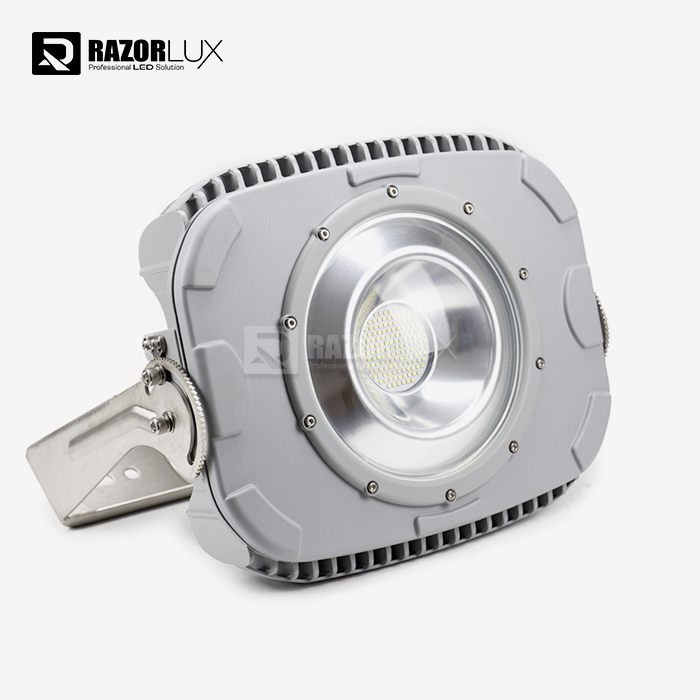
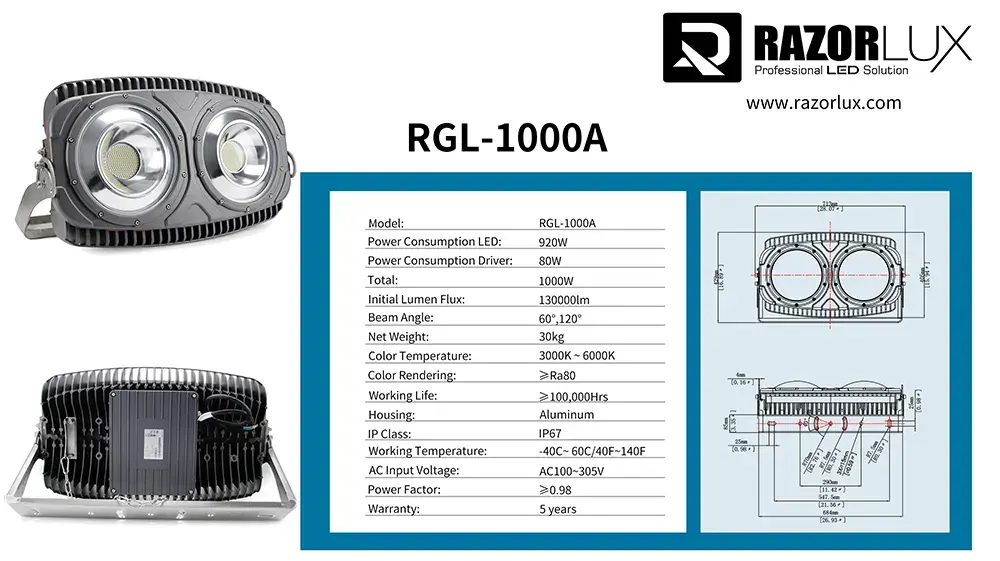
Lumen brightness shows how bright something is. Depending on the job, professional lights can have anywhere from 40,000 to 150,000 brightness or more. Our 800W system gives off 88,000 lumens at 130 lumens per watt, which is enough to light up big work areas from high hanging places. Our AC90-305V and DC127-431V support makes sure stable operation in a wide range of electrical settings, which is important for foreign sites and facilities with inconsistent power quality. IP (Ingress Protection) ratings describe environmental sealing. IP65 offers dust-tight protection and water jet resistance, making it suitable for covered areas. IP67, on the other hand, provides submersion protection to 1 meter depth for 30 minutes, making it necessary for marine applications that are mounted on decks and places that flood during bad weather. IK (Impact Protection) ratings tell you how strong a machine is. For example, an IK10 rating can handle 20 joules of impact energy, which is the same as dropping a 5-kilogram mass 40 centimeters. This is very important in industrial settings where fixtures could hit things from cranes or other material-handling equipment.
Beam Angle and Light Distribution
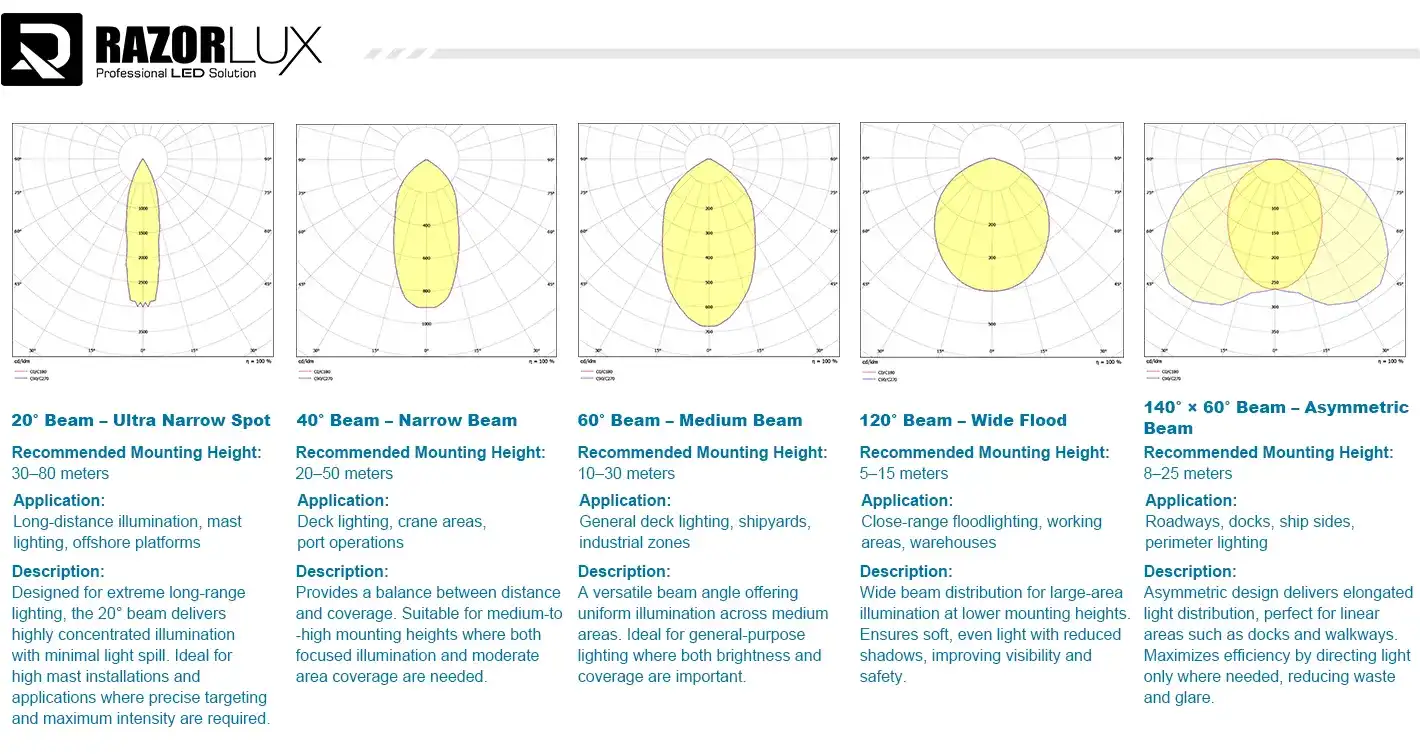
Precise beam control cuts down on lost light and makes sure that the area is covered evenly. Narrow beams (15° to 30°) focus light for long-throw tasks, like lighting up work areas far away from tall masts or covering large areas. For general area lights with even spread, medium beams (40° to 60°) work best. Wide beams (120° to 140°) give off a flood of light from lower mounting heights. Asymmetric beam patterns (140°x60°) are best for covering a rectangle area. Look at the shape of your building. For example, a narrow dock may need linear fixture layout with medium beams, while a square storage yard may need fewer fixtures spread out more widely. Photometric data with candela distribution curves and isolux graphs allows for accurate models. Ask for this information when evaluating suppliers to confirm coverage estimates before buying.
Certification and Compliance Requirements
International approvals make sure that promises about safety and efficiency are true from a third party. The CE mark shows that the product meets the safety and electromagnetic compatibility standards of the European Union. UL (Underwriters Laboratories) approval shows that safety standards in North America are being met, which is important for work in U.S. regions or with American companies. The SAA and C-Tick licenses meet the needs of Australia and New Zealand. For naval uses, certificates from DNV GL (Det Norske Veritas - Germanischer Lloyd) and ABS (American Bureau of Shipping) make sure that the product is suitable for conditions like earthquake resistance and rust protection. RoHS (Restriction of Hazardous Substances) compliance protects the environment by reducing dangerous substances like mercury and lead. ISO 9001 approval shows that a company has quality management systems in place, which is a key sign of uniform production standards and methods for ongoing growth.
Evaluating Supplier Reliability
Supplier selection is more than just choosing a product. It also includes the supplier's ability to make the product, their professional help, and the possibility of a long-term relationship. Check the factory's output capacity and quality control systems. Buildings with approved engineering labs and large patent files show real R&D investment, not just contract assembly operations. Check where the parts come from; high-end systems use named drivers (Meanwell, Inventronics) and trusted LED chips (Samsung, OSRAM, Cree) instead of generic ones. Ask for sample setups in places that are like the ones you want to use them for. Real performance data from facilities that are like your application is more useful than lab specs. Check to see if the paperwork is complete. Professional providers give full technical instructions, installation guides, lighting test results, and certification documents. Check how prompt a seller is during the research phase. Suppliers that answer technical questions quickly and in detail usually have the same standards for support after the sale.
Warranty Terms and After-Sales Support
A full guarantee shows that the maker is sure that the product will last. Standard warranties for LED modules and drivers last between 3 and 5 years. Premium guarantees last between 5 and 7 years. Some makers offer longer housing guarantees (10 years or more) that cover structural stability and resistance to rust. This is especially helpful in tough naval settings. Carefully read the guarantee terms. Does the coverage include both parts and work, or just parts? How long do you promise to respond to service claims? Are new units available during fix times to keep operations running as smoothly as possible? Check out the infrastructure of the seller for after-sales support. Manufacturers with regional service centers or established dealer networks will respond faster than suppliers that are far away and need to ship everything for every service contact. For important infrastructure projects, providers might want to offer emergency spare parts programs or keep local stock on hand to make sure they can repair parts quickly.
Types and Technical Features of LED Stadium Flood Lights
High-performance LED stadium flood lights encompasses diverse design approaches optimized for different installation scenarios and operational requirements. Understanding these variations enables precise matching between product capabilities and application demands.
Fixed Versus Adjustable Mounting Systems
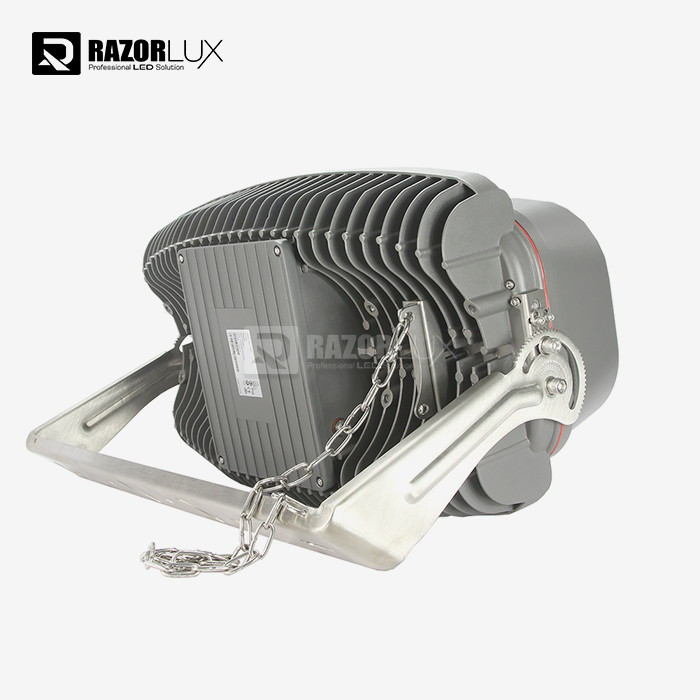
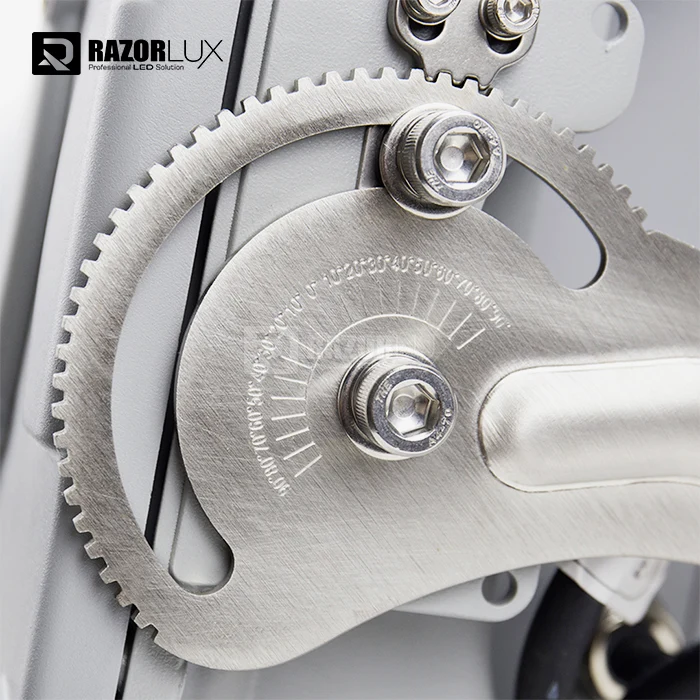
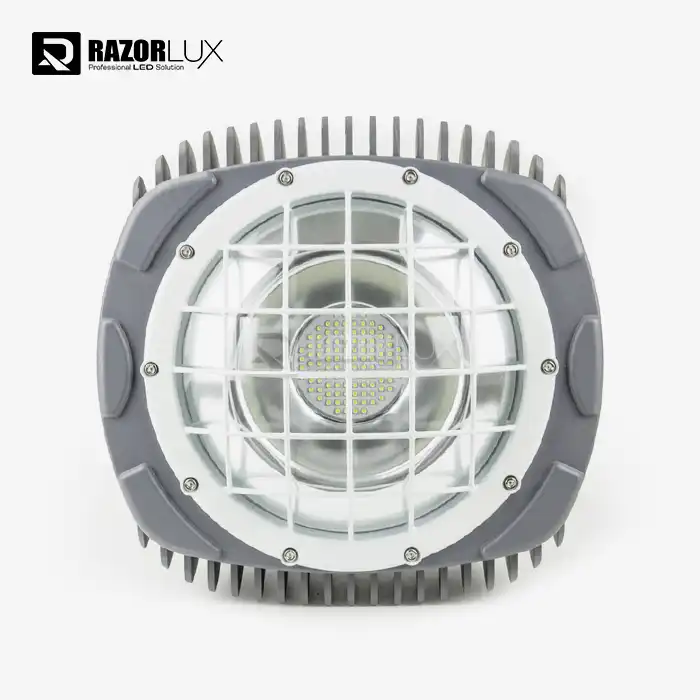
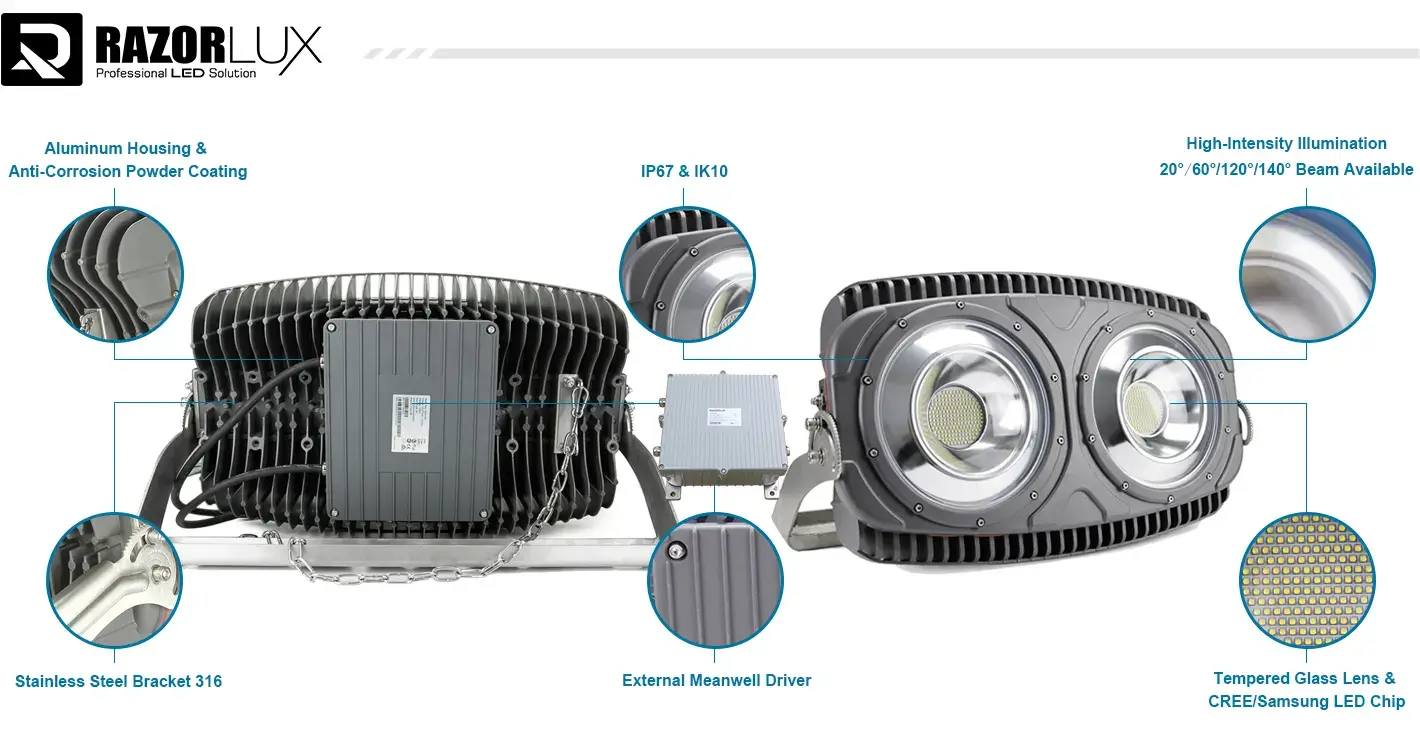
Fixed-mount lights are attached directly to structure supports at set shooting angles. They are very durable and don't need much upkeep. These designs work well for places where the direction of the light doesn't change, like dock aprons, parking lots, or fixed work zones that need general area lighting. Adjustable-mount systems have multi-axis moving devices that let you change the exact direction after installation. This is useful for changing the plan of a facility or making up for differences in the mounting structure. Marine-grade movable clamps are made of stainless steel and have locking systems that keep them in place even when they are being loaded with wind and pressure. Our patented multi-function design includes strong fastening gear that can handle harsh weather stresses and lets you adjust the installation angle during testing.
Optical Design and Beam Shaping Technology
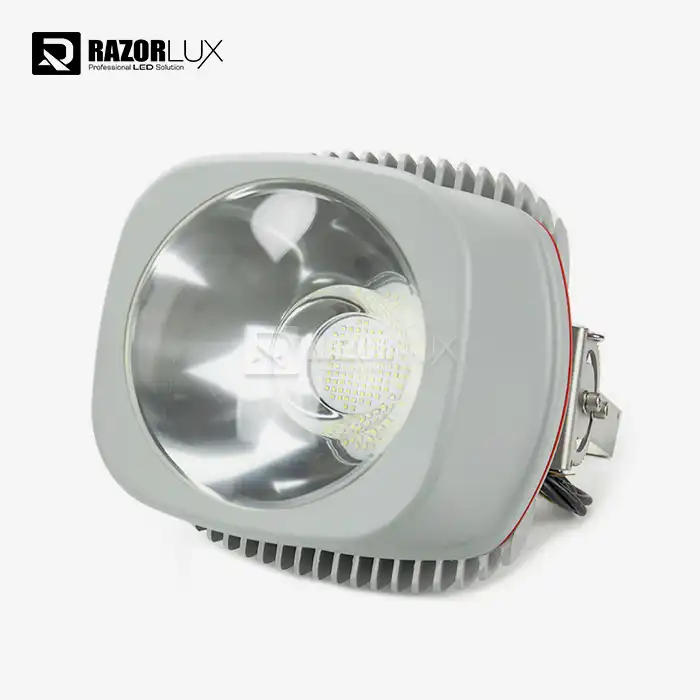
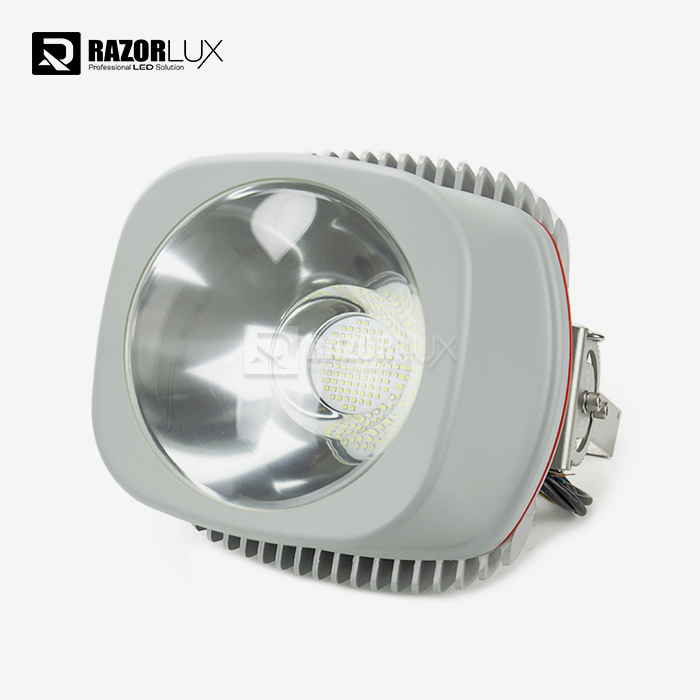
Advanced LED systems use optical parts that were carefully designed and manufactured to control how light is spread with little loss. When placed directly on top of LED arrays, primary optics catch the light that they give off and send it to secondary optical elements. Secondary optics, like high-transmission PMMA (polymethyl methacrylate) or toughened glass lenses, shape the beam pattern based on the needs of the application. Total Internal Reflection (TIR) lenses use carefully calculated surface shape to reroute light through internal reflection instead of surface refraction. This makes them very efficient (>90% transmission) and cuts off the beam sharply, eliminating sky glow and light pollution. Multi-lens array designs spread out several LED sources in the best way possible, making even lighting without the hot spots that come with single-source lights. Anti-glare visors and shutter extensions give you more control over the light by moving it downwards and blocking direct viewing of bright LED surfaces. This is very important for situations where the device needs to be less visible from nearby navigation channels or residential areas.
Thermal Management Systems
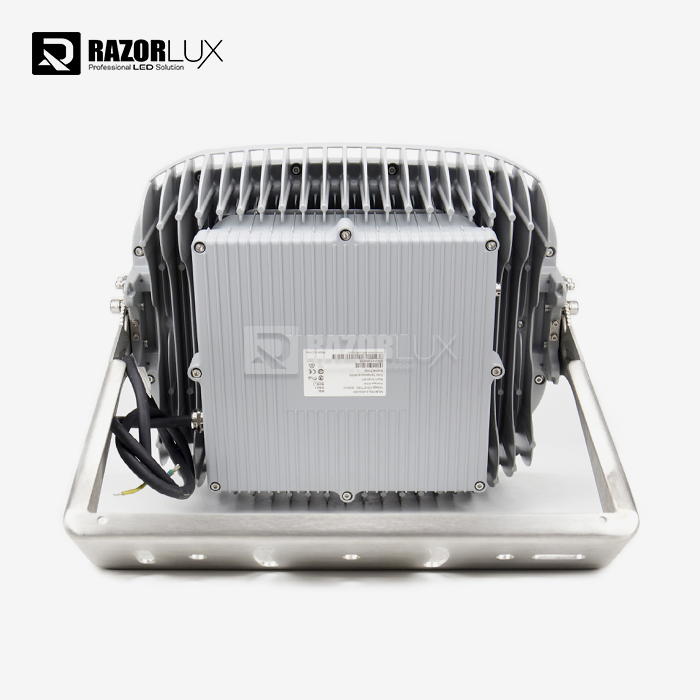
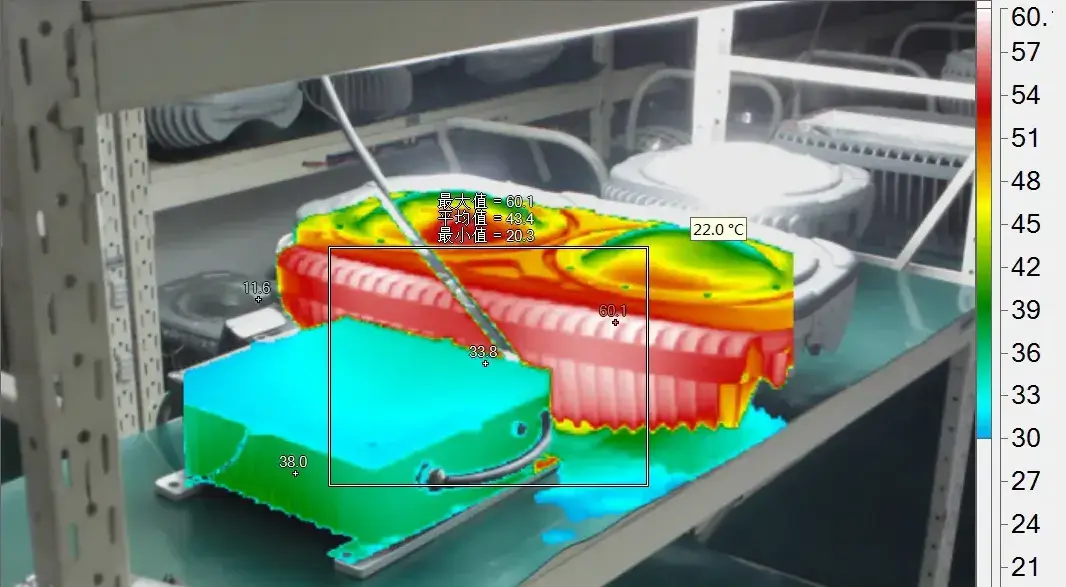
Managing the joint temperature has a direct effect on how long an LED lasts and how well it works. Professional lights have designed heat disposal systems that keep LEDs running at the right temperature. Die-cast metal housings act as heat sinks, moving heat away from the LED clusters and spreading it out through long fan structures that cover as much surface area as possible. Some designs use heat pipe technology, which is made up of sealed tubes that hold phase-change working fluids that move heat from LED modules to faraway cooling fins by evaporating and condensing. Thermal interface materials (TIM) with high conductivity are used between LED panels and heat sink surfaces in high-end systems. This reduces thermal resistance. Because passive cooling systems don't have any moving parts, they are reliable in tough settings where fan-based active cooling would need more upkeep and have possible failure spots. Our design keeps the LED junction temperatures below 85°C even when the temperature outside is 60°C. This means that the L70 will last more than 50,000 hours in hot and desert settings.
Electrical Specifications and Power Management
The range of input voltage affects how flexible and resistant a system is to changes in power quality. Wide-range drivers (AC90-305V) work with all voltage standards around the world and can handle big changes in voltage. This is very important for places with shaky grid links or that are switching between generator and public power. Power factor correction (PFC) circuits keeps the power factor above 0.98, which lowers the amount of reactive power used and the fees that utilities charge for it. It also lowers the amount of current drawn and the stress on the electrical infrastructure. Total harmonic distortion (THD) of less than 10% makes sure that the electricity will work with sensitive equipment that shares the facility's power systems. For flicker-free operation, the current ripple needs to be managed. Professional drivers keep the output current fluctuation to less than 1% to 3%. This stops the high-frequency flicker that can affect fast camera systems and make long exposures more tiring on the eyes. Surge protection built into driver designs protects against short-term voltage spikes caused by lightning strikes or grid switching events. High-quality systems offer 10kV+ surge immunity by using MOV (metal oxide varistor) components and improving circuit design.
Environmental Protection Features
IP67 entry protection makes airtight seals that keep dust and water out of internal parts. This is very important for naval installations that are placed on decks and buildings that get flooded sometimes. Corrosion-resistant materials are used to build houses, like marine-grade aluminum metals with powder-coat or anodized finishes, stainless steel frames and bolts, and seals that can handle salt water, oil products, and chemicals. Tempered glass or plastic lens covers can take a hit and still keep their sharpness over time. Breather plugs with Gore-Tex coverings keep the pressure inside even when the temperature changes, but they also stop water from getting in, which stops condensation that would fog up visual parts and speed up rusting. Cable entry systems that use compression glands with multiple closing rings keep IP ratings while being able to fit cables of different sizes. IK10 impact resistance checks the stability of the housing under mechanical stress. This is very important in industrial settings where devices could be hit by cars, climbing equipment, or flying objects during bad weather.
Installation and Maintenance Best Practices for Long-Term Performance
Maximizing LED flood lighting system performance and longevity requires attention to installation quality and systematic maintenance protocols. Proper implementation establishes the foundation for reliable long-term operation while minimizing total cost of ownership.
Pre-Installation Site Assessment
Do thorough site studies to record how well the building is supported, how much power the equipment can handle, and how exposed the area is to the environment. Check the stability of the mounting structure. High-intensity lights that weigh 45 kg each, along with the mounting gear and wind loads, need a lot of support. Figure out the wind load by using the fixture's effective projected area (EPA) and the wind speed data for the area. Coastal areas may have winds of 150 km/h or more, which means they need designed mounting solutions. Check the electrical capacity and make sure that the circuit breakers, wire sizes, and transformer capacities can handle the total load on the fixtures with enough safety gaps. Figure out the best places to put them by thinking about how much light they need, how easy they are to reach for upkeep, and how to avoid obstacles like cranes, loading equipment, and vessel masts that could block light tracks or cause collisions. Keep track of natural factors like salt spray exposure in coastal areas, chemical exposure in industrial sites, wide temperature swings, and the possibility of floods that could affect where the junction box is placed.
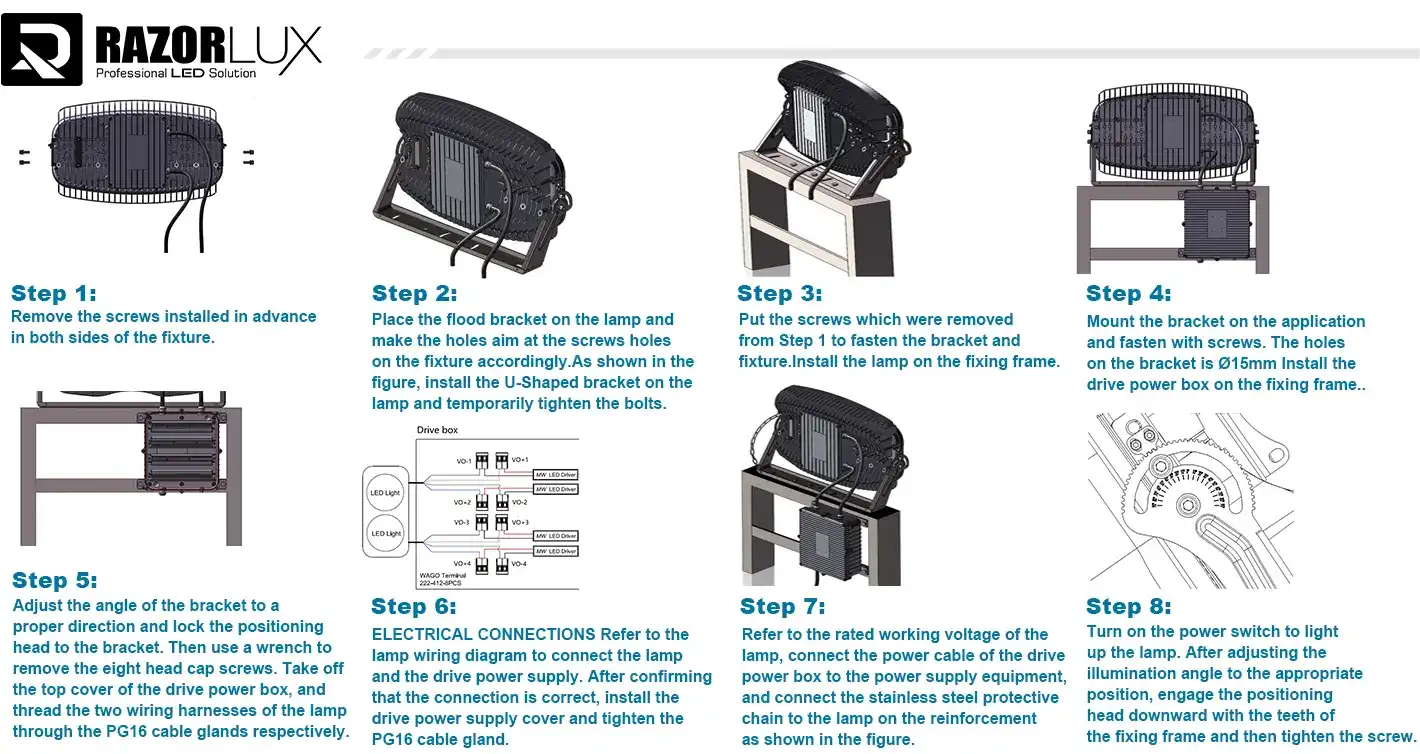
Professional Installation Requirements
High-voltage electrical work and mounting at high heights must be done by trained professionals who have the right safety gear and training. Electrical installations must follow national and local rules, such as the National Electrical Code (NEC) in the US, IEC norms around the world, and special marine rules for installations on ships. When you ground something properly, you protect yourself from electrical shocks and spikes caused by lightning. Electrical links are kept safe from the weather in weatherproof junction boxes with the right IP ratings. When moving cables, you have to think about mechanical protection, temperature limits, and how easy it is to do upkeep. In industrial settings, protected cable or pipe systems protect against physical damage. To make sure that mounting hardware is securely attached without damaging device housings or mounting frames, torque specs must be checked. During setup, laser levels and illuminance meters check that the light distribution fits the design specs. Aim change then follows the photometric estimates. Systems that don't have precise aim produce uneven lighting with dark spots and glare problems that need to be re-commissioned at a high cost.
Maintenance Protocols for Extended Service Life
Regular maintenance keeps things running smoothly and makes them last longer. Set up testing plans that are right for the environment—every three months for tough sea settings, every six months for milder industrial ones. Cleaning the lens is part of the inspection process because salt and dust buildup lowers the light output by 20–40% over a year, checking the torque on the fasteners (over time, vibrations loosen the mounting hardware), checking the condition of the gaskets (broken seals let water in), and checking the electrical connections (corrosion raises resistance, which causes overheating). When cleaning lenses, soft cloths and light soaps are used because rough chemicals or materials damage anti-reflective surfaces and lower optical efficiency. Thermal imaging cameras can find drivers that are burning, which means they are about to fail. Replacing them early stops catastrophic failures and unplanned downtime. Keep records of repair tasks that set performance standards and help you spot failure patterns that will help you make future purchasing choices. Think about predictive maintenance programs that use measures of light output. When readings of illumination drop below performance levels, they cause replacements to be made before the whole system fails and stops working.
Case Study: Port Facility LED Upgrade
A container port in Southeast Asia that is open 24 hours a day, seven days a week replaced 120 old 2000W metal halide lamps with 800W Led Flood Lights to light up a 15-hectare storage yard for containers and 1.2 km of dock shoreline. The plant had problems, like having to run for 14 hours a day, having to change lamps often, having bad lighting that made it unsafe for crane operators, and having to pay a lot for energy. The LED retrofit had immediate benefits, including saving 62% of energy (1.68 million kWh per year), not having to replace lamps every month (metal halide lamps had to be replaced every 8–10 months), increasing lighting uniformity from 0.4 to 0.7, and better color rendering for CCTV security systems. A financial study showed that the project would pay for itself in 2.8 years just from saving energy, and in 2.1 years when upkeep costs are taken into account. Operational gains included not having to stop work at night to change lamps, fewer reports of accidents involving cranes because of better sight, and better security tracking. The facility procurement manager stated, "The LED conversion exceeded projections. We've experienced zero fixture failures in 18 months, compared to replacing 10-15 metal halide ballasts monthly previously. Crane operators consistently report improved visibility, particularly identifying container markings and attachment points."
Environmental and Economic Impact of Choosing LED Stadium Flood Lights
LED stadium flood lights delivers measurable benefits extending beyond immediate operational improvements to encompass substantial environmental and economic advantages supporting organizational sustainability objectives and long-term financial optimization.
Quantifying Energy Consumption Reduction
Comparative analysis reveals dramatic efficiency advantages over legacy technologies:
| Lighting Technology | Wattage | Lumen Output | Efficacy (lm/W) | Annual Energy (10hr/day) |
|---|---|---|---|---|
| High-Pressure Sodium | 1000W | 90,000 lm | 90 lm/W | 3,650 kWh |
| Metal Halide | 1500W | 105,000 lm | 70 lm/W | 5,475 kWh |
| LED Flood Light | 800W | 104,000 lm | 130 lm/W | 2,920 kWh |
An 800W LED system replacing a 1500W metal halide lamp achieves 2,555 kWh annual reduction per fixture. For a facility operating 100 fixtures at $0.12/kWh electricity cost, this represents $30,660 annual savings. Over the LED's 50,000-hour service life (approximately 14 years at 10 hours daily operation), cumulative savings reach $429,240—before considering maintenance cost reduction and avoided replacement expenses. These calculations assume stable electricity pricing; regions experiencing annual rate increases see accelerated returns. Facilities utilizing time-of-use electricity pricing maximize savings by concentrating operation during off-peak periods—LED instant-on capability enables this flexibility whereas metal halide systems requiring warm-up periods cannot respond to dynamic pricing signals.
Return on Investment Analysis
Comprehensive financial modeling incorporates multiple cost factors beyond energy consumption. Initial LED system investment typically ranges 2-3 times metal halide equivalent, but total cost of ownership calculations reveal substantial advantages. Consider a 100-fixture installation:
Initial Investment:
- LED fixtures: $150,000 ($1,500/fixture)
- Installation: $25,000
- Total: $175,000
Metal Halide Alternative:
- Fixtures: $60,000 ($600/fixture)
- Installation: $20,000
- Total: $80,000
Annual Operating Costs (LED):
- Energy: $35,040 (292,000 kWh × $0.12)
- Maintenance: $2,000
- Total: $37,040
Annual Operating Costs (Metal Halide):
- Energy: $65,700 (547,500 kWh × $0.12)
- Maintenance: $15,000 (lamp replacement, ballast repair, labor)
- Total: $80,700
The LED system delivers $43,660 annual savings, achieving payback in 2.18 years. Over 10 years, cumulative savings reach $341,600—nearly triple the initial investment premium. This analysis excludes avoided costs from improved reliability (reduced emergency service calls, elimination of productivity losses during lighting failures) and intangible benefits like improved safety from superior illumination quality. Facilities in high-labor-cost regions see accelerated returns as maintenance savings increase proportionally.
Carbon Footprint Reduction
Environmental benefits extend beyond energy efficiency to encompass lifecycle considerations. The 100-fixture example above prevents 255,500 kWh annual consumption compared to metal halide systems. Using regional average emission factors (approximately 0.5 kg CO₂/kWh for most grid mixes), this represents 127,750 kg annual carbon dioxide reduction—equivalent to removing 27 passenger vehicles from roads or preserving 5,880 tree seedlings grown for 10 years. Over the LED system's operational lifetime, cumulative emission avoidance exceeds 1,789 metric tons CO₂. LED fixtures contain no mercury (unlike fluorescent and metal halide lamps requiring hazardous waste disposal) and generate minimal heat pollution affecting ambient temperatures in enclosed facilities. Organizations pursuing carbon neutrality goals, reporting under greenhouse gas protocols, or seeking green building certifications (LEED, BREEAM) gain quantifiable benefits supporting sustainability claims and stakeholder reporting requirements.
Smart Technology Integration
Advanced LED systems incorporate connectivity enabling intelligent lighting management. Integrated control systems support scheduling (automatic operation aligned with facility hours), dimming (reduced output during low-activity periods), and zoning (selective illumination of active areas). A container terminal might operate full illumination during peak gate hours (0600-1800), reduce output 40% during moderate overnight periods (1800-2200, 0400-0600), and maintain minimal coverage (20% output) during low-activity hours (2200-0400), achieving additional 25-35% energy savings beyond LED base efficiency. Occupancy sensing activates lighting in response to vehicle or personnel presence—ideal for storage yards with intermittent access. Light level sensing responds to ambient daylight contribution, reducing output when natural light provides adequate illumination. Networked systems provide remote monitoring detecting fixture failures immediately rather than through periodic inspections, enabling rapid response minimizing dark periods. Integration with facility management systems coordinates lighting with security cameras, access control, and environmental monitoring creating comprehensive operational awareness. These capabilities position LED installations as infrastructure assets supporting evolving operational requirements rather than static equipment requiring periodic replacement.
Future-Proofing Infrastructure Investments
Technology evolution continues advancing LED capability while reducing costs. Organizations implementing LED systems today establish infrastructure supporting future upgrades—control wiring, network connectivity, and mounting structures accommodate next-generation fixtures offering incremental improvements without complete system replacement. Unlike metal halide technology (mature with limited improvement potential), LED development continues advancing efficacy (150+ lm/W systems entering production), optical control precision, and integration sophistication. Facilities adopting LED technology participate in this advancement trajectory whereas those maintaining legacy systems face widening obsolescence gaps and increasing operational cost penalties. The regulatory environment increasingly favors high-efficiency technologies through building codes, environmental regulations, and utility incentive programs—early adoption positions organizations ahead of compliance mandates while capturing available incentives (utility rebates, tax credits) that may diminish as adoption broadens.
Conclusion
Selecting the right LED stadium flood lights system requires balancing technical specifications, environmental requirements, and financial considerations within your operational context. High-quality systems delivering 130+ lm/W efficacy, IP67 environmental protection, and comprehensive certification provide reliable performance across demanding marine, industrial, and infrastructure applications. The investment premium compared to legacy technologies delivers substantial returns through 60-70% energy savings, dramatically reduced maintenance requirements, and operational benefits from superior light quality and instant controllability. Successful procurement demands thorough supplier evaluation—verifying manufacturing capability, component quality, certification authenticity, and after-sales support infrastructure. Proper installation by qualified professionals and systematic maintenance protocols maximize service life and performance, ensuring your lighting infrastructure supports operational requirements throughout extended 50,000+ hour lifecycles while contributing measurably to sustainability objectives and cost optimization.
FAQ
How does LED brightness compare to traditional metal halide lamps for stadium applications?
Professional LED systems achieve comparable or superior illumination using significantly less power. An 800W LED fixture delivering 104,000 lumens replaces a 1500W metal halide producing similar output, but provides better light quality through higher color rendering (CRI >75 versus 65-70 for metal halide), eliminates warm-up delays, and maintains consistent output throughout its service life, whereas metal halide performance degrades 40-50% before the end of rated life.
What typical operating lifespan can I expect from quality LED stadium lighting?
Premium LED flood lights maintain 70% of initial brightness (L70 rating) beyond 50,000 operating hours—approximately 14 years at 10 hours daily operation. Actual lifespan depends on operating conditions, including ambient temperature, power quality, and maintenance practices. Systems incorporating advanced thermal management and quality components (branded drivers like Meanwell) consistently achieve or exceed these specifications. This contrasts dramatically with metal halide lamps requiring replacement every 6,000-15,000 hours (1.5-4 years under similar operating conditions).
Can LED stadium lighting systems be customized for specific venue requirements?
Comprehensive customization addresses diverse application needs. Beam angle selection (15° to 140°) optimizes light distribution for venue geometry. Color temperature adjustment (2700K-6500K) accommodates activity-specific requirements—neutral white (4000K) suits general sports use, cooler temperatures (5000-5700K) support broadcast applications. Input voltage customization (wide-range AC90-305V plus DC options) ensures compatibility with local power infrastructure. Physical modifications including specialized mounting brackets, extended cable lengths, and integrated control interfaces, address facility-specific installation requirements. Premium manufacturers provide photometric modeling services creating detailed illumination analyses verifying proposed systems meet your performance specifications before procurement commitment.
Partner With a Professional LED Stadium Flood Lights Manufacturer
Razorlux has engineered high-performance lighting solutions for demanding marine, industrial, and infrastructure applications since 1998. Our 800W professional stadium-grade LED flood lights deliver 104,000 lumens with industry-leading 130 lm/W efficacy, backed by IP67 environmental sealing and IK10 impact resistance. As a trusted LED stadium flood lights supplier, we maintain comprehensive international certifications, including UL, CE, RMRS, and marine classification society approvals (DNV GL, ABS), ensuring global project compliance. Our Xi'an LED Lighting Engineering Laboratory—authorized by China's National Development and Reform Commission—conducts rigorous testing verifying every unit meets exacting performance standards before shipment. We recognize procurement complexity for critical infrastructure projects. Our engineering team provides complimentary photometric analysis modeling your facility's specific requirements, complete documentation including technical specifications and test reports, and sample units for hands-on evaluation before bulk ordering. Whether you're illuminating offshore platforms, shipyard facilities, port infrastructure, or heavy industrial complexes, our application specialists deliver tailored solutions backed by 5-year comprehensive warranties and responsive technical support. Contact sam@razorlux.com to discuss your LED stadium flood lights requirements. We'll provide detailed quotations, arrange sample shipments with 30-day evaluation periods, and connect you with engineering resources, ensuring your lighting infrastructure delivers optimal performance throughout its multi-decade service life. Visit razorlux.com to explore our complete product portfolio and download technical documentation supporting your procurement evaluation.
References
American Society of Testing and Materials. (2019). Standard Guide for Selection of Light Sources for Industrial and Commercial Applications. ASTM International.
Illuminating Engineering Society. (2020). IES Recommended Practice for Sports and Recreational Area Lighting. IES RP-6-20.
International Electrotechnical Commission. (2018). LED Modules for General Lighting – Performance Requirements. IEC 62717:2014+AMD1:2018.
National Electrical Manufacturers Association. (2021). Solid State Lighting for Outdoor Applications: Performance Standards and Testing Protocols. NEMA SSL 7A-2021.
Society of Petroleum Engineers. (2017). Recommended Practices for Offshore Platform Electrical Systems and Lighting Requirements. SPE Technical Report 185.
U.S. Department of Energy. (2022). Energy Savings Potential of Solid-State Lighting in General Illumination Applications. DOE Building Technologies Office Report.