


_1750326878398.png)

LED Area Flood Lights Beam Angle and Coverage Guide
When choosing LED area flood lights for heavy-duty, industrial, or marine use, it's important to know the beam angle and range to get the best lighting while using the least amount of energy. The angle of the beam directly affects how light spreads across a target area. Narrow beams focus the strength for focused tasks, while wide beams cover large areas evenly. By choosing the right beam angle, you can avoid dark spots, cut down on too much light, and make sure you're following safety rules in places like docks, offshore platforms, and port facilities.
Understanding LED Area Flood Lights and Beam Angle Fundamentals
What Are LED Area Flood Lights and Why They Matter
LED area flood lights are high-intensity lights that are made to create a wide, even light spread in big outdoor or industrial areas. LED technology is better than standard metal halide or high-pressure sodium lights because it uses less energy, turns on instantly, and lasts longer. These lights must be able to handle salt spray, shaking, and changes in temperature while still putting out the same amount of power in naval and heavy-duty settings. When you switch from older lighting to LED flood lights, the performance is much better, and you'll save money on upkeep and running costs.
Beam Angle Explained: The Foundation of Effective Lighting Design
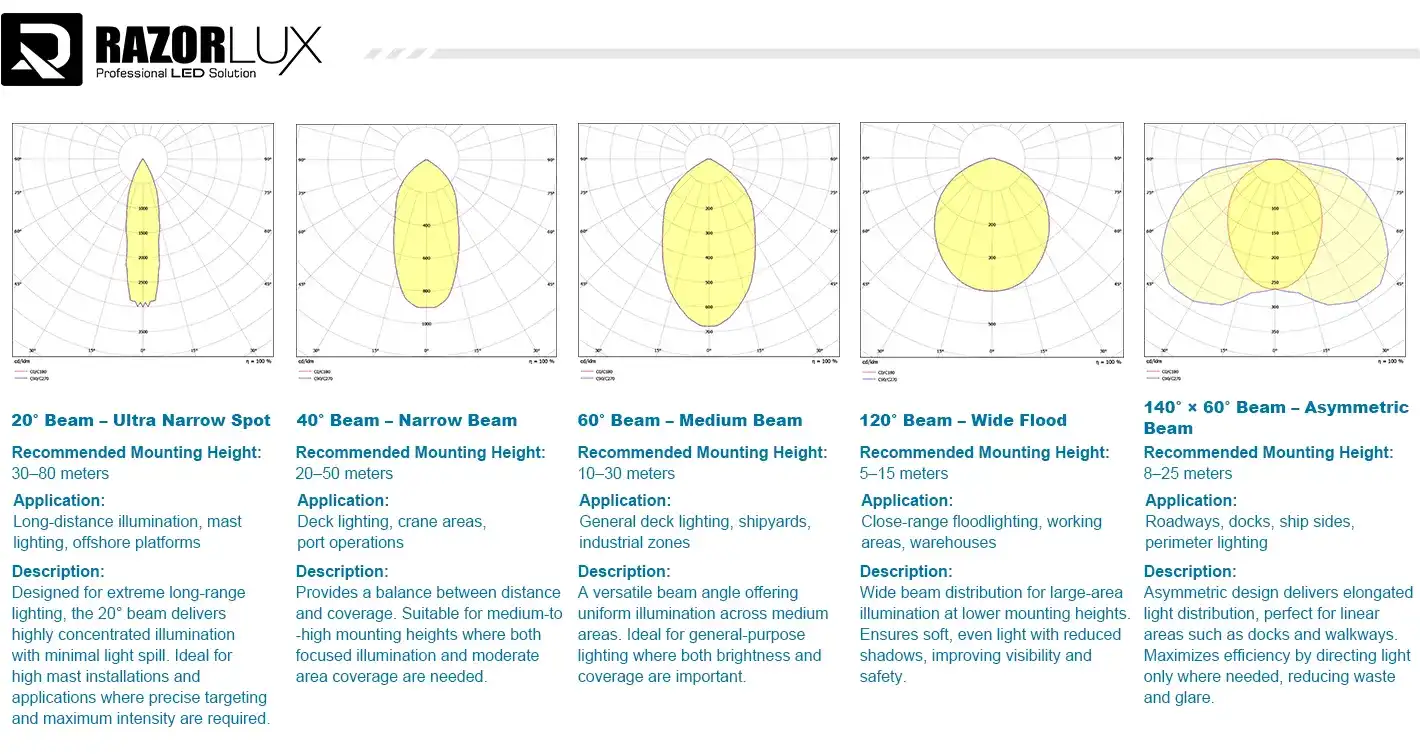
Beam angle, which is given in degrees, shows how far the light from a bulb spreads. A narrow beam angle (15° to 30°) makes a pool of concentrated, high-intensity light that can be used to shine a flashlight on certain pieces of equipment or dangerous areas. Another option is a wide beam angle (60° to 140°), which evenly spreads light over large areas. This makes it perfect for general lighting in parking lots, decks, or storage yards. When procurement managers and engineers know about this feature, they can match attachment specifications to the shape of the site, the mounting height, and the viewing needs.
How Beam Angle Affects Coverage and Intensity
LED area flood lights beam orientation, mounting height, and covering area are all related in a way that can be predicted using simple geometry. If you put a fixture 10 meters up with a 60° beam angle, it will cover more area than the same fixture with a 30° beam angle, but the edges will not be as bright. This trade-off is very important when planning lighting for factories or remote sites, where safety rules require both even covering and high enough lux levels. To figure out coverage, you need to combine information about the beam angle with installation requirements and light output.
LED Versus Traditional Flood Lighting: A Performance Comparison
Metal halide and halogen flood lights lose lumens over time, take a long time to warm up, and need to be relamping often. Solid-state technology in LED area flood lights gets rid of these problems. They provide stable color temperature, quick lighting, and L70 scores that are more than 50,000 hours. When used in tough naval settings, LED lights with strong heat management systems and no weak filaments mean fewer breakdowns and a lower total cost of ownership. Compared to older systems, new systems usually save between 50% and 70% of energy, which is very important for buildings with hundreds of outlets.
Key Technical Dimensions Impacting Beam Angle and Coverage
Lumens, Wattage, and Beam Angle: The Performance Triangle
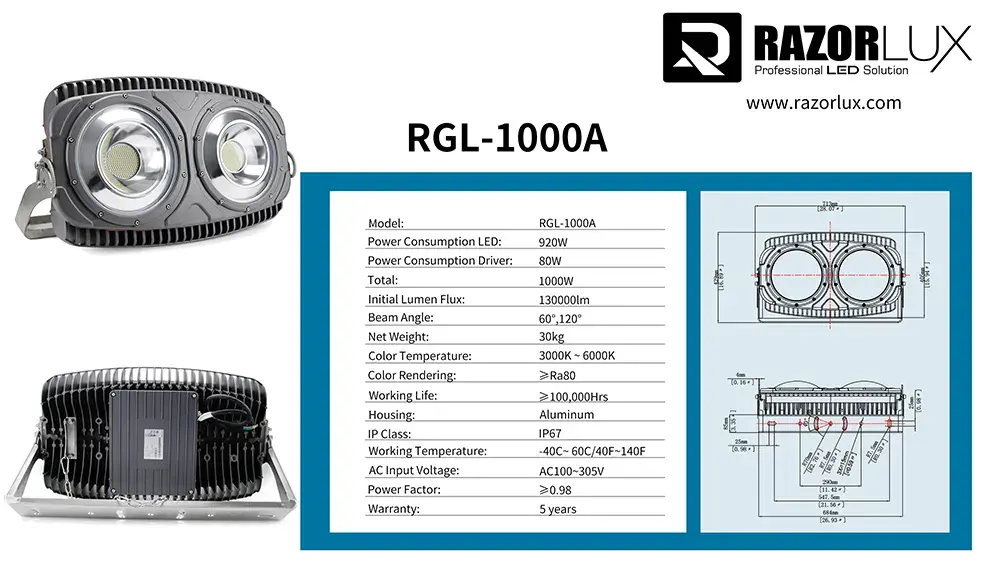
Lumen output measures how much light is created, while beam angle shows how that light is spread. With 130,000 lumens and a 30° beam angle, a 1000W LED flood light gives off a concentrated amount of light that can be used for high-mast lighting or arena lighting. When set up with a 120° beam angle, the same bulb spreads light out widely but with less peak strength. This makes it good for general lighting in industrial yards or ports. Procurement teams have to find a balance between these factors and the needs of the project, making sure there is enough light without setting too many standards.
IP Ratings and Environmental Durability in Coverage Planning
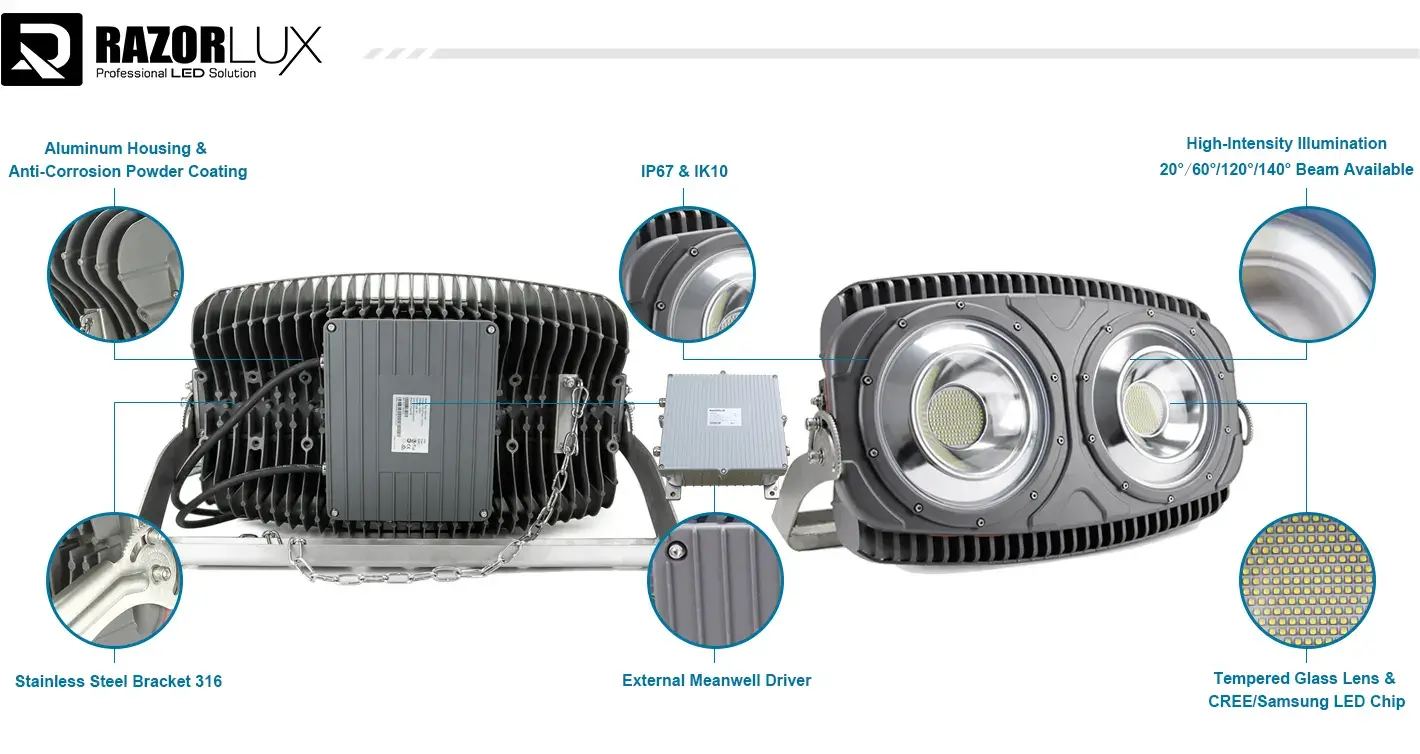
A fixture's waterproof grade directly affects how long it lasts and how often it needs to be maintained. IP67-rated lights can handle being submerged in water for a short time and being exposed to salt spray all the time, which is important for naval uses. IP65 grades guard against dust and low-pressure water jets, which is enough for most industrial settings. When choosing beam angles, keep in mind that devices used in areas that are prone to corrosion or shaking need strong sealing and impact protection (IK10), no matter what optical configuration they are in. Marine-grade aluminum metal housings and toughened glass lenses are used in Razorlux lights to keep the optics working well in harsh circumstances.
Mounting Height and Angle Adjustments: Maximizing Effective Coverage
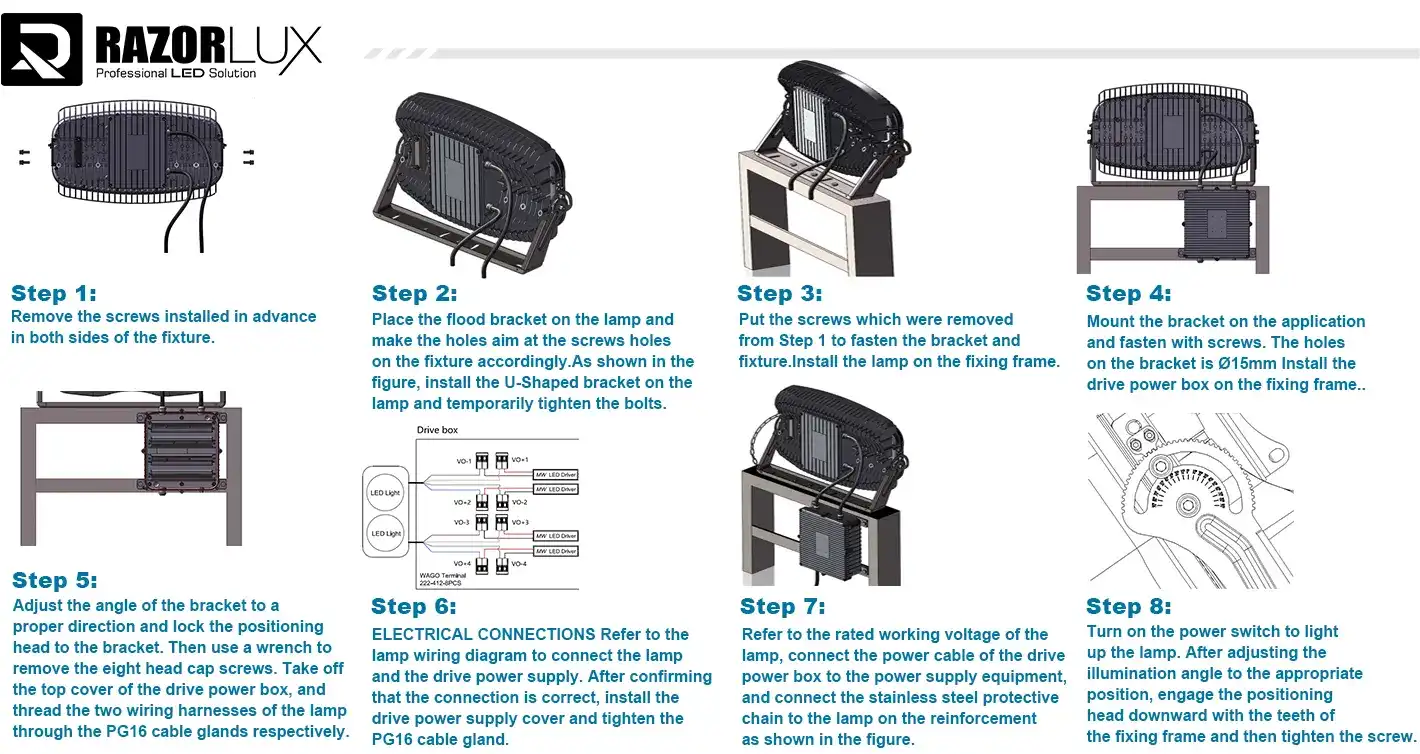
The effect of choosing a beam angle is amplified by the mounting height. When put up at 15 meters, a 40° beam angle device covers a different area than when put up at 8 meters. Adjustable brackets let you finetune both the vertical and horizontal pointing, which can help with uneven sites or needs for uneven covering. Stainless steel fastening gear keeps things stable in windy and shaking conditions, which is very important for setups on cranes or high masts. Accurate pointing during launching keeps light from going to waste and makes sure that the brightness levels are the same across the target area.
Comparative Analysis: LED Area Flood Lights by Beam Angle for Different Applications
Outdoor Applications: Ports, Shipyards, and Offshore Platforms
LED area flood lights that work in marine settings need to have specific beam angles that meet the needs of the job. 60° to 90° beam angles are good for shipyard dry docks because they evenly light all parts of the hull without too much glare. Offshore platform helidecks need uneven beam patterns (140°x60°) to meet aircraft lighting standards and keep light pollution to a minimum. Port container yards usually use 120° beam angles on high-mast poles to make sure even lighting across stacking areas and enough vertical light for crane operators. The Razorlux RGL-1000A series has seven beam angle options (15°, 20°, 30°, 40°, 60°, 120°, and 140°x60°), so it can be perfectly matched to the conditions on the job site. Each setup keeps the 130 lm/W brightness and IP67/IK10 protection. Samsung LED chips and Meanwell drivers make sure stable performance in salt spray and temperature changes from -40°C to 60°C. These technical specs handle the main concerns of naval and heavy-duty buyers, which are dependability, lifespan, and low upkeep.
Indoor Industrial Settings: Warehouses and Manufacturing Facilities
Warehouses and factories with a lot of high bays need different visual tactics than places outside. Because the beam angles are wide (90° to 120°), the light shines evenly across the floor, removing shadows and making material handling safer. In dirty or muggy places like steel mills and paper plants, lights with IP67 ratings and toughened glass eyes that don't break when exposed to heat or chemicals work better. Beam angles are chosen based on mounting heights between 8 and 20 meters. For taller installs, tighter angles are better to keep the lux levels at the working surface.
Case Study: Optimizing Beam Angle Selection in a Singapore Port Expansion
As part of Singapore's recent port growth, a 50,000-square-meter container station had to be lit up with 20-lux equal coverage. The engineering team chose 120° beam angle lights that were placed on 25-meter high mast poles and 40 meters apart. Photometric modeling showed that this setup provided the right amount of light while using the least amount of energy. Razorlux 600W lights with movable bases were used in the project, which let the lighting be fine-tuned during setup. The new system uses 60% less energy than the old metal halide system and comes with a five-year guarantee that covers all of its parts.
| Application Type | Recommended Beam Angle | Typical Mounting Height | Key Considerations |
|---|---|---|---|
| Shipyard Dry Dock | 60°–90° | 10–15m | Even hull coverage, minimal glare |
| Offshore Platform Helideck | 140°x60° (asymmetric) | 12–18m | Aviation compliance, light pollution control |
| Port Container Yard | 120° | 20–30m (high-mast) | Uniform stacking area coverage, crane visibility |
| Warehouse High-Bay | 90°–120° | 8–20m | Horizontal uniformity, shadow reduction |
| Steel Mill Equipment Zone | 40°–60° | 12–18m | Focused task lighting, thermal resistance |
How to Choose and Procure LED Area Flood Lights Based on Beam Angle Needs
Defining Project-Specific Beam Angle and Coverage Criteria
To do effective buying, you must first have a good idea of the site's size, practical needs, and legal requirements. The buying managers at shipyards should write down the following: the fixing height, the goal illumination (lux), the area measurements, and the weather conditions. A storage yard that is 100 meters by 80 meters and needs 15 lux needs a different optical solution than a ship deck that is 20 meters long and needs 50 lux. Photometric tools can model coverage patterns, but lighting experts who know how to work with naval and industrial uses are better to talk to.
Technical Specification Checklist for Procurement Teams
Beyond beam angle, procurement managers should check a number of important factors when looking at LED area flood lights. The lumen output needs to match the project's lighting goals, taking into account the upkeep factor and the fact that light fades over time. The IP and IK ratings should meet the amount of weather exposure. For marine and port uses, IP67 and IK10 values are required. Dependability depends on the quality of the driver. Meanwell or a similar constant-current driver stops flicker and voltage surge harm. Certifications like DNV/GL, ABS, CE, RoHS, UL, and DLC prove that the product meets international standards. LED chips made by Samsung or Philips last longer and keep their brightness better than cheap options. A CRI above 75 makes sure that colors are shown correctly for checking jobs and for seeing safety signs. Adjustable fixing plates made of stainless steel (which doesn't rust) let you change the aim after installation. LED modules, drivers, and optical components should all be covered by the warranty. Razorlux offers a five-year guarantee that covers everything and is backed by ISO 9001 quality management.
Reputable Manufacturers and Brand Considerations
There are well-known names like Philips, Cree, and Osram in the global LED flood light market, as well as niche makers like Razorlux. Established names usually charge higher prices because they have a lot of products and a lot of ways to get them to customers. Manufacturers that focus on marine and industrial uses offer custom systems with certifications for those uses (RMRS, DNV/GL, ABS) and direct expert support. Razorlux has been focusing on LED technology for 20 years and has 436 patents and in-house technical skills that make the company a trusted partner for complicated projects that need custom beam angles or help with integration.
Bulk Purchasing Insights: Pricing, Logistics, and After-Sales Support
LED area flood lights volume prices and combined shipping are good for big jobs. Teams in charge of buying things should ask for pricing tiers and more information on wait times, especially for specific beam angles or color temperatures. Shipping choices depend on how quickly you need something and how much money you have. Express air freight (3–7 days) is best for quick repairs, while sea freight (15–50 days) is best for long-term building projects. After-sales support should include technical advice, help with installation, and quick responses to problems in the field—important factors that are often overlooked when choosing a first vendor. Razorlux helps clients with lighting layout design and brightness calculations, which are especially helpful for engineering contractors and facility managers who don't have their own photometric experts on staff. The company has offices in both the US (Razorlux Technology Inc.) and China (Xi'an Razorlux Optoelectronic Technology Co., Ltd.). This allows for quick contact across time zones and easier operations for projects in North America, Europe, and Asia.
| Power Rating | Lumen Output | Typical Application | Recommended Beam Angle | Coverage at 15m Height |
|---|---|---|---|---|
| 300W | 39,000 lm | Small shipyard zones, equipment areas | 40°–60° | ~150 m² |
| 600W | 78,000 lm | Medium port areas, dry docks | 60°–90° | ~400 m² |
| 1000W | 130,000 lm | Large container yards, high-mast | 120°–140°x60° | ~900 m² |
Best Practices for Installation, Maintenance, and Optimizing Coverage
Installation Techniques to Maximize Beam Angle Performance
The visual performance and life of a light are directly affected by how well it is installed. Mounting brackets should be firmly fixed to stop movement caused by wind, which can make it hard to aim and give off uneven light. Marine-grade strain relief and corrosion-resistant leads are needed for electrical connections, especially in places where salt spray is present. Checking the voltage at the fixture makes sure it works with the driver's input range (AC90-305V or DC127-431V for Razorlux lights), which keeps the fixture from breaking down too soon. A light meter should be used to make changes to the aiming so that the design illumination levels at the working plane are met.
Maintenance Best Practices for Sustained Light Distribution
Fixtures last longer and keep their eye performance when they get regular care. Lenses should be cleaned every three months during checks to get rid of salt deposits, dust, and bacterial growth that block light. Checking the quality of the seals stops moisture from getting in, which is the main reason why drivers and LED modules fail. To keep connections from becoming resistant and getting too hot, electrical terminations should be retorqued once a year. Recording maintenance tasks helps with guarantee claims and gives information for lifetime cost analysis, which is very important for building managers who need to explain spending on expensive equipment.
When to Upgrade or Replace: Operational Triggers and Beam Angle Adjustments
Fixtures that lose less than 70% of their original lumen output (L70 cutoff) should be looked at to see if they need to be replaced. Color change or flickering is usually a sign of a failing driver, which can be fixed under guarantee if reported quickly. When operational changes happen, like adding new equipment or changing how work is done, the beam angle may need to be adjusted or the fixture may need to be moved. Razorlux's flexible design lets you change the lens without taking apart the whole unit. This cuts down on downtime and work costs. Planning for replacements keeps safe lighting levels steady and keeps you from having to buy things on the spot.
Conclusion
To choose the right beam angle for LED area flood lights, you have to think about the technical specs, the lighting surroundings, and the needs of the operation. Marine and heavy-duty uses need lights that are highly effective, well-built, and have accurate vision control. The RGL-1000A line from Razorlux is a good example of this combination. It has seven beam angle choices, IP67/IK10 safety, 130 lm/W economy, and a five-year guarantee. When procurement teams understand how brightness, beam angle, and mounting height affect each other, they can make decisions that improve performance and lower the total cost of ownership over the lifespan of the light.
FAQ
How do I determine the correct beam angle for my shipyard project?
Beam angle selection depends on mounting height, target illuminance, and area geometry. Narrow angles (30°–40°) suit focused lighting on specific equipment or work zones, while wide angles (90°–120°) provide uniform coverage across large deck areas. Photometric calculations should account for light loss factors and regulatory lux requirements (typically 15–50 lux for shipyards). Consulting with lighting engineers who have marine project experience ensures compliance with DNV/GL or ABS standards while avoiding over-specification.
What is the expected lifespan of LED area flood lights in corrosive environments?
Quality LED fixtures with IP67 protection and marine-grade housings typically achieve L70 ratings of 50,000 to 100,000 hours in salt spray environments. This translates to 10–15 years of operation at 12 hours per day. Lifespan depends on thermal management, driver quality (Meanwell drivers are industry-standard), and maintenance practices. Razorlux fixtures undergo salt spray testing per ISO 9227 to validate corrosion resistance, a critical specification often omitted by lower-tier manufacturers.
Can beam angles be customized for specialized offshore platform applications?
Manufacturers offering in-house optical engineering can develop custom beam patterns for unique applications. Asymmetric distributions (such as 140°x60°) address helidecks, crane booms, or architectural facades requiring directional control. Custom optics typically involve minimum order quantities and extended lead times, so early engagement with suppliers during project planning is essential. Razorlux's 436 patents include proprietary optical designs, enabling tailored solutions for offshore and industrial clients.
Partner with a Trusted LED Area Flood Lights Manufacturer
Razorlux delivers engineered lighting solutions backed by two decades of LED innovation and 436 patents in chip Packaging, driver control, and housing design. Our RGL-1000A series features seven beam angle configurations, IP67/IK10 protection, and 130 lm/W efficacy with Samsung chips and Meanwell drivers—specifications addressing the critical needs of shipyard purchasing managers, marine equipment integrators, and offshore facility engineers. We provide comprehensive support including photometric layout design, brightness calculations, and rapid technical response. Contact sam@razorlux.com to discuss your project requirements and receive a customized lighting proposal with certification documentation.
References
1. Illuminating Engineering Society. "LM-79-19: Approved Method for Optical and Electrical Measurements of Solid-State Lighting Products." New York: IES, 2019.
2. Marine Equipment Directive (MED). "Directive 2014/90/EU: Marine Equipment Standards and Type-Approval Requirements." Brussels: European Commission, 2014.
3. DNV GL. "Rules for Classification of Ships: Electrical Installations and Navigation Equipment." Høvik: DNV GL, 2020.
4. U.S. Department of Energy. "Solid-State Lighting Technology Fact Sheet: LED Outdoor Flood Lighting." Washington: DOE Office of Energy Efficiency and Renewable Energy, 2021.
5. International Commission on Illumination (CIE). "CIE 150:2017: Guide on the Limitation of the Effects of Obtrusive Light from Outdoor Lighting Installations." Vienna: CIE, 2017.
6. American Petroleum Institute. "API RP 500: Recommended Practice for Classification of Locations for Electrical Installations at Petroleum Facilities." Washington: API, 2018.
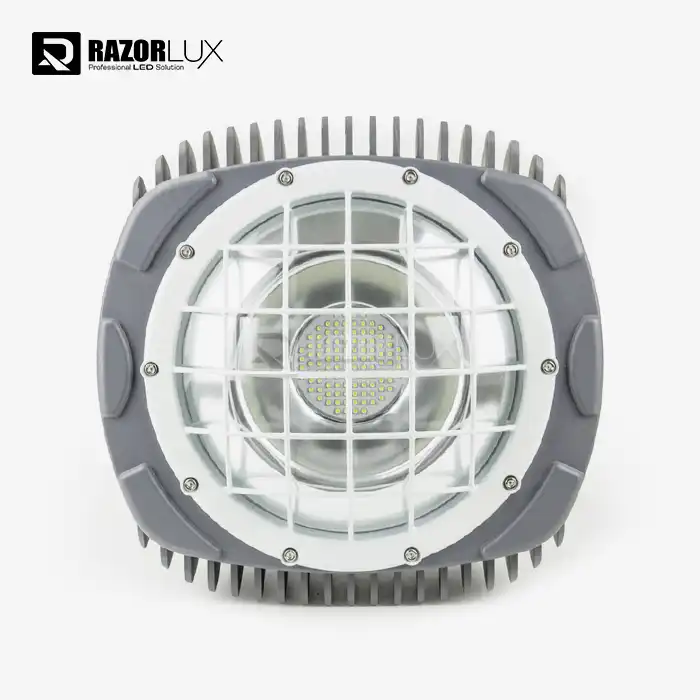 VIEW MORE100 Watt Led Outdoor Flood Light
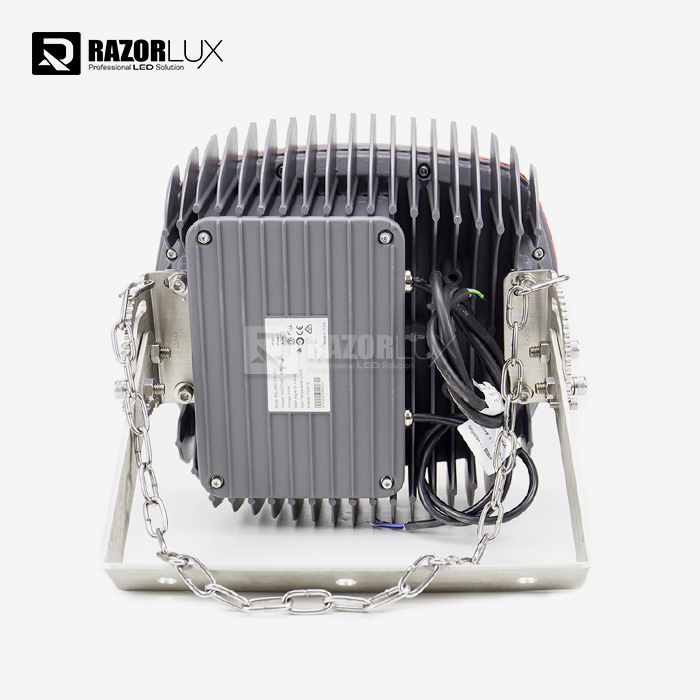 VIEW MOREshuttle court lights
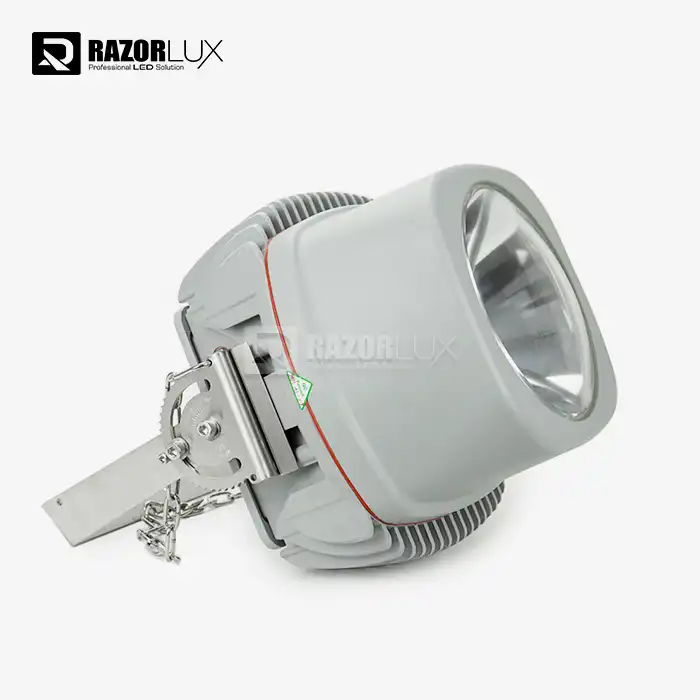 VIEW MORECrane Light Fixture
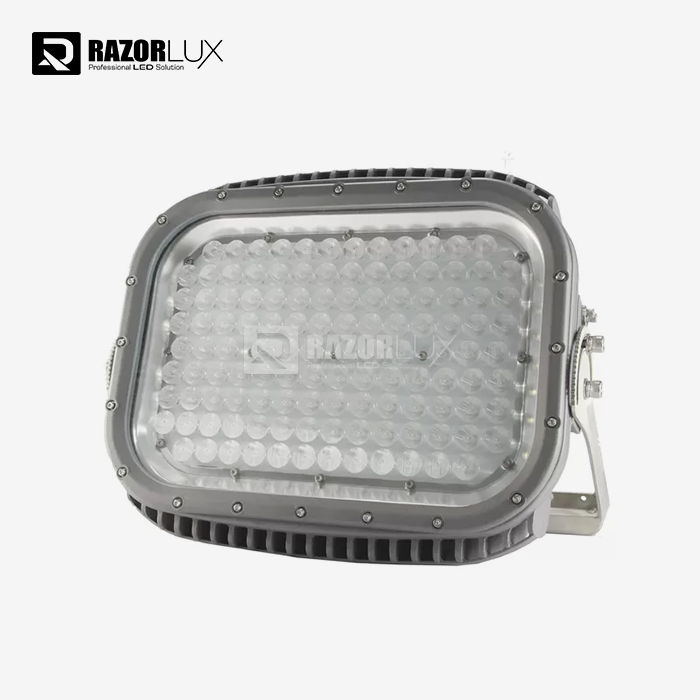 VIEW MOREIP66 Building 500W Dimmable Led Flood Light 10 Degrees Angle Wall Washer Spotlight
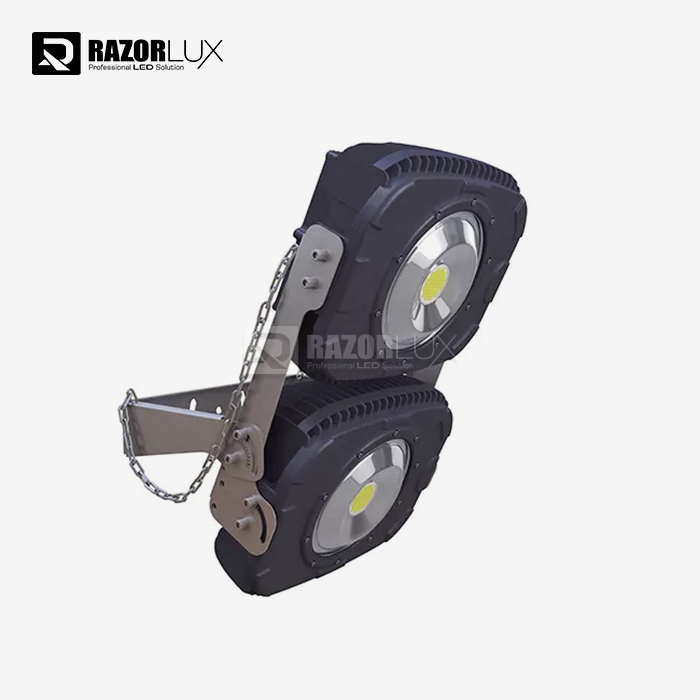 VIEW MOREHigh Safety 1400w Led Sports Ground Floodlights IP67 High Lumen Led Flood Light
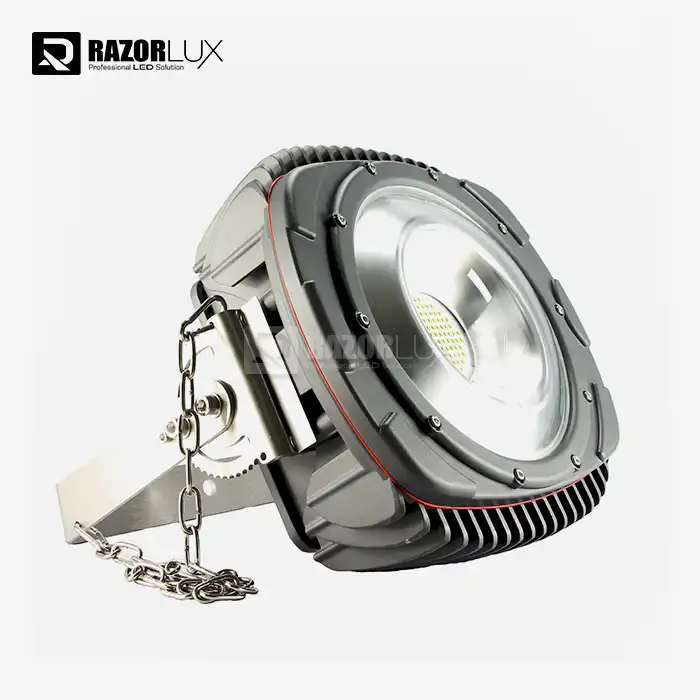 VIEW MOREMast Led Lighting
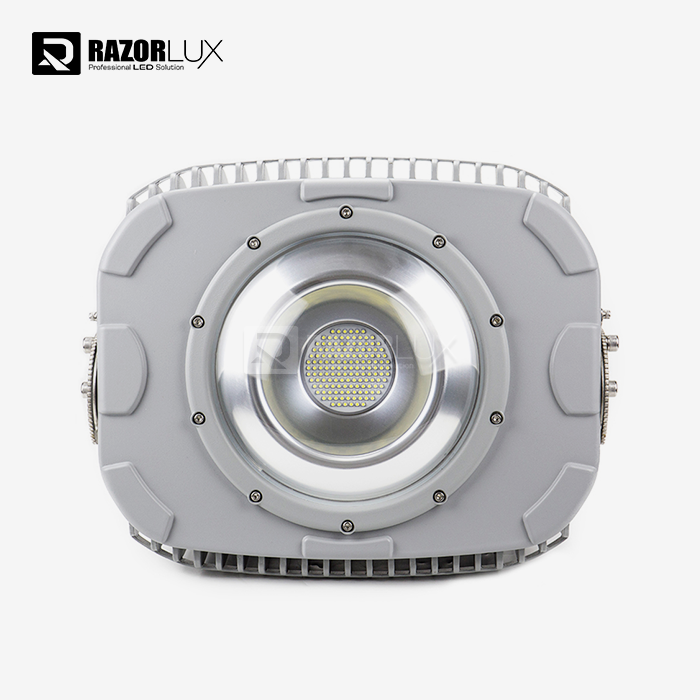 VIEW MORE400W Led Floodlight
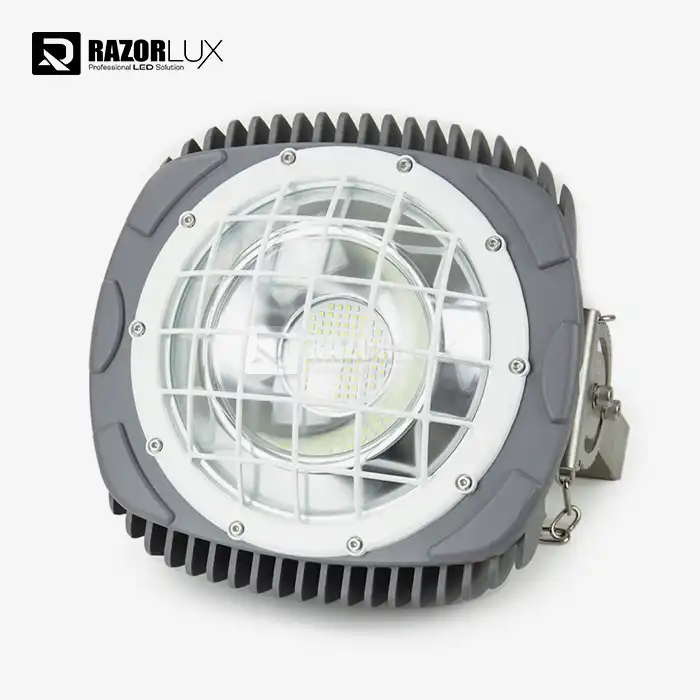 VIEW MOREOutdoor Landscape Flood Lights