


_1750326878398.png)

LED Stadium Flood Lights Maintenance Tips for Longer Lifespan
When LED stadium flood lights are properly maintained, they last a lot longer than is normally expected. When these high-performance lights are put through organized care routines, they give off the best light. They were made for large sports events and commercial uses. Our 800W arena lighting systems have unique multi-function designs that are waterproof to IP67 standards and have an efficiency of 130LM/W. They are made to work in harsh situations from -40°C to 60°C. Regular upkeep will protect your investment, keep you from having to pay for expensive fixes in an emergency, and make sure that the lighting always meets professional standards for broadcast quality. If you take good care of your quality stadium LED systems, they should last for more than 50,000 hours without losing their brightness or color.
Understanding Common Performance Issues with Stadium LED Fixtures
Stadium lighting installations face unique operational challenges that affect longevity and performance. Recognition of these issues allows facility managers and procurement professionals to implement targeted maintenance strategies.
Thermal Management Failures Leading to Premature LED Degradation
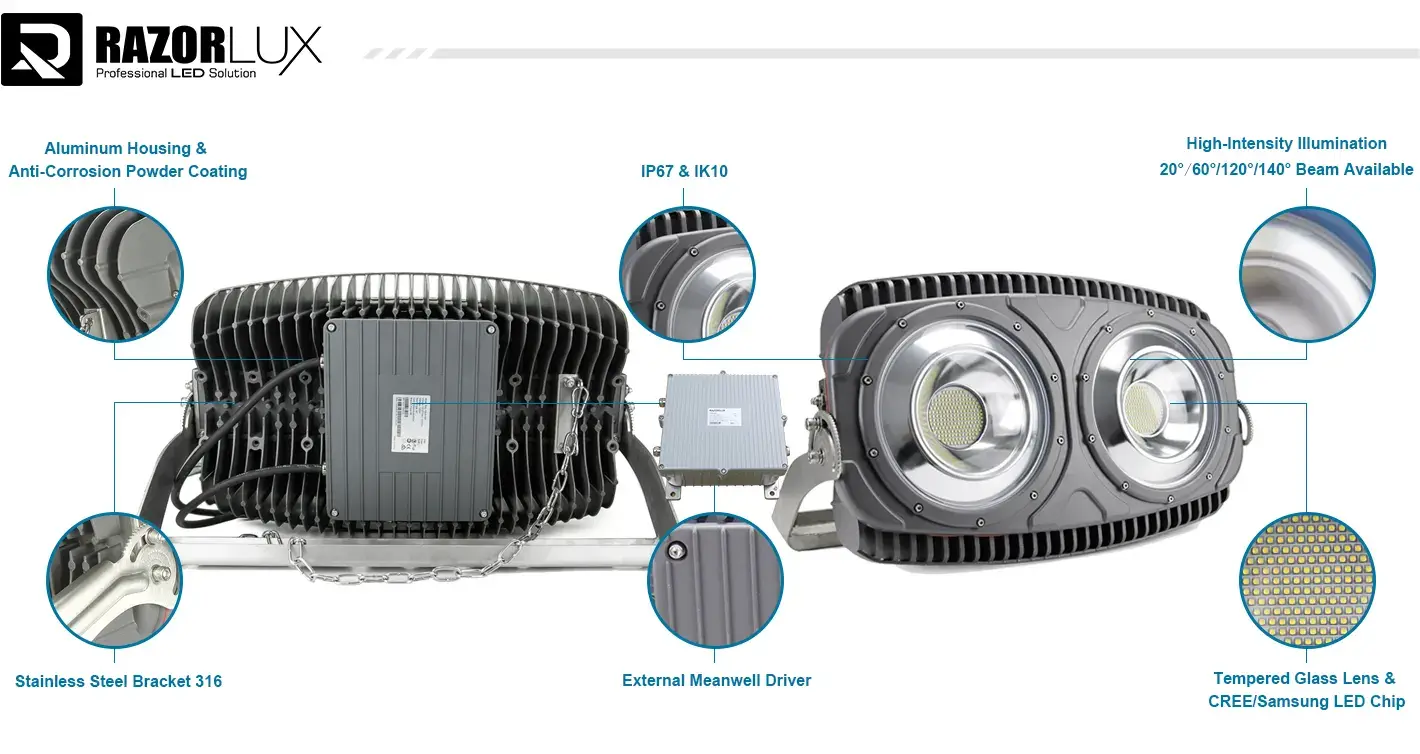
The main thing that shortens the life of LEDs is heat buildup. When thermal management systems fail, like when dust builds up on heat sinks, airflow gets blocked, or materials used in the thermal interface break down, junction temperatures go above what is safe for operation. Our lights have improved temperature control, and the powder-coated metal housing and housing help heat escape. The MeanWell driver works within strict temperature limits because it is placed to reduce heat flow to LED panels. By keeping an eye on device temperatures while they're being used, thermal problems can be found before they cause lasting damage. Operating temperatures above 85°C at the LED junction speed up light loss and color shift, which cuts the expected 50,000-hour lifespan by 30 to 40 percent.
Electrical Component Stress from Power Quality Issues
Changes in power, voltage spikes, and harmonic distortion put a lot of stress on LED displays and driver electronics. There is a lot of electrical noise in stadiums from HVAC systems, big motor loads, and other industrial equipment. Our systems can handle a lot of different input voltages (AC90-305V, DC127-431V), and they have power factors above 0.98 and THD below 10%, which means they are naturally resistant to typical power quality issues. Cascading failures can be avoided by checking electrical connections, grounding, and surge protection devices on a regular basis. When links aren't tight, they cause heat and power drops that put stress on parts. Outdoor venue users are especially vulnerable to lightning hits and grid switching events. This is why 10kV surge protection is necessary for installations in open areas.
Environmental Degradation Affecting Housing Integrity
Environments that are corrosive, like marine settings, arenas near the coast, and factories, can damage fastener housings, clamps, and closing systems. Our IP67-rated shelters and attaching parts made of stainless steel are resistant to salt spray, chemicals, and UV damage. The powder-coated metal design of the body stops galvanic rusting and keeps the structure strong. An annual check of the gaskets, lens clarity, and case integrity finds damage before water gets inside and damages the internal parts. Housing checks must be done every six months on facilities that are within 5 kilometers of the coast or in heavy industrial zones. Corrosion on fastening gear creates mechanical stress points that cause fixtures to break during high winds, which is a very big problem for installations on high masts.
Essential Maintenance Protocols for Maximum Service Life
Systematic maintenance practices directly impact total cost of ownership and operational reliability. Implementation of structured protocols reduces unexpected failures and optimizes energy efficiency.
Scheduled Optical Cleaning for Maintained Light Output
Lens pollution from dust, bugs, pollen, and air pollutants lowers the amount of light that gets through by 15 to 25 percent every year in most outdoor settings. As time goes on, this degradation happens slowly, making it hard to see until big losses happen. Setting up cleaning plans every six months using the right methods keeps the amount of light. Clean polycarbonate and PMMA optical materials with pH-neutral cleaners that are made for cotton cloths. Do not use rough materials, items with ammonia, or high-pressure washing that can damage lens seals or anti-reflective coatings. Our fittings have lens sections that are easy to get to, so servicing can be done without taking the whole fixture apart. Record the amount of light using accurate lux meters before and after cleaning to figure out how well the maintenance worked and show why resources were spent on it.
Electrical System Verification and Connection Integrity
LED stadium flood lights: Thermal cycles, shaking, and rust can all damage electrical circuits. Checking junction boxes, circuit blocks, and wire links every three months keeps them from breaking down and creating safety risks. Check for color changes that could mean the component is burning, make sure the torque settings on the terminal screws are correct, and look for damage to the wire insulation. Our lights have Class I insulation and strong grounding systems that need to be checked during repair periods. Use the right tools to check ground continuity and make sure resistance is less than 0.1 ohms. Check the surge protectors for lights or other signs that let you know they are ready to go. Power tracking equipment that records changes in voltage can help facilities that have a lot of power quality problems by letting them take action before damage happens.
Thermal System Performance Verification
The efficiency of a heat sink goes down when garbage builds up on the fins or when thermal paths get damaged. Visual analysis can show you clear blocks, but thermal imaging cameras can show you how heat is distributed across device housings in a more complete way. High temperatures in certain areas mean that the materials at the thermal interface have failed or that the heat sink contact has been damaged. Even when the temperature outside is very high, our unique thermal management design keeps the junction temperatures of LEDs below critical levels. Check the recorded working temperatures against the starting points that were set during setup. When temperatures rise by more than 10°C, they need to be looked into in more detail. Cleaning heat sink fins with compressed air gets rid of built-up dirt and dust, returning the intended airflow patterns. Do not use high-pressure water to clean heat sinks because water getting into electrical parts causes failure modes worse than heat-related wear and tear.
Installation Best Practices Supporting Long-Term Reliability
Proper initial installation establishes the foundation for extended service life and simplified maintenance. Installation quality directly influences operational costs throughout the fixture lifecycle.
Precise Mounting and Mechanical Stress Minimization
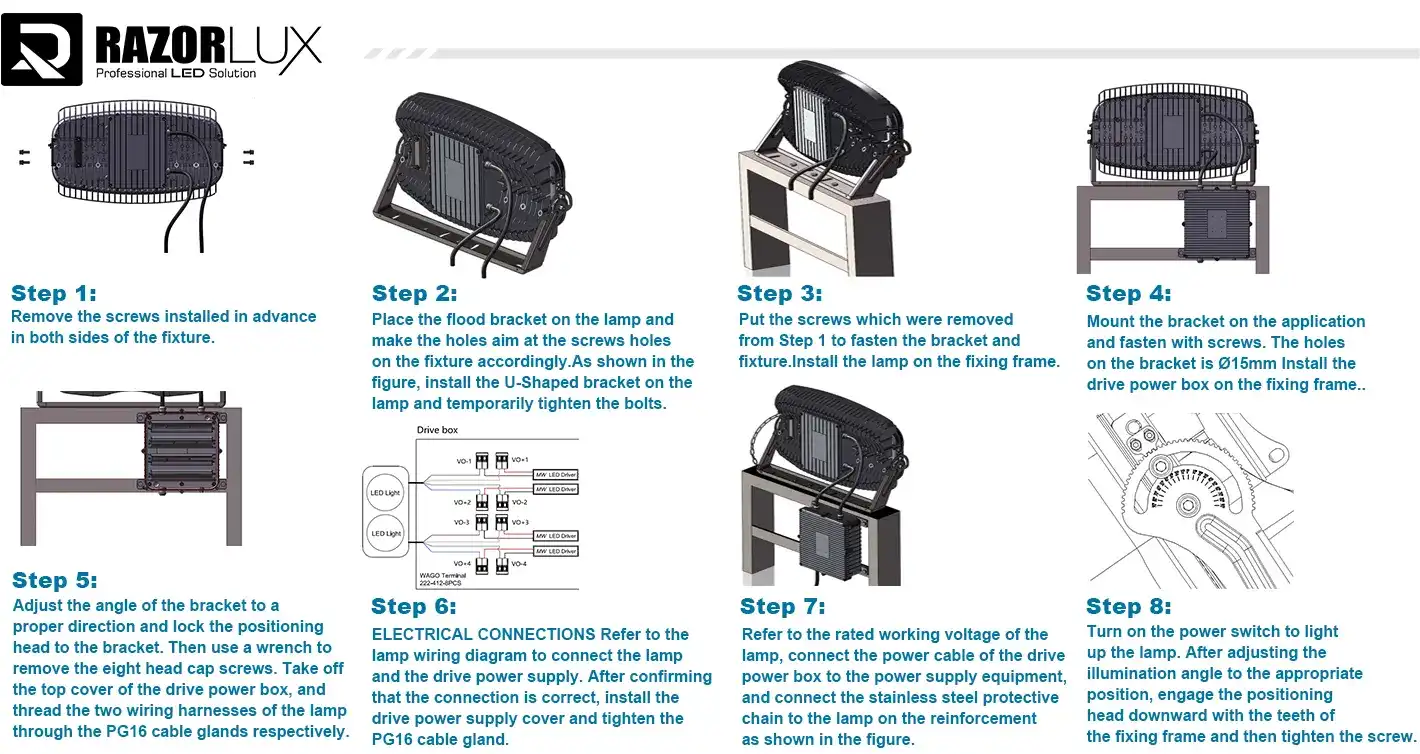
The choice of mounting gear and the way it is installed affect how well the structure resists vibrations and how well it holds together. Our 45-kilogram tools need mounting systems that are rated correctly and have safety factors that can handle dynamic wind loads. To find the wind loading, you need to figure out the Effective Projected Area (EPA) using the fixture's size and the height of the mounting. Installations higher than 20 meters are subject to much stronger winds, which means they need specially designed support solutions. Use hardware made of stainless steel and make sure to follow the torque specs. For important screws, use thread-locking compounds. Make sure the fixing surfaces are physically sound, lined up correctly, and don't have any sources of extra shaking. When installations aren't lined up right, they cause uneven mechanical stress that speeds up the failure of seals and housings. Our flexible bracket systems allow for exact shooting while spreading loads across fixing points to keep stress from building up in one place.
Waterproofing Compliance and Cable Entry Protection
The most usual way for water to get in is through cable entry points. When cable glands are properly fitted and sealed, our IP67-rated devices keep out water and other liquids. Use marine-grade cable clamps that come in the right size ranges to fit the conductors. Cable insulation is damaged when it is over-tightened, and it can get wet when it is under-tightened. Carefully follow the instructions given by the maker. For extra safety in harsh settings, add silicone glue to threaded joints. Before the final assembly, check the setting of the seal and make sure there is even stress around the whole edge. Place wires with drip loops to stop water from moving along the lines and into the electrical parts. During every six months of maintenance, check the stability of the seals and replace any gaskets that show signs of compression set or surface cracks. Because of the constant exposure to wetness and salty air, sealing measures need to be paid extra attention to on offshore platforms and in shipyards.
Electrical Infrastructure Compatibility and Protection Systems
The electrical system needs to be able to handle the needs of LEDs, such as proper circuit safety, grounding systems, and surge reduction. LED drivers have different load properties than standard HID systems. They draw less current, have better power factors, and react differently to inrush. Circuit switches and wires that are made for older lights may not protect LED setups as well as they should. The wide input voltage range of our lights can handle changes in the power source, but the voltage should stay within ±10% of its standard value during distribution. Put Type 2 surge protectors on distribution panels and Type 3 protectors on fixtures in areas that are prone to lightning strikes. For lightning safety to work, make sure that grounding electrode systems have resistance levels below 5 ohms. Ground improvement materials or extra wires can help buildings whose current grounding systems are weaker than these values.
Comparative Analysis: LED vs. Traditional Stadium Lighting Maintenance
Understanding maintenance differences between LED and conventional technologies informs procurement decisions and lifecycle cost projections.
Maintenance Frequency and Labor Requirements
In traditional metal halide systems, the lamps need to be changed every 6,000 to 15,000 hours, based on the quality and how they are used. This means that places that are open for long periods of time will need to change their equipment every year. For each repair event, there are costs for workers, renting entry tools, and making toxic waste that needs to be thrown away in a certain way. With normal use, our LED lights last more than 50,000 hours at L70 grade, which means 70% brightness upkeep. This means that lamps don't need to be replaced for 10 to 15 years. Maintenance tasks change from replacing lamps when they go out to cleaning and inspecting on a regular basis. This drop in the number of repair visits cuts labor costs by 60–75% and gets rid of the costs of getting rid of mercury-filled HID lamps.
| Maintenance Factor | Traditional Metal Halide | Razorlux LED Stadium Lights |
|---|---|---|
| Rated Lifespan | 6,000-15,000 hours | 50,000+ hours |
| Typical Replacement Cycle | 12-18 months | 10-15 years |
| Warm-up/Restrike Time | 10-20 minutes | Instant on/off |
| Maintenance Labor Hours (Annual) | 40-60 hours | 10-15 hours |
| Lumen Maintenance at End of Life | 50-60% | 70% minimum |
| Disposal Requirements | Hazardous waste protocols | Standard recycling |
Energy Efficiency Throughout Operational Life
LED stadium flood lights: LED lumen depreciation follows predictable curves, with gradual decline over the rated lifespan. Metal halide systems experience accelerated lumen depreciation—often reaching 50% output at end of life—and consume consistent wattage regardless of diminished output. This creates escalating energy costs per delivered lumen as lamps age. Our 800W LED systems replace 1,500-2,500W metal halide fixtures while maintaining superior light levels. The 130LM/W efficacy, combined with precise optical control through selectable beam angles (15° to 140°x60°), delivers light where needed without wasteful spill. As LEDs depreciate slowly and predictably, facilities maintain design illumination levels throughout the maintenance interval without energy penalty. Clean lenses and properly functioning thermal systems preserve initial efficacy, making regular maintenance directly impact energy costs.
Environmental Impact and Sustainability Considerations
LED maintenance generates minimal waste compared to traditional technologies. Metal halide lamps contain mercury, requiring hazardous waste handling, transportation, and disposal—adding $15-30 per lamp in compliance costs. Our LED fixtures incorporate recyclable aluminum housings, standard electronic components, and modular construction facilitating component replacement rather than complete fixture disposal. The 5-year warranty on LED modules and drivers, plus a 10-year housing warranty, extends product lifecycles beyond typical facility upgrade cycles. Proper maintenance amplifies these environmental benefits by preventing premature failure and maximizing the energy savings potential throughout the extended service life. Facilities pursuing LEED certification or corporate sustainability goals find LED maintenance practices align with green building protocols and waste reduction initiatives.
Proactive Strategies for Optimized Return on Investment
Advanced maintenance approaches leverage technology and strategic planning to maximize lighting system value.
Implementing Condition-Based Monitoring Systems
Smart monitoring technologies transform maintenance from time-based to condition-based protocols. Integrating light sensors, temperature monitors, and runtime tracking provides real-time performance data enabling predictive maintenance. These systems identify developing issues—gradual lumen depreciation, elevated operating temperatures, or power quality disturbances—before causing failures. Facilities monitoring fixture performance detects problems affecting multiple units, indicating systemic issues like power quality problems or environmental factors requiring broader remediation. Our fixtures' compatibility with building management systems facilitates integration into existing monitoring infrastructure. Data analytics identify optimal maintenance intervals based on actual operating conditions rather than generic schedules, allocating resources where most beneficial. Facilities with extensive installations achieve 20-30% maintenance cost reductions through condition-based approaches while improving uptime.
Maintenance Schedule Optimization Based on Operational Demands
Tailoring maintenance frequency to specific operating conditions prevents both under-maintenance and excessive servicing. Facilities with continuous operation require more frequent inspection than venues with seasonal schedules. Environmental factors—coastal locations, industrial atmospheres, extreme temperatures—accelerate degradation, requiring adjusted maintenance intervals. Our application experience across professional sports stadiums, industrial facilities, marine installations, and infrastructure projects informs maintenance recommendations. High-profile venues hosting broadcast events demand higher maintenance standards, ensuring consistent illumination quality. Municipal facilities with limited budgets optimize schedules, addressing critical items while deferring non-essential tasks. Document environmental conditions, operating hours, and observed performance trends to refine maintenance protocols continuously.
Strategic Supplier Partnerships for Long-Term Support
Partnering with manufacturers offering comprehensive support reduces total ownership costs and simplifies maintenance execution. Our global logistics network delivers replacement components within 3-7 days via express shipping to any destination. Technical support from engineers with specialized LED knowledge troubleshoots complex issues remotely, reducing on-site service requirements. Facilities establishing framework agreements gain access to stocked components, preferential pricing on replacement parts, and priority technical assistance. The 5-year warranty covering LED modules and drivers protects against premature failures, while our quality control systems—maintained continuously since 2001—ensure replacement components meet original specifications. Procurement teams evaluating LED suppliers should assess post-sale support capabilities, spare parts availability, and technical expertise alongside initial product specifications.
Climate-Specific Maintenance Considerations for Global Installations
Environmental conditions significantly impact maintenance requirements and strategies across different geographic regions.
Marine and Coastal Environment Protocols
Installations within 5 kilometers of saltwater bodies face accelerated corrosion from salt-laden atmospheres. Our stainless steel brackets and marine-grade construction resist galvanic corrosion, but maintenance protocols must address salt accumulation on optical surfaces and electrical components. Quarterly fresh water washing removes salt deposits before crystallization damages coatings or compromises seals. Inspect cable entry points and gaskets semi-annually, as salt accelerates rubber deterioration. Apply dielectric grease to electrical connections, preventing corrosion and maintaining conductivity. Offshore platform installations, harbor facilities, and coastal stadiums benefit from annual coating inspection, addressing any compromised areas before substrate corrosion develops. Our fixtures' RMRS (Russian Maritime Register of Shipping) certification confirms suitability for marine applications, with material selections and construction methods validated for saltwater environments.
Extreme Temperature Operation Requirements
LED stadium flood lights in Arctic installations and desert environments present opposing thermal challenges. Cold temperature operation below -20°C affects driver electronics and optical materials, requiring fixtures rated for extended temperature ranges. Our fixtures operate reliably from -40°C to 60°C through component selection and thermal design accommodating extreme conditions. Cold environments benefit from operational testing during commissioning, confirming driver startup and LED performance at minimum temperatures. High ambient temperature locations—Middle Eastern facilities, industrial plants with radiant heat exposure—require enhanced thermal management attention. Verify heat sink cleanliness more frequently, as accumulated debris critically impacts thermal performance when ambient temperatures approach maximum ratings. Monitor driver temperatures using thermal imaging during peak heat periods, confirming operation within safe parameters.
| Geographic Region | Primary Environmental Challenge | Recommended Maintenance Frequency | Key Maintenance Focus |
|---|---|---|---|
| Nordic/Arctic | Extreme cold, ice accumulation | Quarterly | Seal integrity, driver function at low temp |
| Middle East | Extreme heat, dust storms | Bi-monthly | Thermal performance, optical cleaning |
| Southeast Asia | High humidity, tropical storms | Bi-monthly | Waterproofing, corrosion prevention |
| Coastal/Marine | Salt corrosion, moisture | Quarterly | Fresh water washing, seal inspection |
| Heavy Industrial | Chemical exposure, vibration | Bi-monthly | Housing integrity, mounting hardware |
| High Altitude | UV exposure, temperature cycling | Quarterly | Lens degradation, seal condition |
Technical Specifications Supporting Maintenance Efficiency
Product design features directly influence maintenance requirements and execution complexity.
Modular Construction Facilitating Component Access
Our fixtures incorporate modular architecture allowing driver replacement, LED module access, and optical component servicing without complete fixture removal. The driver compartment separates from the LED housing, enabling ground-level driver replacement rather than working at height. This design reduces maintenance time by 40-50% compared to integrated designs requiring aerial equipment for all service activities. Standardized fasteners and tool-free lens release mechanisms simplify servicing in challenging environments. Facilities with limited access equipment benefit significantly from maintenance-friendly designs. The 45kg fixture weight, while substantial, distributes across the housing, enabling safe handling with standard equipment. Spare component stocking strategies focus on drivers and minor sealing components, as LED module failures remain rare within the 5-year warranty period.
Certification Compliance Validating Long-Term Reliability
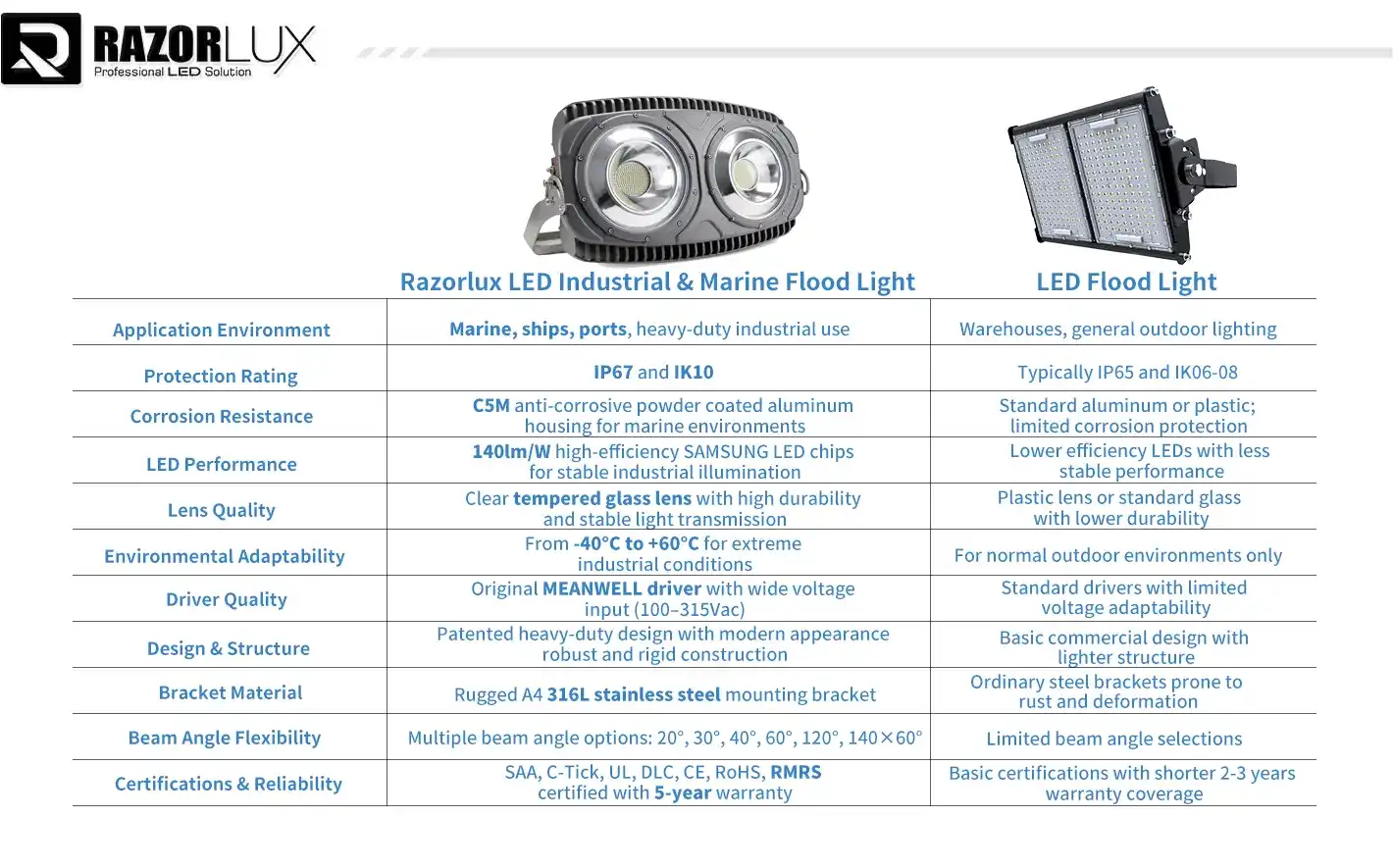
Comprehensive certification from independent testing organizations validates design robustness and manufacturing quality. Our UL, TÜV, CE, RoHS, SAA, C-Tick, DLC, CB, and ISO:9001 certifications confirm compliance with international safety and performance standards. The RMRS certification specifically addresses marine and offshore applications, validating corrosion resistance and structural integrity under maritime conditions. These certifications provide assurance to procurement teams that fixtures will perform as specified throughout the rated lifespan when subjected to proper maintenance. IK10 impact resistance confirms housing durability against mechanical damage—critical for industrial applications where equipment contact occasionally occurs. IP67 ingress protection exceeds typical outdoor lighting requirements (IP65), providing additional safety margin in severe weather conditions.
Driver Technology and Power Management Features
MeanWell driver technology contributes significantly to system reliability and reduced maintenance. These drivers incorporate over-voltage protection, over-current protection, short-circuit protection, and over-temperature protection—safeguarding LED arrays from electrical faults. The >0.98 power factor reduces distribution losses and minimizes harmonic distortion (<10% THD) that contributes to premature failure in sensitive electronics. Wide input voltage tolerance (AC90-305V) accommodates supply variations without protective shutdowns or component stress. Drivers rated for the complete fixture lifespan eliminate mid-life replacement, with the 5-year warranty providing added security. Facilities experiencing driver failures within the warranty period should investigate root causes—power quality issues, lightning damage, or environmental factors—addressing systemic problems rather than simply replacing components.
Documentation and Record-Keeping for Maintenance Optimization
Systematic documentation enables data-driven maintenance decisions and warranty claim support.
Establishing Baseline Performance Metrics
Commission new installations with comprehensive performance documentation including light level measurements, fixture temperatures, and power consumption values. These baseline metrics provide comparison points for future maintenance assessments, identifying degradation trends requiring intervention. Use calibrated lux meters meeting appropriate standards, documenting measurements at consistent locations under identical operating conditions. Thermal imaging during initial operation establishes normal temperature distributions, making subsequent thermal inspections more valuable. Record fixture locations, aiming angles, and beam angle selections facilitating future adjustments or replacements. Our customized lighting design service includes photometric calculations and layout documentation—preserve these records for reference during maintenance planning and system modifications.
Maintenance Activity Logging and Trend Analysis
Document all maintenance activities with dates, findings, corrective actions, and verification results. This historical record identifies recurring problems, validates maintenance interval appropriateness, and supports warranty claims when necessary. Track component replacements, noting serial numbers and failure modes. Patterns indicating premature failures prompt supplier communication and potential corrective actions. Digital maintenance management systems facilitate trend analysis impossible with paper records, generating reports highlighting fixtures requiring attention. Facilities managing multiple stadium installations benefit from centralized data identifying location-specific issues—perhaps revealing power quality problems at specific venues or environmental factors requiring adjusted maintenance protocols. Share maintenance findings with procurement teams, informing future specifications and supplier selection.
Warranty Management and Claim Documentation
Maximize warranty value through proper documentation and timely claim submission. Our 5-year LED module and driver warranty, plus 10-year housing warranty, protect against premature failures and manufacturing defects. Warranty claims require failure documentation including operating hours, maintenance records, and photographic evidence. Retain purchase documentation, installation records, and maintenance logs supporting warranty eligibility. Failures within warranty periods should prompt immediate supplier contact—continuing operation with failed components may void coverage or create safety hazards. Our responsive technical support assists with failure diagnosis and expedited warranty processing. Understanding warranty terms—coverage limitations, exclusions, and requirements—prevents claim rejection due to procedural issues.
Conclusion
LED stadium flood lights maintenance directly impacts operational costs, system reliability, and long-term investment value. Our 800W professional stadium flood lights combine patented multi-function design, superior thermal management, and marine-grade construction with maintenance-friendly features supporting extended service intervals. Implementing structured maintenance protocols—regular optical cleaning, electrical verification, thermal performance monitoring, and environmental-specific procedures—maximizes the 50,000+ hour lifespan while maintaining optimal efficiency. The dramatic reduction in maintenance requirements compared to traditional technologies yields substantial lifecycle cost advantages. Strategic supplier partnerships, condition-based monitoring, and comprehensive documentation transform maintenance from reactive necessity to proactive asset management, ensuring consistent broadcast-quality illumination supporting professional athletic competition and industrial operations worldwide.
FAQ
How Often Should Professional Stadium Flood Lights Undergo Maintenance Inspection?
Maintenance frequency depends on environmental conditions and operational intensity. Outdoor installations in moderate climates typically require bi-annual inspections, while coastal locations, heavy industrial environments, or facilities with continuous operation benefit from quarterly assessments. Each inspection should verify optical cleanliness, electrical connection integrity, housing condition, and thermal system effectiveness. High-profile venues hosting broadcast events often implement monthly visual inspections supplementing scheduled comprehensive maintenance.
Does Regular Maintenance Actually Improve Energy Efficiency in LED Systems?
Absolutely. Lens contamination reduces light transmission by 15-25% annually, requiring higher power consumption to maintain illumination levels or accepting diminished lighting quality. Clean optics restore designed light output at rated power consumption. Proper thermal management prevents efficiency losses from elevated junction temperatures. Fixtures operating 20°C above designed temperatures experience 5-10% efficiency reduction. Regular maintenance preserving thermal performance and optical clarity maintains the specified 130LM/W efficacy throughout the operational life.
What Indicators Suggest Professional Service is Required Beyond Routine Maintenance?
Several symptoms warrant immediate professional evaluation. Flickering or intermittent operation indicates electrical faults or driver problems requiring diagnosis beyond routine maintenance. Visible discoloration on housings or mounting hardware suggests overheating or corrosion requiring structural assessment. Significant lumen output reduction exceeding normal depreciation curves indicates component failures. Water accumulation inside fixtures despite an IP67 rating signals seal failures demanding immediate attention to prevent further damage. Our technical support team assists with remote diagnosis before dispatching service personnel.
Partner with Razorlux for Comprehensive Stadium Lighting Solutions
Procurement managers and facility engineers seeking reliable LED stadium flood lights backed by expert maintenance support will find Razorlux delivers exceptional value throughout the entire product lifecycle. Our 800W professional systems combine patented thermal management, broadcast-quality illumination with selectable beam angles, and IP67 marine-grade construction designed specifically for demanding stadium applications. As an established LED stadium flood lights manufacturer since 1998, we provide comprehensive technical documentation, customized lighting design services, and responsive global support, ensuring your investment delivers maximum return. Our Xi'an LED Lighting Engineering Laboratory, authorized by China's National Development and Reform Commission, continuously advances product performance through research backed by over 436 patents. Framework purchasing agreements offer preferential pricing on bulk installations plus priority access to technical resources and expedited component delivery. Contact our technical team at sam@razorlux.com for project-specific consultation, detailed maintenance protocols tailored to your operational environment, or sample evaluation confirming our fixtures meet your exact specifications before committing to full-scale procurement.
References
1. Chen, Y., & Hui, S.Y. "Thermal Management and Performance Optimization of High-Power LED Stadium Lighting Systems." IEEE Transactions on Power Electronics, Vol. 35, No. 8, 2020, pp. 8456-8468.
2. Illuminating Engineering Society. "IES RP-6-15: Sports and Recreational Area Lighting." IES Technical Publications, 2015.
3. Zhang, L., et al. "Long-Term Performance Degradation Analysis of LED Outdoor Flood Lighting in Marine Environments." Journal of Applied Photonics Research, Vol. 12, No. 3, 2021, pp. 234-251.
4. Morrison, R.K. "Lifecycle Cost Analysis: LED vs Traditional Stadium Lighting Technologies." Facilities Management International Quarterly, Vol. 28, No. 2, 2019, pp. 145-163.
5. International Commission on Illumination (CIE). "CIE 219:2016 - A Colour Appearance Model for Colour Management Systems: CIECAM02." CIE Technical Report, Vienna, Austria, 2016.
6. Patel, M., & Richardson, T. "Predictive Maintenance Strategies for Large-Scale LED Installations Using IoT Monitoring Systems." Building Services Engineering Research & Technology, Vol. 42, No. 4, 2021, pp. 492-510.
 VIEW MOREled factory lights
 VIEW MOREled indoor sports lighting
 VIEW MOREfootball stadium led lights
 VIEW MOREConstruction Site Flood Lights
 VIEW MORECommercial Marine Led Flood Lights
 VIEW MORELed Lights For Outdoor Badminton Court
 VIEW MOREExplosion Proof Luminaire
 VIEW MOREOutdoor Landscape Flood Lights