

_1750326878398.png)

Why Choose Tennis Court LED Flood Lights for Sports Facilities?
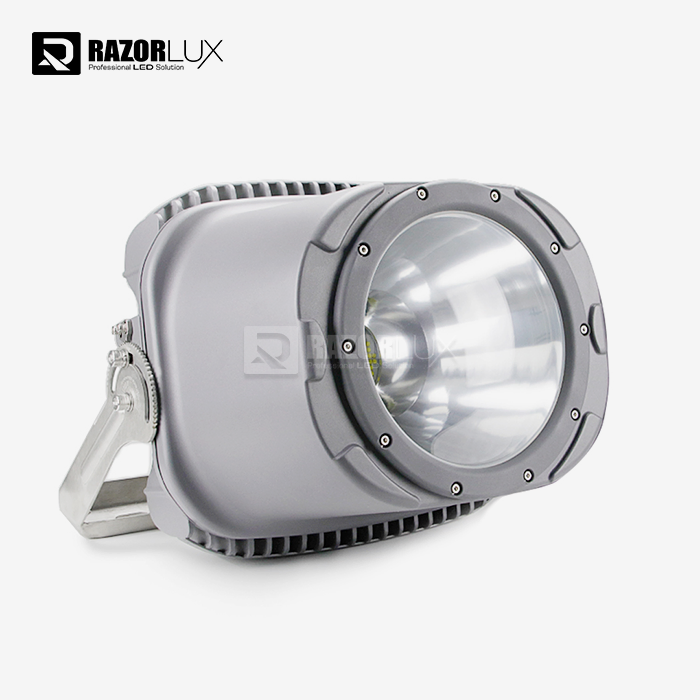
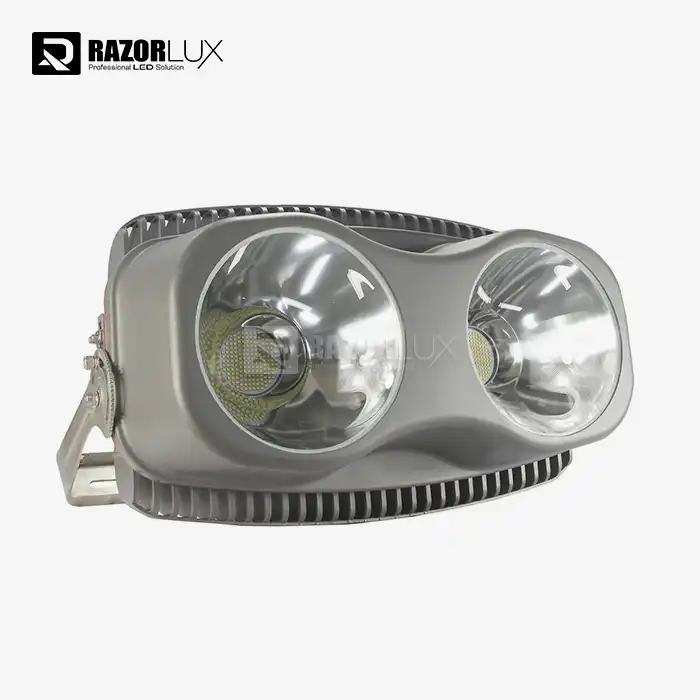
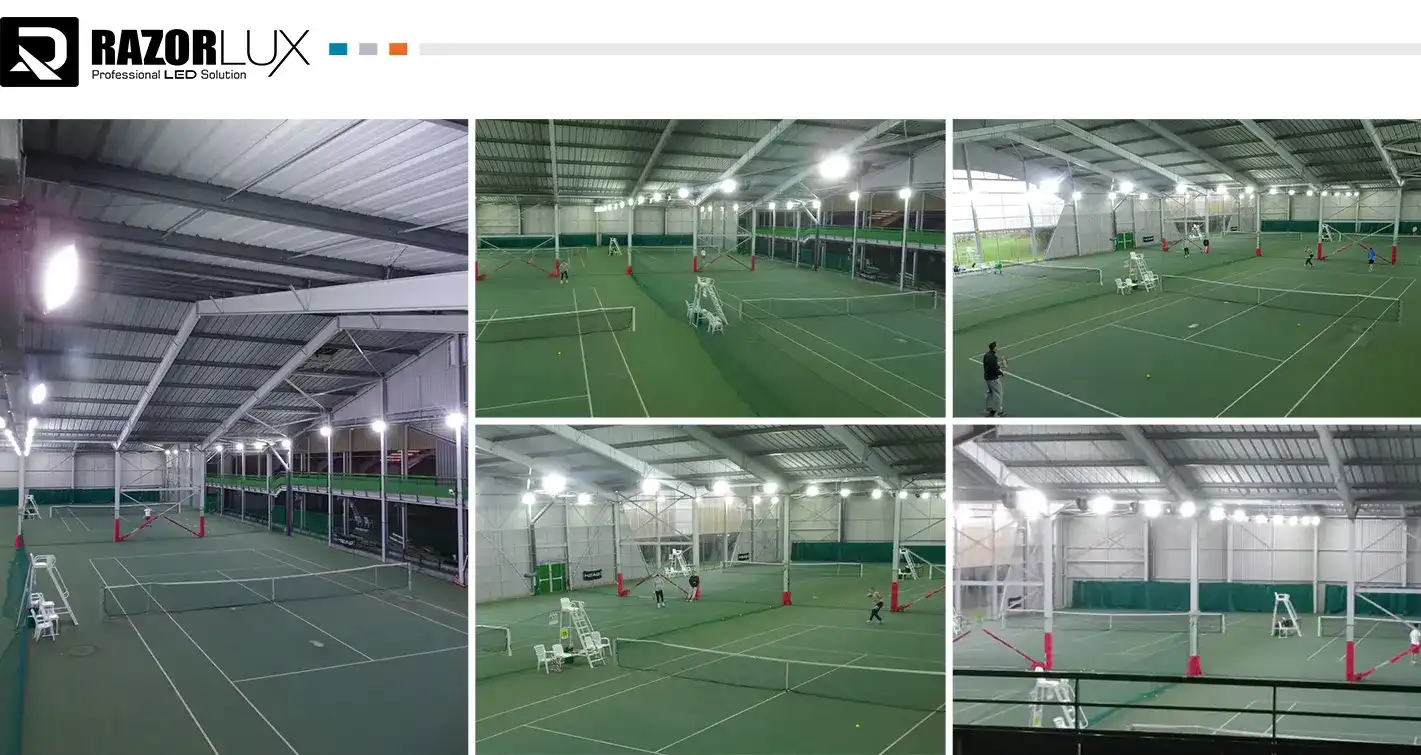
Choosing the right lighting for sports places is a big business choice that affects how well players do, how much it costs to run, and the image of the location. Since they offer real improvements in energy efficiency, clarity, and long-term dependability, Tennis Court Led Flood Lights have become the best choice for modern sports centers. Here at Razorlux, we've seen building managers cut maintenance costs by almost 60% while improving player happiness through better lighting performance. Our RGL2-400A type is a great example of this new technology. It gives off 52,000 lumens at 130 lm/W while still being waterproof to IP67 standards and impact-resistant to IK10 standards, which meet the strict needs of professional tennis settings.
Understanding the Core Advantages of LED Technology for Tennis Courts
As sports centers switch from standard metal halide and high-pressure sodium lights to LED technology, the way they work is completely changed. This change goes beyond just replacing bulbs; it means redoing the whole lighting system to make it more in line with current performance standards and cost-effectiveness.
Superior Energy Efficiency and Cost Reduction
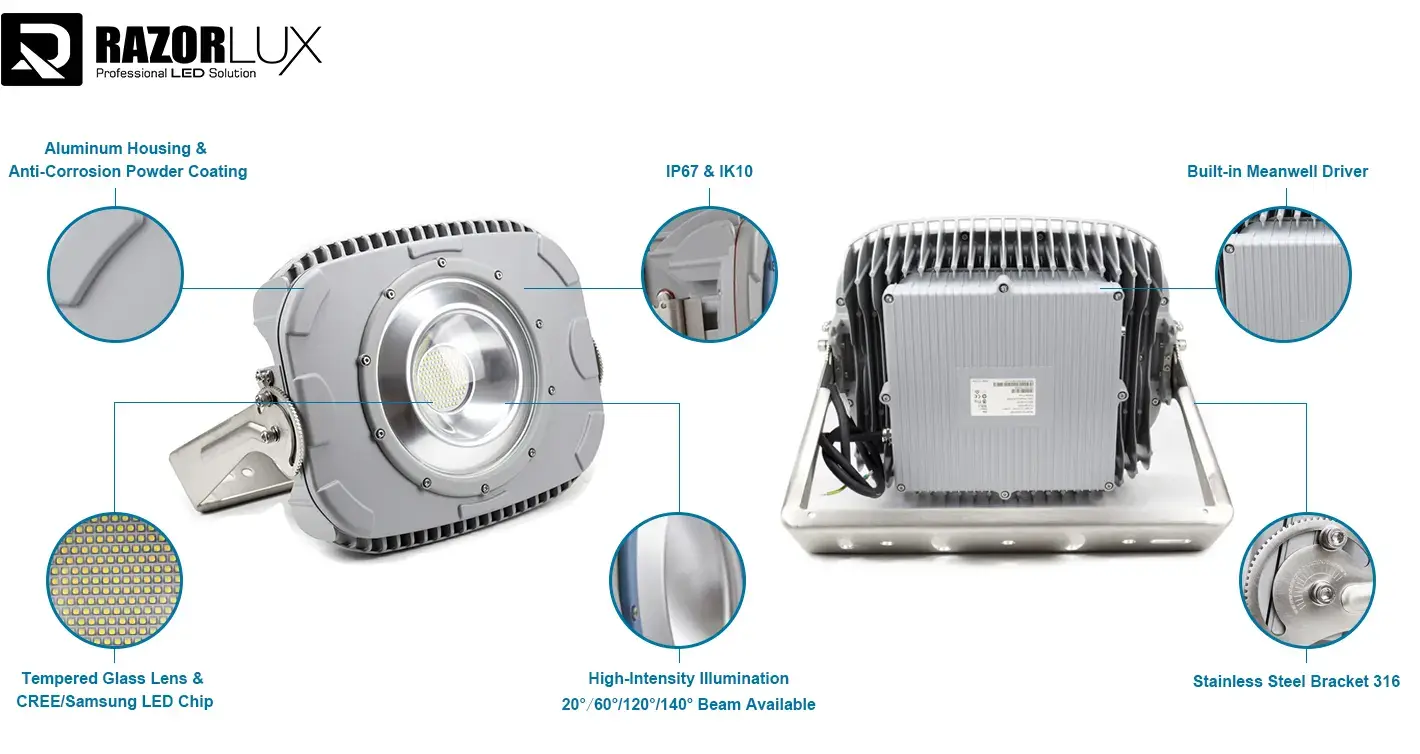
Contemporary LED floodlights use a lot less power than their older versions, but they produce the same amount of light or more. Our 400W type can be used instead of 800-1000W metal halide lights, which means that power use goes down right away. This efficiency comes from advanced semiconductor technology that turns electrical energy directly into visible light, skipping the thermal waste that comes with filament-based systems. Facilities that use six courts for 12 hours a day can expect to save more than $15,000 a year on electricity costs alone. Depending on energy rates and usage trends in the area, the payback time is usually between 18 and 24 months. In addition to saving energy directly, buildings that use less power can often qualify for utility refund programs and green building certifications, which adds to the financial benefits.
Enhanced Visual Performance and Player Safety
Quality of lighting has a direct effect on how well players do and how likely they are to get hurt. Professional-grade LED systems have constant color temperatures between 4000K and 5700K, which is very close to natural sunshine and lets you see the distance and track the ball accurately. Our lamps keep the Color Rendering Index (CRI) above Ra75, and for tournament-level use, they can go up to Ra80 or Ra90. Even light spread stops the dark spots and hot spots that are common with older technology. When LED systems are set up correctly, they make sure that the minimum to average illuminance ratio is higher than 0.7 across all playing fields. This meets the standards set by the International Tennis Federation (ITF) for professional play. This stability makes it easier on the eyes during long games and gets rid of the flickering effect that happens with old discharge lights.
Extended Operational Lifespan and Reduced Maintenance
Because LED technology is mechanically durable, it changes the way upkeep plans are made for buildings in a big way. With working lifespans of more than 50,000 hours, or about 15 to 20 years with normal use, LED lights get rid of the cost and hassle of replacing bulbs all the time. Our goods go through strict thermal management tests to make sure joint temps stay within the best ranges. This is directly linked to longevity estimates based on LM-80 and TM-21 standards. The benefits of maintenance go beyond lamp life. LED lights can handle shaking and contact much better than traditional ones because they don't have weak filaments or heated gas tanks. Our IK10 impact grade makes sure that fixtures can withstand direct hits from balls, which happen a lot in tennis courts. When installed outside, stainless steel bolts and powder-coated metal housings don't rust, so the structure stays strong even after years of being exposed to the weather.
Critical Selection Criteria for Procurement Professionals
Choosing the optimal lighting system requires systematic evaluation of technical specifications, operational requirements, and vendor capabilities. Procurement decisions should balance initial investment against total cost of ownership while ensuring compliance with relevant standards.
Wattage, Lumen Output, and Court Coverage
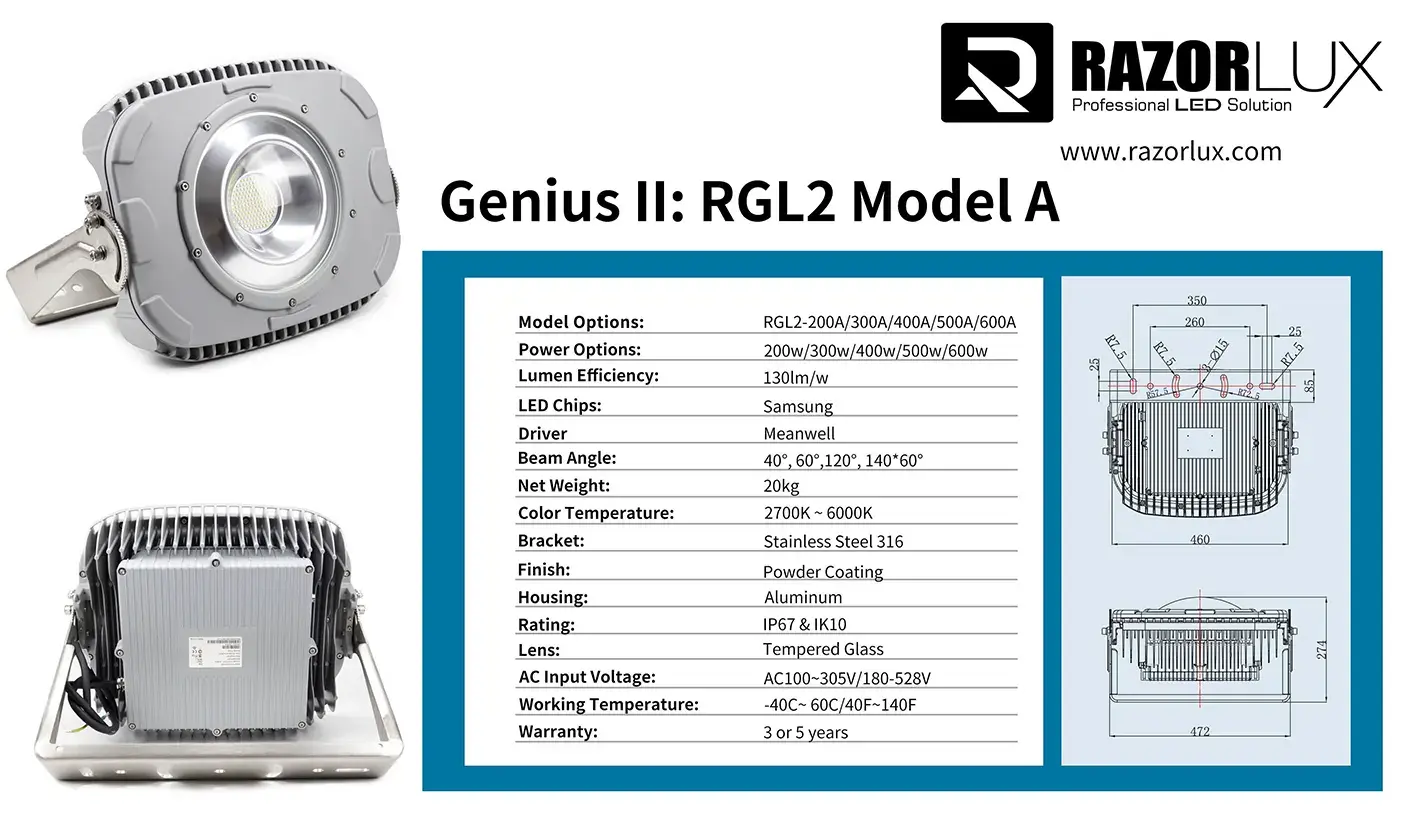
To get the right amount of light, you must first accurately calculate how much light is needed. For casual play, recreational sites aim for 200 to 300 lux, while competition places need 500 to 750 lux and broadcast-quality setups need 1000 lux or more. The size of the court and the height of the mounting bracket directly affect how many fixtures and how much power they need. Our 400W model makes 52,000 lights and has four adjustable beam angles (40°, 60°, 120°, and 140°x60°), so it can be customized based on where the poles are placed and how the court is laid out. Asymmetric lenses focus light precisely on playing areas while reducing sky glow and light trespass, which are things that city lighting codes are requiring more and more. When planning, doing the right lighting analysis stops over-specification (which wastes energy) and under-specification (which makes it harder to see).
Voltage Compatibility and Power Quality
The ability to accept voltages from different sources is very helpful for places that don't use normal electricity systems. Our lights can take AC110-480Vac and DC100-400Vdc input without the need for extra transformers. This makes installation easier and lowers the number of places where something could go wrong. This adaptability comes in handy for foreign projects or buildings that are upgrading their electrical systems. Metrics for power quality have a direct effect on how long a system lasts. Total Harmonic Distortion (THD) stays below 10% and power factor rises above 0.98 with our Mean Well drivers. This makes sure that they work with sensitive electrical systems and meet utility requirements. A high power factor lowers the amount of power that seems to be used, which could lower the demand charges on business energy rates.
Environmental Protection and Durability Ratings
Tennis Court Led Flood Lights Rain, humidity, weather changes, and flying contaminants are always hitting outdoor sports lights. IP67 ingress protection ensures complete dust sealing and submersion resistance to one meter—critical for installations in coastal regions or areas with severe weather. The sealed optical chamber keeps wetness out, which damages mirror surfaces and causes LEDs to fail early. The operating temperature range (-40°C to 60°C) allows placements in places from the Nordic region to the Middle East without affecting performance. Using precision-engineered heat sinks to control heat keeps the LED junctions at the right temperature, which is directly linked to reaching the stated lifespan. Our fixtures go through a lot of outdoor testing, such as being exposed to salt spray (ASTM B117) and being analyzed for vibrations. This makes sure that they work well in a wide range of placement situations.
Certification Requirements and Compliance Standards
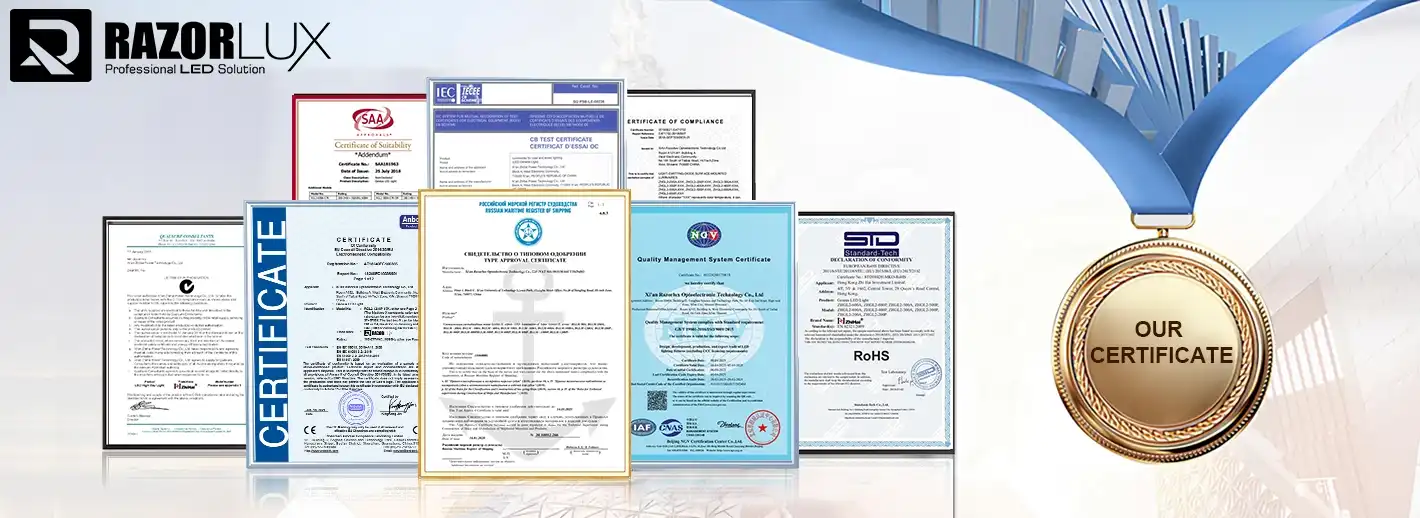
International approvals prove that a product is safe, works well, and was made with good quality. Our CE, RoHS, UL, DLC, and CB certifications show that our products meet safety standards for electricity, rules for the environment, and standards for energy savings in all major markets. For sites near the water or specific uses, extra certificates like DNV/GL or ABS may be needed. The requirements for the purchase should make this clear and ask for proof when the seller is being evaluated. Issuer records can be used to check the legitimacy of certifications, which gives customers peace of mind that the goods they sell meet the standards they say they do. This paperwork is very important for insurance reviews, building inspections, and figuring out who is responsible after an accident or piece of equipment breaking down.
Installation Planning and Implementation Strategies
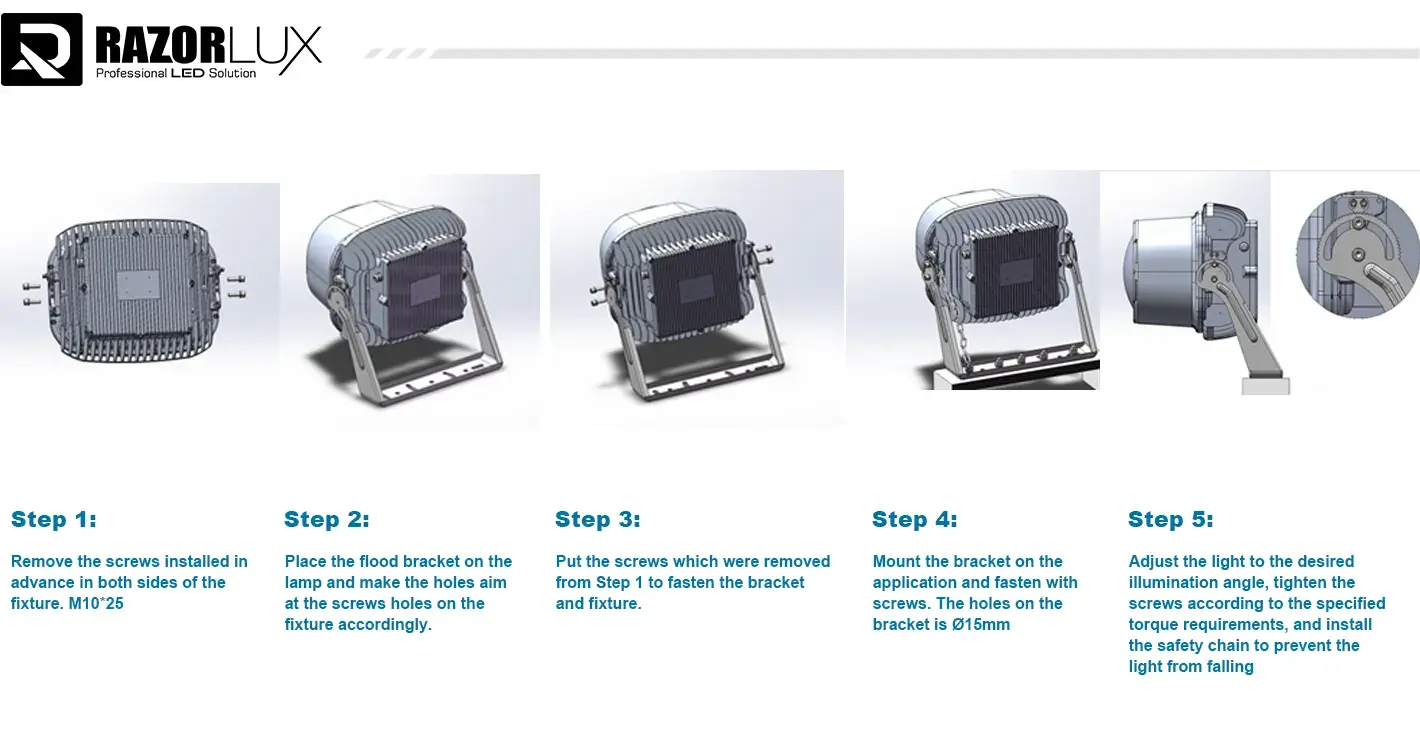
Successful LED lighting upgrades require comprehensive planning that addresses electrical infrastructure, structural mounting, and photometric optimization. Facility managers should engage lighting designers familiar with tennis-specific requirements during early project phases.
Pre-Installation Site Assessment and Electrical Evaluation
Before buying tools, thorough site surveys find possible problems and possibilities. Electrical infrastructure evaluations find out if existing circuits can support new fixtures or need to be upgraded. They should also record existing pole locations, heights, and structural conditions, as well as electrical service capacity and circuit routing, control system requirements, and environmental factors that affect equipment choice. LED systems usually use less electricity than the fixtures they replace, which could mean that more fixtures can be put on the same circuit or the size of the conductors can be lowered. However, the features of inrush current and discharge lights are different, so existing breakers and control systems need to be checked to make sure they work with the new lamps.
Mounting Configuration and Photometric Optimization
Where you put your lights has a big impact on their quality and how well they work. Four-corner or six-pole sets are common on tennis courts. The mounting heights range from 6 to 12 meters, based on the level of the court and the presence of nearby obstructions. Higher mounting lowers glare, but it takes more watts to keep the goal brightness. Asymmetric beam patterns let fixtures stay level while sending light forward across courts, which is much better for players than tilted fixtures. Our lenses can be changed so that the beam is precisely shaped to fit different pole configurations and court sizes. Professional photometric analysis with AGi32 or DIALux software shows how things are supposed to work, making sure that plans meet the desired level of light and regularity before they are put in place.
Wiring, Control Integration, and Commissioning
Installing electrical components correctly is important for safety and efficiency. Connections should be made according to the National Electrical Code (NEC) or local rules that apply, using wires with the right rating, tubing, and waterproof junction boxes. Surge protection devices (10kV or 20kV rating) are very important for protecting against lightning-caused transients, especially for installations that are mounted on poles that are out in the open. The control system can be integrated with manual switches, photocells for automatic dusk-to-dawn operation, or complex building management system connectivity. As part of the commissioning process, the right operation, optical performance, and control functions are checked. In this step, the final brightness readings should be taken across all game surfaces and compared to the design expectations. Small changes should also be made to the aiming to make it more regular.
Comparative Analysis: LED Versus Traditional Lighting Technologies
Understanding the fundamental differences between LED and conventional technologies clarifies the compelling advantages driving widespread adoption across sports facilities worldwide.
Energy Consumption and Operational Cost Differences
Most of the power that goes into traditional metal halide and high-pressure sodium lights is turned into heat instead of visible light, giving off between 60 and 90 lumens per watt. LED technology can reach 130–160 lm/W, which means it can produce twice as much useful light per watt. This difference in efficiency directly leads to lower power costs over the life of the system.Operational factors cause extra cost differences on top of raw energy use. Metal halide lights need 5 to 15 minutes to warm up, and they can't be turned back on right away after being turned off. This makes arranging harder and wastes energy during changeover times. LED lights can work at full power right away and can switch on and off an infinite number of times. This lets you use flexible control methods and gets rid of the need for wasted warm-up energy.
Maintenance Requirements and Replacement Cycles
Light output drops 20–30% in conventional discharge lamps before they fail completely, which can be predicted. This loss of lumens means that higher wattages than are theoretically needed to keep lamps at the right level of illumination must be specified during installation. Usually, bulbs need to be replaced every 8,000 to 15,000 hours, which means that the costs of materials and labor keep going up. LED systems, on the other hand, keep their output more stable over their estimated lifespan. L70 rates show when light output hits 70% of its initial brightness. Quality fixtures last longer than 50,000 hours to L70, so they don't need to be replaced often during normal facility control times. Because they last so long, there's no need to keep track of lamp stocks or plan regular repair visits.
Light Quality and Environmental Impact
How players see the color of the ball, the court floor, and their surroundings is affected by their ability to render colors. The CRI of metal halide lights is about 65 to 75, but the colors change a lot over time and between groups of lamps. LED lights keep their color traits fixed over time, and there are CRI choices above 80 for uses that need the best color accuracy. Environmental concerns are becoming more and more important in purchasing decisions. LED technology doesn't use mercury or other dangerous materials, which makes it easier to get rid of them and lowers the company's environmental responsibility. Less energy use directly leads to less carbon emissions, which helps the group reach its environmental goals and could help it earn LEED certification points for improvements to its facilities.
Performance in Extreme Conditions
Tennis Court Led Flood Lights Long-term dependability in a variety of installation sites depends on how well the system can handle the environment. When it's cold outside, traditional discharge lamps don't work as well; they put out less light and have trouble starting below freezing. Extreme temperature ranges (-40°C to 60°C) don't affect the performance of LED lights; they work well without any warm-up or output delays. Another important benefit is that they don't get damaged by vibrations. Traditional lamps can have their filaments break too soon because of mechanical shocks from nearby equipment, poles moving because of the wind, or direct ball hits. Solid-state LED design gets rid of weak parts, so they can work reliably in places with a lot of mechanical stress.
Strategic Procurement Approaches for B2B Buyers
Effective procurement extends beyond technical specifications to encompass vendor evaluation, contractual protections, and long-term relationship management. Facility managers should approach LED lighting acquisition as strategic infrastructure investment rather than commodity purchasing.
Vendor Qualification and Due Diligence
When choosing a supplier, you should pay attention to their producing skills, quality control systems, and facilities for after-sale assistance. Manufacturers with ISO 9001 recognition have organized their quality processes, and manufacturers with UL or DLC ratings have had their products checked by a third party. During the evaluation process, ask for factory audit reports, information on production capacity, and customer reference lists. Where the components come from has a big impact on how reliable and long-lasting the product is. Fixtures that use trusted LED chips (Samsung, Cree, Nichia) and tried-and-true drivers (Mean Well, Philips) have a long past in the field and are supported by the manufacturers. Specifications for buying things should make it clear which providers are important parts and include ways to check that the information is correct.
Pricing Structure and Total Cost of Ownership Analysis
The initial cost of a device is only one part of its lifetime costs. A full financial study should include the costs of energy over the expected lifetime, the costs of upkeep, and the costs of getting rid of the item when it's no longer useful. Even though LED systems cost more at first, they usually pay for themselves in 18 to 36 months because they are more efficient and last longer. When negotiating volume prices, you should think about future plans for growth and the benefits of uniformity. Building partnerships with makers that can support deployments across multiple sites and long-term parts supply makes future buying easier. To make it easier to compare prices, ask for specific price reports that separate the costs of fixtures from those of tools, control systems, and extra features.
Warranty Terms and After-Sales Support Evaluation
Warranty coverage shows that the maker trusts the product and protects the buyer financially against early fails. Our five-year warranty on LED modules and drivers is longer than the industry standard. The extended 10-year warranty on the housing shows how well it was built and how resistant it is to rust. The warranty terms should make it clear what is covered, how to file a claim, and how quickly the service will be provided. Technical help is very important during the installation and use phases. Check how quick the maker is to questions before the sale to get an idea of how good their service will be after the sale. Check to see if detailed documents, startup instructions, and tools for fixing problems are available. When buying things from other countries, make sure you check the local service infrastructure or parts delivery networks to make sure you get help quickly.
Sample Testing and Performance Verification
Sample evaluation lets you try something out for yourself before you commit to buying a lot of it. Ask for trial units to be installed in typical settings so that expert staff can check the lighting performance, build quality, and operating features. The testing periods should be long enough to check the thermal performance and find any early failures that could be signs of problems with the manufacturing process. To make sure the performance is correct, lux measurements should be taken in representative areas and compared to manufacturer photometric data. Uniformity and glare should also be checked. Keep detailed records of your results so that you can compare vendors in an objective way and use these records as a starting point for acceptance testing during the full installation process.
Product Specifications: Razorlux RGL2-400A Tennis Court Floodlight
Our flagship tennis court lighting solution integrates advanced LED technology with robust construction designed specifically for demanding outdoor sports applications. The following specifications demonstrate our commitment to performance, reliability, and operational excellence.
| Parameter | Specification | Advantage |
|---|---|---|
| Rated Power | 400W (360W LED + 40W Driver) | Replaces 800-1000W metal halide fixtures |
| Luminous Flux | 52,000 lumens (stable after 1 hour) | High output ensures adequate illumination for competitive play |
| Efficacy | 130 lm/W | Superior efficiency reduces operational costs |
| Input Voltage | AC110-480Vac, DC100-400Vdc, DC500-800Vdc | Universal compatibility eliminates transformer requirements |
| Color Temperature | 2700K-6500K (customizable) | Flexible specification for different venue preferences |
| CRI | ≥Ra75 (Ra80, Ra90 available) | Excellent color rendering for accurate ball tracking |
| Beam Angles | 40°, 60°, 120°, 140°x60° | Optimized light distribution for various court configurations |
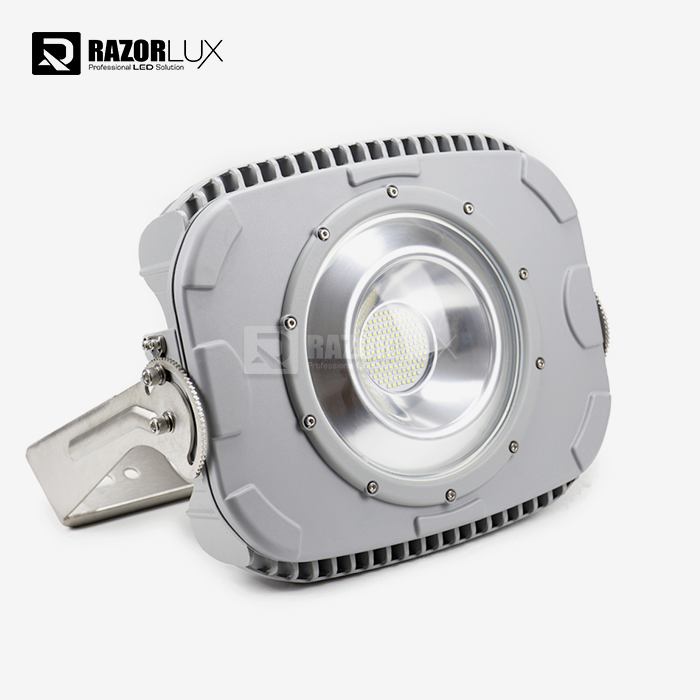
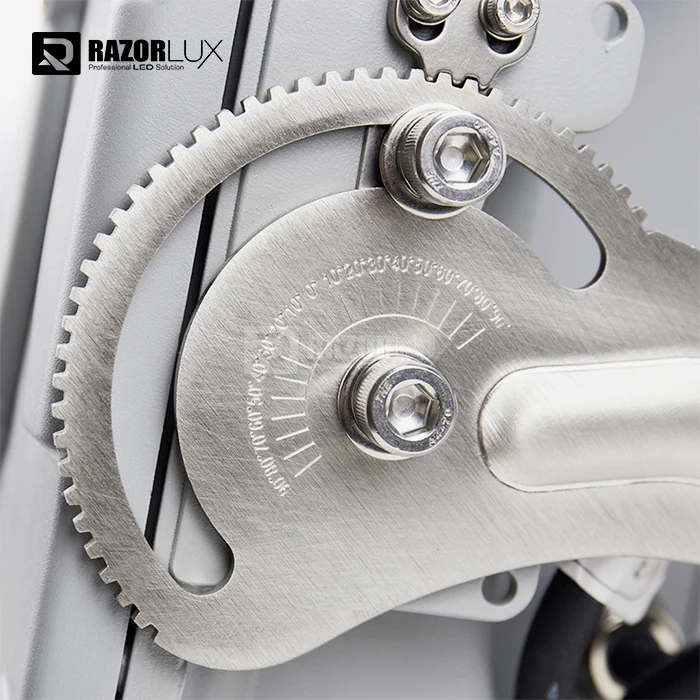
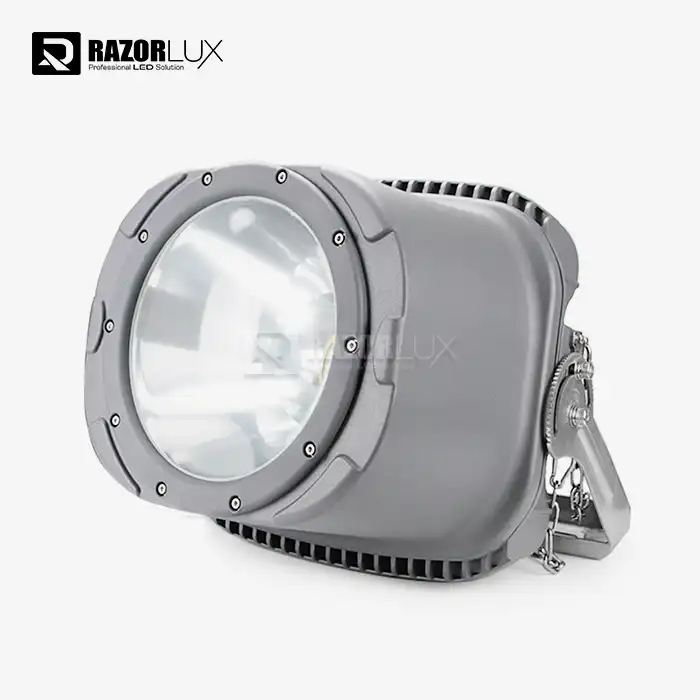
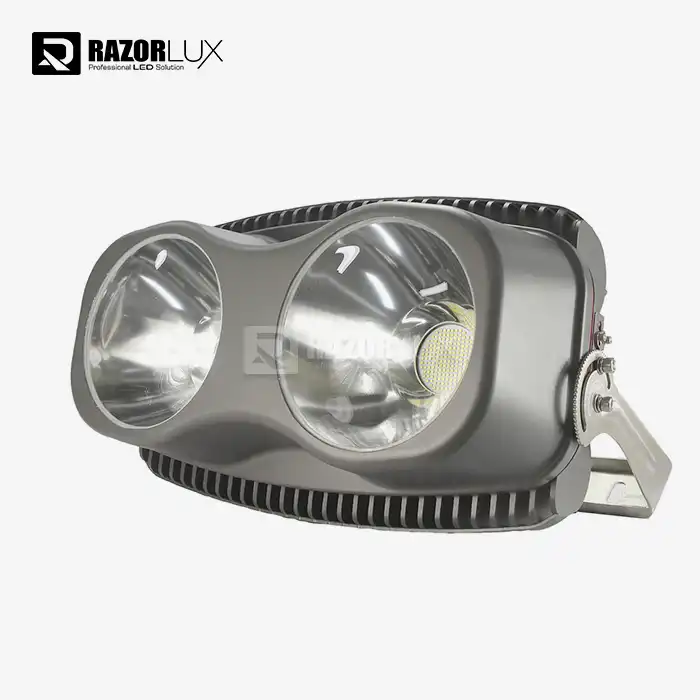
The patented multi-function design accommodates diverse mounting requirements and environmental conditions. Stainless steel brackets provide corrosion resistance and mechanical stability, while powder-coated aluminum housings dissipate heat efficiently while protecting internal components. At 15kg total weight, fixtures remain manageable during installation while providing substantial construction that withstands long-term outdoor exposure.
| Protection Rating | Value | Application Benefit |
|---|---|---|
| IP Grade | IP67 | Complete dust sealing and submersion resistance to 1 meter |
| IK Grade | IK10 | Maximum impact resistance withstands ball strikes and vandalism |
| Operating Temperature | -40°C to 60°C | Reliable operation from Arctic to desert climates |
| Working Humidity | 10% to 95% | Functions reliably in high-humidity coastal installations |
| THD | <10% | Clean power draw compatible with sensitive electrical systems |
| Power Factor | ≥0.98 | Reduced apparent power minimizes utility demand charges |
Tennis Court Led Flood Lights Mean Well power sources are the most reliable and efficient in their class, and they have been used in a wide range of challenging situations for a long time. The low total harmonic distortion (THD) and high power factor make it compatible with modern electrical infrastructure. They also reduce harmonic distortion that can affect nearby equipment. The extensive certification portfolio shows that the product meets international safety and performance standards. CE and RoHS certifications let you sell your products in Europe, and UL and DLC lists meet the needs of people in North America. The SAA and C-Tick licenses cover markets in Oceania, and the CB scheme acceptance makes approval easier in more places. Our ISO 9001 certification backs up our quality management systems and manufacturing processes. Our five-year warranty on LED modules and drivers gives you peace of mind for the long term, and the extended 10-year warranty on the housing shows how well it was built and how resistant it is to rust. This coverage shows that we trust the product to last a long time and protects your finances, which lowers the total cost of
Conclusion
Tennis Court Led Flood Lights are the best option for modern sports sites that want to meet performance needs while also being environmentally friendly and saving money on costs. When you switch from older lighting technologies to new ones, you can see clearer images, use less energy, and keep the building in better shape. This directly benefits both the players and the business. Razorlux's RGL2-400A model is a great example of this progress. It has a 130 lm/W efficiency rating, IP67/IK10 safety ratings, and international voltage compatibility to meet a wide range of application needs. Because we only use high-quality parts, offer full certification, and offer the best warranty terms in the industry, procurement professionals can be sure that the lighting infrastructure they specify will work reliably for a long time and help the organization meet its sustainability goals.
FAQ
What wattage is appropriate for standard tennis court installations?
Most recreational tennis courts achieve adequate illumination with 300-400W LED fixtures per pole in four-corner or six-pole configurations. Competitive venues may require higher wattage or additional fixtures to reach 500-750 lux target illuminance. Court dimensions, mounting height, and surrounding obstruction factors influence optimal wattage selection. Professional photometric analysis during planning phases ensures specified fixtures deliver required performance.
How does asymmetric beam distribution improve tennis court lighting?
Asymmetric optics direct light forward across court surfaces while fixtures remain horizontally mounted, significantly reducing direct glare when players look upward during serves or lobs. This approach concentrates illumination where needed while minimizing light trespass and sky glow. Compared to tilted symmetric fixtures, asymmetric designs improve visual comfort and comply more readily with dark-sky ordinances governing outdoor lighting installations.
What lifespan can facilities expect from LED tennis court lights?
Quality LED fixtures with proper thermal management achieve L70 ratings (70% of initial lumens) exceeding 50,000 hours under typical operating conditions. This translates to 15-20 years of reliable operation for facilities averaging 8-10 hours daily usage. Actual lifespan depends on ambient temperature, electrical quality, and operational duty cycles. Our fixtures undergo extensive thermal testing to validate longevity projections based on industry-standard LM-80 and TM-21 methodologies.
Are dimming and control features available for LED sports lighting?
Advanced LED drivers support various control protocols, including 0-10V analog dimming, DALI digital control, and motion sensor integration. These capabilities enable energy savings during practice sessions, automated scheduling, and instant response to changing conditions. Control system integration should be specified during procurement to ensure compatible drivers and necessary interface hardware are provided.
Partner With Razorlux for Superior Tennis Court Lighting Solutions
Upgrading your sports facility lighting represents a significant infrastructure investment that impacts operations for decades. Razorlux, an established Tennis Court Led Flood Lights manufacturer since 1998, combines advanced LED technology with rigorous quality control and comprehensive support services. Our RGL2-400A model delivers 52,000 lumens at 130 lm/W efficiency while maintaining IP67 weatherproofing and IK10 impact resistance—specifications that address the demanding requirements of professional tennis environments. We offer sample units for hands-on evaluation, complete photometric analysis support, and customization capabilities for unique project requirements. Contact our technical team at sam@razorlux.com to discuss your specific facility needs and receive detailed specifications, pricing information, and application guidance. Benefit from our 5-year warranty coverage, international certification portfolio, and responsive after-sales support infrastructure that ensures successful implementation and long-term satisfaction.
References
1. Illuminating Engineering Society. "Recommended Practice for Sports and Recreational Area Lighting" (IES RP-6-15). New York: IES, 2015.
2. International Tennis Federation. "ITF Guidelines for Test Methods and Performance Standards for Tennis Court Lighting Systems." London: ITF Technical Department, 2018.
3. U.S. Department of Energy. "LED Lighting for Sports and Recreation Facilities: Gateway Demonstration Results." Washington: DOE Solid-State Lighting Program, 2019.
4. Navigant Consulting. "Energy Savings Forecast of Solid-State Lighting in General Illumination Applications." Report prepared for U.S. Department of Energy, 2017.
5. American National Standards Institute. "Pre-Standard for Recommended Metrics for Characterizing the Color Rendition of Light Sources" (IES TM-30-18). Washington: ANSI, 2018.
6. Chartered Institution of Building Services Engineers. "Lighting Guide 4: Sports Lighting." London: CIBSE Publications, 2016.