

_1750326878398.png)

Led Sports Lighting Fixtures: Key Specs to Check Before Buying
When reviewing stadium or arena illumination systems, choosing high-performance Led Sports Lighting Fixtures requires knowing several critical technical parameters that directly influence operating efficiency, athlete safety, and long-term upkeep costs. Modern LED lighting systems can replace old metal halide or high-pressure sodium systems. They can turn on instantly, work without flickering for HD streaming, and save more than 60% of energy. To make sure that lighting can survive harsh weather and evenly light up playing areas, procurement managers and building engineers must look at things like lumen output, beam precision, ingress protection ratings, and thermal management. This guide breaks down the most important specs that will help you decide what to buy.
Understanding LED Sports Lighting Fixtures
What Defines High-Performance Stadium Lighting
Solid-state technology is used in high-performance stadium lighting systems to meet the strict photometric standards for professional sports venues. LED Sports Lighting Fixtures give full brightness right away, while standard discharge lamps need time to warm up. This is a huge benefit when the power goes out or the schedule for an event changes. These bulbs have precisely designed optics that control how light spreads, reducing spill into nearby neighbourhoods while increasing lighting on the pitch. The technology solves problems that have been around for a long time, like lamps that need to be replaced too often because of pole height issues and the flash effect that makes slow-motion repeat quality worse.

Core Components Driving Superior Performance
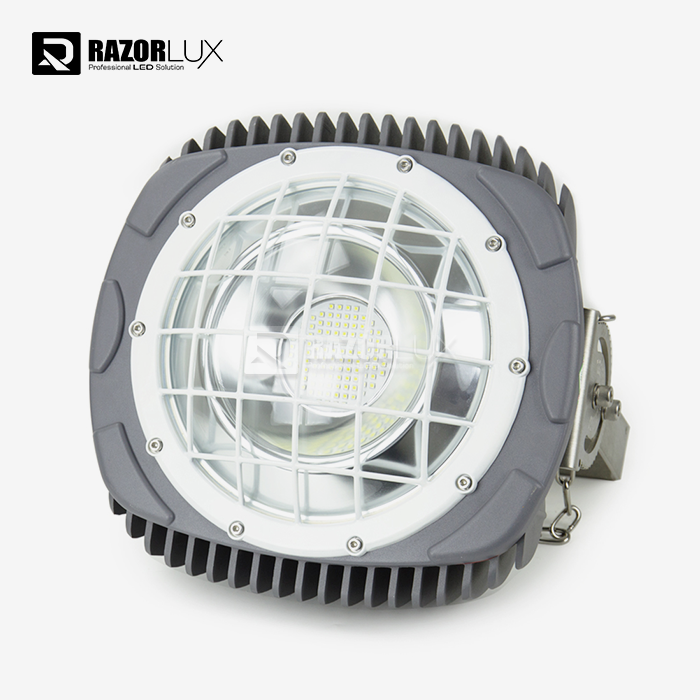
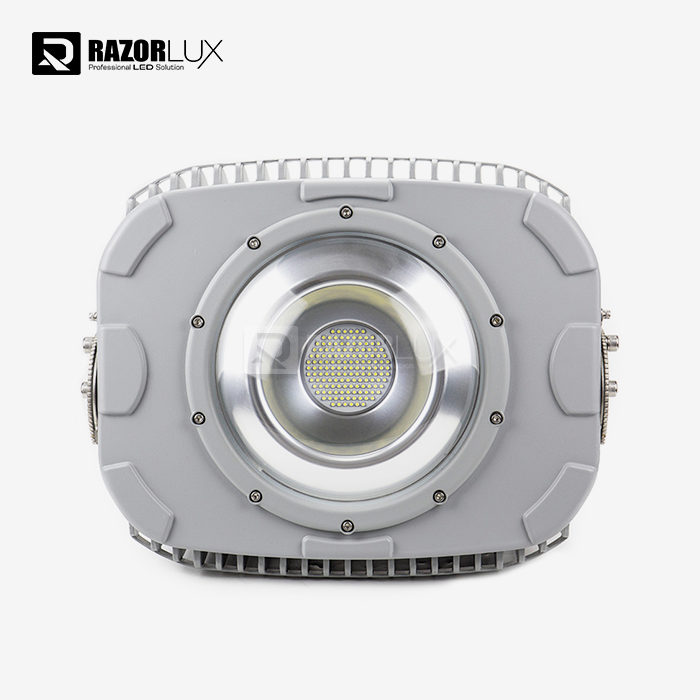
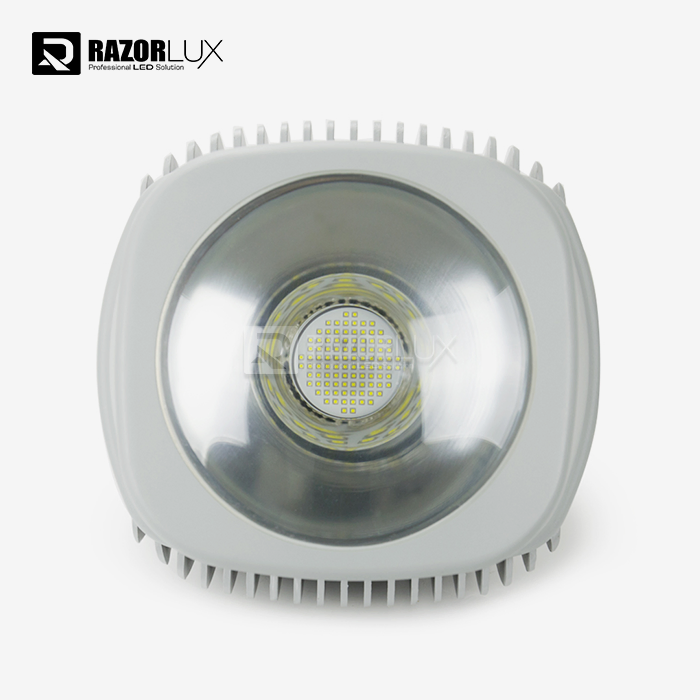
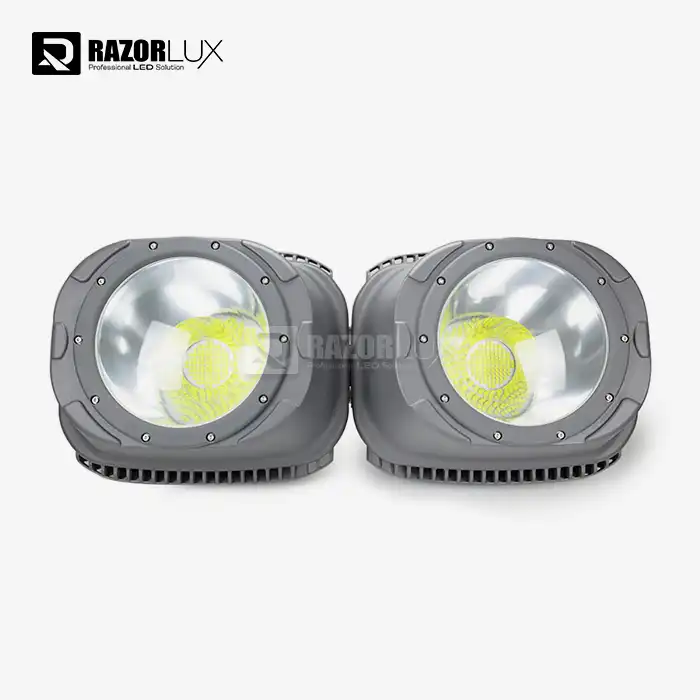
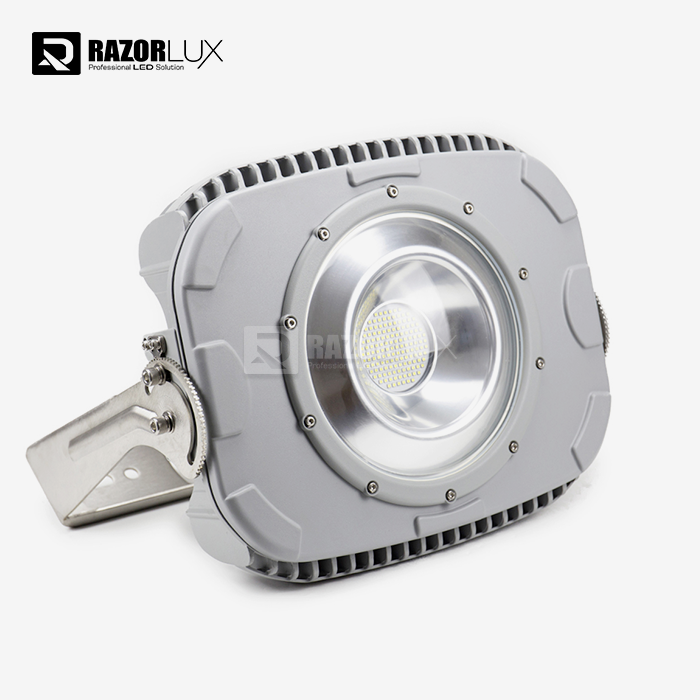
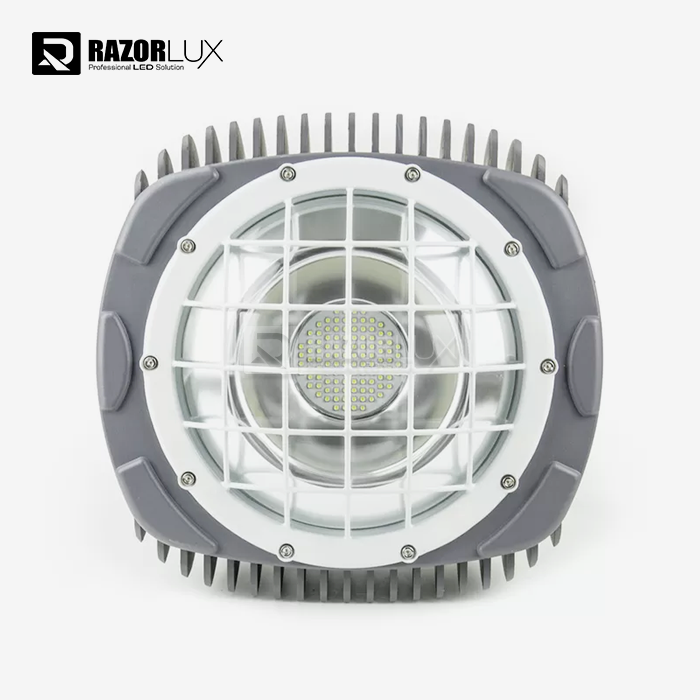
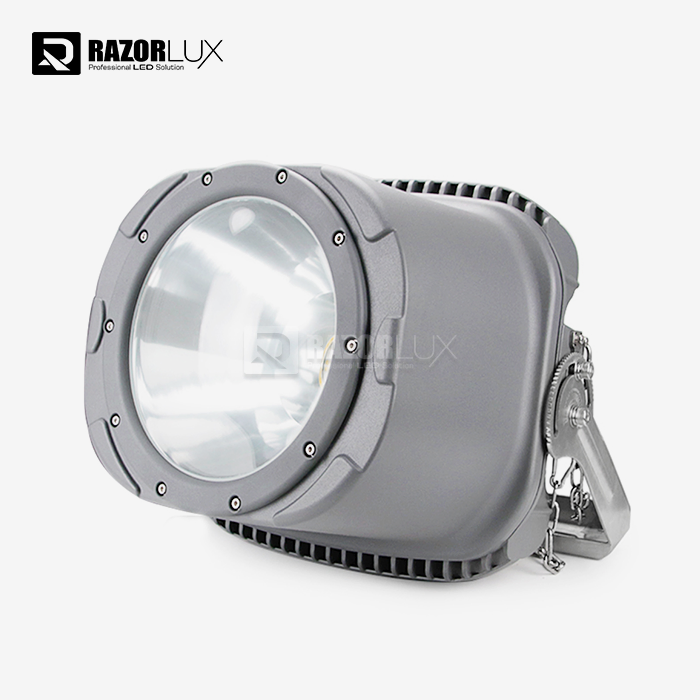
Our RGL-120A model at Razorlux is a good example of this way of building. The light has 108W LED panels and a 12W Meanwell driver, which together produce 14,400 lumens at 130 lumens per watt. The die-cast aluminium housing with powder coating effectively removes heat, keeping junction temperatures below critical levels even when the device is in use for a long time. This temperature control has a direct effect on how long the modules last. Our modules are rated to work reliably for over 50,000 hours. The stainless steel bracket system can be mounted in a number of different ways, and the IP67 and IK10 grades show that it is safe from dust, high-pressure water jets, and mechanical impact.
LED Technology Versus Legacy Systems
Metal halide fixtures were the standard for sports lighting for many years, but they were very hard to use. These systems used 250–300W to light up, but 120W LED options can do the same job, saving over 50% of the energy used. In addition to measuring how much they are used, metal halide lights quickly lose 30% of their original power in just 6,000 hours. LED systems keep their flux output stable over their rated lifetime, losing less than 10% of their lumens at L70 endpoints. Since LED technology doesn't have any delays or mercury, it's even more of an environmentally friendly choice for current buildings.
Key Specifications to Evaluate Before Purchasing
Lumen Output and Beam Angle Precision
To light up a sports venue well, the lumen output needs to be matched to the size of the pitch and the needs of the activity. A regulation football pitch needs more vertical lighting than a recreational court. For broadcast quality, the lighting needs to be between 1,500 and 2,000 lux. We can choose from three beam directions on our RGL-120A: 60°, 120°, and 140°x60°. This lets you place the light exactly where you want it. Narrow beams focus the power for long-throw uses from high-mast poles, while wide distributions work better for lower mounting heights. This visual freedom gets rid of the common mistake of making dark spots or areas with too much light that put players in danger.
Color Temperature and Rendering Accuracy
When it comes to perception and broadcast quality, colour temperature makes a huge difference. You can change the colour temperature to suit different games, with choices running from 2700K warm white to 6500K daylight. Cooler temperatures (5000–6500K) help the ball track better in tennis and cricket, while warm tones work better in indoor venues. The colour rendering index (CRI) is a way to measure spectral quality. Our sets achieve Ra>75 as standard, and Ra>80 and Ra>90 are available for places that show TV events. High CRI makes sure that the colours of team outfits and playing grounds are shown correctly, which is important for referees and fans.
Durability Ratings: IP and IK Classifications
Ratings for Ingress Protection (IP) and Impact (IK) show how durable a fixture is. The RGL-120A has been certified with IP67, which means it can withstand short-term immersion and high-pressure water jets. This is important for coastal installations or places that use pressure washing for maintenance. The IK10 number shows that the security is good against 20 joules of kinetic energy, which is the same as dropping a 5 kg object from 40 cm. These specifications are important during bad weather or when maintenance workers come into contact with something by accident. When combined with salt-spray tests according to ASTM B117 standards, our fixtures can handle harsh marine and industrial settings without rusting too soon.
| Specification | RGL-120A Value | Industry Significance |
|---|---|---|
| Rated Power | 120W | Replaces 250-300W metal halide |
| Luminous Efficacy | 130 lm/W | Exceeds DLC Premium requirements |
| IP Rating | IP67 | Full dust protection + temporary immersion |
| IK Rating | IK10 | Maximum mechanical impact protection |
| Operating Temperature | -40°C to 60°C | Arctic to desert climate capability |

Voltage Tolerance and Power Factor
Wide input voltage acceptance (AC 80-315V / DC 80-400V) keeps performance from dropping when the power grid changes, which can happen in industrial areas or growing regions. This range lets voltage drop during motor starts or utility switching happen without shutting down the power. Power factor above 0.98 keeps reactive power fines from utilities to a minimum, and total harmonic distortion below 10% keeps sensitive equipment from being harmed. When adding modern lighting systems to older places, these electricity requirements lower the cost of upgrading the infrastructure.
Thermal Management and Lifespan Projections
How long an LED lasts depends on how well it gets rid of heat. The RGL-120A is made of finned aluminium that has the right amount of surface area for passive cooling, so there are no failure points tied to the fans. Thermal models show that joint temperatures stay within the manufacturer's guidelines even when they are used a lot in the summer in desert areas. This engineering means that the L70 will work reliably for more than 50,000 hours, which is about 11 years of regular use. Lifespan estimates that have been checked by LM-80 tests and TM-21 calculations give procurement teams accurate data for making upkeep budgets.
Comparing LED Sports Lighting Fixtures with Traditional Options
Performance Benchmarking: LED Versus Metal Halide
Direct comparisons show that LEDs are better in many ways. A 1000W metal halide system gives off about 80,000 lumens at first, but by the middle of its life, it only gives off 56,000 lumens. Our RGL-1000A uses 1000W of power to produce 130,000 lumens while keeping the output stable. The LED fixture gets rid of the 15-minute warm-up timer, which lets places with multiple uses handle the lighting on the fly. Maintenance intervals are shortened from once a year to every 5 to 7 years. This greatly lowers the cost of labour for high-pole access equipment.
Evaluating 2024 Product Innovations
Modular driver designs and smart controls merging are two recent advances. Fixtures now come with 0-10V dimming and DALI protocols built in as standard. This lets you set schedules automatically and make changes based on usage. Our engineering team has improved optical designs to get better beam control across NEMA 2 through NEMA 6 distributions. This has made neighbouring properties less likely to complain about light trespass. Anti-glare improvements make it easier for players to see while they play by reducing eye strain. This fixes a common problem with older LED Sports Lighting Fixtures.

Certification and Warranty Considerations
Full certification portfolios show that the manufacturer cares about quality. Check for UL or ETL safety listings, DLC Premium qualification to get a utility rebate, and CE marking to make sure it works in other countries. The CE, RoHS, SAA, C-Tick, UL, DLC, CB, and ISO 9001 labels are on our pieces of furniture. Warranty terms should meet the claimed length. For example, our LED modules and drivers are covered for 5 years, and our housings are covered for 10 years. This protection takes away the buyers' financial risk and shows that the company trusts the product to last.
Procurement Considerations for B2B Buyers
Aligning Specifications with Venue Requirements
A thorough site evaluation is the first step in making a procurement choice. Beam angle choice is based on pole height, installation places, and mapping of obstructions. To cast light across football fields, a 30-meter high-mast installation needs narrow 10–30° optics. On the other hand, 60–120° distributions work best for 12-meter poles above tennis courts. Lighting designers use photometric software to figure out how many fixtures they need, but buyers should make sure that the calculations take into account maintenance factors, which are usually 0.8 for LED systems and 0.6 for discharge lamps.
Budget Planning and Total Cost of Ownership
The initial costs of a fixture only make up 30 to 40 percent of its lifecycle costs. The total cost of ownership includes energy used for more than 50,000 hours, labour for relamping, and dumping fees. At $0.12/kWh rates, a 120W LED fixture that uses 1.05 kWh of electricity every day costs about $115 a year, while a 250W metal halide fixture costs $274 a year, which is a $159 savings per fixture. If you multiply this by 50 to 100 games in a normal stadium, the payback time drops to two to three years, even though you have to pay more up front.

Bulk Purchasing and Customization Options
Volume pricing and working directly with the factory are good for big projects. When you buy more than 100 units, you can usually get 15–25% off and free customisation without having to pay for tools. Custom choices include changing the beam angle, getting special attaching tools, or adding sensors. We keep a large stock of core models and provide OEM services for branded applications. Before full buying promises are made, pre-project sampling makes sure that photometric performance meets standards for LED Sports Lighting Fixtures.
| Cost Factor | Metal Halide (10 Years) | LED (10 Years) | Savings |
|---|---|---|---|
| Fixture Cost (50 units) | $25,000 | $40,000 | -$15,000 |
| Energy (50 fixtures) | $136,900 | $57,500 | $79,400 |
| Relamping Labor | $18,000 | $0 | $18,000 |
| Disposal Costs | $2,500 | $500 | $2,000 |
| Total 10-Year Cost | $182,400 | $98,000 | $84,400 |
Installation and Commissioning Best Practices
Fixtures work better and last longer if they are installed correctly. To keep vibrations from loosening mounting bolts, they need to be torqued to a certain level, and electrical connections need to be made in protected, sealed enclosures. An optical plan and an on-site light meter should be used to make changes to the aiming. A lot of buyers forget to include surge protection devices. 10kV to 20kV SPDs protect against lightning hits and grid transients, which keeps drivers from failing in terrible ways. As part of the commissioning process, thermal imaging is used to find areas where heat isn't being removed properly, and electrical testing is done to check power quality factors.
Maintenance Protocols for Extended Lifespan
Compared to older technologies, LED systems don't need as much maintenance, but they do need to be cleaned every so often to keep their output at its best. Coastal sites can benefit from freshwater rinses every three months to get rid of salt buildup. Once a year, the mounting hardware, gaskets, and lens clarity should all be checked to make sure they are tight and in good shape. Over time, the thermal paste that seals heat sinks to mounting surfaces wears off. Reapplying it during regular maintenance keeps the thermal transfer efficiency high. Following these simple steps will protect the investment and make sure that lighting standards are always met.

Future Trends and Technological Advances in LED Sports Lighting
Smart Controls and IoT Integration
New systems have sensors and digital connections built in so they can be monitored in real time. Fixtures tell centralised control platforms about their operating state, how much energy they use, and how many lumens they produce. Predictive maintenance programs look at patterns in performance and plan repairs before they go wrong. Occupancy sensors and daylight harvesting cut down on operations that aren't needed. This is especially helpful for training facilities where use patterns change often. With these features, lighting goes from being a passive piece of infrastructure to an asset that generates data that helps facility managers make decisions.
Sustainable Materials and Circular Economy Initiatives
To have less of an effect on the earth, manufacturers are using more and more recyclable aluminium metals and wire without halogens. Repairing individual parts of modular designs is easier than replacing whole fixtures, which increases their useful life and lowers waste. Take-back schemes get old units back so that the materials can be reused. These steps for sustainability are in line with the environmental goals of the company and may help projects get green building certifications like LEED.
Advancements in Optical Engineering
Micro-structured lenses and asymmetric distributions are used in next-generation optics to direct light exactly where it is needed. Computer-aided design models real-world installs so that the number of fixtures and where they are placed can be optimised before they are actually put in place. Anti-glare technologies use louvres and shields that meet the requirements for Dark Sky compliance without lowering the quality of the light. These improvements ease the conflict between the need for performance and care for the environment, allowing venues to be good neighbours while still maintaining the infrastructure needed for competitive sports.
Conclusion
To choose the right stadium lighting systems, you need to carefully look at the technical specs that match the needs of the project. Long-term running costs and upkeep loads are directly affected by energy efficiency, durability ratings, and thermal management. Certification files and guarantee terms give you peace of mind about quality and compliance with the rules. LED Sports Lighting Fixtures: As smart controls and eco-friendly features are added to LED technology, buying plans must balance what is needed now with what can be used in the future. When buyers put detailed specifications first and build relationships with manufacturers with a lot of experience, they set up their buildings for decades of reliable, low-cost lighting.
FAQ
What is the typical lifespan of LED sports lighting fixtures?
If you use quality lights that are rated for 50,000 to 100,000 hours at L70 lumen upkeep, they should last between 10 and 20 years. The actual lifespan varies on how well the temperature is managed, the working temperature, and the electrical stress factors. Our RGL-120A lasts longer than 50,000 hours thanks to better heat absorption and high-quality parts.
Do these fixtures support dimming and remote control?
0-10V analogue dimming and DALI digital systems are built into most modern lights. These connections let you connect them to building management systems so that scheduling, occupancy detection, and scene planning can all be done automatically. There are wireless control choices for retrofit situations where it's not possible to install new control wires.
How do LED systems compare in energy savings versus traditional lighting?
LED lights produce more lumens while using 50–70% less energy than metal halide alternatives. When you replace a 250W metal halide with a 120W LED, you save about 1,140 kWh per fixture per year, which is about $137 a year at standard business electricity rates. Facilities with 50 to 100 openings see big drops in their operating costs.
Partner with Razorlux for Your LED Sports Lighting Fixture Needs
With more than 20 years of experience in designing and manufacturing, Xi'an Razorlux Optoelectronic Technology is ready to help you with your stadium lighting projects. Our RGL series lights offer great value for money while still performing well. They come with full 5-year warranties and are certified to work anywhere in the world. Our technical team can help you with photometric analysis, custom sampling, and support after the installation to make sure the project goes well, whether you need small court lighting or large arena installations. Get in touch with our experts at sam@razorlux.com to talk about your needs and get accurate quotes. As a trusted LED Sports Lighting Fixtures manufacturer, we deliver reliable solutions that reduce total ownership costs while exceeding performance expectations.
References
1. International Commission on Illumination. "Guide on the Limitation of the Effects of Obtrusive Light from Outdoor Lighting Installations." CIE Technical Report 150:2017, Vienna, Austria, 2017.
2. Illuminating Engineering Society of North America. "Recommended Practice for Sports and Recreational Area Lighting." IESNA RP-6-15, New York, NY, 2015.
3. U.S. Department of Energy. "Solid-State Lighting Technology Fact Sheet: LED Sports and Area Lighting." Building Technologies Office, Washington, DC, 2023.
4. National Electrical Manufacturers Association. "American National Standard for Specifications for the Chromaticity of Solid State Lighting Products." ANSI C78.377-2017, Rosslyn, VA, 2017.
5. Society of Light and Lighting. "Code for Sports Lighting." The Chartered Institution of Building Services Engineers, London, United Kingdom, 2018.
6. DIN Deutsches Institut für Normung. "Light and Lighting - Sports Lighting." DIN EN 12193:2019, Berlin, Germany, 2019.