

_1750326878398.png)

Marine LED Flood Lights 120V Installation Guide for Beginners
To make sure that marine-grade LED flood lights that work at 120 volts last for a long time in tough ocean settings, they need to be carefully planned and installed. Marine LED Flood Lights 120V are designed to work in places like ships, docks, offshore platforms, and coastal industrial sites where regular lighting systems don't last long because of rust, shaking, and water getting in. This guide shows you the whole installation process, from getting ready to testing. It helps procurement managers and installation teams get the best performance while keeping upkeep costs low and making sure they follow marine safety standards.
Understanding Marine LED Flood Lights 120V
What Makes Marine LED Lighting Different
Marine settings have special problems that can't be solved with regular industrial lights. Saltwater speeds up the rusting of electrical contacts and housing materials. Engines and waves hitting the boat can cause constant vibrations that can damage internal parts and break connections. Marine LED flood lights are made with marine-grade metal housings that have been powder coated, stainless steel brackets, and electrical sections that are sealed and rated IP67 or higher. These fixtures work reliably in temperatures from -40°C to 60°C and up to 95% humidity, so they can be used on everything from fishing boats in the Arctic to port facilities in the tropics. The 120-volt AC configuration is better for larger ships and installations on land. Low-voltage DC systems lose a lot of energy over long wire runs. 120V AC systems, on the other hand, give steady power over long distances, making sure that lighting systems on large decks or piers provide even lighting. This voltage standard works with shore power systems in North America and generators on ships, so you don't need any complicated tools to change the voltage.
Core Technical Specifications That Matter
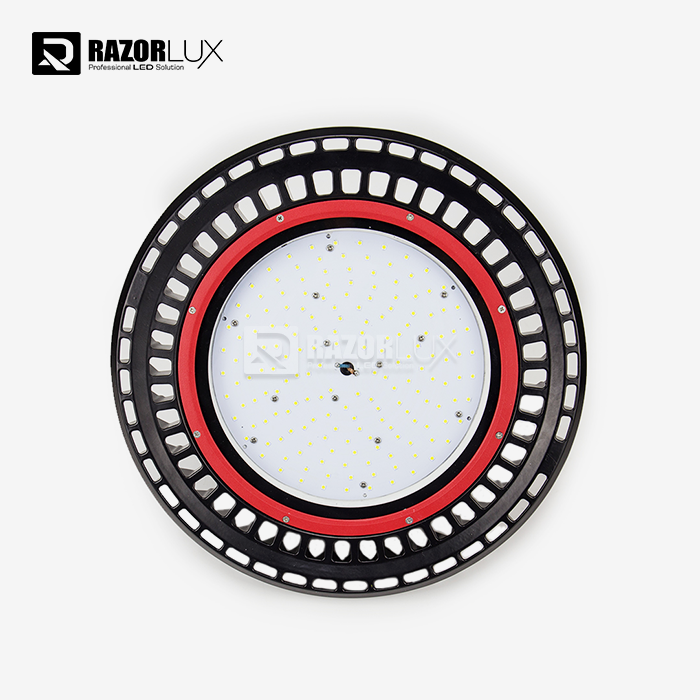
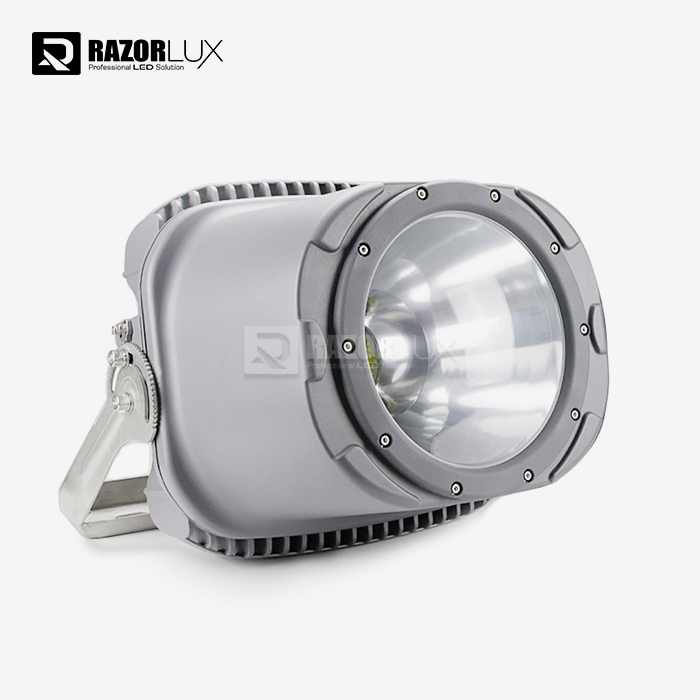
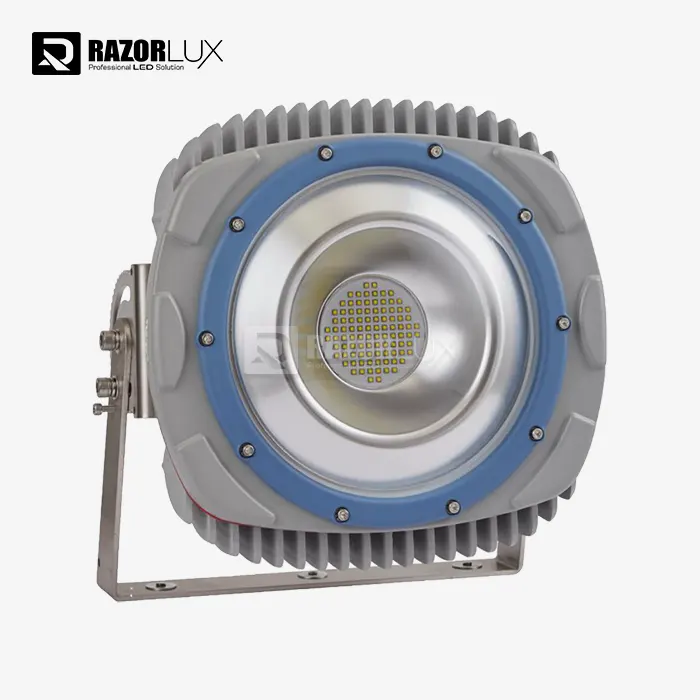
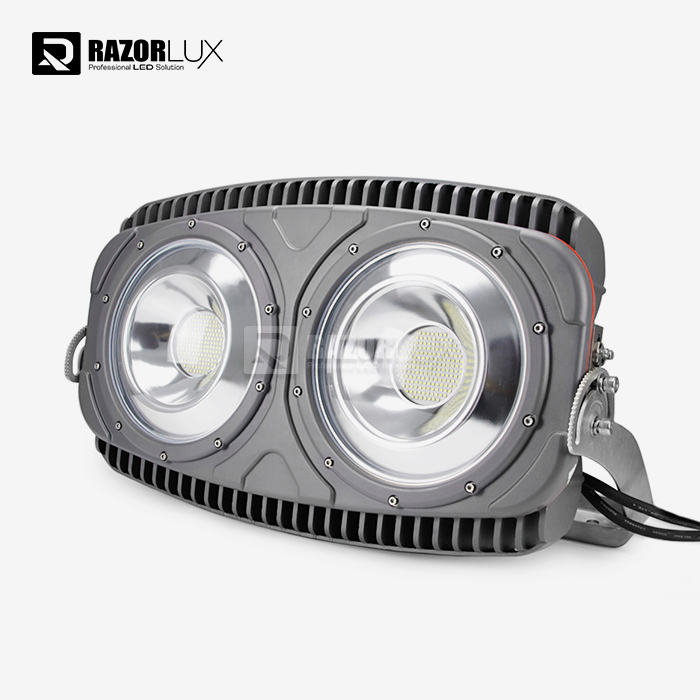
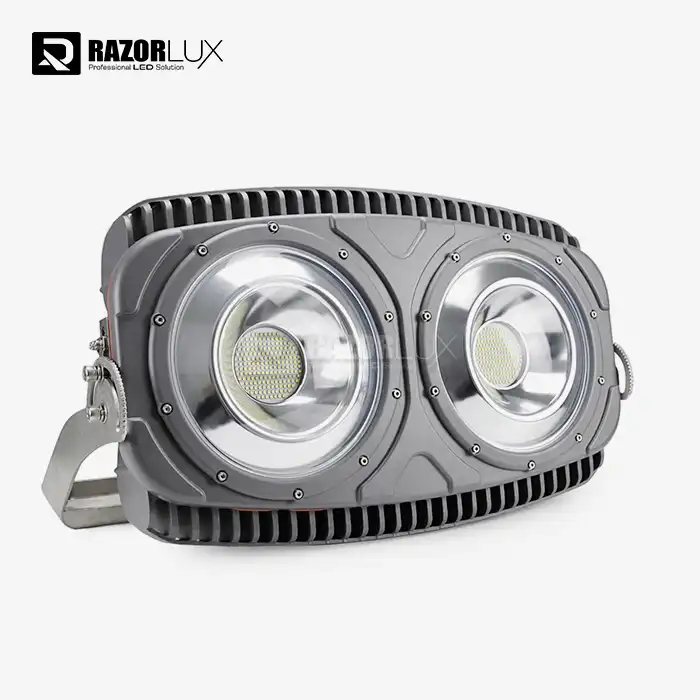
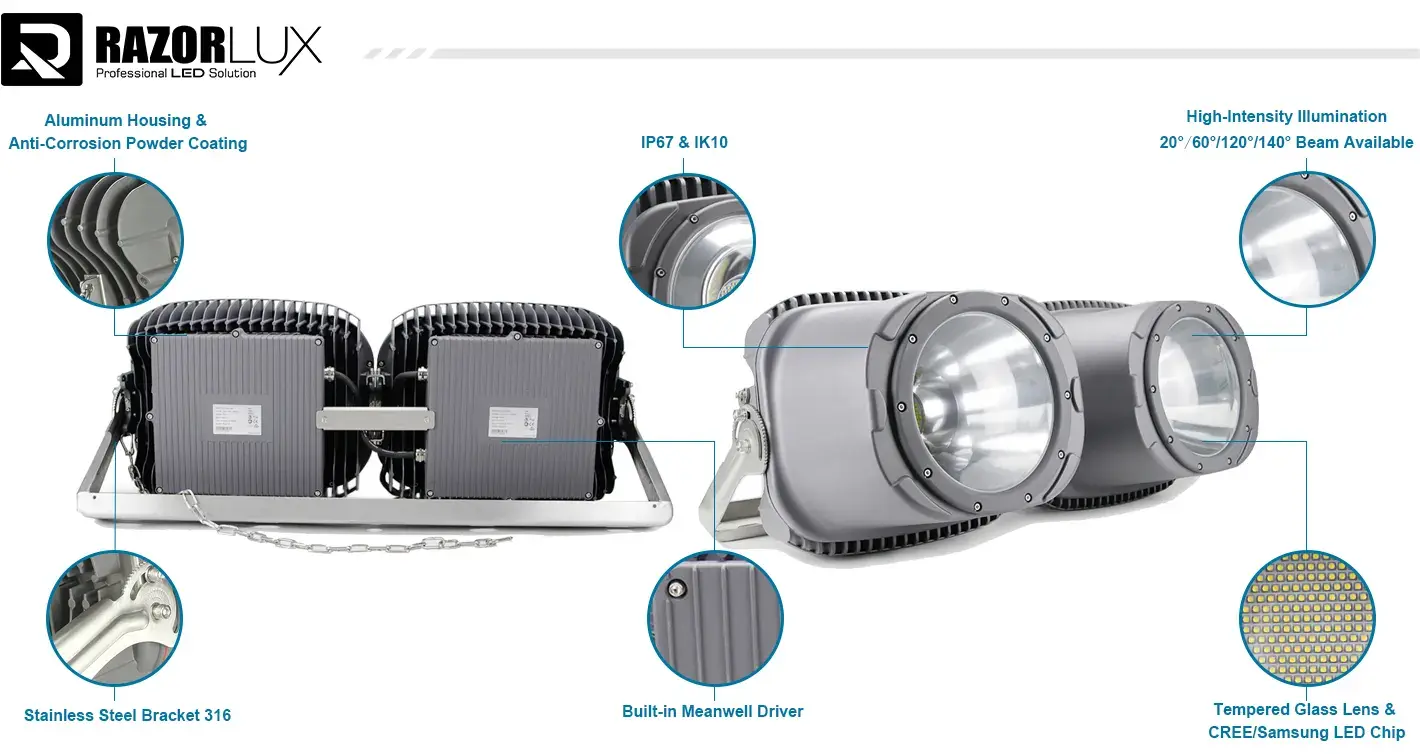
There are a number of technical factors that affect performance and total cost of ownership when choosing outdoor LED flood lights for your building or boat. Razorlux's RGL-1000P-L20 model has the best specs in its class, with 130 lights per watt economy and a stable output of 105,000 lumens while using only 1000W. It can replace 2000–3000W HID lamps. Over the fixture's 50,000-hour life, this efficiency will save a lot of energy. The IP67 rating for entry protection ensures complete dust-tight closing and protection against water immersion up to one meter deep for 30 minutes. With IK10 impact resistance, these fittings can handle dropped tools, moving objects, and accidental crashes that happen a lot in shipyards and marine settings. The bracket is made of stainless steel, so it doesn't rust when it comes into direct contact with salt spray. The Mean Well power source can handle voltage changes from 80Vac to 305Vac, so it can work with generator power that isn't stable without flickering or failing.
Application Scenarios Across Maritime Industries
For safe sorting and processing at night, commercial fishing operations need high-intensity deck lights. The 20-degree beam angle gives off focused light that can pass through sea fog and spray, and the CRI value of above 75 makes sure that colors are correctly perceived when spotting fish species. For tugboats and barges, the instant-on feature gets rid of the warm-up delay that comes with traditional HID lamps, making towing operations safer. Port terminals and container handling facilities need lighting that keeps giving off the same amount of light even when heavy crane and gantry operations cause power quality problems. It works well even when sharing circuits with big motor loads because it has a wide input voltage range and low total harmonic distortion (THD <10%). Offshore oil platforms may have the toughest conditions. Fixtures have to withstand hurricane-force winds, being completely submerged in saltwater during wave hits, and years of nonstop use without any access for upkeep.
Step-by-Step Installation Guide for Marine LED Flood Lights 120V
Pre-Installation Planning and Safety Preparation
Before starting the installation, you should carefully look over the site to find the best places to put the panels so that they get the light they need while also being protected from direct wave hits. Make sure that the current your light needs can be safely supplied by your electrical system. At 120V AC, a 1000W light bulb uses about 8.3 amps. Check the existing circuit breakers and wiring gauge to make sure they meet the National Electrical Code requirements for marine installations, which usually call for 12 AWG or larger conductors for branch circuits. Get the right tools, such as a torque wrench for tightening the brackets correctly, marine-grade sealant that can withstand continuous submersion, a multimeter that can test AC voltage and continuity, and the right safety gear for you. Make sure that the new lights have all the appropriate marine certifications, such as UL 1598A for wet areas, RMRS approval for installs on boats, and classification society approvals from DNV-GL or ABS if they are being put on business vessels.
Mounting Hardware Installation Procedures
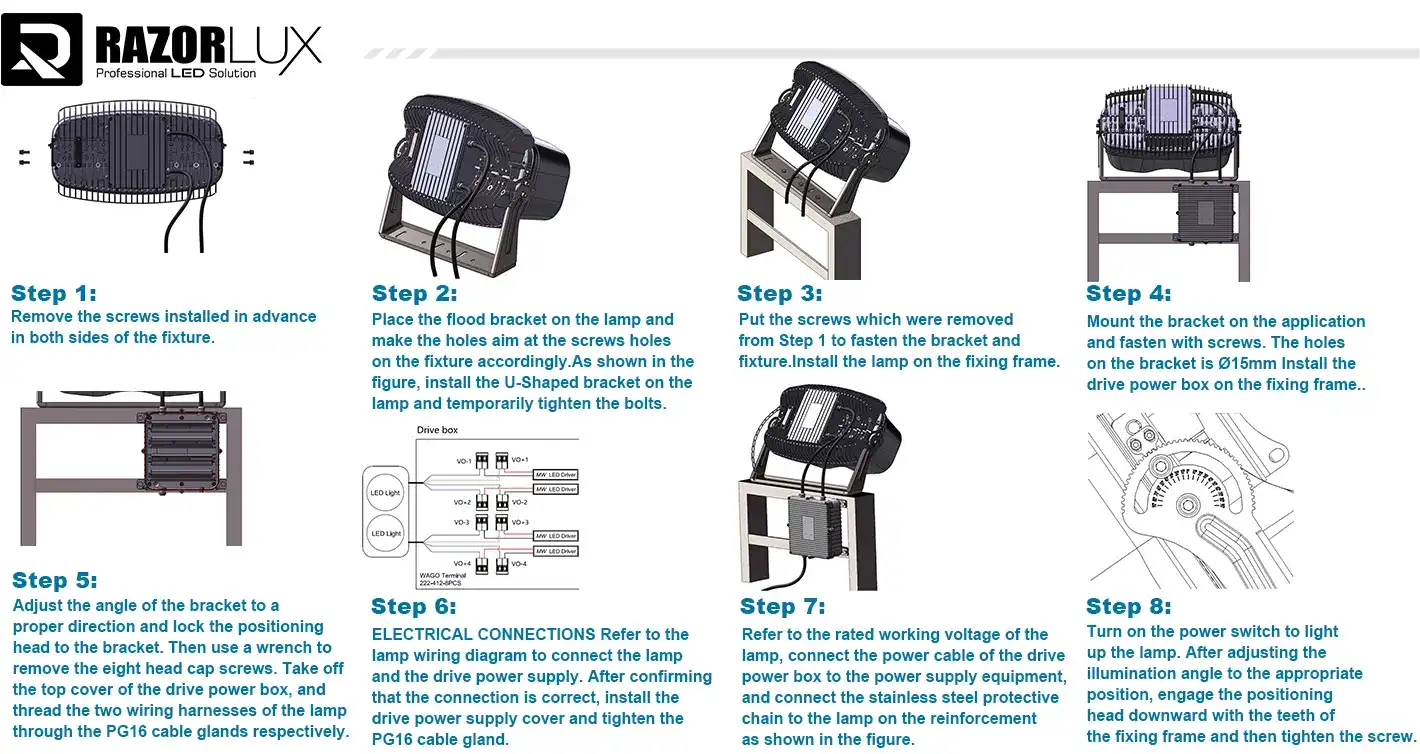
The fixing clamp needs to be attached to structural parts that can hold the weight of the 29-kilogram fixture plus dynamic loads like wind and shaking. To spread the weight on steel decks or bulkheads, you should cut test holes and use stainless steel bolts with lock nuts and backing plates. To stop electrolytic rust in aluminum buildings, put an anti-galvanic substance between metals that are not the same. To make sure the bolts are securely attached without breaking the seal materials, tighten them to the manufacturer's specs, which is usually 25 to 30 Nm for M12 screws. Place the fixture so that it covers the area you want it to, taking into account the 20-degree beam angle that makes a focused light pattern. After installation, the pointing adjustment mechanism lets you tilt and rotate the bulb, but for most deck lighting uses, the axis should be placed about 30 degrees off-center when it is first set up. Even though the IP67 grade means the case is fully waterproof, make sure the drainage holes face downward to keep water from building up inside.
Electrical Connection and Weatherproofing Steps
Marine LED Flood Lights 120V Because the climate is so toxic, all electrical work has to meet marine wire standards, which are higher than land-based standards. Run the supply wires through watertight conduit systems. For the final link, use flexible liquid-tight conduit to allow for the device to move and shake. Carefully remove the cable's insulation to reveal just the right length of bare conductor for a safe connection to the fixture's terminal block, leaving no extra. The block can hold wires up to 12-10 AWG and has clearly marked line, neutral, and ground connections. Tighten terminal screws to the pressure level of 0.5 to 0.7 Nm. If you don't tighten them enough, vibrations can cause conductors to come free, but if you tighten them too much, you could crack terminal blocks or cut wire strands. Before putting everything together, use dielectric grease to cover all the joints. This will keep moisture away and stop rusting. Close the terminal box and make sure the seal fits properly in its groove before tightening the cover screws diagonally to make sure even compression. Once all the connections are made, turn on the circuit breaker and make sure it works properly. Check that the source voltage is enough by measuring the voltage at the fastener terminals while they are loaded. Readings below 108V mean that there is too much voltage drop, which means that bigger wires or special circuits are needed. Make sure the light bulb turns on right away, doesn't flicker, and gives off the right amount of light.
Comparative Insights – Choosing the Best Marine LED Flood Lights 120V
Voltage System Considerations for Marine Applications
There are three typical voltage levels used by marine lighting systems: 12/24V DC from battery banks, 120V AC from engines and base power, and 240V AC for bigger ships and commercial setups. Low-voltage DC systems are safer in wet areas, but the voltage drops dramatically over lengths greater than 10 meters, which means that larger gauge wires are needed, which raises the cost of installation. The 12V fixtures also need a lot more current—a 1000W light needs over 80 amps at 12V but only 8.3 amps at 120V—which means they need expensive, heavy-duty wiring and switching equipment. The 120V AC standard is best for medium to large ships and fixed installations. Even for runs longer than 50 meters, the cable sizes are still doable, and the higher voltage cuts down on resistance losses that waste energy as heat in the wires. Being able to connect to normal shore power makes setups at piers and docks easier. This also lets lights work during repair times when engines aboard are turned off.
Performance Metrics Comparison Table
| Parameter | Traditional HID | Standard LED | Razorlux Marine LED |
|---|---|---|---|
| Power Consumption | 2000-3000W | 800-1200W | 1000W |
| Luminous Efficacy | 60-80 lm/W | 100-120 lm/W | 130 lm/W |
| Warm-Up Time | 3-5 minutes | Instant | Instant |
| Operational Life | 6,000-10,000 hrs | 30,000-40,000 hrs | 50,000 hrs |
| Salt Spray Resistance | Poor-Fair | Fair-Good | Excellent (1000+ hrs) |
| Vibration Tolerance | Poor | Good | Excellent (5G rated) |
This comparison demonstrates why marine LED technology has rapidly replaced traditional lighting in demanding maritime environments. The extended operational life alone delivers substantial savings—a fixture lasting 50,000 hours operates continuously for nearly six years, eliminating frequent replacements that require vessel downtime and expensive shipyard labor.
Certification Requirements and Compliance Standards
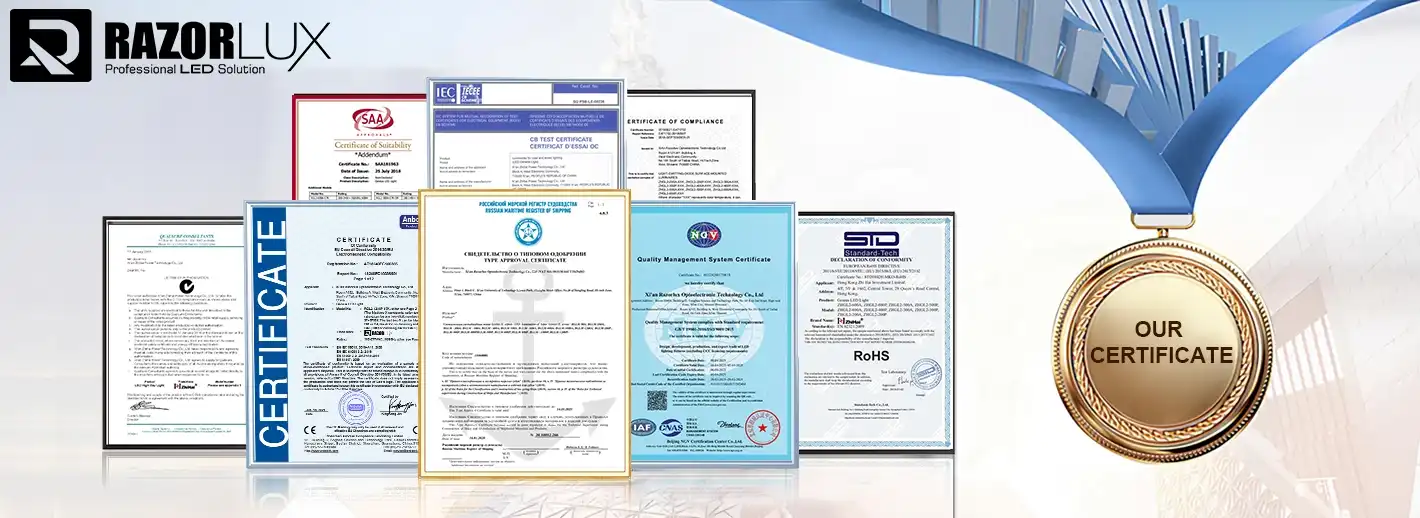
Marine sites need to follow strict approval rules to meet insurance requirements and government rules. The Russian Maritime Register of Shipping (RMRS) approval makes sure that equipment is safe for use in marine settings by testing it in a number of ways, such as by exposing it to salt fog, analyzing its shock and vibration, and making sure that it doesn't let water or other things in. UL 1598A specifically talks about wet location requirements and makes sure that fixtures can handle being submerged in water without creating shock hazards. When installing equipment on commercial vessels that are subject to international conventions, you need approval from a classification society like DNV-GL, ABS, or Lloyd's Register. For these certificates, you need to show a lot of paperwork, like the makeup of the materials, results from electrical safety tests, and optical performance data. Razorlux keeps its certifications up to date with all of the major classification societies. It also provides all the necessary paperwork for projects to get approved and inspected without any problems.
Procurement Guide for Marine LED Flood Lights 120V
Supplier Evaluation Criteria
There are more things to think about than just the initial buy price when choosing the right boat LED flood lights provider. Manufacturing experience is very important. Companies that have been specializing in boat lights for decades know the minor design requirements that separate good products from truly reliable ones. Razorlux has been dedicated to making the best marine lighting products since 1998. They have over 200 patents protecting new ways to package LEDs, manage heat, and improve optical design. The number of patents and the quality control systems used directly affect how reliable deliveries are and how consistent products are. Systematic quality management is confirmed by ISO 9001:2015 approval. Every device meets specs before it is shipped thanks to in-house testing tools like salt spray tanks, vibration tables, and optical integrating spheres. When looking at sources for big projects that need thousands of parts that all work the same, make sure you ask for facility checks or inspection reports from a third party.
Cost Analysis and Total Ownership Considerations
Marine LED flood lights are big expenses, but the total cost of ownership, not just the purchase price, needs to be taken into account in a good financial analysis. Find the current value of the energy savings over the life of the device. For example, switching a 2500W HID with a 1000W LED saves 1500W per fixture. Running for 12 hours a day at $0.12 per kWh, this saves $788 a year per bulb, covering the higher price within the first year and continuing to save money for decades. For standard lighting systems, maintenance costs often exceed the cost of the initial purchase. Every 6,000 to 10,000 hours, HID lights need to be replaced, which costs $150 to $300 per lamp plus work. In marine settings, the bulbs break down quickly and need to be replaced every 3 to 5 years. LED systems don't need any new lamps because the lights can be used for 10 years or more. This cuts down on lifetime maintenance costs by a huge amount and gets rid of the downtime that comes with lighting system fixes.
Negotiation Strategies and Bulk Purchase Advantages
When you commit to a volume, you can get big discounts on prices and better service terms. Ask for tiered price models that reward bigger order numbers when you buy marine LED flood lights for multi-vessel groups or facility-wide upgrades. Manufacturers usually give discounts of 10–15% for orders of more than 50 units, and even bigger discounts are possible for orders of more than 200 fixtures. These kinds of talks work best when there are clear project timelines and the chance to do business again in later stages or at more locations. Sample evaluation programs let you try things out without risking big purchases. Ask for evaluation units to be tested in the field under real-life working conditions. Put samples on boats or docks and keep an eye on their performance throughout the whole yearly cycle to make sure they can handle salt spray, heat, and stable light output. Write down any problems you find, and then use this information when you're negotiating the final terms of the deal to get performance promises or better insurance terms.
Procurement Decision Matrix
| Evaluation Factor | Weight | Traditional Supplier | Razorlux Advantage |
|---|---|---|---|
| Product Certification | 25% | Variable coverage | RMRS, UL, CE, DNV-GL, ABS |
| Luminous Efficacy | 20% | 100-120 lm/W | 130 lm/W certified |
| Warranty Coverage | 15% | 2-3 years typical | 5 years comprehensive |
| Manufacturing Experience | 15% | Often <10 years | 26 years (since 1998) |
| Technical Support | 10% | Limited availability | 24/7 global assistance |
| Customization Capability | 10% | Standard products only | Full OEM/ODM services |
| Delivery Reliability | 5% | Variable lead times | Guaranteed scheduling |
This decision matrix helps procurement teams objectively evaluate suppliers based on factors that impact long-term project success rather than initial price alone. The weighted scoring approach ensures critical factors like certification compliance and warranty support receive appropriate consideration during vendor selection.
Maintenance and Longevity Tips for Marine LED Flood Lights 120V
Routine Inspection and Cleaning Schedules
Marine LED Flood Lights 120V Setting up preventative maintenance plans for fixtures keeps them working at their best and extends their life. Visual checks should be done every three months to see if the fixing hardware, wire entry points, and bracket adjusting mechanisms are corroded. Check the state of the gaskets around the lens assemblies and terminal sections. Any obvious cracks or compression set indicate possible water entry points that need to be fixed right away to prevent damage to the electronics inside. Cleaning methods depend on how bad the working environment is. Ships that work in warm waters with lots of living things need to be washed down once a month to get rid of salt buildup and organic growth that can stick to the housing surfaces and trap water. Spray fresh water at a mild pressure (below 1000 PSI) so that you don't force water past the seals. Then, check the drainage holes to make sure they are still clear. Do not use high-pressure water on cable entry glands and sealed compartment joints.
Troubleshooting Common Issues
When something stops working sometimes, it's usually because of loose electrical connections or water getting into the main areas. Turn off the power to the whole circuit and check the strength on the terminal screws. Over time, vibrations can make connections loose. If the connections look like they're rusted, turn off the power, clean the contacts with electrical contact cleaner, and re-terminate using new pieces of wire and the right amount of dielectric grease. If you see any signs of water getting into the terminal compartment seals, you should replace them. Less light output after years of use could be due to LED degradation or lens contamination. First, clean the lens very well. Years of salt spray leave behind almost transparent layers that make it much harder for light to pass through. If the output is still lower after cleaning, write down the percentage drop and the number of hours the device was used before calling the maker to see if the guarantee covers it. Good makers, like Razorlux, keep detailed records of all the services they provide and usually respect guarantees quickly when there is real damage during the covering periods.
Component Upgrade and Modernization Options
As LED technology improves, even lights that are well taken care of will become useless over time. Instead of replacing everything, you might want to look into repair programs that update important parts while keeping housings and mounting systems that still work. Newer LED modules are more efficient than older ones, with 150+ lm/W compared to 100–110 lm/W units. By replacing just one module, you can save 30–40% on energy costs. In the same way, updating to smart drivers with built-in tracking and lowering features adds usefulness without replacing the whole fixture. When planning changes, check to see if the new parts will work with the old lights. Housing designs from well-known brands like Razorlux can usually fit more than one generation of LED modules and power sources. This protects original investments while allowing small performance gains over time. Before approving upgrade projects, make sure you have detailed paperwork that proves the mechanical and electrical compatibility. This way, you won't find out during installation that they aren't compatible.
Conclusion
To install naval Marine LED Flood Lights 120V volts correctly, you need to pay attention to the surroundings, choose the right parts, and be very careful during the installation process. The money spent on high-quality lights with full licenses, solid construction, and track records of consistent performance pays off over many years with little upkeep needed. Facility managers make sure that important marine operations have the best lighting possible while keeping long-term costs low and operational delays to a minimum by following organized installation processes, putting in place proactive upkeep plans, and working with experienced makers.
FAQ
What IP rating do I actually need for marine flood lights?
IP67 provides adequate protection for most above-deck installations on vessels and dock structures, withstanding temporary submersion during wave strikes and heavy weather. However, fixtures mounted on swim platforms, transom areas, or locations subject to regular submersion should specify IP68 rating for continuous underwater operation. Both ratings provide complete dust protection, but the higher number indicates extended submersion capability beyond one meter depth.
Can I install 120V marine LED flood lights myself?
While mechanically capable individuals can complete the physical mounting, electrical connections should always be performed by licensed marine electricians familiar with wet location wiring requirements. Improper installations create serious shock hazards and void manufacturer warranties. Insurance coverage for marine vessels typically requires certified electrician documentation for all electrical system modifications.
How do I calculate how many fixtures I need for my dock?
Determine the area requiring illumination in square meters, then multiply by the desired light level in lux—typically 50 lux for general dock areas and 100+ lux for loading zones. Divide this total lumen requirement by the fixture output (105,000 lumens for Razorlux RGL-1000P-L20) and multiply by 1.3 to account for light loss and uneven distribution. Round up to the nearest whole number to determine fixture quantity.
Partner with Razorlux for Your Marine LED Flood Lights 120V Needs
Xi'an Razorlux Optoelectronic Technology stands ready to support your marine lighting projects with industry-leading products and unmatched technical expertise. Our Marine LED Flood Lights 120V supplier capabilities extend beyond premium fixtures to include comprehensive support services—from initial specification development through installation guidance and decades of post-installation support. The RGL-1000P-L20 model delivers uncompromising performance backed by RMRS, UL, DNV-GL, and ABS certifications that satisfy the most demanding regulatory requirements.Contact our technical team at sam@razorlux.com to discuss your specific application requirements. We provide complimentary site assessment services, customized lighting calculations, and sample evaluation programs that allow hands-on testing before commitment. Experience the Razorlux difference—26 years of marine lighting innovation, 200+ patents, and unwavering commitment to customer success in the world's harshest operating environments.
References
1. National Fire Protection Association. (2020). NFPA 70: National Electrical Code, Article 555 – Marinas and Boatyards. Quincy, MA: NFPA Publications.
2. Illuminating Engineering Society. (2019). IES RP-12-19: Recommended Practice for Marine Lighting Systems. New York: IES Technical Publications.
3. American Bureau of Shipping. (2021). Guide for LED Lighting Systems for Offshore Applications. Houston, TX: ABS Technical Publications.
4. Det Norske Veritas. (2018). DNVGL-CP-0103: Class Programme for Electrical Equipment and Cables on Ships. Oslo, Norway: DNV-GL Maritime Standards.
5. U.S. Coast Guard. (2020). Navigation and Vessel Inspection Circular No. 9-97: Guidelines for Electrical Engineering Regulations. Washington, DC: USCG Navigation Standards.
6. International Association of Classification Societies. (2019). IACS Unified Requirements E22: Lighting for Machinery Spaces and Accommodations. London, UK: IACS Publications.