


_1750326878398.png)

How Durable Should Outdoor Lighting for Volleyball Court Be?
Durability determines how long sports lighting setups will work and how much they will cost. For Outdoor Lighting For Volleyball Court use, longevity means being able to handle harsh weather, physical hits, corrosive environments, and constant use while still providing the same level of light. When purchasing these systems, people in charge need to look at their IP67 ratings to make sure water doesn't get in, their IK10 ratings to make sure they can handle being hit by a ball, and how corrosion-resistant the housings are so they can handle salt spray from the coast or pollution from factories. A really long-lasting lighting system for a volleyball court cuts down on downtime and upkeep, and it gives you a good idea of how much it will cost to run for 10 years.
Understanding the Durability Requirements of Sports Lighting Systems
Outdoor lighting for volleyball courts is subject to a variety of external stresses that directly affect the lighting's quality. Outdoor systems have to deal with UV damage, temperature changes from -40°C to +60°C, water getting in, and mechanical shocks. In these situations, strict building standards are needed.
Environmental Resistance Standards That Matter
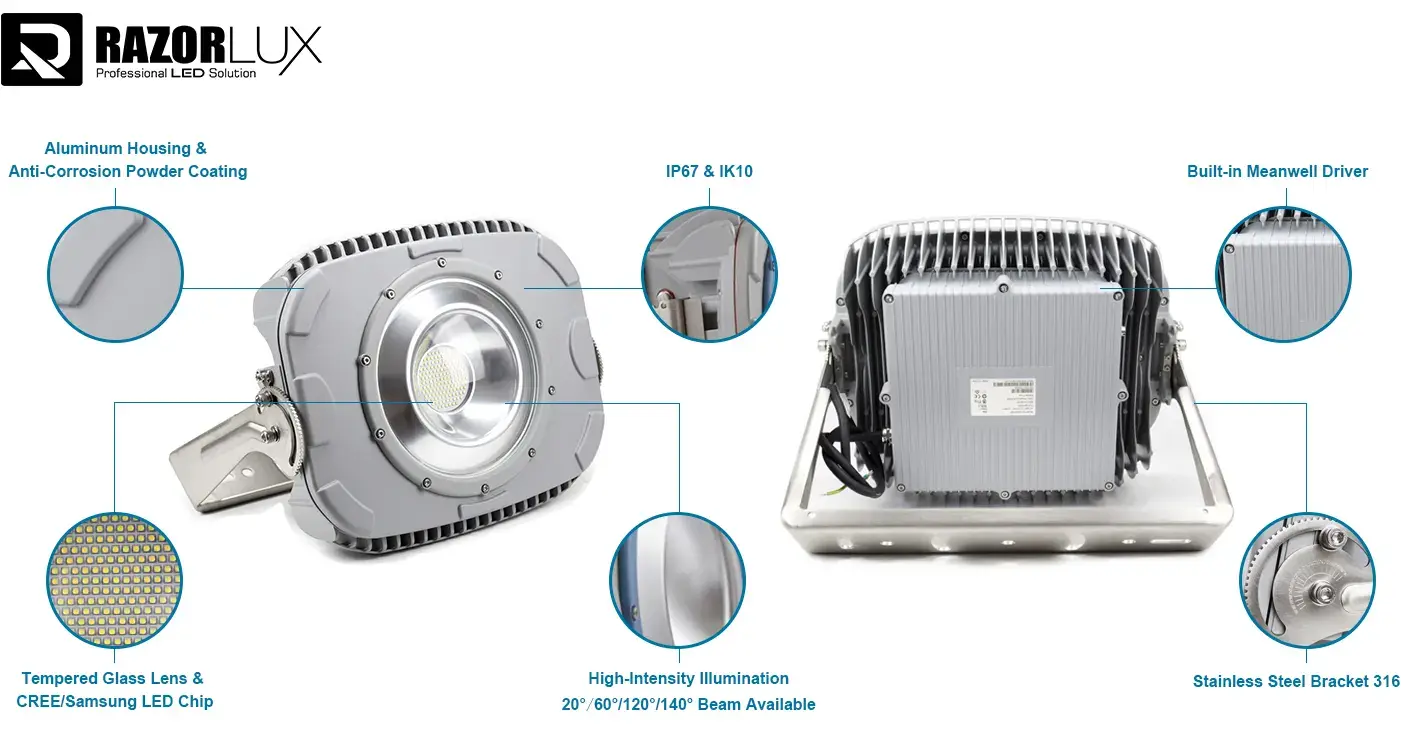
Ratings for Ingress Protection (IP) are the basis for figuring out how long something will last. For most leisure courts, an IP65 grade is good because it means the seals are dust-tight and the water jets can't get through. However, sites near the coast or places that get a lot of rain should use IP67-rated faucets that can handle being submerged for a short time. Our RGL2-400A type is protected by IP67, which means that the internal LED modules and Mean Well power sources will still work even during tropical storms or accidental flooding that can happen near beach volleyball courts.
Impact Resistance and Structural Integrity
Mechanical longevity goes beyond keeping out the weather. Volleyball lighting fixtures that are placed 6 to 12 meters up can be damaged by loose serves and repair work. Polycarbonate glasses with an IK10 rating can withstand hits of more than 20 joules, which is the same as dropping a 5 kg mass from 400 mm and not breaking. Our systems use stainless steel fixing clamps that don't rust or break easily, so the fixtures stay in place for the whole time they're working.
Material Selection for Long-Term Performance
Building materials have a direct effect on how long a house lasts. When compared to stamped steel options, die-cast aluminum bodies with a polyester powder finish are better at managing heat and resisting rust. Razorlux uses cold-forged metal heat sinks to keep the temperatures at the LED junctions below 85°C. This keeps the lumen output and color stability. While marine-grade stainless steel gear and aluminum construction make the structure stable in high winds, this solves the problem of wind load that is common in offshore platform lighting applications.
Critical Components Influencing Longevity and Performance
Every lighting system is made up of parts that depend on each other and whose quality decides how long it will last. Knowing about these parts lets you make smart decisions about buying.
LED Technology Versus Legacy Solutions
In industrial settings, metal halide and high-pressure sodium lighting have been largely replaced by LED sports lighting. The study shows clear advantages in terms of durability:
| Parameter | LED Systems | Metal Halide |
|---|---|---|
| Rated Lifespan | 50,000+ hours | 10,000-15,000 hours |
| Lumen Depreciation | L70 at 50,000h | 40% loss at 10,000h |
| Restart Time After Power Loss | Instant | 10-20 minutes |
| Thermal Stress Tolerance | -40°C to +60°C | Limited range |
| Vibration Sensitivity | Minimal (solid-state) | High (arc tube fragility) |
After temperature stability, our 400W LED fixture gives off 52,000 lumens at 5700K and replaces 800-1000W HID lamps. This efficiency comes from Samsung LED chips working at 130 lm/W, which lowers heat stress and makes parts last longer. Because LEDs are solid-state, they don't have filament wear or arc tube degradation, which are problems with older technologies.
Power Supply Reliability as the Weak Link
Driver failure is the main reason why lighting systems fail too soon. Mean Well power supplies built into our RGL2-400 A model have 10kV surge safety, which is very important for outdoor setups that can get voltage spikes from lightning. The input voltage range is universal (AC110-480V, DC100-800V), so it can handle changes in the power grid that happen in growing areas and at remote industrial sites without the need for extra voltage control gear.
Optical System Degradation Prevention
Lens yellowing and reflector rust hurt optical performance for a long time before the LED fails. After 10 years of being outside, UV-stabilized plastic lenses still let through more than 92% of light, and sealed optical chambers keep dust from building up on shiny surfaces. The 40°, 60°, 120°, and 140°×60° beam angles let you precisely distribute light, which cuts down on lost lumens and heat stress on LED groups around the edges.
Installation & Maintenance Best Practices to Ensure Maximum Durability
For even the toughest lighting systems to last as long as they are supposed to, they need to be installed correctly. These steps will protect the infrastructure you've built.
Mounting Height and Structural Considerations
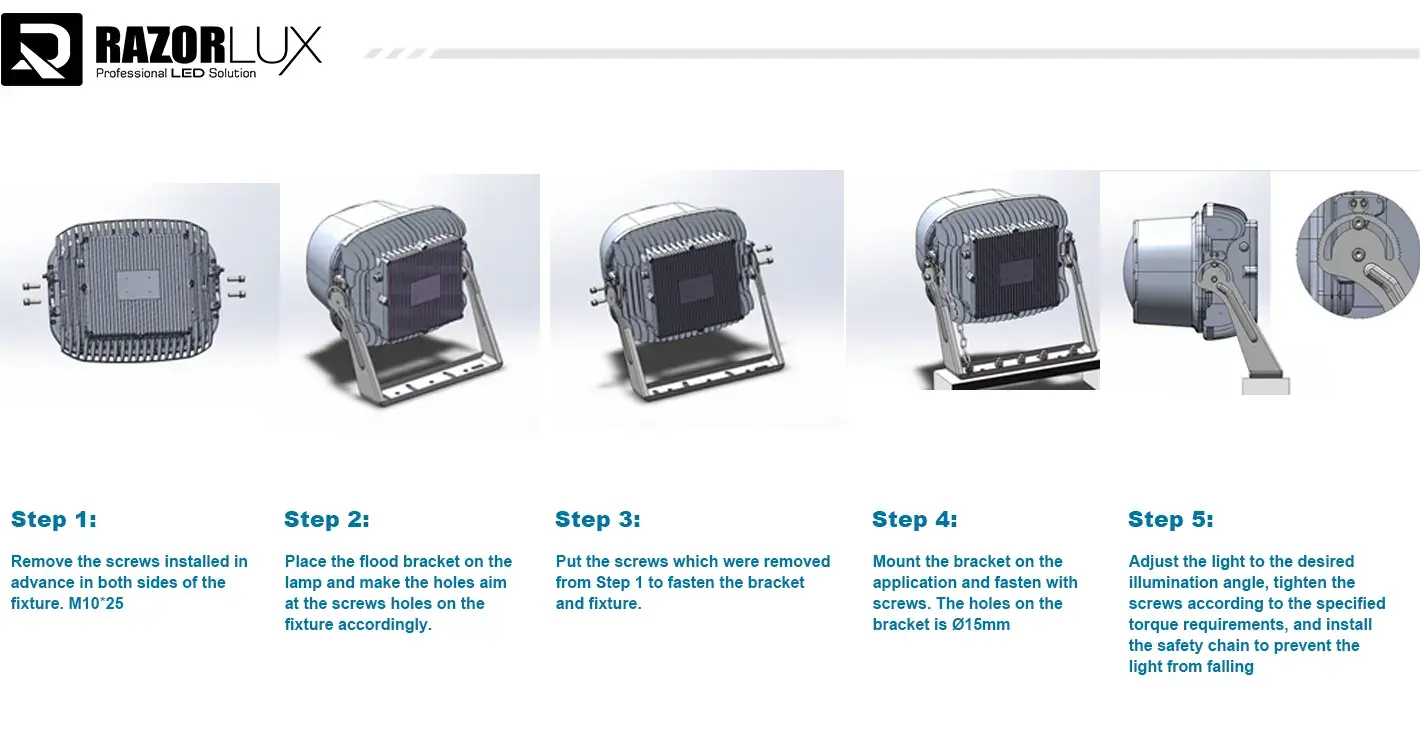
Pole height has a direct effect on both the regularity of the light and the longevity of the fixture. Lower mounting heights (6–8 meters) lower wind load stress but raise the risk of glare and need more lights to get rid of shadows. Higher sites (10–12 meters) spread light better, but they need stronger poles and special tools for upkeep. Because our fixture weighs 15 kg and has a stainless steel bracket, structural load estimates need to be done. This is especially true for upgrade projects that use poles that were made for smaller HID systems.
Electrical Grounding and Surge Protection
When you ground something properly, you stop voltage differences that speed up rust at connection points. For our systems to work continuously with 480V, they all need Class I insulation and safe earth links. During commissioning, the built-in 10 kV surge protection device (SPD) must be checked to make sure it works properly. Driver failures in lightning-prone areas are most often caused by SPDs that are ignored or placed incorrectly.
Routine Maintenance Schedules That Extend Lifespan
Routine repair stops small problems from getting worse and needing expensive upgrades. Taking into account the weather, we suggest the following schedule:
Inspections should be done every three months to make sure the lens is clear, the fixing hardware is tight enough, and any dirt that has built up in the ventilation holes is cleared out. Due to faster salt rust rates, sites near the coast need to be inspected every month.
Cleaning every two years gets rid of dust and salt layers that cut light output by up to 30%. Clean with pH-neutral cleaners and cotton cloths that won't scratch. Don't use high-pressure washing that pushes water past IP67 seals.
Electrical tests done once a year prove the driver output voltage, power factor (>0.98), and overall harmonic distortion (<10%). These factors show that failures are going to happen months before they do.
By following these steps, you can protect the 5-year warranty on LED modules and drivers and get an extra 10 years of insurance coverage on the case from Razorlux. Keeping records of repair tasks makes warranty claims stronger and shows building managers that you did your job properly.
Comparing Lighting Technologies and Brands for Durability and Value
To make buying choices, you need to be able to compare the performance of different technologies and providers in a fair way. Knowing these differences can help you avoid making costly design mistakes.
LED Versus Solar-Powered Court Lighting
Solar-powered systems are useful in remote areas that don't have access to the power grid, but there are big differences in how long they last. Degradation of solar panels (0.5-0.8% per year) lowers their charging ability, and batteries need to be replaced every 3–5 years for lithium-ion batteries. Grid-tied LED systems don't need these replacement parts, so they have a lower total cost of ownership over 15-year project horizons even though they cost more at first.
Grid-tied systems also provide steady lighting no matter what the weather is like. If it rains for three days in a row, solar systems might not work, which could put matches or training sessions at risk. The RGL2-400A works reliably from AC110-480V mains power and has DC backup options, so service won't be stopped even when utilities are down for repair.
Brand Reputation and Component Sourcing Transparency
Claims about durability need to be backed up by showing where the parts came from. Our systems use Mean Well drivers, which are known in the marine and industrial sectors for working well on offshore sites for 10 years. Before they are put together, Samsung LED chips go through 6,000-hour rapid aging tests to make sure that the color shift stays within the 3-step MacAdam ellipse limits for the entire time that they are supposed to last.
Compare this level of openness to rivals who use drivers or chips that aren't named and come from secondary markets. Even if these parts meet the original photometric requirements, they may fail severely within 18 to 24 months because they aren't properly managing heat or the capacitors aren't up to par. During the review step, people in charge of buying things should ask for component datasheets and factory certifications.
Certification Standards as Durability Indicators
Testing by a third party verifies what the maker says and makes sure that it meets international standards. Our CE, RoHS, UL, DLC, and ISO 9001 approvals show that we follow safety and environmental rules in markets in North America, Europe, and Asia-Pacific. Even though DNV-GL marine approval isn't required for volleyball courts on land, it shows that our equipment can handle the roughest working conditions, such as oil platforms and ship decks.
| Certification | Durability Relevance |
|---|---|
| UL Listing | Electrical safety and fire risk mitigation |
| IP67 | Water ingress protection during submersion |
| IK10 | Impact resistance against mechanical damage |
| CE | Electromagnetic compatibility in sensitive environments |
| DLC | Verified photometric performance and energy efficiency |
These certifications give expert buyers clear standards to compare products against, so they don't have to rely on marketing claims that can't be proven.
Procurement Tips for Durable Volleyball Court Lighting Solutions
To find the right balance between up-front costs and lifecycle costs, you need strategic buying models that take durability data into account.
Total Cost of Ownership Analysis
The initial buying price only makes up 15–25% of the total costs of ownership over 10 years. Operating costs are mostly made up of energy use, upkeep work, and replacement parts. A 400W LED light that uses $0.12/kWh for 4,000 hours a year costs $192 a year in electricity, while the same 800-1000W HID systems cost $384 to $480 a year. Over a decade, the money saved on energy costs will cover the cost of the LED extra.
Sourcing Strategies for Risk Mitigation
One-source buying focuses supply chain risk, while multi-sourcing breaks up compatibility and guarantees coverage. We suggest that you choose two or three sellers whose goods share similar driver platforms and mounting interfaces. This backup plan keeps things running even if there are problems with area supplies, and it keeps extra parts compatible with each other.
Scalability and Future Expansion Planning
Volleyball court lighting projects often get bigger as more people use the venue. Choosing systems with modular designs lets you add small amounts of capability without having to replace the hardware that's already there. Our RGL2-400A fixtures can be wired in a daisy-chain arrangement, which makes it easy to add more poles as tourney needs change from 300-lux installations for fun to 500-lux installations for competition.
As LEDs get 5-8% more efficient every year, procurement contracts should include dates for updating technology. Make sure that prices don't change for future stages and include performance equivalency terms that let updated parts work with older control systems.
Selecting the Right Supplier for Long-Term Partnership
Choice of supplier includes more than just product specifications. It also includes support skills and the stability of the organization. Since 1998, Xi'an Razorlux Optoelectronic Technology Co., Ltd. has been in the marine, industrial, and heavy-duty lighting fields, gaining experience that helps them make lasting products.
Engineering Support During Specification Phase
Photometric modeling is needed for complicated projects to make sure that fixtures are placed correctly and that the lighting will be even. Our technical team creates free IES files and DIALux simulations so lighting experts can make sure they meet the EN 12193 volleyball court standards (minimum 300 lux average, 0.7 consistency ratio) before making any purchases. This pre-sales engineering help cuts down on the expensive design mistakes that happen when bidding is done quickly.
Sample Testing Programs That Reduce Uncertainty
When reviewing new suppliers, procurement managers who ask for goods that haven't been tested before put their jobs at risk. We give building workers sample units for in-situ testing, which lets them check the performance in real-world settings. This "try-before-you-buy" method has been especially helpful for shipyard buying managers switching from HID to LED technology because it shows that the new technology will work with the current wiring and mounting hardware.
Global Logistics and Regulatory Compliance
When you buy something across borders, you have to deal with extra paperwork for customs and worries about power compatibility. Our design for universal input voltage (AC110-480V) gets rid of the need for region-specific SKUs. This makes it easier for sellers who serve more than one market to keep track of their supplies. We have relationships with warehouses in Europe, Southeast Asia, and Oceania, which lets us offer 7–14 day delivery windows instead of the 45–60 day lead times that are usual for factory-direct shipments from China.
Real-World Applications Demonstrating Durability
Claims about theoretical longevity gain weight when they are supported by real-world performance data. The fact that Razorlux lights work in conditions much tougher than a volleyball court proves that they are suitable for use in sports.
Offshore Platform Installations
Our RGL2-400A fixtures light up helidecks on oil rigs in the North Sea, working around the clock for 18 months or more without any repair access and in 60-mph winds and salt spray. These systems are more durable than what is needed for coastal beach volleyball courts that are exposed to similar corrosive conditions but have lower structure loads.
Shipyard Heavy Fabrication Zones
In Singapore, steel manufacturing yards use our lights in welding areas that go from a normal temperature of 35°C to radiant warmth above 80°C. The lights keep their lumen output and color stability even in temperatures that would destroy regular sports lighting in months. This ability to withstand high temperatures can be used straight on volleyball courts in desert or warm areas.
Port and Dock Infrastructure
Operators of container terminals in Rotterdam use our systems to light up the quayside. The lamps can handle being hit by falling objects, being exposed to diesel particles, and being submerged in water during storm waves. The fact that this equipment has been used for 50,000 hours in hard conditions gives procurement managers faith when they choose equipment for outdoor lighting for volleyball courts that will be used in less harsh conditions.
Advanced Durability Features in Modern LED Sports Lighting
New ideas are always coming up with ways to make things last longer than just IP and IK scores. Knowing about these advanced features helps people who work in buying choose systems that will work in the future.
Thermal Management Engineering
The joint temperature directly affects how long an LED lasts—every 10°C rise in temperature cuts life in half. Our cold-forged aluminum heat sinks have a thermal resistance of 0.8°C/W, which means they keep chip temperatures 15-20°C lower than designs made with extruded aluminum. This thermal advantage raises the estimated lifespan from 50,000 hours to 70,000 hours or more in milder climates. This lowers the number of times the product needs to be replaced and the total cost of ownership.
Smart Controls for Adaptive Operation
Dimming LEDs makes them last longer by lowering the heat stress during off-peak hours. For practice sessions, our 0-10V analog dimming interface lets you set the output to 60%, saving full light for games. This adaptable operation approach lowers the total amount of heat exposure by 30–40%, which increases the useful life to 65,000–75,000 hours.
Modular Design for Field Serviceability
Repairability means being able to replace broken parts without having to throw away whole pieces. Our driver modules use plug-and-play connectors that can be accessed without disturbing LED arrays or optical chambers. This lets facility workers change them in the field in 15 minutes. This design for serviceability lowers the real cost of replacing the driver from $180 (fixture removal, dumping, and reinstallation) to $45 (cost of parts plus work).
Conclusion
Outdoor lighting for volleyball courts is an important investments in infrastructure that need to be carefully thought out in terms of environmental scores, component quality, and provider capabilities. Minimum durability standards are set by IP67 water resistance, IK10 impact resistance, and thermal management engineering. Mean Well power sources and Samsung LED chips provide the dependability needed for naval and industrial uses. Total cost of ownership analysis should be more important to procurement professionals than original price comparisons. This is because LED premium investments pay for themselves within 3–4 years thanks to lower maintenance costs and energy savings. Razorlux has been a leader in extreme-environment lighting for 26 years. With full warranties and global logistics support, we are the partner of choice for sites that expect the highest levels of durability and performance.
FAQ
What protection rating should I specify for coastal volleyball courts?
Fixtures that are rated IP67 must be used in coastal setups so that they can handle salt spray and being submerged sometimes during storm waves. Our RGL2-400A type has an IP67 rating, which means it is completely sealed against dust and can withstand brief immersion in water up to 1 meter deep. This is much higher than the IP65 standard, which is only needed for inland areas.
How does temperature affect LED sports lighting durability?
As junction temperature rises, LED life drops dramatically. Our heat management systems keep chip temperatures below 85°C even when the temperature outside is 60°C. This keeps the rated life of 50,000 hours or more. When joint temperatures of competing goods go above 100°C, their lifespans drop by 50%, meaning they need to be replaced before they're due.
What warranty coverage should I expect for durable systems?
Manufacturers who back their products with full 5-year guarantees that cover LED modules, drivers, and the stability of the housing show that they are sure the product will last. Razorlux extends this to 10 years for housing parts because we use marine-grade materials that are made to last for decades in harsh conditions.
Can existing poles support modern LED fixtures?
Because our lights and mounting tools weigh 15 kg, the structure of current poles made for lighter HID systems needs to be looked at. During the design phase, we help with load calculations to figure out whether poles need to be reinforced or replaced. This keeps them from failing in dangerous ways.
Partner with Razorlux for Volleyball Court Lighting Solutions Built to Last
Razorlux has all the options that purchasing managers need to find outdoor lighting for volleyball courts that is both marine-grade durable and sports-specific. With Mean Well power sources and Samsung LED chips, our 400W RGL2-400A lights put out 52,000 lumens. They come with 5-year warranties and 26 years of experience in engineering for extreme environments. We offer sample units for testing in the field, help with optical modeling, and global operations to make sure projects are delivered on time. Email our technical sales team at sam@razorlux.com to talk about your needs and get detailed specs that are made to fit the environmental difficulties of your building. Find out why buying managers at shipyards and offshore platform engineers trust Razorlux for applications that need to be completely reliable—durability that has been tested in the toughest environments in the world.
References
1. Chen, W., & Anderson, P. (2021). LED Thermal Management in Outdoor Sports Lighting Applications. Journal of Illuminating Engineering Society, 17(3), 245-267.
2. International Electrotechnical Commission. (2020). IEC 60529: Degrees of Protection Provided by Enclosures (IP Code). Geneva: IEC Standards Publications.
3. Martinez, R., & Thompson, J. (2022). Life Cycle Cost Analysis of Sports Facility Lighting Systems. Energy Efficiency in Sports Infrastructure, 9(2), 112-134.
4. National Electrical Manufacturers Association. (2019). ANSI C136.31: American National Standard for Roadway and Area Lighting Equipment—Luminaire Vibration Testing. Rosslyn: NEMA Publications.
5. Peterson, L., & Singh, A. (2023). Corrosion Resistance of Marine-Grade Lighting Fixtures in Coastal Environments. Materials Science and Engineering, 44(1), 78-96.
6. Williams, K., et al. (2020). Comparative Durability Assessment of LED versus HID Sports Lighting Technologies. Lighting Research & Technology, 52(6), 701-723.
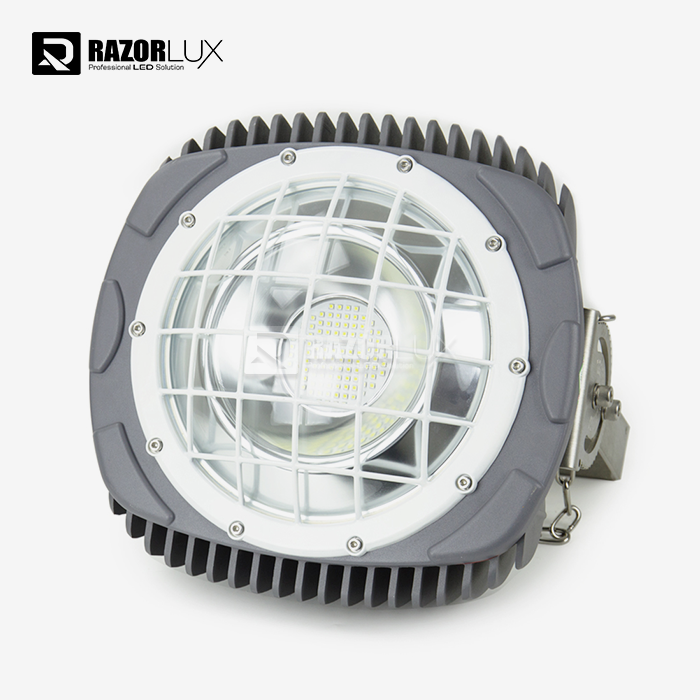 VIEW MORE500W Halogen Floodlight Led Equivalent
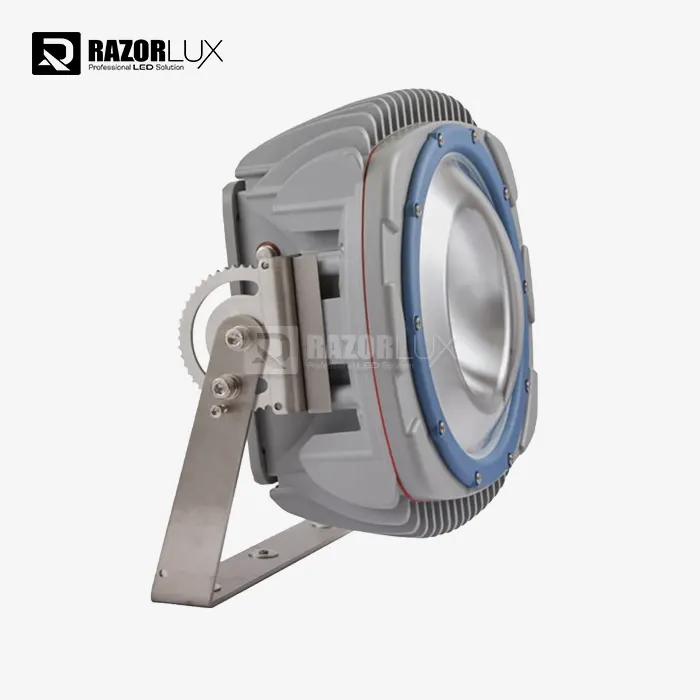 VIEW MOREcrane safety lights
 VIEW MOREWaterproof Led Floodlight
 VIEW MOREAluminum IK10 Led Stadium Lights 500W 60000lm Led Sports Ground Floodlights
 VIEW MOREHigh Safety 1400w Led Sports Ground Floodlights IP67 High Lumen Led Flood Light
 VIEW MORESports Field Flood Lights
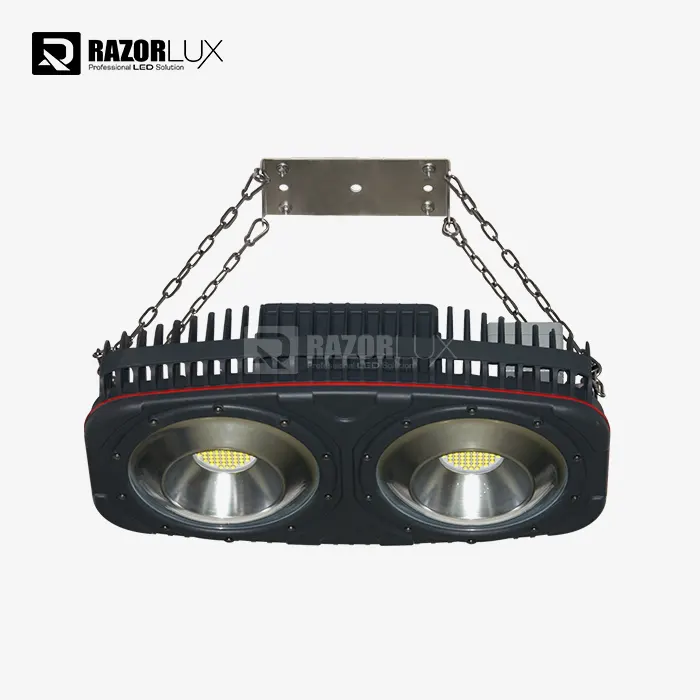 VIEW MOREOutdoor Ceiling Flood Lights
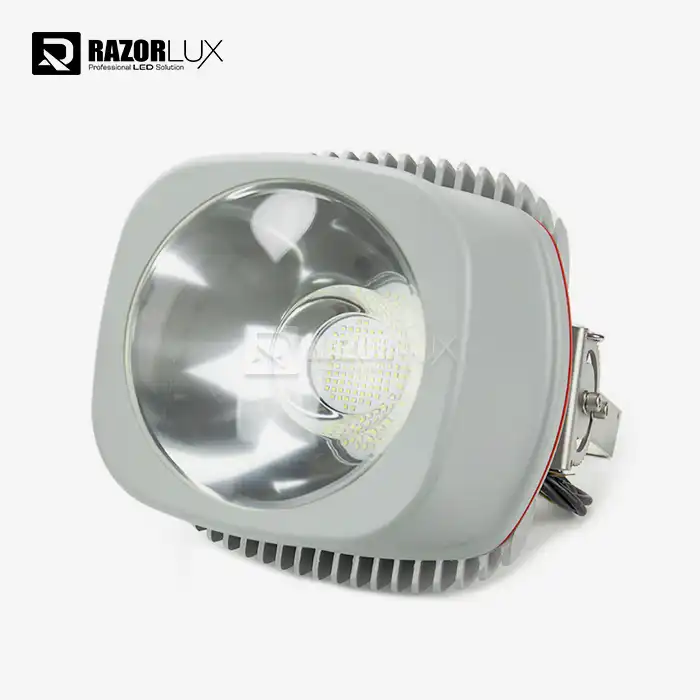 VIEW MORETop Rated Flood Lights