


_1750326878398.png)

What Makes 1000 Watt Led Outdoor Flood Lights Powerful?
When we talk about what really makes high-wattage LED flood lights powerful, we're talking about high lumen output, high energy efficiency, and high engineering durability. A high-quality 1000 Watt LED Outdoor Flood Light produces between 130,000 and 170,000 lumens, replacing conventional 2000–3000 watt metal halide lamps and using 60–70% less energy. Not only is it bright, but it also has smart thermal management, a rugged IP65/IP67 rating, wide voltage compatibility, and precise beam control that makes sure every lumen goes where it's needed most, so there's no wasted light or early failure.
Introduction
Outdoor lighting that is strong is a must for making sure that industrial, business, and large-scale infrastructure sites are safe, productive, and always up and running. 1000 Watt Led Outdoor Flood Lights are the best choice for B2B buyers, such as buying managers at shipyards, marine equipment integrators, lighting engineering companies, and facility managers at offshore platforms. They are efficient, last a long time, and work well. These lights are now essential in places like sports stadiums, airport aprons, and heavy industrial complexes, as well as container terminals and ports. Unlike home lighting, these fixtures are part of infrastructure and are made to survive harsh environmental conditions while providing steady light for decades. This guide goes into great detail about why these floodlights are so useful in tough conditions. We will talk about technical details that engineers care about, comparative benefits that support procurement budgets, selection criteria that lower risk, best practices for installation that maximise ROI, and procurement strategies that are made for the way businesses make decisions. Readers will get useful information that they can use to make confident, large-scale buying decisions and make sure the plan works.
Understanding the Power Behind 1000 Watt LED Outdoor Flood Lights
A 1000 Watt LED Outdoor Flood Light is a high-intensity solid-state lighting technology designed for large outdoor areas that need strong, even lighting. These lights are important parts of the infrastructure that fix important operating problems that regular lighting can't.
Technical Architecture and Core Performance Metrics
The technology behind these lights is based on luminous efficiency levels between 130 lm/W and 170 lm/W, which means that they produce between 130,000 and 170,000 lumens. Metal halide or high-pressure sodium lights, which usually only get 70 to 90 lm/W, are a huge step backwards in terms of economy. The housing is made of precise die-cast aluminium or 6063-T5 extruded aluminium and has a fin-style heat sink shape. Thermal management is the main factor that determines how long an LED lasts, and modern designs for thermal discharge keep junction temperatures below critical levels even when temperatures hit 60°C (140°F). With the right heat sink engineering, an L70 lifespan (the point at which luminaires keep 70% of their original light) can be extended to more than 50,000 operating hours, which is more than 11 years of nonstop operation.
Environmental Protection and Durability Standards
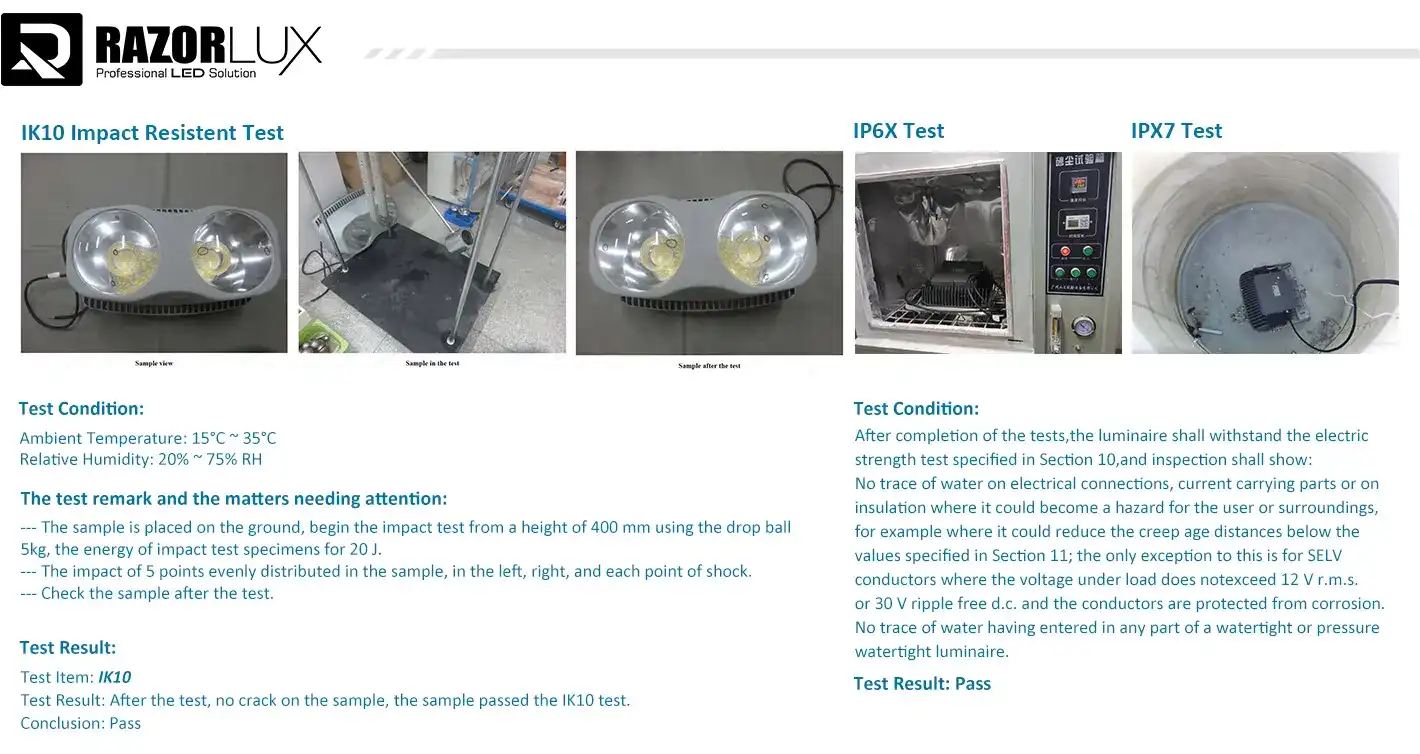
Industrial-grade flood lights have to be able to handle situations that would kill regular lights. Ingress Protection grades of IP66 or IP67 make sure that dust can't get in and protect against strong water jets or short immersion. Impact resistance ratings of IK08 to IK10 show that the material can handle up to 20 joules of force from the outside, which is the same as dropping a 5 kg object from 40 cm. Corrosion resistance is very important in coastal and maritime areas where salt spray speeds up the breakdown of materials. Premium fixtures are put through 1000 hours or more of ASTM B117 salt spray testing to make sure that marine-grade stainless steel parts and special powder coating processes work well in salty environments.
Addressing Critical B2B Pain Points
The most obvious financial gain comes from using a lot less energy. Cutting energy use by 60–75% while keeping or raising ground-level lux levels directly leads to lower operating costs over the fixture's many-decade lifetime. For places with hundreds of high-mast lights, the amount of energy saved each year can be in the six figures. Getting rid of maintenance solves the problem of the high cost of running traditional HID systems that need to change bulbs all the time. To get to things that are 30 to 50 meters up, you need special lift tools, and there are safety risks. With L70 lifespans of more than 50,000 hours, LED technology pretty much gets rid of the need for planned maintenance for at least ten years. With instant-on, you don't have to wait 10 to 20 minutes for metal halide lamps to warm up and turn back on. This is very important for safety and security during power outages because it lets you get full light right away when you need it most in an emergency. Using secondary lens systems for precise optical control lowers light pollution and sky glow, two things that are needed to follow modern environmental rules and get along with people who live nearby.
Comparative Insights: 1000 Watt LED Flood Lights vs Alternatives
There are big differences in performance and cost between LED technology and older choices for high-wattage outdoor lighting, as well as between different LED wattage combinations.
Energy Consumption and Total Cost of Ownership Analysis
Traditional lights and 1000 Watt LED Outdoor Flood Lights are very different from each other. A standard 1000 Watt LED Outdoor Flood Light with 130,000 lumens can be used instead of a 2500W metal halide fixture with the same number of lumens. The metal halide uses 125,000 kWh over 50,000 hours, while the LED only uses 50,000 kWh. That's a 75,000 kWh difference. With industrial power rates of $0.12/kWh on average, this will save each light $9,000 in energy costs over its lifetime. Besides the direct cost of energy, LED technology also has much lower maintenance costs. Every 6,000 to 12,000 hours, metal halide lights need to be replaced. Over 50,000 hours, this means that 4–8 lamps need to be changed. The cost of materials and labour for each replacement cycle can be $300 to $800. This includes the rental of a lift and the time of a technician for high-mast installations. This means that the total cost of maintenance for each fixture can be over $3,200 to $6,400. With 1000 Watt Led Outdoor Flood Lights that last 50,000 hours or more, these ongoing costs are eliminated.
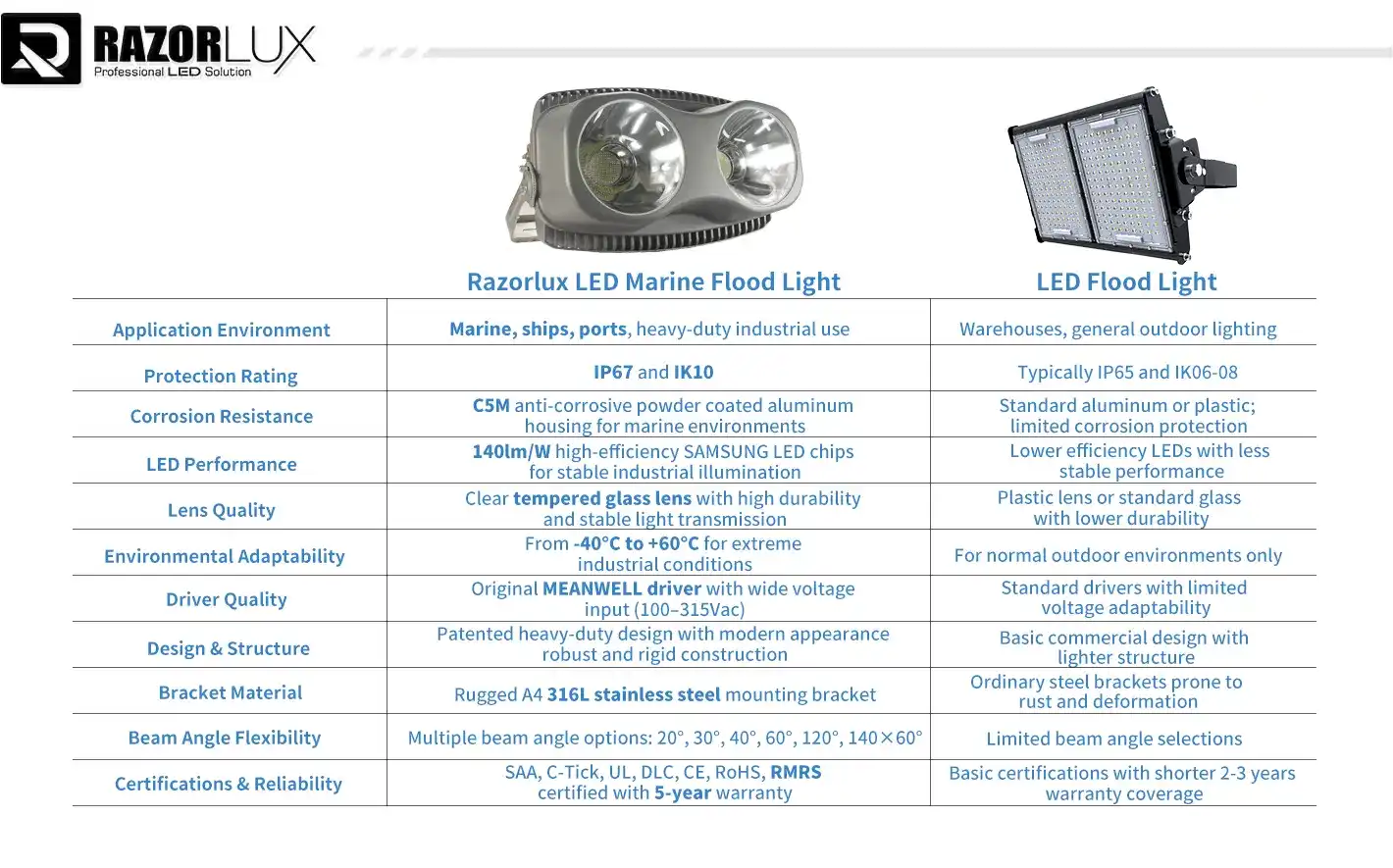
Performance Comparison: Wattage Configurations
When you compare 1000 Watt Led Outdoor Flood Lights to 500W options, it's easier to see which ones are best for what. While 500W units that put out 65,000 to 85,000 lumens are good for medium-sized areas, you need 1000 Watt Led Outdoor Flood Lights to light up areas bigger than 5,000 square meters or get lux levels above 100 at ground level from 25 to 40 meters above the ground. For stadium-level lighting, high-mast parking lot lighting, and industrial yard uses where safety rules require certain minimum lighting levels, the higher wattage gives the photometric horsepower needed.
Advanced Features Driving Commercial Value
Contemporary high-end lights have features that go beyond just lighting up a room. Using high-quality names like MeanWell or Inventronics in modular driver designs lets power sources be changed in the field without throwing away whole fixtures, which protects the investment in infrastructure. Advanced surge protection rated at 10–20kV protects sensitive electronics from voltage spikes caused by lightning that are common in outdoor installations that are left open to the elements. Secondary optical systems with beam angle choices of 15°, 30°, 60°, or 120° give lighting designers precise tools to reduce light spill and increase useful illumination. Narrow beams of 15-20° focus light for high-mast uses, while wider beams of 60–120° work for lower mounting heights that need wider coverage patterns. These technical benefits lead to procurement benefits such as lower lifetime costs, higher reliability, more operating freedom, and compliance with stricter environmental and energy rules.
How to Choose and Install 1000 Watt LED Outdoor Flood Lights for Maximum Impact
Finding the best high-wattage LED lights means matching their technical specs to the needs of the application and the conditions of the surroundings. Then, they need to be installed in a way that gets the most out of their performance and durability.
Critical Selection Parameters for Procurement Professionals
Power supply compatibility is the most important thing to think about. High-quality fixtures can work with a lot of different voltages, from 80V to 305V or even 100V to 400V DC in some industry and green energy settings. This voltage range keeps things running smoothly even when the power grid changes, which can happen in growing areas, and stops annoying shutdowns that stop work. Colour temperature choice affects how well things can be seen and how efficiently they can be used. 5000K to 5700K daylight temperatures are often needed in industrial settings because they improve vision and make it easier to tell colours apart, which is very important for safety in places with moving equipment. For maritime uses, 4000K to 4500K neutral white may be better because it lowers eye strain during long night shifts while still rendering colours correctly. For industrial use, a Colour Rendering Index (CRI) number above 75 is considered normal. However, bigger values are needed for certain tasks. Container terminals at ports that deal with colour-coded cargo, auto factories that do quality checks, and sports places that show HD feeds often mention CRI >80 or even >90 to make sure that colours are seen correctly.To specify the beam angle, photometric analysis is needed. For uses that require placing at high levels (25–40m), beam angles must be narrow (15–30°) so that light can be sent over long distances efficiently. Medium to wide beam angles (60° to 90°) give each device a wider area of coverage at lower mounting heights (8–15 m).
Certification Requirements and Compliance Validation
For B2B buying methods to work, a lot of paperwork needs to be kept. For European markets, CE marking is necessary. For North American use, UL/DLC listing is necessary. For Australia and New Zealand, SAA certification is needed. For naval systems, DNV/GL, ABS, or RMRS certifications are needed. Buyers who care about quality check where the parts came from. Fixtures with LED chips from Samsung or Philips, drivers from MeanWell or Inventronics, and recorded LM-80 test data for lumen maintenance show that the manufacturer cares about quality. Systematic quality management is shown by ISO 9001 certification, and environmental responsibility is shown by ISO 14001 certification. Both are important for companies that want to be sustainable.
Installation Best Practices for Performance Optimization
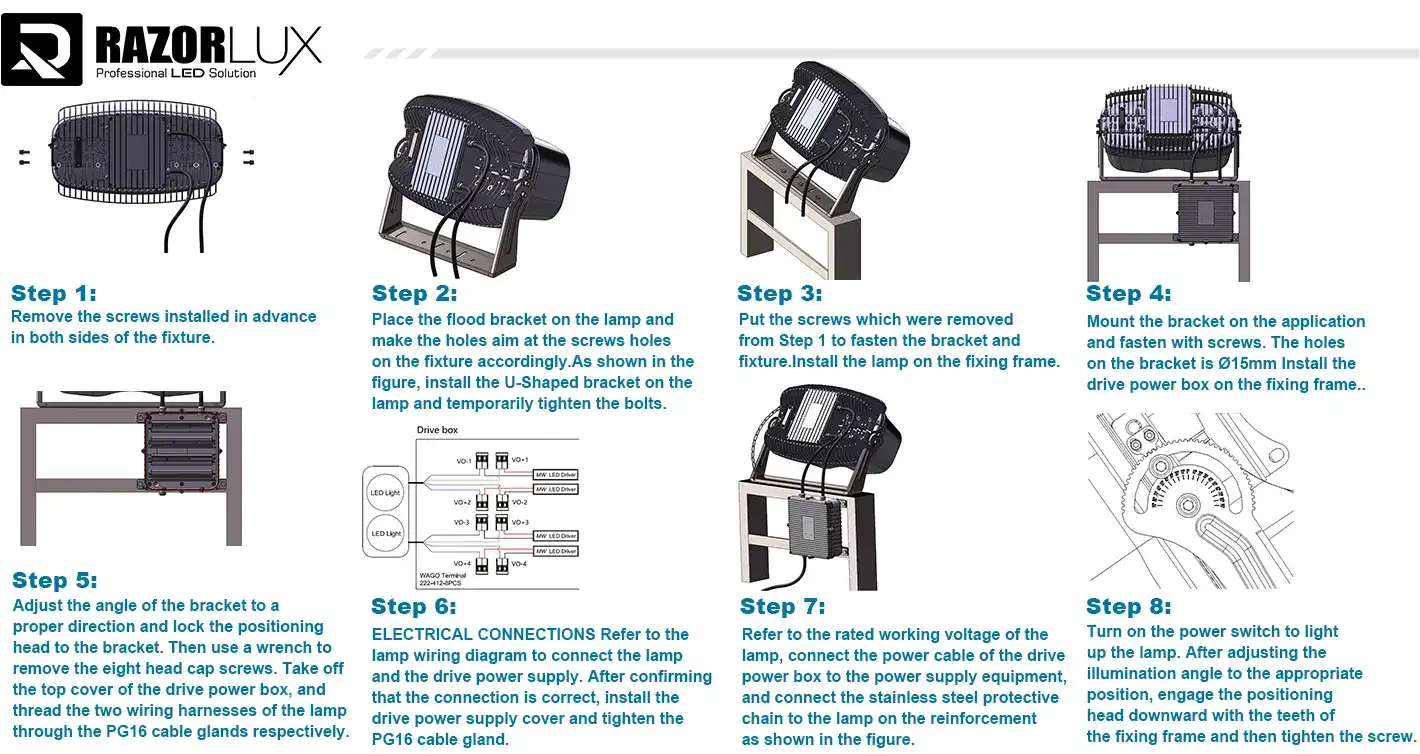
Accurate estimates of mounting height and spacing make sure that all areas are lit evenly while keeping the number of fixtures to a minimum. IES photometric files are used in lighting design software to model how light is distributed, which lets you make changes before installing the lighting. In industrial yards and parking lots, lights are usually placed 40 to 60 meters apart and mounted 30 to 40 meters high to get an average brightness of 20 to 50 lux. Changing the aiming point has a big effect on how well it covers. Fixtures on poles should point 10-15° downward from horizontal to get the most light to the ground, and the least amount of direct glare and sky glow. For installations near the coast, they need to be tilted away from the direction of the wind to keep salt spray from building up on the optical surfaces. Local rules, like the NEC (National Electrical Code) in North America or IEC guidelines around the world, must be followed when installing electricity. Grounding, circuit protection, and surge reduction must be done correctly to protect both the fixtures and the building's electrical system. Installing circuit breakers for each bulb lets you isolate them for repair without disturbing whole lighting zones.
Smart Control Integration for Enhanced Efficiency
Putting together motion sensors, photocells, and networked control systems makes the best use of energy without putting safety at risk. When there isn't much going on, motion sensors can turn down the brightness to 30–50%. When movement is detected, the brightness goes back up to full. This approach increases the life of the light and cuts energy use by an extra 30–40% on top of what 1000 Watt Led Outdoor Flood Lights already do well. Networked control systems let you check on the status of fixtures from afar, set up automatic schedules, and quickly find problems. Centralised control makes operations much simpler and repair response times much faster for facilities that are responsible for hundreds of fixtures spread out over big areas.
Trusted Brands and Procurement Tips for B2B Buyers
For B2B procurement to go well, it's important to find trustworthy manufacturers whose quality, technical skills, and service infrastructure support long-term partnerships and keep project risk to a minimum.
Evaluating Manufacturer Credentials and Capabilities
The history of manufacturing gives us important context. Established makers who have been working with LED technology for 15 to 20 years or more have institutional knowledge that spans multiple technology stages. This makes sure that their products reflect the lessons learned from installing millions of fixtures around the world. Companies with 100 or more patents have a history of investing in research and development and coming up with new technologies. The ability to produce things is just as important. Companies that package LED chips, put together power supplies, and make fixtures are called "vertically integrated." These companies are better at keeping quality control and supply chain security than assembly operations that only use parts they buy. Independent of what the seller says, specs are checked in-house using goniophotometers, environmental chambers, integrating spheres, and surge test tools.
Component Quality as Performance Indicator
Brand-name parts that have been proven to work reliably in other industries are used in high-end equipment. LED chips from Samsung, Philips Lumileds, or Cree are the best choices, and a lot of LM-80 test data backs up forecasts for lumen maintenance. Power supplies made by MeanWell, Inventronics, or Tridonic are very efficient, have low harmonic distortion, and have been tested and proven to work in the field. The power factor specification shows how good the driver is. Power factors >0.95-0.98 are reached by premium drives, which reduces reactive power that raises energy costs and puts stress on electrical infrastructure. Total Harmonic Distortion (THD) levels below 10% keep sensitive electronics from being harmed and meet the needs of ever stricter power quality standards.
Warranty Structure and After-Sales Support
Warranty terms show how confident the company is in the product's durability. The best guarantees in the business cover LED modules, drivers, and housing for 5 years. Some high-end makers offer coverage for 7–10 years. It's important to note that the usefulness of a warranty relies on the service infrastructure. Manufacturers with regional service centers, stocked spare parts, and responsive technical support teams offer better safety than companies that offer long warranties but can't support them.In business-to-business relationships, after-sales service should include technical hotlines filled by experts who can fix problems with complicated installations, detailed documents such as CAD drawings and IES files for design integration, and easy return policies for broken units. Suppliers who train installation workers and upkeep teams show that they care about their customers' success after the sale.
OEM and Customization Capabilities
Customisation is often needed for big projects to meet specific needs for mounting arrangements, optical distributions, control interfaces, or looks. Companies that have their own industrial design departments, mold-making facilities, and flexible production systems can meet specific needs without having to wait too long for parts or meet minimum order quantities, which can be hard for smaller projects. Distributors, builders, and owners of lighting brands can use OEM services to make lights with their own labels that meet their needs. This feature is useful for businesses that are building a line of branded products or that serve markets with specific certification needs.
Maintenance, Lifespan, and Environmental Impact
With the right care, LED technology can last for a long time and be environmentally friendly, making it an important part of both business sustainability efforts and government regulations.
Maintenance Requirements and Service Intervals
1000 Watt LED Outdoor Flood Lights need little but important upkeep. Visual checks every three months find dirt buildup, biological growth, or damage that needs fixing. Handheld lux meters should be used to record lumen output, make sure the gasket is intact, check the torque of the mounting hardware, and look for corrosion or loose electrical connections during yearly detailed inspections. Optical cleaning keeps light levels stable and improves the life of fixtures. Salt spray and floating particles make lens pollution happen faster in coastal and industrial areas. Cleaning it every six months with mild detergents and soft cloths stops buildup that can lower its output by 15 to 25 percent over time. Fixtures with closed optical chambers need to be cleaned less often than ones with open ones. Inspections using thermal imaging can find problems that are getting worse before they break. Unusual heat patterns can mean that the driver is wearing out, the thermal interface isn't making good contact, or an LED string isn't working. Replacement of failing parts before they cause more damage or unexpected downtime is important.
Realistic Lifespan Expectations and L70 Performance
To figure out how long an LED light will last, you need to know how to maintain lumens. The standard measurement for useful life in the industry is L70, which stands for "hours until brightness drops to 70% of initial output." Based on LM-80 test results extrapolated using TM-21 methods, quality fixtures that control heat well can last between 50,000 and 100,000 hours. Conditions in the real world have a big effect on lifespan. Fixtures that work in controlled ambient temperatures (25°C) and moderate duty cycles (12 hours/day) often last longer than expected. On the other hand, fixtures that work continuously in harsh environments with high ambient temperatures (40–50°C) may have shorter lifespans. With 1000 Watt LED Outdoor Flood Lights, lights last 3–5 times longer than metal halide options, even in harsh circumstances. Driver failure is the most common way for an LED light to fail, and it usually happens before the LEDs degrade to L70 levels. LED modules last as long as premium drivers, which are rated for 50,000 hours or more at the highest temperature. Lower-quality drivers, on the other hand, may stop working after 20,000 to 30,000 hours. This fact shows how important brand-name power sources are for good lighting.
Environmental Benefits and Sustainability Impact
Cutting down on energy use has real environmental benefits that can be measured. A 1000 Watt Led Outdoor Flood Light uses 50,000 kWh over its lifetime, while a metal halide bulb uses 125,000 kWh. This means that the 1000 Watt Led Outdoor Flood Light saves 75,000 kWh. At an average U.S. grid carbon intensity of 0.92 pounds CO₂ per kWh, each LED fixture stops 69,000 pounds (31 metric tonnes) of carbon dioxide emissions, which is the same as growing about 1,150 tree seeds and watching them grow for 10 years.
Responsible End-of-Life Management
Even though they last for more than 50,000 hours, 1000 Watt Led Outdoor Flood Lights need to be thrown away or recycled at some point. Manufacturers who are responsible take part in programs that recycle electronics and accept returned fixtures so that the materials can be recovered. The aluminium housing, copper wire, and steel mounting hardware have a lot of worth as scrap. When electronic waste is properly processed, valuable metals can be recovered from driver electronics.Modern makers make their products so that they can be taken apart easily, which makes recycling much easier. When fixtures reach the end of their useful life, they can be recycled at the component level thanks to their modular design, which lets drivers and LED modules be replaced in the field.
Real-World Applications Across Heavy Industry
Knowing the exact needs of an application helps procurement professionals choose the right fixtures and avoid costly mistakes where product capabilities don't match up with operational needs.
Maritime and Offshore Platform Installations
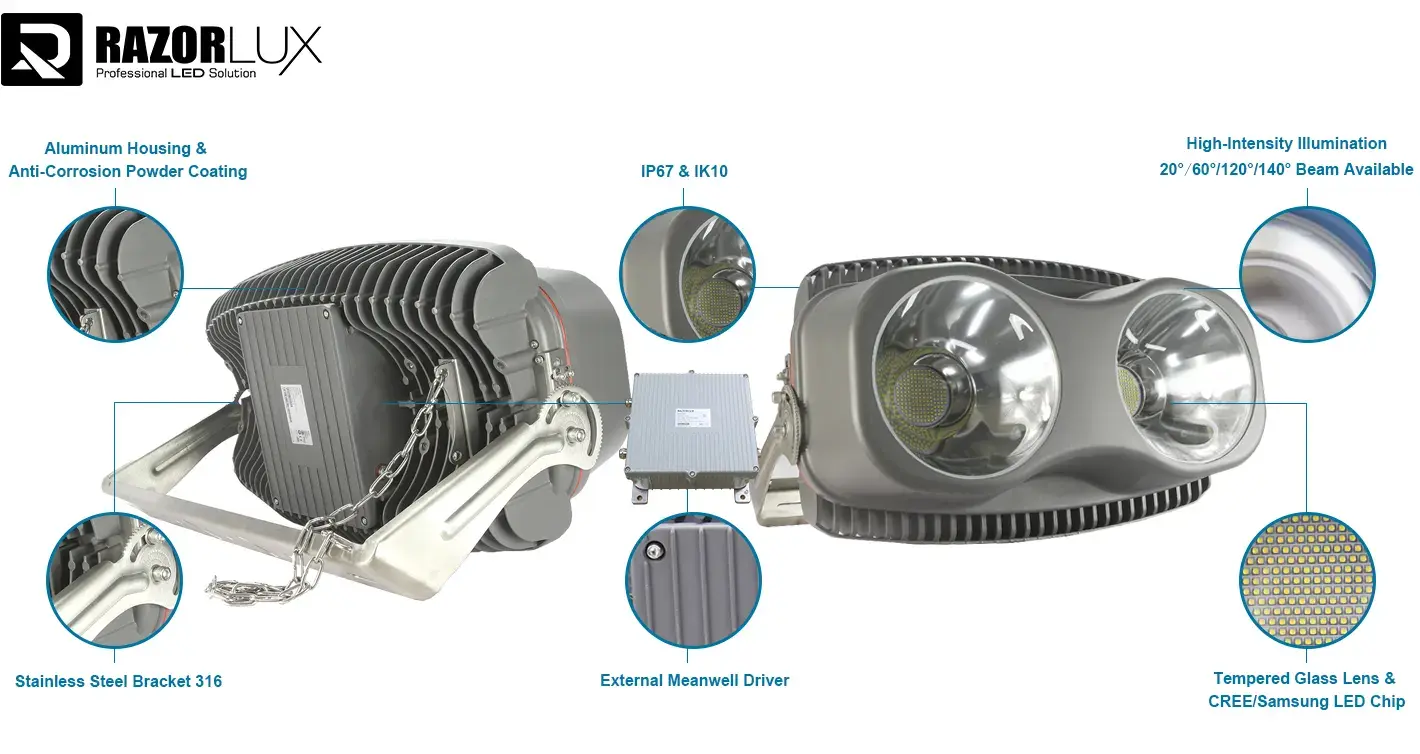
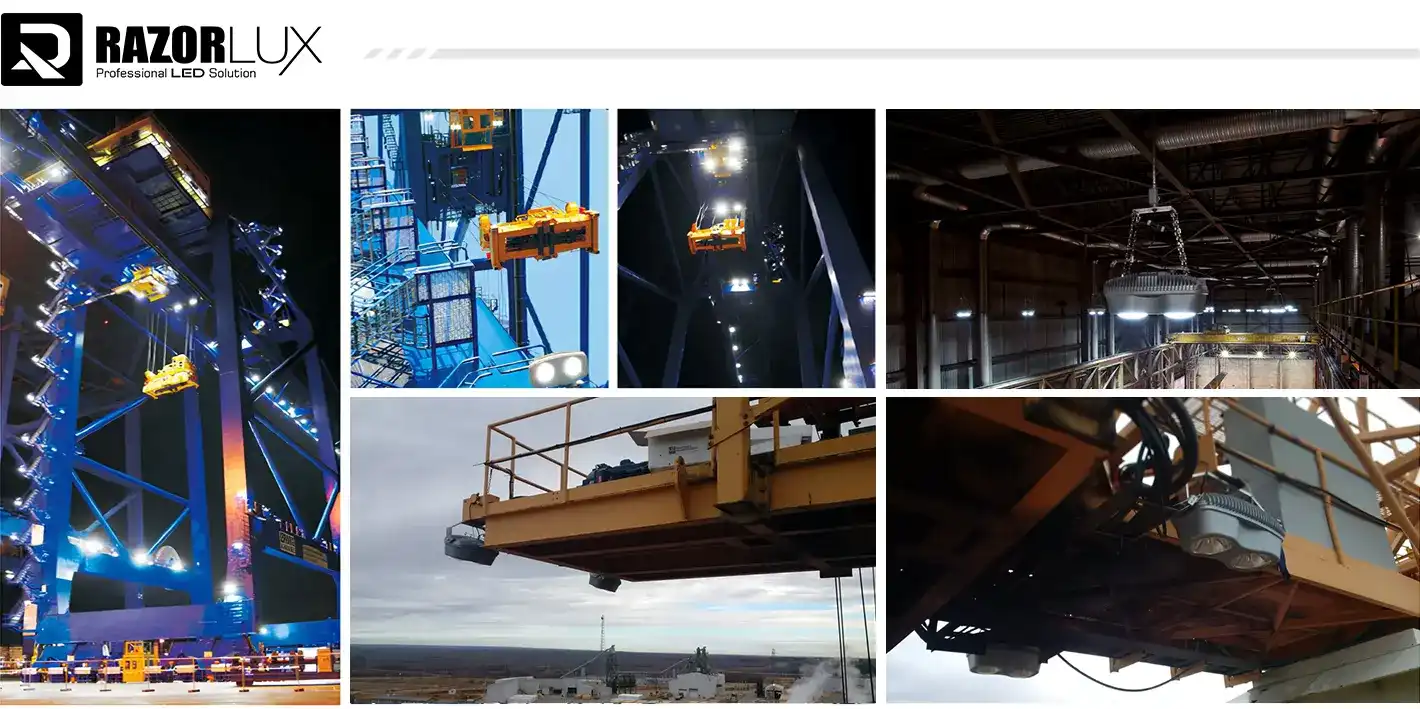
Shipyards, container ports, and oil rigs in the ocean are all very difficult places to light. For example, salt spray makes rusting happen faster, machinery and waves constantly shaking things puts stress on mounting systems, and places with explosive atmospheres need special licenses.316 stainless steel mounting brackets and tools are used on high-quality marine lights. Aluminium housings have multiple layers of corrosion-resistant coating, and sealed cable entry systems keep moisture out. If needed, ATEX or IECEx approvals prove that the equipment is safe for use in dangerous environments. Wide DC voltage input ranges (100–400Vdc) allow shipboard power systems and renewable energy installations that are common on offshore platforms to work.
Sports Stadium and Arena Lighting
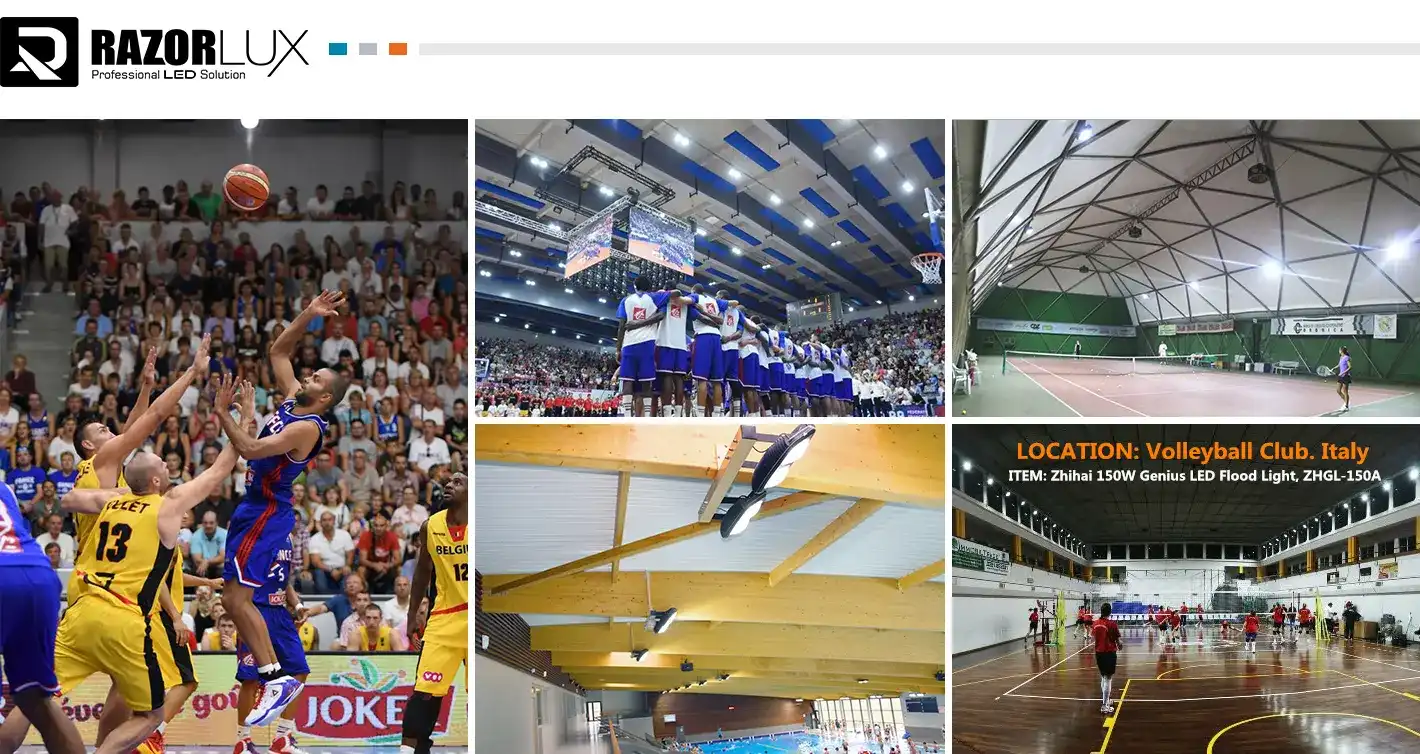
Professional sports places need players to have certain skills. High frequencies (>3000Hz) that don't cause flickering keep high-speed cameras that record slow-motion repeats from strobing. High CRI values (>80, and often >90) make sure that HD and 4K broadcasts show true colours. Accurate beam control and anti-glare optics keep athletes from being too uncomfortable while providing the right amounts of vertical and horizontal illumination across all playing surfaces.Installing 1000 Watt Led Outdoor Flood Lights in stadiums usually means setting them up in high masts at 40–60 metre heights. This makes the powerful throw lengths needed to evenly light up large playing grounds. Rapid restrike capability lets lights go back on right away after the power goes out, which is important for keeping program plans and keeping viewers safe.
Industrial Complex and High-Bay Applications
In places like steel mills, paper mills, and heavy production sites, where the air is dirty, the temperature changes a lot, and machines shake, strong lighting is needed. Wide working temperature ranges (-40°C to +60°C) make sure that they work reliably even when the weather changes or when they are close to hot industrial processes. Narrow to medium beam angles (30–60°) at mounting heights of 12–20 meters work best for high-bay uses in large production areas. Overhead cranes need to be taken into account when designing lighting. Shadows that hide dangers should be kept to a minimum, and glare should not bother crane operators. Impact-resistant IK10 ratings keep fixtures from hitting equipment or materials by accident.
Razorlux 1000W LED Flood Light: Technical Specifications and Advantages
Our engineering team has come up with a patented multi-function design that can be used in harsh work environments in infrastructure, maritime, and industrial settings. This fixture follows the basic rules and best practices that have been talked about in this book.
Comprehensive Technical Parameters
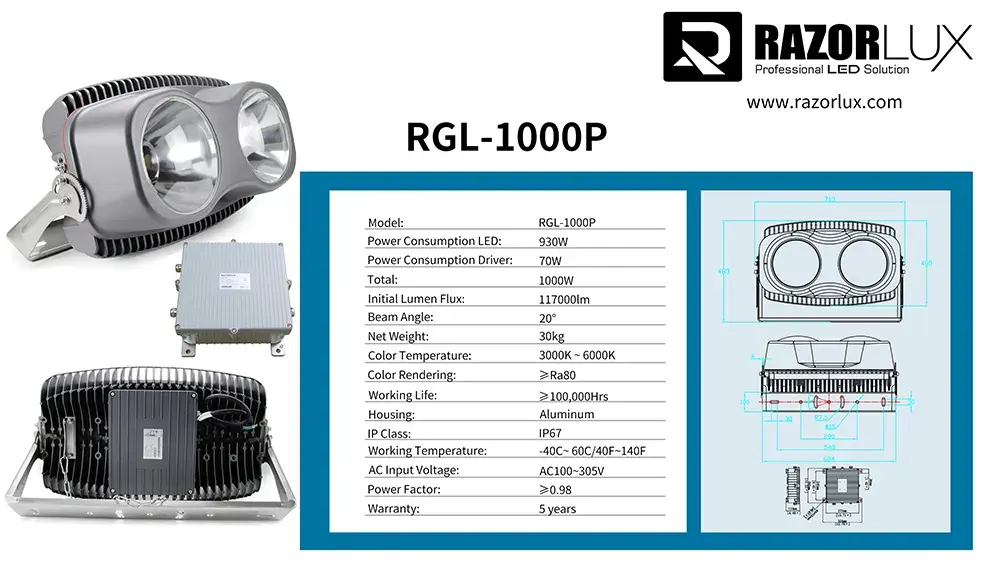
The main features that make our 1000 Watt LED Outdoor Flood Light work and be useful are shown in the table below:
| Parameter | Specification |
|---|---|
| Model | RGL-1000P-L20 |
| Rated Power | 1000W (900W LEDs + 100W Driver) |
| Stable Luminous Flux | 105,000 lm (5700K after an hour) |
| Lamp Efficiency | 130 lm/W |
| Replaces HID Lamp | 2000W to 3000W |
| Input Voltage Range | AC 80–305V, DC 100–400V, and DC 500–800V |
| Color Temperature | 2700K–6500K (can be changed) |
| Color Rendering Index | ≥Ra75 (≥Ra80 and ≥Ra90 can be ordered) |
| Beam Angle | 20° (other angles are available) |
| Power Factor | ≥0.98 |
| Total Harmonic Distortion | <10% |
This great voltage compatibility works with unstable grids, green energy, and both AC and DC power systems that are popular in marine and off-grid industry settings. The high power factor and low THD keep the electrical infrastructure from being overloaded while still meeting strict standards for power quality.
Environmental Protection and Durability Features
Industrial-grade fixtures are different from business goods because they can handle harsh environments. These important safety features are built into our construction:
| Protection Feature | Specification |
|---|---|
| IP Rating | IP65 or IP67 (complete security against dust and water jets or soaking) |
| IK Rating | IK10 (impact strength of 20 joules) |
| Operating Temperature | -40°C to +60°C (-40°F to 140°F) |
| Operating Humidity | 10% to 95% |
| Housing Material | Powder coating on an aluminium alloy |
| Mounting Bracket | Stainless steel made for boats |
| Working Life | ≥50,000 hours |
| Warranty Coverage | 5 years (driver and LED module) |
The IP67 rating validates submersion resistance to 1 meter depth for 30 minutes, providing confidence for coastal installations and weather-exposed locations. IK10 impact resistance protects against accidental contact in busy industrial yards and loading areas.
Premium Component Selection
Long-term dependability is based on the quality of the parts. MeanWell power supplies are used in our fixtures, and they are known throughout the industry for being efficient, reliable, and long-lasting. The driver's high power factor and wide input voltage range make the best use of energy while defending against voltage changes that damage less powerful lights. The aluminium housing with precisely designed fin shape provides the most heat-dissipating surface area, keeping LED junction temperatures within the ideal ranges even when the temperature outside is 60°C. Marine-grade stainless steel mounting gear doesn't rust in places with a lot of salt spray, like seaports, offshore platforms, and seaside facilities.
Certification Portfolio
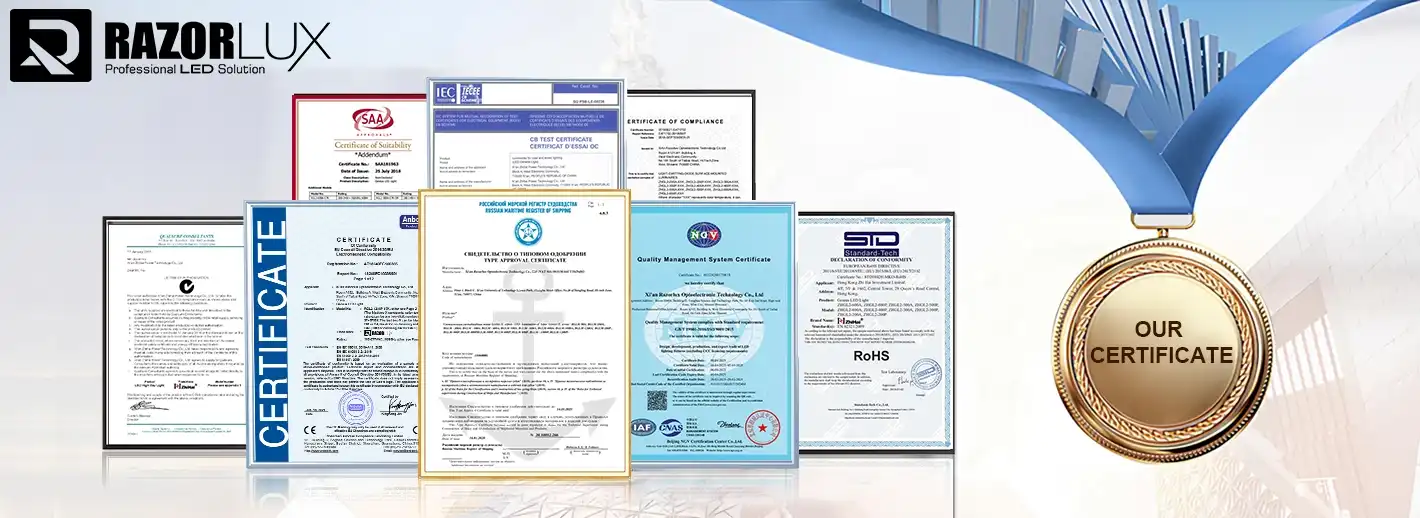
Full international certifications get rid of problems with buying things in global markets:
- CE, RoHS (complying with European law)
- SAA, C-Tick (New Zealand and Australia)
- UL, DLC (In North America, energy efficiency and safety)
- CB (International acceptance of each other)
- ISO 9001 (Certification for a quality management system)
Our 20+ years of manufacturing experience and 200+ patents, along with this portfolio of certifications, show that we have the technical knowledge and dedication to quality that procurement professionals look for when they are choosing mission-critical infrastructure.
Conclusion
1000 Watt LED Outdoor Flood Lights are powerful in more ways than just how bright they are. These fixtures are high-tech engineering answers to difficult operating problems. They dramatically reduce energy use, eliminate the need for upkeep, allow for instant operation, provide exact optical control, and offer resistance to environmental stress. These technical capabilities directly lead to lower total cost of ownership, better safety, operational reliability, and environmental responsibility for B2B procurement professionals who run shipyards, industrial facilities, transportation infrastructure, and heavy-duty applications. Successful implementation requires careful specification matching application requirements, selection of quality manufacturers with proven components and comprehensive certifications, and proper installation following photometric design principles. The switch from old HID technology to more modern LED systems brings real financial benefits and prepares places to meet the stricter energy and environmental rules that are affecting businesses around the world.
FAQ
How does brightness compare between 1000W LED and traditional metal halide fixtures?
A 1000W LED fixture with 130,000 lumens gives off the same amount of light as or more than 2500–3000W metal halide lamps. The difference is more than just lumen numbers. After 50,000 hours, LED fixtures still have 70% of their original brightness, while metal halide power drops by 30–40% after only 6,000 hours. 1000 Watt LED Outdoor Flood Lights also have practical benefits beyond their raw lumen specs, such as better colour rendering and the ability to turn on instantly.
What IP rating should I specify for harsh weather environments?
Installations near the coast, industrial yards that are open to the elements, and marine uses need IP66 or IP67 ratings. IP66 protects against strong water jets coming from any direction, and IP67 adds resistance to being submerged for a short time. Both ratings make sure that there is no dust at all. Higher levels of protection are worth the small extra cost because they prevent moisture-related breakdowns that happen with lower-rated fixtures in tough settings.
Can these fixtures integrate with motion sensors and smart building controls?
Several control protocols can be used with good 1000 Watt LED Outdoor Flood Lights, such as 0-10V dimming, DALI (Digital Addressable Lighting Interface), and relay-based switching. Adding a motion sensor cuts energy use by 30–40% during times of low activity while keeping people safe by turning the light on full brightness right away when movement is noticed. Networked control systems let installations all over a building be monitored from afar, have their schedules automatically updated, and get maintenance done before they break down.
Partner With a Trusted 1000 Watt LED Outdoor Flood Lights Manufacturer
Razorlux can help you find high-performance lighting options for your business. Our dedication to engineering excellence has led us to make LED fixtures that have been used in the world's toughest marine, industrial, and building projects since 1998. Our 1000W flood light is a great example of this skill. It has a patented multi-function design that is backed by our 5-year warranty and offers 130 lm/W of efficiency, IP67 protection, quality MeanWell drivers, and full international certifications. We control every part of production as a vertically integrated manufacturer with more than 200 patents. This means that we can guarantee consistent quality, stable supply lines, and quick expert support. You are welcome to feel the Razorlux difference whether you are a buying manager at a shipyard, an industrial building expert, or a lighting contractor. Contact our team at sam@razorlux.com for technical consultations, custom specifications, photometric analysis, or bulk procurement solutions tailored to your specific project requirements. Visit razorlux.com to explore our complete product portfolio and discover why leading organizations worldwide trust Razorlux as their preferred industrial LED lighting supplier.
References
1. Illuminating Engineering Society (IES). "LM-79-08: Approved Method for the Electrical and Photometric Measurements of Solid-State Lighting Products." New York: IES, 2008.
2. U.S. Department of Energy. "Solid-State Lighting Technology Fact Sheet: High-Output LED Applications for Industrial and Commercial Environments." Energy Efficiency and Renewable Energy Office, 2022.
3. International Electrotechnical Commission. "IEC 60598-2-5: Luminaires - Part 2-5: Particular Requirements - Floodlights." Geneva: IEC Standards, 2020.
4. National Electrical Manufacturers Association (NEMA). "ANSI C136.31: American National Standard for Roadway Lighting Equipment - Luminaire Vibration." Rosslyn: NEMA, 2019.
5. Det Norske Veritas (DNV). "Rules for Classification of Ships - Part 4 Chapter 8:
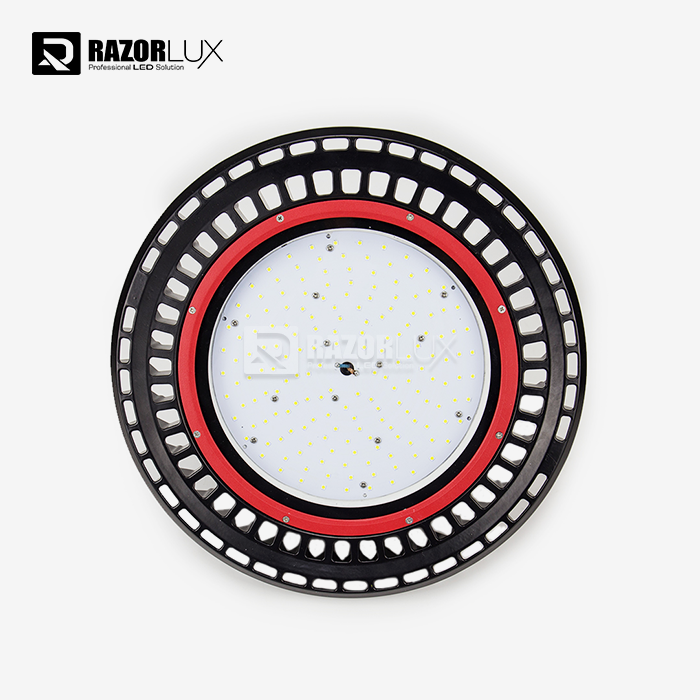 VIEW MOREwarehouse light fixtures
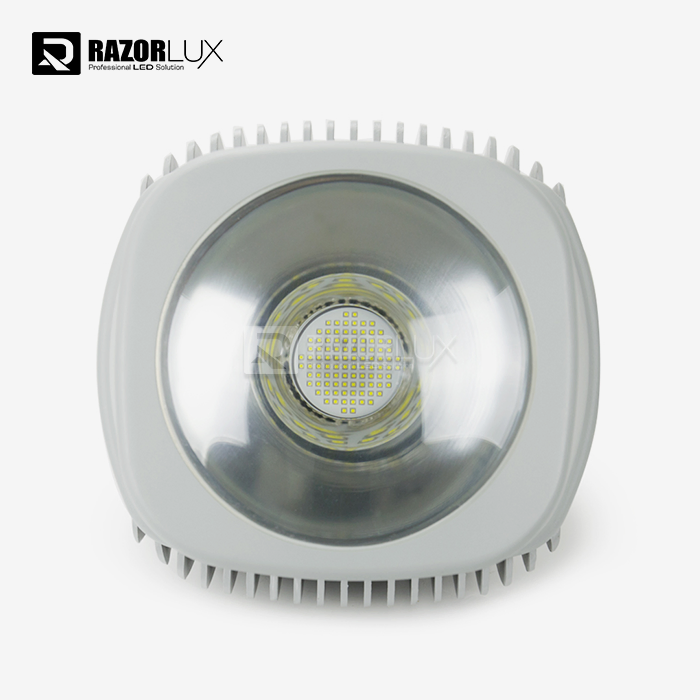 VIEW MOREsand volleyball court lighting
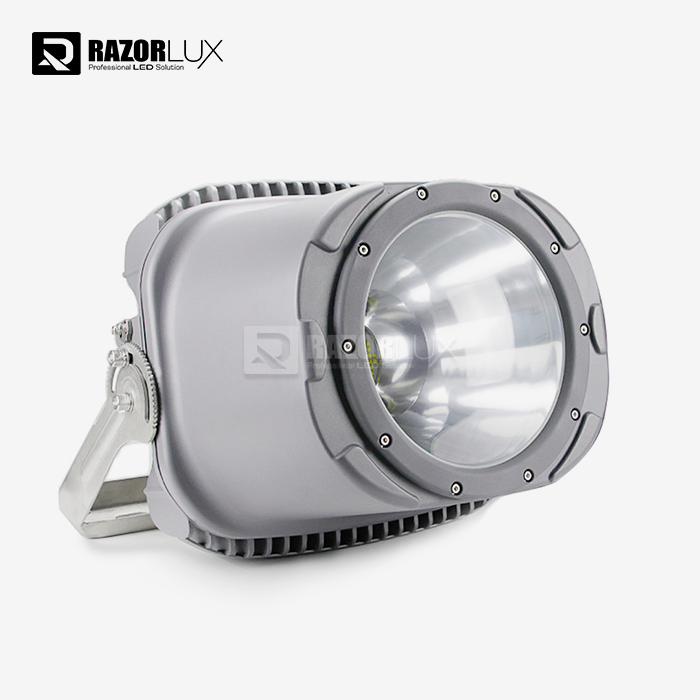 VIEW MOREtennis court floodlights
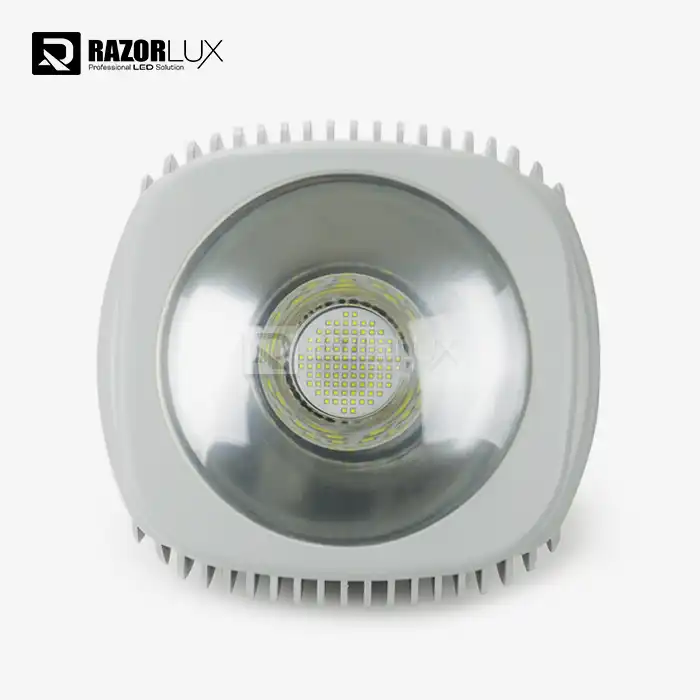 VIEW MOREBest Marine Flood Lights
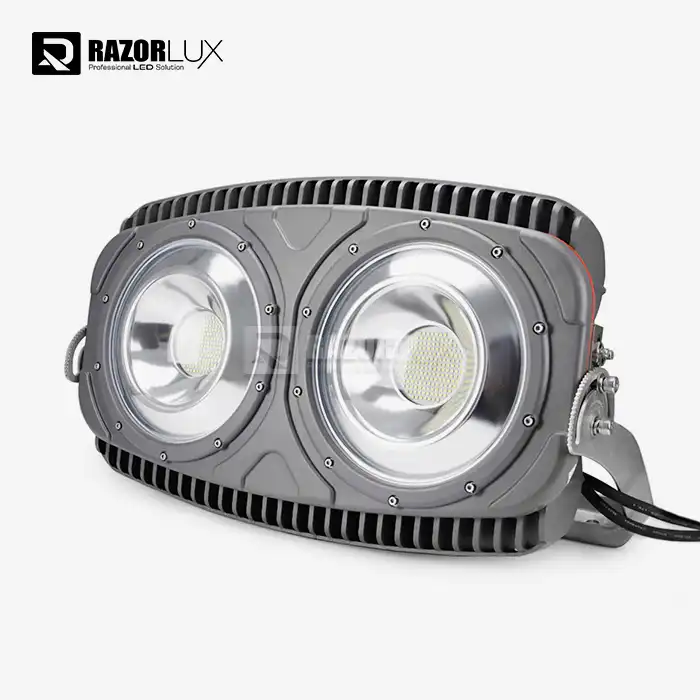 VIEW MOREHigh Mast Led Flood Light
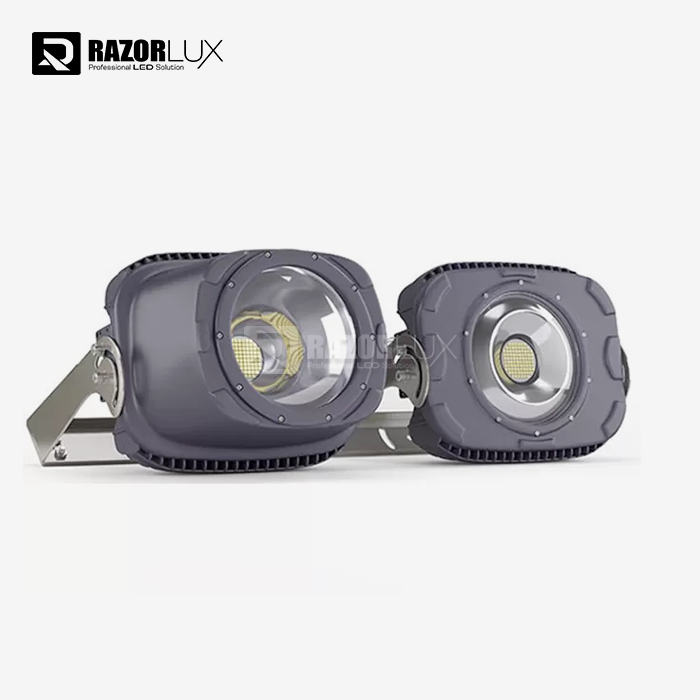 VIEW MOREDLC Led Stadium Lights 120lm/W 6000K Football Stadium Floodlights Fixtures
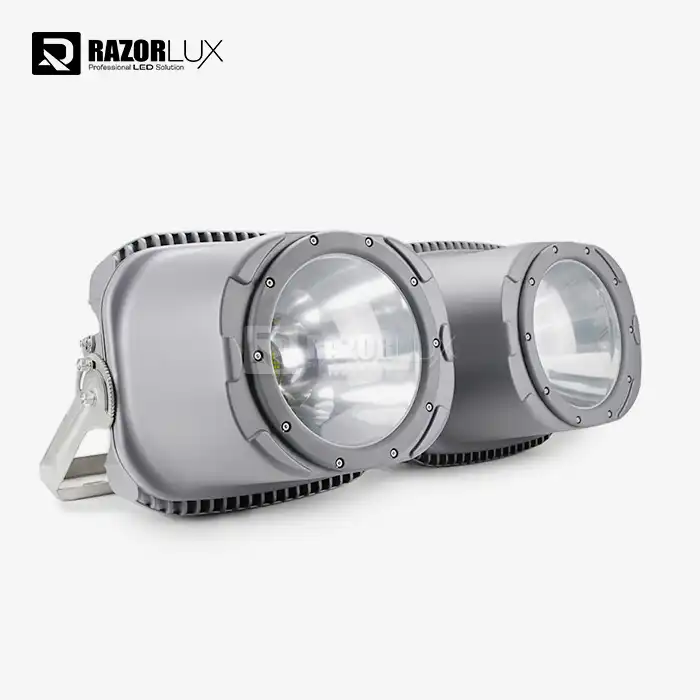 VIEW MORELed Lights For Soccer Field
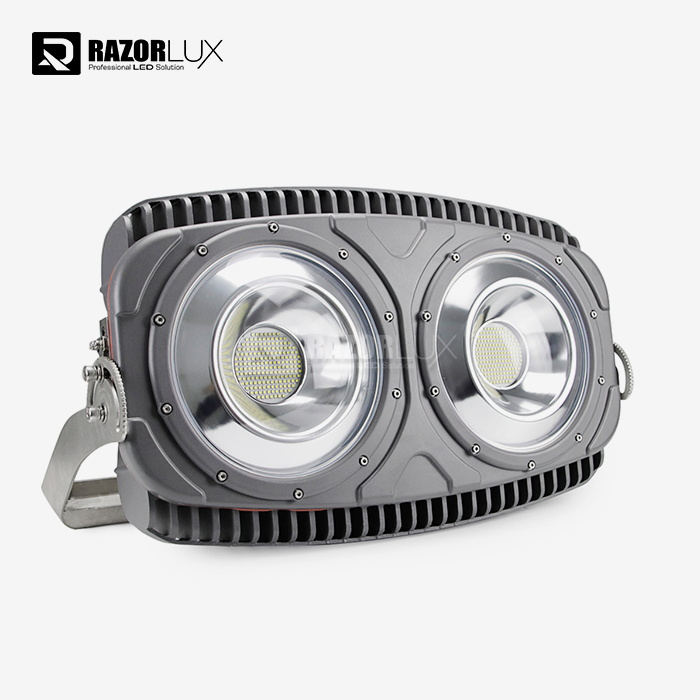 VIEW MORE2 Head Led Flood Light