

_1750326878398.png)

Why Are Crane Boom Lights Critical for Low-Light Operations?
When heavy machinery is used after dark or in places with bad lighting, accuracy and safety rest on the quality of the lighting. Crane Boom Lights shine focused, high-intensity light from above, making it possible for operators to see clearly over hook blocks, load zones, and people moving below. Without specialized lighting placed directly on cranes, the shadows that booms and jibs cast make dangerous blind spots that can't be fixed by the site's general lighting. Because they have to project light vertically over distances of more than 50 meters while being exposed to vibrations and the elements all the time, these special fixtures are essential for 24/7 use in construction sites, maritime terminals, and industrial facilities.
The Role of High-Performance Lighting in Industrial Safety
Eliminating Vertical Blind Spots During Night Operations
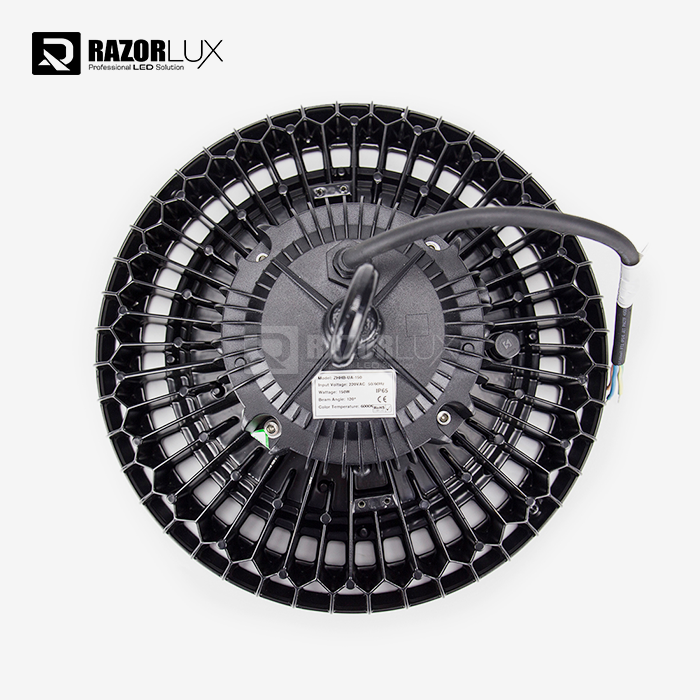
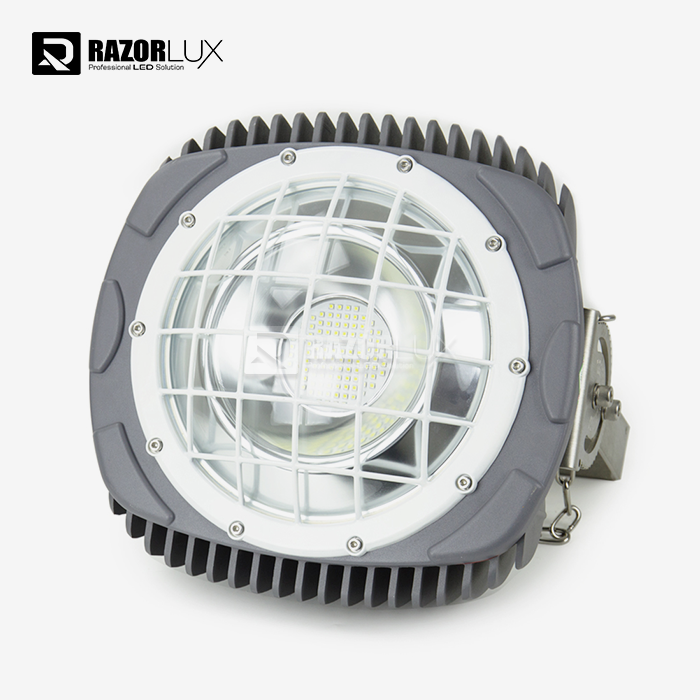
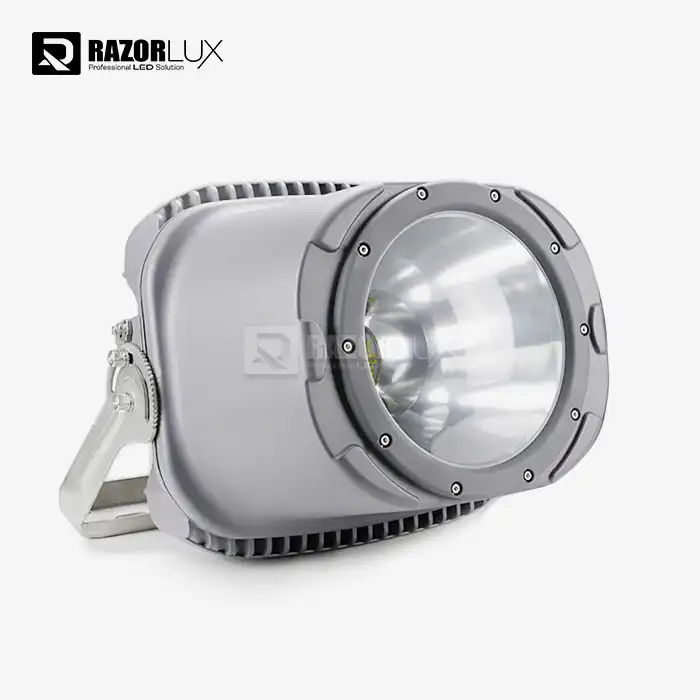
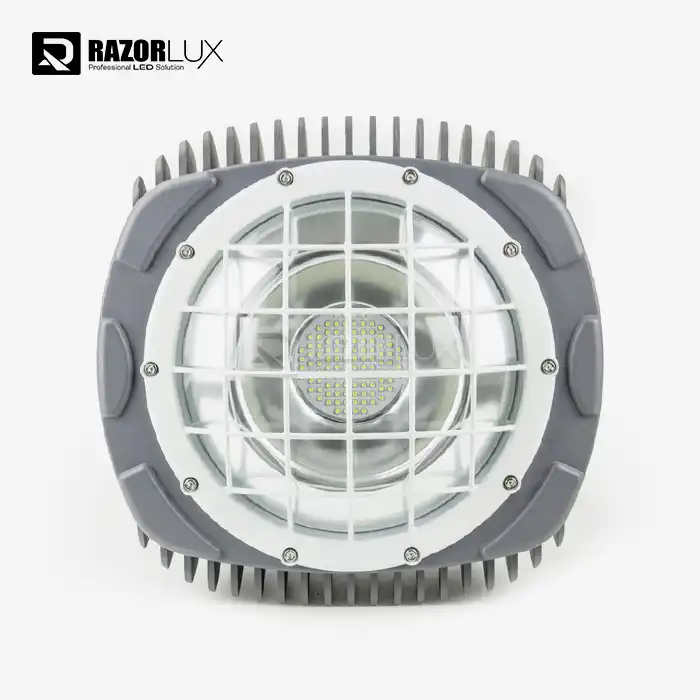
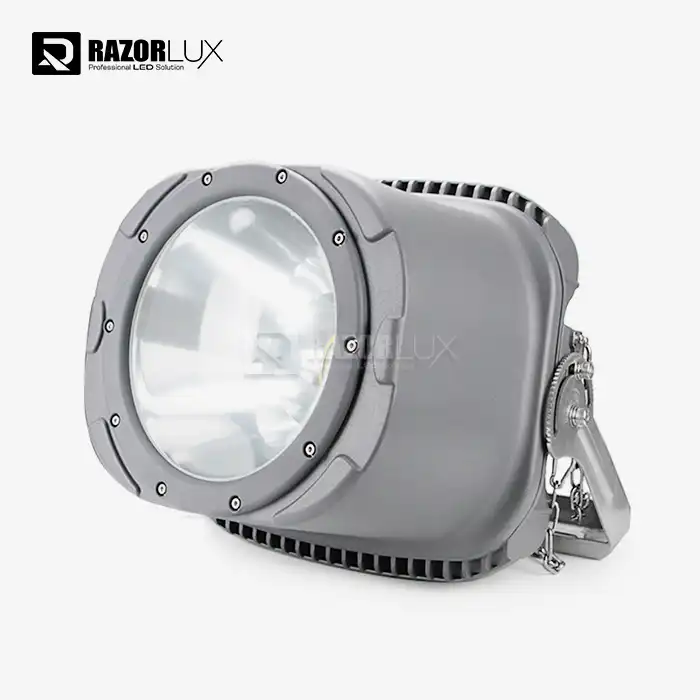
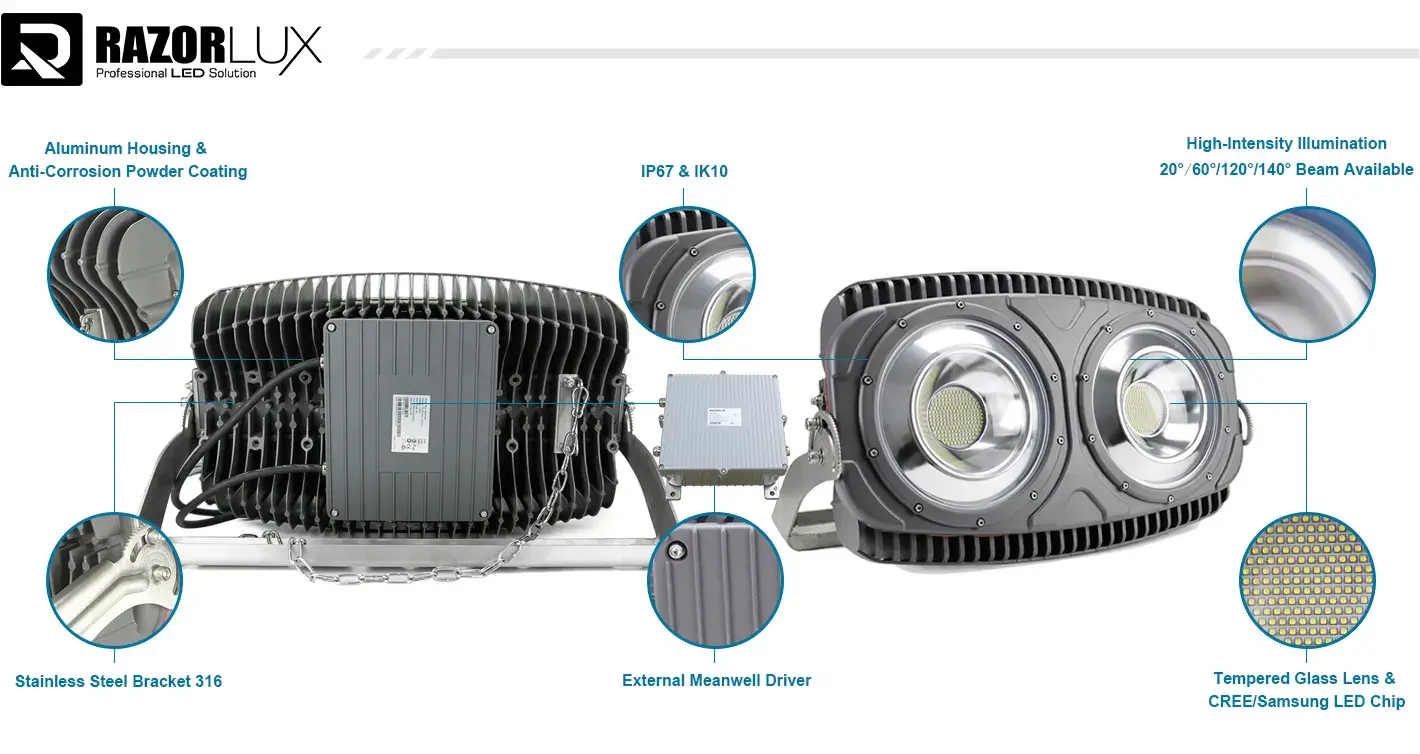
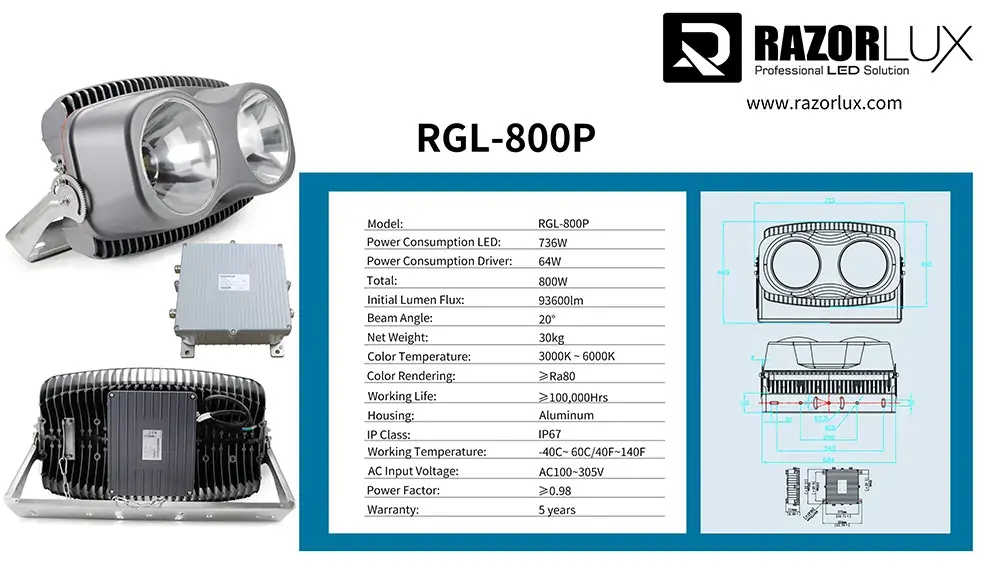
Normal floodlights on the ground can't get through the complicated shapes of cranes, so they cast shadows over important work areas. When you mount LED lamps directly on booms, the light sources are raised above any obstacles and focused downward to light up hook paths and load areas. This vertical position changes the operator's view, letting them see exactly how deep loads are when they are placed within centimeters of targets. Razorlux's 150W type has a 20° beam angle that is designed to focus 13,200 lumens onto work areas without spilling out too much light, keeping operators focused and reducing glare for people on the ground.
Meeting Regulatory Requirements Across Global Markets
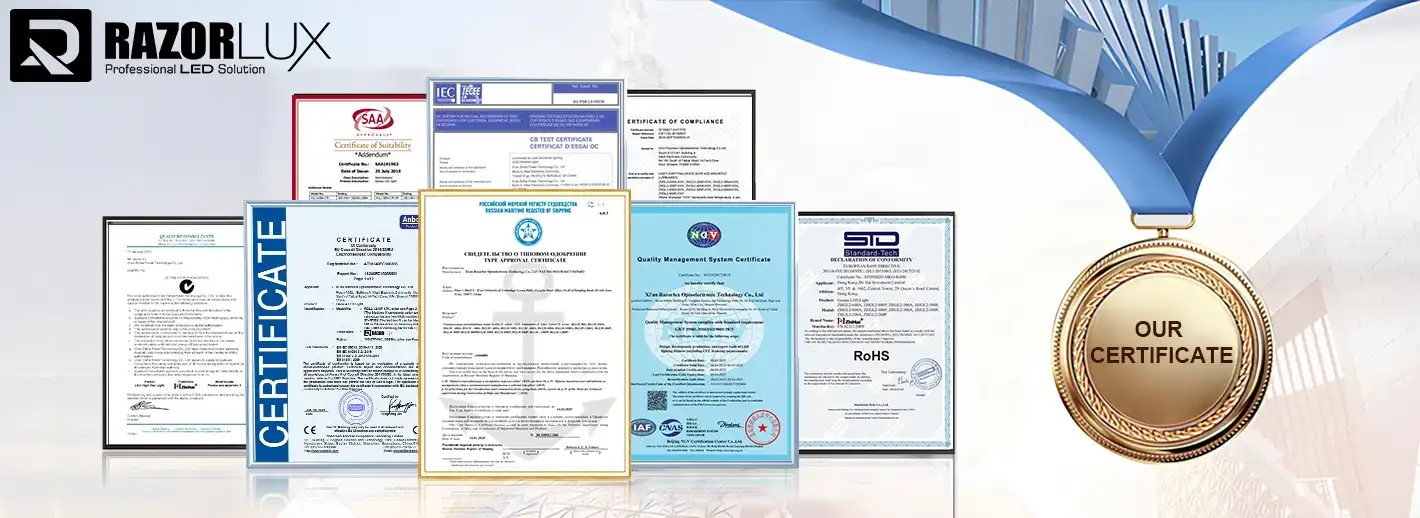
In Europe, North America, and Asia, safety officials require that actions involving lifting things from above must have a minimum level of lighting. This level is usually between 50 and 200 lux, but it depends on how hard the job is. Compliance paperwork is an important part of getting project approvals and insurance coverage. Razorlux goods are certified by CE, RoHS, UL, and DLC. This gives buying teams instant proof that the products are in line with regulations in a number of different areas. This set of certifications makes it easier to get projects approved in countries where equipment needs to meet different national standards without being changed.
Understanding LED Technology Advantages in Harsh Environments
Solid-State Durability Versus Traditional Lighting
The mechanical stress that comes with operating a crane caused metal halide and halogen Crane Boom Lights predecessors to fail in terrible ways. When the trolley moves quickly or stops suddenly while the load is being placed, shock forces are created that break fragile filaments and arc tubes. LED technology uses semiconductor connections that are protected by strong materials, so it doesn't need parts that are likely to break. This basic change in design increases operating life from 2,000 hours to over 50,000 hours, which means that it can be used continuously for about six years before it needs to be replaced.
Wide Voltage Input Compatibility
Unstable power sources are common on construction sites and marine facilities. Voltage changes happen when equipment starts up or when the generator changes over. For standard lights, you need extra tools to control the voltage, which adds to the cost and creates failure points. Razorlux lights can handle AC input from 80V to 315V and DC input from 80V to 400V without the need for extra adapters. They also keep the output stable over this wide range. This adaptability is very helpful at temporary project sites where power quality isn't always stable, and equipment needs to work regularly even when the electricity isn't at its best.
Critical Selection Criteria for Industrial Purchasers
Environmental Protection Standards
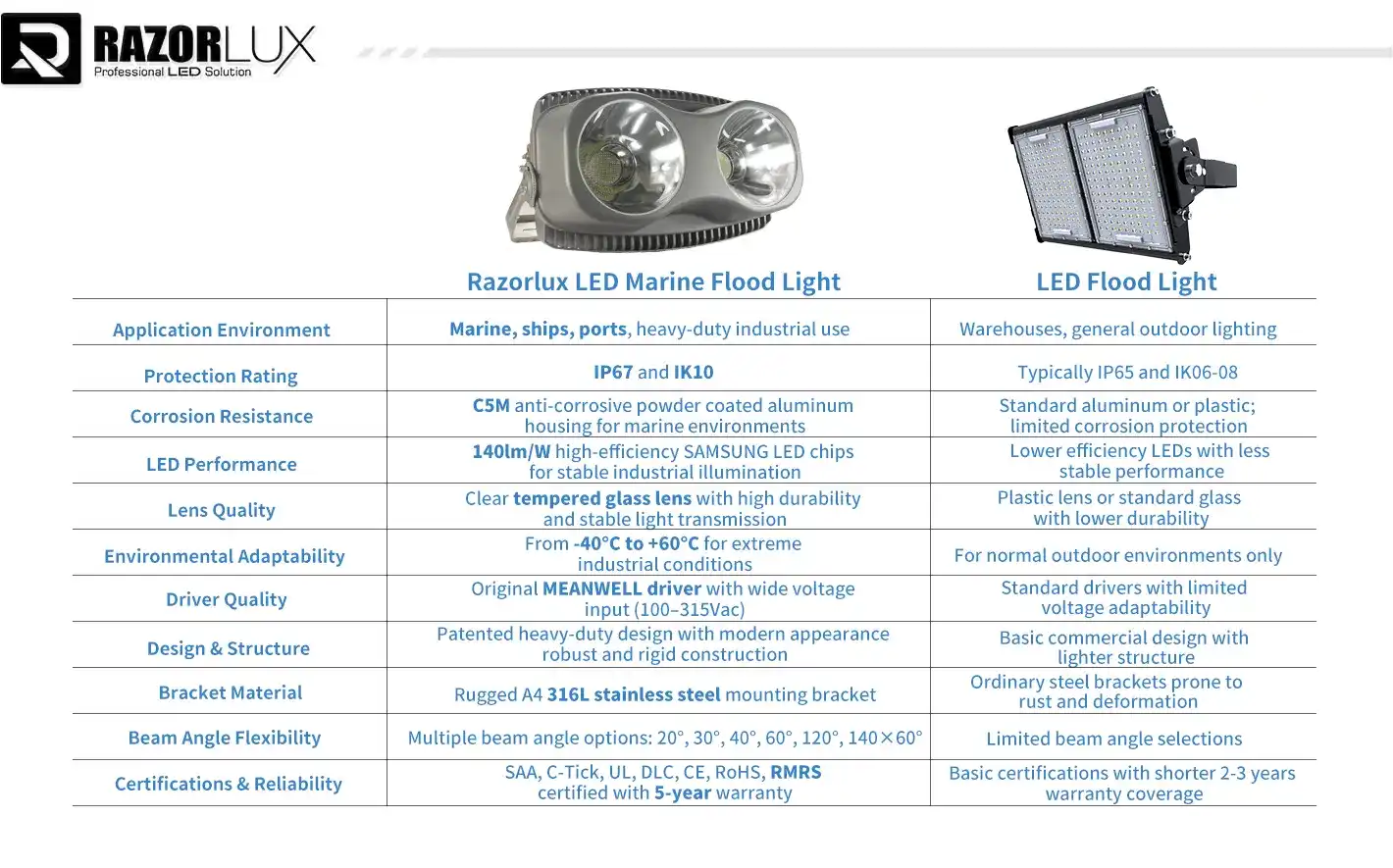
IP (Ingress Protection) grades show how resistant a device is to solid particles and water getting in. IP65 seals out dust and protects against water jets. It's good for setups that are covered or that are exposed to mild weather. IP67 can handle being submerged for a short time up to one meter, which is important for equipment that works near the coast, where heavy rain or waves could submerge it. The IK10 impact number proves that the material is resistant to 20-joule hits, which is the same as a 5-kilogram object being dropped from 40 centimeters. This means that it can withstand unexpected tool impacts or debris strikes that happen a lot in industrial settings.
Mounting Hardware Robustness
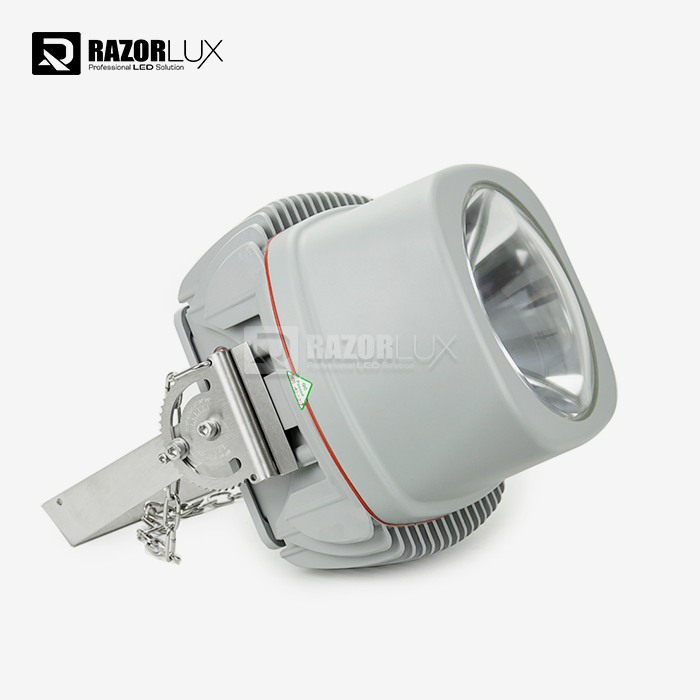
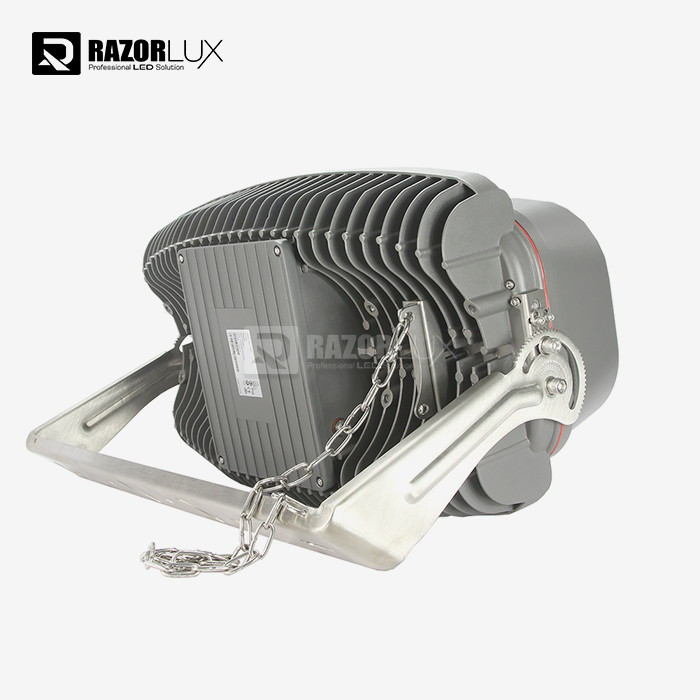
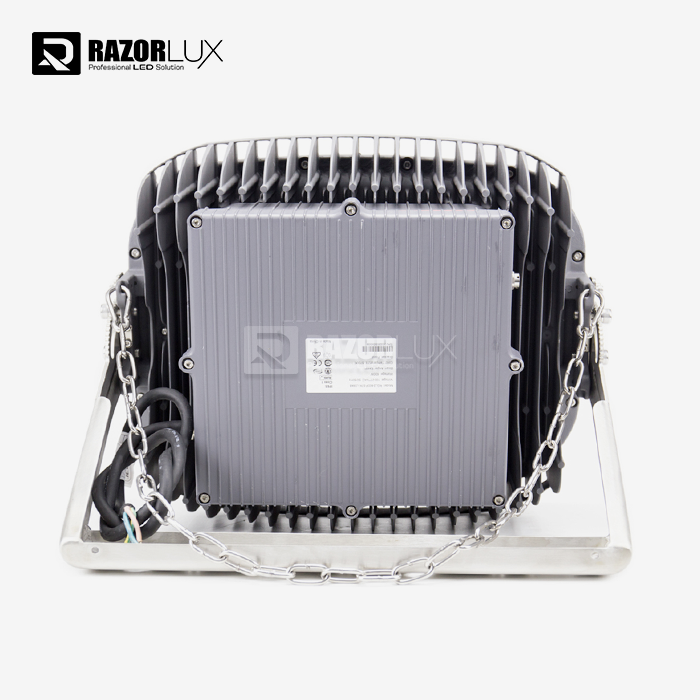
Stainless steel clamps don't rust when exposed to chemicals or salt spray, and they're strong enough to hold 10-kilogram pieces in place against wind loads and vibration. Even after years of use and many shocks, the adjustment devices must keep the positioning accuracy. Razorlux uses marine-grade 316 stainless steel fasteners in seaside settings. This makes the hardware last longer in places where regular hardware would rust in months. A good mounting design also makes it easy to change the angle without using tools. This means that repair teams can move beams around as needed without needing special tools.
Application-Specific Performance Requirements
Different industrial environments impose unique demands that influence specification selection:
| Environment | Key Challenges | Critical Specifications |
|---|---|---|
| Offshore Platforms | The wind, salt spray, and humidity | IP67, 316SS hardware, >130 lm/W |
| Steel Mills | Heat, dust, and shaking | Wide temperature range, IK10, and lenses that are sealed |
| Container Terminals | 24/7 service, scale | High lumen care, guarantee for 5 years or more |
| Mining Operations | Environments of shock and explosion | Ratings for ATEX and IECEx, stronger build |
Marine and Shipyard Environments
Lighting systems in vessels that are being built or fixed are exposed to welder sparks, grinding debris, Crane Boom Lights, and corrosive cleaning chemicals, as well as water from the environment. When glasses are sealed, contaminants can't get in and damage the reflecting surfaces, which lowers output. When chemicals come in contact with the metal housing, the powder layer protects it while keeping the thermal conductivity needed for good heat removal. When cleaning the deck, fixtures must be able to withstand direct jet contact while being exposed to high-pressure washdowns on a regular basis. This is exactly what the IP67 grade is for.
Installation Methodologies and Safety Protocols
Pre-Installation Assessment Requirements
In order to do a proper site evaluation, you need to write down the maximum mounting surface load, the electricity lines, and any possible issues that could stop the crane from moving. Structural studies show that the boom parts can handle extra weight and wind loads without making the crane less stable. Electrical planning checks to see if there is power at mounting sites and sees if any new lines need to be installed. Finding problems during installation that require changes to the design or short stops to work can be avoided with good planning.
Electrical Integration Best Practices
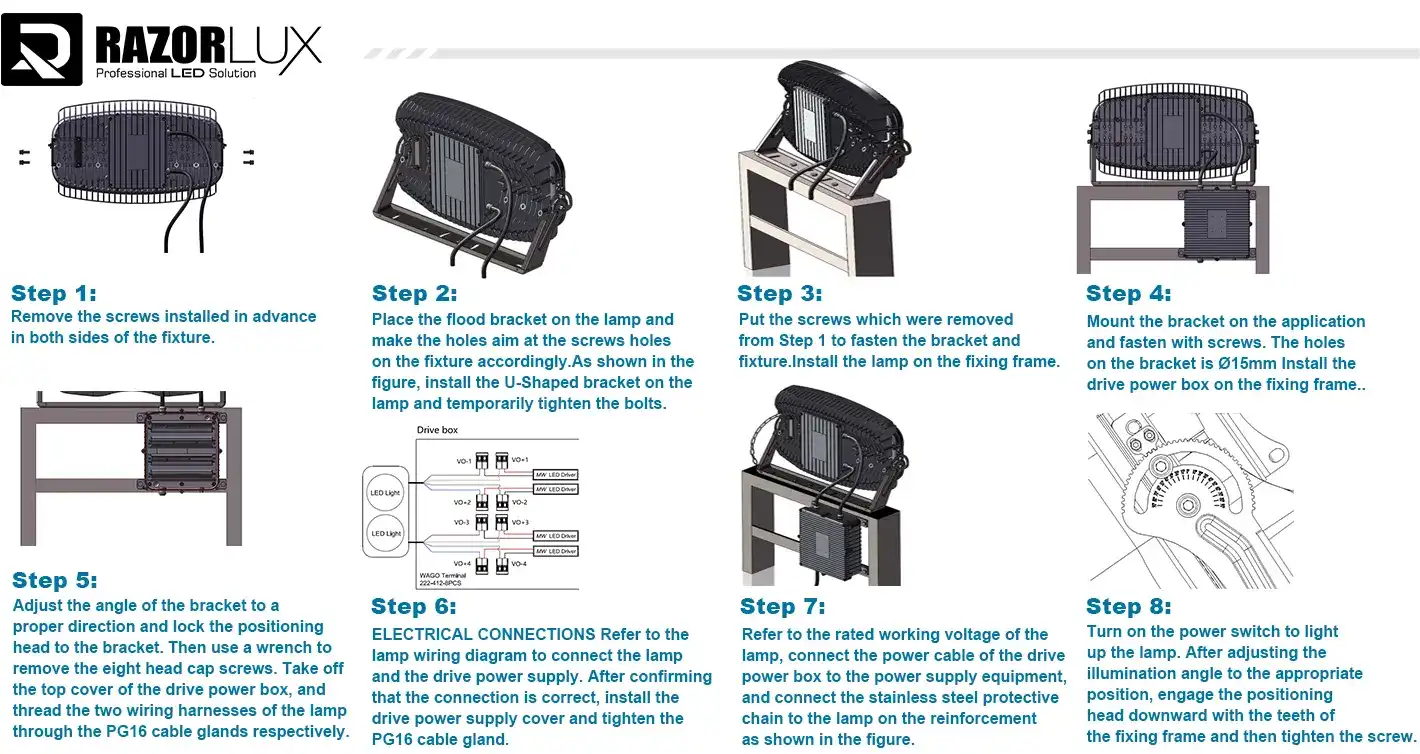
When cables are routed correctly, they are protected from damage by moving parts and can still bend when the boom is extended. With strain relief fittings, pulling forces don't get transferred to the electrical links inside the fittings. At junction points, waterproof connectors that are approved for the installation area keep water out. Grounding wires must keep paths open to crane structures so that electrical problems trip safety devices before people touch charged surfaces. These steps will protect the investment in tools and the safety of workers for as long as the system is in use.
Procurement Strategies for Long-Term Value
Total Cost of Ownership Analysis
An analysis of the total cost of ownership shows that when upkeep, energy use, and replacement costs are added in, the initial buy price is only a small part of the total costs over the product's lifetime. A piece that costs 30% more but lasts three times longer is worth more over its lifetime. High-efficiency LEDs save more energy every year, and for equipment that is used all the time, the payback period is usually less than two years. This method for analysis helps with purchasing choices that go beyond simple price comparisons to find solutions that cost the least overall.
Supplier Evaluation Criteria
Reliable makers have quality management systems that are written down and adhere to strict rules. For example, ISO 9001 approval shows that the company has set up procedures for controlling designs, tracking materials, and fixing problems. When projects need dozens of similar units to be supplied at the same time to stay on schedule, production ability is important. Customization features let you change the specs to fit your needs without having to wait for tools to be made.
| Evaluation Factor | Things to Ask | Warning Signs |
|---|---|---|
| Quality Systems | When is the ISO 9001 certification? | Not an audit background, just got certified |
| Technical Support | Promised response time? | There is no specific help contact |
| Customization | MAQ for changed specs? | Standard goods that can't be changed |
| Warranty Terms | Exclusions from coverage? | Short time frames and restricted options |
| Delivery Reliability | Rate of on-time delivery? | There is no speed data given |
Maximizing Return on Lighting Investments
Lifecycle Cost Modeling
Spreadsheet models that include energy rates, worker costs, and machine depreciation plans, Crane Boom Lights can figure out how much money will be lost over 10 years. Sensitivity analysis shows which variables have the biggest effect on results, which helps people focus on getting better prices on factors with a lot of influence. When you compare LED systems to keeping old lights in use, you can see strong business cases that support investing money. These financial projections turn technical details into choices that can be made by executives based on measurable results.
Emerging Smart Lighting Technologies
Next-generation systems have wifi settings that change the output based on how the system is being used. For example, when the system is not being used, the output will dim automatically to save energy. Predictive repair sensors watch electrical factors that show when something is about to break. This lets replacements happen before the equipment stops working. When compared to fixed-output fixtures, these features cut energy waste by 20–30% and avoid unexpected downtime through condition-based service. Early adoption positions organizations to capitalize on efficiency gains as technology matures and costs decrease.
Building Strategic Supplier Relationships
Preferred seller deals set prices for future purchases and make sure that production capability is available first during times of high demand. When makers work together, they can better understand specific operating problems, which helps them make products that meet real-world needs. Sharing information about future projects with suppliers helps them keep the right amount of goods on hand, which cuts down on the time it takes to fill purchase orders. These partnerships turn one-time purchases into long-term relationships that help both sides by making things more efficient and coming up with new ideas.
Conclusion
For heavy-duty crane uses, choosing the right lighting means finding a balance between technical efficiency, environmental resilience, and lifecycle economics. LED systems are better than older technologies in terms of how much energy they use, how long they last, and how much upkeep they need. When safety levels, thermal management, and mounting tools are properly specified, they work reliably in tough industrial settings. When you make buying choices based on a total cost analysis and a seller capability estimate, you get more value than just the initial purchase price. As operations go 24 hours a day and government rules get stricter, investing in good lighting infrastructure becomes more important for keeping buildings safe, productive, and in line with the rules.
FAQ
1. How do LED boom lights compare to halogen alternatives regarding energy consumption?
Crane Boom Lights use 60–70% less electricity than halogen versions but give off the same amount of light or more. It saves 250 watts per light when a 150W LED is used instead of a 400W incandescent. In a 10-crane facility that works 16 hours a day, every year, more than 14,000 kWh of energy is saved, which means high cost savings and fewer generator needs at remote places.
2. What installation precautions prevent damage during crane movements?
When the boom moves, the right strain relief keeps the internal connections safe from pulling forces, and a secure cable route keeps the conductors from getting worn down. Mounting brackets need to be able to handle thermal expansion without coming loose, and fixtures need to be placed so that they don't hit trolley sections or load lines when the crane moves all the way through its range of motion. Vibration-dampening washers stop the transfer of mechanical stress.
3. Can lighting specifications be customized for specialized applications?
Manufacturers that offer OEM services change the beam directions, color temperatures, and mounting arrangements to meet the needs of different applications. For custom specs, the minimum order quantity is usually between 50 and 100 units. This is done to balance the cost of the tools with the speed of production. Custom solutions solve problems that standard goods can't, which is why it's worth spending money on development for big or ongoing projects.
Partner with a Trusted Crane Boom Lights Manufacturer
Razorlux has been an expert in LED tech for more than 20 years and has certifications for all global markets. This makes us your ideal partner for heavy-duty industrial lighting solutions. Our 150W Crane Boom Lights have Samsung chips and Mean Well drivers that give it 13,200 brightness. It comes with a five-year guarantee to protect your purchase. We keep stock on hand so that we can quickly deploy it, and we also offer customization services that are specific to your business needs, like when you need special beam angles for container ports or marine-grade corrosion protection for offshore platforms. Email our technical team at sam@razorlux.com to talk about the details of your project, get full product instructions, or set up a trial sample. We help you with everything, from choosing the specifications to making sure the installation goes smoothly. This way, you can be sure that your lighting systems will work well for years to come.
References
1. Maritime Safety Administration. (2021). Illumination Standards for Shipboard Cargo Handling Operations. Technical Publication Series, Volume 47.
2. Chen, W., & Rodriguez, M. (2022). LED Thermal Management in High-Vibration Industrial Environments. Journal of Industrial Lighting Engineering, 34(2), 118-135.
3. International Crane Standards Committee. (2023). Best Practices for Auxiliary Equipment Installation on Mobile and Tower Cranes. Safety Bulletin 2023-08.
4. Peterson, L. (2020). Total Cost of Ownership Analysis for Industrial Lighting Systems. Facilities Management Quarterly, 28(4), 67-82.
5. Zhang, H., Thompson, K., & Andersen, J. (2022). Corrosion Resistance of Marine-Grade Lighting Enclosures in Salt Spray Environments. Materials Science and Engineering B, 276, 115543.
6. European Committee for Standardization. (2023). EN 60598-2-29: Particular Requirements for Luminaires for Use in Heavy Industrial Applications. Technical Standard Update.