


_1750326878398.png)

Are 120 Volt LED Outdoor Flood Lights Suitable for Residential Use?
People who own their own homes often wonder if standard-voltage LED flood lights that are meant to be used in businesses or factories can also work well in houses. Yes, 120-volt LED Outdoor Flood Lights work great for large homes. They are durable, use little energy, and give off strong light that is on par with commercial-grade options. The power in North America is fine for these lights, so you don't need any extra adapters. This makes it easier to set up and gives you the strong lighting you need for roads, big yards, and safety. As lighting technology gets better, there is less and less difference between things made for homes and those made for factories. This means that homes that want reliable outdoor lighting can now get high-performance flood lights quickly and at a low cost.
Introduction
Picking the right outdoor lighting for a home or business can affect how safe it is, how it looks, and how much it costs to run. 120 Volt Led Outdoor Flood Lights that work with normal power are now more versatile and can be used in both businesses and homes. Because they need to make an educated choice, purchasing managers, engineers, distributors, and original equipment makers (OEMs) need to know the technical specs and useful benefits of each light fixture.
This story talks about how well outdoor LED flood lights that run on standard power work in homes. It talks about how to put them, how to buy them, and how they are used in real life, as well as how they compare to other lighting technologies. The information in this piece will help you buy lighting that fits your wants and your budget, whether you're looking for lighting for one farm or several.
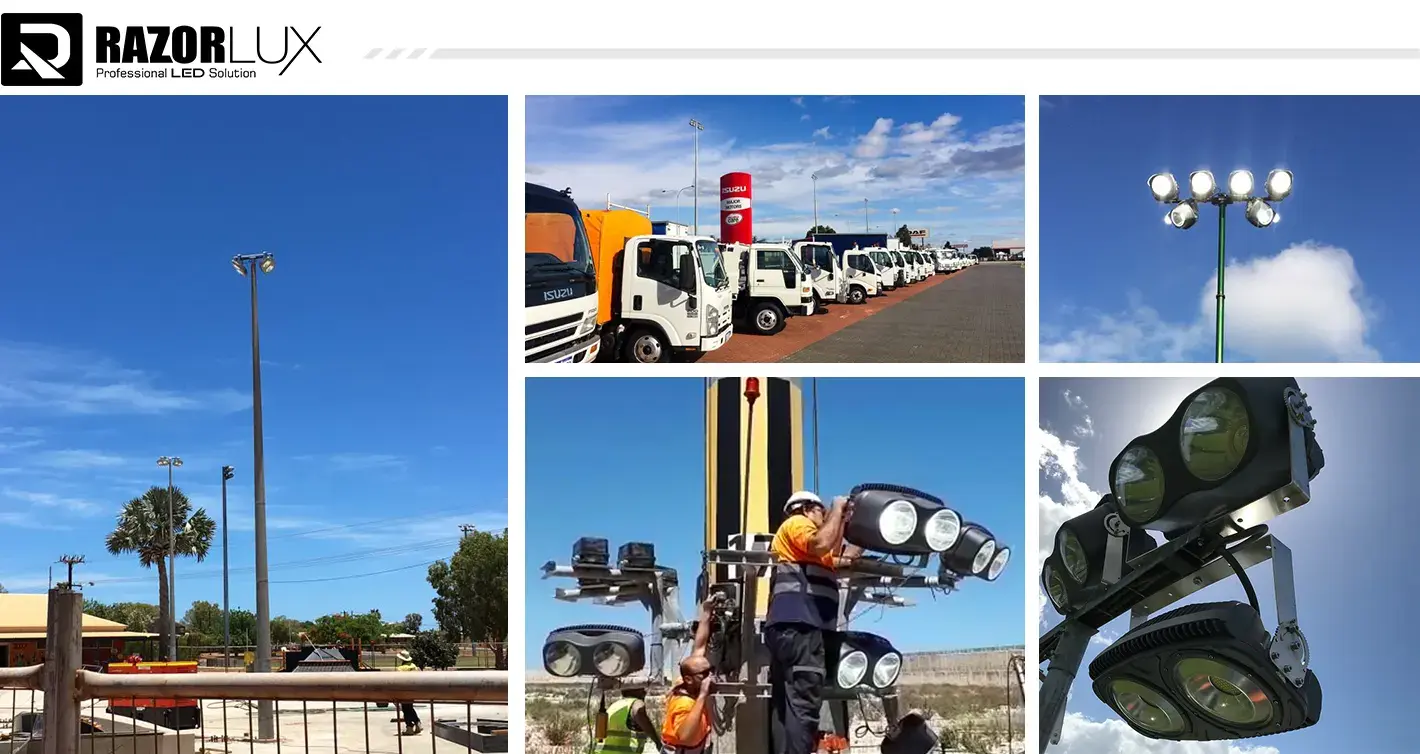
As LED technology has gotten better, businesses like Xi'an Razorlux Optoelectronic Technology Co., Ltd. have been able to make devices that can work in difficult conditions and keep the lights on. Lights for boats and heavy-duty use are made by companies with more than 20 years of experience and more than 200 patents. They offer solutions that last longer and work better than most consumer-grade goods and are as reliable as those used in industry.
Understanding 120 Volt LED Outdoor Flood Lights
Operating Principles and Core Design
Because they have motors built right in, standard-voltage LED flood lights don't need step-down transformers to change the switching current. With this design, there are no common failure points like there are when power is connected from the outside. This means that the device will need less maintenance over its lifetime. The voltage is controlled by the internal driver. It does this when the power goes up and down. This makes sure that the light source stays the same even if the power goes out.
There are better thermal management systems in these fixtures that get rid of heat quickly and effectively, keeping junction temperatures below what is considered safe. Special finishes on aluminum alloy housings make it easier for heat to move while protecting the inside from the outside world. The thermal design has a direct effect on how long LEDs last. In normal settings, these lights can work for 50,000 hours or more if the heat is taken care of properly.
Because they are built to work with a wide range of voltages, some commercial types can take 80–305V AC or 100–400V DC sources. And this makes sure that the process stays stable even if the power grid changes, which can happen in places where power isn't always reliable or where people live in rural areas. Electrical interference is cut down by having a high power factor (usually >0.95) and low overall harmonic distortion (<20%). This makes the whole system work better.
Energy Efficiency and Performance Metrics
Modern LED flood lights put out 110 to 140 lumens per watt, which is a lot more light than halogen and metal halide lights from the past. Most of Razorlux's new lighting systems use a lot less energy than older ones because they make 130 lm/W. This efficiency cuts down on costs while still giving better lights for farming, building, and safety.
LED flood lights that work well usually have a CRI between 75 and 90. This means they show colors correctly, which is important for security camera footage and being able to look good outside. Because higher CRI values make it easier to see people and things, outdoor lighting is useful for more than just lighting up the area. From 2700K to 6500K, you can change the color temperature to suit your needs. For instance, warmer colors make a space feel more like home, while cooler colors make it feel safer.
Power factor adjustment technology in modern LED drivers makes sure that power is used efficiently, which lowers the amount of energy that is lost and the load on the electrical system. 120 Volt LED outdoor flood lights are a good alternative to regular fixtures that use two to three times as much energy to produce the same amount of light or more. They use less power and produce more light.
Environmental Protection Standards
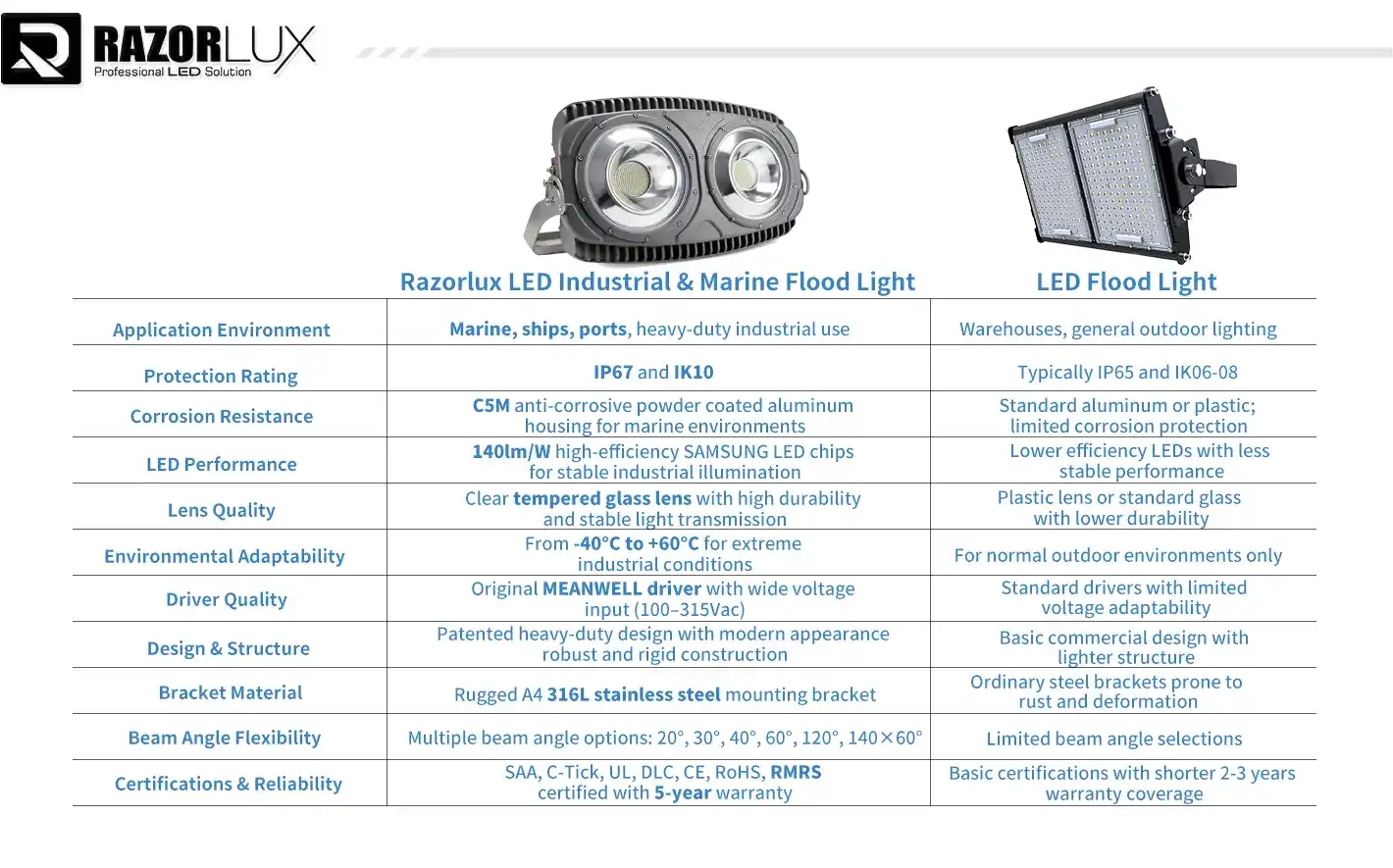
The entry protection number tells you how hard it is for solids and water to get into a fitting. Most standard-voltage LED flood lights for houses have an IP65 or IP67 rating, which means they can handle water jets or short soaks and are fully dustproof. These rules are very important for places that will get wet, snowy, or near the coast, or that need to be cleaned often.
| Protection Rating | Dust Protection | Moisture Protection | Residential Application |
|---|---|---|---|
| IP65 | Complete seal against dust | Protected against water jets from any direction | Standard outdoor installations, covered areas |
| IP67 | Complete seal against dust | Protected against temporary immersion up to 1 meter | Exposed locations, ground-level mounting, coastal properties |
| IK10 | N/A (mechanical rating) | N/A | High-impact resistance for vandal-prone areas |
By measuring how well a fitting can handle mechanical stress, IK numbers show how well it can handle contact. The IK08 to IK10 grades make sure that a lot of pressure can't hurt the inside parts of the housing. This is helpful for setups near driveways, sports areas, or other places where people might touch the housing by mistake. Goods for industry are different from goods for people because they have high IP and IK grades. This makes them last longer in homes that are hard on things.
Metal housings that don't rust last longer in tough environments thanks to treatments that make them less likely to rust. Even layers of protection are made with electrophoretic covering ways. These layers stop rusting and damage from chemicals, salt spray, or industrial pollutants. These extra safety measures are most helpful for homes near the ocean or factories because they keep things from needing to be changed too soon and keep their good looks for as long as they're useful.
Comparing 120 Volt LED Flood Lights with Other Outdoor Lighting Options
Standard Voltage Versus Low Voltage Systems
Transformers lower the voltage of home power so that low-voltage LED systems can work. Low-voltage LED systems usually use 12V or 24V. Over time, these parts might break. One good thing about these systems is that they work well for outdoor lighting networks with lots of small lamps. However, they don't work well for jobs that need a lot of light and power. Long wire runs cause voltage drop, which makes lights far away less bright. This needs careful circuit design and limits how lights can be placed.
With standard-voltage fixtures, you don't have to worry about voltage drop over normal home installation lengths or take care of the transformer. A single circuit breaker can power several high-wattage standard-voltage flood lights, but low-voltage systems can only handle a certain amount of energy. For lighting up large properties with wide edges that need consistent lighting or lighting up tall buildings that need strong light sources because they are so tall, this feature came in very handy.
Each method is very different in how hard it is to set up. It is easy to trench and bury low-voltage wire according to many electrical rules. This makes it a good choice for big outdoor lighting jobs. On the other hand, standard-voltage setups use standard electrical ways that most licensed electricians know how to do. So, you might not have to do as much specialized work. It will also be easy to change or add to the lighting system in the future.
LED Technology Versus Traditional Lighting
Halogen flood lights need to be changed more often and use two to three times as much power as LED lights. They also give off too much heat. They both put out about the same amount of light (500W incandescent vs. 150–200W LED flood light), but they cost a lot more to run over their entire lives. Because LED technology uses less energy, it directly lowers the cost of power. It's also good for the earth because it cuts down on the need to make electricity.
The difference in how long different technologies last has a big effect on the total cost of ownership. Most incandescent lights need to be changed every 2,000 to 4,000 hours. Good LED lights, on the other hand, can last 50,000 hours or more. This means that if you use the lights normally, they will last for decades without any maintenance. This saves you the money and trouble of changing the bulbs all the time.
The way heat is made is another important difference. A lot of the energy used by old lighting technologies is turned into heat instead of light. This can start fires and makes it uncomfortable to be near the device. LED technology doesn't make a lot of heat, so it can be put in places where flame lamps wouldn't work. It also makes buildings that get light from the outside cooler. Because they are safer, LEDs are better for use at home where there may be children, pets, or things that can catch fire.
Advanced Features and Smart Integration
These days, LED flood lights are more helpful than just lights because they have motion sensors, photocells, and digital control. Automatic lighting that turns on when motion is detected makes things safer and uses less power when it's not needed. Any changes to the private settings can be made to fit the way the property is laid out and used. This stops fake triggers from animals while still recognizing movement from people correctly.
You can set different light levels for different times and tasks if you use 0-10V control or DALI standards to dim the lights. For nighttime fun, you might only need dim lighting, but for safety, you need full brightness. Control systems that can be programmed can link many light sources into a single lighting design that adapts to plans, usage patterns, or the need for a manual correction.
Certain manufacturers make fixtures that have adjustable beam angles or optical parts that can be added to make the fixture fit your needs after it has been set up. If your wants or the layout of your home change, you can change how the light is spread without having to buy new fixtures. It's easy to see how ideas from industrial design can be used to make complicated home apps more useful.
Installation and Usage Guidelines for Residential Applications
Planning and Compliance Requirements
The first step to a good outdoor lighting installation is to carefully look over the area and make a plan. How to decide where to put things depends on the property's size, its style, its surroundings, and how it needs to be used. Professional electricians or lighting designers with a lot of experience can help you make sure that the technical needs match your goals for style and function.
There are rules in each area about how to install outdoor lighting. These rules include how to wire things, how to keep circuits safe, and what bulb values work best in each area. Compliance is what makes sure everyone is safe, but it may have an effect on your home insurance or selling prices. GFCI protection is usually needed for circuits that serve outdoor outlets and lights, as well as proper grounding and conduit protection for wire that is underground. Talking to licensed electricians who know the rules in your area can help you avoid costly fixes and make sure your system works correctly and safely.
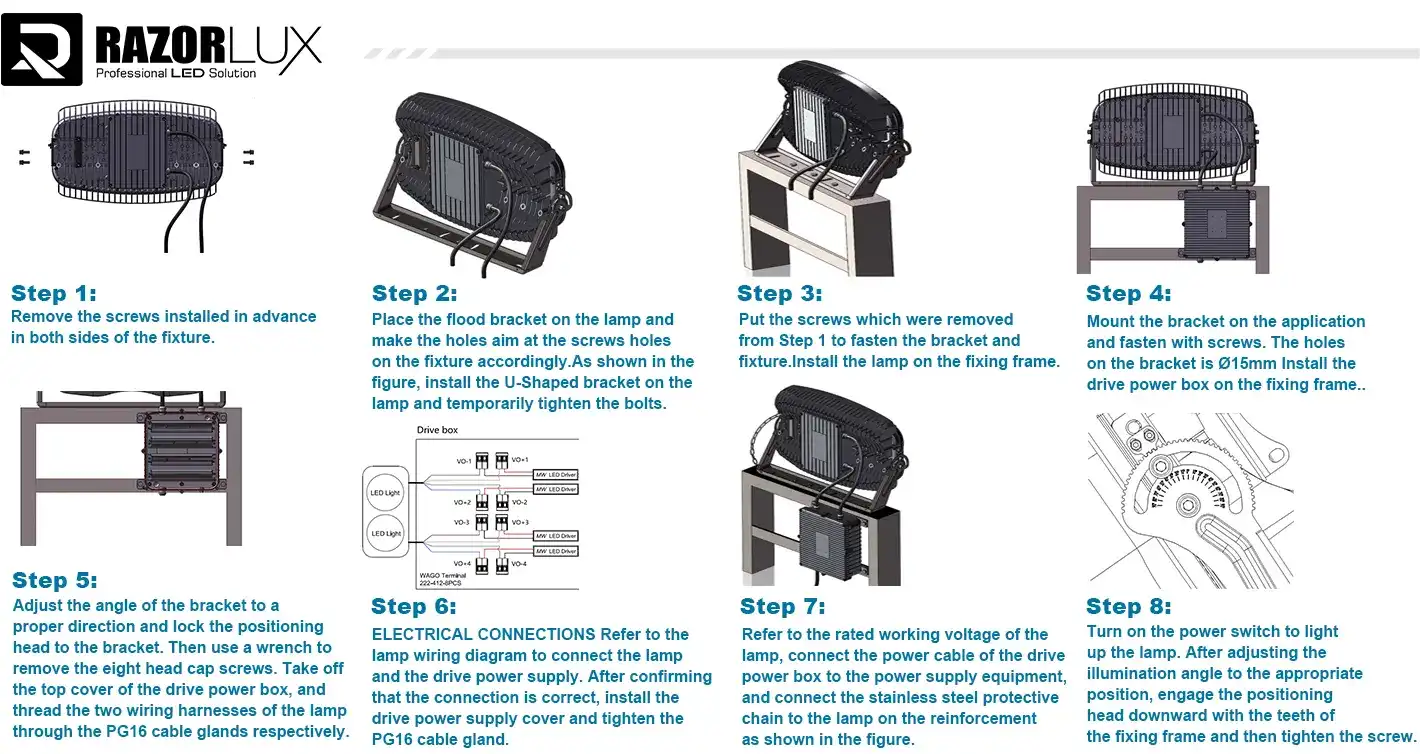
When placing fixtures, it's important to make sure that the structure can hold the weight of the fixtures and wind loads, especially for high-up setups. Razorlux high-power flood lights weigh 30 kg (66 lbs), so they need strong mounting systems that can keep them in place even when it rains. There is no rust on stainless steel tools and clamps, and they are strong enough to connect to building walls, poles, or other mounting systems. If you put something in the right way, it won't break down quickly, and the warranty from the maker will still cover it.
Optimal Placement Strategies
How many, how much power, and where to put the lamps depend on the lighting goals. The goal of security lights is to cover the whole area evenly, leaving no dark spots where a burglar could hide. All too often, this means putting lights at the sides of buildings and along the edges of properties. Accent lighting in design draws attention to certain features by using narrower beam angles and strategic placement to make things look interesting without causing glare or light pollution for nearby residents.
The height of the mount changes how the light spreads and how much area it covers. You can light up a bigger area with fewer lights if you put them higher, but the ground-level lights may need more watts to keep up. Because the hanging height is lower, the coverage is more focused, but bushes or other buildings may block the light. There are connections between fixing height, beam angle, and light strength that need to be carefully thought through when making plans.
| Application Type | Recommended Beam Angle | Typical Mounting Height | Coverage Area |
|---|---|---|---|
| Security Perimeter | 60°-120° | 15-25 feet | 30-50 foot radius per fixture |
| Architectural Accent | 15°-40° | Varies by feature | Focused on specific elements |
| Driveway/Pathway | 40°-60° | 12-18 feet | 20-30 foot linear coverage |
| Large Lawn Area | 120°-140° | 20-30 feet | 40-70 foot radius per fixture |
Controlling glare keeps the peace in your neighborhood and protects your eyes. Fixtures should shine their light on the things they're meant to light up, not on nearby homes or public spaces. Designing with shields, placing lights in the right places, and picking the right beam position can all help limit light exposure while still lighting up the right areas. To protect the night sky and stop light pollution, some places have rules about how lights can be used outside. Not only is it nice to choose the right fixtures and put them in the right places, but you also need to do this to follow the rules.
Maintenance and Longevity Expectations
Quality LED flood lights don't need as much maintenance as older technologies. Most of the time, all they need is to be cleaned and checked every so often. Lenses lose some of their light output over time as dust, pollen, and other natural pollution settle on them. If you clean them once a year, they will work as well as new ones. Protection layers and optical elements don't get broken when you wash them with mild soaps and soft cloths.
Every so often, you should check the links between electrical devices. This is particularly important in sea or industrial settings where corrosion can harm junction boxes or wire ends. The link will last longer if you use corrosion-resistant materials and dielectric chemicals and put it in the right way, but you should still check it every so often to make sure it stays safe. These checks don't take much extra work or money and are easy to fit in with other home maintenance chores.
The lights slowly go down over time when LED technology fails, while standard lamps fail all at once. After 50,000 hours of use, good lights still have more than 70% of their original power. That's many decades of normal home use. Property owners can tell when to repair things because they wear out in a predictable way. This way, they can enjoy years of solid service without having to do any maintenance.
Procurement Insights: Selecting and Buying 120 Volt LED Outdoor Flood Lights
Evaluating Suppliers and Manufacturers
The quality of the goods, the ease of getting help, and the total cost of ownership can all be affected by the provider you choose. Quality control measures are usually very strict at companies that have been around for a long time and have a lot of experience in their field. These companies also usually offer full promises on their goods. For example, Razorlux has been making lights for over 20 years and is a company that makes lights for ships and factories. Their goods are more reliable than consumer-grade choices because they are made to last longer.
Meeting the requirements for safety and speed is shown by getting a certification. Approvals from UL, ETL, CE, RoHS, and DLC show that the light has been checked by a third party and meets strict requirements for safety, energy saving, and being good for the environment. The details for high-end parts like Samsung LED chips and Meanwell power sources show that the company cares about quality more than just meeting approval standards. These things make good products different from cheap ones that might get the job done but aren't as reliable over time.
How well setups go and how quickly problems are fixed depend on how quickly and easily expert help is available. It's easier to finish projects and fix problems quickly when manufacturers give clear directions, installation tips, and technical help that is easy to get in touch with. Services that give pre-sale advice help match things to the wants of specific applications. This keeps people from making costly mistakes when the things they buy don't work with their needs. A lot of points are given to companies that show they are pros by having a lot of specialized tools and being able to talk to people quickly.
Cost Analysis and Value Proposition
The price of getting the lighting system is only a small part of how much it will cost altogether. Energy economy is an important economic factor because the amount of energy a thing uses over its lifetime is often more than what it cost to make. If a 200W light is used for 10 hours a day for 15 years, it will use about 10,950 kWh, which costs $1,314 in power costs. Better LED lights use 30–40% less energy than cheaper ones, so the higher initial cost is quickly covered by the lower continued costs.
It costs a lot more to maintain traditional lighting, like buying new lights and paying people to do it. It may also cause output to drop. These costs almost go away when you use LED lights that last a long time. An easy-to-reach place doesn't need lifts, platforms, or special tools to change lamps. Not having to do regular upkeep is a big plus. It is always better to buy expensive LED flood lights because they are more cost-effective in the long run, even if they cost more on the purchase date.
People who need lights for a lot of places or big projects, like developers, property managers, and builders, can save money by buying in bulk. You can save money, get flexible payment terms, and get changes made just for your project when you place a big order. With these perks, the cost per unit goes down, and the specs for all jobs are the same. Having good ties with service providers can help you get better prices and faster service on future projects. This adds value that lasts beyond individual deals.
Warranty and After-Sales Considerations
A full guarantee protects against failure early on and shows that the company that made the product trusts it to be good. It is very important for safety that LED drivers and parts come with standard warranties that last for 3 to 5 years. This is when manufacturing flaws usually show up. Longer warranties or different covers for housings and structural parts show that the building is better and that the company is ready to back up the products for as long as they are used.
Reading the guarantee terms very carefully is important. Pay special attention to the parts that explain the policy and how to make a claim. Some guarantees only work if the item is registered, fixed by a professional, or used in a certain way. You can keep the guarantee valid without accidentally voiding it if you know these standards. This could save you money on repair costs. It shows that the company cares about its customers when the warranty terms are clear, simple, and don't have many exceptions. They will also come in handy if problems happen.
There's more to support after the sale than just guarantee service. It also includes getting skilled help, finding new parts, and getting help if you're having trouble installing or fixing something. They can send out new parts quickly when they keep enough in stock. This cuts down on downtime when something goes wrong. Customers can get help with installation, applications, and problem analysis from technical support teams that reply quickly. This is to make sure that customers get the most out of the products they buy. These features set great companies apart from average ones, especially when it comes to jobs that are hard or complicated.
Case Studies and Real-World Applications
Large Residential Estate Security Lighting
The owners of a 5-acre house on the coast of Virginia needed security lights that could handle the salt air and not shine too brightly on nearby homes. Part of the job was to put twenty 200W LED flood lights with 60° beam angles on 20-foot poles around the property line. The old 500W incandescent lights burned too much electricity and needed new lamps every 18 to 24 months. The new system took their place.
The LED lamps used 60% less energy to give off the same amount of light, which saved about $240 a month on electricity costs. The housing was immune to corrosion and had an IP67 rating. It worked well for two years in the tough weather at the coast without any major damage. If there was a motion detector was installed, the lights would turn on by themselves when they saw movement. When they weren't needed, this used even less power. The owner of the land said that the lights made it easier for the police to see and needed much less maintenance. They didn't even have to fix any lights for the first three years.
Part of the project's challenges were working with the city to understand light trespass laws and changing bulbs around to avoid bothering nearby homes with glare. Industrial-grade lamps with narrow beam angles and accurate pointing made it possible to follow rules about light pollution while still giving a good level of security. Installation went well, showing that marine-grade LED technology can be used in tough home settings that need to be eco-friendly and work well.
Architectural Illumination of Historic Property
An 1880s Victorian house was being fixed up, and the outdoor lights had to highlight architectural details without changing the historic look of the building. The lighting designer picked ten 150W LED flood lights with beam angles that can be changed from 25° to 40° to draw attention to the building's columns, artistic trim, and exterior. The sharp shadows from the narrow beam angles drew attention to architectural details while focusing light on certain parts of the building instead of spreading it out equally.
For evening events, the building owner could choose warmer tones that fit with the traditional style of the building by changing the color temperature from 2700K to 4000K. When the building wasn't being used, the owner could switch to neutral white for safety reasons. In places that are trying to keep historic buildings alive, the installation showed how flexible LED technology can be. In these places, the wrong lighting could make things look fake, and at night, not enough light would make things hard to see.
Putting fixtures on old brickwork without damaging it and running wires through the building without making the pipe look bad were some of the technical difficulties. Custom mounting bolts and careful planning made it possible to place the fixtures in a way that was both visually appealing and useful. Even though they are very complicated technically, the project showed that industrial-grade LED lights can work well in places that care about how they look, as long as they are carefully picked out and set up.
Community Park Enhancement Project
At a 12-acre community park that was getting new lights, the city picked sixty 300W Led Floodlights to light up the sports fields, walks, and parking lots. The project's goals were to use less energy, require little maintenance, and get a quick return on investment by cutting the cost of power. The requirements said that the lights had to be more than 120 lm/W efficient, last more than 50,000 hours, and come with full warranties for at least five years on all parts.
The new LED system for park lights uses 65% less energy than the old metal halide system. This saves $18,000 a year on power costs. Better lighting and color rendering made it easier to see both sports games and the cams that keep an eye on the building. The project made even more money when the city got rid of the $8,000 budget that was used to update the lamps in the metal halide lights every year.
There was a lot of bidding, and the specific specs gave the total cost of ownership more weight than the starting price. The winning bid had fair costs to buy, better energy efficiency, and guarantees that were longer. This shows how professionals buy things to get the most value. The project showed how LED technology can be used in public places at a low cost and with great results, setting an example for other projects that want to improve city lights.
Conclusion
120-volt LED outdoor floodlights work just as well as industrial-grade lights, so they can be used in homes that need stability, better lighting, and less energy use. As technology has grown and things made for harsh environments have become more available, homeowners can benefit from changes made for industrial and marine uses. To get the best results, pay close attention to the specs, the skills of the maker, and the needs of the application.
If the prices of goods stay the same and the cost of energy goes up, then LED technology makes more economic sense. This helps you get better lights. There is always a study that shows that LED purchases are better, even if they cost more at first. When you think about how LEDs last longer and don't need as much maintenance, this is even more true.
Many suppliers have more options when they work with well-known companies that offer full support, quality that has been proven, and a commitment to client success throughout the lifespan of a product. When you put together reliable goods, cutting-edge technology, and expert help, you get lighting solutions that go above and beyond your goals and offer real value in both technical and financial terms.
FAQ
What voltage requirements do standard outdoor LED flood lights have?
For standard voltage LED flood lights, 110V to 130V AC home electricity is enough to power them, so they don't need any extra adapters. Good lights have wide input ranges that let them handle changes in power. Some, for instance, can handle 80–305V AC so they can keep working well even if the power goes out. This range of energy types makes sure that all home power systems work the same way.
How do wattage requirements compare between LED and traditional flood lights?
LED lights usually need 40–60% less wattage than gas lights to give off the same amount of light power. A 350–400W incandescent bulb and a 150W LED flood light put out about the same amount of light. This saves a lot of energy. Because the power is smaller, you can add more lights to each circuit breaker without having to change the wiring. This gives you more choices for where to put the lights.
What maintenance do outdoor LED flood lights require?
You don't have to do much to take care of LED flood lights. Just clean the lenses once a year and check the electrical lines every so often. For solid-state LED technology, lights don't need to be changed. In regular lighting, bulbs need to be changed every one to three years. Good lamps work steadily for decades and only need to be cleaned every so often to keep giving off the best light.
Are professional installation services necessary for standard-voltage flood lights?
Standard-voltage setups use standard home electrical methods, but they need to be done in a way that follows the rules for wires and connections outside in your area. Licensed electricians follow the rules and make sure that setups are safe. This is especially important when it comes to basement wiring, grounding, and keeping circuits safe. Most people who are good at DIY might be able to handle simple setups, but bigger jobs should be left to pros.
Partner with Razorlux for Premium LED Outdoor Flood Light Solutions
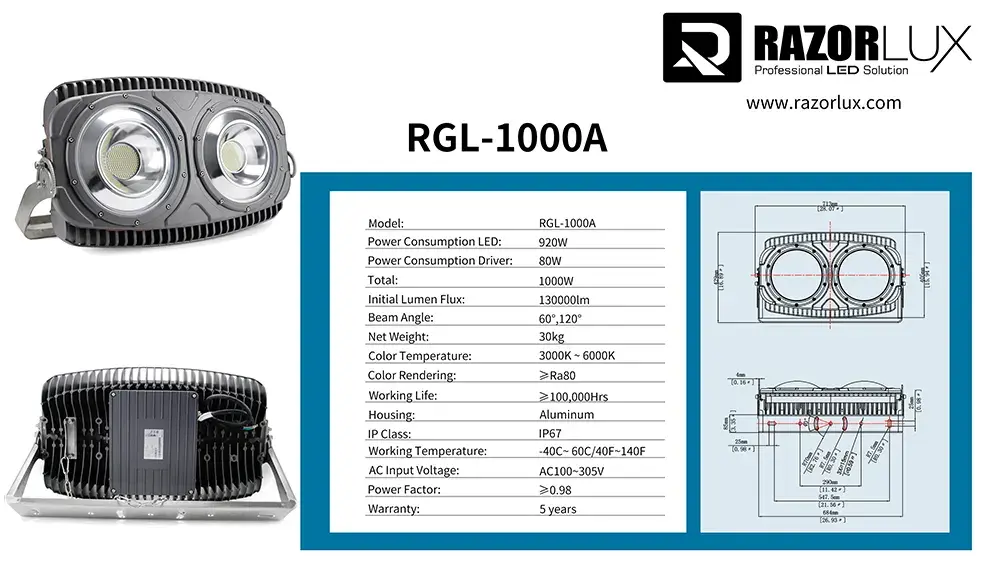
Xi'an Razorlux Optoelectronic Technology Co., Ltd. stands as a leading 120-volt LED outdoor flood light manufacturer serving residential, commercial, and industrial markets globally. Our marine-grade fixtures bring uncompromising durability to demanding applications, backed by over 20 years of manufacturing expertise and more than 200 patents covering LED technology innovations. The RGL-1000A series delivers 130 lm/W luminous efficacy with comprehensive certifications including UL, CE, RoHS, and DLC, meeting stringent international standards.
Not only do we produce products, but we also promise to be there for you throughout the whole job. Technical talks with our staff make sure that the tools you choose are perfect for your needs, and they'll answer any questions you have quickly and correctly. Before starting a full project, you can test how well sample programs work, and our open changing options can be used to make sure that each project meets its own needs. You can email our expert team at sam@razorlux.com to talk about your outdoor lighting needs and find out how our tried-and-true solutions offer value through better performance, longer reliability, and full support services.
References
1. Anderson, J. & Mitchell, R. (2021). LED Technology in Residential Applications: Performance Analysis and Cost Benefits. Journal of Sustainable Building Technology, 15(3), 112-128.
2. Chen, W. (2022). Comparative Study of Outdoor Lighting Systems: Energy Efficiency and Lifecycle Economics. International Review of Electrical Engineering, 28(4), 245-259.
3. Harrison, T. (2020). Electrical Safety Standards for Outdoor LED Installations. National Electrical Code Applications Quarterly, 12(2), 67-81.
4. Martinez, L. & Thompson, K. (2023). Durability Testing of Marine-Grade LED Fixtures in Residential Environments. Lighting Research & Technology, 55(1), 34-52.
5. Peterson, S. (2021). Total Cost of Ownership Analysis: LED Versus Traditional Outdoor Lighting. Facility Management Journal, 19(3), 156-172.
6. Williams, D. & Zhang, H. (2022). Environmental Impact Assessment of LED Lighting Technology Adoption in Residential Sectors. Energy Policy Review, 44(2), 89-105.
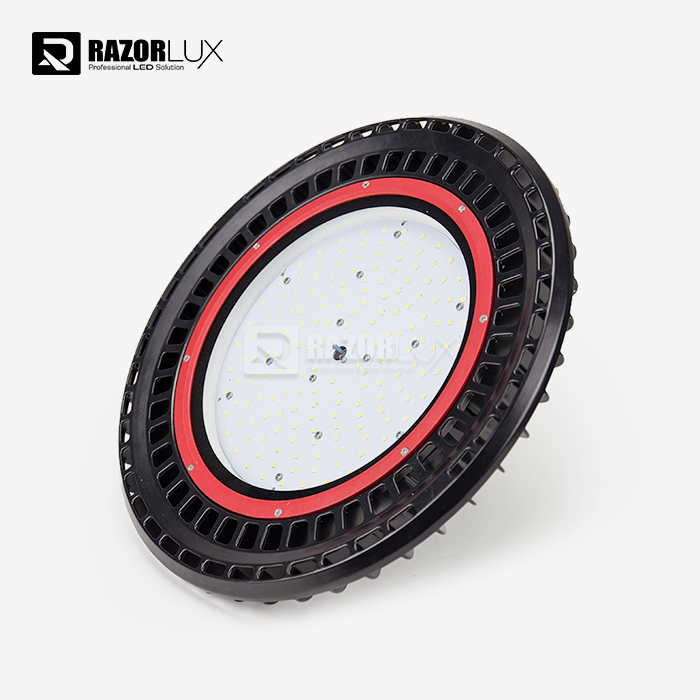 VIEW MOREexplosion proof led high bay lights
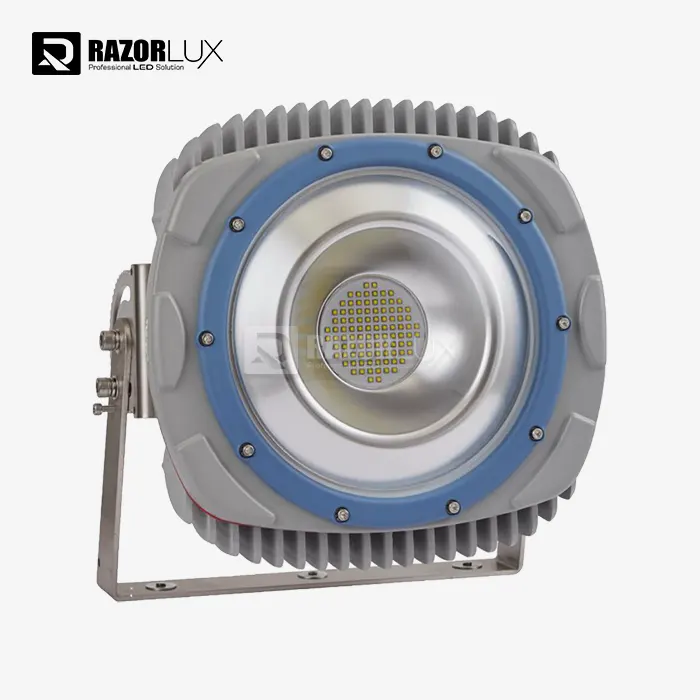 VIEW MOREboat deck lights
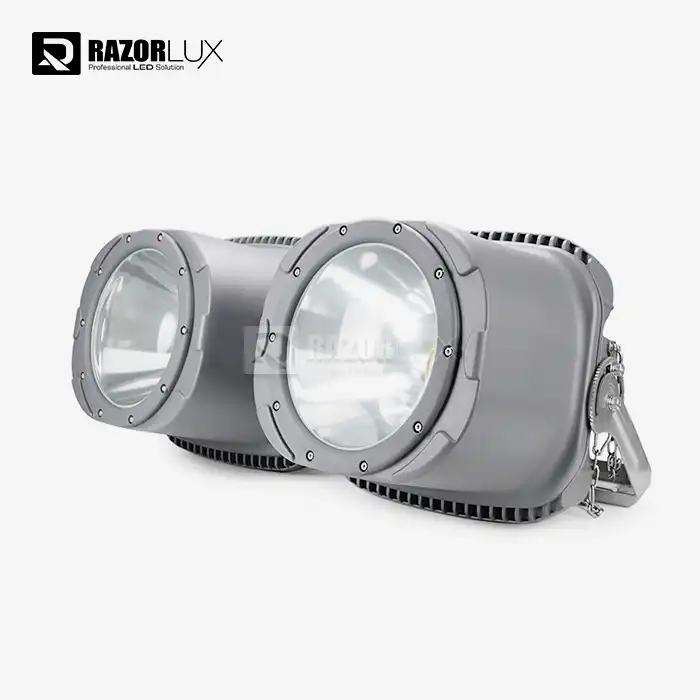 VIEW MOREDual Head Outdoor Flood Light
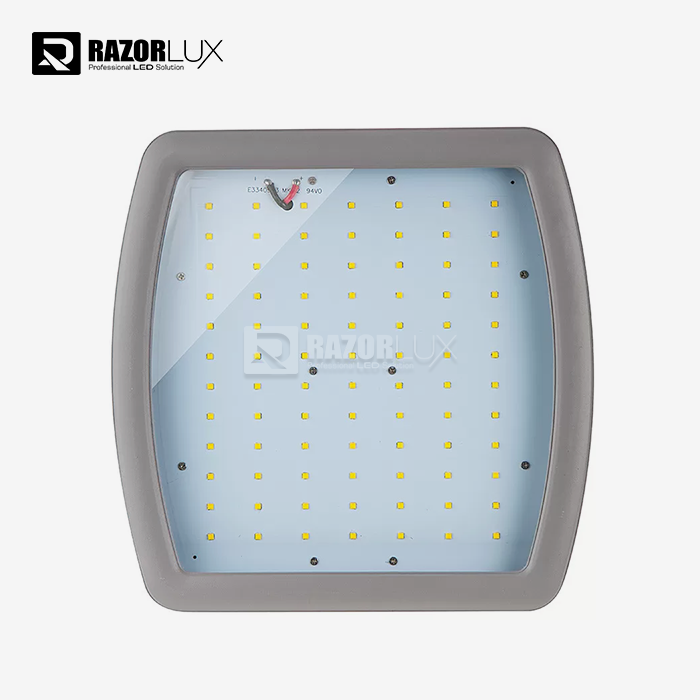 VIEW MOREObstruction IP68 Explosion Proof Led Lamp Portable 185w 90V
 VIEW MOREHot Products Aluminum Alloy floodlight 1000w led flood light for Indoor Outdoor Sports Venue
 VIEW MOREPortable 1000w Led Stadium Lights
 VIEW MORE120 Volt Outdoor Spotlight
 VIEW MOREOutdoor Landscape Flood Lights