

_1750326878398.png)

Best Layout Design for LED Stadium Flood Lights Explained
To get the best setup for led stadium flood lights when lighting up big sports arenas, you need to think carefully about how to make the lighting even, save energy, and meet broadcast quality standards. To get rid of shadows and glare for both athletes and fans, the best plan design combines light placement, beam angles, and mounting heights. Modern LED systems work better because they have better vision control and better heat management, which makes them effective in harsh weather conditions. This guide talks about tried-and-true ways to get the most out of your stadium lighting budget by planning the layout smartly and choosing the right source.
Understanding LED Stadium Flood Light Layouts: Key Concepts and Benefits
With the help of semiconductor technology, stadium lighting has changed a lot. The switch from halogen and metal halide systems to LED solutions is more than just changing lamps; it changes the way we plan lighting for sports events in a basic way.
Advanced Semiconductor Technology in Sports Lighting
In LED technology, semiconductor chips directly turn electrical energy into visible light while making very little heat. LEDs don't need to warm up before they can be used, unlike older technologies that use wires or gas to light them. This feature is especially useful for places that host a lot of events because the lighting needs to be able to adapt quickly to new needs. Because LED output can be directed, designers can put light exactly where it's needed, cutting down on the amount of light that goes beyond the playing area that is lost.
Energy Efficiency and Operational Savings
Modern lighting systems for stadiums get more than 130 lumens per watt of light, which means they use about 70% less energy than older metal halide systems. These gains in efficiency add up over time, since LED systems can keep working for at least 50,000 hours before they need to be replaced. In normal situations, light fixtures that are used for 3,000 hours a year should last longer than 16 years in buildings. Because less power is being used, energy costs go down and cooling loads go down in protected buildings, which saves money on costs other than lights.
Enhancing Uniformity and Visual Experience
When plans are set up correctly, light is spread evenly across playing areas. This gets rid of the dark spots and hot spots that hurt player performance and fan pleasure. The link between the lowest and highest levels of light has a direct effect on both eye health and safety. Uniformity values of 0.7 or higher are usually what professional sports sites aim for. This way, players can keep track of moving objects without having to change to different levels of light. Fans can see clearly from any place because the lighting is always the same, and television cameras can record the action without having to worry about exposure issues.
Essential Components and Types of LED Stadium Flood Light Layouts
Creating effective stadium illumination requires understanding how individual fixtures work together as an integrated system. Each component plays a specific role in achieving performance objectives while maintaining operational efficiency.
Beam Angle Selection and Optical Control
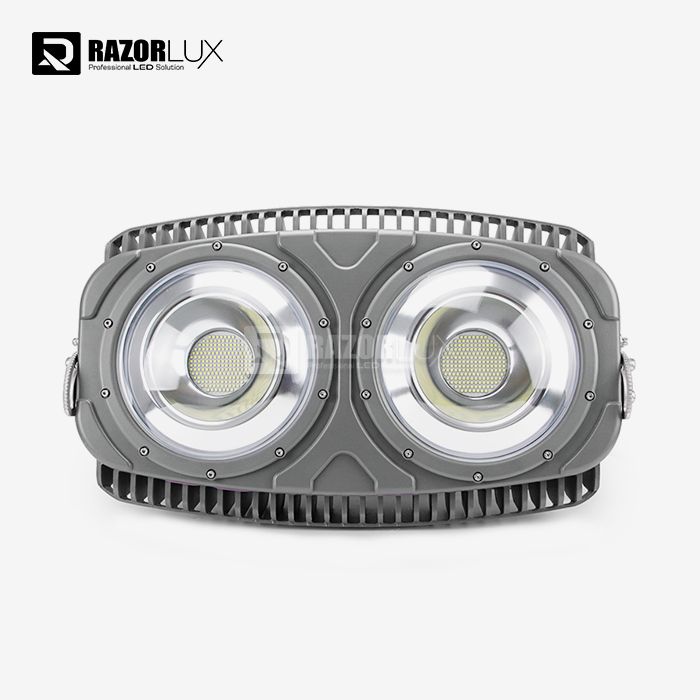
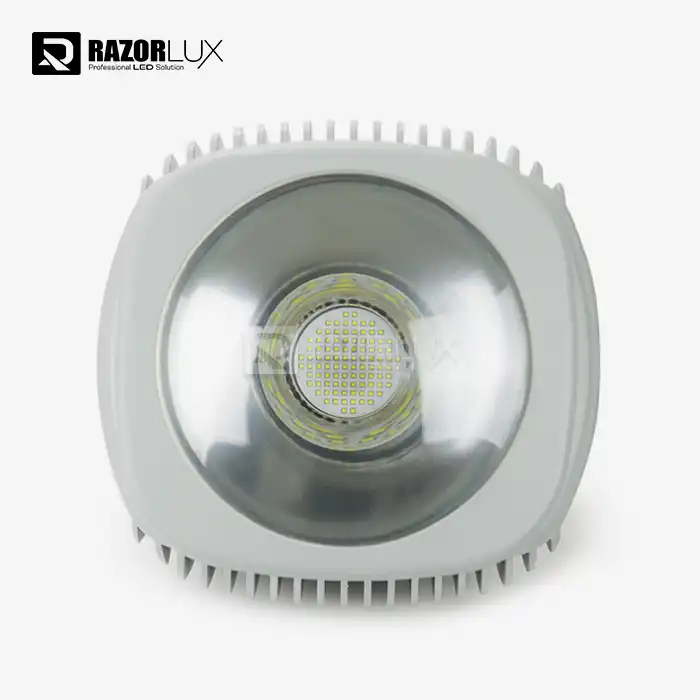
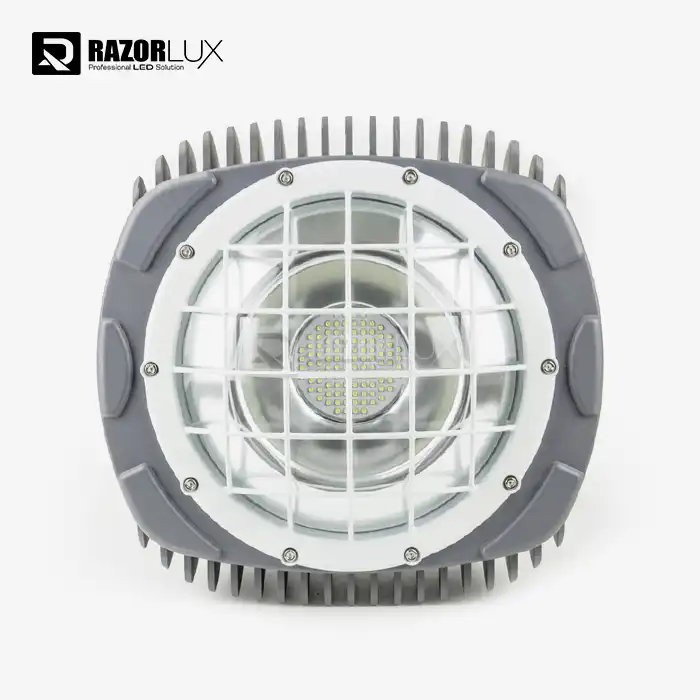
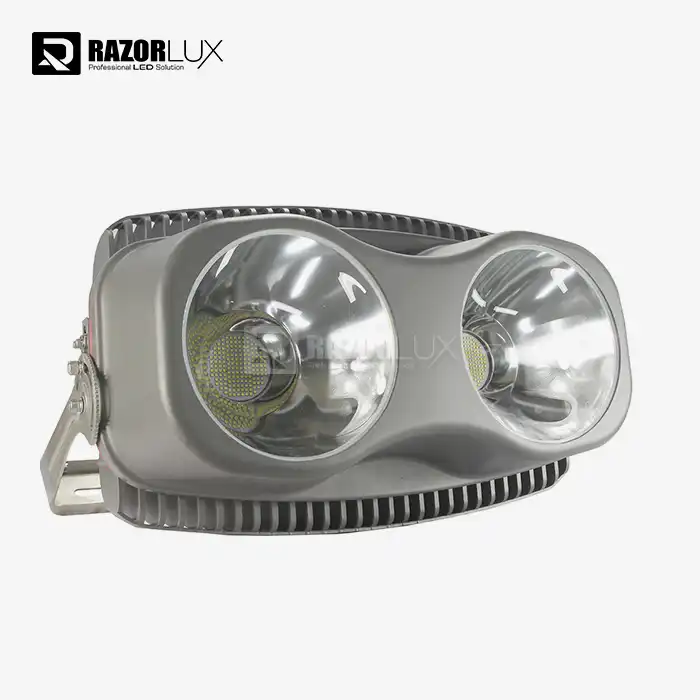
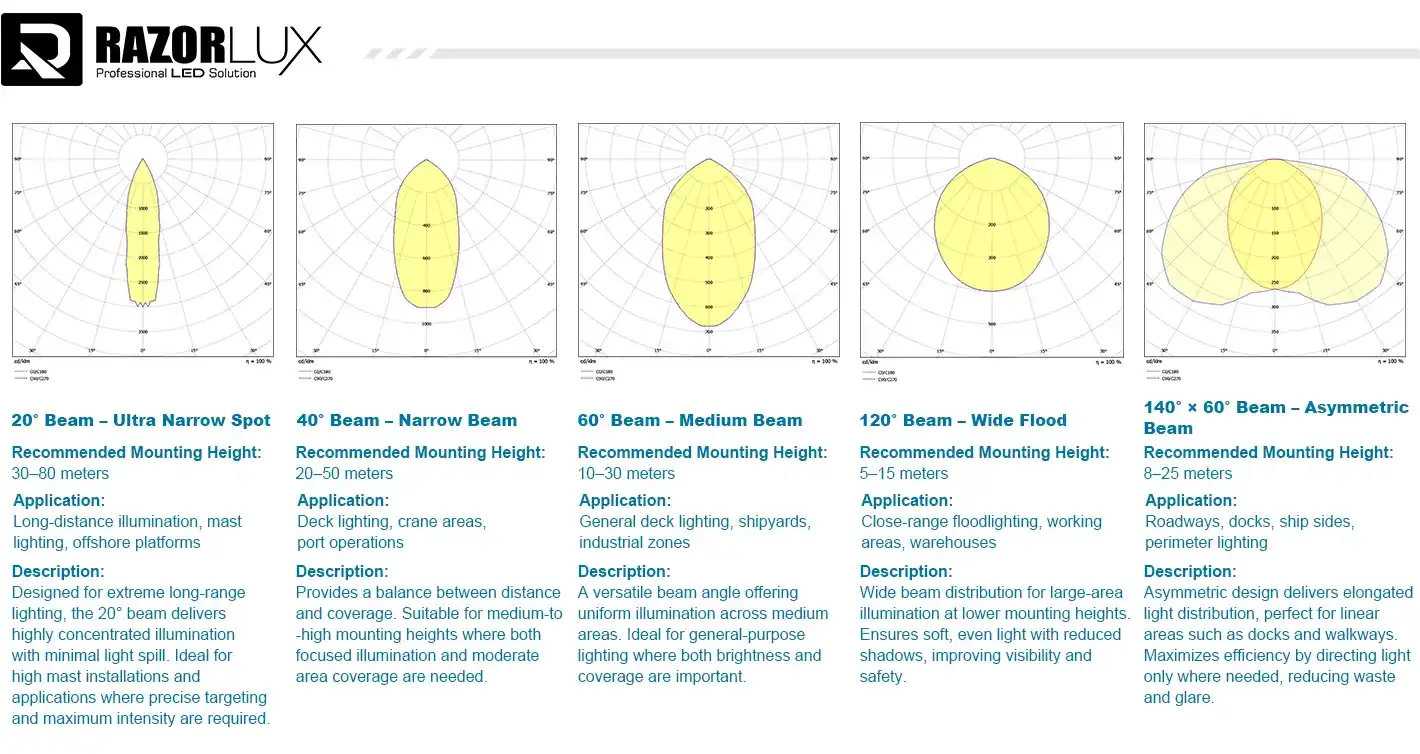
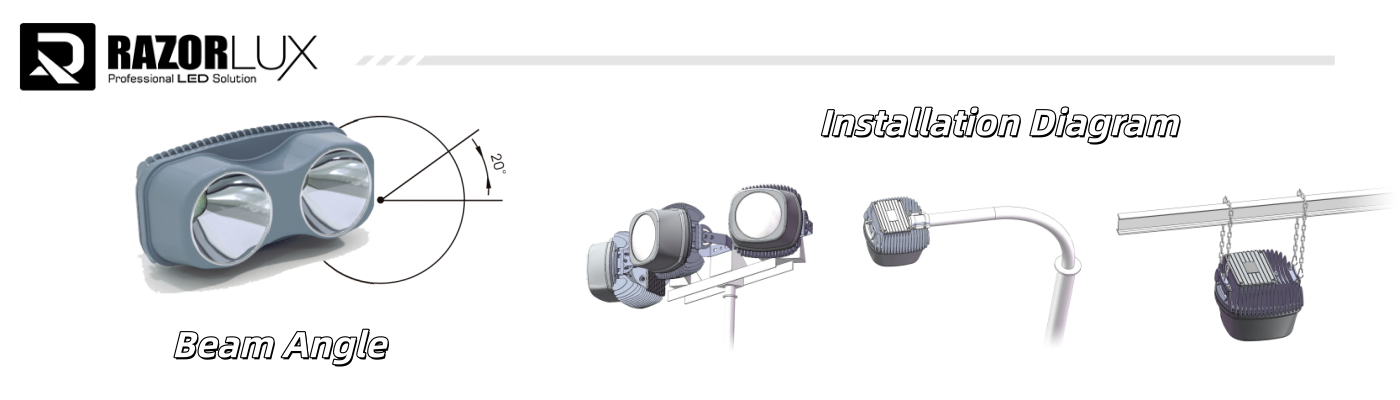
Beam angles, which range from 15 degrees for narrow spotlights to 140 degrees for wide floodlights, show how the light spreads from each device. Because they have narrow beams that shine light over long distances with little spread, they can be mounted far away from game areas. Our 800W arena lighting system has six beam configurations: 15°, 20°, 30°, 40°, 60°, and 120°. For special uses, it also has an uneven 140°x60° beam design. Choosing the right beam angles keeps things from getting too bright while still making sure there is enough coverage. This is done by matching the need for strength with the amount of energy used. Wide beam lights work well in lower hanging places or to fill in gaps between main lighting zones. Using more than one beam angle in the same placement makes stacked covering that can be adjusted to meet different needs. For example, training facilities might want bigger beams to cover a lot of ground evenly, while television places need better control to make sure that camera spots get enough high-level light.
Color Temperature and Rendering Considerations
LED stadium flood lights Color hue changes both how we see things and how well they work. Neutral white outputs between 4000K and 5700K are often used in stadiums because they nearly match the conditions of natural sunlight. This range makes it easier to see and gives correct color reproduction for both live watching and TV production. Our systems can change the color temperatures from 2700K to 6500K, so facilities can change how things look based on personal taste or government rules. Color Rendering Index (CRI) values above Ra75 make sure that things like team uniforms, field markings, and sponsor signs look accurate and full of color. To meet the production guidelines for high-definition TV, professional broadcast apps often need Ra80 or better. Higher CRI values slightly lower the lighting effectiveness, but they greatly enhance the viewing quality, which makes the tradeoff worth it for high-end facilities.
Environmental Protection and Durability Requirements
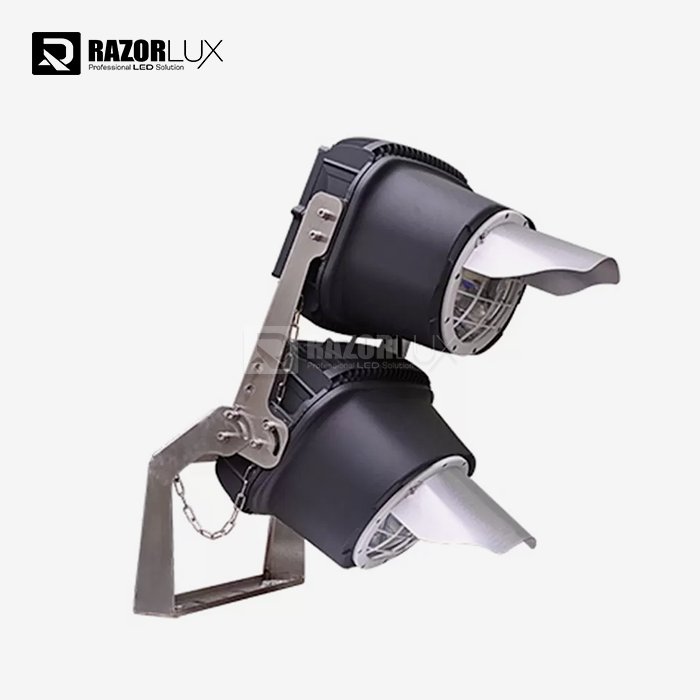
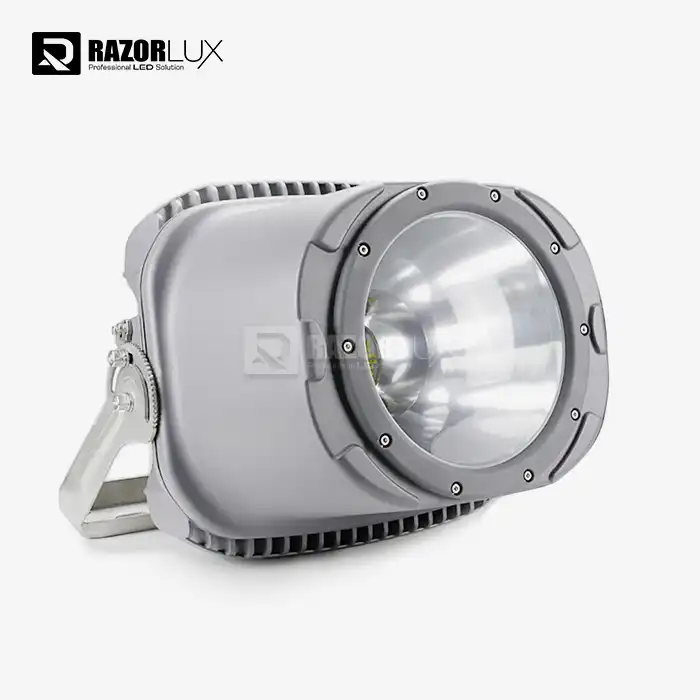
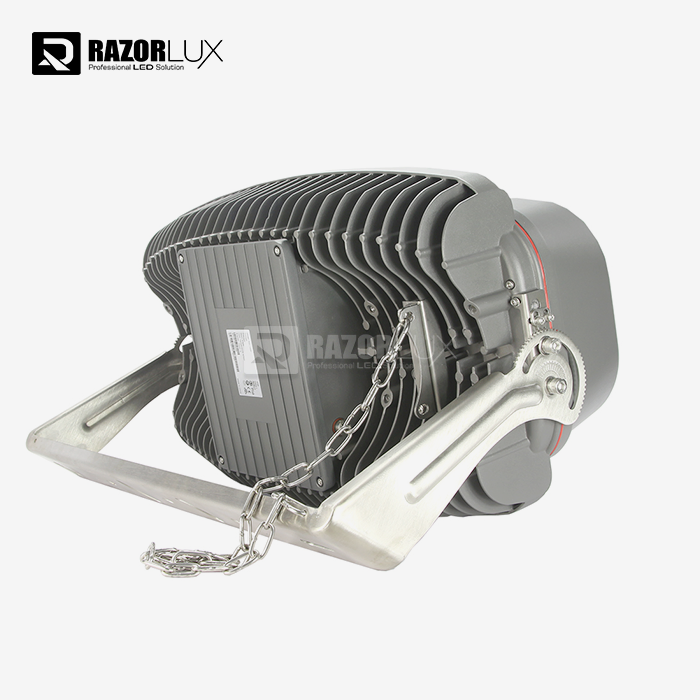
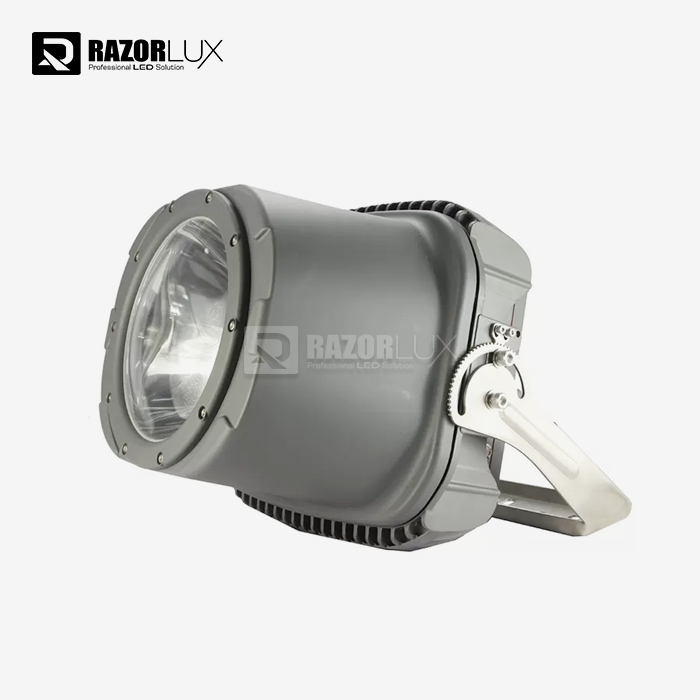
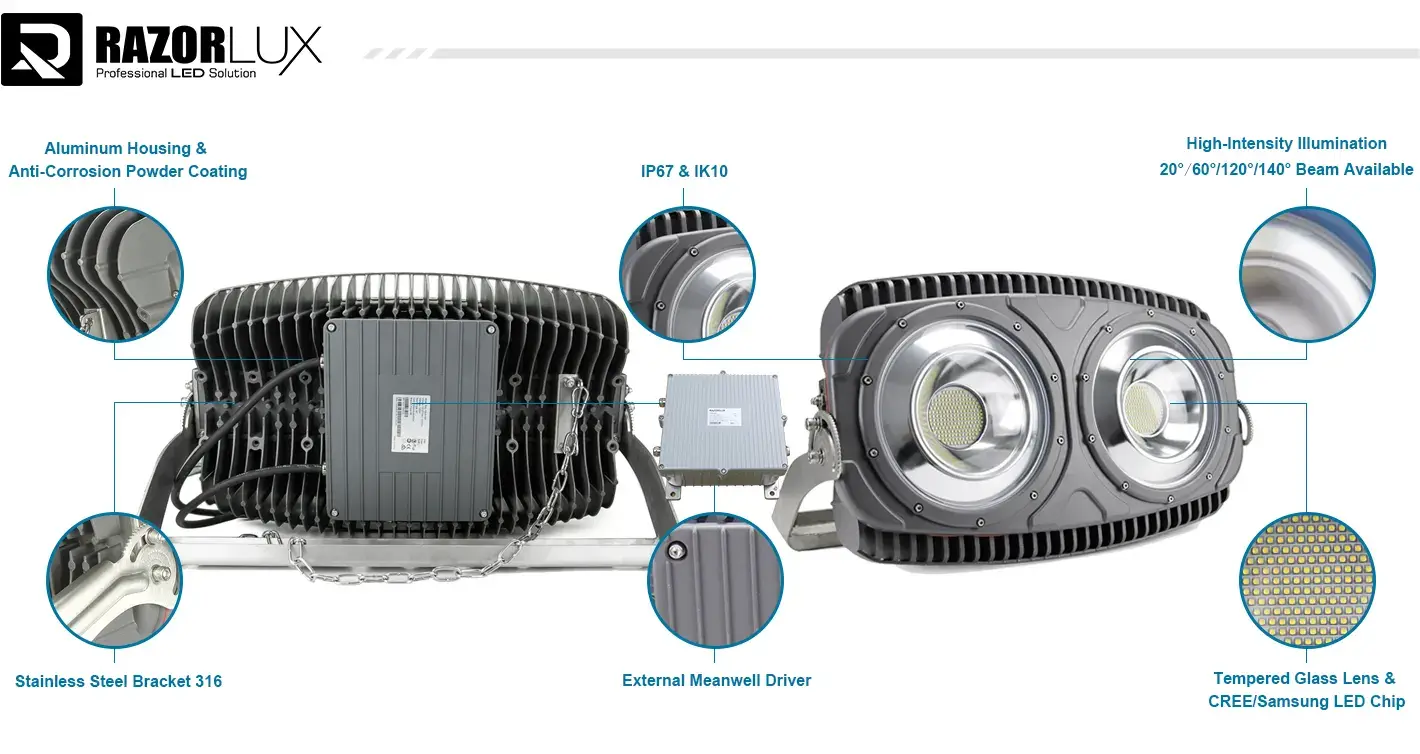
Outdoor stadium features are constantly exposed to all kinds of weather, from blazing hot in the summer to cold in the winter. IP67 grades for security make sure that dust can't get in and water can't get in, so sensitive gadgets are safe when it rains or snows a lot. Our 800W units have marine-grade stainless steel brackets and powder-coated aluminum housings that protect against corrosion. This is important for installations near the coast or in industrial settings where airborne contaminants are common. The IK10 rating for impact resistance means that the units can handle mechanical shocks from maintenance work, wind-blown debris, or accidental contact while they are running. This amount of security can handle hits of 20 joules, which is about the force of a 5-kilogram object being dropped from 40 centimeters, without damaging the fixture. This kind of sturdiness lowers the number of times things need to be replaced and the total cost of ownership for buildings that work in tough settings.
Comparison of Traditional vs LED Flood Light Layouts and Their Impact on Performance
The shift from conventional lighting technologies to LED systems transforms both design approaches and operational characteristics. Understanding these differences helps procurement professionals evaluate upgrade benefits and justify investment decisions.
Energy Consumption and Heat Management
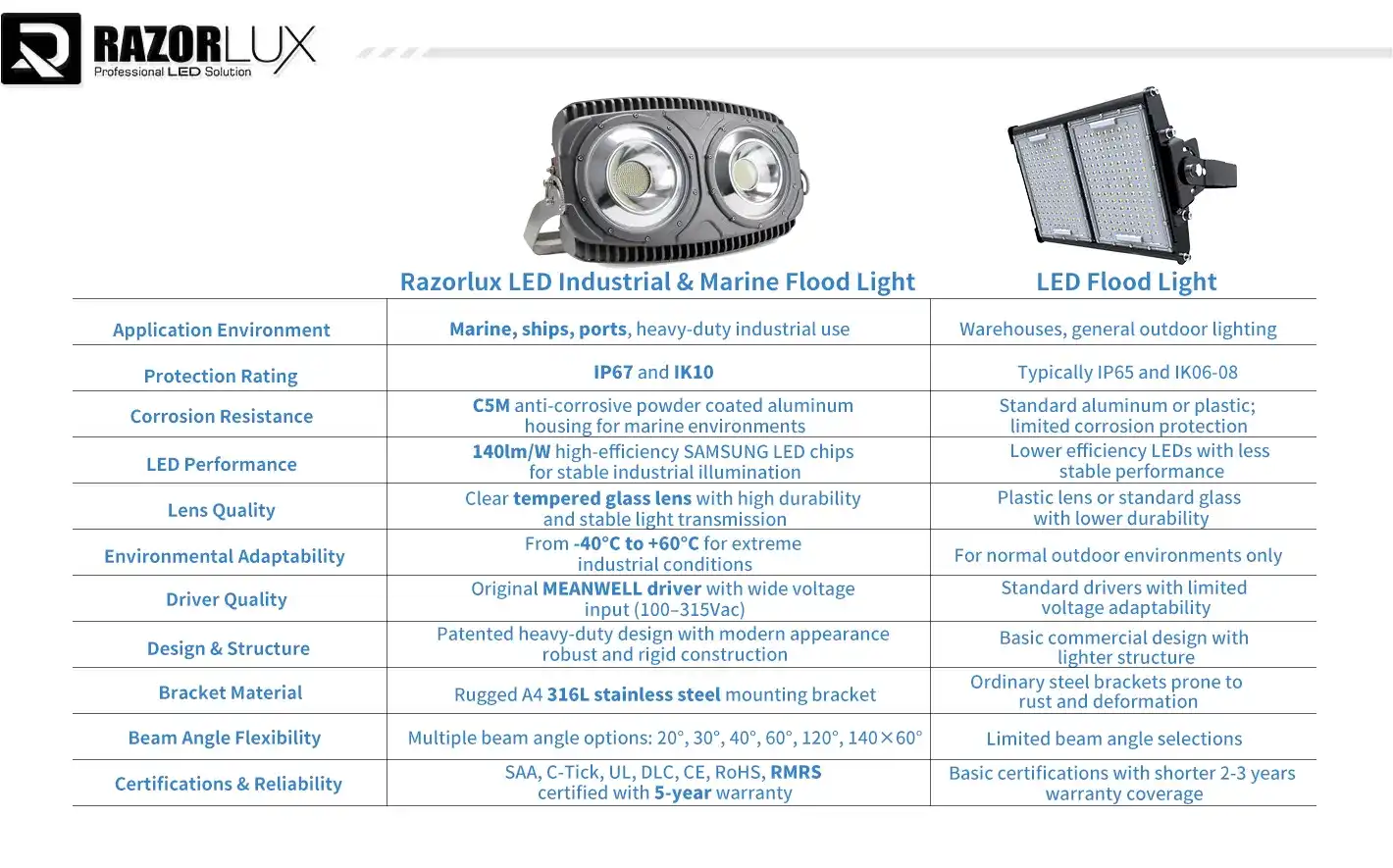
Metal halide systems need 1500 to 2500 watts to produce the same amount of light as our 800W LED lamps, which is a power savings of over 60%. This difference gets bigger in big systems with dozens or hundreds of lights, where the total saves hit megawatt levels. Less power use means less work needs to be done on the electrical infrastructure, which could mean that transformer upgrades or service capacity expansions are not needed during retrofit projects. Metal halide lamps turn most of their energy into heat instead of visible light, which makes it harder to cool down enclosed spaces and raises the risk of fire in older buildings. Instead of spreading heat everywhere, LED thermal management systems let it escape through precisely designed metal fins. This keeps housing temperatures under control even when they are running all the time. Advanced heat safety circuits keep things from breaking in harsh conditions, which is something that older technologies can't do.
Maintenance Requirements and Operational Continuity
Depending on the technology and how they are used, regular stadium lights need to be relamped every 6,000 to 15,000 hours. For each replacement cycle, there are costs for workers, renting tools for high-reach areas, and getting rid of dangerous materials. LED systems get rid of these ongoing costs because, with normal use, they don't need any upkeep for at least five years. Metal halide systems have long restrike delays, taking 10 to 20 minutes to reach full output after the power goes out. The 5-year guarantee covers both the LED modules and the driver electronics, protecting you financially against premature failure. This limitation is a problem during bad weather or grid problems, which could lead to event delays or closures. LED lights reach full brightness instantly, turning on again as soon as the power comes back on, and they can handle dynamic control routines that older technologies can't.
Advanced Control Capabilities
Today's LED stadium systems allow fading, zoning, and programmed patterns that make operations more flexible. To save energy, facilities can lower the light levels during practice sessions. For events, the lights can be turned back up to full strength. Zone control lets you choose which parts of a field to light up, so you can do more than one thing at once or lower the amount of light pollution during off-peak hours. These features work with building management systems to allow automated control based on occupancy sensors, scheduling algorithms, or manual override. Conventional systems don't give you many control options because they usually have a fixed output and use basic switching to light up whole areas at once. Not being able to change the strength or make unique sets makes operations less efficient and limits the money that can be made by having different events with different lighting needs. With LED lighting that can be controlled, stadiums become flexible spaces that can host sports games, concerts, art shows, and community events with the right amount of lighting.
Step-by-Step Guide to Designing the Best LED Stadium Flood Light Layout
Creating optimal stadium lighting requires a systematic analysis of venue characteristics, performance objectives, and operational constraints. Following a structured design process ensures that installed systems meet functional requirements while avoiding costly mistakes.
Project Requirements Assessment
Start by writing down the venue's measurements, such as the size of the playing area, the locations of the hanging structures, and the separation heights. Athletic governing groups set lighting standards for each sport and level of play. For example, FIFA, UEFA, and state organizations all have thorough rules for field lighting. Professional broadcast places have to meet extra requirements for vertical illumination and regularity that go beyond basic gameplay standards. The way a surface is shaped affects reflection values, which in turn affect lighting estimates. Natural grass reflects about 20% of the light that hits it, while the amount that a manufactured field reflects depends on the color and structure. When planning an indoor space, it's important to think about how ceiling and wall shadows can add to or take away from direct lighting from sources. Accurate surface data makes sure that computer models accurately predict real-world performance, which stops overdesigning or not covering enough. Operational trends decide the best control methods and durability needs. Buildings where daily activities happen need strong systems that can handle switching on and off often and changing weather conditions. When it comes to seasonal places, lower starting costs might be more important than longer-term costs. When makers know how things are used, they can make standards that work best in real-world situations instead of just guessing what could go wrong.
Environmental and Infrastructure Analysis
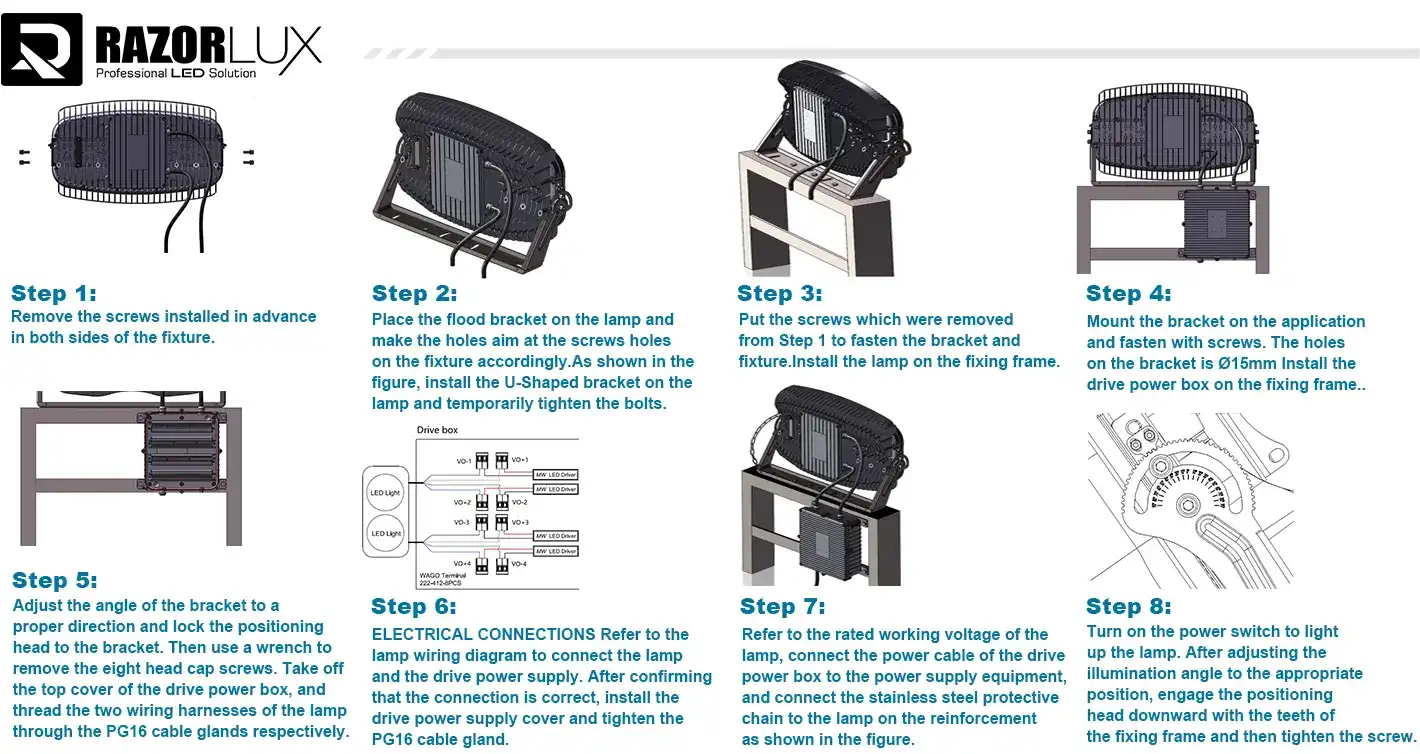
Led stadium flood lights. Climate data tells us what range of temperatures, levels of humidity, and types of rain or snow that things must be able to handle. Coastal sites need more rust protection than what is required by law, while places in the desert have to deal with huge changes in temperature and a buildup of dust. Our systems work reliably from -40°C to +60°C, so they can be used in almost any terrestrial climate and still provide good photometric performance across the whole temperature range. The mounting infrastructure that is already in place, like towers, poles, and roof structures, determines where fixtures can be placed and may limit their weight or wind loading. To keep costs down, many repair projects use existing mounting points again. This means that fixings need to match old mechanical connections while also offering better optical performance. Our 800W units weigh 45 kilograms, which strikes a balance between strong construction and mounting restrictions. The stainless steel bracket allows for a range of installation angles and directions. Electrical service capacity and distribution routes affect system design and installation costs. Our lights can work with a wide range of electrical systems because they accept voltages from 90V to 305V and 127V to 431V. They don't need step-down transformers or other power conditioning. This adaptability makes working on projects with other countries easier and lets you connect directly to green energy sources or backup power systems.
Applying Layout Design Principles
Fixtures are put in place using geometric designs that find a good mix between covering consistency and mounting restrictions. Four-corner mounting points, which are common in smaller venues, put fittings at the corners of the playing area and aim them diagonally across the field. This set-up reduces shadows, but athletes looking toward corner spots may see glare. Six-point or eight-point setups add mid-field mounting spots that make uniformity better and lower the strength needs of each light. Mounting height has a big effect on both how uniform the light looks and how much glare you feel. Fixtures with wider beam angles and smaller wattages can be used when the fixing point is lower. But places that are lower make it easier to see in bright conditions and may get in the way of views from higher sitting levels. Professional sports venues usually put up fixtures 25 to 40 meters above the playing fields, weighing the benefits of optical performance against the costs of the structure and the difficulty of maintenance access. A fixture's peak strength is based on its aiming angle, which is related to where it is mounted. When you aim correctly, you can make covering patterns that meet and evenly light the playing fields while sending little to no light toward viewing areas or beyond the borders of the facility. During testing, precise target changes make computer-generated plans work better by adjusting for installation errors and getting the design purpose.
Simulation Validation and Performance Testing
Lighting design software uses the optical properties of fixtures, mounting places, and weather factors to estimate how well they will work when they are placed. Good modeling tools take into account how surfaces reflect light, the weather, and things that get in the way of light flow. Running several scenarios lets you compare the pros and cons of different light numbers, wattages, and positions, helping you find the best setups before you buy the hardware. Once the hardware is installed, optical testing makes sure that the real performance fits what the design predicted. Point-by-point readings taken across game fields show the amounts of light and regularity, proving that they meet the standards that apply. Internationally recognized procedures are used in measurement protocols to make sure they are accurate and repeatable. This creates records that can be checked and meet regulatory requirements. These records also serve as a starting point for planning future maintenance. Pilot testing lets facilities check how well fixtures work before they are fully deployed. Sample setups show how the color works, how the dimming works, and how the control system works with the lighting in real life. This method works especially well for big buildings that need to be validated carefully because of the cost of purchase, and for upgrade projects that aren't sure if they will work with existing infrastructure.
Procurement Considerations: Choosing the Right LED Stadium Flood Light Supplier and Service
Selecting the appropriate manufacturing partner influences project success as much as technical design decisions. Supplier capabilities in product quality, customization, logistics, and support determine whether installations meet expectations and deliver projected returns.
Evaluating Manufacturer Credentials and Certifications
International certificates show that a product meets well-known standards for safety and effectiveness. If something is listed with UL, it means it meets North American electricity codes, and if it's marked with CE, it means it meets European Union rules. We have a lot of certifications for our 800W stadium fixtures, such as RMRS for marine applications, SAA for Australian markets, and DLC for North American energy efficiency programs. This makes sure that they are accepted by regulators in all of the major markets. Our manufacturing quality systems give you confidence in the consistent performance of our products. Razorlux has had ISO9001 approval since 2001. It shows that they have a method for controlling quality in all stages of production, including design. Facilities with 436 current patents and 300 ongoing applications show that they have been investing in research and development for a long time. This keeps products getting better instead of using old technologies. Where you get your parts affects both the quality of the product at first and how reliable it will be in the long run. Premium LED drivers from companies like Meanwell have advanced safety circuits and high-efficiency conversion steps that make the system last as long as possible. Samsung LED chips have the best light efficiency and brightness upkeep in the business. This means that lamps will keep working at their stated level for the whole time they are in use. Buyers can check quality standards on their own with transparent component exposure instead of believing promises that aren't backed up.
Customization Capabilities and Technical Support
Standard products don't always meet all of an application's needs perfectly. Customization services from manufacturers that change color temperatures, beam patterns, mounting hardware, or control interfaces make it possible to find the best options for different settings. Our Xi'an LED Lighting Engineering Laboratory, which is approved by China's National Development and Reform Commission, helps Razorlux's design engineers make custom configurations that meet the needs of each project. Pre-sale technical support helps buyers choose the right products and make layouts that work well. Lighting assessment services that use professional tools help make sure that suggested systems meet performance goals before committing to buy them. Our team has helped with successful installations in airports, seaports, factories, and sports arenas around the world, and they can use their wide range of experience to take on new projects. Post-sale support includes questions about installation, help with commissioning, and warranty service that goes beyond just replacing products. Integration tasks are made easier by detailed paperwork that includes installation guides, wiring layouts, and upkeep instructions. Responding to technical problems within hours instead of days through responsive contact keeps project delays to a minimum and shows that the maker cares about the success of their customers.
Supply Chain Reliability and Global Logistics
Manufacturers can meet project deadlines for big orders without sacrificing quality by rushing production when their production capacity stays the same. Delivery delays don't happen at established facilities with grown supply chains, which don't have the same problems as new businesses or makers who don't have enough money. Our production infrastructure can handle orders ranging from small test runs to stadium-sized deployments. Lead times are reliable, and quality standards are met in every production batch. We offer a range of shipping choices to meet the needs of different projects with different budgets and schedules. When you need something quickly, or a sample, international fast delivery can get it to most places within a week. For bigger packages that don't need to get there right away, air freight is a more cost-effective option. Ocean freight has the lowest cost per unit for moving large amounts of goods when longer travel times work with building plans. We handle all details, including paperwork, customs clearance, and final delivery, to make foreign buying easier. Protective packing keeps items from getting damaged during long-distance shipping and multiple handling operations. Custom foam plugs protect fixtures from shock and vibration, and moisture barriers keep gadgets safe on sea trips. Electrostatic discharge can damage sensitive LED drivers and control circuits. Anti-static materials protect these parts. Good packing cuts down on damage claims and repair delays that mess up installation plans.
| Supplier Evaluation Criteria | Key Questions | Red Flags |
|---|---|---|
| Quality Certifications | Does the supplier hold UL, CE, DLC, and relevant marine/industrial certifications? | Lack of third-party testing, uncertified products, or expired certificates |
| Manufacturing Experience | How many years in LED stadium lighting? What is their patent portfolio? | Less than 10 years in LED, no proprietary technology, generic product offerings |
| Customization Services | Can they modify beam angles, color temperature, or mounting configurations? | "Off-the-shelf only" approach, no engineering support |
| Component Transparency | Do they disclose the LED chip and driver manufacturers? | Vague "high-quality components" claims without specifics |
| Warranty Terms | What is covered, and for how long? What is the claims process? | Warranties under 3 years, complex claim procedures, and no local support |
| Technical Support | Do they provide lighting design assistance and post-sale troubleshooting? | Sales-only interaction, slow response times, language barriers |
Real-World Performance: Razorlux Stadium Lighting Applications
Installations in real life show how theoretical design ideas can be put into practice and work well in a variety of settings. Our 800-W professional arena lighting systems have been used in tough situations in places like professional sports centers and factories that need broadcast-grade lighting.
Professional Sports and Broadcast Venues
Led stadium flood lights. High-level sports events need lighting that supports both the success of the players and the needs of TV production. Broadcast cameras often need more vertical illumination than the playing field requires, which means that fixtures have to be carefully placed and their strength has to be spread out. Our narrow beam choices (15°–30°) provide focused lighting from higher mounting places, giving cameras the high light levels they need without using too much energy. Flicker-free operation is essential for fast camera capture during action scenes. Power factor adjustment above 0.98 and overall harmonic distortion below 10% make sure that the electricity works properly and doesn't mess up other systems in the place. The instant-on feature gets rid of restrike delays, so lights can be restored right away after power changes that could otherwise stop broadcasts or push back events.
Multi-Purpose Athletic Complexes
Community centers that host a variety of sports need lights that can be adjusted to fit different-sized playing surfaces and meet competition standards. With zone control, you can choose which baseball parks, soccer fields, or track areas to light up separately. This saves energy when only parts of bigger buildings are being used. Color temperatures that can be changed between 2700K and 6500K let facilities create different moods for different events or renter preferences. Durability is more important in high-use facilities where repair windows are limited. Our IP67 security and IK10 impact resistance make sure that it will work reliably even if it is used in tough conditions or is hit by flying balls or equipment. The 5-year warranty that covers both the LED modules and the driver electronics protects your money, and the 10-year guarantee on the case shows that you trust the structure to last.
Industrial and Infrastructure Applications
Heavy industrial settings, like ships, steel mills, and factories, need lighting systems that can work in rough conditions and keep up their performance so that precise work can be done. The input voltage range is wide (AC90-305V, DC127-431V), so it can work with power sources that aren't stable, which is common in industrial settings. Thermal safety keeps the device from breaking when temperatures rise or fall too quickly. Marine certifications (RMRS) prove that it can work in harsh coastal environments where salt spray and high humidity speed up the breakdown of equipment. Our patented multi-function design can be used in a variety of mounting setups and fits into small spaces that are common in industrial facilities. Stainless steel brackets don't rust and allow for exact changes to aim and light up the target area as required. The strong construction can handle vibrations from nearby machines and mechanical hits from repair work, so the alignment and performance stay the same over long service lives.
| Application Type | Primary Requirements | Recommended Configuration | Key Benefits |
|---|---|---|---|
| Professional Stadium | High uniformity (>0.7), broadcast-quality CRI (>80), vertical illuminance | Narrow beam (15°-20°), 5700K, Ra80+, elevated mounting | Meets FIFA/UEFA standards, supports 4K broadcast, eliminates shadows |
| Training Facility | Cost-efficiency, adaptability, and lower uniformity are acceptable | Medium beam (40°-60°), 5000K, Ra75, zone control | Reduces operational costs, adjustable for multiple sports |
| Municipal Complex | Durability, simple operation, minimal maintenance | Wide beam (60°-120°), 4000K, Ra75, robust construction | Long service life, low total cost of ownership |
| Industrial Site | Extreme environment protection, voltage tolerance, safety | Asymmetric beam (140°x60°), 5000K, IP67/IK10, wide voltage input | Operates in harsh conditions, reduces workplace accidents |
Conclusion
To get the best Led stadium flood lights plans, you have to find a balance between technical requirements, installation limitations, and operations goals. Modern LED technology is much better than older systems because it uses less energy, is easier to handle, and lasts longer, which lowers the total cost of ownership. To be successful, you need to use organized design methods that take into account things like the venue's features, performance standards, and the surroundings, and you should also choose manufacturing partners with a track record of success and full support services. When facilities invest in properly designed LED arena lighting systems, they get better lighting, lower running costs, and more freedom to support a wider range of events and activities. The switch to LED lighting isn't just a replacement for lamps; it's a basic improvement in how sports places handle their lighting systems, with benefits that build over decades of steady service.
FAQ
How Much Energy Can LED Stadium Flood Lights Actually Save?
LED stadium lighting systems typically reduce energy consumption by 60-70% compared to equivalent metal halide installations. Our 800W fixtures replace traditional systems consuming 1500-2500 watts while providing comparable or superior illumination levels. A typical stadium installation with 100 fixtures might consume 250 kilowatts with metal halide technology, but only 80 kilowatts using LED systems—saving 170 kilowatts continuously during operation. At commercial electricity rates of $0.12 per kilowatt-hour and annual operation of 2,000 hours, this translates to $40,800 in annual energy savings, often recovering equipment costs within three years.
What Maintenance Should We Expect Over the Fixture Lifespan?
LED stadium systems require minimal maintenance compared to traditional technologies. No routine relamping is necessary during the 50,000+ hour lifespan, which typically exceeds 15 years under standard athletic facility usage patterns. Periodic cleaning of optical surfaces maintains peak performance—typically annually or after severe weather events. Inspection of mounting hardware and electrical connections should occur on similar intervals. The 5-year warranty on LED modules and drivers covers component failures during the initial service period, eliminating repair costs. Budget for eventual fixture replacement rather than ongoing maintenance expenses characteristic of metal halide systems.
Can LED Systems Meet Professional Sports Broadcasting Standards?
Modern LED stadium lighting exceeds requirements for professional broadcast production when properly specified. Color rendering indices above Ra80 ensure accurate color reproduction for high-definition cameras, while flicker-free operation prevents dark bands visible in slow-motion replays. Vertical illuminance specifications for broadcast cameras often require 1400-2000 lux with uniformity ratios exceeding 0.6—achievable through careful layout design using appropriate beam angles and mounting positions. Our systems support various professional standards, including those specified by FIFA, UEFA, and national governing bodies for televised competitions.
Partner with Razorlux for Superior Stadium Lighting Solutions
Razorlux brings over two decades of specialized LED engineering expertise to every stadium lighting project. As a trusted led stadium flood lights supplier, we combine advanced manufacturing capabilities with comprehensive technical support that extends from initial design consultation through long-term operational support. Our 800W professional stadium lighting system delivers the perfect balance of performance, efficiency, and durability required for demanding athletic venues, backed by certifications from UL, CE, DLC, RMRS, and other international standards bodies. Our Xi'an LED Lighting Engineering Laboratory, authorized by China's National Development and Reform Commission, maintains the technical resources to address complex project requirements. Whether you need assistance with photometric modeling, custom beam angle configurations, or integration with existing control systems, our engineering team provides responsive support throughout your project timeline. We have successfully delivered lighting solutions to airports, seaports, industrial facilities, and athletic venues across North America, Europe, Asia, and Oceania, applying proven methodologies to new challenges. Procurement professionals seeking reliable LED stadium flood lights for sale benefit from our flexible supply chain and global logistics network. We maintain inventory to support rapid sample delivery—typically 3-5 business days via international express—and coordinate large project shipments via air or ocean freight to meet your construction schedule. Each installation includes comprehensive technical documentation, installation guides, and access to our technical support team to ensure successful commissioning and optimal long-term performance.Contact our team at sam@razorlux.com to discuss your stadium lighting requirements. We will work with you to develop customized solutions that enhance your venue's performance while delivering measurable operational savings. Experience the Razorlux difference—where precision engineering meets practical application in stadium lighting solutions trusted by facilities worldwide.
References
1. Illuminating Engineering Society of North America. (2020). IES RP-6-20: Sports and Recreational Area Lighting. New York: IESNA Publications.
2. International Commission on Illumination. (2019). CIE 169:2019 - Practical Design Guidelines for the Lighting of Sport Events for Colour Television and Filming. Vienna: CIE Central Bureau.
3. Federation Internationale de Football Association. (2021). Football Stadiums: Technical Recommendations and Requirements (5th Edition). Zurich: FIFA Publications.
4. U.S. Department of Energy. (2022). LED Lighting for Sports and Recreation Facilities: An ENERGY STAR Guide. Washington: DOE Office of Energy Efficiency.
5. Wang, J., Chen, H., & Liu, X. (2021). Thermal Management Strategies for High-Power LED Stadium Lighting Systems. Journal of Illumination Engineering, 47(3), 234-251.
6. European Committee for Standardization. (2018). EN 12193:2018 - Light and Lighting - Sports Lighting. Brussels: CEN Standards Bureau.