

_1750326878398.png)

Best Dimmable Flood Lights for Commercial and Industrial Projects
Advanced dimmable flood lighting is no longer a choice when looking for lighting options for harsh marine, offshore, and heavy industrial settings; it's a must. High-performance Best Dimmable Flood Lights make shipyards, port terminals, oil platforms, and manufacturing facilities safer, lower the cost of running the lights, and let you control the brightness precisely. These light fixtures are made with strong engineering and smart dimming protocols, so they can work in a variety of environments with harsh conditions like salt spray, extreme temperatures, and mechanical vibration.
Understanding Dimmable Flood Lights for Industrial Use
What Makes Dimmable LED Technology Superior
Industrial-grade Best Dimmable Flood Lights use advanced LED chip architecture and smart driver systems that work with a number of different dimming protocols, such as 0-10V, DALI, and PWM modulation. In contrast to older halogen lights, current LED solutions can produce more than 130 lm/W while keeping the color temperature stable across a range of dimming levels. This consistent performance makes sure that operations are reliable even during long duty cycles that are common in maritime and offshore settings. The main benefit is that it manages heat better. Die-cast aluminum heat sinks with the right shape of fins are used in high-quality fixtures to keep junction temperatures below 85°C even when the power is on full. This thermal stability directly stretches the L70's life beyond 50,000 hours, cutting down on repair times and replacement costs, which are very important for facilities that work in remote or dangerous areas.
Energy Efficiency and Cost Savings in Industrial Settings
Being able to dim lights directly leads to measurable energy savings. Taking into account driver efficiency curves, a 400W Dimmable Flood Light that is set to 50% output during times of low activity can cut electricity use by 40 to 45 percent. This freedom leads to big sites having much lower yearly running costs, like container ports or shipyard assembly areas. Also, less heat flow at lower dimming levels lowers the load on HVAC systems in tight workplace areas. Facilities managers say that switching from non-dimmable to Dimmable LED systems can save up to 15% more energy in climate-controlled stores. These compounding savings make return on investment estimates more accurate, especially when planning for capital tools that will last more than one year.
Selecting Appropriate Wattage and Lumen Output
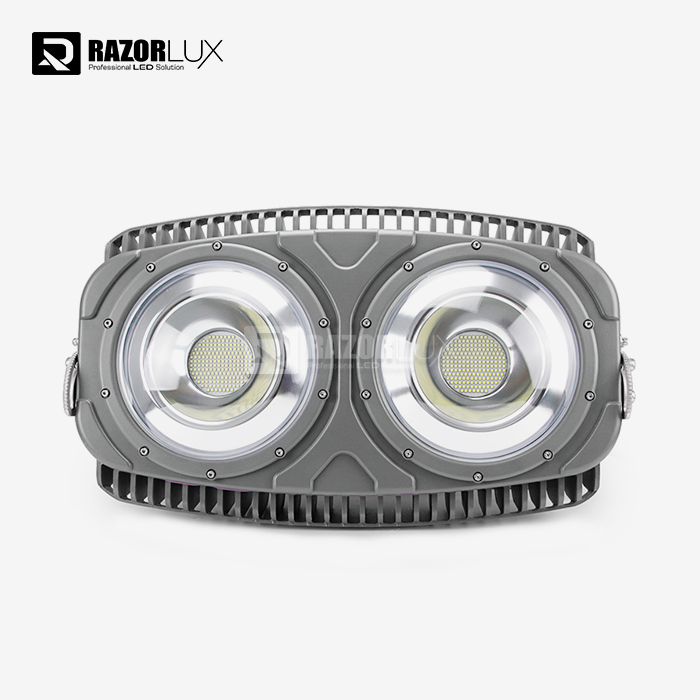
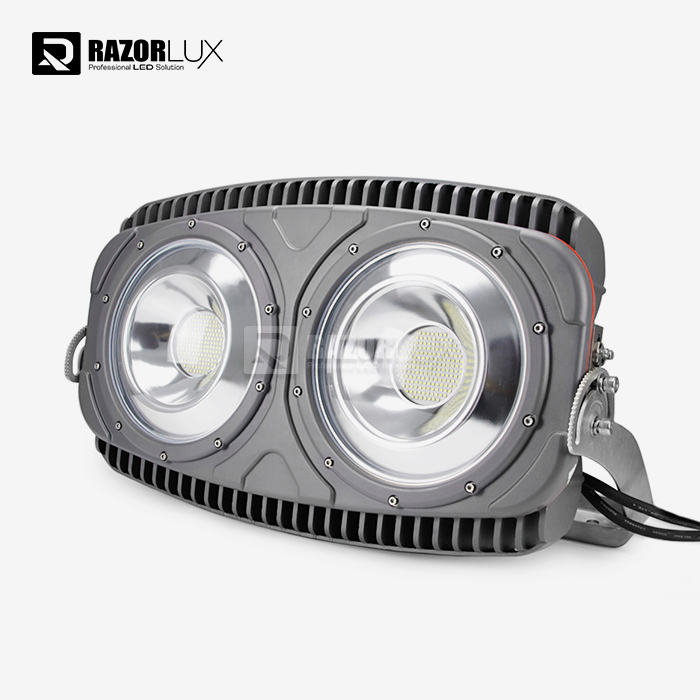
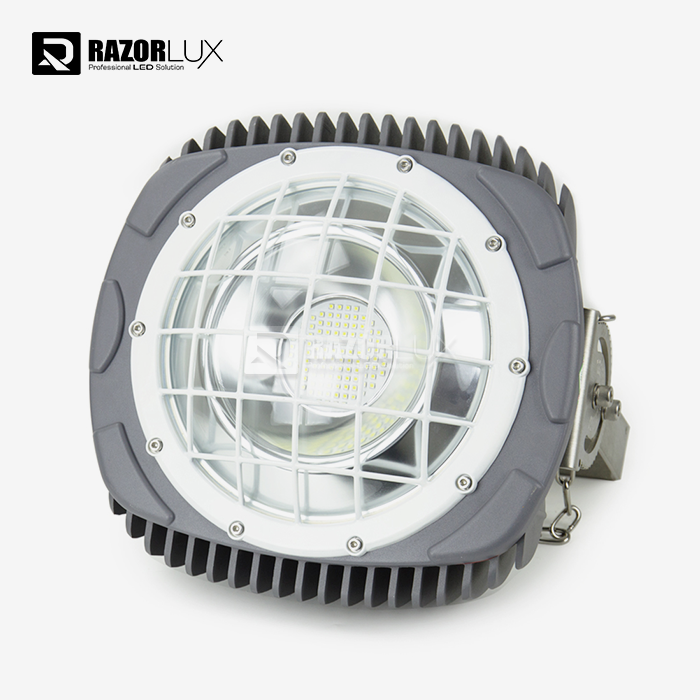
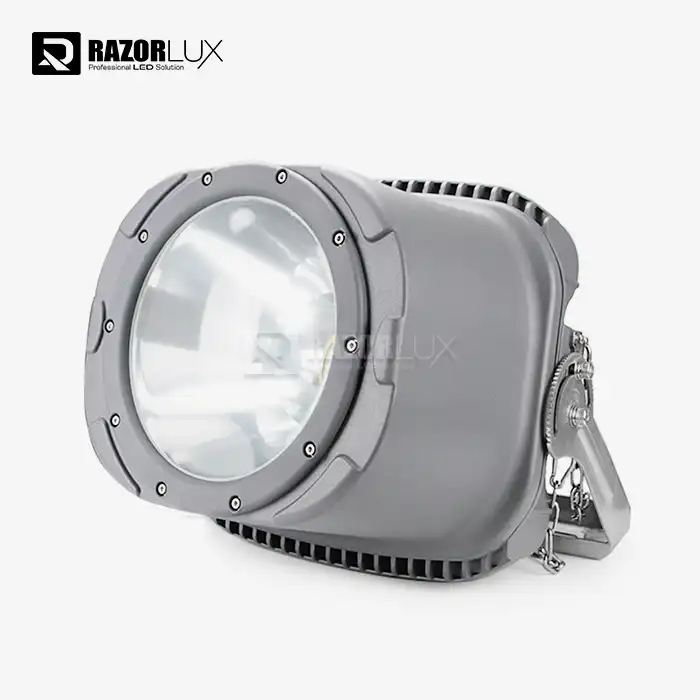
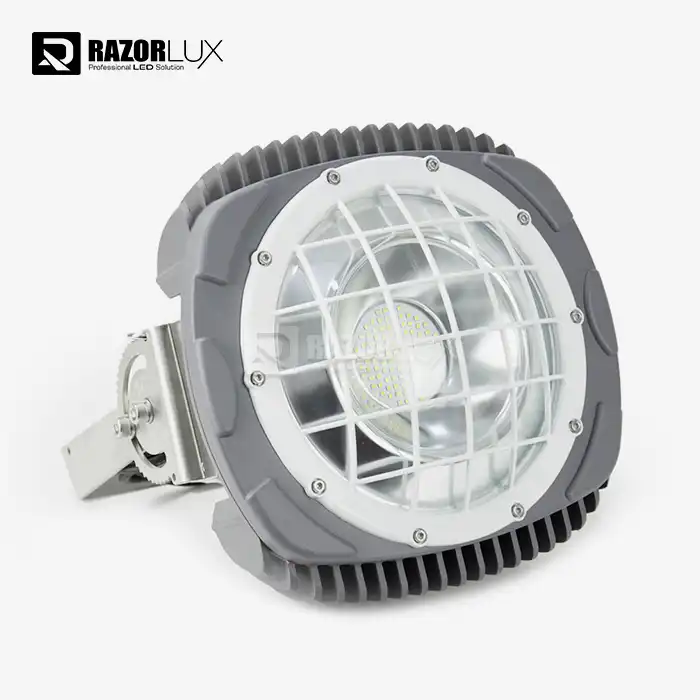
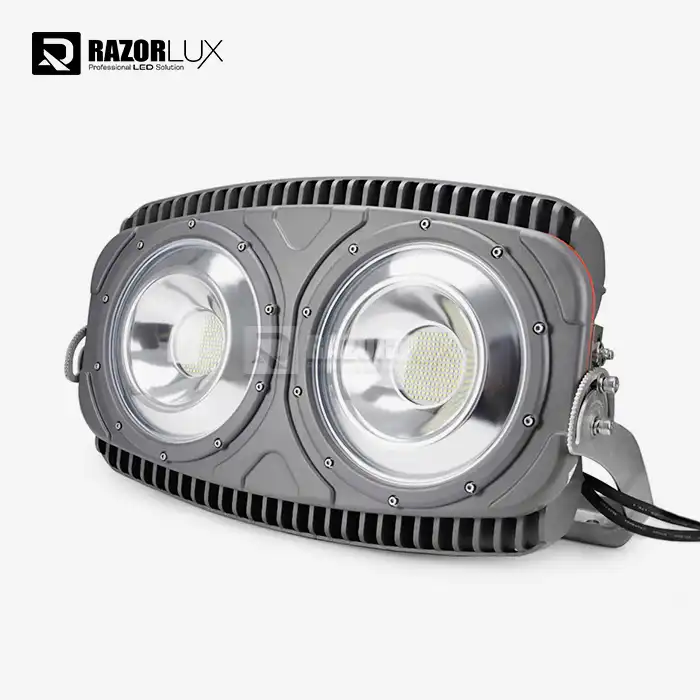
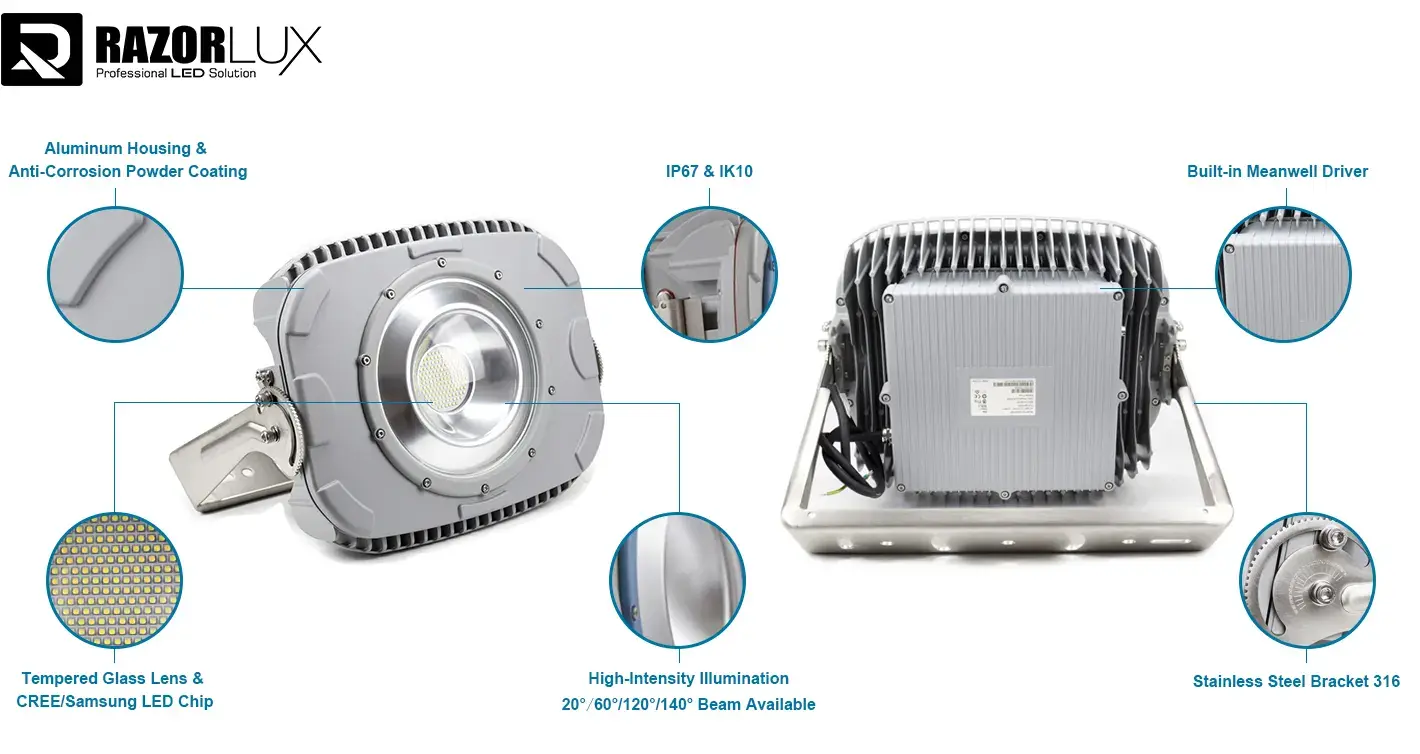
To get the right specs, you have to match the lighting needs to the operating situations. For vertical surface lighting, high-bay industrial areas usually need 300–500W lights that put out 40,000–65,000 lumens and have narrow beam angles (40°–60°). On the other hand, 400W units with a wider 120° spread are better for outdoor dock areas because they make sure that all loading zones have the same horizontal coverage. Razorlux's RGL2-400A model is a great example of this balance in engineering. It gives off 52,000 stable lumens while using a total of 400W of power (360W for the LED array and 40W for the driver). The multi-function design that has been patented can be customized for beam angles of 40°, 60°, 120°, or asymmetric 140°x60°. This lets procurement teams use a single platform to meet the needs of different sites. This modularity makes it easier to keep track of supplies and train technicians in sites that are spread out.
Comparing Top Dimmable Flood Lights for Commercial and Industrial Projects
Durability Standards for Marine and Offshore Environments
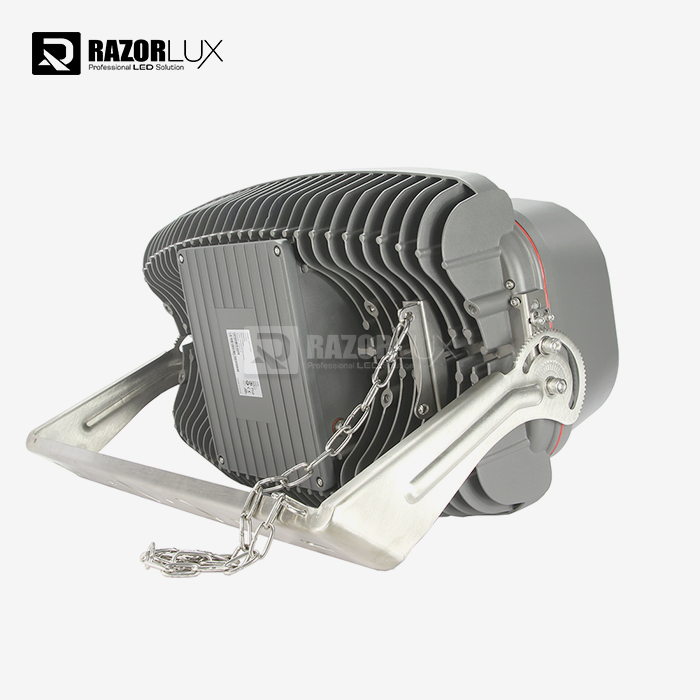
Harsh weather conditions need strict entry protection. IP67-rated enclosures completely block out dust and provide brief immersion protection, which is very important for installations that are placed on decks and are exposed to wave wash and pressure cleaning. IK10 impact resistance ensures that the material will not break if a tool falls or hits something during maintenance work. The choice of material is also very important. Razorlux uses powder-coated and electrophoresis-treated aluminum housings, which make them more resistant to rust in salty environments. When connecting to ship superstructures or offshore platform frameworks, the RGL2-400A comes with stainless steel mounting clamps that remove galvanic corrosion issues. These building features directly deal with the faster wear and tear cycles that affect lower-quality fixtures in naval service.
Dimmable vs. Non-Dimmable: Performance Trade-offs
Non-dimmable fixtures are cheaper to buy at first, but they don't give you the operating freedom you need for modern building management. Best Dimmable Flood Lights systems make it possible to follow laws about light pollution, security rules that need different levels of lighting in different areas, and energy demand response programs. The extra cost, which is usually between 15 and 20 percent at the fixture level, is paid for within 18 to 24 months by lower energy costs and longer component life due to less thermal stress.
| Feature | Dimmable LED Flood Light | Non-Dimmable LED Flood Light |
|---|---|---|
| Energy Optimization | 40–50% less light at 50% dim | Fixed use of resources |
| Thermal Stress | Lower when output is lower | Maximum heat all the time |
| Control Integration | 0-10V, DALI, and PWM compatible | Only for on/off switching |
| Lifespan Extension | L70 is up to 25% longer | Standard number of hours |
| Initial Cost | 15% to 20% more | Less money needed up front |
Motion Sensor Integration and Smart Controls
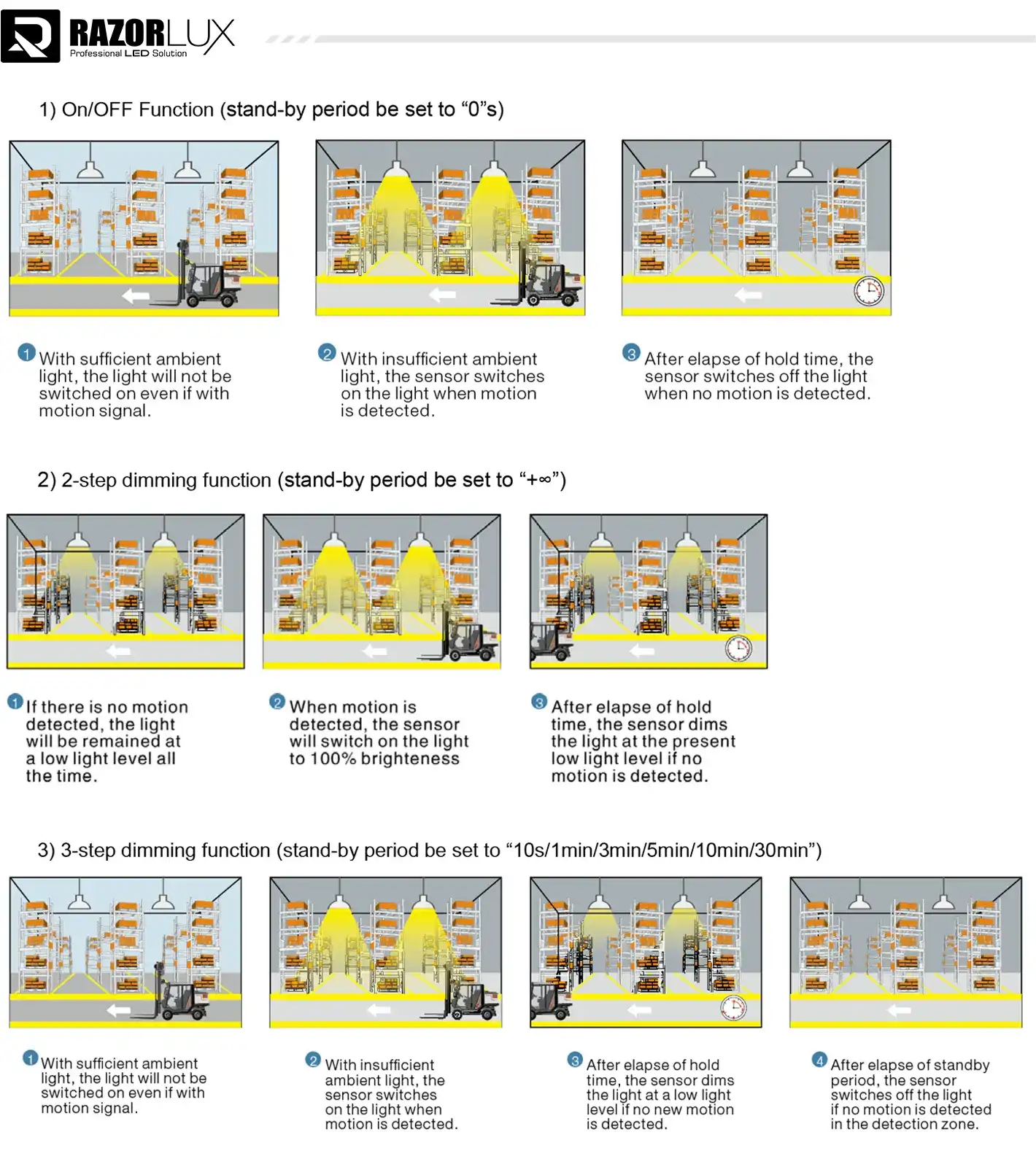
More and more advanced installs use occupancy monitors and photocell controls to change the output automatically based on the environment and whether or not someone is there. When set up correctly, these systems can save 60 to 70% of energy in low-traffic areas like perimeter fencing or extra storage areas. But choosing the right sensor for a high-vibration environment is important. Industrial-grade PIR sensors with anti-nuisance algorithms stop false triggers from things like marine life or debris in the wind. Standard control protocols make it easy for Razorlux fixtures to work with building management systems. The RGL2-400A can take both AC (110-480Vac) and DC (100-800Vdc) input without the need for extra adapters. This makes installation easier on ships and offshore sites where each room has its own electrical distribution. This ability to work with all voltages cuts down on the need to keep extra parts on hand and make changes in the field.
Installation, Compatibility, and Troubleshooting in Industrial Settings
Proper Setup and Electrical Integration
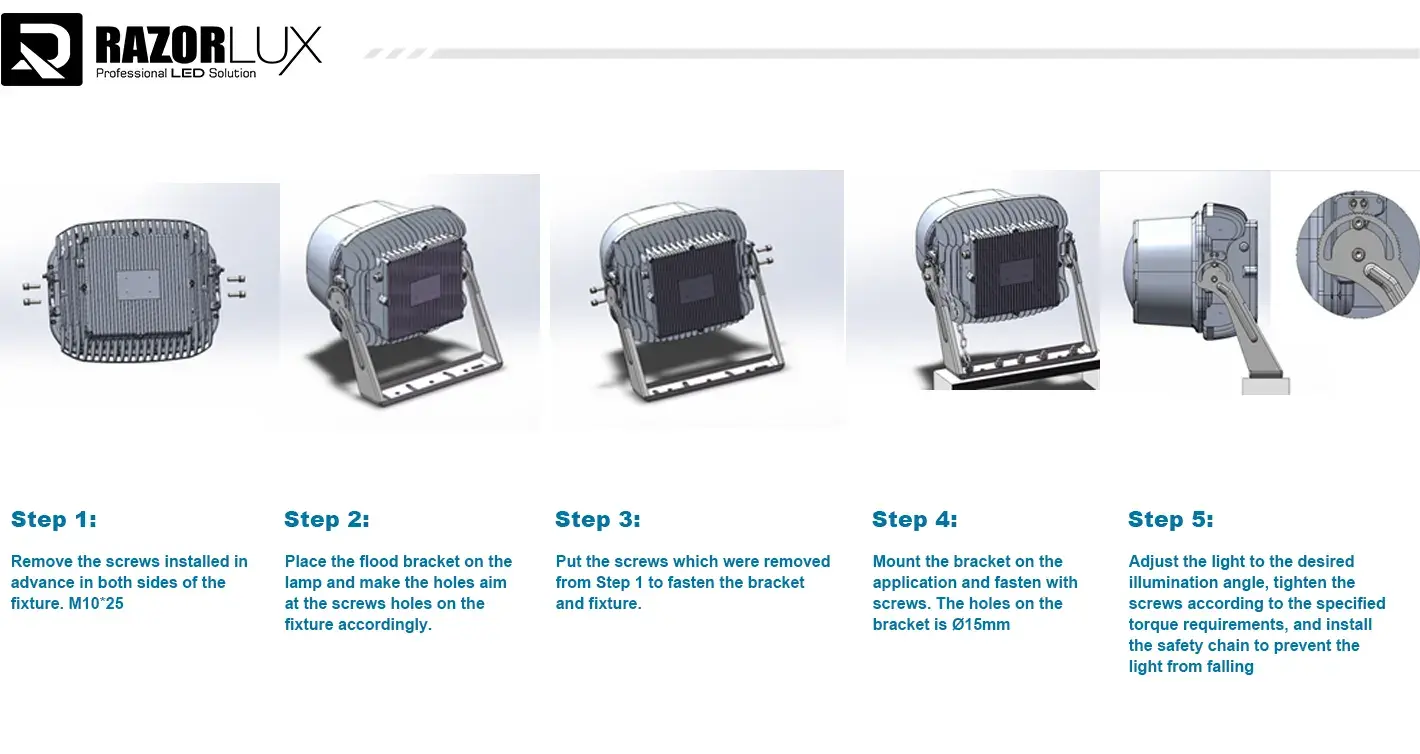
Verifying the power and making sure the driver is compatible are the first steps in a successful installation of Best Dimmable Flood Lights. Make sure that the current dimming infrastructure works with the fixture's control protocol. For example, using 0-10V lights with TRIAC dimmers can lead to unpredictable behavior and driver failure before its time. When changing old systems, switching out wall-mounted controls for suitable units makes sure that the dimming goes smoothly from 1% to 100%.How the mount is oriented affects how well it handles heat. To get the most natural airflow, put fixtures where the heat sink fins are facing vertically. To keep junction temperatures safe in small places or protected areas with little air flow, lower device wattage by 10 to 15 percent. Razorlux includes detailed installation diagrams and thermal derating curves with every shipment to help field engineers set up the systems in the best way possible.
Addressing Flickering and Compatibility Issues
There are two main causes of visible flicker: a mismatch between the driver and the dimmer, and not enough minimum load. High-frequency PWM dimming (>1kHz) gets rid of flicker and stroboscopic effects that can get in the way of fast machinery or security camera recording. Make sure that the total linked load is higher than the dimmer's minimum cutoff, which is usually between 20 and 50W. This will stop hunting behavior, in which the control circuit jumps from one output level to another. If the flickering doesn't go away after validation, check the wiring for too much voltage drop. Shielded twisted-pair wires must be used for long cable runs (>100 meters) between the driver and the control signal source to keep the signal's integrity. In big setups with spread-out fixtures, degradation can be fixed by adding a line conditioner or signal amplifier in the middle of the span.
Maintenance Strategies to Maximize Lifespan
Fixtures last a lot longer when they are maintained regularly. Set up yearly checks to clean the lenses and make sure the seals are still in good shape. In coastal areas, salt deposits that build up over two years reduce light output by 20–30%. Every three years, you should replace the gaskets and breather holes to keep water out, which wears down car parts. The RGL2-400A comes with a full warranty from Razorlux. The LED modules and drivers are covered for five years, and the aluminum housings are covered for ten years. This coverage shows that the company is sure of the parts they choose, like Meanwell power sources and high-quality thermal interface materials. When technical help is needed, our applications engineering team gets back to you within 24 hours to help with remote diagnostics and get replacement parts quickly to keep downtime to a minimum.
Procurement Strategies for Bulk and Commercial Purchases
Evaluating Supplier Partnerships and Certifications
When buying Best Dimmable Flood Lights, it's important to make sure that the company has the right naval and industry certifications. The CE, RoHS, UL, DLC, and CB marks show that the product meets standards for environmental and electrical safety. For maritime uses, DNV/GL or ABS certification shows that the equipment is suitable for marine service, which is needed for classification society approval during vessel surveys. In addition to certificates, ISO 9001 quality management system registration is another way to measure how mature a manufacturing process is. Razorlux's ISO 9001-certified process includes inspecting incoming materials, testing materials for heat while they're being made, and checking the final product's photometric accuracy. This makes sure that each batch is the same, which is very important for large, multi-phase projects. Before committing to large orders, get plant audit records and test data from a third party to make sure that performance claims are true.
Cost Optimization Through Strategic Ordering
When you buy 100 or more units, volume price structures usually offer 15–25% lower unit costs. But the best way to buy things is to weigh price breaks against the costs of keeping goods and the timing of the job. You might want to set up framework agreements with staged delivery schedules to lock in good prices and time the arrival of fixtures with construction milestones. Customization options make things more useful without adding too much cost. Razorlux lets you change the color temperature between 2700K and 6500K, offers CRI upgrades (Ra>80 or Ra>90), and helps OEMs brand their products. If these changes are made when the order is first placed, they cost much less to make than changes made after production. Early on, talk to expert sales reps about the different setup options that will work best for your application.
Real-World Case Study: Offshore Platform Retrofit
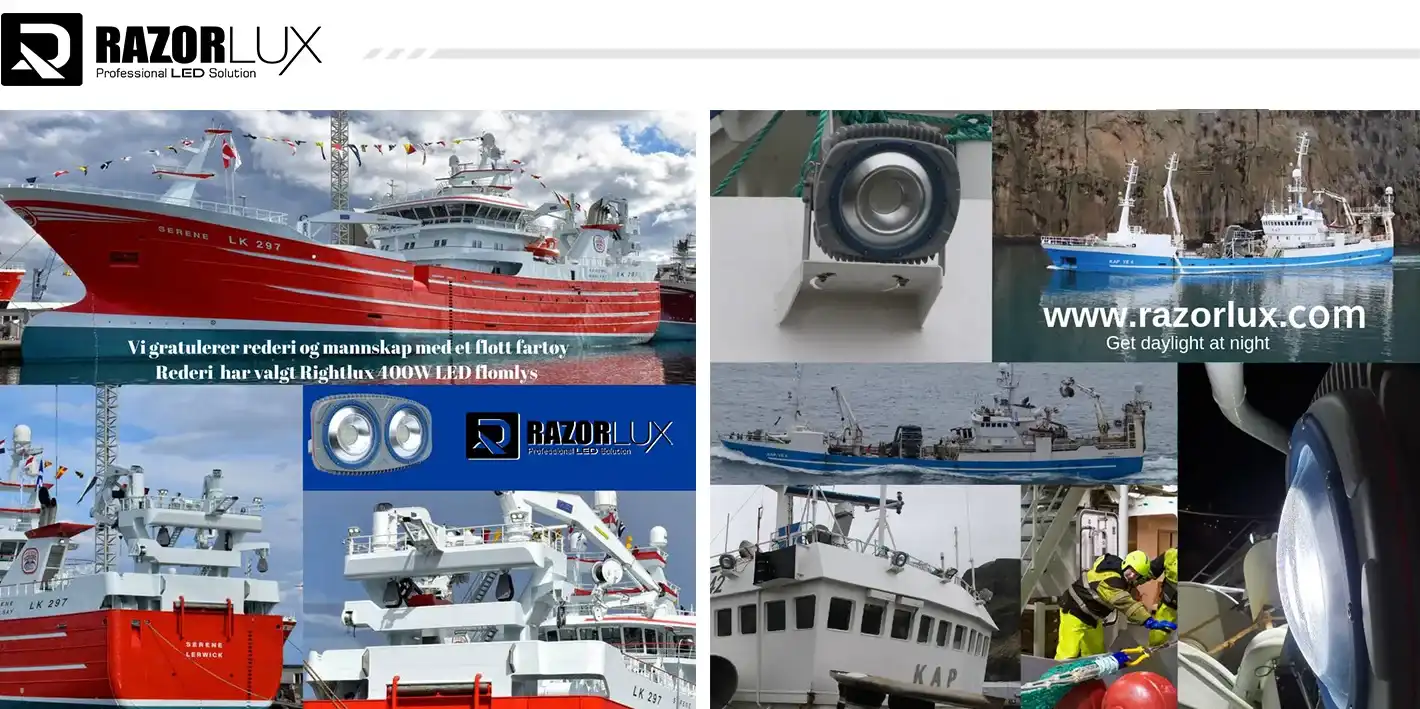
A company that runs an offshore platform in the North Sea recently replaced 180 old HID lamps with Razorlux RGL2-400A Dimmable Flood Lights. The project had immediate effects, including a 62% drop in energy use, the end of having to replace lamps every month, and better visibility on the deck during critical lift operations. Integrating dimming with the helideck's lighting settings made sure that the lighting changed in a way that was approved by the FAA during chopper approaches. The purchasing team split the order into three shipments to work with maintenance shutdowns that happen every three months. Razorlux offered mounting plates that were already set up and matched the bolt patterns on existing fixtures. This cut the time needed for installation by 40%. Two years after installation, audits showed that there were no problems and that the lumen maintenance was stable. This proved that the total cost of ownership estimates were accurate and that the initial capital spending was justifiable.
Making the Right Choice: Selection Criteria for Commercial and Industrial Buyers
Defining Project-Specific Requirements
Analysis of the surroundings is the first step in writing a good plan for Best Dimmable Flood Lights. Keep track of the temperature ranges, humidity levels, amounts of corrosive contact, and mechanical vibration patterns that will be used. Check these conditions against the fixture's operating temperature range. An item that can work in temperatures ranging from -40°C to +60°C can be used on Arctic drilling platforms, but most commercial fixtures won't work below -20°C.The output and distribution patterns of lumens are affected by security and legal requirements. For a perimeter fence, you need 30 to 50 foot-candles with very little light trespass. This can be done with uneven optics and precise aim angles. For systems to work in explosive atmospheres, they need to be ATEX or IECEx certified. These are specialized versions that cost more but are still needed in petrochemical sites.
Critical Selection Metrics Checklist
Figuring out if a fixture is right for the job takes a careful look at a lot of different factors. The following factors make up a full system for evaluation:
Performance Specifications:
- Luminous efficacy ≥130 lm/W to save energy
- Power factor ≥0.95 to keep reactive power costs as low as possible
- Total Harmonic Distortion <10% to work with electricity grids
- L70 lifespan >50,000 hours based on LM-80 test results
Environmental Protection:
- IP67 is the minimum for placing on a marine deck; IP65 is fine for protected industrial areas
- IK10 impact protection for areas with a lot of foot traffic
- Corrosion-resistant materials that don't rust and have passed the ASTM B117 salt spray test
- Operating temperature range that matches the peaks of the spot
Control and Integration:
- Dimming protocols that work with each other (0-10V, DALI, or PWM)
- Flicker-free operation >1kHz PWM frequency
- Emergency backup compatibility for critical safety lighting
- Voltage range that works with local power supplies (85–305Vac is common; 110–480Vac is better)
Support and Warranty:
- Minimum five-year guarantee that covers the LED, driver, and case
- Technical support in your area or a promise to respond remotely 24 hours a day
- Spare parts availability promise for at least ten years
- Detailed installation documentation and training materials
Why LED Dimmable Flood Lights Dominate Industrial Applications
As LED technology has improved, alternatives are no longer useful for demanding tasks. Metal halide fixtures need to warm up for 10 to 15 minutes and lose 30% of their lumens after 8,000 hours. Color rendering is bad with high-pressure sodium lamps (CRI <25), which makes it harder to do eye inspections and use color-coded safety systems. These problems can't happen with LED options, which offer instant-on functionality and stable color output. The ability to dim adds operational dimensions that can't be done with HID technologies. It's easy to handle dynamic lighting situations, like turning down the lights when migrant birds are nesting near shore sites or dimming them during overnight maintenance to protect workers' ability to see at night. As standards for worker safety and environmental compliance change, these abilities become more important in making specification decisions.
| Selection Factor | Razorlux RGL2-400A | Typical Competitor |
|---|---|---|
| Luminous Efficacy | 130 lm/W | 110–120 lm/W |
| Voltage Range | 110-480Vac / 100-800Vdc | 120 to 277Vac Usually |
| IP Rating | IP67 | IP65 to IP66 |
| IK Rating | IK10 | IK08 |
| Warranty (Driver) | 5 years | 3 years |
| CRI Options | Ra75, Ra80, and Ra90 | Ra70–Ra80 |
| Beam Angle Choices | 4 options (including asymmetric) | 2 or 3 choices |
Conclusion
When choosing the right Best Dimmable Flood Lights for industrial and maritime settings, you need to think about technical specs, how long the lights will last in the environment, and how much they will cost over their entire life. High-performance fixtures like the Razorlux RGL2-400A meet important buying needs by offering IP67/IK10 safety, working with all voltages, and using tried-and-true parts that come with full warranties. Investing in good lighting infrastructure pays off in the form of lower energy costs, longer maintenance intervals, and higher operational safety. When procurement teams have structured evaluation criteria, they can definitely choose solutions that will work well for many years and help the company reach its goals for efficiency, sustainability, and legal compliance in tough working conditions.
FAQ
Can dimmable LED flood lights reduce energy costs compared to non-dimmable models?
Of course. When Best Dimmable Flood Lights are used at lower power levels during times of low activity, they can save 40 to 50 percent of the energy they use. The energy savings go down almost linearly with the amount of dimming, taking into account small changes in how efficient the drivers are. Facilities with changing levels of usage or natural light benefit most from automatic dimming controls that change output based on what's happening in real time.
Are these fixtures compatible with building management systems?
Yes, standard control methods make it easy for industrial-grade Dimmable Flood Lights to work with BMS systems. The 0-10V analogue dimming interface works with all commercial systems, and DALI-enabled versions let you talk back and forth for more advanced diagnostics and to assign specific addresses to individual fixtures. Check for protocol compatibility during design to avoid having to make expensive changes in the field after installation.
What causes flickering in dimmable LED fixtures, and how can it be resolved?
Flicker usually happens when the driver and dimmer don't work well together or when the minimum load isn't high enough. Make sure that the dimming control works with the fixture's protocol. Mixing types that don't work together leads to strange behavior. Make sure that the loaded sum is greater than the dimmer's lowest limit, which is usually between 20W and 50W. Good drivers with PWM frequencies higher than 1kHz get rid of flickering. If the problems still happen after being checked, check the control wire to make sure it is properly shielded and that the voltage drop is within accepted limits.
Partner with Razorlux for Superior Industrial Lighting Solutions
Razorlux is ready to help you with your next business or factory lighting project by giving you expert advice and using tried-and-true products. We are a well-known company that has been making the best dimmable flood lights for 25 years and has over 200 patents. We offer custom solutions that meet the strict needs of naval, offshore, and heavy industrial settings. Our RGL2-400A model is a great example of engineering excellence. It combines 130 lm/W efficiency, IP67/IK10 protection, and voltage compatibility across all platforms in a single platform that comes with a full five-year warranty. Email our expert sales team at sam@razorlux.com to talk about your particular needs. We give you full specifications, sample units to test in the field, and all the project paperwork you need to help you buy something. Find out why Razorlux is the lighting partner of choice for the world's top shipyards, port owners, and industrial sites.
References
1. Illuminating Engineering Society (2020). "IES Lighting Handbook: Reference and Application, 10th Edition." New York: Illuminating Engineering Society.
2. U.S. Department of Energy (2022). "LED Lighting for Marine and Industrial Applications: Energy Efficiency and Performance Standards." Washington, D.C.: Office of Energy Efficiency and Renewable Energy.
3. International Maritime Organization (2021). "Guidelines for Lighting Systems on Ships and Offshore Installations." London: IMO Publishing.
4. American Petroleum Institute (2019). "API Recommended Practice 14F: Design and Installation of Electrical Systems for Offshore Production Platforms." Washington, D.C.: API Publishing Services.
5. National Electrical Manufacturers Association (2023). "NEMA SSL 7A: Phase Cut Dimming for Solid State Lighting - Basic Compatibility." Rosslyn, VA: NEMA Standards Publication.
6. Det Norske Veritas (2021). "Rules for Classification of Ships: Electrical Installations." Oslo: DNV GL Maritime Standards.