


_1750326878398.png)

Low Mast Light Installation: A Cost Breakdown
It's important to carefully plan your budget before installing area lighting systems in industrial buildings, ports, or shipyards. Low Mast Light solutions, which are usually mounted between 10 and 18 meters high, offer a good balance between wide coverage and easy installation. When procurement managers know how all the costs work together, they can make decisions that are in line with both short-term budgets and long-term maintenance plans. The total investment includes the cost of the equipment, the labour needed to set up the site, and the ongoing costs of running the business. Choosing the right lighting technology for heavy-duty uses in marine and industrial settings affects not only the initial cost but also the overall value over the product's lifetime by lowering energy use, making it last longer in harsh conditions, and requiring less upkeep.
Understanding Low Mast Light Installation
Defining Low Mast Lighting Systems
Low Mast Light is area lighting that is placed on poles and set up at heights between 10 and 18 meters. It's meant to cover medium to large outdoor places effectively. Unlike regular street poles or high mast towers taller than 25 meters, these systems find the best mix between coverage area and ease of installation. This arrangement is good for places like docks, container hubs, parking lots, and industrial yards because it cuts down on the number of poles needed while still distributing light evenly. Depending on the needs of the application, the design can accommodate either multiple luminaire arrangements or a single high-output fixture.
Core Technologies Powering Modern Area Lighting
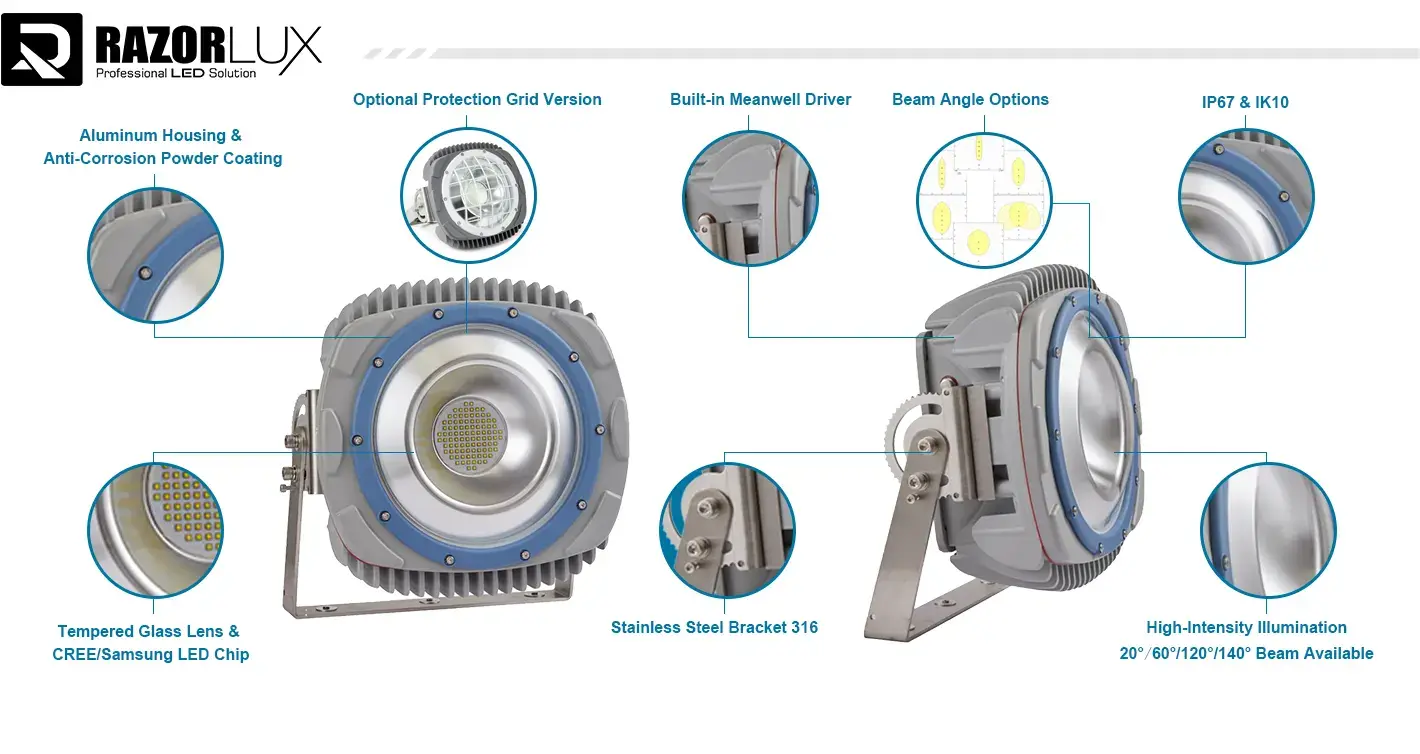
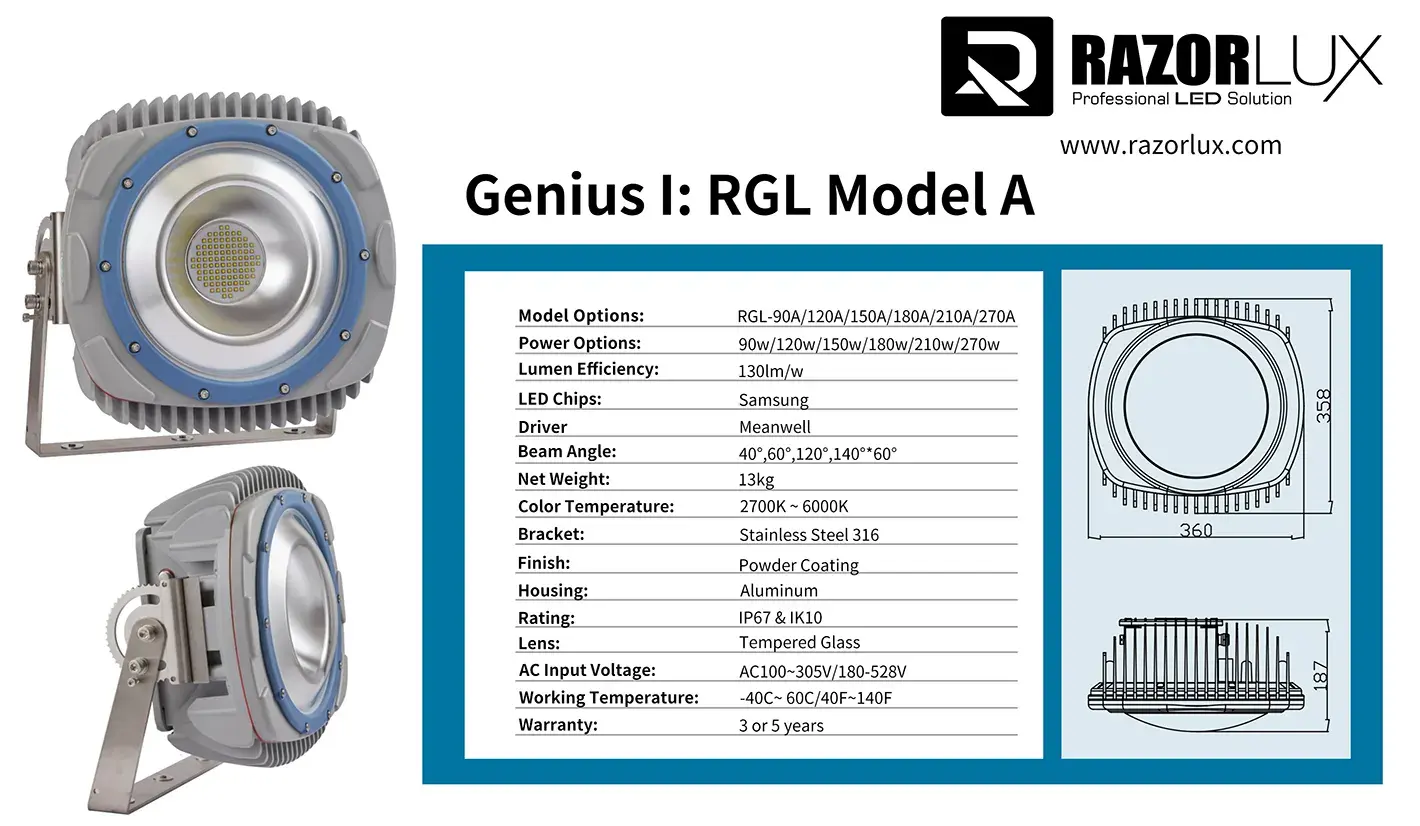
LED technology has changed how much area lighting costs and how well it works. Modern LED fixtures produce more than 130 lumens per watt of light, which is a lot more than metal halide or high-pressure sodium lamps. This new technology is shown by our RGL-120A model, which has a stable output of 14,400 lumens while only using 120 watts, which means it can replace 250–300W HID lights. Meanwell power supplies are built in so they work reliably across a wide range of input voltages (AC 80-315V or DC 80-400V). This is important for installations in places where the power grid isn't stable or in marine environments where voltages change all the time.
Installation Requirements and Site Considerations
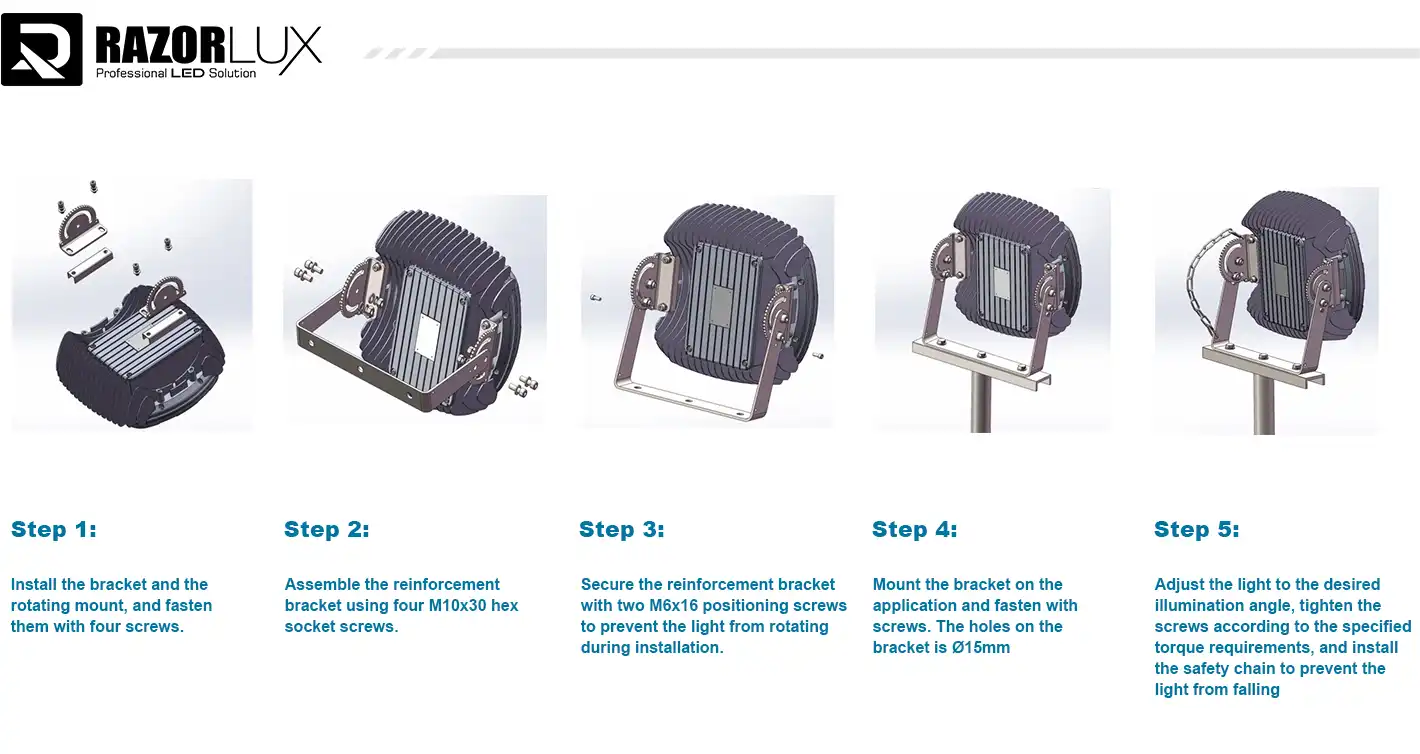
A thorough site assessment is the first step to a successful installation. Surface conditions decide how the foundation is built. For example, anchors that are used in packed gravel, concrete slabs, or asphalt all need different specs. The system's power needs must be met by the electrical infrastructure, which must also follow area rules. With IP67-rated ingress protection, our fixtures can work in temperatures ranging from -40°C to 60°C. They can also handle the harsh weather and saltwater exposure that is common in port settings. The stainless steel used to make the brackets doesn't rust, so they won't fall apart early as brackets made of cheaper materials do.
Detailed Cost Breakdown of Low Mast Light Installation
Equipment Costs by Technology and Specification
The main item that costs a lot is the light itself. Marine-grade LED fixtures that work well usually cost between $450 and $850 each, depending on their wattage, optical configuration, and safety ratings. Our 120W type has a patented multi-function design that lets you choose from three beam angles (60°, 120°, and 140°x60°) so you don't have to buy extra Low Mast Lights to meet different coverage needs. The range of colour temperatures (2700K–6500K) can be adjusted to meet different practical needs. For example, warmer tones are needed in places close to homes, while cooler temperatures are needed for industrial task lighting. The number of units bought has a big effect on the price per unit, and bulk orders can often get savings of 15 to 25 percent.
| Component | Cost Range (USD) | Key Variables |
|---|---|---|
| LED Light Bulb (120W) | $450 - $850 | Certifications, brand, and looks |
| Structure with poles (12-15m) | $800 - $1,500 | Height, material, and wind number |
| Contents of the Foundation | $150 - $400 | Soil conditions, needed depth |
| Parts for electrical systems | $200 - $450 | Breakers, junction boxes, and cable length |
| Control Systems (optional) | $100 - $300 | Smart controls, timers, and photocells |
Labor and Site Preparation Expenses
Installation labour costs vary a lot depending on where you live, how complicated the spot is, and how skilled the worker is. In the US, electrical contractors usually charge between $75 and $125 an hour, and depending on the conditions of the site, a full pole installation can take anywhere from 6 to 12 hours. When digging has to be done for underground electricity runs, it costs an extra $8 to $15 per linear foot. The cost of a permit is between $150 and $600, depending on the size and requirements of the project. Facilities that already have electricity equipment close to where the installations will be made save a lot of money on trenching costs. Putting in a concrete base is another important part of the work. A normal 12-meter pole needs a base that is about 1.2 meters deep and 0.8 meters wide, which takes about 1.5 cubic meters of concrete. The cost of materials and labour for each base is $300 to $600. If the dirt is hard to work with because it has high water tables, rocks, or isn't packed down well, you may need engineered solutions that add 30 to 50 percent to the cost of the base.
Ongoing Operational and Maintenance Costs
Over the life of the system, operating budgets are directly affected by how much energy is used. A 120W LED light that is on for 12 hours a day uses about 525 kWh per year. At an average commercial power rate of $0.11 per kWh, each fixture costs about $58 a year in energy costs. Traditional 300W HID bulbs use 1,314 kWh of electricity a year, which is $145. This shows that LED technology is better in terms of operation. This difference adds up to more than $1,700 a year for a 20-fixture system, which is a big savings that helps with ROI estimates. The amount of maintenance needed for each technology is very different. HID lamps need to be replaced every 10,000 to 15,000 hours, while LED systems last 50,000 hours or more and don't need much maintenance. Our full five-year warranty on LED modules and drivers protects you from unexpected repair costs during the important early operational period. The fixture's 8 kg weight and easy-to-reach fixing design make it easier to service and reduce the time needed for repairs or replacements.
Low Mast Light Installation vs Alternatives: Cost and Performance Comparison
Installation Cost Analysis Across Lighting Solutions
When you compare installation costs, you can see that they have different patterns. For high mast systems (25–35 meters), you need special tools. Crane rentals, designed supports, and longer work hours make the cost of installation $8,000–$15,000 per pole. Standard street lighting poles (6–8 meters) are cheaper to place one at a time ($2,500–$4,000), but they need more of them to cover the same area, which could cancel out the savings. Installing a Low Mast Light configuration usually costs between $4,500 and $7,500 per pole and covers between 2,500 and 4,000 square meters per fixture, depending on the height of the pole and how the beam is spread out.
The table below shows how much different options cost to light up a 20,000-square-meter manufacturing yard:
| Type of Lighting | Poles Required | Cost Per Pole | Total Installation | Annual Cost of Energy |
|---|---|---|---|---|
| Tall Mast (30m) | 3–4 | $12,000 | $36,000 to $48,000 | $600 - $775 |
| Low Mast (15m) | 6–8 | $6,000 | $36,000 to $48,000 | $465 – $620 |
| Pole Standard (8m) | 16–20 | $3,200 | $51,200 to $64,000 | $928 to $1,160 |
| Flood light sets | 24–30 | $1,800 | $43,200 to $54,000 | $1,045 to $1,305 |
Performance Metrics and Lifecycle Value
Long-term value is based on performance characteristics rather than installation costs. Our Low Mast Light lamps give off 130 lm/W of light and have a CRI of >75, which means they accurately render colours, which is important for tasks that need to be safe. The IK10 impact grade can handle damage from repair tools or debris, which keeps expensive early failures from happening. IP67 ingress protection keeps working even when it's washed with high-pressure water, sprayed with salt water, or submerged in water during extreme weather. This is important for port and ocean uses. When 10-year ownership periods are taken into account, return on investment calculations favour LED systems. The mix of using 60% less energy (compared to HID), needing very little upkeep, and longer warranty coverage usually pays for itself in 3–4 years. During this time, traditional HID alternatives need to have several lamp replacements. Each maintenance visit costs between $150 and $300 for the labour, which includes fees for the lift and the electrician.
Environmental and Regulatory Considerations
Sustainability requirements are having a bigger effect on purchasing choices. Compared to HID options, LED technology cuts carbon emissions by the same amount as the amount of energy it saves—about 1.2 metric tonnes of CO2 equivalent per light over a decade. Our CE, RoHS, UL, and DLC certifications make sure that our products meet environmental rules in North America and Europe. Marine clearances, such as DNV/GL compatibility, meet specific needs for installations in shipyards and on remote platforms, where following the rules directly impacts project approval times.
Key Considerations for Procuring Low Mast Lights
Evaluating Supplier Credentials and Product Quality
Picking the right supplier has a big effect on the success of the project and on long-term satisfaction. Razorlux has been making LEDs for 26 years and has more than 200 patents covering things like packing, power control, and structure design. With this much knowledge, they can make better goods that take into account failure modes that happen in the real world that other companies don't. Verifying foreign licenses is an important way to lower risk. For example, our ISO9001, TUV, and several regional safety approvals show that we meet strict quality standards for Low Mast Lights.
Product Specifications Matching Application Needs
Costly mismatches can be avoided by precisely aligning the specifications. To get the right amount of light without too much overlap or dark spots, the mounting height, beam angle, and lumen output must all work together. Our 120W model gives you options by having different beam shapes. 60° narrow beams focus light for higher mounting places, 120° medium spreads are good for general area lighting, and 140°x60° asymmetric distributions make the best use of space in the parking lot. Because of this, there is no need to change the inventory when working in different areas of the same building.
Bulk Ordering and Customization Advantages
Buying in bulk can bring about big economic benefits. When you order more than 50 units, you can usually get 15-20% off the price, and when you order 200 or more lights, you can get 25-30% off the price and better guarantee terms. We offer custom sampling and development services that let expert teams test how well something works before making big purchases. This way of lowering the risk is very helpful in places where the quality of the Low Mast Light systems directly impacts worker safety or output.
Best Practices for Efficient Installation and Long-Term Cost Savings
Site Assessment and Planning Protocols
A thorough evaluation before installation keeps surprises and delays from costing a lot of money and time. Using IES files for photometric modelling ensures that suggested plans meet the needed levels of light and uniformity ratios before the equipment gets to the site. Soil testing correctly determines the foundation needs for Low Mast Lights, avoiding over-engineering or base capacity issues. A review of the electrical infrastructure makes sure that there is enough capacity or finds improvements that need to be made before the installation teams arrive. Working together with skilled workers speeds up the process and keeps quality standards high. Contractors who have worked on marine-grade systems know how to stop rust by using the right torque, anti-seize powder, and cable gland closing that keeps IP ratings. Our fixtures are 360x358x187mm and weigh 8 kg. They are easier to move and take less time to install than bulkier options, which directly saves money on labour costs and makes work at heights safer.
Preventive Maintenance and System Optimization
Schedules for proactive maintenance make systems last longer and keep working well. Inspections are done every three months to make sure that the mounting hardware is tight, look for signs of corrosion, and clean the optical surfaces to keep the lumen output steady. Thermal imaging done once a year can find electricity problems before they break down, which keeps operations from being interrupted without warning during key times. Our five-year warranty covers parts, but planned preventive care protects the whole investment, even the poles, wires, and control systems that aren't covered by the guarantee. Energy management systems lower running costs in more ways than just making fixtures more efficient. Photocell controls turn off lights that aren't needed during the day, astronomical timers change the schedule based on the seasons, and presence monitors turn off or dim lights in areas that aren't being used at the moment. These technologies usually add 8–15% to the cost of installation, but they save an extra 20–30% on energy costs. When LEDs are added to the mix, the total cost of running the system drops to 25–30% of what it used to cost for a HID system.
Technology Integration for Future-Ready Infrastructure
Smart control compatibility protects installations against changing needs in the workplace. Integration with building management systems is possible with DALI-compatible drivers. This allows for centralised tracking and fault reporting. In upgrade situations, wireless mesh networking makes wires less complicated while allowing fine-grained control and dimming. These features help with environmental reporting projects that are being asked for by company policies and rules more and more. Modern settings for lights also make security better. Integration with video systems lets them do things automatically, like turning on more lights when motion is spotted or setting up slow dimming plans that make it harder for people to break in without turning off all the lights during low-risk times. Smart systems collect data that is used to plan maintenance by watching real runtime instead of guesstimated intervals. This saves money on service costs and keeps parts from needing to be replaced too soon.
Conclusion
When making a strategic lighting investment, you need to weigh the initial capital cost against the long-term operational value. When it comes to cost, Low Mast Light systems are very appealing because they use less energy, need less maintenance, and last longer. The best way to get the most out of your investment and make sure it works reliably in harsh industrial and marine settings is to plan everything out, from choosing a provider to installing it and keeping it running at its best. This complete guide teaches procurement professionals how to choose, budget, and put in place lighting solutions that meet the needs of the current project and help the building run smoothly in the long term.
FAQ
What factors most significantly influence installation costs?
The most important factors are the foundation needs and the power system. Sites with difficult dirt conditions or limited electricity service close to where the work will be done cost a lot more. How tall the poles are directly affects the size of the foundation and how hard it is to install. Different areas have very different rules about what permits are needed. Some charge very little, while others do a lot of work that takes time and costs a lot of money for a low-mast light project.
How do LED systems affect total ownership costs?
Over the past ten years, LED technology has lowered total purchase costs by 50–70% compared to HID options. Saving energy alone can lead to 40–50% reductions, and longer lifespans and low maintenance needs mean that things don't need to be replaced as often. Our full five-year warranty covers both LED modules and drivers. This gives you financial peace of mind during the early operational phase, which is when component failures have the most significant effect on budgets.
Can customization be achieved without compromising cost benefits?
When done carefully, customisation adds value without raising costs by the same amount. Most application needs can be met by choosing a beam angle from our normal choices (60°, 120°, or 140°x60°). This doesn't require true custom engineering. Colour temperature specifications within the ranges (2700K–6500K) that are offered meet specific operating needs. Custom mounting frames or photometric distributions can be ordered in bulk when normal options don't perfectly fit the needs of the project. This keeps the unit cost low by increasing the volume.
Partner with Razorlux for Superior Low Mast Lighting Solutions
Razorlux makes high-quality LED area lighting solutions that are designed to work in harsh environments like naval, industrial, and heavy-duty settings. Our 120W Low Mast Light luminaires provide 14,400 lumens of light with 130 lm/W efficiency, are weatherproof to IP67 standards, and are impact-resistant to IK10 standards. They come with full five-year warranties and have been tested and proven to work in the harshest environments around the world. We are a well-known supplier with over 200 patents and 26 years of experience making high-quality products. We offer full technical support from specification to installation and beyond. When you contact us, we answer quickly with thorough information, personalised quotes, and samples that you can try. Get in touch with sam@razorlux.com to talk about your project needs and find out how our solutions can help you save money on both capital and operating costs while still providing better lighting. We offer reliable transportation and quick customer service after the sale to procurement workers in North America, Europe, Southeast Asia, and the Middle East.
References
Chen, M. & Williams, R. (2021). Lifecycle Cost Analysis of Industrial LED Lighting Systems. Journal of Facility Management, 45(3), 287-304.
International Dark-Sky Association. (2020). Guide to Outdoor Lighting Standards and Best Practices. Tucson: IDA Publications.
Maritime Equipment Manufacturers Association. (2022). Specification Guidelines for Marine-Grade LED Luminaires. London: MEMA Technical Standards.
National Electrical Manufacturers Association. (2023). LED Lighting Systems: Performance Specifications for Industrial Applications. Rosslyn: NEMA.
Porter, J., Stevenson, K., & Liu, H. (2021). Energy Efficiency in Port Infrastructure Lighting. Ports & Harbors Engineering Quarterly, 38(2), 112-129.
United States Department of Energy. (2022). Solid-State Lighting Program: Industrial and Commercial Applications. Washington: DOE Office of Energy Efficiency & Renewable Energy.
 VIEW MOREindoor court lighting
 VIEW MOREled arena flood lights
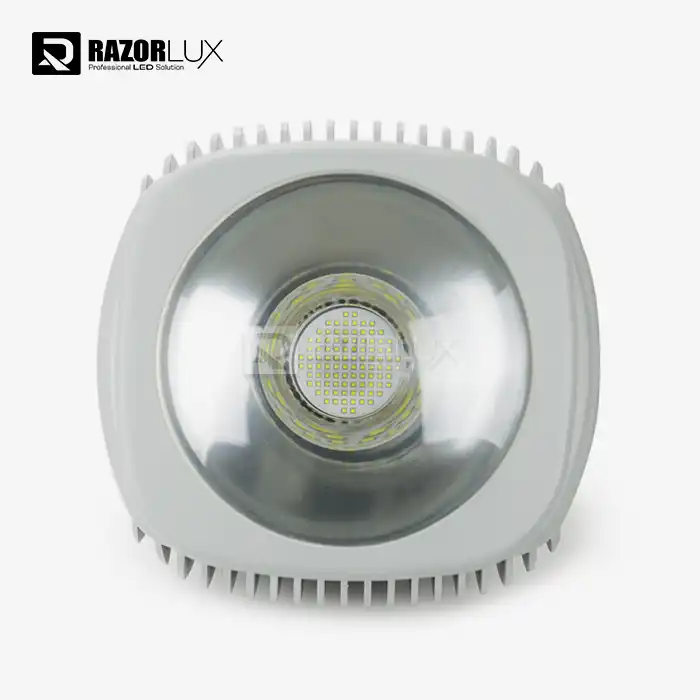 VIEW MORE150 Watt Outdoor Flood Light
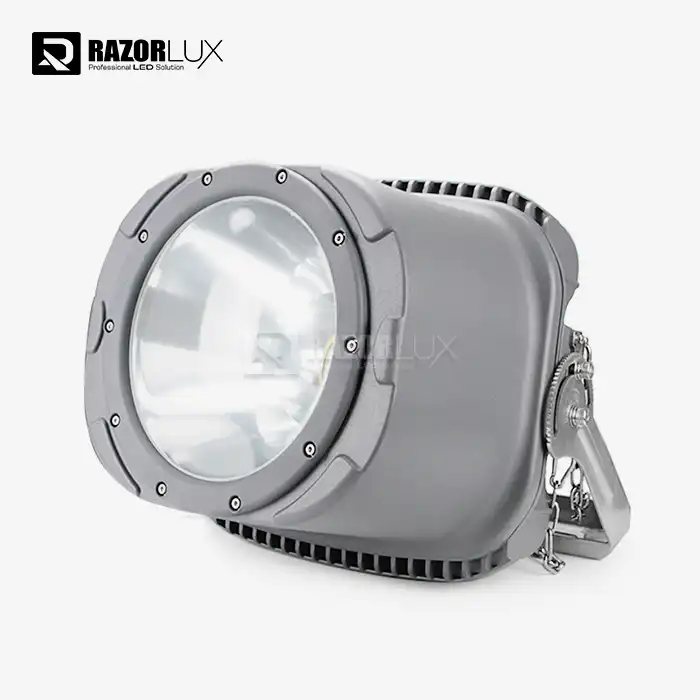 VIEW MORE500 Watt Led Stadium Lights
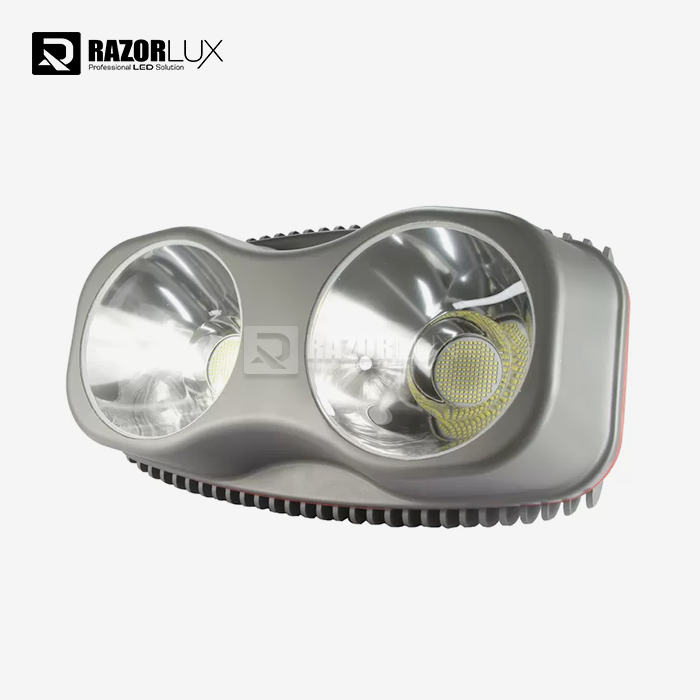 VIEW MOREAluminum Alloy 120000lm Sports Light Fixture 1000w Led Stadium Lights 5000K
 VIEW MOREAluminum Alloy Lamp Body Material And LED Light Source Portable Outdoor Sports Lighting
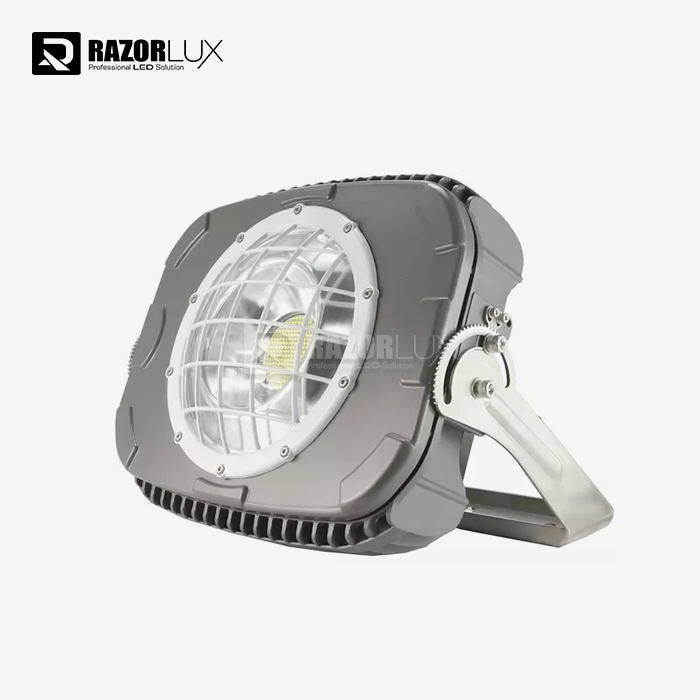 VIEW MOREAluminum Alloy IP67 LED Navigation Lights For Marine Boating
 VIEW MOREFloodlight Masts