


_1750326878398.png)

Marine LED Flood Light for Commercial Ships and Yachts
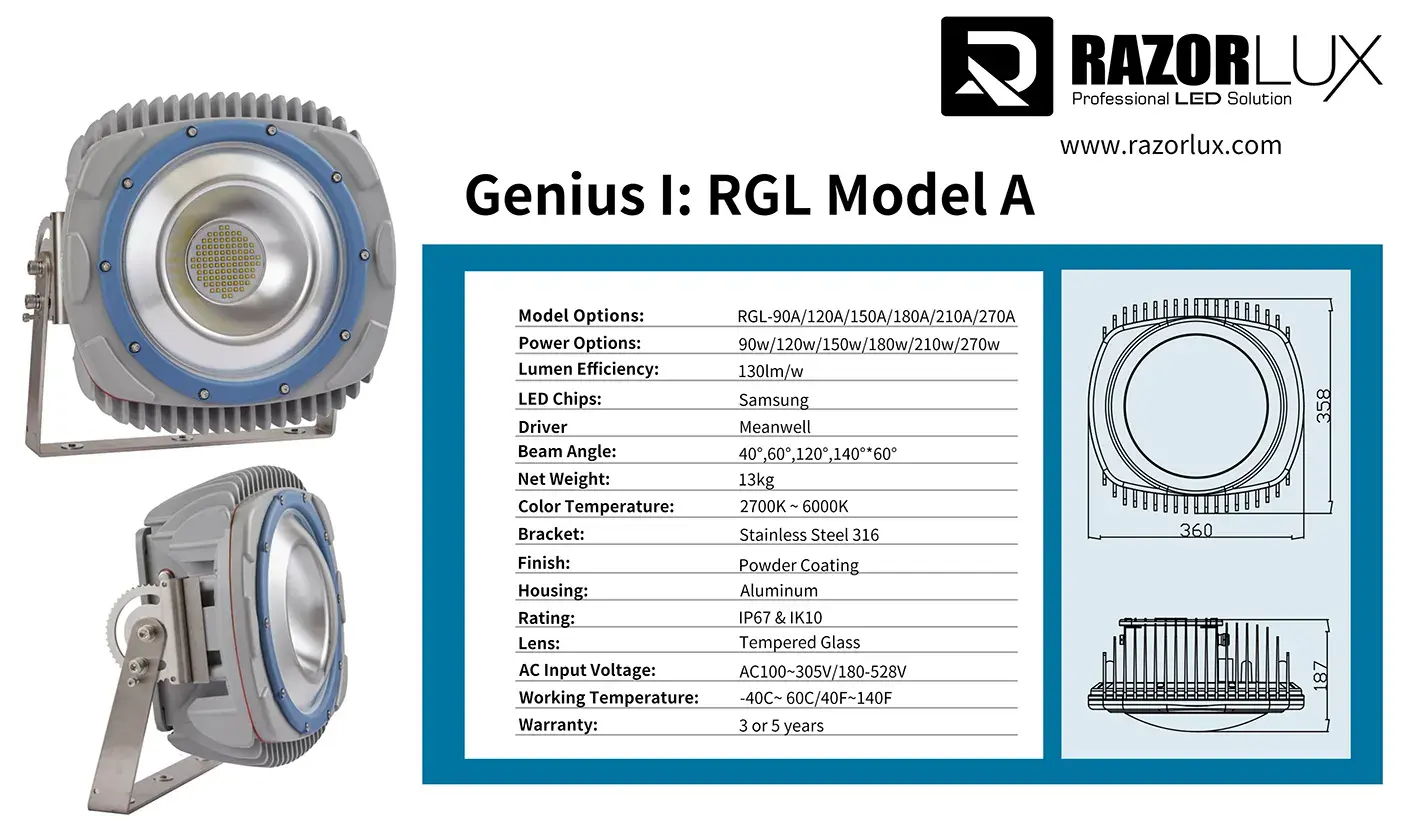
When business ship owners and yacht owners look for reliable lighting solutions, the Marine LED Flood Light stands out as the best option. These unique light fixtures use cutting-edge LED semiconductor technology and tough maritime engineering to create strong, energy-efficient lighting that can withstand salt spray, strong vibrations, and temperature changes from -40°F to 140°F. Today's marine-grade LED floodlights last 50,000 hours or more and use 130 lm/W of energy, which is much more efficient than traditional halogen or metal halide lamps that break down often in offshore conditions. This means that maintenance visits are much less frequent and less energy is used, both of which are important when getting to an area that requires dangerous deck work or expensive vessel downtime.
Introduction
Maritime lighting is more than just a way to see. It's essential for safe sailing, smooth cargo operations, and the well-being of team members on both business ships and luxury boats. The switch from older lighting technologies to LED systems has changed how ship owners plan lighting, set budgets for maintenance, and make sure they follow the rules. This in-depth guide looks at every aspect of Marine Led Flood Lights, from their technical specs and installation instructions to their purchasing options and long-term costs. This resource gives you useful information based on 25 years of experience with marine lighting, whether you are in charge of a business shipping fleet, a shipyard, or the equipment for offshore platforms. We help purchasing managers and marine engineers with problems like high failure rates, missing certification paperwork, unreliable supplier responses, and not knowing the total cost of ownership. We do this by giving them evidence-based selection criteria that are in line with international maritime standards.
Understanding Marine LED Flood Lights: Features, Benefits & Working Principles
Core Technology Behind Maritime LED Illumination
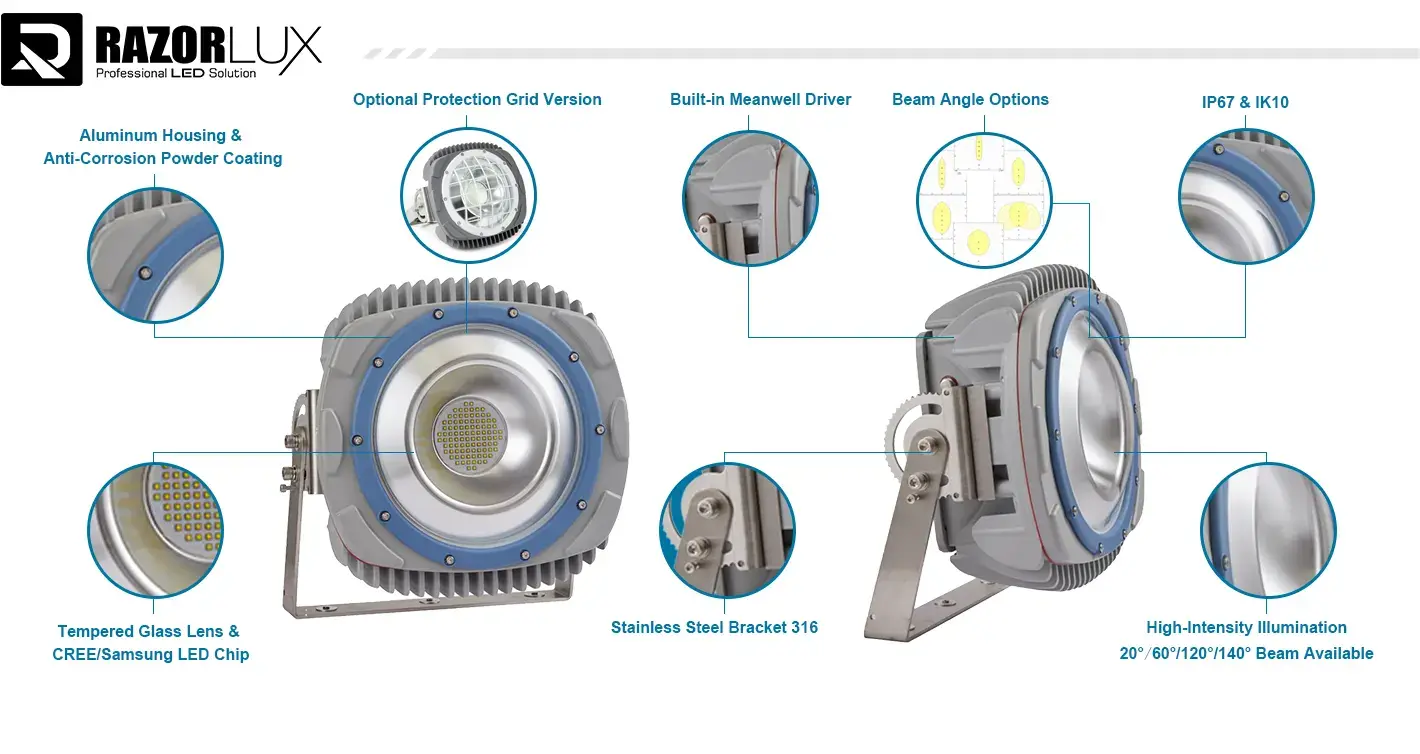
Electroluminescence is how marine LED flood lights work. This is when semiconductor diodes directly turn electrical current into visible light, without using filaments or gas discharge that produce heat. Because of this basic difference, maritime uses benefit right away. Our RGL-180A model uses LED chips from Samsung or Philips to produce 23,400 lumens from just 180W of input power, meeting the 130 lumens per watt efficiency requirements that are becoming more and more important in purchase standards. The solid-state design gets rid of weak parts that can break from shock and vibration. This fixes a common problem with traditional marine lighting that is affected by engine noise and wave impact.
IP67 Protection and Corrosion-Resistant Architecture
The "IP67" rating in technical specs means that the device is protected against both solid particles and water immersion. The first number (6) confirms that the fixture housings are completely dust-tight, which is necessary to keep salt crystals from building up inside them. The second number (7) proves that the item can withstand being submerged up to one metre for thirty minutes. This is very important when cleaning the deck or when green water flows across the bow sections. The body of our aluminium alloy goes through a special marine-grade anodising process, and the clamps are made of stainless steel, which doesn't rust when exposed to saltwater all the time. This engineering solves a known problem in the industry: low-quality lights start to lose their electrical integrity within 18 months of being installed.
Flexible Input Voltage and Color Temperature Options
Different types of electricity systems are used on commercial ships, ranging from 110V shore power to 440V engine output and, in smaller ships, DC battery systems. Our unique multi-function design can work with either AC 100-305V or DC 127-431V input, so you don't have to worry about compatibility issues when you're calling a foreign port or upgrading your system. You can choose a colour temperature between 2700K and 6500K to meet specific operational needs. For example, warmer 3000K lighting keeps crews from getting too tired during overnight watches, while cooler 5000K lighting makes it easier to see colours clearly for tasks like inspecting cargo and maintenance that require accurate visual assessment to avoid costly mistakes.
Marine LED Flood Light Types and Their Applications on Commercial Ships and Yachts
Classification by Beam Angle and Mounting Configuration
Choosing the right beam spread affects both how well the lighting works and how quickly it can be installed. Narrow beam angles (15° to 30°) focus light intensity for long-throw uses like searchlights, areas where cargo cranes work, and lighting around the perimeter of a building for security. This focused intensity works well over long distances and in bad weather. Medium beams (40° to 60°) are good for general outdoor work areas because they provide even coverage without using too many fixtures. Wide-angle choices (120° or our unique 140°×60° asymmetric pattern) light up large areas like engine rooms and cargo holds by lowering the formation of shadows that can be dangerous. The fixing bracket system has a big effect on the cost of labour and the dependability of the system over time. Our 15 kg stainless steel bracket assembly can be adjusted in multiple directions and keeps its structural integrity even when it is vibrating continuously. This is something that has been proven by IK10 impact resistance testing. This solves the procurement problem of "ease of installation and maintenance" by letting a single technician place it with common tools, while competing systems need special tools or more than one person.
Application-Specific Selection Criteria
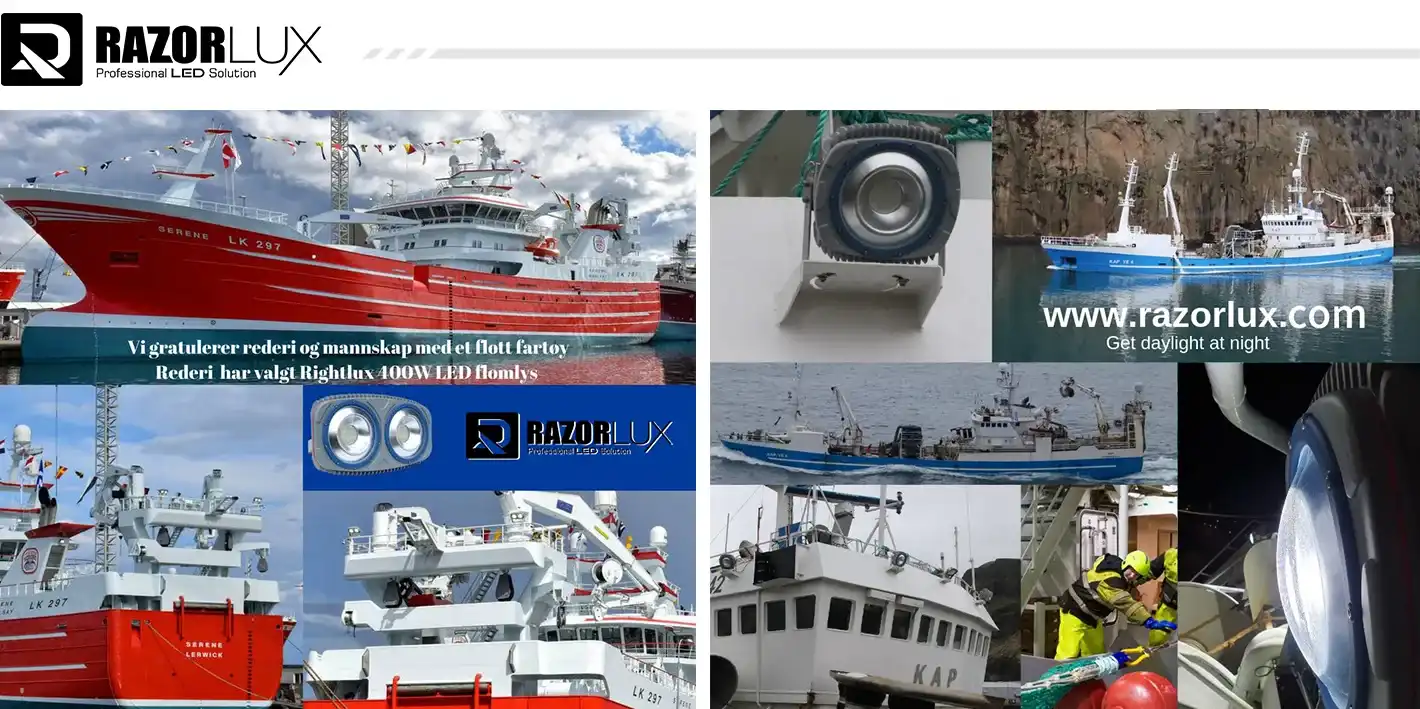
Customised lighting plans are needed for each type of vessel and its intended use: Commercial Cargo Vessels: Container ships and bulk carriers prioritise high-output lighting across large deck areas where loading continues even when visibility is low. When lights are spaced out according to photometric estimates that take into account mounting height and beam spread, the 180W configuration with 23,400 lumens gives off enough light. Offshore Platforms and Production Vessels: Oil rigs and FPSO units need lighting that works around the clock and is very reliable, since getting to them for upkeep costs a lot of money and time. This operational limitation is directly addressed by the 50,000-hour lifespan (5.7 years of continuous operation) and 5-year warranty coverage. RMRS marine certification also ensures compliance with offshore regulatory frameworks. Luxury Yachts and Recreational Boats: High-end yacht installations strike a mix between speed and style. With adjustable colour temperatures, you can switch from task lighting during docking procedures to ambient lighting in the evening that makes the atmosphere on board better. The CRI>75 standard makes sure that colours are shown correctly for both safety-critical and aesthetic uses.
| Vessel Type | Primary Application Zones | Recommended Beam Angle | Key Performance Priority |
|---|---|---|---|
| Container Ships | Deck cargo areas, crane zones | 60°-120° | High lumen output, durability |
| Offshore Platforms | Helideck, production modules | 40°-60° | Regulatory compliance, reliability |
| Fishing Vessels | Working deck, fish holds | 120° wide coverage | Vibration resistance, waterproofing |
| Luxury Yachts | Deck entertaining areas, docking | 40°-60° adjustable | Aesthetic integration, dimming capability |
| Tugboats | Forward work deck, aft towing areas | 30°-40° focused | Impact resistance, instant-on capability |
Comparative Performance Against Legacy Technologies
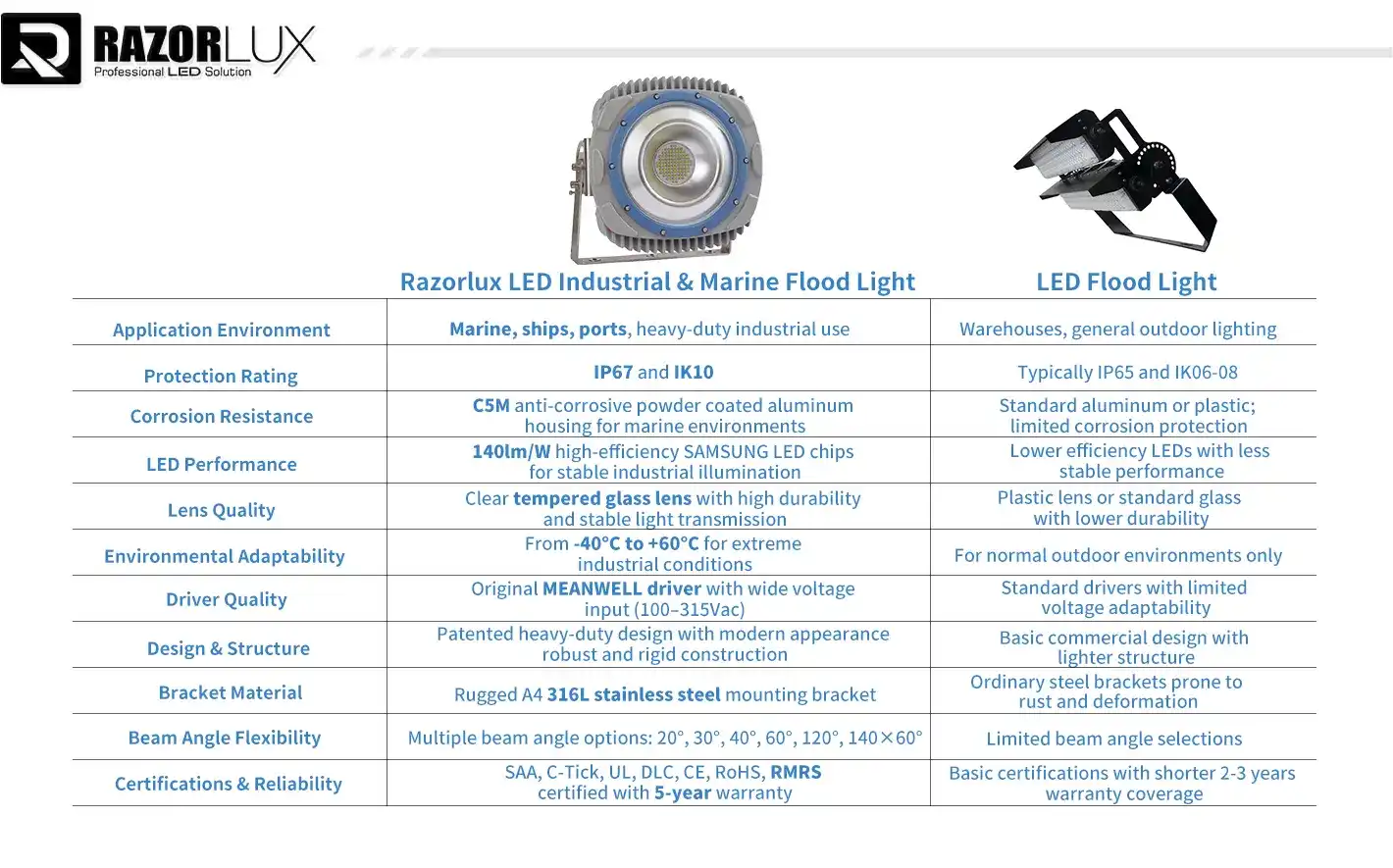
Moving from gas and metal halide systems to LED technology has clear benefits for operations. Traditional 400W metal halide lights that produce the same number of lumens use 220% more energy than our 180W marine LED flood light option. This means that generator-powered ships can save a lot of fuel. LED lamps last 50,000 hours or more, while halogen lamps need to have their lamps replaced every 2,000 to 3,000 hours. This means that LEDs don't need to be serviced as often, which can be dangerous when working on fixtures that are high up. When there is an emergency, the ability of LED technology to turn on instantly is very important, since metal halide warm-up times take 3–5 minutes.
Installation Guide & Maintenance Tips for Marine LED Flood Lights
Pre-Installation Assessment and Site Preparation
A thorough site evaluation that looks at structural support, electrical infrastructure, and operational needs is the first step to a successful installation. Because the fixture weighs 15 kg, it needs to be securely attached to the main structure of the vessel instead of non-structural panels or trim. This is a requirement that is often ignored during repair projects that then fail due to vibrations. Check that the mounting surfaces can handle the load; deck installations may need reinforcement plates that spread the weight across several stiffeners. When electrical planning, the voltage drop over the wire runs needs to be taken into account. This is especially important on big ships where fixtures are mounted more than 50 meters from distribution panels. Figure out the wire gauge needs using the wide input voltage range (AC 100–305V) to make sure the operation stays within specs even when the generator frequency changes, which can happen during manoeuvring. The Mean Well driver that's built into the fixture has surge protection up to 10kV, which handles the "dirty power" environment that marine electrical systems often have.
Step-by-Step Installation Protocol
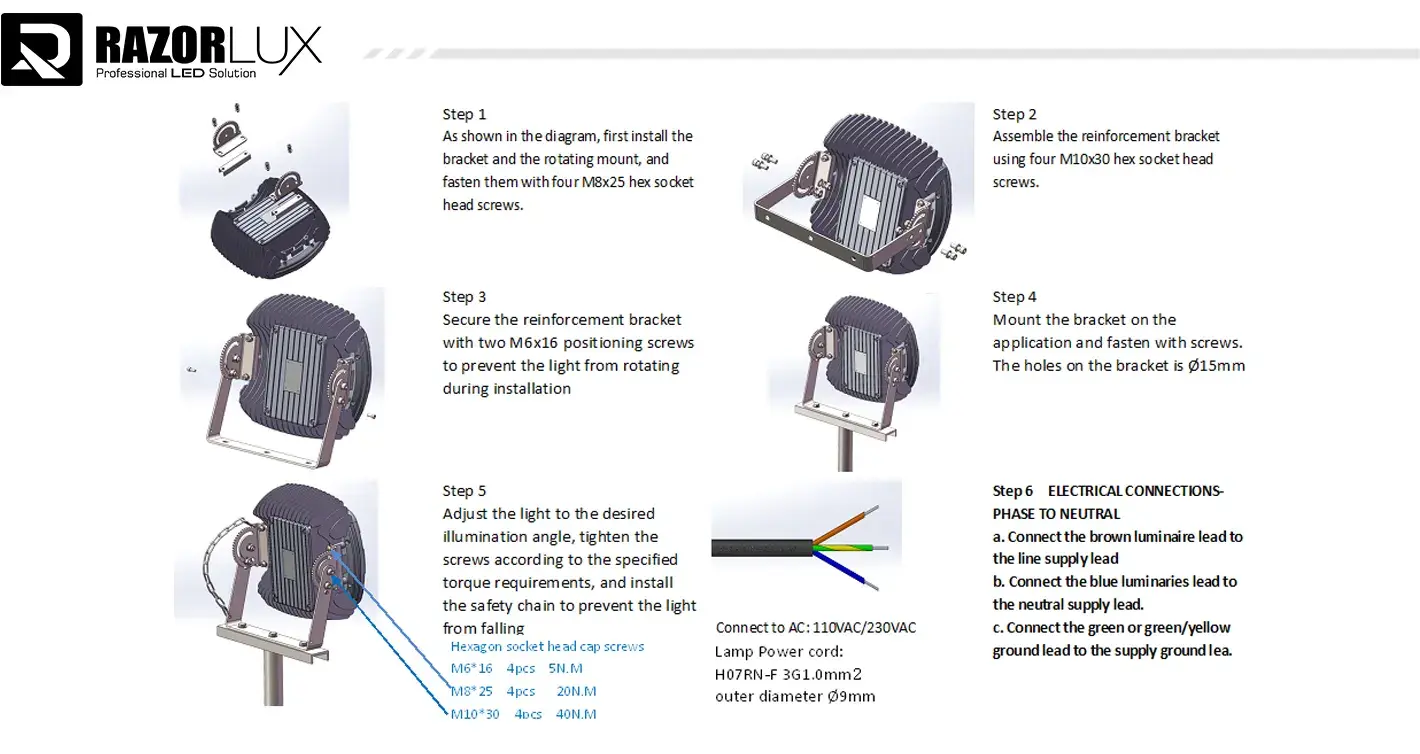
The right way to place something has a direct effect on how reliable and waterproof it is in the long run. Place the stainless steel bracket so that the bulb faces in a way that sends the beam pattern according to the photometric design. This will keep water from building up on the tempered glass lens. The IP67 grade depends on keeping the compression of the gasket within the limits allowed. Tightening screws too much can damage the sealing surfaces, and not tightening them enough lets water in through capillary action. The most common place for naval lighting systems to go wrong is where the cables enter. Supply lines should be run through the right gland with the right strain relief to keep the conductors from wearing out from vibrations. Use marine-grade glue on all threaded connections, keeping in mind that the salt air will use any tiny opening to start rusting. Before turning on the circuit, test the waterproof integrity of the marine LED flood light by spraying low-pressure water on the joints and looking for signs of water getting in.
Preventive Maintenance Schedule and Inspection Criteria
Even though LED technology requires a lot less maintenance than traditional lighting, regular inspections keep small problems from getting worse and causing the system to fail. Every three months, a visual inspection should find early signs of gasket wear, hardware corrosion, or lens contamination that makes light less effective. Salt buildup on lens surfaces can lower their usefulness by 15 to 20 percent. Cleaning them every so often with fresh water and a light soap is an easy way to get their performance back to normal. Electrical testing once a year makes sure that the process is still meeting standards. Measure the input current and compare it to the reference data. A big difference means that the driver is getting worse or there are problems with the LED array that need to be fixed before they fail during important operations. Keep track of any rust that appears on the mounting hardware. If the corrosion gets too bad for the working environment, upgrade to higher-grade stainless steel fasteners.
Procurement Guide: How to Source High-Quality Marine LED Flood Lights for Commercial Use
Certification Requirements and Compliance Verification
Certain certifications are needed for maritime lighting that can't be met by non-marine lighting. The RMRS (Russian Maritime Register of Shipping) approval on our RGL-180A model shows that it meets strict guidelines for shock, vibration, and environmental resistance tests that are specific to installations on ships. This certification solves the problem of "lack of certifications or documentation" in procurement by letting a third party check that specs meet practical needs instead of just believing what the maker says.UL approval for marine uses (UL 1598A) is the standard for compliance in North America, while CE marking is the standard for compliance in Europe. Multiple regional certifications, such as the SAA for Australia and the C-Tick for telecommunications compatibility, show that the company can make marine LED flood lights that can be used by global fleets without having to make different versions of the product for each operating region. This makes it easier for international ship operators to keep track of their inventory.
Evaluating Supplier Capability and After-Sales Support
Using technical specifications alone is not enough to choose a supplier. The operational question "Which company supplies your power supply?" shows a real worry about how the quality of the parts affects how reliable they are in the long run. Our listing of Mean Well drivers—the standard in the industry for LED power supplies—addresses this issue directly by finding a source of parts that have a history of being used in naval applications. The quality of post-sale help can be predicted by how responsive the supplier was during the review process. Ask for all the technical information you need, like photometric reports, installation drawings, and certifications for the materials. Check the answer time and completeness—suppliers who can't give you all the information you need before you buy usually can't give you good technical help when you have problems with installation or a warranty claim. Our ISO9001 certification, which we've kept for 22 years in a row, shows that we have a method for managing quality that helps us produce products consistently and solve problems quickly.
Total Cost of Ownership Analysis
The purchase price is only one part of the economics of a lighting system. Figure out the total cost of ownership by adding up the prices of energy use, upkeep labour, replacement parts, and downtime over the expected service life. Even though the premium product costs 25% more up front, a comparison test shows that premium marine LED flood lights with 180W consumption and 50,000-hour lifespan are cheaper overall than cheaper options with 200W consumption and 30,000-hour service intervals.
| Cost Factor | Premium LED (Our RGL-180A) | Economy LED Alternative | Traditional Metal Halide |
|---|---|---|---|
| Purchase Price (per fixture) | $385 | $295 | $180 |
| Power Consumption | 180W | 200W | 400W |
| Operational Lifespan | 50,000 hours | 30,000 hours | 8,000 hours |
| Maintenance Interventions (10-year period) | 1 replacement | 2 replacements | 7 replacements |
| Energy Cost (10 years @ $0.15/kWh) | $2,430 | $2,700 | $5,400 |
| Labor Cost (@ $150/maintenance visit) | $150 | $300 | $1,050 |
| Total 10-Year Cost | $2,965 | $3,590 | $7,890 |
The study shows that original price optimisation leads to false economies when lifecycle costs are taken into account correctly. This strategy is based on proof and helps procurement teams convince management teams to approve capital expenditures while technical departments focus on dependability and compliance.
Bulk Procurement Strategies and Sample Testing
Structured buying methods help with big projects like building new ships or fixing up old ones. Before placing a large order, you should ask for sample units to be tested for technical issues. This will help you find problems with compatibility, confirm performance claims, and get your crew used to the installation process. Our complete sample packages come with detailed technical documentation, installation guides, and performance test reports that let you fully evaluate the products in the conditions that are right for you. Framework deals that set prices, release dates, and quality standards for multi-phase projects should be negotiated. This method gets good prices and keeps the supply flexible so that project needs can change. Set up acceptance testing procedures to make sure that production units perform the same as samples. This will protect against quality changes in large production runs.
Comparative Insights: Marine LED Flood Light vs Traditional Lighting Solutions
Energy Efficiency and Operational Cost Reduction
The claim that modern marine LED technology can produce 130 lumens per watt is a huge step forward from older systems. Traditional metal halide lamps that give off the same amount of light use 400–450W, which is more than twice as much as LED versions, which only need 180W. When the generator capacity provides electricity, this difference saves a lot of fuel on ships that use their lighting systems for 12 hours or more every day. When a business ship with 40 deck lights switches from 400W metal halide to 180W LED technology, the lighting load drops by 8.8kW. This saves about 2.2 litres of fuel per hour at normal generator efficiency, which adds up to 9,636 litres of fuel per year when the ship is always working overseas. More and more, environmental laws require lowering emissions, which makes the energy economy more than just a matter of saving money. By lowering both fuel use and pollution, LED technology directly supports the goals of environmental management systems without affecting the ability to do their job or safety standards.
Reliability Metrics and Maintenance Cost Impact
Because LEDs are solid-state, they don't have the failure modes of filament breakage, electrode erosion, and gas seal degradation that are common in standard lights. Field data from installations offshore shows that good marine LED flood lights have survival rates of 95% or more after 30,000 hours of use, while metal halide systems only have survival rates of 40 to 50 percent after the same amount of time. This difference in reliability lowers unplanned maintenance, which is the most expensive type of intervention because it causes problems with operations, requires emergency parts, and poses safety risks during repairs in bad weather. In naval uses, vibration resistance is a very important performance factor. Our IK10 impact rating confirms that the fixture can withstand 20 joule impacts, which is the same as dropping a 5 kg mass directly onto it from 40 cm above. This specification talks about how deck equipment is actually used, where accidental contact happens all the time. Traditional lights with glass covers and weak wires can't handle the same level of mechanical stress. They break down early, leaving dark areas that are unsafe and a lot of work that costs money that can't be used for other things.
Case Evidence from Commercial Maritime Operations
A Southeast Asian shipping company that was in charge of a fleet of 12 container ships kept detailed records of its success during the LED makeover program that began in 2021. Over the course of 18 months, 1,640 metal halide deck lights on their whole fleet were swapped out for LED ones. The data showed after 24 months of service:
- In the end, 97.3% of LED lights kept working without any help.
- Energy use for lighting on decks went down by 58%.
- 76% fewer maintenance hours were spent on lights.
- There were no safety events because of lighting problems, compared to three in the previous 24 months when standard lighting was used.
- Total program ROI was reached in 31 months, even though the initial capital investment was 28% higher.
The results of this case study back up the operational and safety benefits that theoretical specifications suggest. They provide evidence-based support for similar fleet-wide upgrade programs. The shipping company said it was especially helpful that the lights could be turned on right away in case of an emergency and that they didn't have to change the lamps as often, which required them to work at heights in difficult conditions.
Installation Guide & Maintenance Tips for Marine LED Flood Lights
Advanced Waterproofing Validation Techniques
In addition to basic construction steps, experienced naval electricians use extra validation steps to make sure that the waterproof integrity will last for a long time. Once all the gland nuts are tightened and all the cables are connected, do a low-pressure spray test that looks like deck washing. Any moisture entering at this point means there are problems with the installation that need to be fixed right away. This is much better than finding water entering after the fixture has started to rust inside. For important installations in harsh environments, like chemical ship deck areas or splash zones on offshore platforms, you might want to add more marine-grade silicone sealant to all the surfaces where the device body and mounting bracket meet. This extra closing step protects against gasket tension loss over time, making the waterproofing of the marine LED flood light work longer than the main seal design.
Troubleshooting Common Operational Issues
Because LED technology is naturally reliable, problems with operation are usually caused by poor fitting or problems with the power supply, not by broken fixtures. If a newly installed fixture doesn't light up, check the supply voltage at the fixture terminals before assuming there is a problem with the product. The large input voltage range (AC 100–305V) gives a lot of room for error, but voltages below 90V or above 305V are too high or too low for the driver. Check the terminal blocks for any loose connections. Vibration can slowly loosen connections that aren't properly torqued, which can cause occasional problems. Dimming or flickering is generally a sign that the driver is under a lot of stress because of problems with managing heat or power. Make sure that the way the fixture is mounted allows enough convection cooling around the housing. Installations in tight areas without airflow can cause working temperatures to rise above what is allowed, which can set off thermal safety circuits that lower output or shut down the system. The operating temperature range of -40°C to 60°C assumes good convection cooling. Installations that are too close together may need extra ventilation.
Optimizing Long-Term Performance
Simple operational practices can help you get the most out of your service life and keep the light levels steady. Lenses should be cleaned every three months in places with mild salt exposure and every month in places with heavy exposure. The buildup of salt crystals causes hygroscopic surface contamination that attracts water, which could lead to rusting even though the device is sealed with IP67. To clean, use clean water and a mild soap. Do not use rough materials, as they can scratch the toughened glass lens and make it less clear. Using a calibrated light meter, keep an eye on the fixture's output over time. A steady drop in output that goes beyond the normal LED degradation rates could mean that problems are starting to show up that can be fixed with preventative maintenance before they fail. LED technology has a predictable lumen loss, keeping about 70% of its original output over its rated service life (L70 specification). If there is a big difference from this curve, it needs to be looked into.
Procurement Guide: How to Source High-Quality Marine LED Flood Lights for Commercial Use
Building Strategic Supplier Relationships
When you buy things in a transactional way, you miss out on chances to create value through collaborative relationships with your suppliers. Instead of general industrial lighting companies selling marine versions, look for marine LED flood light makers and wholesalers who have real experience in the maritime sector. Check to see if the seller has separate lines of marine goods that are certified properly, or if they are just adapting industrial products and making marketing claims that don't actually mean anything in terms of engineering. Razorlux has been serving the marine, offshore, and heavy industrial sectors exclusively since 1998, which shows that they have a strong focus on these areas and real subject knowledge. This specialisation shows up in the design in small ways, like choosing marine-grade powder coatings and hardware made of stainless steel, and in the company's certifications, which include RMRS listings along with the more common CE and UL listings. General industrial providers can't afford to keep up with multiple certification standards, which means they can't serve teams that operate around the world and need to follow a lot of different rules.
Customization Capabilities and Project Support
Standard products from catalogues work well for many uses, but for more complicated vessel projects, it's often better to make changes that fit specific installation or use needs. Check to see if the supplier can provide different beam patterns, different mounting options, or custom voltage requirements for unique electrical systems. Our unique multi-function design shows that engineers have put a lot of thought into being flexible, so it can be set up in different ways without having to start from scratch with a new design program. Technical support during the specification phase keeps expensive problems from being found during installation. Photometric modelling service providers can simulate proposed lighting layouts to find the best number of fixtures, mounting locations, and beam angles to meet lighting needs while keeping installation costs as low as possible. This consultative strategy is different from just selling products, and it adds value to the relationship beyond the competition in terms of price.
Conclusion
Technical performance requirements, approval compliance, total ownership costs, and source capability must all be considered when choosing the right marine LED flood lights. This guide has looked at the important things you need to know to make a decision, like what IP67 waterproof ratings and IK10 impact resistance mean, and how reliable the Mean Well driver is. The comparison shows that LED technology has big practical benefits over traditional lighting, which is supported by examples from business maritime operations. The 50,000-hour service life of these devices is extended by installing them correctly and following naval electrical standards and preventive maintenance procedures. The best investment results come from procurement strategies that focus on verifying certifications, building relationships with suppliers, and lifecycle cost analysis. Maritime lighting is too important for safety and operations to be compromised by bad specifications or choosing a seller based only on price at first.
FAQ
What operational lifespan can I realistically expect from marine-grade LED flood lights?
When installed and maintained correctly, high-quality marine LED flood lights can work for more than 50,000 hours, which is about 5 to 7 years of nonstop use or 10 to 15 years in the normal duty cycles of commercial vessels. This lifespan is based on the idea that the device will work within certain power and temperature ranges. Our 5-year warranty covers these performance claims and backs them up with a legal duty. This addresses the buyer's worry about the manufacturer's responsibility for early failures.
How do I verify waterproof ratings and corrosion resistance before committing to large purchases?
Instead of just believing what the standard sheet says, ask for full test results that show proof of IP67 certification testing. Third-party test reports proving immersion testing and ingress protection confirmation are made available by legitimate marine LED flood light makers. For our products to have the RMRS certification, we have to send samples to independent testing laboratories that do destructive tests to make sure they are waterproof. Certification marks show that the testing was completed, not just claims of self-certification. Look at the specs for the housing material and the methods used for surface cleaning. A marine-grade aluminium alloy with a special powder covering is much better at resisting rust from salt spray than regular industrial finishes. Ask for the results of the salt spray test according to ISO 9227. Good marine faucets last for 1,000 hours or more without breaking down.
Are marine LED flood lights compatible with dimming and remote control systems?
Dimming support is based on the technology used in the LED driver. Our specification for the Mean Well driver includes 0-10V dimming protocols that work with most marine automation systems. Make sure you know exactly what dimming you need before you buy it. For example, some applications need DALI (Digital Addressable Lighting Interface) or DMX protocols for complex lighting control scenarios that are common on luxury yachts or high-tech offshore installations. The larger electrical design affects how well a remote control works with it. When the right interface standards are set during the planning phase, LED fixtures can easily work with programmable logic controller (PLC) systems or special lighting control networks. Talk to your systems expert to make sure that the electrical features of the fixtures and the outputs of the control system can work together.
Partner with Razorlux for Reliable Marine Lighting Solutions
Choosing the right marine LED flood light supplier will determine whether your lighting investment works as promised or becomes a constant source of maintenance. Razorlux has been making high-quality lights for ships for 25 years and has been ISO9001 certified since 2002, which shows that they are good at what they do. Our RGL-180A marine flood light is the result of engineering that specifically addresses the problems that commercial vessel operators and yacht owners have, such as lights that fail too soon, not being able to withstand bad weather, not having all of the necessary certifications, and not having enough support from suppliers. You can email our technical team at sam@razorlux.com to get personalised advice on how to meet the needs of your particular vessel, detailed price quotes for large-scale projects involving a fleet, and sample evaluation programs to check performance before committing to a large order. We keep a large inventory to meet short delivery times, offer a variety of shipping options, including fast air freight for important projects, and back up every product with a full 5-year warranty and helpful technical support. Find out why the most important shipyards and business companies in Southeast Asia, the Middle East, and Oceania trust Razorlux as their go-to marine LED flood light supplier.
References
1. International Maritime Organization (IMO). "Standards for Ship Lighting Systems: Safety and Performance Requirements." Maritime Safety Committee Publications, 2023.
2. American Bureau of Shipping. "Guide for LED Lighting Systems on Marine Vessels: Certification and Testing Protocols." ABS Technical Publications, 2022.
3. Maritime Technology Society. "LED Technology in Commercial Marine Applications: Performance Analysis and Case Studies." Journal of Marine Engineering and Technology, Vol. 28, No. 3, 2024.
4. Det Norske Veritas. "Marine Electrical Installations: Standards for Lighting Equipment in Harsh Environments." DNV Classification Notes, 2023.
5. Society of Naval Architects and Marine Engineers. "Energy Efficiency in Vessel Lighting Systems: Comparative Analysis of LED vs. Traditional Technologies." SNAME Technical Research Bulletin, 2023.
6. International Electrotechnical Commission. "IEC 60598-2-18: Luminaires for Swimming Pools and Similar Applications - Marine Environment Adaptation Standards." IEC Standards Publication, 2022.
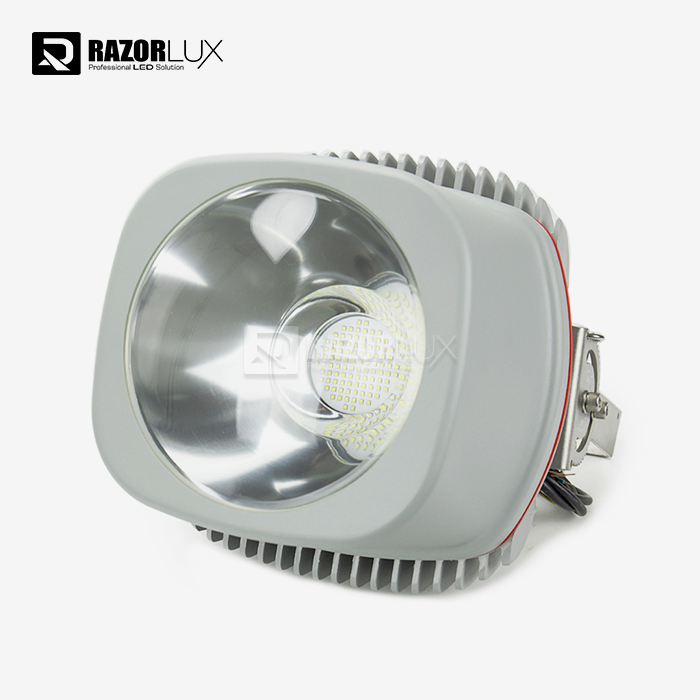 VIEW MOREled loading lights
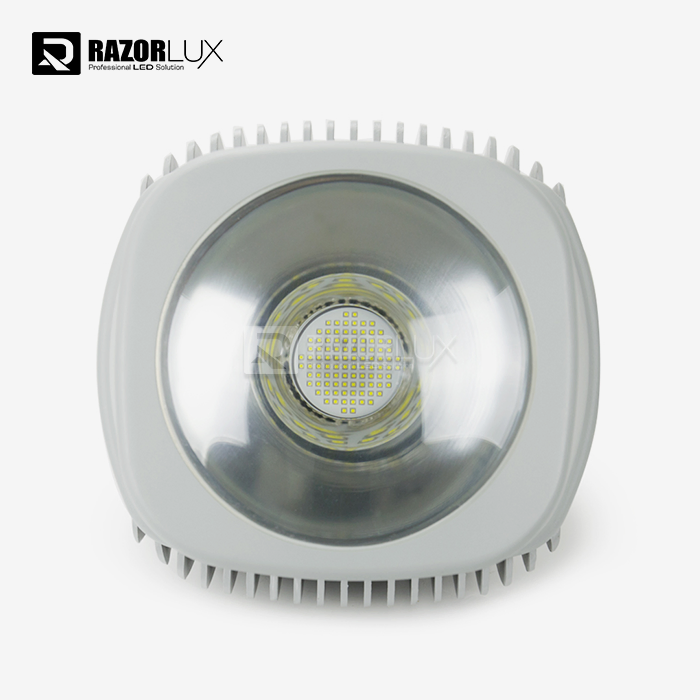 VIEW MOREsand volleyball court lighting
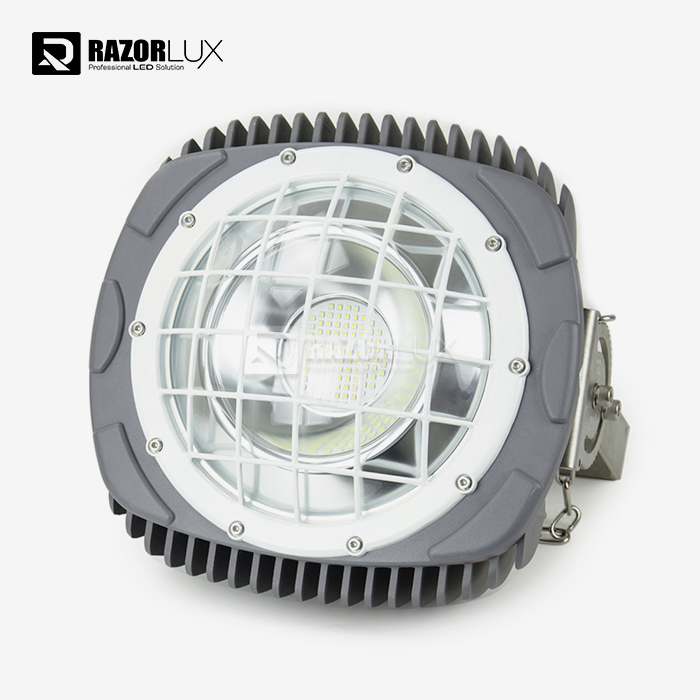 VIEW MOREindoor volleyball court lighting
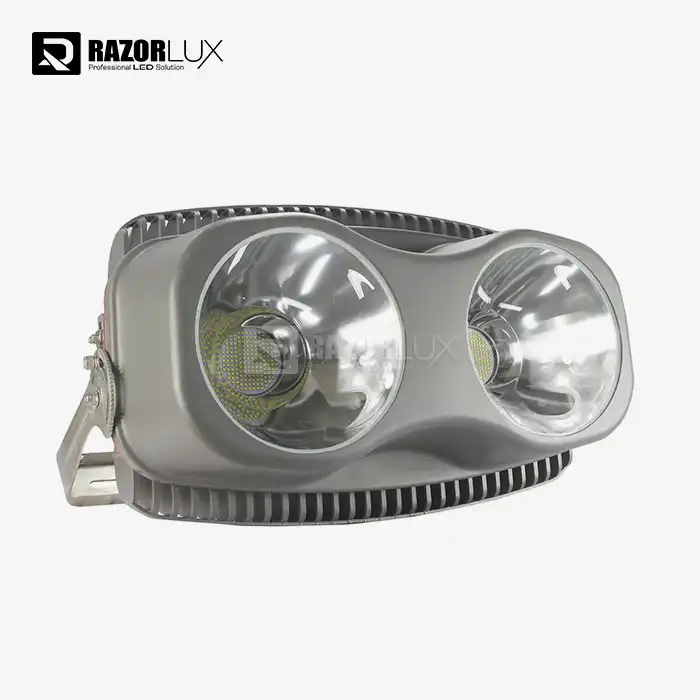 VIEW MORE1000 Watt Flood Light Outdoor
_1748337998981.webp) VIEW MOREExplosion Proof Led Fixtures
VIEW MOREExplosion Proof Led Fixtures VIEW MOREHot Products Aluminum Alloy floodlight 1000w led flood light for Indoor Outdoor Sports Venue
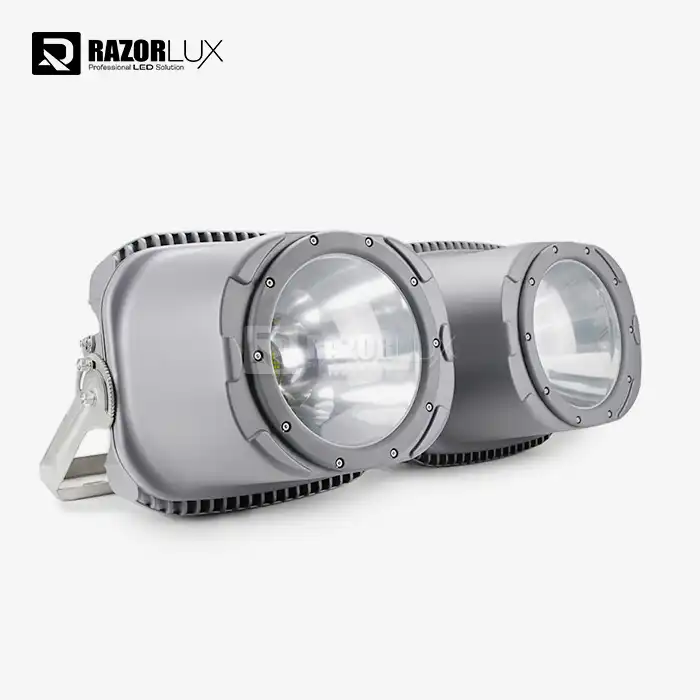 VIEW MORELed Lights For Soccer Field
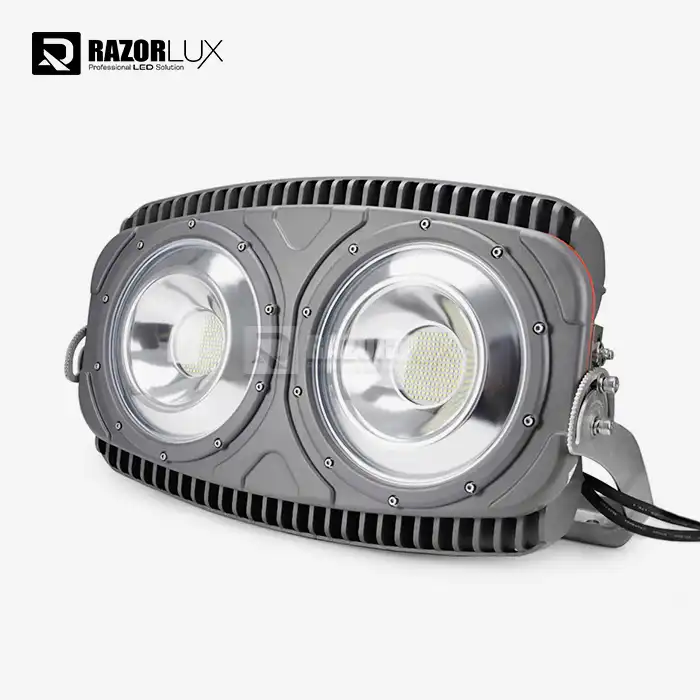 VIEW MOREHigh Voltage Flood Lights