


_1750326878398.png)

What Makes LED High Mast Flood Lights Energy Efficient?
Led High Mast Flood Lights achieve remarkable energy efficiency through a number of interconnected factors, including cutting-edge LED chip technology, which turns electricity into light at rates higher than 130 lumens per watt, carefully designed thermal management systems, which keep the right operating temperatures, and smart power supply units with high power factors (0.98). By providing directional lighting with little heat production, these fixtures get rid of the energy waste that comes with traditional Metal Halide and High-Pressure Sodium systems. This lets facilities cut lighting energy use by 60–75% while keeping the quality of light high in ports, shipyards, and industrial complexes.
Understanding LED High Mast Flood Lights and Their Energy Efficiency
There is a special kind of industrial lighting called LED High Mast Flood Lights that is made to be mounted at heights between 15 and 50 meters. Consistent visibility is very important for operating safety and efficiency in places like container terminals, offshore platforms, and big manufacturing sites. These systems provide concentrated light output over large areas.
The Core Technology Behind Energy Savings
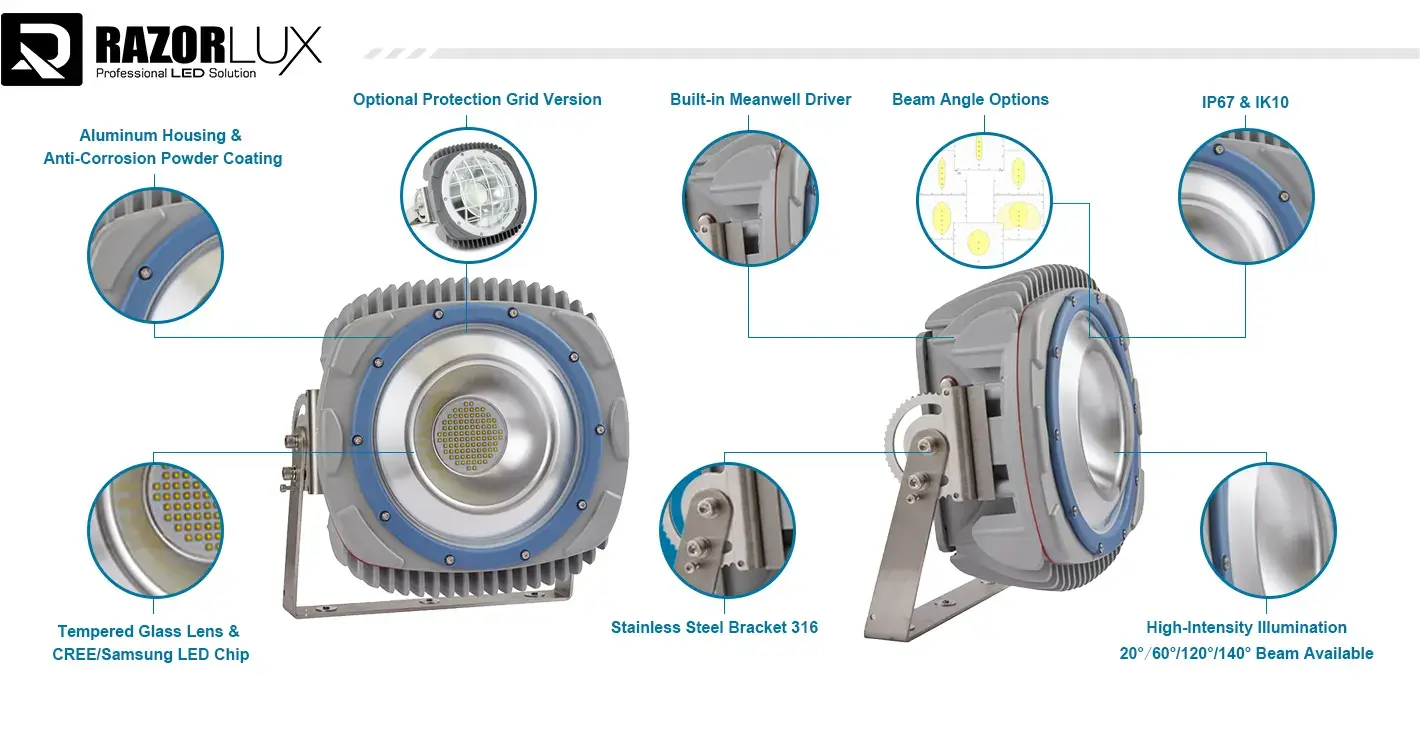
At the chip level, the energy edge starts to show. Electroluminescence turns electrical current directly into photons in high-quality LED chips like the ones used in our Razorlux RGL-120A model. This avoids the wasteful heat production that plagues regular discharge lamps. The luminous efficacy of this direct conversion process is 130 lm/W or higher, which means that every watt of electricity makes a lot more visible light. This means that buying managers who are looking at lighting upgrades will immediately use less electricity without lowering the standards for lighting set by marine classification societies like DNV/GL or ABS.It is just as important to look at the temperature design. Optimised fin designs in aluminium housings get rid of heat through conduction and natural convection, keeping junction temperatures within ranges that stop lumen degradation. LED chips keep giving off light for more than 50,000 hours when they stay below critical temperature limits. This is usually done by passive cooling in marine-grade enclosures. With this longer L70 lifespan, performance doesn't drop as quickly as it does with HID options, whose light output can drop 30% in the first 10,000 hours.
Power Supply Efficiency and Voltage Flexibility
Electrical problems can be hard to solve in industrial settings because of things like voltage changes on offshore platforms and the need for a wide range of inputs in international installations. Our tools have Mean Well motors that can work with a wide range of input voltages (AC 80-315Vac / DC 80-400Vdc), so you don't need to use extra transformers that add to the conversion losses. The power factor of ≥0.98 makes sure that there isn't much reactive power draw, which is good for the electrical infrastructure because it makes things run more smoothly. This is especially important for places that are close to their generation capacity limits or where utility companies charge penalties for low power factors. Total Harmonic Distortion below 10% is another sign of how efficient electricity is. Low THD stops lost energy from going to waste as harmonic currents heat wires and stress distribution equipment without adding to lighting. When engineering teams look over the specs during the evaluation stage, these electrical features make sure that the fixture works with sensitive marine electronics and meets grid connection standards in Northern Europe, the Middle East, and the Asia-Pacific areas.
Comparing LED High Mast Flood Lights with Traditional Lighting Solutions
A full lifecycle study makes the difference in running costs between LED High Mast Flood Lights and older technologies clear. Traditional High-Pressure Sodium fixtures need 400W to produce the same amount of light as a 120W LED system. This shows the fundamental difference in efficiency.
Energy Consumption and Operating Cost Analysis
The financial effects are shown by a straight replacement situation. Our RGL-120A model can be used instead of 250–300W HID light and only uses 120W total (108W LED array + 12W driver). This change lowers the amount of energy used by 200 high mast fixtures in a shipyard from 240,000 kWh (300W × 200 units × 4,000 hours) per year to 96,000 kWh, a savings of 144,000 kWh. With industrial electricity rates of $0.12/kWh, this saves a single facility $17,280 a year on its energy costs.The comparison is more than just power. Metal Halide systems need 5 to 15 minutes to warm up, and they can't be turned back on right away after the power goes out, which can cause problems in an emergency. LED systems give off full brightness right away, which improves safety rules that are very important for offshore sites and port operations where clear vision right away can keep accidents from happening when equipment breaks down or bad weather hits.
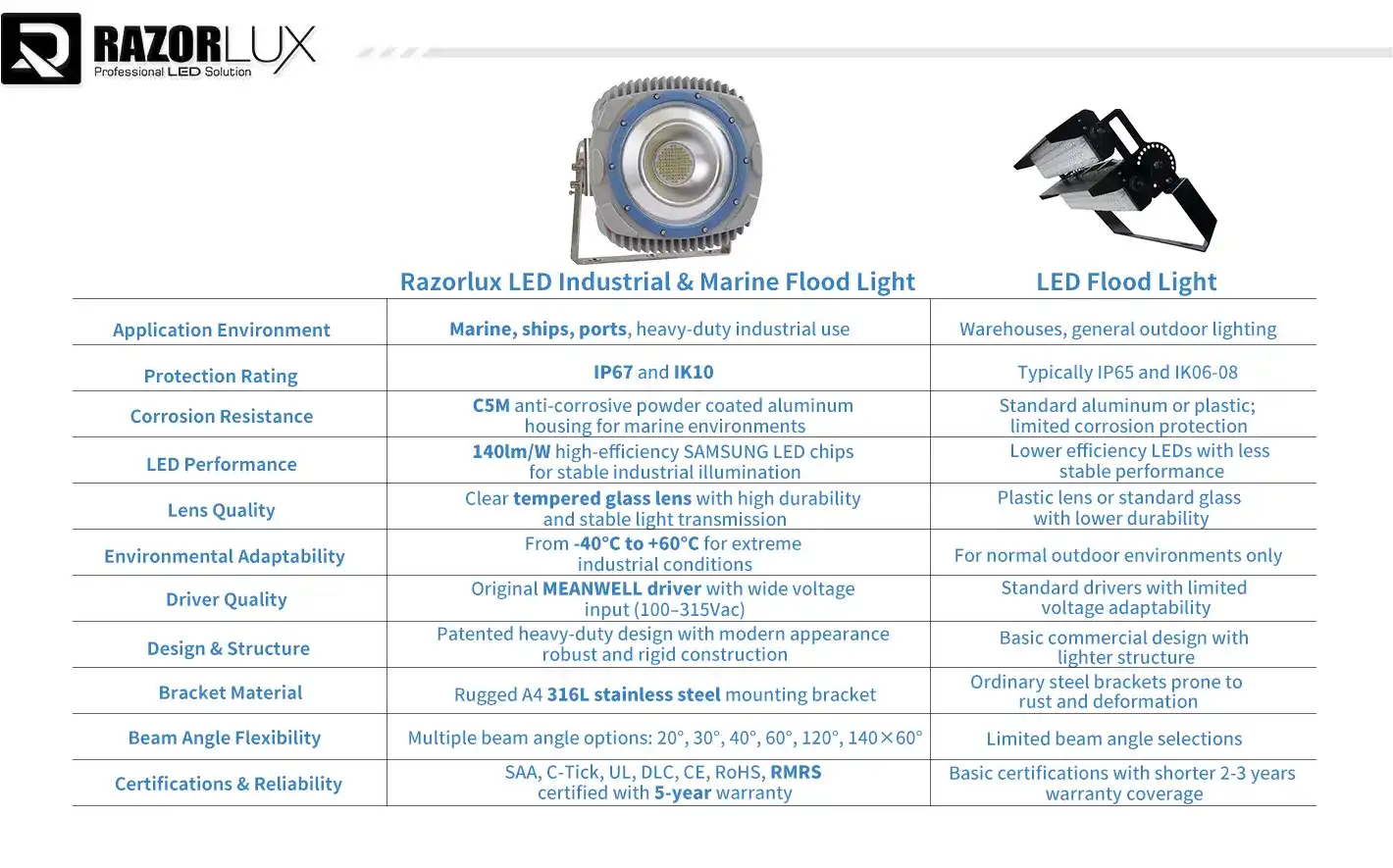
| Parameter | Traditional Metal Halide | Razorlux LED (RGL-120A) |
|---|---|---|
| Power Consumption | 250-300W | 120W |
| Luminous Efficacy | 75-90 lm/W | 130 lm/W |
| Operational Lifespan | 10,000-15,000 hours | 50,000+ hours |
| Warm-up Time | 5-15 minutes | Instant-on |
| Color Rendering (CRI) | Ra 20-40 | Ra >75 |
| Maintenance Frequency | 18-24 months | 5+ years |
Maintenance Cost Reduction and ROI Acceleration
A big chunk of the total cost of owning high-mounted lights is the money spent on repairs and maintenance. To get to lights 20 to 40 meters up, you need special tools like mobile cranes, aerial work platforms, or lowering systems. Your crew also needs to take time off and follow safety rules. These costs are increased because traditional lamps need to be replaced every 12 to 18 months. With LED technology that lasts for 50,000 hours, maintenance can be spread out over 5 to 7 years, which is longer than the usual time between maintenance. This directly addresses the issue that ship repair companies and MRO service providers were having, as they put a high value on quick response times and minimising downtime. Quality LED fixtures are made in a way that lets technicians replace driver modules or LED arrays separately. This makes repairs easier and reduces the need for parts inventory. When you add up the savings on energy and maintenance for a medium-sized installation (100 fixtures), you get a return on your investment in 18 to 30 months. When purchasing managers compare quotes, they shouldn't just look at the original bulb price. Instead, they should look at the total cost of ownership over 10 years. This view always favours LED technology, even though it costs more up front.
In-Depth Analysis of Energy Efficiency Features in LED High Mast Flood Lights
To get good energy performance in harsh naval and industrial settings, engineers need to use complex methods that take into account many factors at once regarding LED High Mast Flood Lights.
Advanced Thermal Management Systems
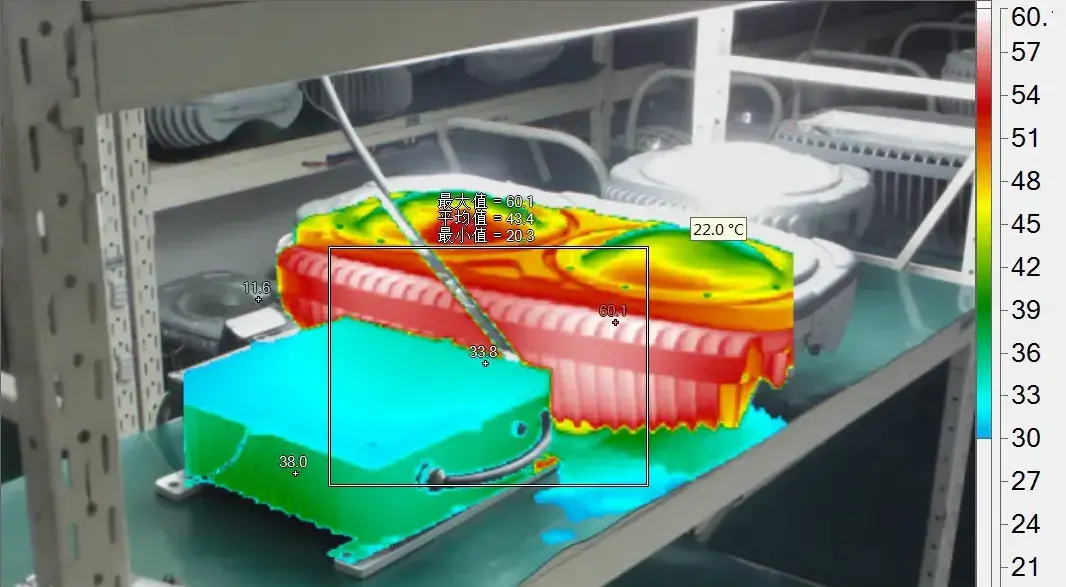
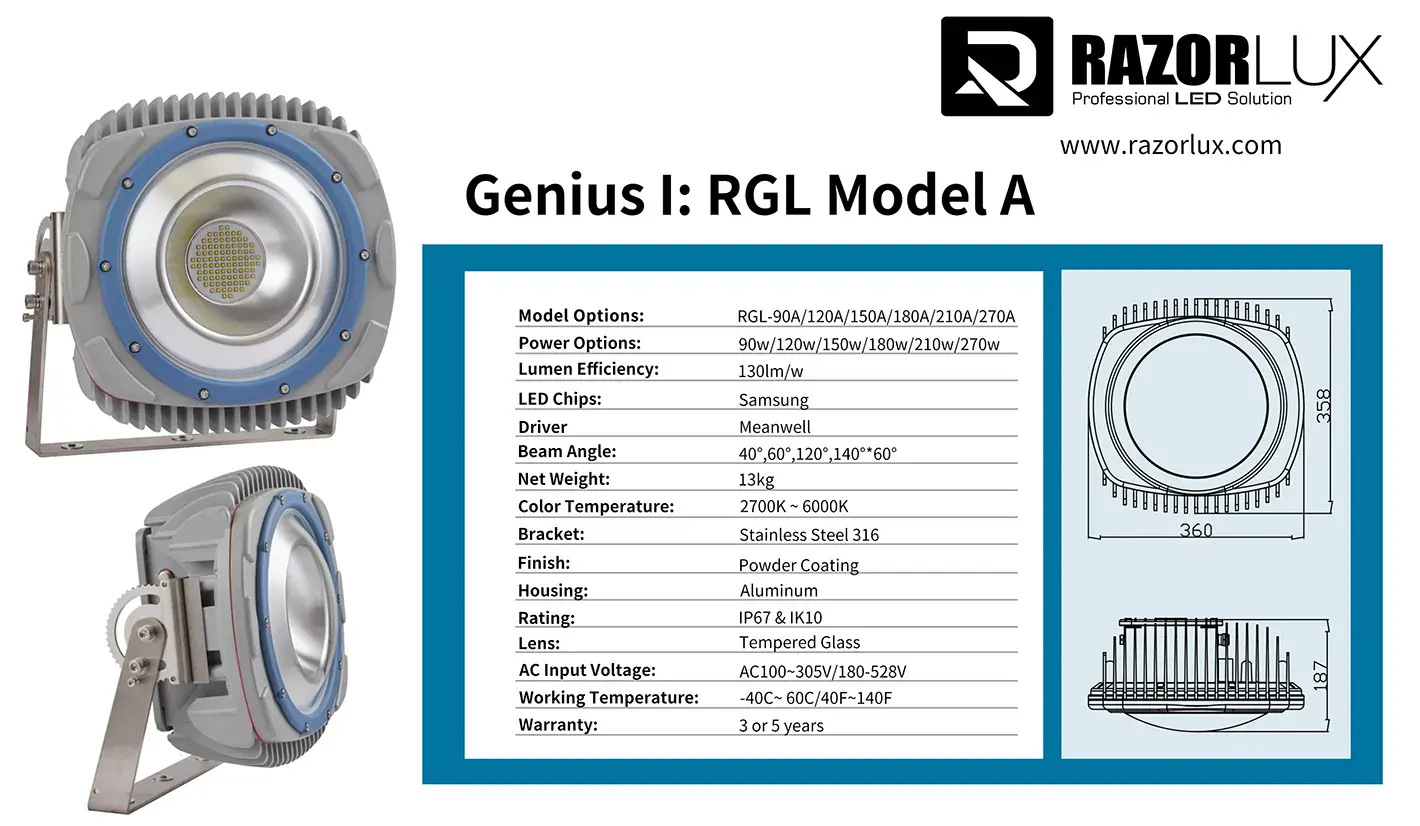
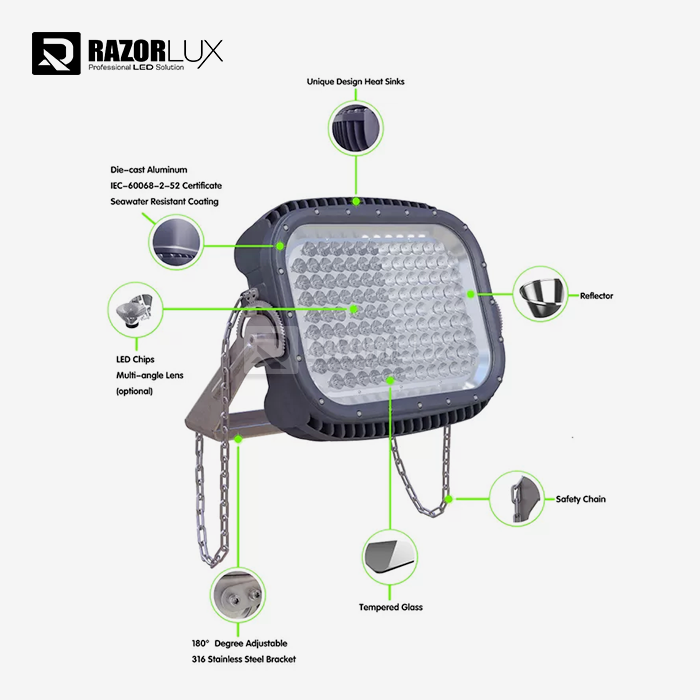
Heat is the main thing that hurts the efficiency and life of LEDs. Every degree of extra junction temperature speeds up the degradation of the lumen and lowers the operating life. Our thermal architecture uses die-cast aluminium housings with carefully calculated fin geometry that makes the most of the surface area to get rid of heat. The mounting plate made of stainless steel not only resists rust, which is important in salt spray settings, but it also acts as an extra heat transfer path. The choice of material is very important. The aluminium alloy's composition strikes a balance between thermal conductivity (important for moving heat) and structural strength (needed to handle wind loads at high elevations and IK10 impact resistance needed in industrial settings). Powder coating finishes protect against corrosive atmospheres while keeping the ability to transfer heat. This unified method lets it work in temperatures ranging from -40°C to +60°C. These temperatures are exactly what our quality control processes say they are by putting parts through long thermal cycling tests.
Optical Design and Light Distribution Efficiency
Not only does energy efficiency include changing electricity, but it also includes visual efficiency, which means putting light exactly where it's needed without wasting any. When you take into account the fact that traditional floodlights spread light in all directions, they need higher wattages to reach their goal lux levels. LED systems use lenses that were specifically made to create beam patterns to fit the needs of the application. The RGL-120A has interchangeable lens assemblies that let you choose from beam angles of 60°, 120°, or 140°×60°. For applications that need to project light over long distances without spreading out, narrow beams focus the output. Wide-angle designs work well for lower placements that need to cover a larger area. Because of this optical precision, each photon adds to useful illumination instead of turning into light pollution or glare. This addresses a common concern raised by facility engineering managers when they look over specs. Advanced types come with asymmetric optics that direct light forward and downward while reducing the amount of light that spills upward. For installations near the coast, where environmental rules limit sky glow, and for airport perimeter lighting, where glare could interfere with flight operations, this is especially important.
Smart Control Integration and Adaptive Operation
Modern energy economy goes beyond the performance of a fixed device and includes smart operation that changes based on what is needed. When a job needs constant lighting, our RGL-120A gives off a steady signal. The platform works with 0-10V dimming and control interfaces, so it can be connected to occupancy sensors and scheduling systems when needed. A port facility could set the level to be lower during times of low activity. This would cut energy use by another 30–50% without affecting safety during human operations. When a photocell is built in, the output instantly changes based on the amount of light in the area. This stops the system from running during the day when natural light is enough. The wide input voltage range (AC 80-315Vac) automatically controls the voltage, so the light output stays the same even when the grid changes, which would cause output to change in traditional ballasted systems.
Practical Applications and Installation Impact on Efficiency
Theoretical efficiency can only be put to use if the right application is matched with the right LED High Mast Flood Lights system. When making a purchase choice, fixtures should be chosen based on their abilities matching operational needs and the surroundings.
Marine and Maritime Applications
Shipyards have especially tough conditions, with air that is full of salt, heavy machinery that vibrates, the possibility of being hit by moving equipment, and high temperatures during welding. Our fixtures are fully protected against temporary immersion thanks to their IP67 rating. This is useful for when we're washing decks or when the weather is really bad. IK10 impact resistance can handle tools and cranes bumping into it by mistake. For offshore sites, there are extra things to think about. Fixtures must keep working even when they are constantly shaking from drilling, withstand Category 5 storm wind loads when fixed correctly, and provide reliable lighting that is essential for 24-hour operating safety. The corrosion-resistant finishes and stainless steel parts stop the fast wear and tear that kills cheap fittings in these settings within months. Our test sites in Singapore's Jurong Port and remote facilities in Norway have been tested and shown to work for more than 45,000 hours with less than 10% lumen loss. This proves that technical specs translate to real-world dependability.
Industrial and Infrastructure Installations
Steel mills, paper plants, and car assembly plants are all examples of large manufacturing facilities that need high-bay lighting on all of their work floors and outside storage yards. The instant-on feature keeps you working even when the power goes out, and the better colour rendering (CRI >75, upgradable to >90) makes eye inspection tasks easier than with HPS lamps, which don't do a good job of showing colours. The directional control that lowers glare for drivers while keeping the necessary lighting on the road surfaces is useful for highway toll plazas and intersection lighting. The longer lifespan is especially helpful for transportation departments that are in charge of handling sites that are spread out and hard to get to for upkeep.
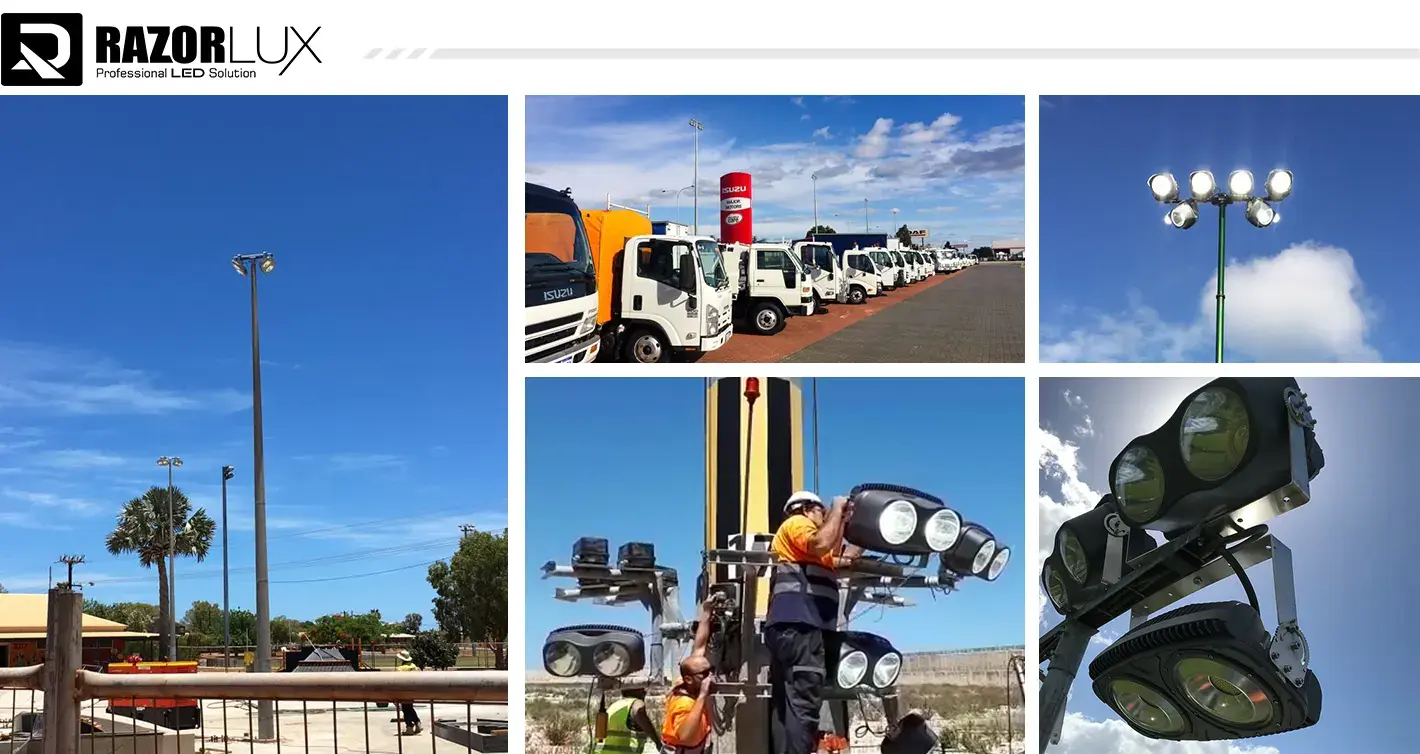
| Application Type | Typical Mounting Height | Recommended Beam Angle | Key Efficiency Benefit |
|---|---|---|---|
| Container Terminals | 25-35 meters | 60° narrow | Focused long-throw distribution |
| Shipyard Work Areas | 15-25 meters | 120° medium | Balanced coverage with minimal overlap |
| Offshore Platforms | 15-20 meters | 140°×60° asymmetric | Maximum deck coverage, reduced glare |
| Highway Intersections | 20-30 meters | 120° medium | Uniform roadway illumination |
| Manufacturing Yards | 18-25 meters | 120° medium | Wide coverage with high CRI |
Installation Best Practices for Optimal Performance
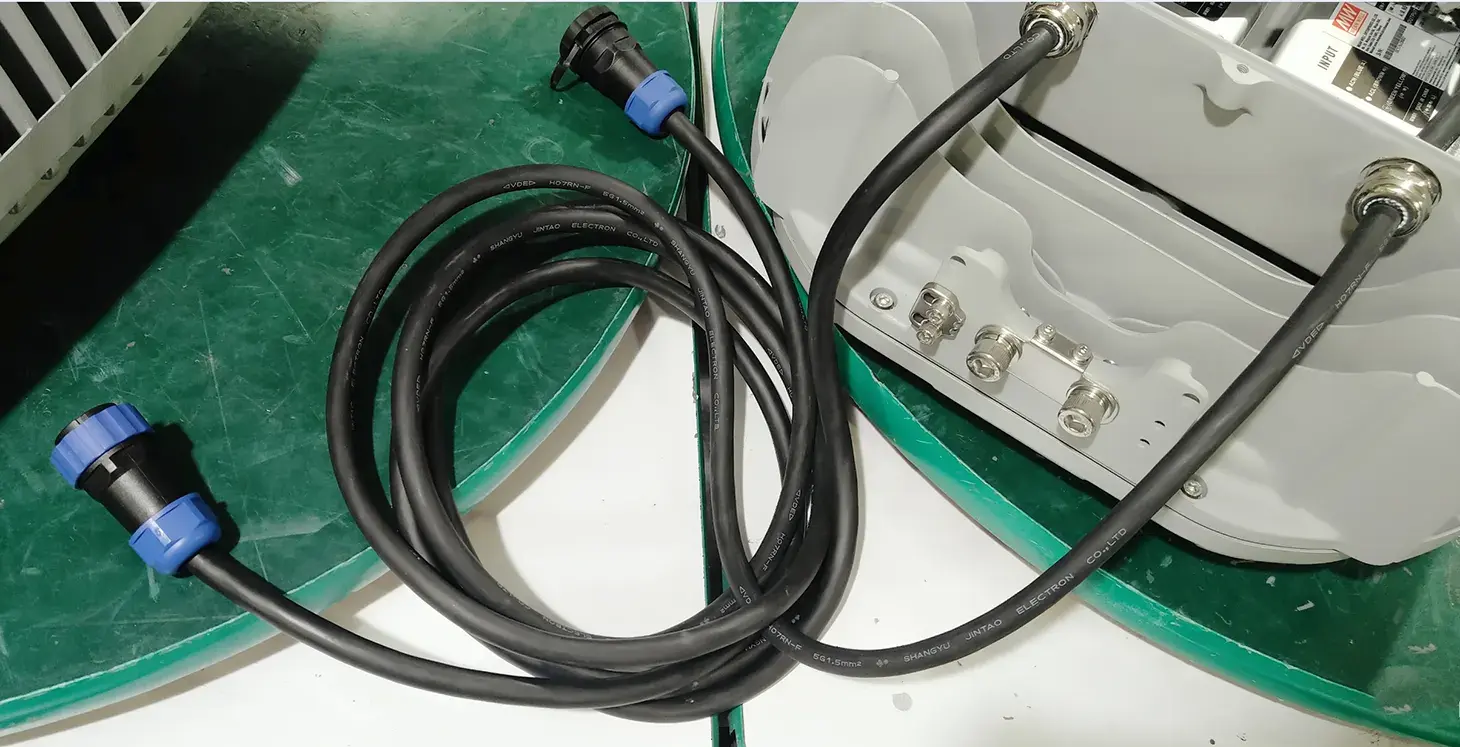
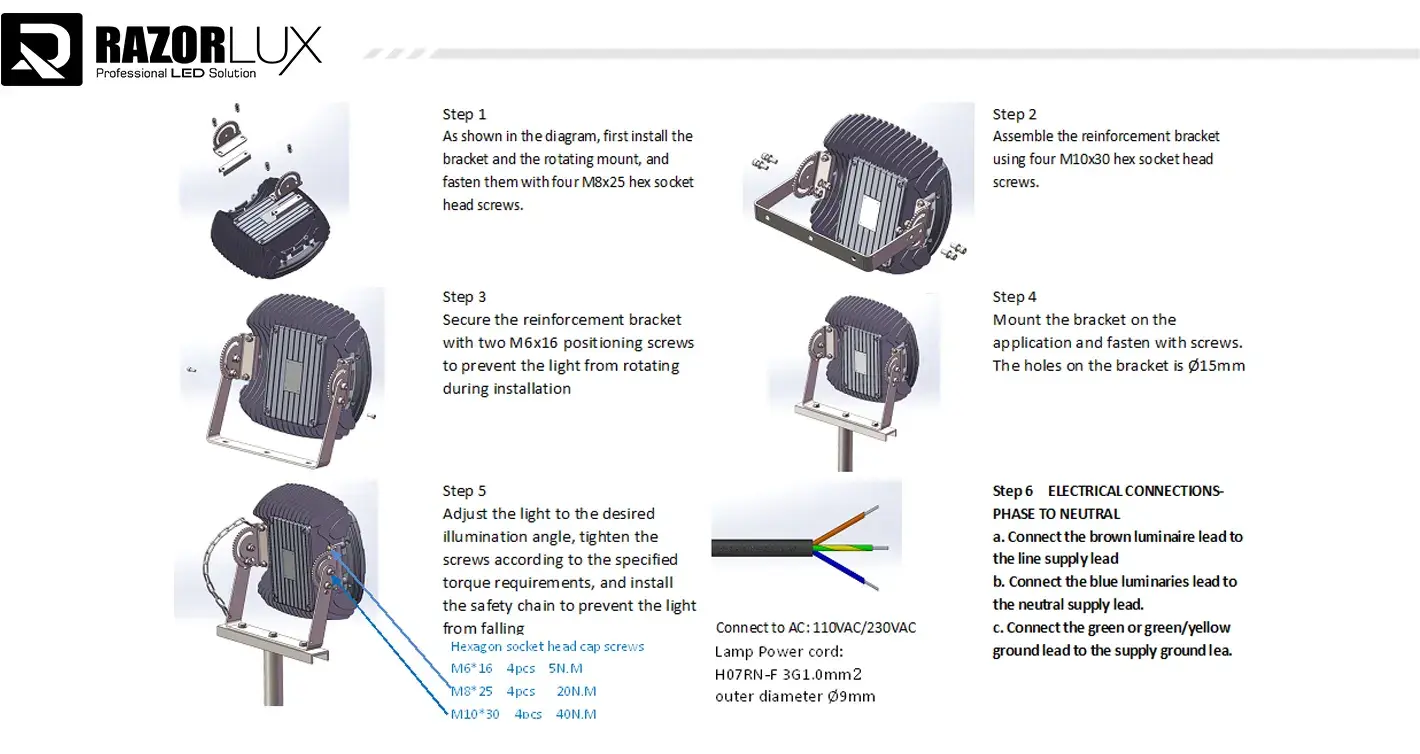
The right fixing position has a big effect on both how well light is distributed and how well heat is absorbed. Fixtures should be set up at an angle so that output goes to the right places, and heat sinks should be placed so that natural convection airflow is maximised. In coastal areas, the direction of the mounting should be based on the direction of the usual wind to improve cooling and keep salt spray from building up on optical surfaces. Long-term efficiency is directly linked to the quality of the electrical installation. Connections need to be able to handle shaking and changes in temperature without building up resistance that wastes energy as heat. Our terminal blocks can hold wires that are the right size for the current draw, and the Class I insulation needs to be properly grounded for surge protection to work. The 10kV surge protection grade protects against short-term voltage spikes that can happen in industrial settings and on high-up installations that are hit by lightning. Periodic maintenance is still important, even if it doesn't happen very often. Visual checks every three months make sure the fixing is solid and find any physical damage. Cleaning optical surfaces once a year keeps them working well, which is especially important in dusty industrial settings where buildup can lower output by 15 to 20 percent. Following these easy steps, which are explained in our technical guides, will ensure continued performance for the full 50,000 hours.
Procurement and Brand Considerations for Energy-Efficient LED High Mast Flood Lights
When choosing a seller of LED High Mast Flood Lights, you need to look at more than just the initial device price. To reduce project risk and ensure long-term satisfaction, purchasing managers must look at the whole value proposition.
Manufacturer Credentials and Certification Compliance
International approvals make sure that product claims are true. Our CE, RoHS, UL, DLC, and SAA approvals show that our products meet safety and environmental standards in major markets for electricity. For maritime uses, extra checks need to be made. Our fixtures meet the standards set by classification societies like DNV/GL and ABS, which address the concerns of marine equipment integrators and offshore platform engineering managers.ISO 9001 certification shows that quality management is organised, which lowers the risk of variation from batch to batch that can happen with sellers who don't have official process controls. Razorlux has done a lot of research and development to keep improving their products' efficiency and ability to adapt to new application needs. They have over 200 patents covering LED packing, cooling design, and control systems. Manufacturers should provide a lot of detailed information to help buyers make choices. Lighting designers can accurately model installations before buying equipment with the help of full IES photometric files. Technical departments can check that the project will work with current infrastructure and meet project requirements by looking at detailed specs that include electrical, mechanical, and environmental factors.
Component Quality and Supply Chain Reliability
Performance and durability in the real world depend on the internal parts. Luminous efficacy and lumen maintenance are guaranteed by LED chips from well-known companies like Samsung or similar tier-one suppliers. Mean Well power sources have a history of stability in industrial settings, with MTBF (Mean Time Between Failures) data that helps with lifecycle cost estimates. Supply chain stability solves a major problem that purchasing managers have pointed out: the risk of project delays caused by missing parts or deliveries that don't happen on time. Manufacturers that have been around for a while keep enough parts in stock and production capacity to meet customer deadlines. Our normal lead time is two to three weeks, and our custom lead time is four to six weeks. This is because we need to plan production and build ties with our suppliers in order to ensure reliable delivery.
Warranty Terms and After-Sales Support
Warranty coverage shows that the company that made the product is sure that it will last. Our 5-year warranty on LED modules and drivers is longer than the industry standard. This gives procurement departments the peace of mind they need when choosing products for important infrastructure projects that will be used for ten years. Support after the sale is just as important. Delays in commissioning can be avoided by getting technical help during installation. Our engineering team can help you with mounting design questions over the phone, and they can also look over wiring specs to make sure they work with your system. Repairs can be done quickly when replacement drivers, lens assemblies, and mounting tools are easy to find. This cuts down on downtime costs, which often go over the value of the item. Field service or authorised service partners in regional markets like Northern Europe, Southeast Asia, the Middle East, and Oceania are very helpful for clients who are in charge of handling systems that are spread out over many sites. Local help makes things easier and speeds up the resolution of problems when they happen.
Conclusion
The fusion of semiconductor technology, thermal engineering, optical design, and clever settings is what makes LED High Mast Flood Lights so energy efficient. The measured benefits—60–75% less energy use, lifespans of 50,000 hours or more, and low maintenance needs—directly address the practical goals and pain points of marine operators, industrial building managers, and infrastructure developers. Not only should you look at the fixture specs, but you should also look at the manufacturer's qualifications, the quality of the parts, whether they meet licensing requirements, and how well they can help you after the sale. When looking at the total cost of ownership, premium LED solutions from well-known brands are the best value, even though they cost more at first. The payback periods are always less than three years, and the operational benefits last for ten years.
FAQ
What lifespan can we realistically expect from LED high mast installations in marine environments?
In coastal and ocean settings, high-quality fixtures with IP67 casings and the right corrosion-resistant treatments regularly last longer than 50,000 hours of use. Our installations on offshore platforms in Norway and in port facilities in Singapore have been used for more than 45,000 hours with less than 10% lumen loss. Its actual lifespan varies on how hot or cold it is, how well the electricity works, and how well it is maintained. As preventive maintenance, cleaning the fixture once a year and replacing the drivers every five years can make LED High Mast Flood Lights last longer than 70,000 hours.
How do we verify energy savings claims before committing to large-scale procurement?
Ask for full photometric data (IES files) and electrical specifications so that lighting design calculations can be made that fit the layout of your building. Sample testing lets your expert team see how much power is being used, how much light is being put out, and how well the device handles heat in real-world situations. Before a full rollout, many suppliers offer trial setups with performance tracking to show that energy use is going down. Independent proof of economy comes from third-party DLC or Energy Star ratings.
Can existing high mast poles support LED fixture retrofits without structural modifications?
Most current poles that were made for HID lamps can be retrofitted with LED systems because they usually weigh less even though they give off the same amount of light. But verification is still needed because the wind load qualities are different depending on the shape of the building. Ask for the weight of the fixture, its wind surface area, and its EPA (Effective Projected Area) specs. Then, have your structural engineer check the current pole's ability. Our 8 kg fixture weight and small 360x358mm housing usually work well for retrofitting.
Partner with Razorlux for Industrial-Grade LED Solutions
Razorlux has been making LEDs for more than 25 years, and they know how to make them work in harsh environments like marine and heavy industrial settings. Our RGL-120A LED High Mast Flood Lights are 130 lm/W efficient and are made for offshore platforms, ships, and port facilities around the world. They have Mean Well drivers, Samsung-grade LED chips, and IP67/IK10 security. Along with CE, UL, and DLC standards, we keep full certification files that include DNV/GL and ABS marine approvals. As a well-known company that makes fixtures, we can help you with the buying process by giving you detailed technical documentation, custom sampling programs, and quick engineering advice. Email our team at sam@razorlux.com to talk about the specifics of your project, ask for optical analysis, or set up a sample evaluation for your technical review.
References
1. Illuminating Engineering Society. (2020). IES Lighting Handbook: Reference and Application. Tenth Edition, New York: IES Publications.
2. U.S. Department of Energy. (2021). LED Lighting for Transportation and Outdoor Applications: Best Practices and Energy Savings. Office of Energy Efficiency and Renewable Energy Technical Report.
3. International Maritime Organization. (2019). Guidelines on Energy Efficient Equipment and Technologies for Maritime Applications. Marine Environment Protection Committee Report MEPC 75/18.
4. European Commission Joint Research Centre. (2020). Life Cycle Cost Analysis of Industrial Lighting Systems: Methodology and Case Studies. EUR 30187 EN, Publications Office of the European Union.
5. Liu, S. and Luo, X. (2022). LED Packaging for Lighting Applications: Design, Manufacturing and Testing. Second Edition, Singapore: Wiley-IEEE Press.
6. Society of Naval Architects and Marine Engineers. (2021). Marine Electrical and Electronics Systems: Design Standards and Energy Efficiency Guidelines. Technical & Research Bulletin 4-58, Jersey City: SNAME Publications.
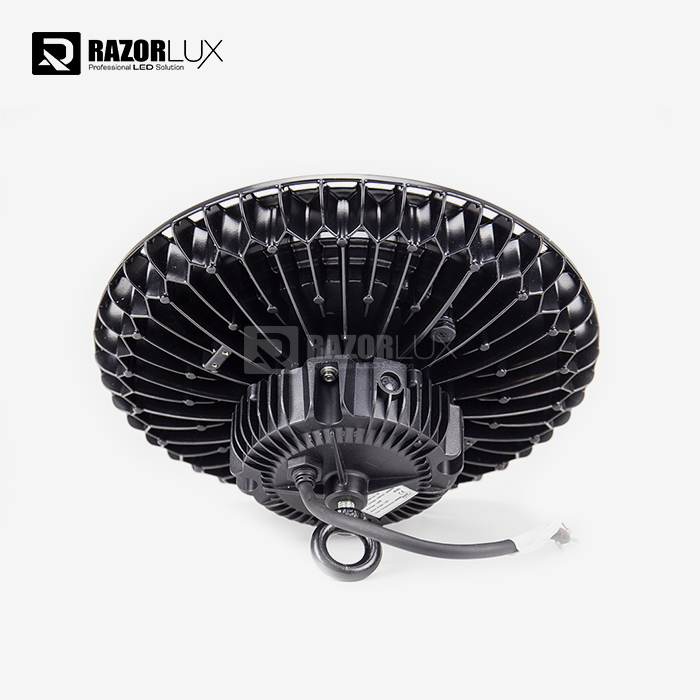 VIEW MOREwarehouse led high bay lights
 VIEW MOREbasketball court light fixture
 VIEW MOREled flood lights sports field
 VIEW MORELed Mine
 VIEW MOREPortable 400w 347V Led Crane Light Badminton Court Cool White
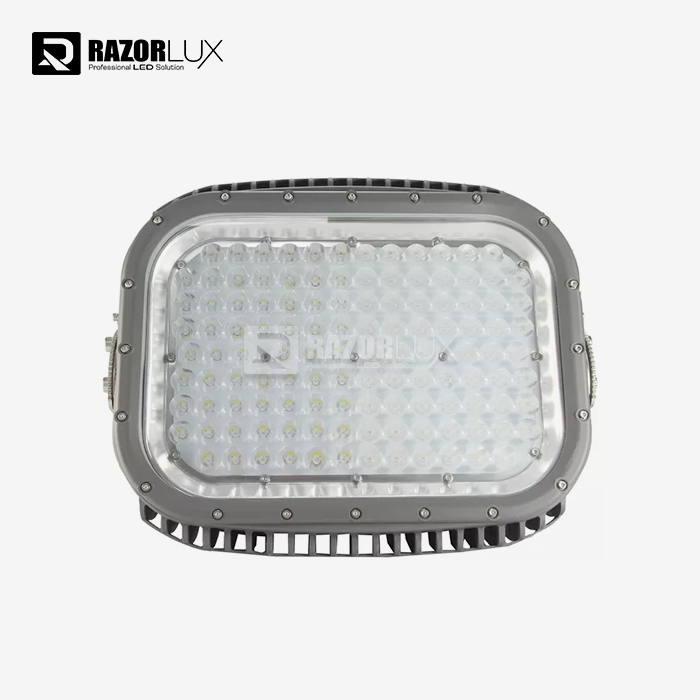 VIEW MORESMD Led Industrial Flood Light 500W 55000 Lm High Power Flood Light
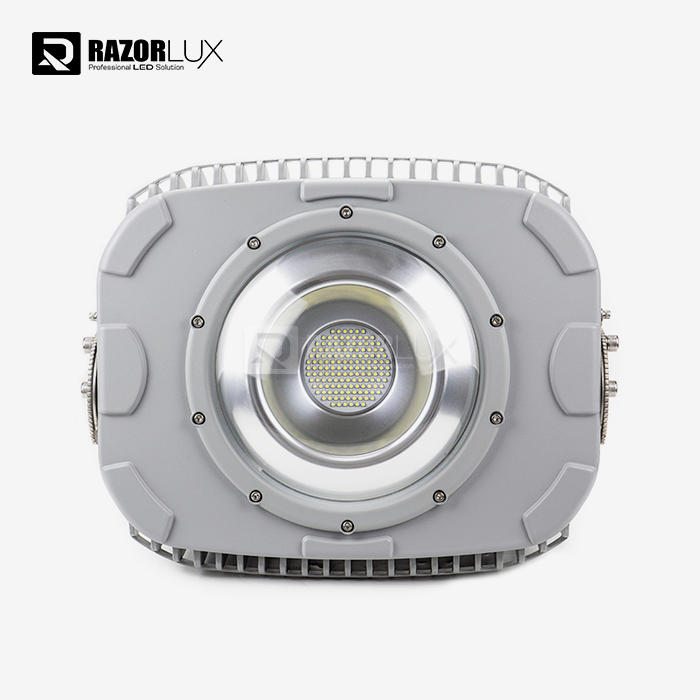 VIEW MORE500W Led Sports Light
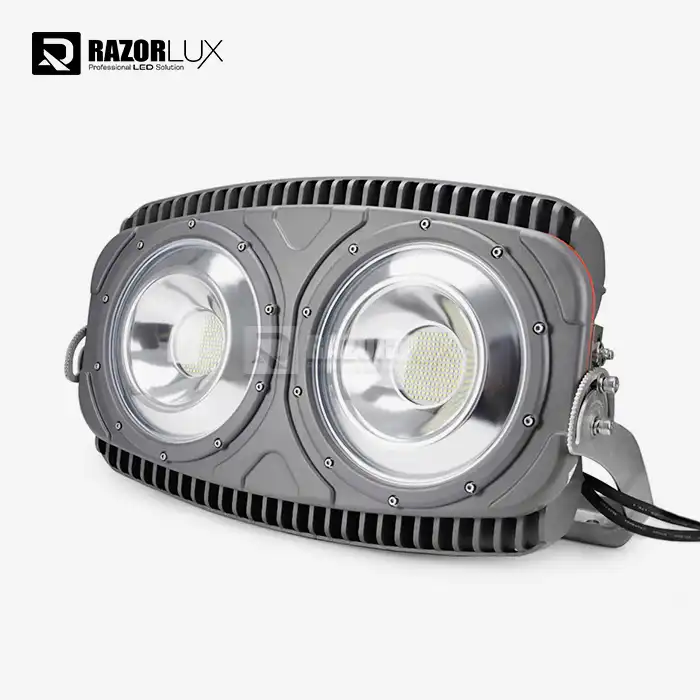 VIEW MOREHigh Voltage Flood Lights