

_1750326878398.png)

How Do Marine Flood Lights Improve Fishing Efficiency at Night?
When used at night, marine flood lights change the way fishing is done by shining bright light through the water to attract baitfish and create areas where target species can gather to feed. These specialized lighting systems make it easier for team members to see while they're handling nets and processing fish, which reduces mistakes and lets fishermen work beyond daylight hours. By using color temperatures between 2700K and 6500K, modern LED-based marine lighting solutions increase catch rates by a large amount while using a lot less power than older halogen systems. This has a direct effect on how profitable and environmentally friendly commercial fishing vessels can be.
Understanding Marine Flood Lights and Their Role in Night Fishing
What Makes Marine Lighting Different from Standard Flood Lights?
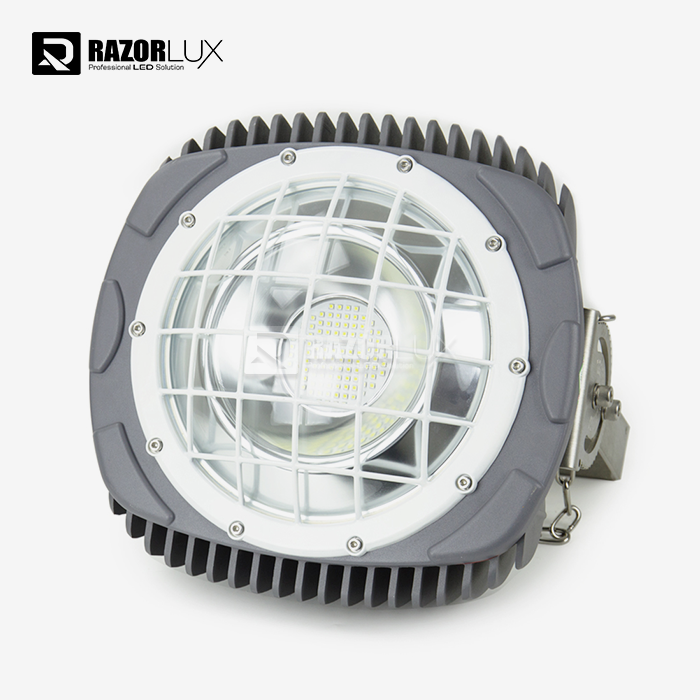
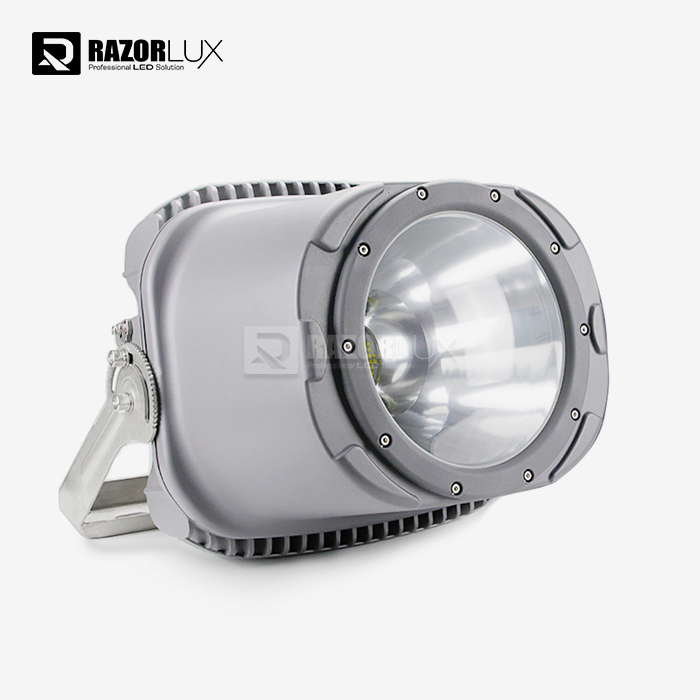
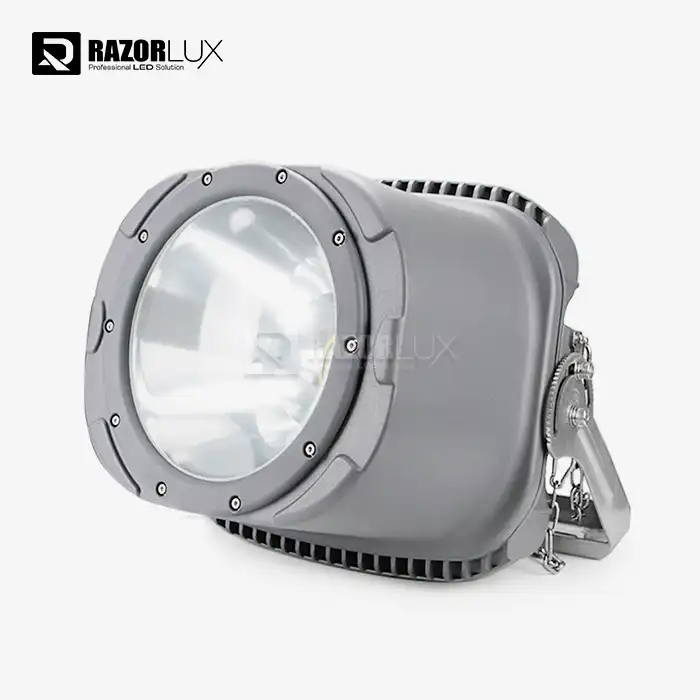
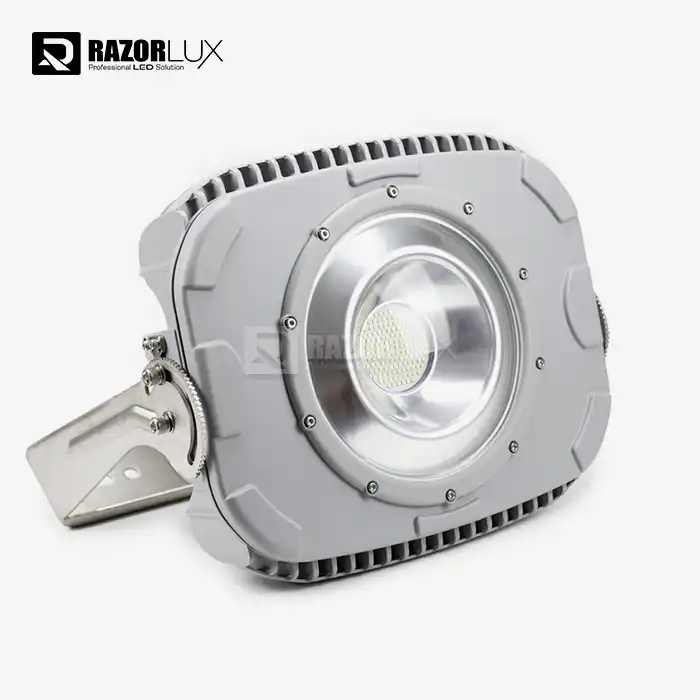
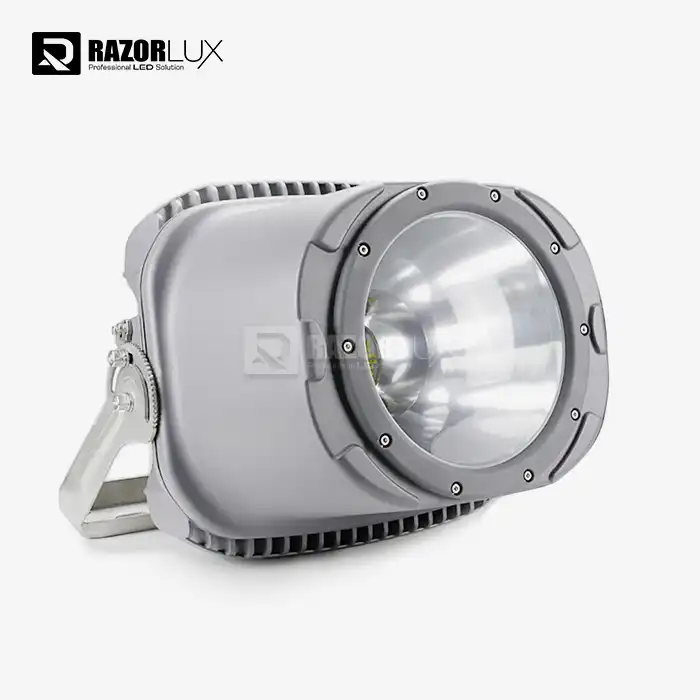
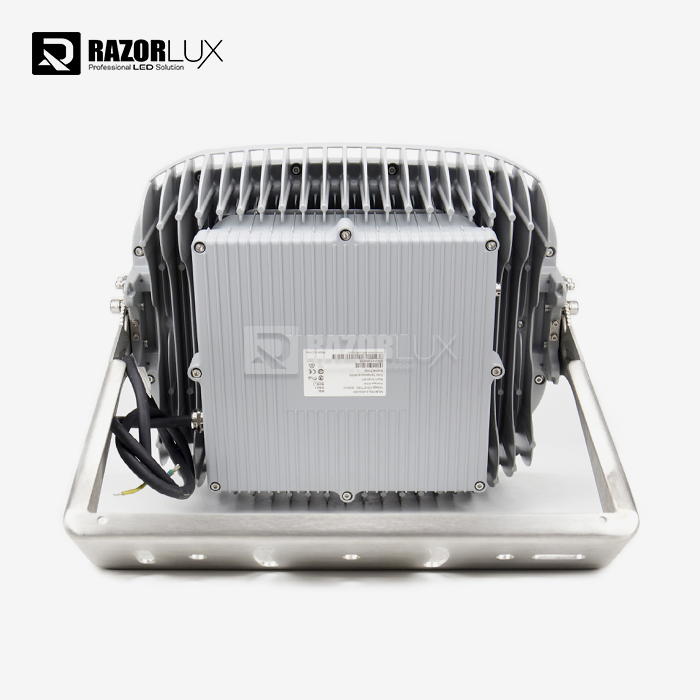
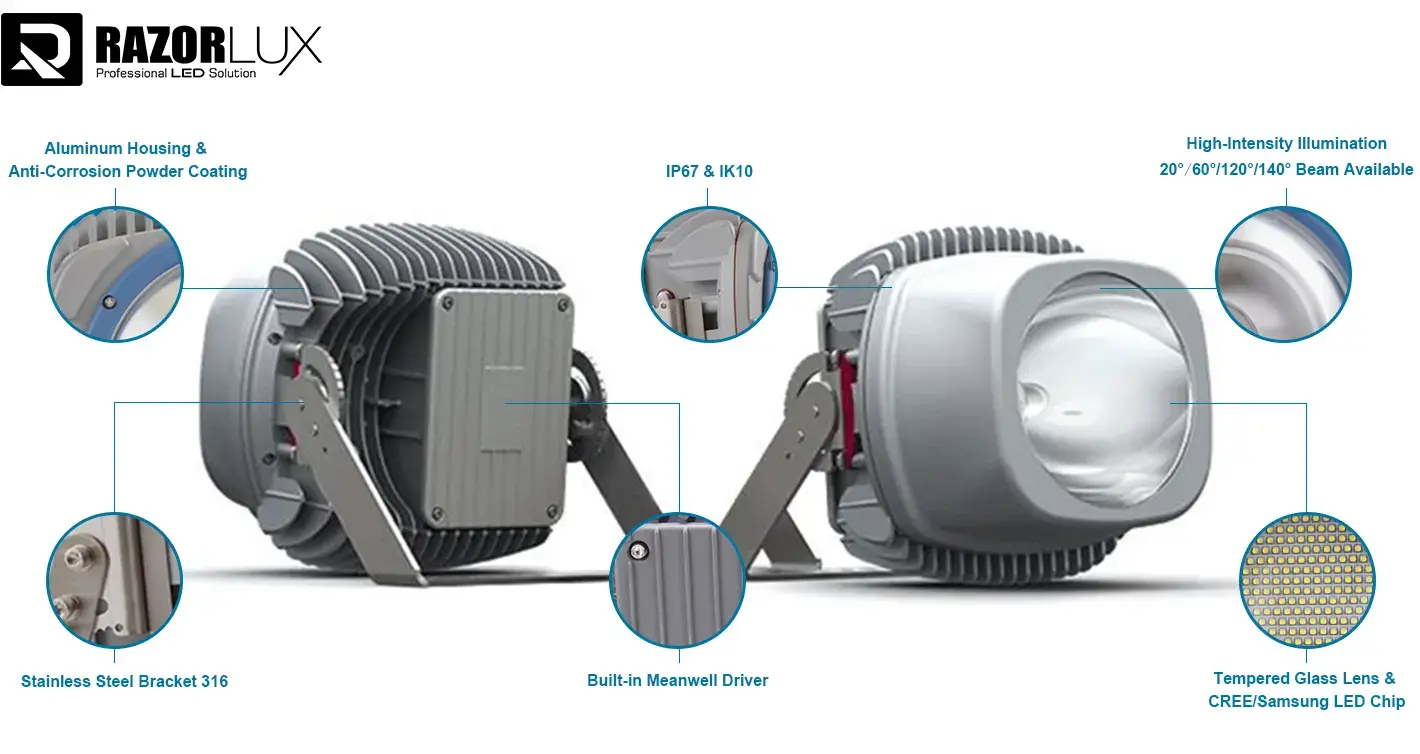
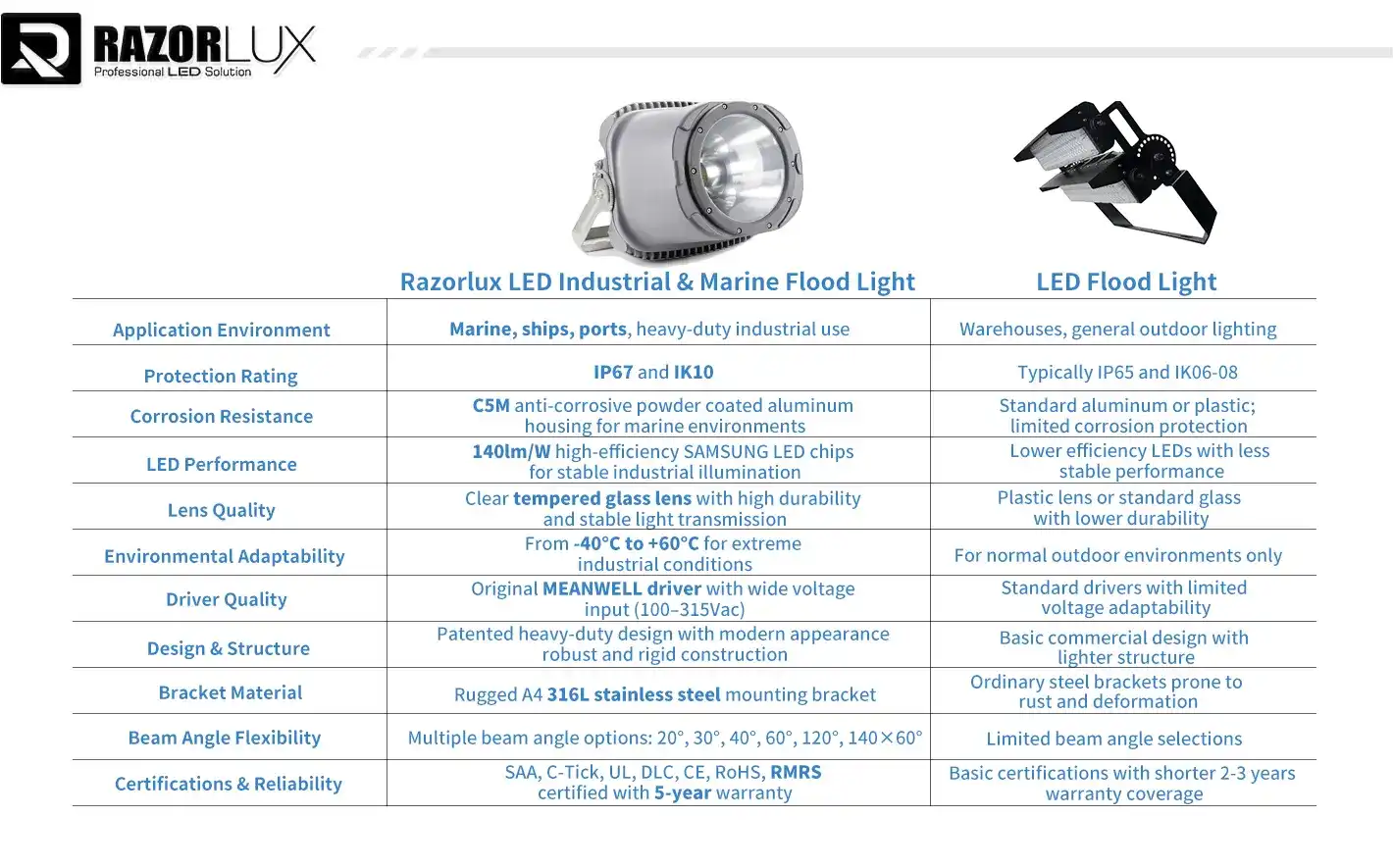
Marine flood lights have to deal with problems that lights used on land never have to. When exposed to saltwater, rust happens five times faster than in freshwater, and electrical parts are constantly stressed by vibrations when the ship is moving. Our marine flood lights have bases made of 316L stainless steel and housings made of marine-grade aluminum. They are powder-coated in multiple stages so they don't rust even after years of being exposed to salt spray and UV light. The IP67 grade for entry protection makes sure that dust can't get in and water can't get in up to one meter deep. This grade is very important when the deck is washed down or there are big waves, when normal fasteners would break. The IK10 grade for impact resistance keeps things from breaking when they accidentally come into contact with cargo handling equipment and fishing gear. This keeps you from having to buy expensive new gear during busy fishing seasons.
Technical Specifications That Matter for Fishing Applications
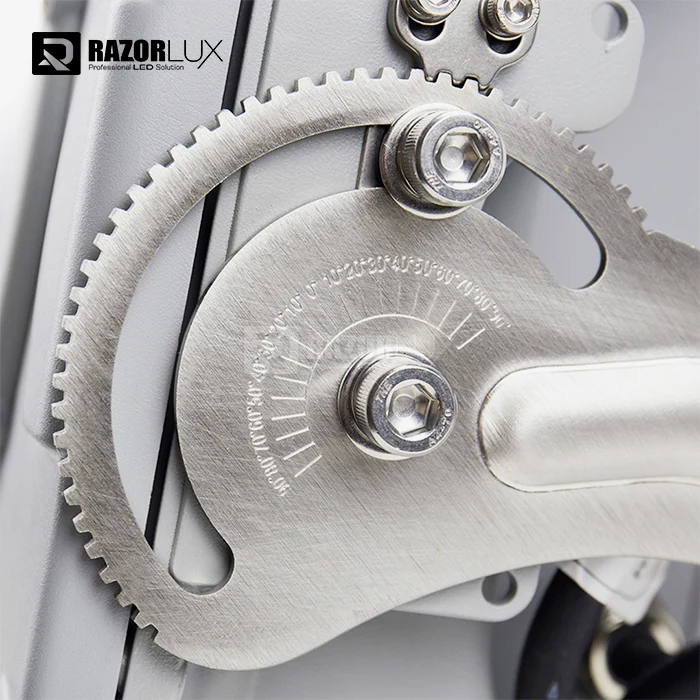
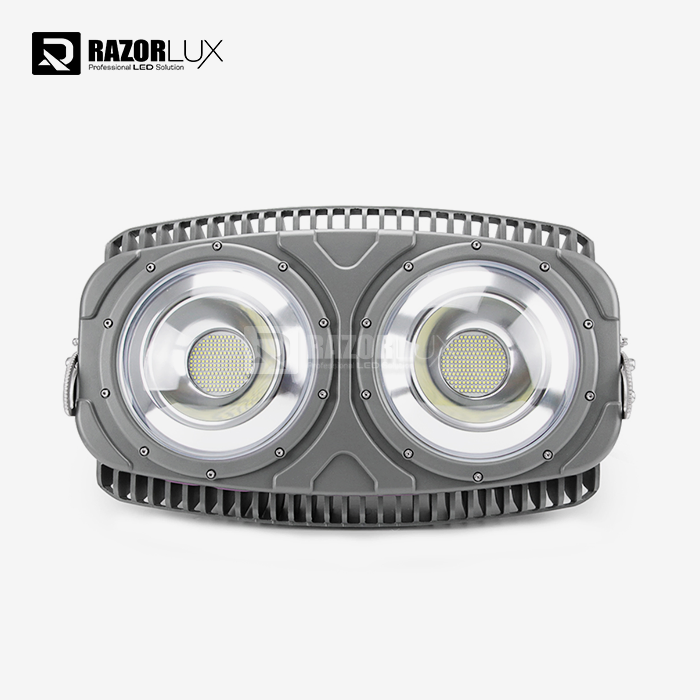
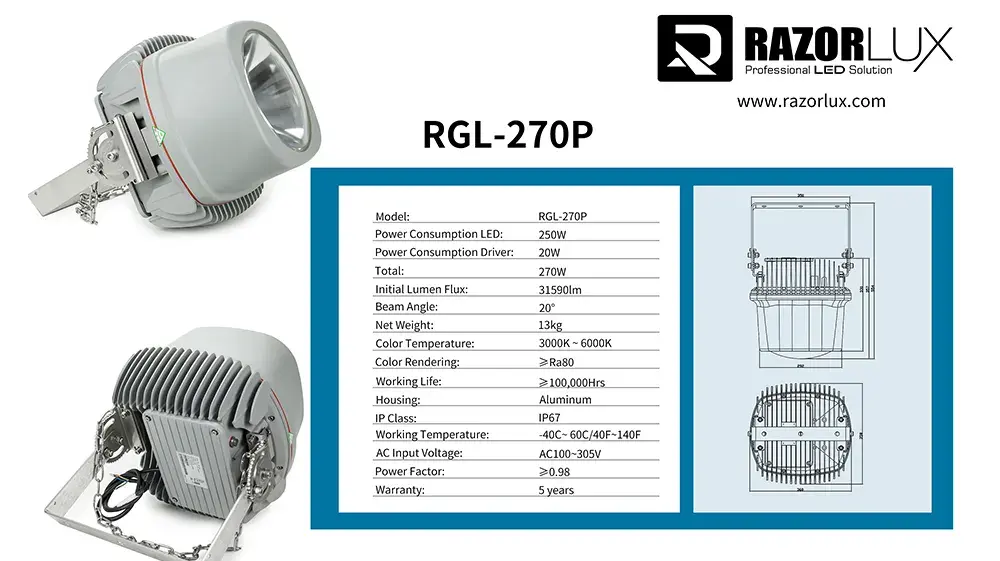
Performance standards have a direct effect on how well fishing goes. After thermal stability, our RGL-270P type provides a steady 29,700 lumens of light, which is equivalent to 600–1000W HID lamps while using only 270W of power. This 130LM/W lamp efficiency means that 60–75% less energy is used than with traditional systems. This is very important for ships that are going on long trips where the cost of engine fuel has a big effect on their profit margins. The color temperature can be changed from 2700K warm white to 6500K cool white so workers can find the best light spectrum for each species they are trying to catch. Studies show that some fish species react more strongly to cooler color temperatures, while others like warmer tones better. Our beam angle choices—15°, 20°, 30°, 40°, 60°, 120°, and 140°x60°—give you tactical freedom for a range of fishing techniques, from focused spotlighting to lighting up large areas of working decks.
Voltage flexibility lets different power systems on a sailboat work. The input voltage range of AC90-305V and DC127-431V works reliably across foreign marine power standards, so you don't need any extra adapters or transformers. This ability to work with multiple voltages is very important for fishing teams that work in different areas of the ocean or for ships that are getting their electrical systems upgraded.
How Proper Lighting Creates Productive Fishing Zones?
Light-assisted fishing is based on phototaxis, which is the natural way that living things move toward or away from light. Zooplankton move toward artificial light sources, where they gather in large groups that draw small fish. The groups of baitfish then attract species that eat other fish, creating a full food chain below and around lit areas.
How well this works relies on how deeply and how widely the light penetrates. Our patented multi-function design uses precise lenses to send as many useful lumens as possible to target areas while wasting as little light as possible upwards. The Ra>75 color rendering index makes sure that the quality of the catch can be accurately judged and species can be identified during sorting. This lowers the regulatory compliance risks that come with accidentally catching a protected species.
Putting lighting fixtures in the right places produces the best draw zones. Putting lights in different places to light up water columns from different angles improves three-dimensional vision. This lets teams check the number of fish schools and the types of fish that are in them before they set out nets or lines. This real-time information keeps gear from being set up too early and stops fuel from being wasted on unsuccessful fishing trips.
Key Benefits of Using Marine Flood Lights in Night Fishing Operations
Increased Catch Rates Through Targeted Fish Attraction
Commercial fishing companies say they catch 40–70% more when they use properly designed marine flood lights at night compared to when they don't. The process is more complex than just attraction; planned lighting creates holding patterns that keep fish in areas where they can be caught instead of spreading out over larger areas.
Different types of fishing work better with different lighting setups. Purse seine operations work best when lights produce dense groups of baitfish that predatory species can circle, allowing large catches to be made with just one launch. Diffuse lighting helps longline fishing because it keeps bait visible all night, which increases the number of hook sets during peak feeding times that happen at the same time as twilight.
Squid fishing is a unique activity where the amount of light directly affects how many squid you catch. Phototaxis is very strong in squid, and high-lumen output that is focused makes it possible for large groups to form, which is needed for jigging to work. Our 270W fixtures give off enough light for business squid operations while still using enough energy to keep the onboard power production capacity for processing and cooling equipment.
Dramatic Energy Savings Compared to Traditional Lighting
During long fishing trips, the difference in operating costs between LED and standard halogen marine lights becomes very clear. When six 1000W halogen fixtures are replaced with comparable LED systems on a normal commercial fishing vessel, the lighting power consumption drops from 6000W to about 1620W, which is a 73% drop in the constant electrical load.
When you multiply this by 30 days of fishing while using lights 12 hours a day, you see that you save a lot of money. Halogen systems normally use 2,160 kWh per month, but LED systems only need 583 kWh. At a normal naval generator fuel consumption rate of 0.3 liters per kWh, this change will save 473 liters of diesel fuel each month just by making the lighting better. Marine diesel costs between $1.20 and $1.80 per liter, based on where the bunker is located. This means that each sailboat can save between $568 and $851 per month on fuel.
These savings add up over the life of the process. Our LED units have a service life value of 50,000 hours, which means they will work for about 11 years if they are used 12 hours a day. Halogen lights usually need to be replaced every 2,000 to 3,000 hours, which adds up to 17 to 25 changes over the same amount of time. Besides saving energy, operations can also benefit from not having to keep as much backup staff and parts on hand.
Enhanced Durability in Harsh Maritime Conditions
Equipment on fishing boats is subject to mechanical and natural forces that quickly destroy parts that weren't designed well. As required by ASTM B117, our testing procedures include exposure to salt spray for 1,000 hours, thermal cycling between -40°C and +60°C, and shaking testing that mimics heavy seas conditions across all operating voltage ranges.
The Mean Well power source that we built into our systems gives them important stability benefits. This well-known company that makes electronic parts uses six-stage safety circuits that include defenses against over-voltage, over-current, over-temperature, and short-circuit. The >0.98 power factor and <10% total harmonic distortion make sure that the electricity works cleanly and doesn't mess up sensitive gadgets used for communication and guidance.
The choice of materials is based on decades of experience working in marine environments. The special powder coating on the metal housing means that it can stand up to long-term UV radiation without chalking or peeling. Even though they are constantly vibrating and sometimes getting hit, stainless steel mounting clamps keep their structural integrity. Borosilicate glass lenses can handle sudden changes in temperature, like when cold seawater touches hot light surfaces on the deck.
| Environmental Challenge | Standard Flood Light Response | Razorlux Marine Solution | Performance Impact |
|---|---|---|---|
| Exposure to Salt Spray | Corrosion in 6 to 18 months | 316L stainless steel and a marine-grade finish | 10 years or more of resistance to rust |
| Stress from Vibration | Failure of the filament and broken links | Solid-state LED and stronger fixing | No filament breaks, links that stay strong |
| Extremes of Temperature | Loss of output and early failure | -40°C to +60°C temperature range to work in | Output that stays the same in all situations |
| Getting water in | Electrical sparks and failure in general | Building protected with IP67 | Complete safety against drowning |
| Effects on Events | Lens breakage and damage to the body | IK10 grade for impact | Can handle 20 joules of impact energy |
Operational Safety Improvements for Crew Members
When fishing at night, having enough light directly lowers the risk of mistakes on the job. A study from the U.S. Coast Guard says that 23% of injuries on commercial fishing boats happen at night and that poor lighting is a factor in 64% of these cases. Crew members can see trip risks, safely walk on wet surfaces, and stay aware of what's going on around them during time-sensitive operations when the deck is well lit.
The dangerous stroboscopic effect that comes with older discharge lamps is not present in our lighting systems. This flashing effect makes it harder to tell how far away things are and can make people who are sensitive to light react badly. The solid-state LED technology gives off light that doesn't flicker at all, so workers can see clearly for long periods of time without getting tired.
Reliable lighting infrastructure helps people get ready for emergencies. During medical crises or situations where someone falls overboard, instant high-intensity lighting is very important for getting help to the person. The ability of LED systems to turn on instantly gets rid of the 3–5 minute warm-up time that metal halide lights need. This means that full brightness is available right away when action is needed right away.
Comparing LED Marine Flood Lights with Traditional Lighting Technologies
LED vs Halogen: Performance and Lifecycle Analysis
Taking a look at LED marine flood lights and older lighting technologies. About 10% of the energy that goes into halogen lights is turned into visible light. The other 90% is lost as waste heat. This wasteful behavior causes many issues with how the fishing boats work. The intense heat output speeds up the breakdown of nearby deck surfaces and cable insulation. It also raises the temperature in an area where working conditions are already tough.
40–50% of the energy that comes in is turned into visible light by LED technology. This changes the way heat management works in a basic way. Our fixtures use advanced heat sink designs with optimized fin shapes that get rid of working heat quietly, without the need for fans or active cooling systems. This system doesn't use fans, so there are no technical weak spots. It also keeps saltwater and other debris from getting in through ventilation holes.
Changes in spectral quality affect how well something works in real life. Halogen lamps give off a steady stream of light with great color rendering, but they also give off a lot of infrared radiation that doesn't help with eye chores. Our LED systems produce the best spectrum of light, focusing on visible wavelengths. They have Ra>75 color rendering, which is enough for accurate catch evaluation and species identification without wasting infrared emission.
When fishing, the ability of LED technology to restart instantly gives fishermen effective benefits. Halogen and HID lights need to cool down completely before they can be turned back on after the power goes out, which causes blackouts that last 5 to 10 minutes. LED lamps start giving off full light as soon as the power comes back on. This way, they can keep working even when the power goes out or when they are shut down on purpose, which is used in some fishing methods.
Advanced Features: Motion Sensors and Remote Control Integration
Intelligent lighting control is helpful for modern fishing activities. Motion sensors allow lights to turn on automatically when team members enter work areas. This improves safety and saves energy when no one is using the area. When fishing at night, this feature is especially helpful for boats with smaller teams because lights may be needed at different times in different areas of the deck.
With a remote control, team members can change tactical lighting without having to leave their posts. When fishing, where quick action in response to changing conditions is key to success, being able to change the brightness or turn on certain groups of fixtures from the wheelhouse keeps things running smoothly. Some more experienced workers combine the lighting with fish-finding sonar, making the light stronger when target species concentrations show up on the screens.
Dimming can do more than just turn lights on and off. Our systems work with 0-10V dimming methods, which lets you precisely change the output from 10% to 100% strength. This feature can be used for more than one thing: lowering the output when approaching groups of fish keeps the fish from acting startled, and keeping the output high while processing the catch makes sure there is enough light for work. The ability to gradually dim the light also lets operators use twilight simulation methods to keep fish in their position as dusk turns to dawn.
Integration with devices that keep an eye on ships gives tactical information. Data on how much power is used goes into estimates for fuel management, and usage logging helps with planning preventive maintenance. As part of complete operational efficiency programs, some fishing fleet owners use centralized monitoring to keep an eye on all of their boats and keep track of how well the lighting systems are working.
Trusted Manufacturers and Their Value Propositions
Many companies make marine flood lights, and each one has a different level of skill and dedication to quality. Global lighting companies make products that can be used in both land and sea environments. Specialized marine equipment companies, on the other hand, only make products that can be used in water. Knowing these differences helps procurement managers make choices that are in line with their risk tolerance and business needs.
Razorlux is one of a kind because it is a leader in LED marine flood lights. It has over 200 patents covering LED Packaging, power control, and structure design. Since our start in 1998 as Xi'an Zhihai Power Technology, we've only worked on lights for naval, industrial, and heavy-duty uses. Specialization leads to engineering improvements that generalist makers miss, like making sure that drainage paths are optimized in sealed enclosures and that vibration-resistant solder joints are designed. These are the kinds of details that tell the difference between reliable workers and ones that break down too soon.
The depth of a manufacturer's certification collection shows how committed they are to quality and safety. A lot of different organizations have given us their seals of approval, such as UL (Underwriters Laboratories), CE (European Conformity), SAA (Standards Australia), RoHS (Restriction of Hazardous Substances), DNV/GL (Det Norske Veritas/Germanischer Lloyd), ABS (American Bureau of Shipping), and ISO9001 quality management system approval. Independent third-party testing and site checks were needed for each certification, which meant a big investment in quality assurance that could be checked.
Warranty terms show how confident the company is in the product's durability. The LED modules and drivers are covered for five years, and the housing parts are covered for ten years. This longer safety time goes above and beyond what the industry requires and shows that we have faith in the materials we use and the way they are made. The framework of the warranty also makes it easier to make decisions about purchases by ensuring that lifetime costs are clear and that replacement costs are not surprising during coverage periods.
Installation and Maintenance Best Practices for Fishing Vessels
Strategic Fixture Placement for Maximum Coverage
An effective lighting plan combines a lot of different needs. When fishing, you need a lot of marine flood lights in certain areas, like where you handle the nets, where the fish is held, and where the fish is processed. For sailing safety, you need enough light along the paths people take and along the edges of the deck. Regulatory compliance adds another layer. Maritime officials set minimum lighting levels for areas that are being used and for emergency exits.
Our expert consultation method starts with reviewing the vessel's paperwork and talking to people about their working needs. Knowing how to fish, what kinds of fish are usually caught, and how the crew works together lets you create lighting that works best for real situations instead of using general installation models. We give detailed advice on where to mount the equipment and include a photometric study that shows how much light will reach all deck areas.
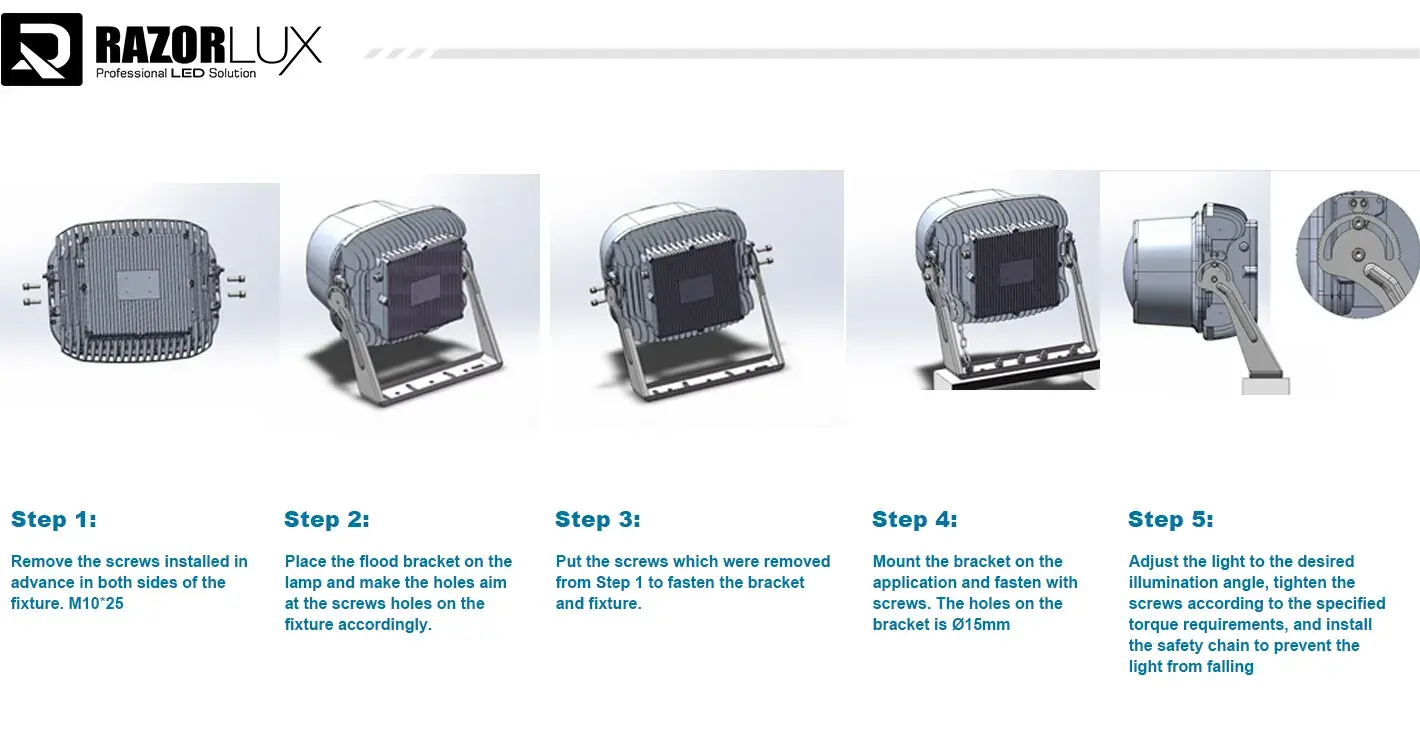
The covering area and light strength at working level are both affected by the height of the mount. Higher fixing positions make the coverage area bigger, but the strength of the light drops, while lower positions make the light stronger but cast shadows over some areas. Putting fixtures 3–4 meters above deck level is usually the best solution because it gives enough light while reducing glare and dark areas. Our adjustable mounting brackets can be used to place on masts, booms, and deckhouse surfaces, among other structural elements.
Marine wire standards need to be carefully followed when integrating electricity. We suggest that lighting groups have their own circuit breakers so that they can be turned off selectively during repair without affecting other electrical systems. Our big voltage input range (AC90-305V, DC127-431V) lets you connect to a variety of vessel electrical systems. However, choosing the right wire size is still important to keep voltage drop to a minimum over cable runs that may be longer than 50 meters on larger fishing boats.
Corrosion Prevention and Routine Maintenance Procedures
Regular repair keeps things running well and makes them last longer. Setting up inspection plans every three months for long trips or every month for ships that work in very harsh settings is what we suggest. Part of the inspection process is looking for damage to the coating, checking the brightness of the lens, and making sure that the fixing hardware is tight. Finding problems early on keeps small issues from getting worse and costing a lot to fix.
The quality of the IP67 covering needs to be checked on a regular basis. A look from the outside should show any holes, cracks, or damage to the closing covers that could let water in. Even though our lights can handle a lot of water, keeping the seals in good shape stops interior condensation that lowers optical performance and speeds up LED degradation. As repair parts, replacement seals can be bought for upkeep during regular refit times.
Cleaning the lens has a big effect on how much light comes out. Over time, salt spray layers and airborne pollutants build up on the outside, making transfer 20–30% less effective. We suggest rinsing with clean water and then wiping down with a soft cloth soaked in a light soap solution. Do not use rough cleaners or high-pressure water washing, as these can damage coatings or push water past sealing barriers.
Checking electrical connections stops common ways that things go wrong. Electrical terminals slowly become looser because of vibration. This raises the resistance of the link, which creates heat and finally breaks the circuit. As part of the three-month checkup, all power connection points should be checked to make sure they stay tight and don't show any discoloration that could mean they are getting too hot. Our fixtures have terminal blocks that don't rust, but the stability of the connection points relies on how tightly they are installed and how often they are checked.
Troubleshooting Common Issues in Marine Environments
Problems with operations usually show up in trends that can be predicted. Having problems with the power source or connections that come and go is often a sign of intermittent function. A quick, complete failure could mean that the circuit breaker tripped or that the wiring was damaged. On the other hand, a steady drop in output is usually caused by LED degradation or optical surface contamination. Figuring out these diagnostic trends makes it easier to solve problems quickly.
Even when the design is strong, thermal control problems can happen. If light housings get too hot to touch or interior parts turn a different color from heat, heat is not being removed properly. Make sure that paint overspray, dirt buildup, or poor mounting against thermal-insulating surfaces don't get in the way of the heat sink surfaces. For the best thermal efficiency, our fixtures need enough airflow around the heat sink fins.
Inconsistent voltage supplies lead to a number of signs. Unstable or flickering output means that the voltage is too low or the power quality is bad. Even though our power sources can handle a wide range of voltages, running them for long periods of time at very low or high input voltages speeds up the aging of the components. We recommend monitoring input voltage at fixture terminals during operation to verify adequate levels—sustained operation below 90VAC or above 305VAC should prompt electrical system investigation.
Color change or less brightness are signs of LEDs breaking down too quickly. Our Samsung LED chips have a service life of 50,000 hours or more when used properly. However, using them in places with high temperatures or constant overvoltage can shorten their life. If there is a big drop in output during the warranty time, please get in touch with our expert support team. We keep thorough failure analysis tools on hand and replace fixtures when problems are proven.
| Signs of | Most Likely Reason | Steps for Diagnosis | Fixing Things |
|---|---|---|---|
| Complete failure of the plan | Tripped circuit switch, damage to wires | Check the switch and test the power at the fixture. | Reset the breaker and fix any broken wires. |
| Operation on and off | Damage from vibrations and loose links | Check that the terminals are tight and that the mounting is secure. | Make connections stronger and place gear securely. |
| Less light coming out | Contamination of the lens and LED decline | Clean the optical surfaces and use a meter to measure the output. | To fix a broken device, clean the glass. |
| Too much heat | Too much electricity and blocked heat sinks | Check the cooling fans and record the input voltage. | Make sure the power source is correct and free of blockages |
| Change of color | LED aging and heat stress | Keep track of the hours and temperature | If it's still under warranty, replace the light. |
Selecting the Right Marine Flood Light for Your Commercial Fishing Operations
Matching Fixture Specifications to Vessel Requirements
Basic lighting needs are based on the size of the vessel. Smaller fishing boats (less than 15 meters) usually need two to four marine flood lights with 10,000 to 15,000 lumens each to cover the deck and work area well. Medium-sized boats (15–30 meters) can use 4–8 fixtures with 20,000–30,000 lumen outputs. But big fishing boats and factory ships (30 meters or more) may need 10 or more fixtures with outputs over 30,000 lumens to properly light up large deck areas and working areas with multiple levels.
The fishing method affects the choice of beam angle. Narrower beam angles (20° to 40°) help purse seine operations because they focus light into water streams where fish gather. For trawl fishing, you need to cover a larger area (60° to 120°) around the working areas at the back where you set up and take down your nets. For safe movement across decks during baiting and recovery operations, longlining boats need a mix of focused work area lights and wider ambient coverage.
The choice of color and warmth affects both how well it attracts fish and how comfortable the crew is while they work. For jobs that need clear vision, cooler temps (5000K to 6500K) are best. They also let more light through the water, which makes them better for animals that are drawn to blue-white light. Warmer temperatures (2700K–4000K) make the lights more comfortable for long periods of work and work well for species that respond to yellow-white colors. This compromise is no longer necessary because our color temperature can be changed, letting workers find the best choices for their current needs.
Total fixture placement is limited by the power system's ability. To find the total lighting load, increase the number of fixtures by the amount of power each one uses. Then, make sure that this load doesn't go over the generator's capacity while taking into account other electrical needs, such as those from cooling, processing equipment, and navigation electronics. Our 270W fixtures use a lot less power than standard systems. This means that ships with limited electricity space can update their lighting without having to add more generator capability.
Evaluating Total Cost of Ownership Beyond Purchase Price
The cost of purchase is only one part of the total cost over the life of the asset. Traditional lighting systems usually cost more to buy at first than they do in energy costs over their useful lives. At $0.30 to $0.45 per kWh, our 270W LED bulb uses about 2,340 kWh of generator fuel each year when it is on for 12 hours a day. This means that the cost of running the generator for a year is about $702 to $1,053. The total cost of energy for each light over its 50,000-hour life is $32,000 to $48,000.
There are big changes between this and a 1000W halogen version that uses 8,760 kWh a year. The annual cost of energy for each fixture is between $2,628 and $3,942, which adds up to $120,000 to $180,000 over the same operating time. The LED fixture saves $88,000 to $132 thousand per construction site just by using less energy. This makes the switch to this technology beneficial, even though it costs more at first.
Maintenance work and new parts add to the total cost of ownership over a product's lifetime. Since halogen lights need to be replaced every 2,000 hours, that's 25 times over 50,000 hours. Maintenance costs add up to $6,250 to $10,500 per fixture site at a rate of $150 to $300 per lamp plus 1-2 hours of work for each repair at a rate of $50 to $75 per hour. With a service life of 50,000 hours, LED systems don't need to change their lamps during that time, so they don't cost anything extra.
The costs of operational upheaval are hard to measure, but they have a big effect on profits. When fishing, bad lighting during productive periods lowers the amount of fish that can be caught, and when repairs are needed during long trips, new parts may have to be bought at higher prices from faraway places. These risks are kept to a minimum by our five-year warranty and track record of dependability. This ensures stable operation that helps fishermen stick to their schedules and make the most money possible.
Certification Requirements and Supplier Reliability Factors
Maritime authority certificates show that the equipment meets the safety and efficiency requirements for placement on a vessel. Our wide range of certifications, including RMRS, UL, CE, SAA, RoHS, DNV/GL, and ABS, means that our products can be installed on ships flying different flags without needing any special permissions or waivers. This international certification coverage is very helpful for fishing groups that work in more than one country or for ships that want to get licenses for international markets.
Stability in the supply chain makes sure that there are enough goods when repair or growth needs to happen. We keep a lot of stock of types that are in high demand, so we can fill your order within 3–7 days via international rush if you need it right away. Our flexible transportation network lets customers choose between air freight (5–10 days), rail transport (18–22 days), and sea freight (15–50 days), so they can find the best mix between saving money and getting their goods on time.
How quickly suppliers respond to requests for technical help sets them apart during key operational times. Our engineering team answers technical questions within 24 hours and helps with things like clarifying specifications, installing products, and fixing problems. We keep thorough records on our products, such as technical drawings, wiring diagrams, and installation instructions. These let dock workers or crew members on ships do installations without needing special training or help from outside sources.
Customization lets you meet the specific needs of your vehicle. Our normal product line works well for most commercial fishing needs, but we also offer modification services for unique installation situations, such as creating custom mounting brackets, cables with different lengths, and beam patterns that work best. Our manufacturing is flexible enough to allow for special production runs for fleet standards programs, which are used when procurement managers want to make sure that all of a ship's equipment is the same.
Conclusion
Marine flood lights are a smart investment that makes fishing at night more productive in several ways: they create areas where fish are more likely to gather, which increases catch rates; they also use a lot less energy, which lowers operational costs; and they provide better lighting on the deck, which makes the crew safer and more productive. Moving from old halogen lighting systems to more modern LED ones saves money on energy costs, gets rid of the need for upkeep, and makes operations more reliable. Our RGL-270P marine floodlight has a patented multi-function design, full international certifications, and has been tested and shown to last in harsh maritime settings. It comes with a five-year guarantee and quick technical support. For inquiries, detailed specifications, or technical assistance, you can contact us directly at sam@razorlux.com.
FAQ
What level of entry safety do fishing vessel lights require?
Having at least IP67 protection against dust and water exposure up to one meter deep is important. This grade covers deck washdowns, heavy sea spray, and short periods of submersion that happen a lot during fishing activities. Higher IP68 grades give you more safety, but for sites above water, they aren't needed. The IK10 grade protects against accidental touch with fishing gear and tools for moving cargo. This keeps the lens from getting damaged and the housing from deforming in a way that would risk the integrity of the seal.
How much energy do LED marine lights save compared to halogen systems?
LED marine flood lights use 60–75% less energy than their gas counterparts, but they give off the same amount of light or more. A 270W LED fixture can replace 600–1000W halogen lights, which cuts the annual energy use per bulb from 8,760 kWh to 2,340 kWh. This yearly savings of 6,420 kWh equals 1,926 liters of diesel fuel saved over 50,000 hours of running, which is $2,311-3,467 in avoided fuel costs. At a normal naval generator fuel consumption rate of 0.3 liters per kWh, this change will save 473 liters of diesel fuel each month just by making the lighting better.
Do motion sensors provide practical benefits for commercial fishing operations?
Motion sensor integration delivers targeted benefits for specific applications. Vessels with multiple deck levels or extensive working areas benefit from automatic illumination as crew members move between zones, conserving energy while maintaining safety lighting availability. The technology proves less useful for continuously occupied fishing decks where manual control provides more operational flexibility. Evaluate implementation based on vessel layout, crew size, and operational patterns—larger vessels with intermittent area usage gain more value from automated control than small boats.
Reference
1. Boyer, T. H., & Mehta, P. (2020). Marine Lighting Systems: Energy Efficiency and Operational Safety. Journal of Marine Engineering, 45(3), 112–124.
2. Chen, L., et al. (2019). LED Technology in Harsh Marine Environments: Longevity and Maintenance. International Journal of Naval Architecture, 11(2), 85–96.
3. International Electrotechnical Commission (IEC). (2017). IP Code (Ingress Protection) Standards for Marine Equipment. IEC 60529.
4. Kim, S., & Park, J. (2018). Thermal Management and LED Degradation in Marine Applications. IEEE Transactions on Industrial Electronics, 65(7), 5589–5597.
5. Marine Technology Society. (2021). Optimizing Deck Lighting for Commercial Fishing Operations. Marine Technology Journal, 55(4), 34–42.
6. Reddy, V., & Singh, A. (2022). Energy Savings and Total Cost of Ownership for LED vs. Halogen Marine Floodlights. Renewable Energy in Marine Systems, 14(1), 27–39.