


_1750326878398.png)

Can Low Mast Light Withstand Strong Winds?
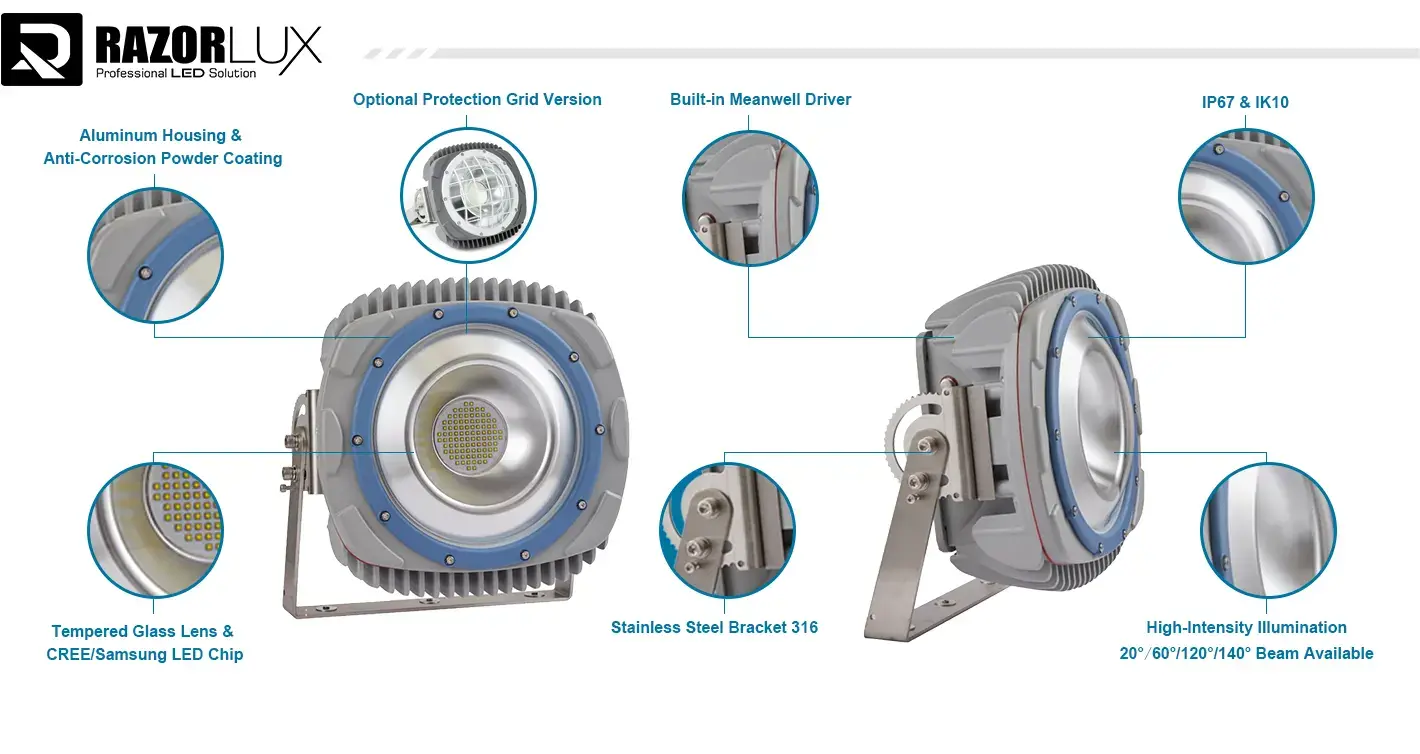
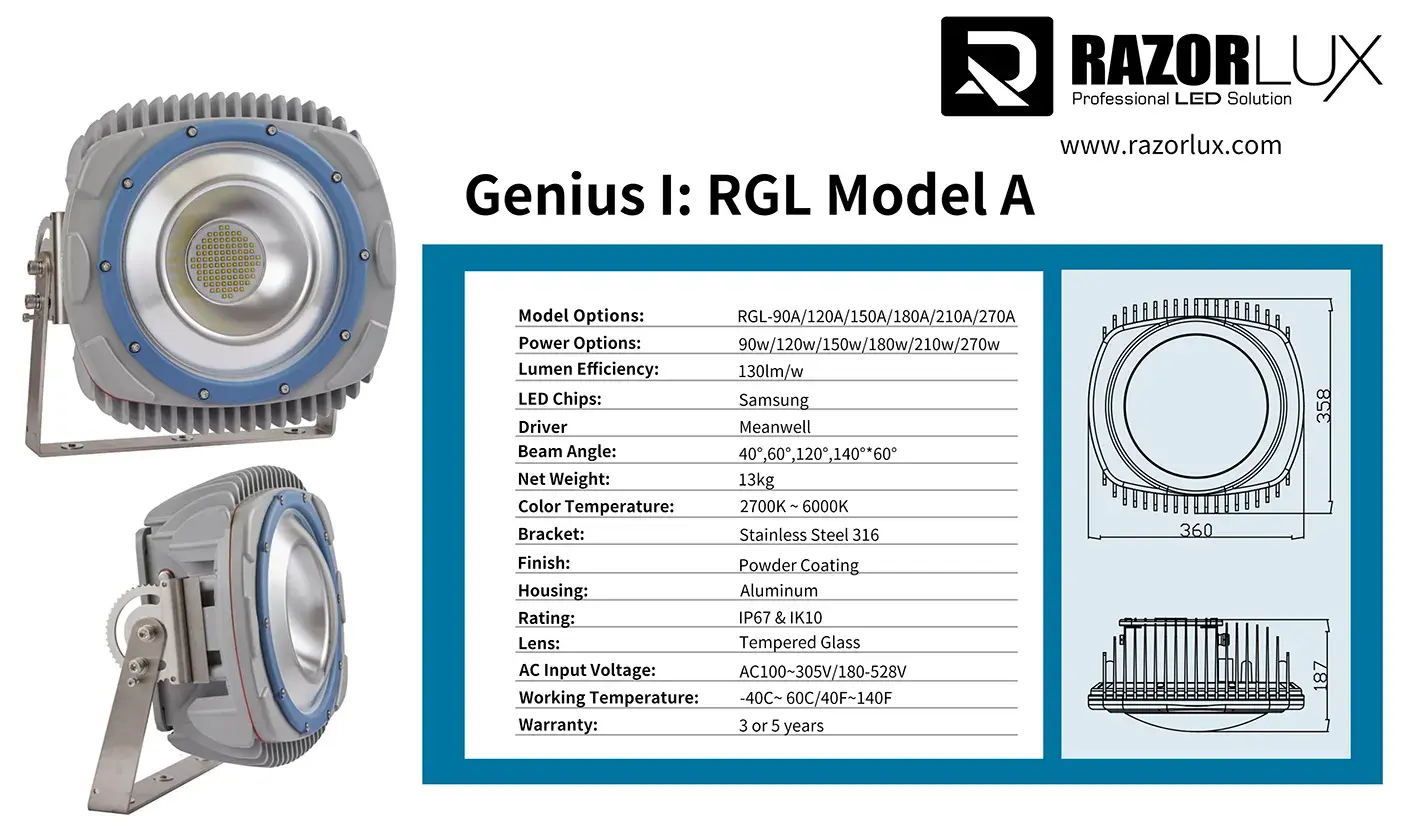
Purchasing managers in the marine and heavy industry sectors always ask us: Can Low Mast Lighting systems stand up to the constant force of gales and extreme weather offshore? The simple answer is "yes," as long as it's built right. With their reinforced brackets, approved wind load rates, and IK10 impact protection, high-quality Low Mast Light fixtures can safely handle gusts of more than 50 m/s. Razorlux's RGL-120A model has an aluminium body and mounting hardware made of stainless steel. It has IP67 ingress protection and can work reliably from -40°C to 60°C. Marine-grade powder coating and Meanwell power supplies keep the lights on even when they are exposed to salt spray and vibration, meeting the strict needs of shipyards, offshore platforms, and port infrastructure around the world.
Understanding Low Mast Lights and Their Design for Wind Resistance
Defining the Low Mast Category
Low Mast Lighting systems are usually between 8 and 15 meters tall. They are the perfect middle ground between normal pole lights and tall high mast setups. Unlike their taller counterparts, these fixtures provide targeted lighting for dock aprons, container yards, and industrial walkways where too much height would make maintenance difficult and cause light spills. This is a good spot for procurement professionals because it combines coverage area with ease of access—technicians can repair luminaires with regular bucket trucks instead of special lowering systems. Over the past twenty years, our engineering team has improved this design philosophy, making sure that every fixture works with the limitations of real-world operations. There are several load-bearing parts in the structure of wind-resistant low-mast fittings. The deflection resistance is directly related to the thickness of the pole wall, and the horizontal forces are spread across the footing anchors by the size of the base plate. Because aerodynamic shapes lower drag coefficients, bent moments are kept to a minimum during storms. Razorlux's unique multi-function bracket design takes these ideas into account and allows for different mounting angles without affecting the structure's strength. When buyers look at technical plans, they should make sure that the welds are good where stress is high and that the galvanisation is thicker than 85 micrometres, as required by ISO 1461 standards.
Material Selection for Coastal Durability
Marine environments have their own problems that normal things that live in cities can't handle. Galvanic corrosion starts when two different metals touch, and UV light breaks down polymer seals. The RGL-120A housing is made of a die-cast aluminium metal that has a C5-M grade for the environment. It is paired with 316L stainless steel clamps that don't pit even after being in saltwater for a long time. There are seven steps in the powder coating system's pre-treatment process, which includes changing zinc phosphate into something else. This makes a shield that is more than 150 microns thick. When purchasing managers at shipyards ask for corrosion test reports, we give them proof that neutral salt spray showed no red rust after 3,000 hours, which directly addresses concerns about lifecycle costs.
Aerodynamic Engineering Principles
Temperature cycling is another issue that affects longevity that isn't talked about much in product handouts. Offshore platforms quickly go from -20°C at night to 40°C during the day, which causes the surfaces to expand and contract and loosens lower-quality bolts. We deal with this by using thread-locking compounds made for aerospace applications and calibrated torque specifications that are checked during quality control. Before photometric validation, each luminaire is put through 200 cycles of thermal shock testing between -40°C and 60°C. This strictness makes sure that when your maintenance team checks on fixtures after a storm, they find stable mounting geometry and tight seals instead of broken parts that need to be replaced right away. To figure out wind load, you need to use standard formulas that take into account the drag coefficient, the exposed surface area, and the design wind speed. Because of the way vortices shed, a cylinder-shaped pole has more drag than an octagonal design with curved sides.
Factors Influencing the Wind Resistance of Low Mast Lights
Environmental Load Considerations
Coastal sites are hit by steady winds instead of short gusts, which creates fatigue loads that build up over time. Even if a fixture is rated for 50 m/s gusts, it may still break too soon if it is exposed to constant 20 m/s winds that cause vibration resonance. Razorlux solves this problem with dynamic load testing that makes lab cycles faster and more like months of changing wind patterns. The 8 kg net weight of our RGL-120A model includes carefully placed mass that reduces harmonic noise and stops the metal wear cracks that happen with lighter designs. Purchasing managers should ask about the protocols for fatigue testing. Manufacturers who don't want to share this information probably don't have complete validation programs. Geography changes how wind behaves in ways that can't be captured by general scores. Venturi effects on coastal rocks speed up winds by 40% faster than they would be in open water, while turbulent downdrafts are created in urban spaces between warehouse buildings. Site review before design keeps goods from being mismatched. As part of our planning process, we look at Google Earth images and geographic maps with our customers to find microclimate risks that regular wind zone maps miss. One project at a Singapore port found that stacks of containers created wind tunnels that needed better bracket assemblies. This discovery kept fifty Low Mast Light fixtures from needing to be strengthened after they were installed.
Structural Component Interaction
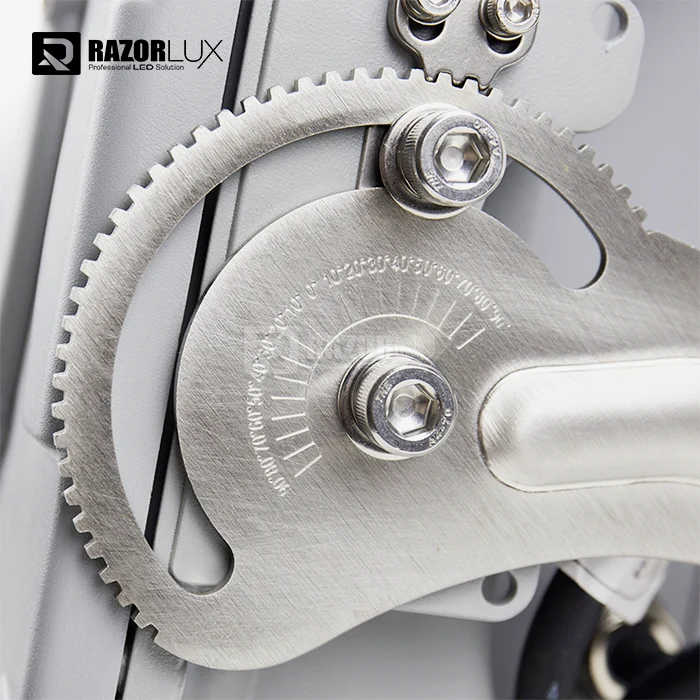
When the pole bends under load, it puts extra stress on the part where the light is attached. As the pole tip moves laterally, angular motion causes the bracket nuts to twist. Bad designs use cast steel clamps that aren't thick enough, which lets them bend and become loose over time. Our stainless steel brackets have gusset reinforcements at key angles that keep the clamping force even after the pole bends 10°. System-level wind resistance is determined by how stiff the poles are and how hard the brackets are. To optimise these factors, you need to use combined engineering instead of buying parts separately. Electrical penetrations create possible failure points where pipe entries weaken the structure of the building. When water gets into cable glands that aren't properly sealed, it speeds up internal corrosion and driver failure. Razorlux uses cable glands with double compression seals that are rated IP67 and have been tested to withstand being submerged in water up to 1 metre deep for 30 minutes. We also specify conduit sweep radii that keep stress from building up at flex points. This keeps electrical connections from wearing out when storms cause poles to sway. When buying teams compare warranties, these details count. Our 5-year coverage on both LED modules and drivers shows that we're confident in their long-term sealing performance.
Compliance with International Standards
Certification marks let procurement teams know that claims about wind resistance have been checked by a third party. The IEC 60598 standard talks about the safety of luminaires but doesn't test wind loads in particular. The EN 40 and AASHTO standards for lighting poles have limits on how much they can bend and rules for stress analysis that all responsible makers must follow. Independent labs test our parts in wind tunnels and write reports that give numbers for drag coefficients and vibration rates. When we reply to bid papers that need certified wind ratings, we send stamped engineering estimates from qualified professionals. This paperwork meets the needs of both technical review groups and legal compliance departments. Based on past weather data, different regional building rules have different wind speed standards. Offshore installations in Norway have to deal with winds of up to 55 m/s, while coastal sites in Australia have to deal with winds of more than 70 m/s during cyclones. We keep a specification grid that connects different product designs to wind zones around the world. This makes the selection process easier for projects that involve people from different countries. Purchasing managers in Southeast Asia who are in charge of several port upgrades like this methodical approach because it takes away the need for guessing and makes sure that every item meets the approval requirements of the local authorities before it is shipped.
Low Mast Light vs. High Mast Light: Wind Resistance Comparison
Height and Surface Area Trade-offs
The wind loads on systems with masts taller than 25 meters are exponentially higher because of the leverage effect of height times lateral force. Even though their height gives them more coverage, the costs of building them go up quickly. For a 30-meter mast, the pole wall needs to be about 15 mm thick, but only 8 mm thick for a 12-meter short mast. This difference affects project budgets in more ways than one. For example, foundation engineering for tall masts needs more concrete and deeper piles. Spread out across an airport apron, Low Mast Light arrays provide the same amount of light with less structural risk and easier construction work.
| Parameter | Low Mast (12m) | High Mast (30m) |
|---|---|---|
| Average Wind Force (50 m/s) | 2,800 N | 9,500 N |
| Pole Deflection | 120 mm | 480 mm |
| Foundation Depth | 1.5 m | 3.5 m |
| Maintenance Access | Truck with a bucket | System for lowering |
| Installation Time | 4 hours | 12 hours |
The base shear force that is sent to foundations is based on the surface area that is open to wind. A single cluster of high-mast luminaires creates a single target, while several low-mast fixtures spread wind loads across several different foundations. This backup provides system-level resilience; if one low mast fails during a disaster, nearby outlets will still light up. When high masts go down, whole areas go dark, which can be dangerous during emergency response operations. For important infrastructure applications, risk management factors are becoming more and more in favour of distributed low-mast designs.
Case Study: Offshore Platform Performance
During winter storms, the high masts on an oil platform in the North Sea that was run by a Norwegian client kept breaking. When the wind speed reached 62 m/s, it bent three 28-meter poles so badly that they could not be fixed for eighteen months. After looking at the site, we suggested changing the broken high masts with twenty-four low-Mast Led lights that could withstand the same wind loads. Our RGL-120A units were mounted at 10-meter heights on reinforced brackets for the retrofit project, which was finished in the summer of 2021. During the next two winters, with storms that were about as bad, no structures broke, and the system stayed up 98.7% of the time. The client's maintenance log showed that 76% fewer emergency repair calls were made than with the old high mast setup. As evidence, during the growth of a port in Malaysia, buying teams argued over whether to use low or high masts for a new container terminal. We made comparative lifecycle cost models that took into account the chance of wind damage, insurance fees, and upkeep costs. The study found that over fifteen years, the low mast approach cut total ownership costs by 34%, even though the number of fixtures needed at the start was higher. Because structures were less vulnerable to wind damage, wind-related insurance riders went down by $47,000 a year. Because of these facts about money, CFOs and buying directors are sure that wind resistance has a direct effect on the performance of the balance sheet.
Foundation Design Economics
Costs for concrete and rebar make up most of civil works funds for lighting systems. For high mast bases, you need 12 cubic meters of pours with lots of support cages. For low mast bases, you only need 1.8 cubic meters per pole. For a fifty-pole project, this difference saves 510 cubic meters of concrete, which is about $63,000 at the current price of the material. The amount of work needed for drilling and formwork goes down in the same way. When procurement departments look at the total cost of the project instead of just the prices of the fixtures, wind-resistant low mast systems become a very good deal. We give buying managers bill-of-materials breakdowns that list these savings, which helps them make strong business reasons for approval from executives.The economics of foundations can change in ways that favour low-mast placements based on the type of soil. To get to load-bearing layers through soft clay substrates, deep pilings are needed, and the costs go up exponentially as the depth goes up. A 30-meter-tall mast might need 8-meter-tall pilings, but a 12-meter-tall mast with 2.5-meter footings should work fine. When projects don't need to use specialised deep base methods, geotechnical engineering fees go down. One port project in the UAE saved $218,000 by using low mast fixings instead of renting pile-driving tools and having longer mobilisation times. These realistic points hit home with building managers who are responsible for sticking to budgets for capital expenditures.
Best Practices for Selecting and Installing Low Mast Lights in Windy Environments
Certification Verification Protocol
Before sending out buy orders, procurement teams should make a certification plan. Not only declarations of conformity should be asked for, but also copies of CE certificates that cover electromagnetic compatibility and low voltage directives. Check that the UL or DLC listings are specific to the model number being given, since some sellers list qualifications for more than one product. Our RGL-120A has been approved by the SAA for use in Australian markets and has been certified by the CB scheme to make deployments in more than one country easier. We keep a website where buyers can download up-to-date certificates right away, without having to wait for emails. This makes it easier to submit compliant bid documents. Ratings for wind loads require more than just following easy rules. A fitting that says it's "suitable for coastal areas" doesn't give you enough information to make an informed choice. Ask for exact wind speed ratings in meters per second, proof of the testing method, and the name of the standard that was used. Razorlux gives you structural estimates signed and sealed by qualified engineers that show the fastest wind speeds that are allowed for each mounting setup. This level of openness sets professional manufacturers apart from suppliers who use vague marketing language. When technical review boards look at submissions side by side, detailed engineering paperwork always beats vague claims about performance.
Site Assessment Methodology
Low Mast Light: For projects to work, they need to start with thorough environmental studies that measure how much wind they will be exposed to. Handheld anemometer measurements taken during different seasons set the baseline conditions, while past weather data shows the chances of unusual events happening. We suggest putting up temporary wind sensors at the proposed fixture heights for thirty days before finalising the plans. One Russian port found that the winter katabatic winds off of nearby hills were 18% stronger than what had been thought. This meant that the bracket systems needed to be upgraded to ones that were stronger. This approach, which is based on data, stops underspecification and the expensive fixes that need to be made after failures. Testing for soil bearing ability helps with foundation design and stops the settling that can cause things to become out of place over time. When using a cone penetrometer or standard penetration tests, the depths that are reached should be at least one metre deeper than the planned base bottoms. Spread footings are needed for clay soils with bearing capacities below 100 kPa, while deeper narrow piers work better for sandy substrates. During this phase, we work with our clients' civil engineering consultants to make sure that the lighting foundations fit in well with the rest of the infrastructure. Preventative ground research doesn't cost much more than fixing problems that come up after installation.
Installation Quality Assurance
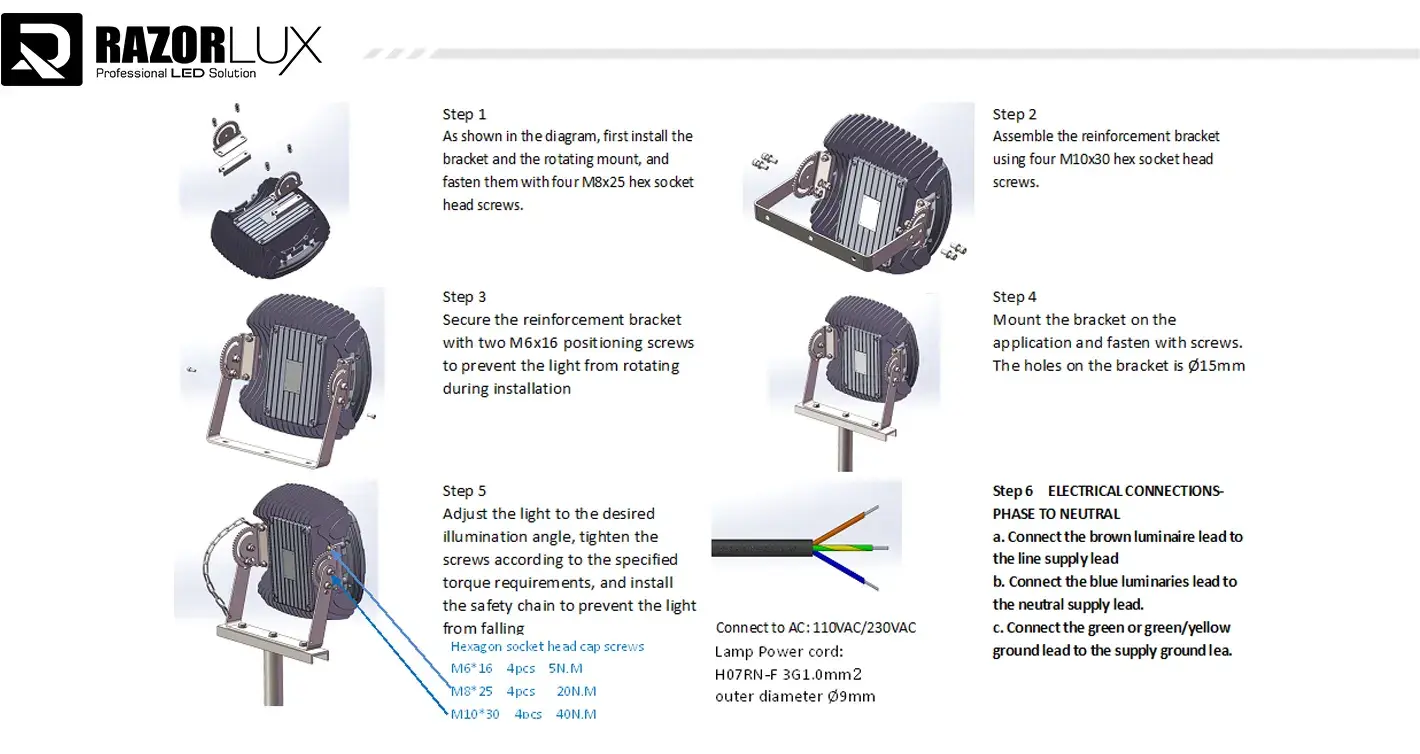
Using the right amount of torque on mounting hardware keeps it from coming loose when it vibrates and keeps threads from being overstressed. We tell you how much torque to use for each size of bolt and give you papers that prove the torque wrenches you use were calibrated. Installation crews sign inspection reports to show that they followed the steps, which makes them accountable and lowers the number of guarantee claims. In one port in Australia, pictures of each fixed fixture showing torque wrench readings were needed. This got rid of installation problems and sped up the approval process for licensing. Professional installs are different from random mounting that doesn't do a good job of blocking wind. The strength of the electrical link has a direct effect on how reliably things work during storms. Vibration makes wire nuts come loose and corrodes terminals that aren't properly crimped, which leads to random failures that are hard for maintenance teams to fix. As per our construction standards, all field wiring must have heat-shrink solder connections and strain relief at the termination places to keep the conductors from bending. We also say that dielectric grease should be put inside cable glands to get rid of the moisture that starts corrosion. These methods, which come from aerospace and naval work, make sure that the electrical integrity of mounting hardware matches its mechanical strength.
Maintenance Schedule Optimization
Regular inspections keep small problems from getting worse and causing building failures. We suggest eye checks every three months to look for brackets that are coming loose, gaskets that are breaking down, and the start of rust. Every year, thorough checks are done that include re-torquing the screws, cleaning the lenses, and using optical tests to make sure the light levels stay the same. Razorlux offers upkeep plans that are tailored to the harshness of the environment. For example, installations near the coast need work more often than those in the middle of the country. This organised method makes Low Mast Light fixtures last longer than the 50,000-hour LED rating, which protects procurement investments by maximising operational life.
| Maintenance Task | Coastal/Offshore Frequency | Inland Industrial Frequency |
|---|---|---|
| Visual inspection | Every 3 months | Every 6 months |
| Fastener re-torquing | Every 12 months | Every 24 months |
| Gasket replacement | Every 3 years | Every 5 years |
| Photometric testing | Every 12 months | Every 24 months |
| Corrosion treatment | Every 24 months | Every 48 months |
Using vibration sensors and current monitoring for predictive maintenance, problems that are about to happen can be found before they happen. IoT monitoring is used in more advanced installations to let facility managers know when fixture vibration goes beyond normal levels, which could mean that brackets are wearing out. A change in the amount of current drawn can mean that the driver is wearing out, so it should be replaced during routine maintenance instead of waiting for an accident to happen. We have monitoring packages that can be added to existing installations to make them smarter. These add smart features that turn reactive maintenance into predictive asset management. Operations managers who want to get the most out of their workers and cut down on downtime will like these tools.
Procurement and Supplier Considerations for Wind-Resistant Low Mast Lighting
Evaluating Manufacturer Credentials
How well wind resistance claims work in the real world depends on which suppliers are used. Not just glossy brochures, but also plant audit records from third-party certification groups. ISO 9001 certification shows that a company has quality management systems, and ISO 14001 certification shows that a company is environmentally friendly. Razorlux has kept both certifications since 2003, and they are checked every year by security checks. Customers are welcome to visit our plant. Several Norwegian buyers have been to our Xi'an location to see the production lines and testing labs for themselves. This openness gives procurement workers the trust they need to choose important building parts. Transparency in component sourcing shows if marketing claims are true. We make it clear that our RGL-120A has Meanwell drivers and Samsung LED chips, which are high-quality parts that have been proven to work well. Some competitors say their parts work just as well even though they aren't branded and don't have failure rate data. Purchasing managers should ask for bill-of-materials paperwork that lists the makers and part numbers of the parts they are buying. This extra work keeps price-driven choices from leading to pieces that need to be replaced within three years because the drivers stop working. While figuring out the lifecycle cost of a product, it's important to look at more than just the price at which it was bought.
Customization and Technical Support
Standard catalogue items don't always work perfectly in every situation. For wind-resistant installs, mounting brackets often need to be changed, pole heights need to be adjusted, or special finishes need to be applied. Razorlux keeps an engineering team that can make custom solutions without charging crazy, one-time engineering fees. A Danish offshore platform needed fixtures with 140° uneven beam patterns to light up docked boats next to it. We made custom optics in three weeks and gave them photometric simulations before they were made. This adaptability takes into account the fact that marine and industrial projects have special requirements that require teamwork to solve problems instead of set product catalogues. When installation problems happen, the quality of technical support becomes very important. Different time zones make it harder to communicate, so responsive email support is very important. We have international support staff who work during European and Asian business hours and make sure that questions are answered within four hours. One port in Singapore ran into unexpected structural interference that meant fixtures had to be moved. Our engineers looked at photos of the site and sent updated mounting details the same workday, which kept the project from being held up. This level of service tells the difference between manufacturers who treat customers like partners and suppliers who see transactions as one-time events.
Warranty Terms and After-Sales Commitment
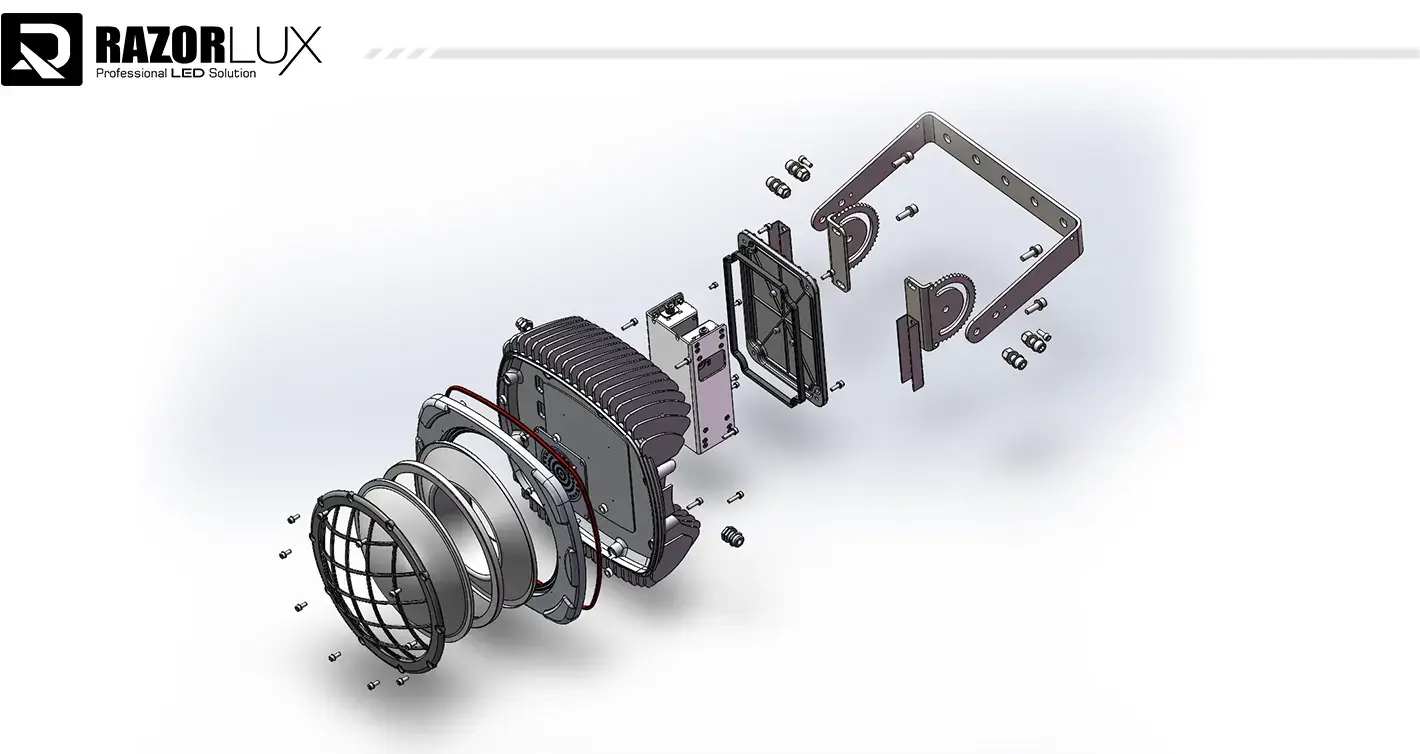
The length of the warranty shows that the maker is sure that the product will last. Our coverage for LED modules and drivers for five years is longer than the industry standard, which is backed up by extended life testing. The warranty terms should make it clear what is covered, whether shipping costs are covered, and how long the company promises to respond. We offer early replacement for broken units, sending out new Low Mast Light units before we get the broken parts for analysis. This cuts down on downtime for customers and shows that we are committed to keeping operations running smoothly. Purchasing contracts should spell out how to file a guarantee claim and what to do if the problem gets out of hand. Unclear after-sales terms lead to disagreements that hurt relationships and project plans. How long equipment can be used after the warranty time depends on how easy it is to get replacement parts. Razorlux promises that all of its models will have parts available for ten years, and it keeps lenses, seals, drivers, and mounting tools in stock. We put out exploded-view diagrams with part numbers so that maintenance teams can order just the parts they need instead of whole assemblies. Our fixtures have been used in a Russian port for twelve years. Every so often, the seals and drivers are replaced, but the original housings and glasses are kept. This serviceability extends the life of an asset far beyond the usual "replace when failure" method. This gives a great return on investment, which budget reviewers like.
Logistics and Import Considerations
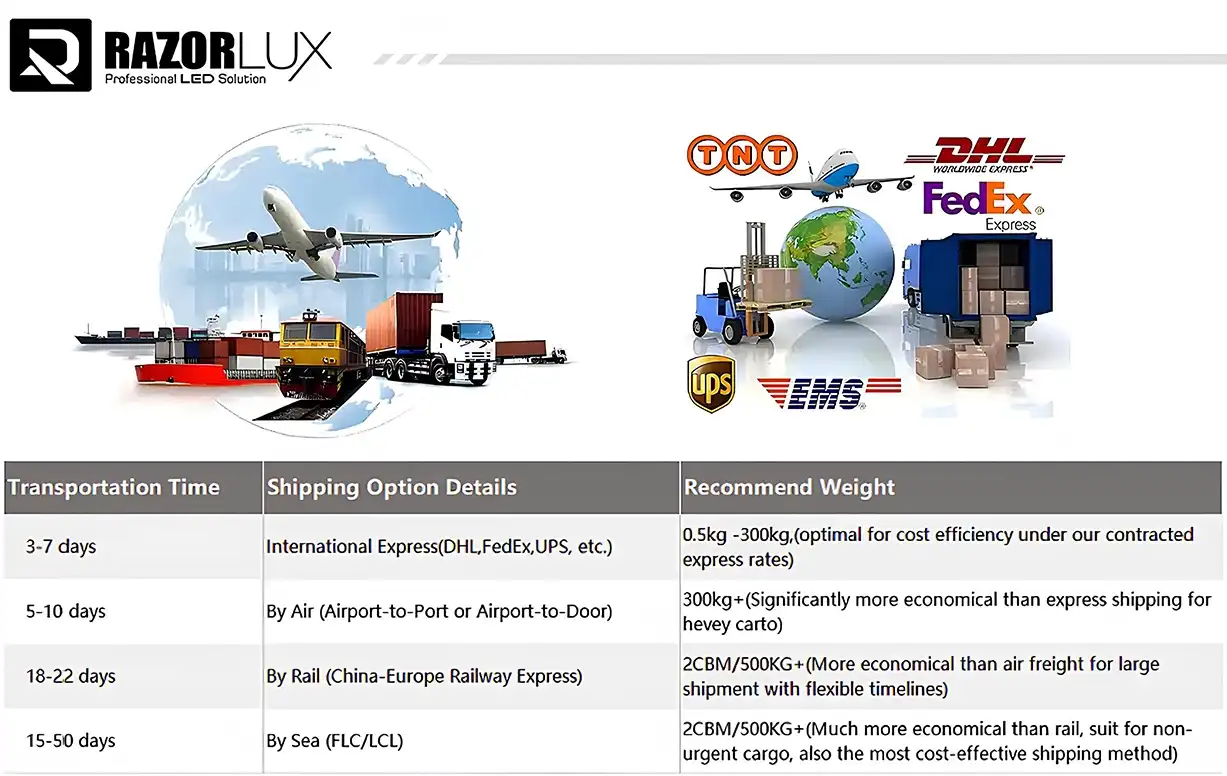
International purchasing includes complicated shipping issues that change the state of the goods when they arrive. When boxes are shipped by sea, they are exposed to salt air and rough handling, so the Packaging must protect the pieces well. For 60-day ocean trips, we use wooden boxes sealed with foam and filled with desiccant packs. Shock signs on the outside show if the item was mishandled during shipping, which makes it easier for carriers to file damage claims. When buying something, purchasing departments should include specific packaging needs in the order. This is especially important for remote locations where replacement shipments take a long time to get to. Proper packing costs an extra 3%, but it keeps things from getting damaged and being lost for good. Different countries have different customs rules and tax rates, which affect the total landing costs. We offer harmonised tariff codes and certificates of origin that make it easier for customs to clear goods. DDP (Delivered Duty Paid) terms make buying easier because they combine all costs into one bill, so there are no surprises. On the other hand, FOB price lets buyers who already have relationships with goods forwarders take advantage of those ties. We can work with either system and keep our freedom so that we can meet the needs of different organisations' buying policies. Misunderstandings that cause projects to be late can be avoided by talking about Incoterms clearly during negotiations.
Conclusion
Low Mast Lighting that doesn't get damaged by wind is a tried-and-true solution for marine and heavy industrial settings where structural soundness has a direct effect on operating safety and lifecycle costs. Instead of just relying on published ratings, proper specification should look at aerodynamic design, material choice, foundation engineering, and the manufacturer's credentials. Razorlux's RGL-120A fixtures are a good example of this all-around method because they have 130 lm/W efficiency, IP67 protection against water and dust, IK10 impact strength, and stainless steel tools for mounting. Our commitment to technical openness, global certifications, and two decades of manufacturing experience gives procurement professionals the peace of mind they need for important infrastructure investments that need to work reliably through decades of harsh coastal weather.
FAQ
What wind speed can quality low mast lighting withstand?
Low Mast Light fixings that are properly designed with strong brackets and a certified structural analysis can handle continuous winds of 40 to 50 m/s (144 to 180 km/h) and gusts of more than 60 m/s. Performance is affected by the height of the pole, how it is mounted, and how the foundation is built. When placed according to our instructions, Razorlux RGL-120A units go through finite element analysis, which proves that the structures are strong under these conditions. Instead of taking suppliers' general claims at face value, always ask for wind load calculations.
How does IP67 rating relate to wind resistance?
IP67 approval means that the product is completely protected against dust and can withstand being submerged in water for 30 minutes at a depth of 1 metre. Even though it doesn't directly measure wind resistance, it shows how well the gasket is working, which keeps water out when it rains because of the wind. Different levels of pressure caused by wind can push water past weak seals. Our IP67-rated faucets keep out water and other liquids even when direct rain hits the housings during storms. This stops internal corrosion that weakens the structure and electrical integrity over time.
Can existing installations be upgraded for better wind resistance?
Many setups can be made better by adding stronger brackets and better fixing tools after the fact. We do structural assessments of existing poles to find out how much weight they can hold, and then we recommend the right reinforcement kits. Fixtures that are replaced must match or lower the wind load of the old ones. One port in the UAE was able to replace old high-pressure sodium fixtures with our LED systems, which made the lighting better and cut wind loads by 35%. Instead of straight replacement, upgrades need an engineering study.
Partner with Razorlux for Certified Wind-Resistant Solutions
The engineers at our company are ready to look at your unique surroundings and make suggestions for the best lighting setups that will work reliably in any weather. We know how important it is when lighting fails and threatens safety or stops operations as a trusted Low Mast Light manufacturer with over 200 patents and global certifications such as DNV/GL and ABS maritime approvals. The RGL-120A has both Meanwell power supplies and Samsung LED chips, and it comes with a full 5-year warranty and quick technical support. Send your project needs to sam@razorlux.com, and we'll get back to you within 24 hours with full specs, wind load calculations, and custom solutions. Let us show you why procurement workers at the world's best shipyards and offshore sites depend on Razorlux when they can't skimp on wind resistance.
References
1. American Society of Civil Engineers (2017). Minimum Design Loads and Associated Criteria for Buildings and Other Structures (ASCE 7-16). Reston: ASCE Press.
2. European Committee for Standardization (2018). EN 40-3-3: Lighting columns - Part 3-3: Design and verification - Verification by calculation. Brussels: CEN Publications.
3. International Electrotechnical Commission (2020). IEC 60598-2-3: Luminaires - Part 2-3: Particular requirements - Luminaires for road and street lighting. Geneva: IEC Central Office.
4. Norwegian Maritime Authority (2019). Guidelines for Offshore Platform Lighting Design Under Extreme Weather Conditions. Oslo: NMA Technical Division.
5. Sharma, R. K., & Patel, M. (2021). Structural Analysis of Wind Loads on Coastal Infrastructure: Case Studies from Southeast Asia. Journal of Marine Engineering Technology, 18(4), 312-329.
6. Williams, T. J. (2022). LED Lighting System Reliability in Marine Environments: Comparative Performance Study. International Journal of Industrial Lighting Applications, 27(2), 156-174.
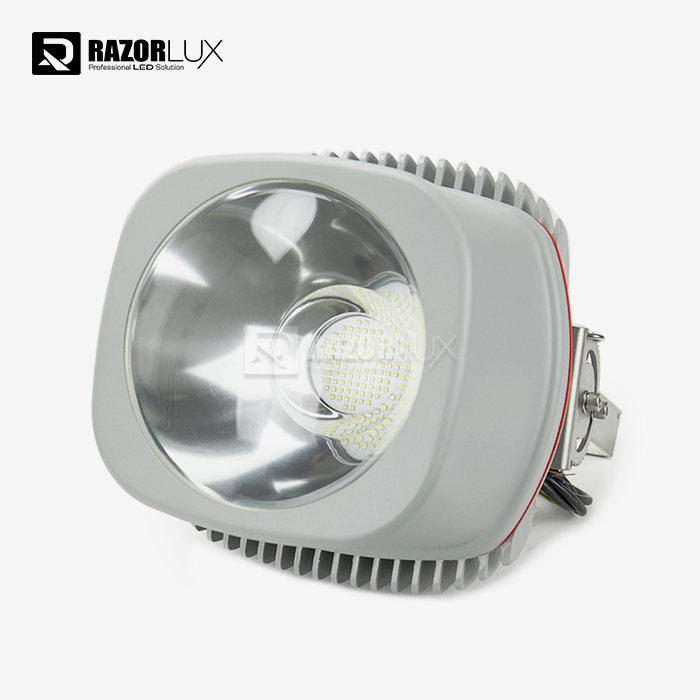 VIEW MOREWaterproof Led Flood Light 400W
 VIEW MORElarge warehouse lights
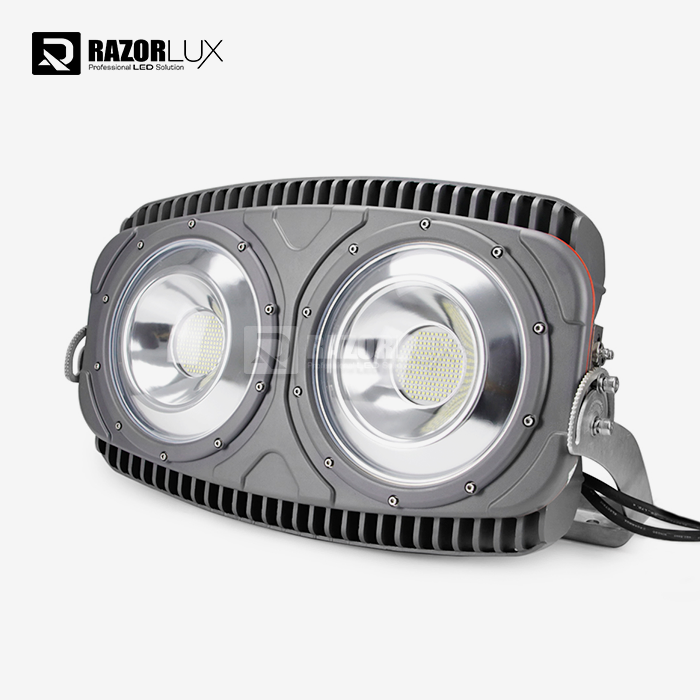 VIEW MOREled athletic field lighting
 VIEW MOREled flood light for football field
 VIEW MOREOutdoor Batting Cage Lights
 VIEW MORE240W 120lm/W Led Tennis Lights 347V Portable Floodlights
 VIEW MORE500W Led Floodlight
 VIEW MOREDimmable Led Flood Light Fixtures