


_1750326878398.png)

Why Choose Marine LED Flood Lights 120V for Marine Environments?
When you choose Marine LED Flood Lights 120V for maritime applications, you solve one of the biggest problems that shipyard managers and offshore facility engineers face: they need reliable, high-performance lighting that can handle corrosion from saltwater, extreme vibration, and weather that changes quickly. When connected to a normal 120V AC system, these special lamps give off more than 130 lumens per watt of light and are rated IP67 for safety against total immersion in water. Unlike traditional lighting solutions that often break down early, marine-grade LED floodlights designed for 120V power supplies work seamlessly with existing electrical systems on larger commercial vessels and coastal installations. This means that expensive transformers are not needed, and the lights will work consistently and without any maintenance for decades.
Understanding Marine LED Flood Lights 120V Technology
What Makes 120V Marine LED Systems Different
It is a special kind of solid-state lighting that marine LED floodlights built for 120V operation are made to work with the electricity that bigger business ships, offshore platforms, and port infrastructure have. The 120V AC standard is the same as the normal shore power and aboard generator systems used in North American marine operations. This means that the systems can be directly connected without the need for complicated voltage conversion equipment. This makes installation easier and gets rid of the failure points that come with step-down transformers or DC conversion modules. The technology combines ruggedized LED arrays with marine-grade driver circuits that can handle big voltage changes (usually between 80V and 305V AC) that happen when the generator load changes or when the power from the shore changes. This large input tolerance stops the blinking and early component wear that happens with regular industrial lights when they are connected to shaky marine electrical systems.
Core Technical Advantages of LED Technology in Marine Settings
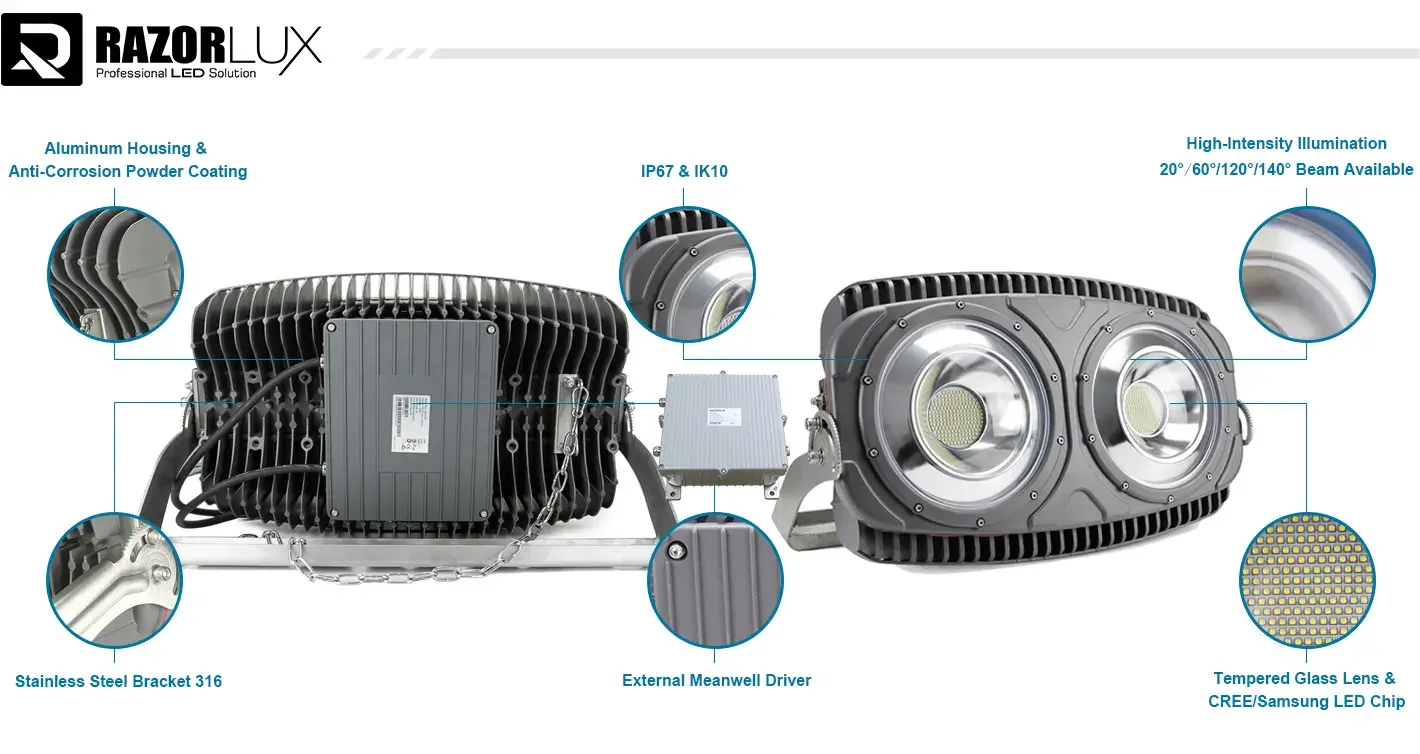
Several basic features of LED technology make it completely different for lighting uses in marine areas. Traditional halogen and HID lights have frail filaments and pressurized gas tanks. Solid-state design gets rid of these parts, making the lamps much more resistant to steady shaking from diesel engines and wave action. The rapid lighting feature—achieving full brightness within milliseconds—improves safety in emergencies where quick vision is needed. Thermal management is another important benefit. High-quality marine LED lights have advanced heat absorption systems that use marine-grade metal housings with special powder coats that stop galvanic rust and move heat away from the LED joints effectively. This thermal control keeps the color temperature stable and stops the loss of lumens that happens in cheaper goods, and shortens their useful life.
Why 120V Systems Excel for Larger Installations
The desire for 120V systems in business marine settings comes from basic electrical engineering ideas. Higher voltage operation lets the same amount of power be sent with less current draw, which reduces resistance losses in long wire runs that are common on ships or at piers where lighting grids are placed. This efficiency directly leads to lower operating costs and less heat stress on electrical distribution systems. Unlike 12V or 24V DC systems that are common on smaller recreational boats, 120V AC systems can handle much higher wattage fixtures, like our 1000W units, without needing conductor sizes that are too big to be practical. When installing high-output floodlights, being able to put them far away from power sources gives you the installation freedom you need to light up large yard areas, parking zones, or security perimeters.
Key Factors to Consider When Choosing Marine LED Flood Lights 120V
Wattage, Brightness, and Application-Specific Requirements
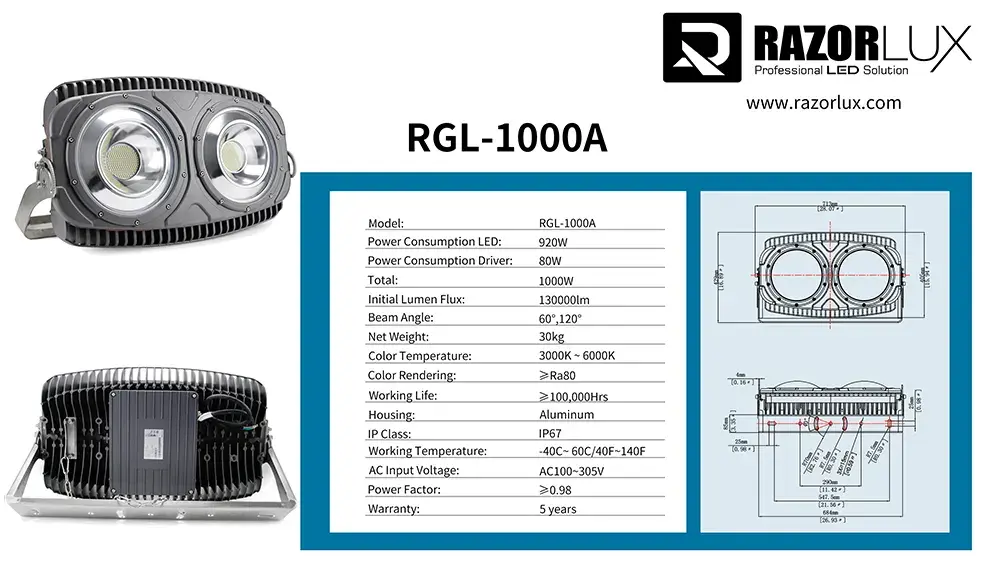
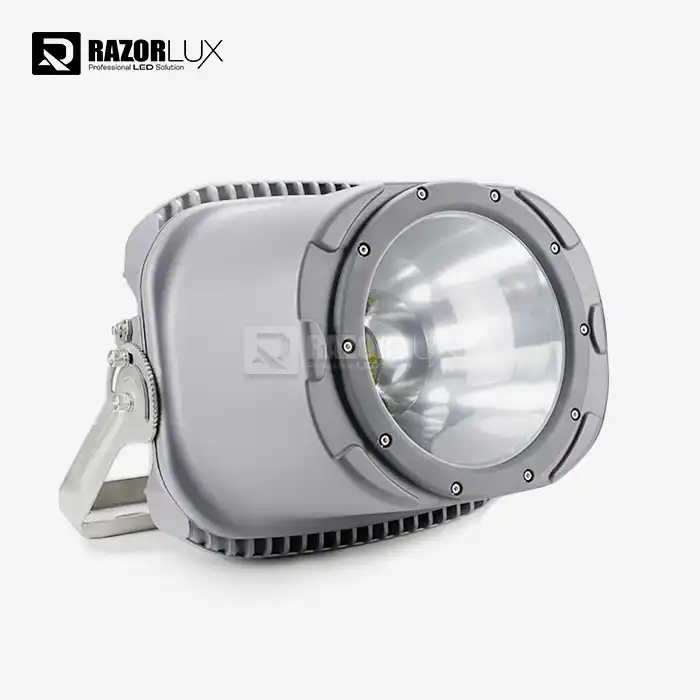
Figuring out the right power and light output for a marine purpose requires a thorough examination. Deck work areas on fishing boats need different amounts of lighting than offshore bases' surrounding protection lighting. Our 1000W fixtures give off 105,000 lumens of steady light, which is the same amount of light as two to three 2000W HID bulbs but uses half as much energy. It has a high output and is suitable for a variety of demanding uses, such as cargo handling areas that need even lighting across large horizontal surfaces, container inspection areas that need high color rendering (CRI ≥75) for accurate visual assessment of freight condition, emergency mustering stations where reliable visibility is essential during emergencies, and navigation support lighting on tugboats and pilot vessels operating in crowded waterways. The focused 20-degree beam angle of our patented multi-function design lets you place the light precisely, directing it exactly where it's needed while reducing light pollution and glare that can make navigation less safe. When compared to wide-flood options that need more overall brightness output, this directed spread gives more light to target areas.
Durability and Environmental Protection Standards
Marine settings are the roughest places for electrical tools to work, and they require levels of safety that are far above what is required in most industries. Our marine LED floodlights have an IP67 rating, which means they are completely protected against dust and water immersion up to one meter deep for 30 minutes. This is important for fixtures that will be washed under high pressure or hit by waves in bad weather. They also have an IK10 rating, which means they are resistant to 20 joules of mechanical impact energy, which means they won't break when cargo moves, maintenance tools fall, or they hit handling equipment. This strong structure is made with marine-grade stainless steel brackets and powder-coated aluminum housings that are specially made to resist the faster corrosion that happens in processing areas when they are exposed to saltwater and industrial chemical atmospheres. The temperature tolerance ranges from -40°C to 60°C (-40°F to 140°F), which is wide enough to handle the extreme temperature changes that happen during operations in places like the Arctic fishing grounds and the equatorial offshore drilling operations. This wide operating range makes sure that performance stays the same no matter the weather or the time of year.
Energy Efficiency and Total Cost of Ownership
Marine Led Flood Lights 120V Our naval LED systems' 130 lm/W light efficiency has a direct effect on operating economics in several ways. Because less power is used, fuel costs go down on boats that use generators and electricity costs go down for sites on land. The operating lifespan of 50,000 hours, which is more than 17 years under normal job cycles, pretty much eliminates the need for regular relamping costs that come with older technologies. Maintenance cost savings go beyond lamp replacements. Because HID technology doesn't have any warm-up or restart pauses, operations don't get interrupted when the power goes out for a short time. Solid-state construction can handle vibration and shock loads that require fixture replacements more often in traditional systems. Low heat generation lowers HVAC loads in enclosed machinery spaces and control rooms. Power factor exceeding 0.98 and total harmonic distortion below 10% reduce reactive power losses and stop harmonic pollution of electrical distribution systems. These are factors that are becoming more and more important for meeting maritime electrical standards and keeping sensitive navigation electronics from being affected.
Comparative Analysis: Marine LED Flood Lights 120V vs Other Lighting Solutions
Performance Comparison with Alternative Technologies
Understanding how 120V marine LED floodlights compare against alternative technologies clarifies their value proposition for procurement decision-makers. The following comparison examines key performance metrics across common maritime lighting options:
| Technology | Initial Cost | Energy Consumption | Lifespan | Maintenance Frequency | Vibration Resistance | Instant-On Capability |
|---|---|---|---|---|---|---|
| 120V LED Floodlight | Moderate-High | 1000W (105,000 lm) | 50,000 hours | Minimal (5-year intervals) | Excellent | Yes (immediate) |
| 12V LED System | Low-Moderate | Similar efficacy | 50,000 hours | Minimal | Excellent | Yes (immediate) |
| Halogen Floodlight | Low | 2000-3000W (equiv.) | 2,000 hours | Frequent (quarterly) | Poor | Yes (immediate) |
| HID (Metal Halide/HPS) | Moderate | 1500-2000W (equiv.) | 10,000 hours | Moderate (annual) | Poor | No (3-5 min warm-up) |
| Solar LED | High | Zero operational | 25,000 hours | Moderate (battery/panel) | Excellent | Depends on storage |
This data reveals several critical distinctions. While 12V LED systems offer comparable solid-state advantages, they lack the power delivery capability required for high-output applications and introduce significant voltage drop concerns across extended cable runs. Halogen fixtures, despite low acquisition costs, impose crushing lifecycle expenses through excessive energy consumption and constant replacement requirements—particularly problematic for fixtures mounted in difficult-access locations aboard vessels or offshore structures.
The 120V Advantage for Fixed and Large-Scale Applications
The 120V specification provides distinct advantages for permanent installations and larger vessel classes. Electrical distribution becomes substantially simpler compared to low-voltage alternatives, as standard marine-grade wiring and circuit protection devices accommodate 120V operation without specialized components. This compatibility reduces installation labor and allows integration with existing electrical infrastructure during retrofit projects.The higher voltage enables efficient power transmission across the substantial distances common in maritime applications—from central generator rooms to remote deck-mounted fixtures, or along extensive pier structures. This efficiency prevents the voltage sag that degrades LED performance in low-voltage systems, maintaining consistent color temperature and lumen output across all fixtures regardless of their distance from power sources.Compared to traditional technologies, LED's directional light emission—with minimal infrared or ultraviolet components—prevents the material degradation and insect attraction problems associated with conventional lamps. The absence of mercury and other hazardous materials simplifies disposal procedures and eliminates environmental compliance concerns during decommissioning.
Cost Analysis and Return on Investment Considerations
Procurement professionals evaluating marine lighting investments must consider total cost of ownership rather than merely initial acquisition expenses. Our 1000W LED fixture replaces 2000-3000W HID equivalents, immediately reducing energy consumption by 50-66%. For installations operating 10 hours daily, this translates to 3,650-7,300 kWh annual savings per fixture—representing substantial fuel cost reductions for vessel-mounted applications or utility expense decreases for shore-based installations.The extended 50,000-hour lifespan eliminates approximately 24 lamp replacements compared to halogen alternatives or 4 replacements versus HID technology. When accounting for labor costs associated with accessing difficult mounting locations—often requiring specialized equipment, safety procedures, and operational disruptions—the maintenance savings alone frequently justify LED adoption within 18-24 months.
The following analysis demonstrates typical cost recovery timelines:
| Cost Component | LED (50,000 hrs) | HID (50,000 hrs equivalent) | Halogen (50,000 hrs equivalent) |
|---|---|---|---|
| Initial Fixture Cost | $1,200 | $600 ($150 × 4 replacements) | $400 ($100 × 5 replacements) |
| Energy Cost (@$0.15/kWh) | $15,000 | $27,375 | $43,800 |
| Maintenance Labor | $500 (minimal) | $4,000 (4 replacements) | $12,500 (25 replacements) |
| Total Lifecycle Cost | $16,700 | $31,975 | $56,700 |
| Cost Savings vs LED | Baseline | $15,275 (48%) | $40,000 (71%) |
These figures illustrate compelling economic advantages extending well beyond simple energy savings, encompassing maintenance labor, operational disruption costs, and disposal expenses that disproportionately burden conventional technologies.
Installation and Maintenance Guide for Marine LED Flood Lights 120V
Proper Installation Procedures and Best Practices
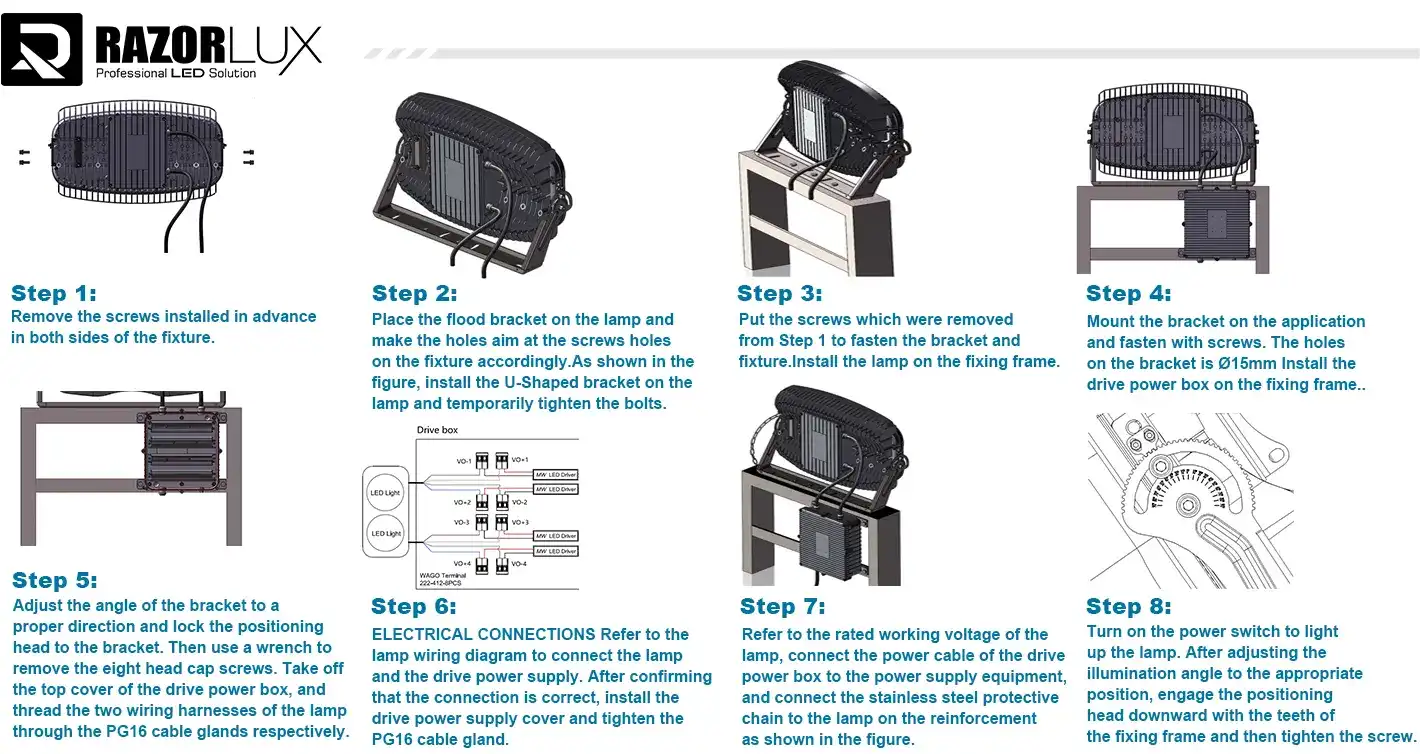
A successful marine LED floodlight installation begins with thorough electrical compatibility verification. Confirm the vessel or facility electrical system operates within the fixture's 80-305V AC input range, and verify circuit breaker ratings accommodate the 1000W power consumption with appropriate safety margins. Our fixtures accept DC input from 100-400V and 500-800V ranges as well, providing flexibility for specialized marine electrical systems.Mounting location selection requires consideration of several factors. Position fixtures to achieve desired illumination coverage while minimizing direct glare toward navigation stations or adjacent vessels. The stainless steel bracket system accommodates various mounting configurations, but installations must ensure adequate clearance for thermal dissipation—maintaining a minimum 150mm spacing from adjacent surfaces or combustible materials.Electrical connections demand marine-grade practices. Use tinned copper conductors rated for marine environments, apply dielectric compound to all connections, and secure cable entries with appropriate strain relief to prevent movement-induced conductor fatigue. The fixture's wide input tolerance accommodates voltage variations, but proper grounding remains essential for personnel safety and electromagnetic compatibility.
Routine Maintenance Requirements and Inspection Protocols
Marine Led Flood Lights 120V Despite LED technology's minimal maintenance requirements, periodic inspection procedures optimize long-term performance and identify potential issues before they compromise operational reliability. Quarterly visual inspections should assess housing condition for corrosion evidence, verify gasket integrity around lens assemblies, and confirm mounting hardware remains secure despite vibration exposure.Semi-annual cleaning procedures preserve optimal light output. Use fresh water with mild detergent to remove salt accumulation and biological growth from lens surfaces and heat dissipation fins. Avoid abrasive cleaners or high-pressure water streams that might compromise gasket seals or scratch optical surfaces. After cleaning, inspect gaskets for deterioration and apply silicone-based lubricant to maintain seal flexibility.Annual comprehensive assessments should include electrical connection inspection, verifying terminations remain tight and corrosion-free. Thermal imaging surveys can identify abnormal heat patterns indicating degraded thermal interface materials or obstructed ventilation. Document luminous output using calibrated light meters to establish performance trends and predict end-of-life timing for proactive replacement planning.
Troubleshooting Common Issues and Solutions
Marine LED systems occasionally present operational anomalies requiring systematic diagnosis. Flickering or intermittent operation typically indicates loose electrical connections, voltage fluctuations beyond the driver's compensation range, or failing circuit protection devices. Verify all terminations, measure supply voltage under load, and inspect upstream electrical components.Reduced light output or color shift suggests thermal management issues or LED array degradation. Confirm heat sink surfaces remain unobstructed and clean, verify ambient temperature falls within operational specifications, and inspect for any housing damage compromising thermal pathways. Premature degradation may indicate voltage overstress from transient surges—consider installing supplemental surge protection if shipboard electrical systems exhibit instability.Complete fixture failure demands methodical troubleshooting. Verify power supply integrity at fixture terminals, confirming voltage presence and proper grounding. If power delivery proves adequate, driver circuit failure becomes likely—covered under our comprehensive 5-year warranty that includes both LED modules and power supplies, ensuring minimal downtime through rapid component replacement.
Advanced Features of Razorlux Marine LED Flood Lights 120V
Patented Multi-Function Design and Versatility
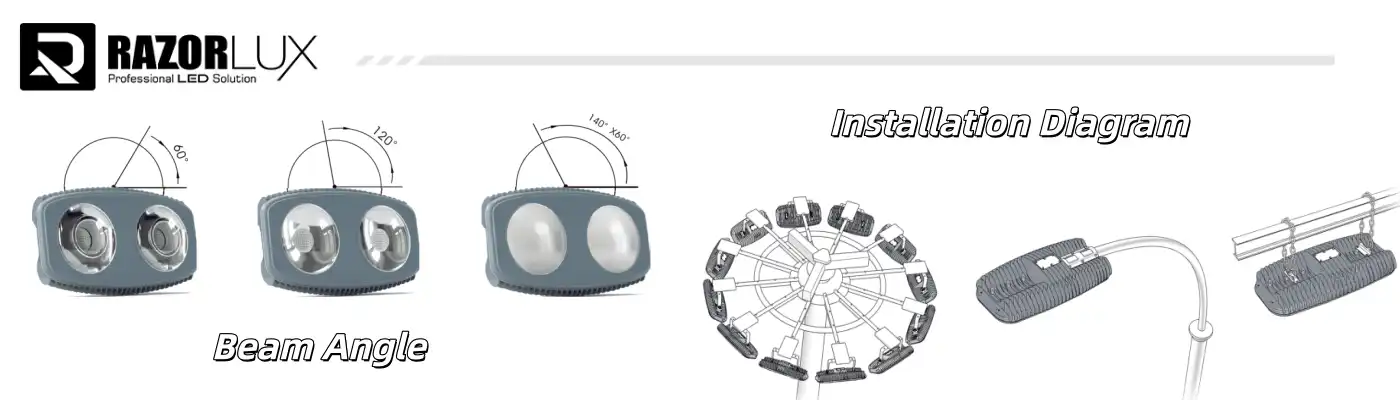
Our patented multi-function design distinguishes Razorlux fixtures from commodity marine lighting products through engineering innovations addressing real-world maritime challenges. The modular construction allows field-configurable beam angles and mounting orientations, accommodating diverse application requirements without inventory proliferation. This adaptability proves particularly valuable for maintenance and repair operations where exact replacement specifications may be uncertain.The stainless steel bracket system incorporates multiple adjustment axes, enabling precise aim adjustment after installation without fixture removal. This capability simplifies commissioning procedures and allows illumination pattern refinement as operational requirements evolve. The robust mechanical design withstands repeated adjustments without degradation, maintaining secure positioning despite continuous vibration exposure throughout the fixture's operational lifespan.The wide input voltage range—spanning 80-305V AC and multiple DC voltage bands—provides exceptional compatibility across diverse marine electrical architectures. This flexibility accommodates international voltage standards, aging vessel electrical systems with degraded regulation, and renewable energy integration projects incorporating variable voltage sources. The universal input capability simplifies inventory management for fleet operators and marine equipment suppliers serving diverse client bases.
Premium Components and Quality Assurance
Component selection directly determines marine LED fixture reliability and longevity. Our fixtures exclusively utilize Mean Well power supplies—recognized industry-wide for exceptional reliability in harsh environments. These driver circuits incorporate sophisticated protection features including over-voltage, over-current, and thermal shutdown mechanisms that safeguard LED arrays against electrical transients and abnormal operating conditions common in maritime settings.The LED modules themselves employ premium-grade semiconductor materials selected for superior luminous efficacy, minimal lumen depreciation, and consistent color temperature maintenance throughout their operational lifespan. Our 130 lm/W performance exceeds typical marine-grade fixtures by 15-25%, directly translating to reduced power consumption or enhanced illumination levels depending on application priorities.Housing construction utilizes marine-grade aluminum alloys with specialized powder coating formulations developed specifically for saltwater immersion resistance. The coating process incorporates chromate conversion pretreatment and multi-layer application achieving coating thickness exceeding 100 microns—substantially surpassing standard industrial finish specifications. This corrosion protection system maintains structural integrity and aesthetic appearance throughout decades of service in the most aggressive marine environments.
Comprehensive Certification and Compliance
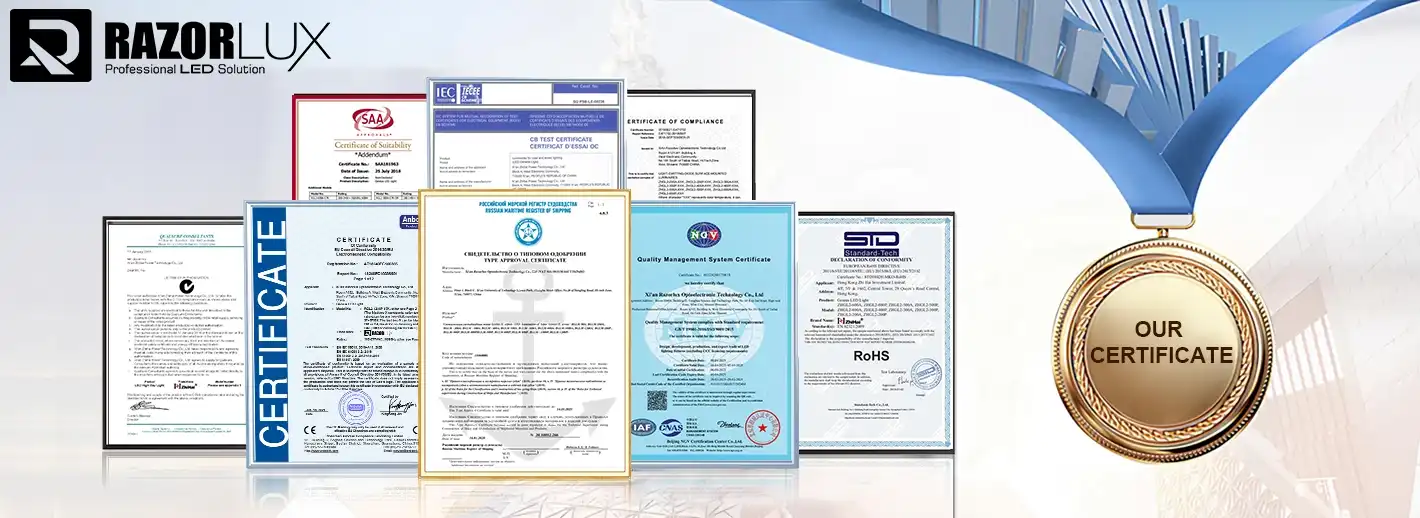
Our marine LED floodlights carry extensive certification validating their suitability for maritime service and compliance with international electrical and safety standards. The RMRS (Russian Maritime Register of Shipping) certification confirms adherence to stringent requirements for vessels operating in Arctic and sub-Arctic conditions—arguably the most demanding maritime environments globally. This approval demonstrates exceptional cold-weather performance and resistance to thermal shock from rapid temperature transitions.UL and DLC listings provide assurance of electrical safety and performance for North American markets, facilitating specification approval for domestic maritime and industrial projects. CE and RoHS compliance enables unrestricted sale throughout European markets while confirming environmental responsibility through hazardous substance elimination. The comprehensive certification portfolio simplifies procurement processes by satisfying diverse regulatory requirements across global markets with a single product specification.ISO 9001:2015 certification of our manufacturing operations demonstrates systematic quality management practices ensuring consistent product quality across production volumes. This third-party validated quality system provides procurement professionals with confidence that products delivered today will perform identically to evaluation samples, eliminating the quality variation concerns that plague some marine equipment suppliers.
Purchasing and Procurement Considerations for Marine LED Flood Lights 120V
Evaluating Supplier Credibility and Manufacturing Capability
Selecting a marine LED floodlight supplier demands thorough assessment of manufacturing capabilities, quality control systems, and long-term business stability. Xi'an Razorlux Optoelectronic Technology Co., Ltd. brings over two decades of LED lighting expertise since our founding in 1998, providing the institutional knowledge and technical depth essential for developing products that genuinely address maritime application challenges rather than merely adapting industrial fixtures with superficial modifications.Our portfolio of 200+ patents covering LED Packaging, thermal management, optical design, and power control technologies demonstrates sustained innovation commitment and technical leadership. This intellectual property foundation enables customization capabilities addressing unique project requirements—from specialized beam patterns to integration with vessel management systems—that commodity suppliers cannot accommodate.The combination of advanced R&D capabilities and comprehensive manufacturing operations—spanning LED assembly through final fixture production—ensures supply chain stability and quality control throughout the production process. This vertical integration eliminates the coordination challenges and quality inconsistencies inherent in operations relying on multiple subcontractors for critical components.
Certification Requirements and Documentation Standards
Marine Led Flood Lights 120V Maritime procurement professionals rightfully demand comprehensive technical documentation supporting specification compliance and regulatory approval. Our products arrive with complete certification packages including test reports confirming IP67/IP68 ingress protection ratings, IK10 impact resistance, photometric data validated by accredited laboratories, and electrical safety certifications from recognized approval agencies.This documentation depth extends beyond basic compliance certificates to include detailed installation manuals, wiring diagrams, maintenance procedures, and troubleshooting guides—essential resources for technical teams responsible for commissioning and maintaining lighting systems. The availability of three-dimensional CAD models in multiple formats facilitates integration planning during design phases, while detailed specification sheets enable accurate electrical load calculations and thermal analysis during engineering reviews.The comprehensive documentation approach reflects our understanding of procurement processes within shipyards, offshore platforms, and port facilities, where technical review committees require substantial evidence supporting product suitability before authorization. Providing complete information upfront accelerates approval processes and demonstrates the technical transparency that builds lasting supplier relationships.
Warranty Coverage and After-Sales Support Structure
The 5-year comprehensive warranty covering both LED modules and driver circuits—along with 10-year housing coverage—reflects confidence in product durability and manufacturing quality. This extensive protection period substantially exceeds typical marine lighting warranty terms, transferring long-term performance risk from purchasers to the manufacturer and providing clear evidence of reliability expectations.Our after-sales support infrastructure includes 24/7 technical assistance channels staffed by engineers familiar with maritime applications and their unique challenges. This expertise proves invaluable during troubleshooting scenarios where generic lighting knowledge proves insufficient for diagnosing issues within complex marine electrical systems. The availability of replacement components—including individual driver circuits, LED modules, and mechanical hardware—extends fixture serviceable life and protects customer investments.The global presence spanning operations in China and the United States positions technical support resources near major maritime markets, facilitating rapid response to urgent support requirements and enabling on-site assistance for major installations or complex integration projects. This geographic distribution also ensures parts availability and logistics flexibility that single-location operations cannot match.
Real-World Applications and Case Studies
Commercial Fishing Vessel Deck Illumination
Commercial fishing operations demand lighting solutions that withstand constant saltwater exposure, high-pressure washdown procedures, and the intense vibration from marine diesel propulsion systems. Our 120V marine LED floodlights have been deployed aboard multiple trawlers and crab fishing vessels operating in North Pacific waters—among the most demanding maritime environments globally.The high CRI rating (≥75, with ≥80 and ≥90 options available) proves essential for crew members sorting catches and accurately distinguishing species during night operations. The instantaneous illumination eliminates the warm-up delays of HID technology that compromised safety during emergency situations or rapid operational changes. Vessel operators report dramatic reductions in maintenance requirements compared to previous halogen systems that required monthly lamp replacements due to vibration-induced filament failure.The 1000W power consumption—replacing 2000-3000W HID equivalents—delivers substantial fuel savings for vessels operating generators continuously during fishing operations. One fleet operator calculated annual fuel cost reductions exceeding $3,500 per vessel, with the savings directly improving operational profitability in an industry facing constant economic pressure from volatile fish prices and increasing regulatory compliance costs.
Offshore Platform and Port Infrastructure Lighting
Offshore oil and gas platforms require lighting systems meeting stringent safety standards while withstanding extreme environmental conditions including salt spray, high winds, and temperature extremes. Our marine LED floodlights have been specified for multiple platform installations throughout Southeast Asian and Middle Eastern waters, providing perimeter security lighting, helipad illumination, and work area coverage for drilling and processing operations.The wide input voltage tolerance (80-305V AC) accommodates the voltage fluctuations common in offshore electrical systems during generator load changes and emergency power transitions. The rugged construction withstands mechanical impacts from maintenance activities and severe weather events without the fragile glass envelopes and pressurized arc tubes that make HID fixtures vulnerable to catastrophic failure from relatively minor impacts.Port and harbor installations benefit similarly from LED technology's durability and efficiency. Container terminals have deployed our fixtures for crane operator illumination and cargo inspection areas, where the high color rendering enables accurate container marking identification and cargo condition assessment. The elimination of mercury-containing HID lamps simplifies environmental compliance and disposal procedures—increasingly important considerations for port authorities subject to environmental regulations.
Conclusion
Selecting appropriate marine lighting solutions represents a critical decision impacting operational safety, maintenance costs, and long-term reliability for vessels, offshore platforms, and port facilities. Marine Led Flood Lights 120V from Razorlux deliver proven performance in the most demanding maritime environments, combining advanced LED technology with marine-grade construction and comprehensive certifications. The 130 lm/W efficiency, IP67 protection, and 50,000-hour lifespan provide compelling economic advantages through reduced energy consumption and minimal maintenance requirements. Our patented multi-function design, premium components including Mean Well power supplies, and extensive certification portfolio address the core concerns of shipyard purchasing managers and facility engineers. The 5-year comprehensive warranty and responsive technical support structure ensure lasting value beyond initial acquisition.
FAQ
What distinguishes marine-grade LED fixtures from standard industrial floodlights?
Marine-grade fixtures incorporate specialized corrosion-resistant materials, enhanced gasket sealing systems, and electrical components rated for the constant vibration, salt spray exposure, and humidity extremes characteristic of maritime environments. Our marine LED floodlights utilize 316L stainless steel hardware, specialized powder coating formulations, and conformal-coated circuit boards that resist the galvanic corrosion and electrical degradation that rapidly destroy standard industrial fixtures in saltwater environments.
Can these fixtures operate on unstable electrical systems common aboard older vessels?
The wide input voltage range (80-305V AC) specifically addresses voltage regulation challenges in aging marine electrical systems and during generator load transitions. The driver circuits incorporate sophisticated filtering and power factor correction that maintain stable LED operation despite supply voltage fluctuations that would cause flickering or premature failure in fixtures designed for stable utility power.
How do 120V systems compare to 12V or 24V LED alternatives for marine applications?
While low-voltage systems suit smaller recreational vessels, 120V operation provides critical advantages for commercial vessels and fixed installations. The higher voltage enables efficient power transmission across long cable runs without significant voltage drop, supports higher wattage fixtures like our 1000W unit, and integrates seamlessly with standard shore power and generator systems common in commercial maritime operations. The reduced current draw at 120V also minimizes conductor heating and connection point stress.
Partner with a Trusted Marine Led Flood Lights 120V Manufacturer
Razorlux stands ready to support your maritime and industrial lighting requirements with proven LED solutions engineered specifically for the most demanding environments. Our 1000W marine LED floodlights deliver 105,000 lumens of reliable illumination backed by comprehensive certifications, premium components, and over 20 years of manufacturing expertise. Whether you're upgrading an existing vessel, specifying lighting for new construction, or seeking replacement solutions for aging infrastructure, our technical team provides expert guidance throughout the selection and implementation process. Contact our marine lighting specialists at sam@razorlux.com to discuss your specific project requirements, request detailed technical documentation, or arrange sample evaluation units. As a leading Marine Led Flood Lights 120V supplier, we maintain substantial inventory enabling rapid fulfillment of both prototype quantities and volume production orders, supported by flexible shipping options worldwide.
References
1. Marine Technology Society. (2021). LED Lighting Systems for Maritime Applications: Performance Standards and Best Practices. Washington, DC: Marine Technology Society Publications.
2. International Association of Marine Aids to Navigation and Lighthouse Authorities. (2020). Guidelines on LED Navigation Lights and Marine Illumination Systems. Saint-Germain-en-Laye, France: IALA Publications.
3. American Bureau of Shipping. (2022). Guide for LED Lighting Systems for Marine and Offshore Applications. Houston, TX: ABS Technical Publications.
4. Maritime and Coastguard Agency. (2019). Marine Guidance Note: Electrical Installations in Ships - LED Lighting Systems. Southampton, UK: MCA Publications.
5. Society of Naval Architects and Marine Engineers. (2021). Technical Brief: Energy-Efficient Lighting for Commercial Vessels and Offshore Platforms. Alexandria, VA: SNAME Publications.
6. Det Norske Veritas. (2020). Recommended Practice: LED Lighting for Marine and Offshore Installations - Design, Testing and Certification Requirements. Høvik, Norway: DNV GL Publications.
 VIEW MOREled football field lights
 VIEW MORE1000 Watt Led Stadium Lights
 VIEW MOREOutdoor Lighting For Volleyball Court
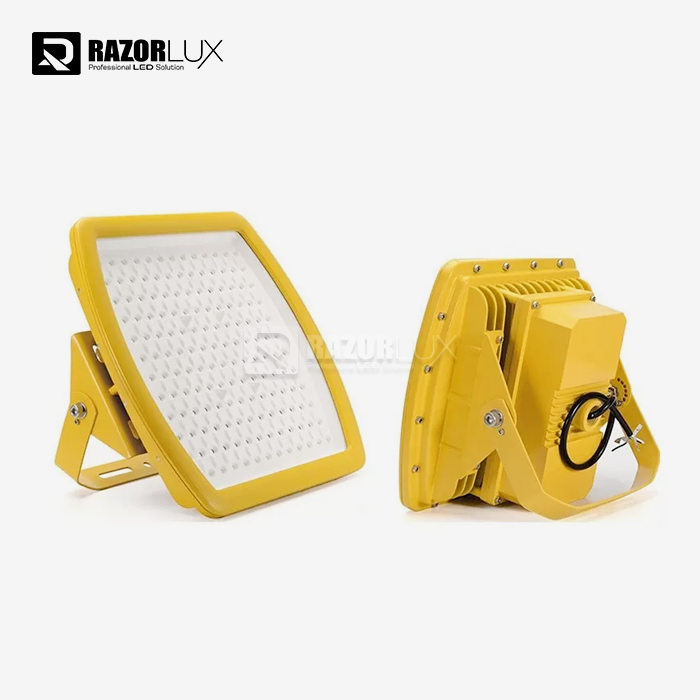 VIEW MOREIP65 Atex 5000K Flood Light Reflector 75 CRI Explosion Proof Street Light
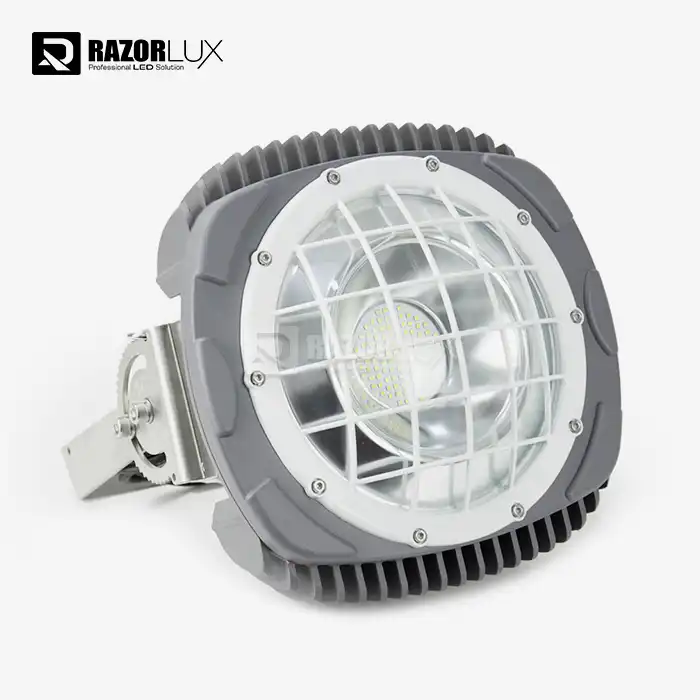 VIEW MORELed High Mast Luminaire
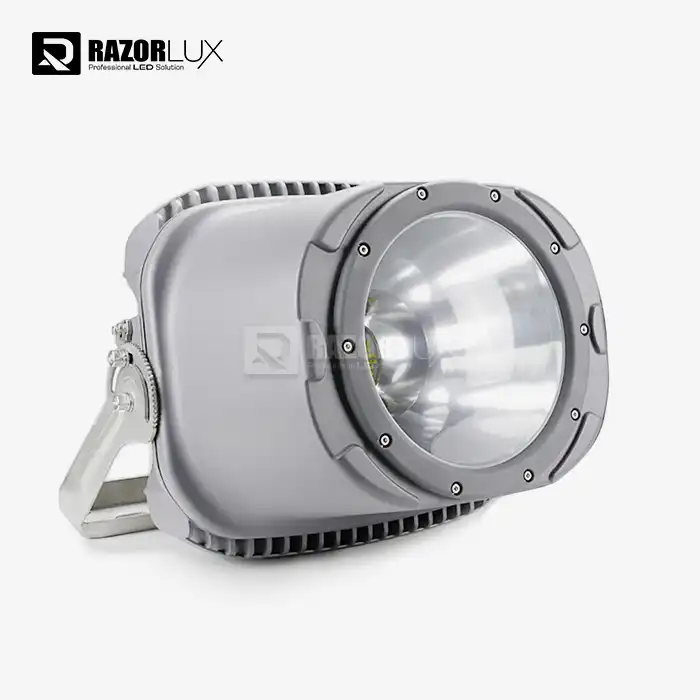 VIEW MOREOutdoor Sport Court Lights
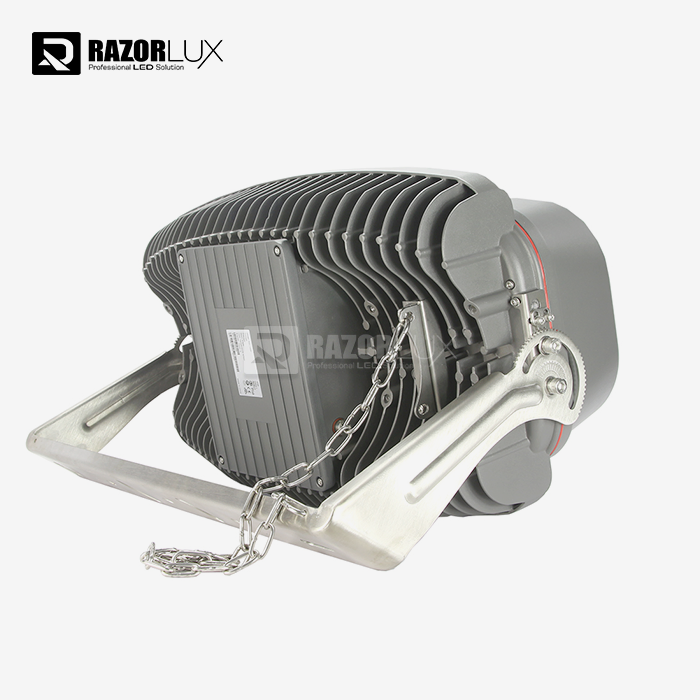 VIEW MOREFootball Pitch Led Flood Lights
 VIEW MORE110V Floodlight